
Roam Research alternatives
Top Note-taking & Knowledge Bases like Roam Research
The most popular alternative to Roam Research is Obsidian, which has a free version. Other great alternatives to Roam Research are Logseq, Notion, Capacities, and Anytype.
Most alternatives to Roam Research are in the Note-taking & Knowledge Bases category, compared here by price, platform and features.
All Roam Research alternatives
Obsidian stores notes as plain Markdown files on your device, links them into a knowledge graph and extends with a large plugin ecosystem.
17 Obsidian alternativesPros
- Notes are plain Markdown files stored on your device
- Large ecosystem of community plugins and themes
- Graph view and backlinks for connected notes
Cons
- Official sync and publishing are paid add-ons
- Plugin-heavy setups take time to configure and maintain
- No real-time collaboration on notes
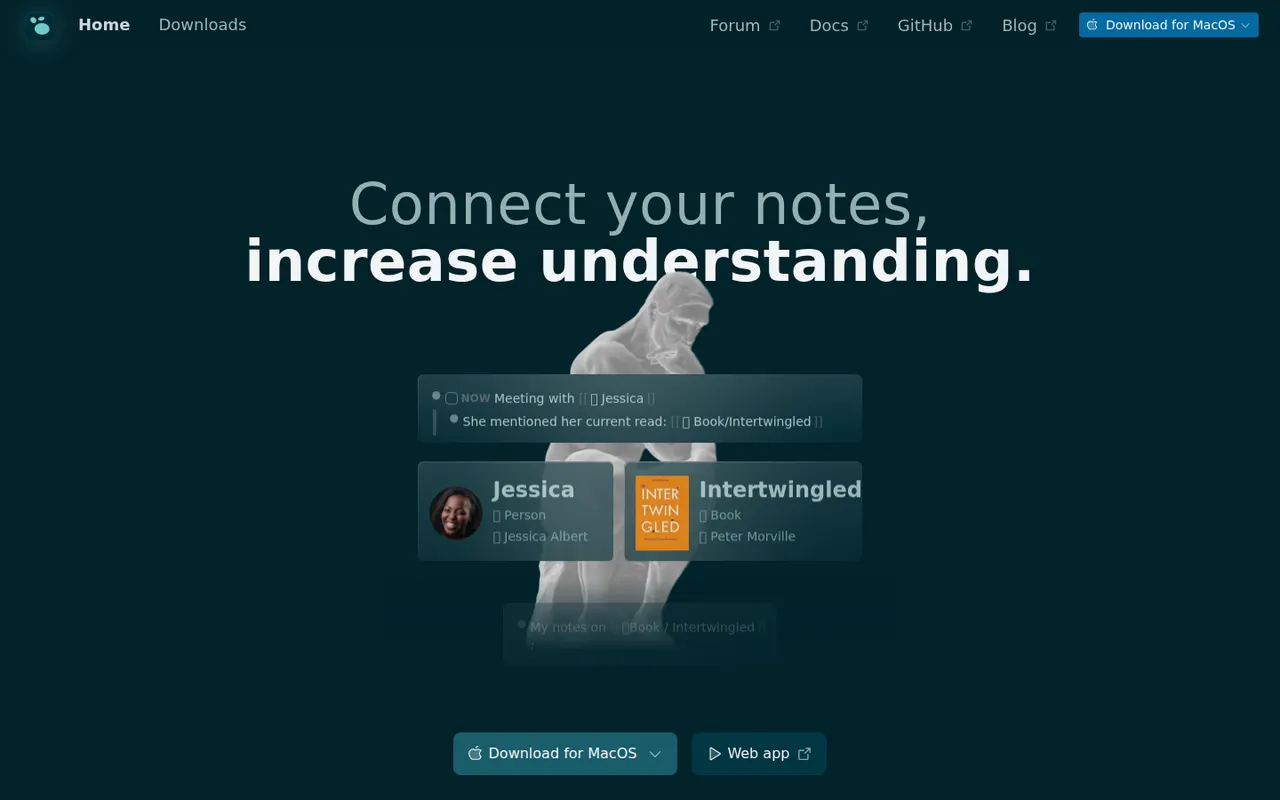
Cost / LicenseFreemiumProprietaryCategoriesLogseq is a privacy-first outliner that stores notes locally in Markdown or Org files, with bidirectional links, journals and whiteboards.
7 Logseq alternativesPros
- Notes live in local Markdown or Org files that you fully own
- Bidirectional links, block references and daily journals
- Free and open source, with a plugin ecosystem
Cons
- Outliner-only structure is a poor fit for long-form writing
- Can slow down with very large graphs
- Syncing between devices takes extra setup
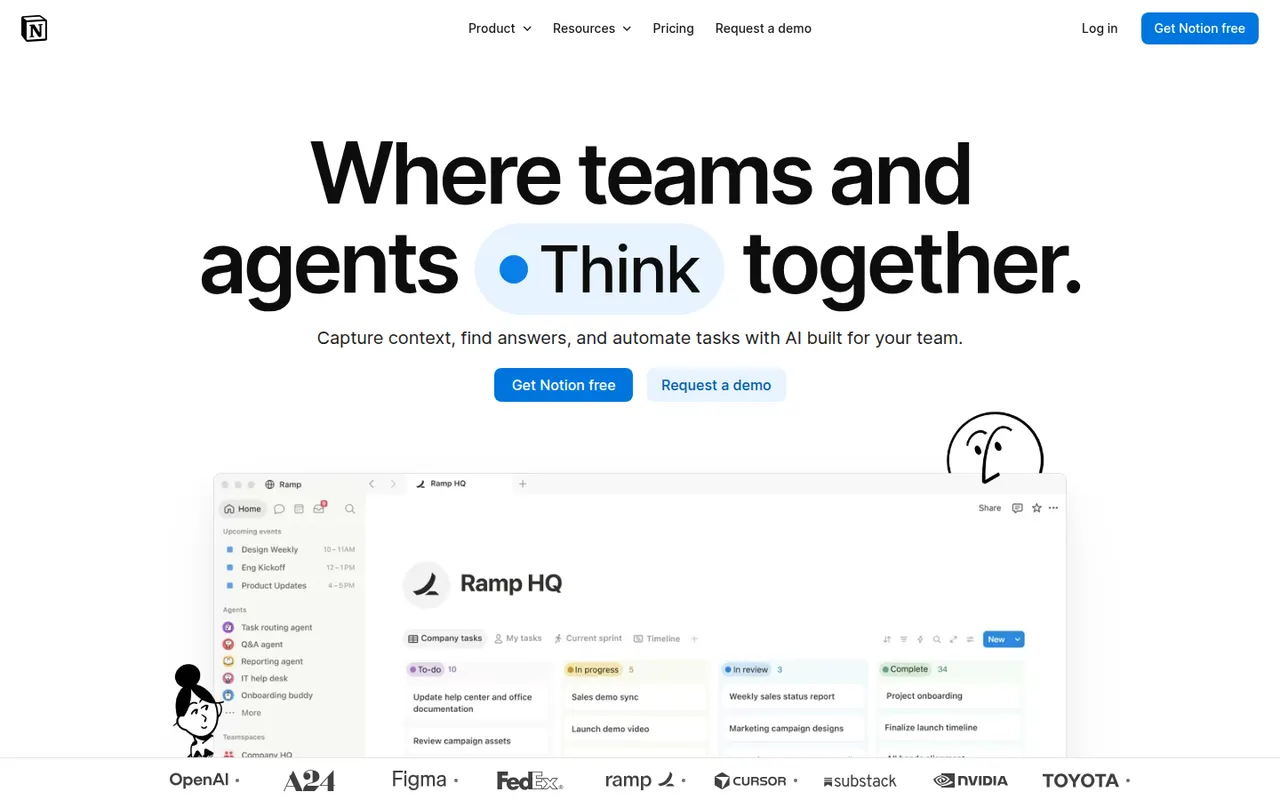
Cost / LicenseFreeOpen sourceCategoriesFeaturesNotion combines notes, documents, databases and project management in a flexible block-based workspace, with an integrated AI assistant.
17 Notion alternativesPros
- Docs, wikis and databases combined in one flexible workspace
- Large template gallery for roadmaps, trackers and wikis
- Real-time collaboration with comments, mentions and an API
Cons
- Databases and relations take time to master
- Offline access is limited compared with local-first apps
- Large workspaces can feel slow to load
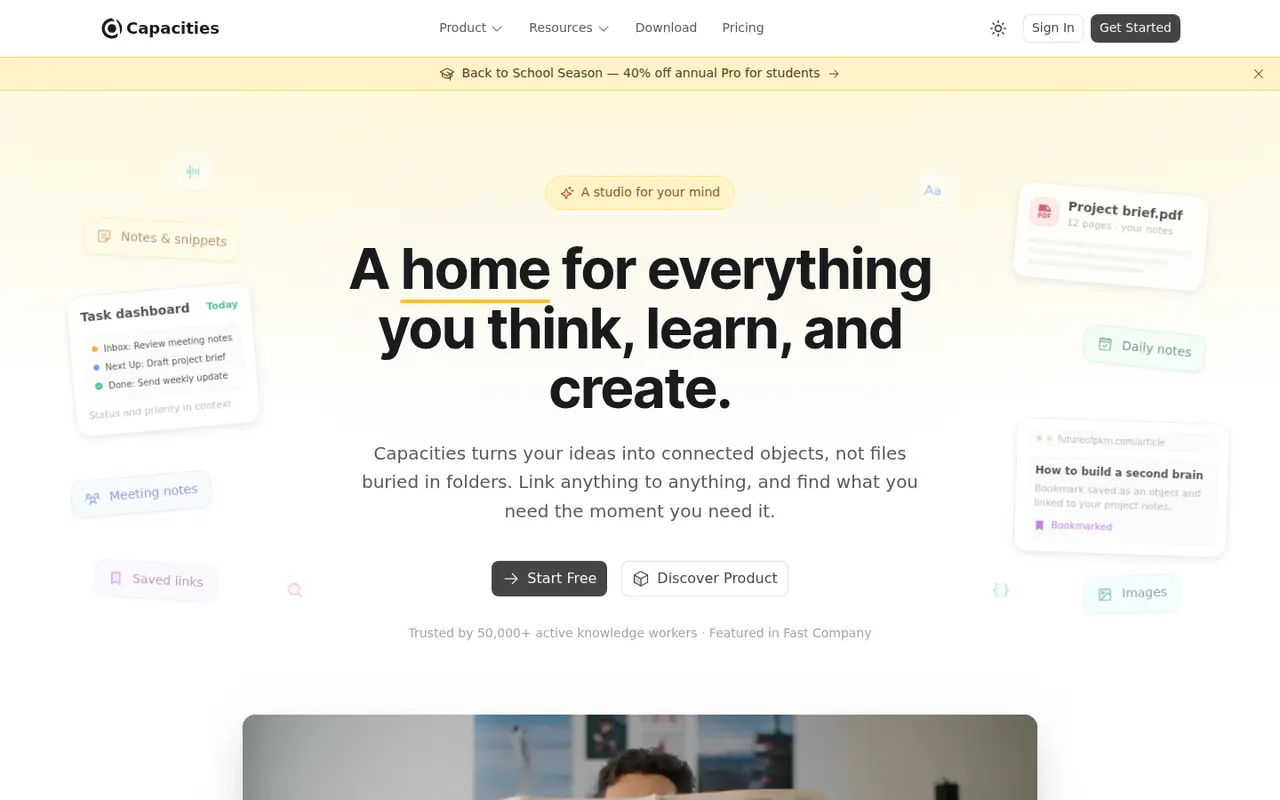
Cost / LicenseFreemiumProprietaryCategoriesCapacities is a note-taking app that organizes knowledge as objects such as people, books, meetings and ideas, each with its own properties and templates, instead of folders. Objects link to each other through backlinks and a graph, daily notes collect everyday thoughts, and the Pro plan adds an AI assistant. It is developed by a small team in Germany.
8 Capacities alternativesPros
- Object types like people, books and meetings give notes structure
- Backlinks, graph view and daily notes connect ideas
- Available on web, desktop and mobile with sync
Cons
- The object-based approach takes time to get used to
- The AI assistant and some features need the Pro plan
- Cloud-based storage gives less control than local-first apps
Cost / LicenseFreemiumProprietaryCategoriesAnytype is a local-first workspace for notes, databases and collaboration, with peer-to-peer sync and end-to-end encryption.
10 Anytype alternativesPros
- Local-first data with end-to-end encrypted peer-to-peer sync
- Objects, types and relations enable flexible, database-like notes
- Works offline on desktop and mobile alike
Cons
- The object and type model takes time to learn
- No web app, only desktop and mobile clients
- Fewer integrations and plugins than mainstream workspaces
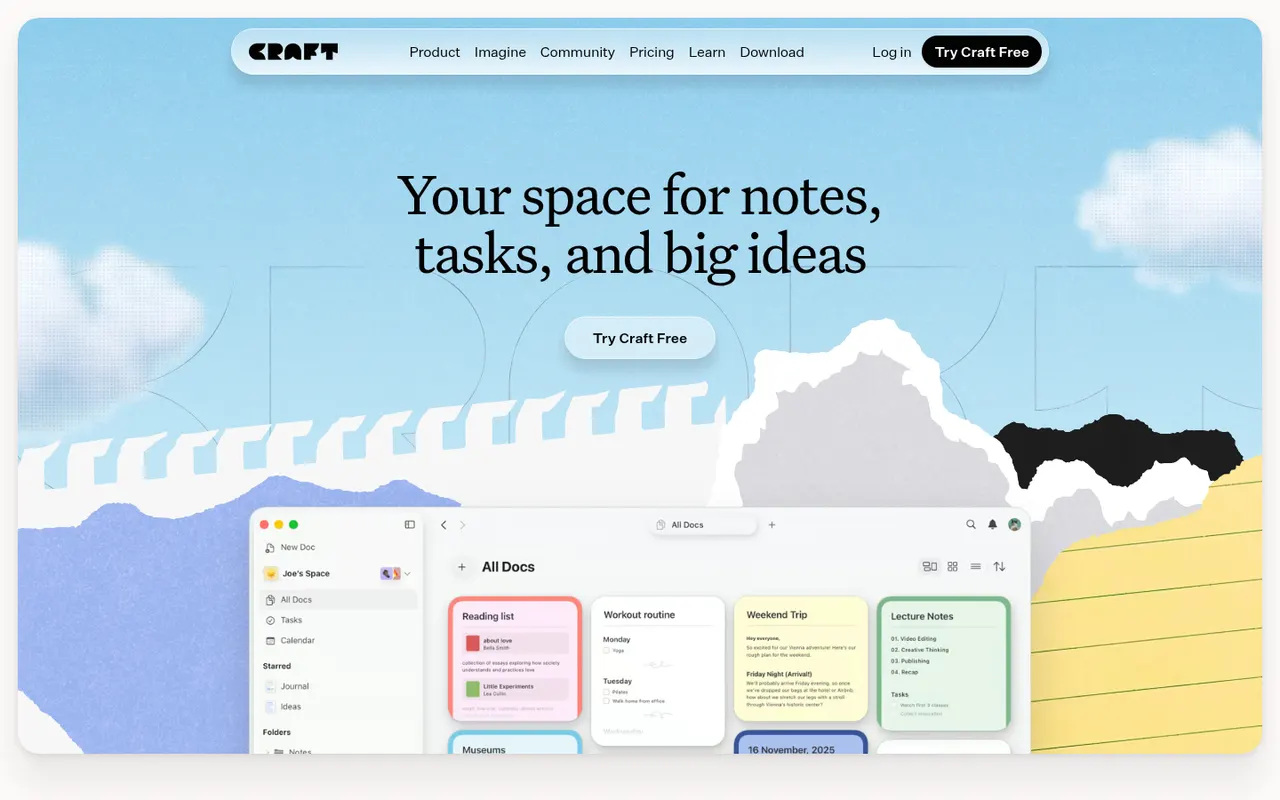
Cost / LicenseFreemiumSource availableCategoriesCraft is a document and note-taking app with a native, polished design on Mac, iPhone and iPad, also available on Windows and the web. Notes are built from blocks and nested pages with backlinks, can be shared as public web pages or edited together in real time, and include AI writing help, tasks and daily notes.
12 Craft alternativesPros
- Polished native design on Mac, iPhone and iPad
- Block-based pages can be shared as public web pages
- Real-time collaboration plus built-in AI writing help
Cons
- The experience is best on Apple devices, other platforms feel secondary
- Advanced features and AI usage are reserved for paid plans
- Less suited to large databases than Notion-style tools
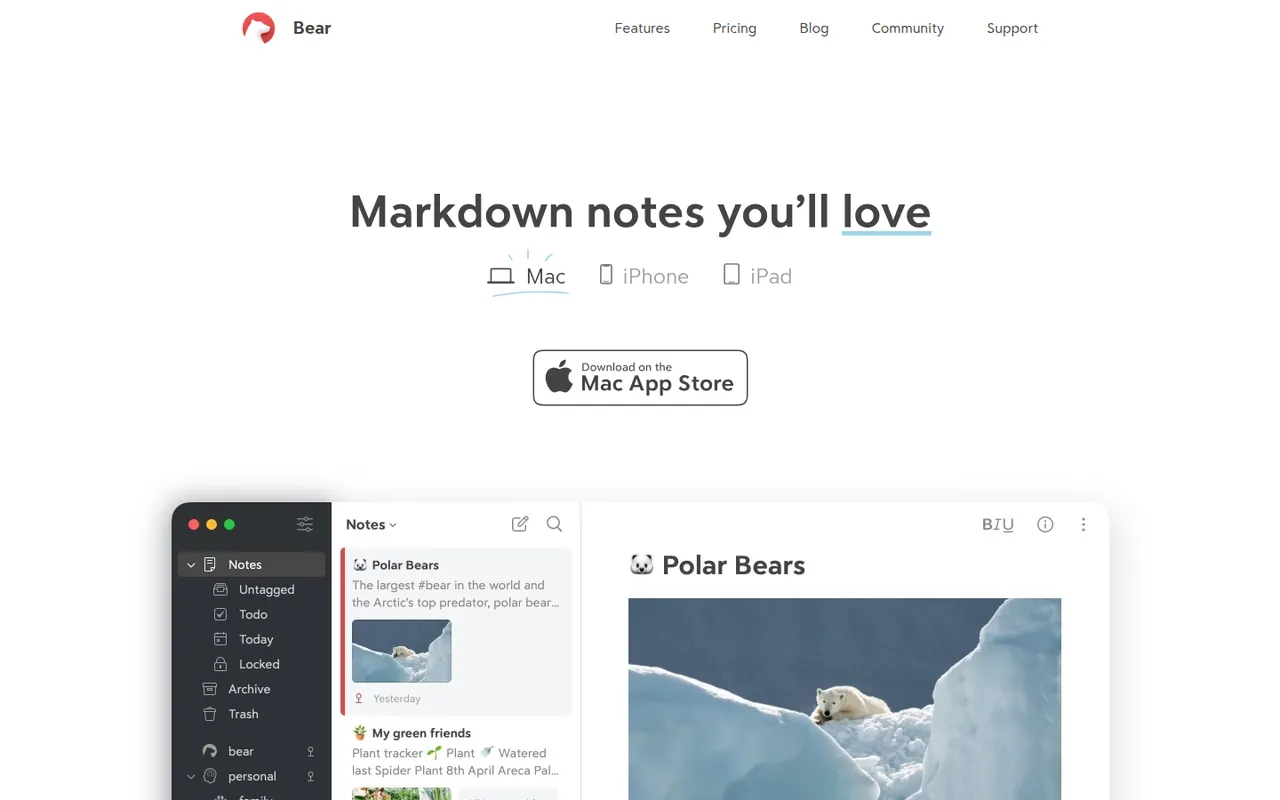
Cost / LicenseFreemiumProprietaryBear is a writing and note-taking app for Mac, iPhone and iPad from Shiny Frog, built on Markdown with nested tags, links between notes and a choice of themes. The app is free to use on a single device, while Bear Pro adds iCloud sync across devices, OCR search in images and PDFs, and more export formats.
12 Bear alternativesPros
- Elegant Markdown editor with a choice of themes
- Nested tags and note links keep things organized without folders
- Native, fast apps designed for Mac, iPhone and iPad
Cons
- Apple only, with no Windows, Android or web version
- Sync across devices requires the Pro subscription
- No shared notes or real-time collaboration
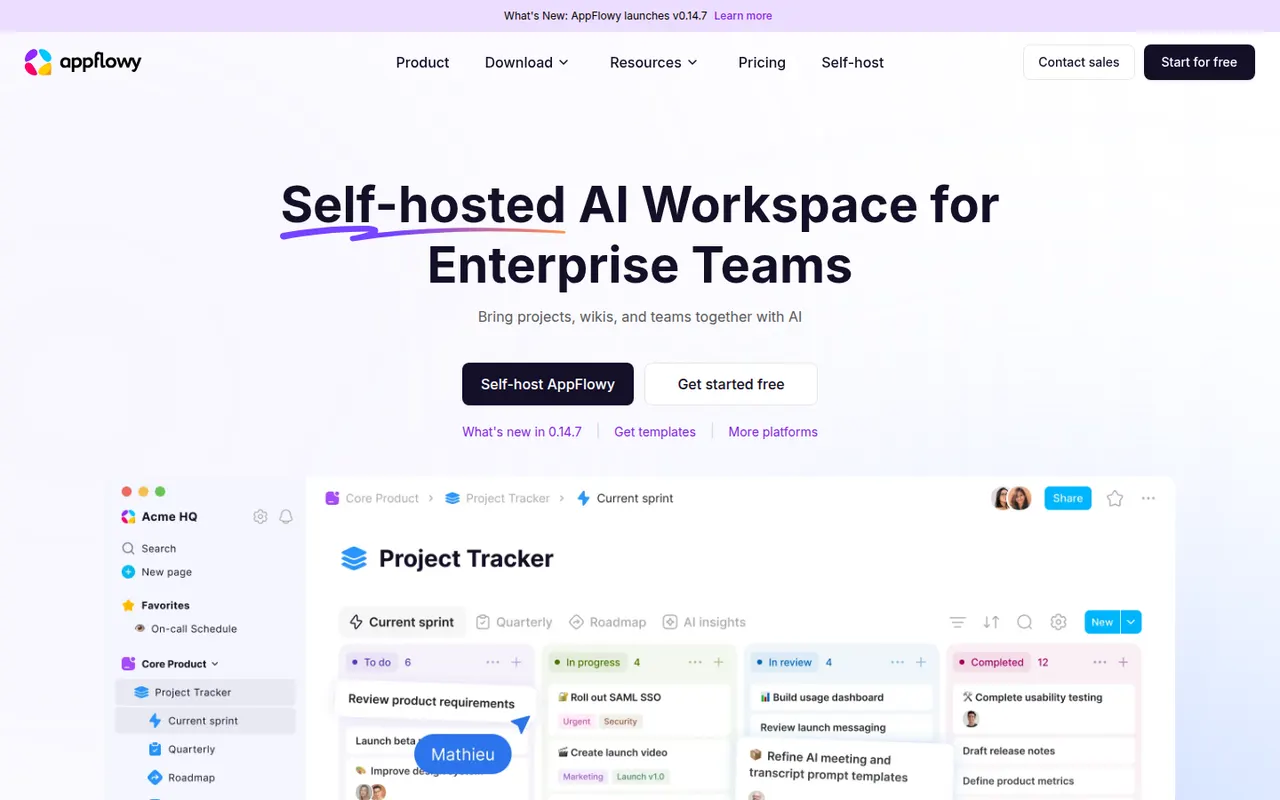
Cost / LicenseFreemiumProprietaryCategoriesAppFlowy is an open source workspace for docs, databases and kanban boards that you can self-host, with AI features and offline support.
7 AppFlowy alternativesPros
- Open source Notion alternative that you can self-host
- Docs, databases and kanban boards in one workspace
- Offline support with apps on desktop and mobile
Cons
- Fewer templates and integrations than Notion
- Some features still feel less polished than in mature rivals
- Advanced AI features are reserved for paid plans
Cost / LicenseFreemiumOpen sourceCategories
















Roam Research vs its alternatives at a glance
Pricing, platforms and the key features of Roam Research, compared with its most popular alternatives.
| App | Pricing | Platforms | Bidirectional links | Graph view | Markdown support | Plugins & extensions |
|---|---|---|---|---|---|---|
 Roam Research Roam Research | Free trial | Web, Windows, Mac | ||||
 Obsidian Obsidian | Freemium | Windows, Mac, Linux, iPhone, Android | ||||
 Logseq Logseq | FreeOpen source | Windows, Mac, Linux, iPhone, Android | ||||
 Notion Notion | Freemium | Web, Windows, Mac, iPhone, Android | ||||
 Capacities Capacities | Freemium | Web, Windows, Mac, Linux, iPhone, Android | ||||
 Anytype Anytype | FreemiumSource available | Windows, Mac, Linux, iPhone, Android |
Roam Research alternatives: frequently asked questions
What is the best alternative to Roam Research?
The most popular alternative to Roam Research is Obsidian: Private, local-first knowledge base on Markdown files. Other great alternatives are Logseq, Notion, Capacities, and Anytype.
Is there a free alternative to Roam Research?
Yes, 8 alternatives are free or have a free plan, including Obsidian, Logseq, Notion, and Capacities.
Is there an open source alternative to Roam Research?
Yes, 2 open source alternatives are listed, including Logseq and AppFlowy.
Is Roam Research free?
Roam Research is a paid app that offers a free trial.
Compare Roam Research with its alternatives


Sponsored listings and products made by the publisher of this site are always labeled. How we rank · Know a good alternative? Submit it