
Free Convex alternatives
Top Backend as a Service like Convex
The most popular alternative to Convex is Supabase, which has a free version. Other great alternatives to Convex are Firebase, Appwrite, PocketBase, and Nhost.
Most alternatives to Convex are in the Backend as a Service category, compared here by price, platform and features.
All Convex alternatives
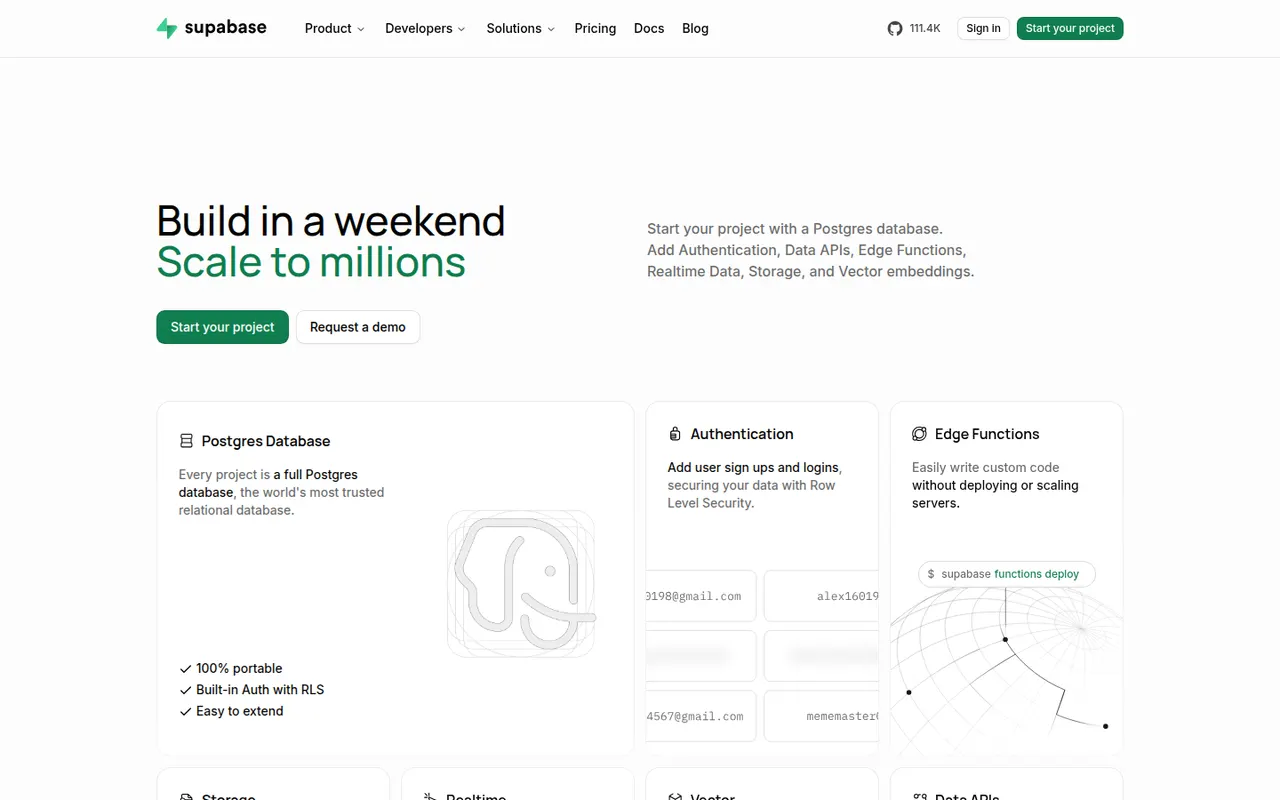
Supabase is an open source backend platform built on Postgres. Each project gets a full Postgres database with auto-generated REST and GraphQL APIs, authentication, file storage, realtime subscriptions, edge functions and vector support for AI applications. It can be used as a hosted service with a free tier or self-hosted with Docker, and appeals to developers who want SQL rather than a NoSQL backend.
8 Supabase alternativesPros
- Full Postgres database with SQL, extensions and row-level security
- Auto-generated APIs, auth, storage and realtime in one platform
- Open source and self-hostable with Docker
Cons
- Free-tier projects are paused after a period of inactivity
- Self-hosting is more involved to set up than the managed service
- Row-level security policies take time to get right
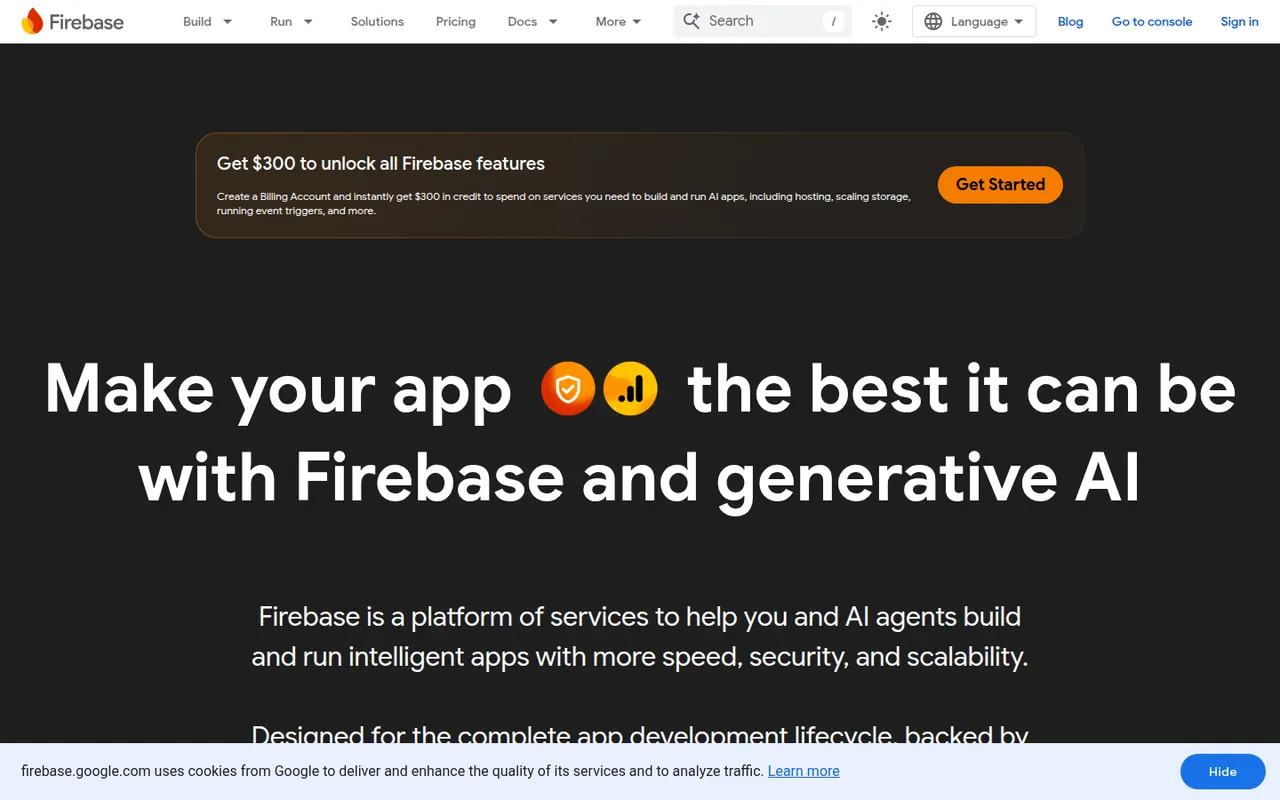
Cost / LicenseFreemiumOpen sourceCategoriesPlatformsFirebase is Google's platform for building web and mobile apps without running your own servers. It provides Cloud Firestore and the Realtime Database, authentication, Cloud Storage, Cloud Functions, hosting, analytics, crash reporting and push messaging, with SDKs for iOS, Android, web, Flutter and Unity, plus Gemini-based AI features. A free Spark plan suits prototypes, with usage-based billing beyond it.
8 Firebase alternativesPros
- Complete toolkit from auth and databases to hosting and crash reports
- Mature SDKs for iOS, Android, web, Flutter and Unity
- The free Spark plan is enough for prototypes
Cons
- Usage-based billing can spike unexpectedly with traffic or inefficient queries
- Firestore’s NoSQL model makes complex queries and reporting awkward
- Strong lock-in to Google Cloud services
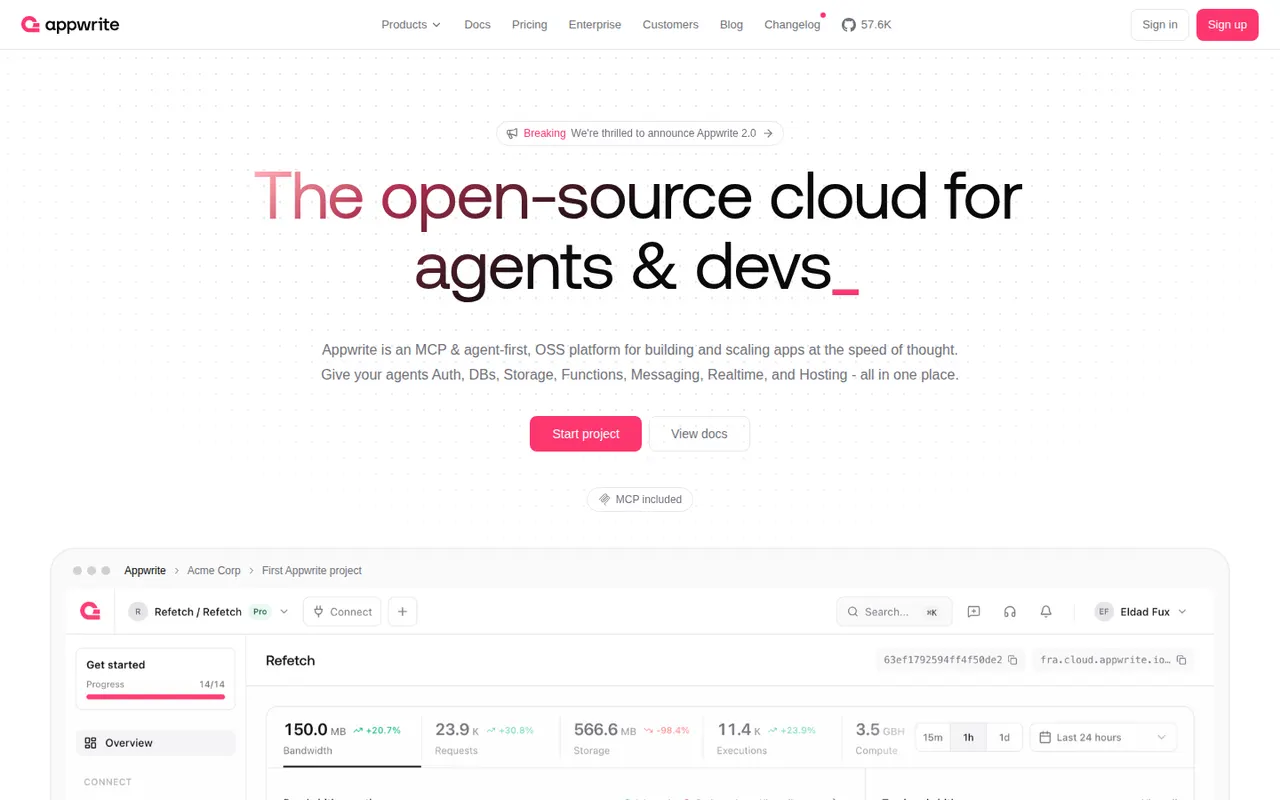
Cost / LicenseFreemiumProprietaryCategoriesPlatformsAppwrite is an open source backend server that bundles authentication, databases, file storage, serverless functions, messaging and realtime events behind one consistent API, with SDKs for web, mobile and Flutter. Since 2025 it also hosts websites and web apps through Appwrite Sites. It can be self-hosted with Docker or used through Appwrite Cloud, which has a free plan.
8 Appwrite alternativesPros
- Auth, database, storage, functions and messaging behind one API
- Open source and straightforward to self-host with Docker
- SDKs for web, mobile and Flutter apps
Cons
- Database queries are more limited than raw SQL
- Self-hosted upgrades between versions can require careful migrations
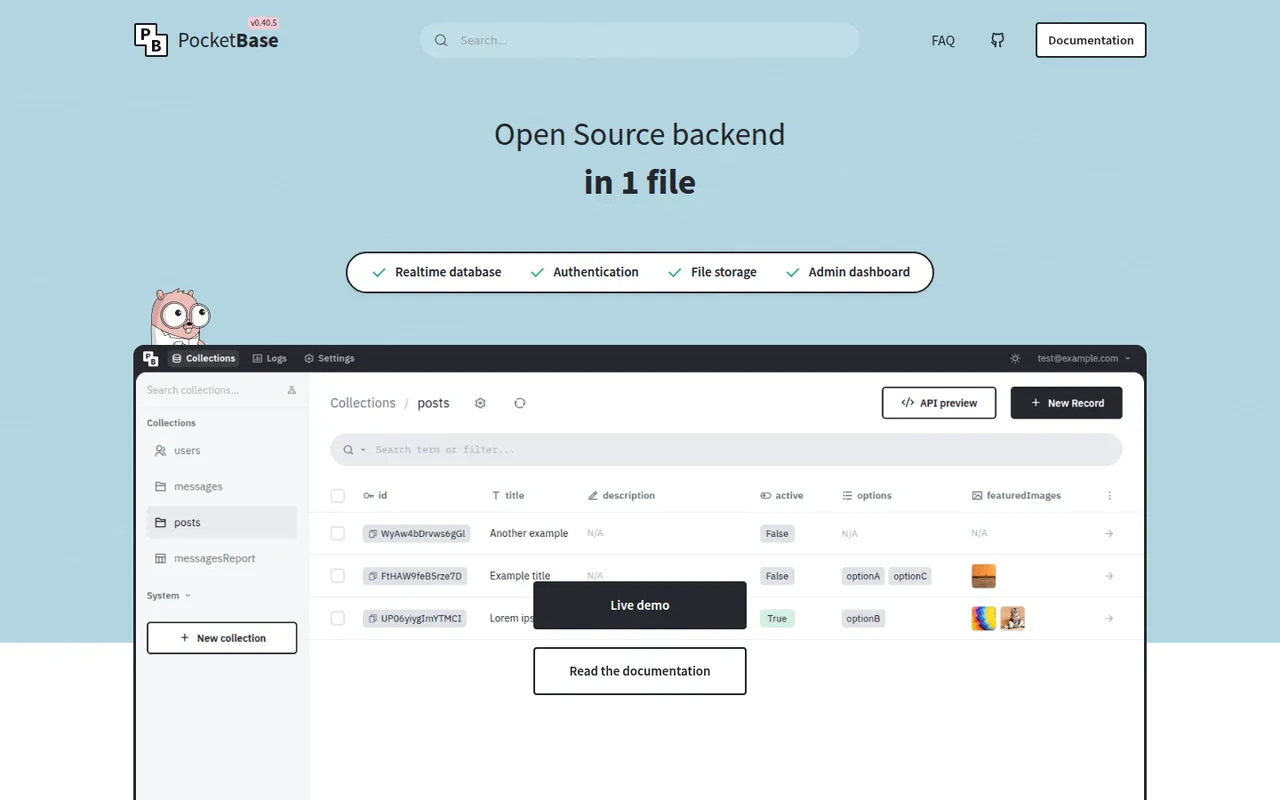
Cost / LicenseFreemiumOpen sourceCategoriesPlatformsPocketBase is an open source backend that ships as a single Go executable with an embedded SQLite database. It provides realtime subscriptions, user authentication including OAuth2, file storage and an admin dashboard, and can be extended in Go or JavaScript. It suits small projects and prototypes that need a backend running in minutes. It has not reached version 1.0, so breaking changes can still happen.
7 PocketBase alternativesPros
- The whole backend ships as one executable that runs in minutes
- Embedded SQLite with realtime, auth and an admin dashboard
- Can be extended in Go or JavaScript
Cons
- Not yet at version 1.0, so breaking changes can still happen
- Single-server SQLite design limits horizontal scaling
- No official managed hosting, so you run and back up the server yourself
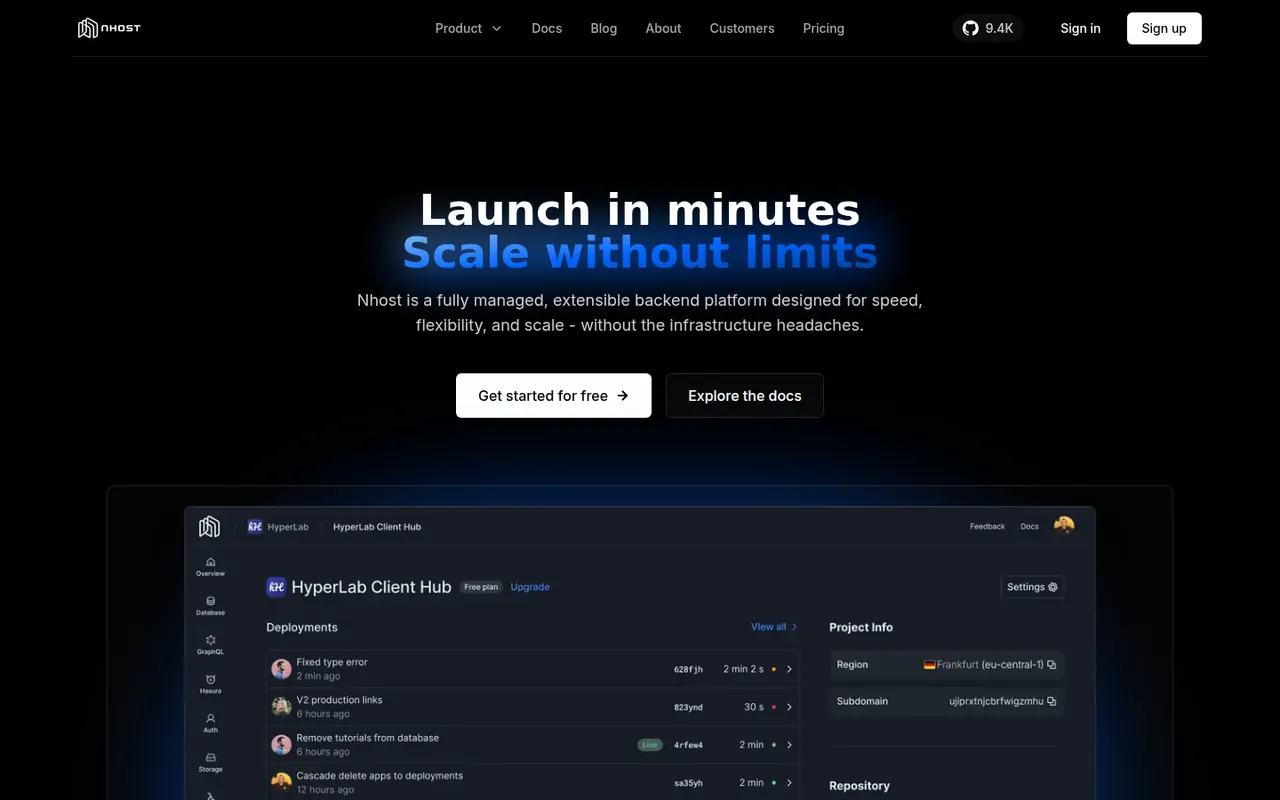
Cost / LicenseFreeOpen sourceCategoriesPlatformsNhost is an open source backend platform that combines a dedicated Postgres database, an instant GraphQL API powered by Hasura with realtime subscriptions, authentication, file storage and serverless functions. It also offers AI tooling such as vector embeddings. Projects run on Nhost Cloud, which has a free starter plan, or can be self-hosted, and a CLI supports local development.
8 Nhost alternativesPros
- Dedicated Postgres database for each project
- Instant GraphQL API with realtime subscriptions through Hasura
- Open source, with a CLI for local development and self-hosting
Cons
- GraphQL-first approach adds a learning curve for REST-oriented teams
- Smaller community and ecosystem than Supabase or Firebase
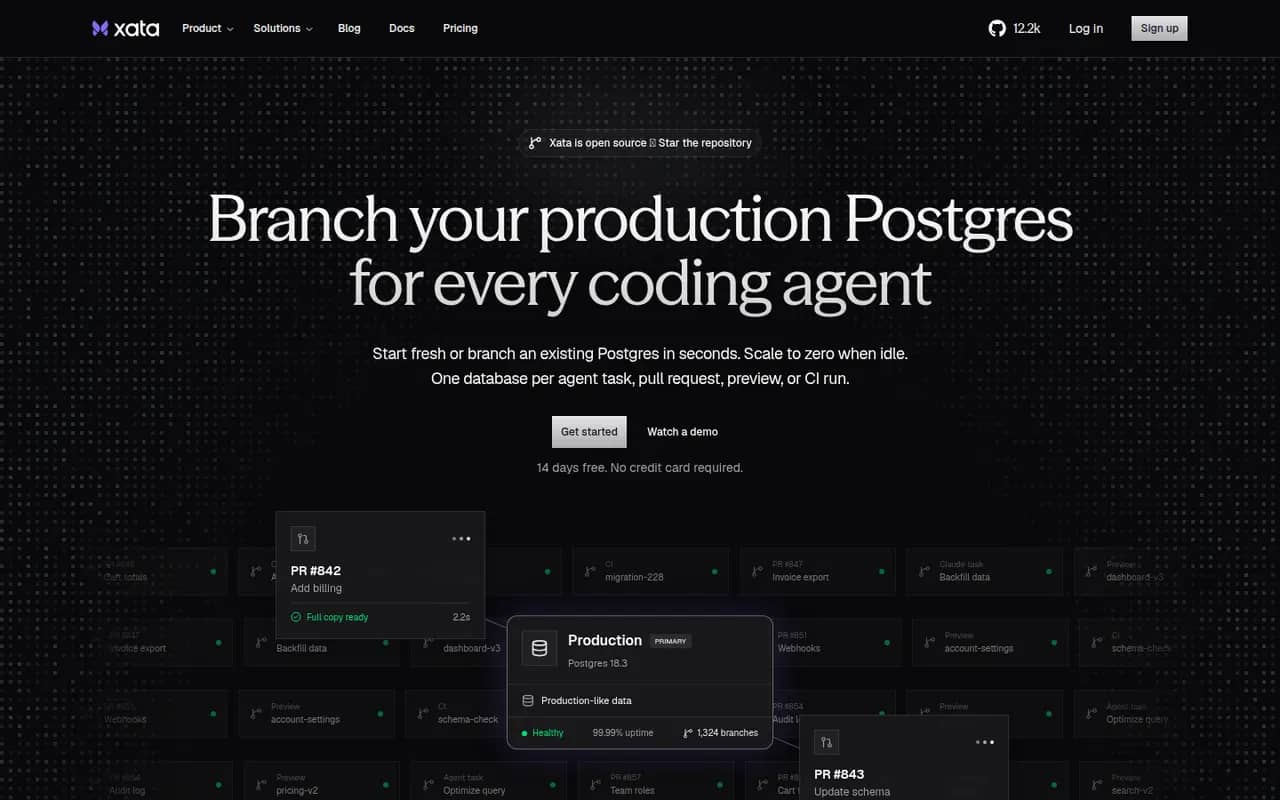
Cost / LicenseFreemiumOpen sourceCategoriesPlatformsXata is a Postgres platform built around copy-on-write branching, which lets teams create full copies of large databases in seconds for previews, testing and development. It adds scale-to-zero compute, data anonymization and zero-downtime schema migrations. The platform is open source under Apache-2.0 for self-hosting on Kubernetes, and is also available as the managed Xata Cloud with a free trial.
8 Xata alternativesPros
- Copy-on-write branches clone large databases in seconds
- Built-in data anonymization for safer test environments
- Zero-downtime schema migrations and scale-to-zero compute
Cons
- Self-hosting requires Kubernetes, which is heavy for small teams
- Focused on Postgres, without the auth or file storage of a full backend
- The cloud offers a free trial rather than a permanent free tier
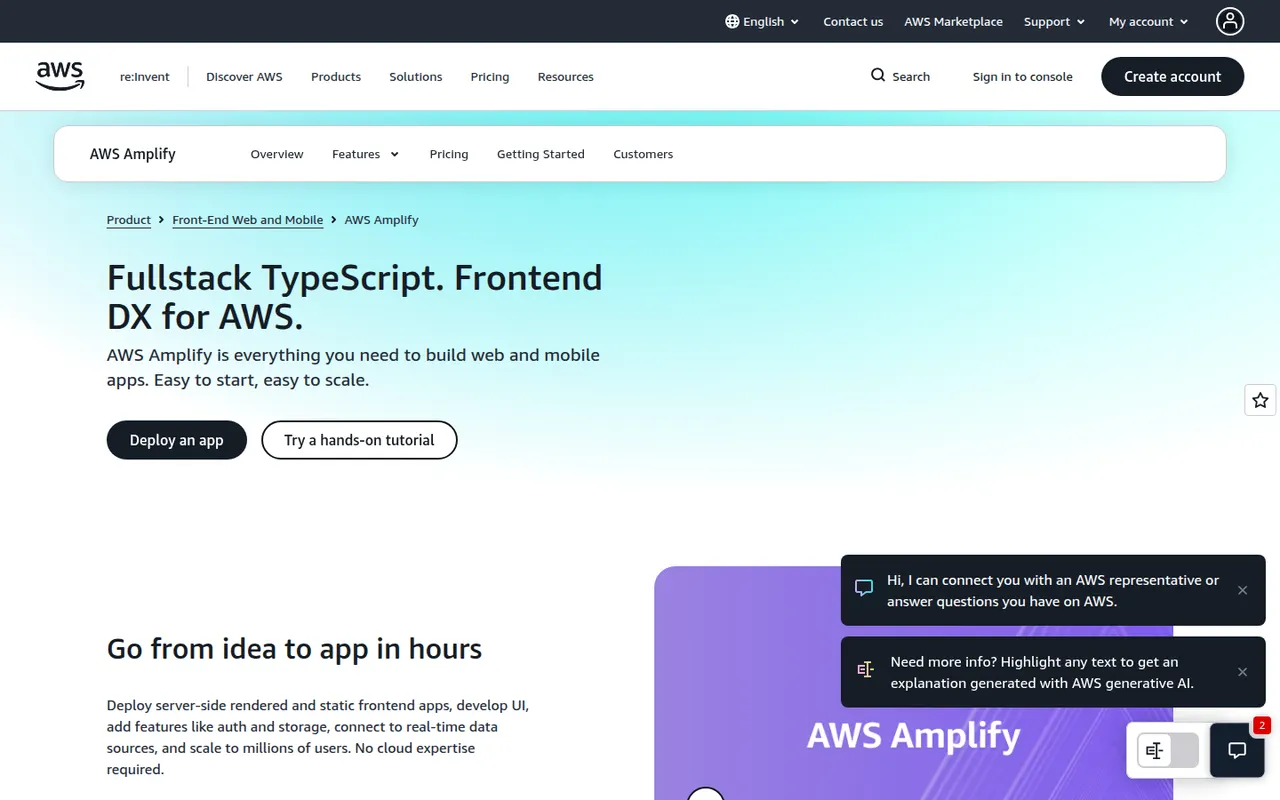
Cost / LicenseFreemiumOpen sourceCategoriesPlatformsAWS Amplify is a set of tools and services from Amazon Web Services for building full-stack web and mobile apps. Amplify Hosting deploys frontends from Git with pull request previews and custom domains, while the backend side sets up authentication, data, storage and functions on AWS services, defined in TypeScript code. Its open source client libraries cover JavaScript, React Native, Swift, Android and Flutter.
12 AWS Amplify alternativesPros
- Git-based hosting with pull request previews and custom domains
- Sets up auth, data, storage and functions on AWS from TypeScript code
- Client libraries for JavaScript, React Native, Swift, Android and Flutter
Cons
- Ties your backend closely to AWS services
- Debugging often means digging into the underlying AWS consoles
- Usage-based AWS billing can be hard to predict
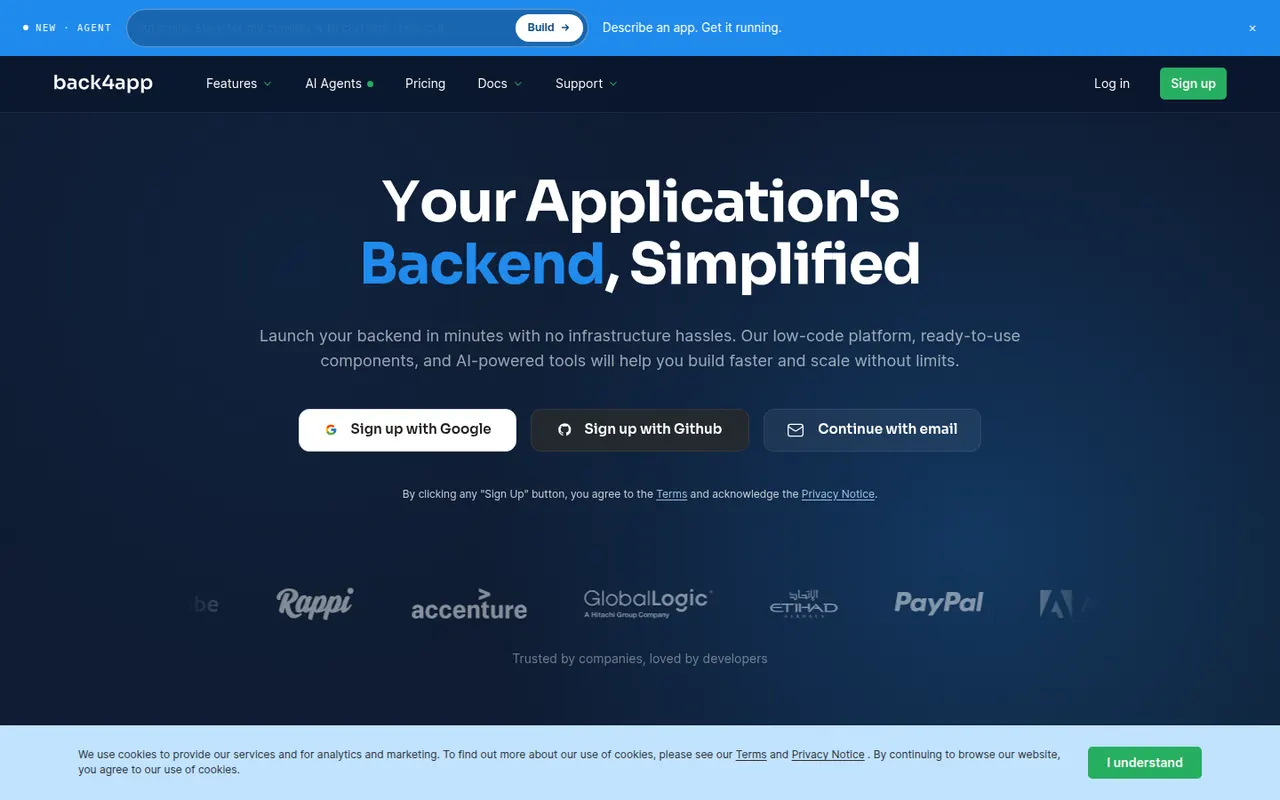
Cost / LicenseFreemiumProprietaryCategoriesPlatformsBack4app is a backend-as-a-service platform built on the open source Parse Server. It provides a database with auto-generated REST and GraphQL APIs, user authentication, file storage, Cloud Code functions and live queries, managed from a spreadsheet-like dashboard. The company also offers a container-based web deployment platform and an AI agent for building cloud backends. Free plans are available for prototyping.
8 Back4app alternativesPros
- Built on open source Parse Server, which limits lock-in
- Auto-generated REST and GraphQL APIs for your data
- Spreadsheet-like dashboard is approachable for beginners
Cons
- The Parse ecosystem is less active than newer backend platforms
- Free plans are meant for prototypes; production needs a paid plan
Cost / LicenseFreemiumProprietaryCategoriesPlatforms
















Convex vs its alternatives at a glance
Pricing, platforms and the key features of Convex, compared with its most popular alternatives.
| App | Pricing | Platforms | Built-in database | File storage | Realtime database | Serverless functions | User authentication |
|---|---|---|---|---|---|---|---|
 Convex Convex | FreemiumSource available | Web, Self-hosted | |||||
 Supabase Supabase | FreemiumOpen source | Web, Self-hosted | |||||
 Firebase Firebase | Freemium | Web | |||||
 Appwrite Appwrite | FreemiumOpen source | Web, Self-hosted | |||||
 PocketBase PocketBase | FreeOpen source | Self-hosted | |||||
 Nhost Nhost | FreemiumOpen source | Web, Self-hosted |
Convex alternatives: frequently asked questions
What is the best alternative to Convex?
The most popular alternative to Convex is Supabase: Open source Postgres development platform and Firebase alternative. Other great alternatives are Firebase, Appwrite, PocketBase, and Nhost.
Is there a free alternative to Convex?
Yes, 8 alternatives are free or have a free plan, including Supabase, Firebase, Appwrite, and PocketBase.
Is there an open source alternative to Convex?
Yes, 5 open source alternatives are listed, including Supabase, Appwrite, PocketBase, and Nhost.
Is Convex free?
Convex has a free plan, with paid plans that unlock more features.
Compare Convex with its alternatives


Sponsored listings and products made by the publisher of this site are always labeled. How we rank · Know a good alternative? Submit it