Apps with GraphQL support
5 apps
Top GraphQL support apps ranked by the community
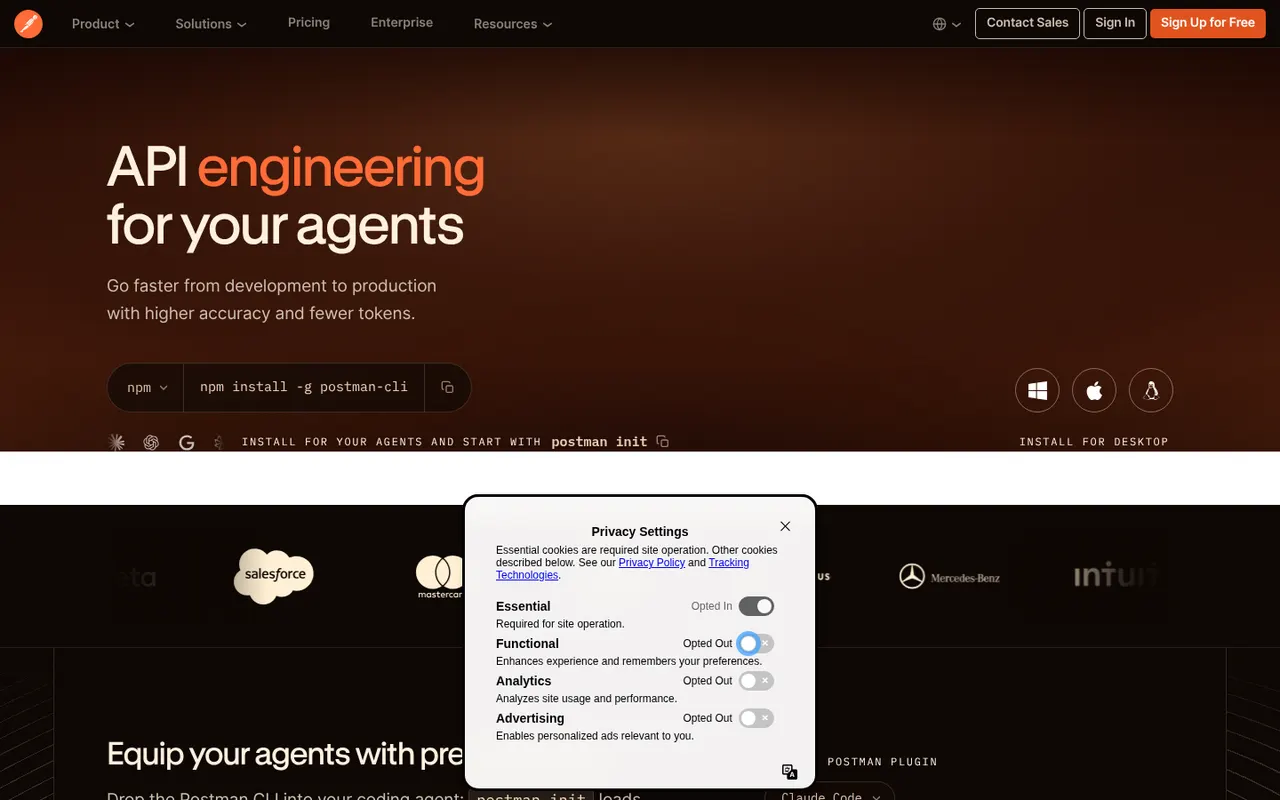
Postman is an API platform for sending HTTP, GraphQL, gRPC and WebSocket requests, organizing them in collections and automating tests. It also covers API design, documentation, mock servers, monitors and AI-assisted features, with shared workspaces for teams. Postman runs on the web and as a desktop app; the free plan is limited to a single user, and team collaboration requires a paid plan.
6 Postman alternativesPros
- Covers the API lifecycle from design and testing to docs and monitors
- Large public network of shared API collections to start from
- Collection runner and scripts automate test suites, including in CI
Cons
- Free plan is limited to one user; team collaboration requires a paid plan
- The app feels heavy and cluttered for sending a quick request
- Cloud-centric workflow is a concern for teams handling sensitive APIs
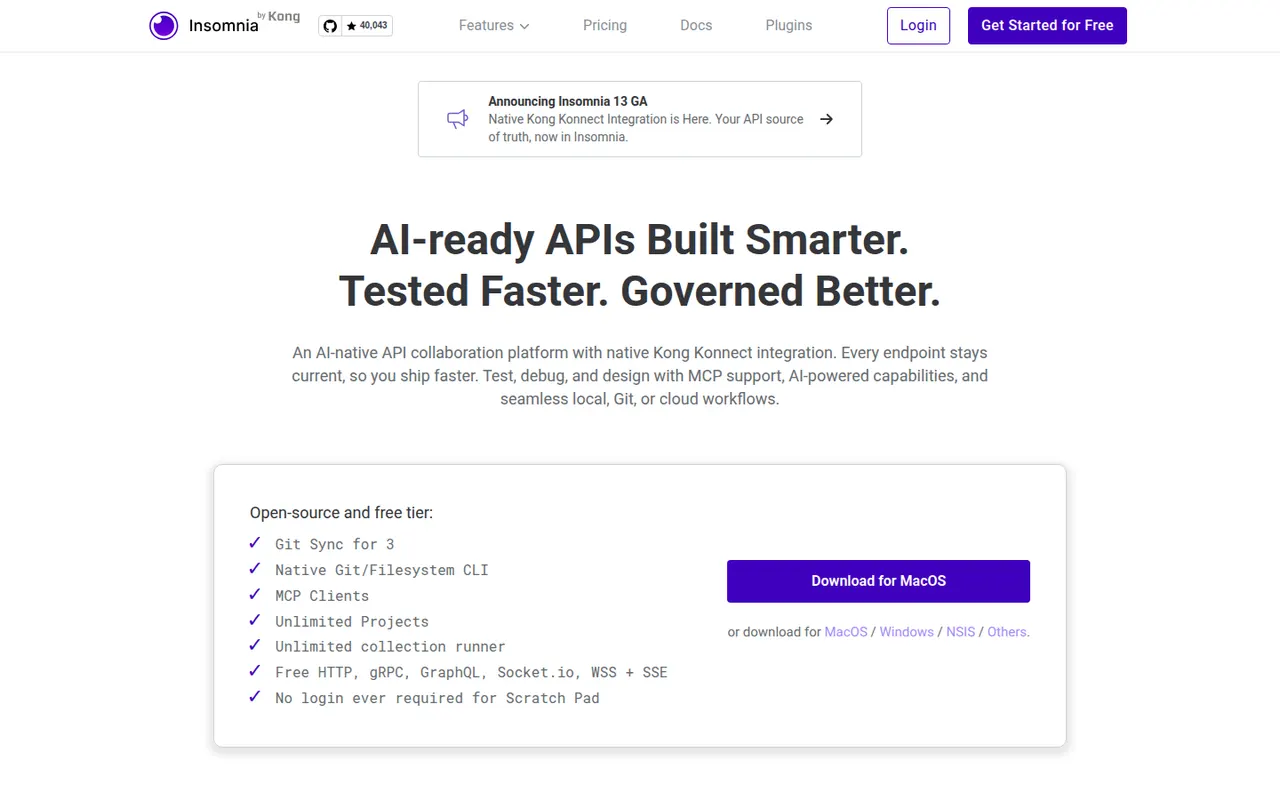
Cost / LicenseFreemiumProprietaryCategoriesInsomnia is an open source API client from Kong for designing and debugging REST, GraphQL, gRPC, WebSocket and server-sent event APIs. It supports collections, environments, scripting, test suites, mock servers, OpenAPI design and plugins. Projects can stay local, sync with Git or live in the cloud with end-to-end encryption, and paid plans add team collaboration and enterprise controls.
6 Insomnia alternativesPros
- REST, GraphQL, gRPC, WebSocket and SSE requests in one client
- Projects can stay local or sync through Git instead of the cloud
- Built-in mock servers, test suites and OpenAPI design
Cons
- Team collaboration and enterprise controls require a paid plan
- Storage options (local, Git, cloud) changed across versions and can be confusing
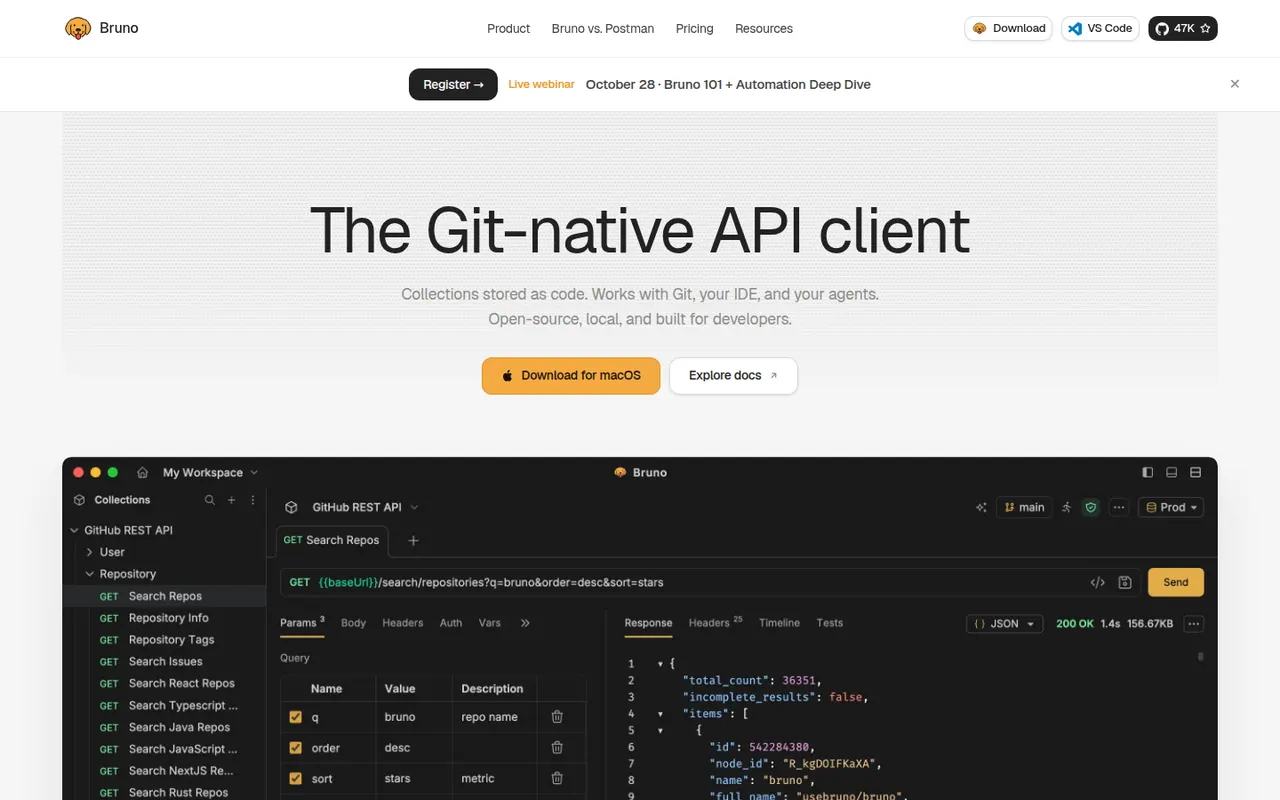
Cost / LicenseFreemiumOpen sourceCategoriesBruno is an open source API client that keeps collections as plain-text files on your disk rather than in a vendor cloud. Requests live next to your code and can be versioned and reviewed with Git like any other file. It handles REST and GraphQL requests, environments, scripting and assertions, and works fully offline without an account. Paid editions add advanced Git tools, AI assistance and enterprise features.
6 Bruno alternativesPros
- Collections stored as plain-text files you can version with Git
- Works fully offline, with no account required
- Open source, with REST, GraphQL, scripting and assertions
Cons
- No built-in cloud sync: teams share collections through Git
- Advanced Git tools and AI features need a paid edition
- Smaller ecosystem than long-established API clients
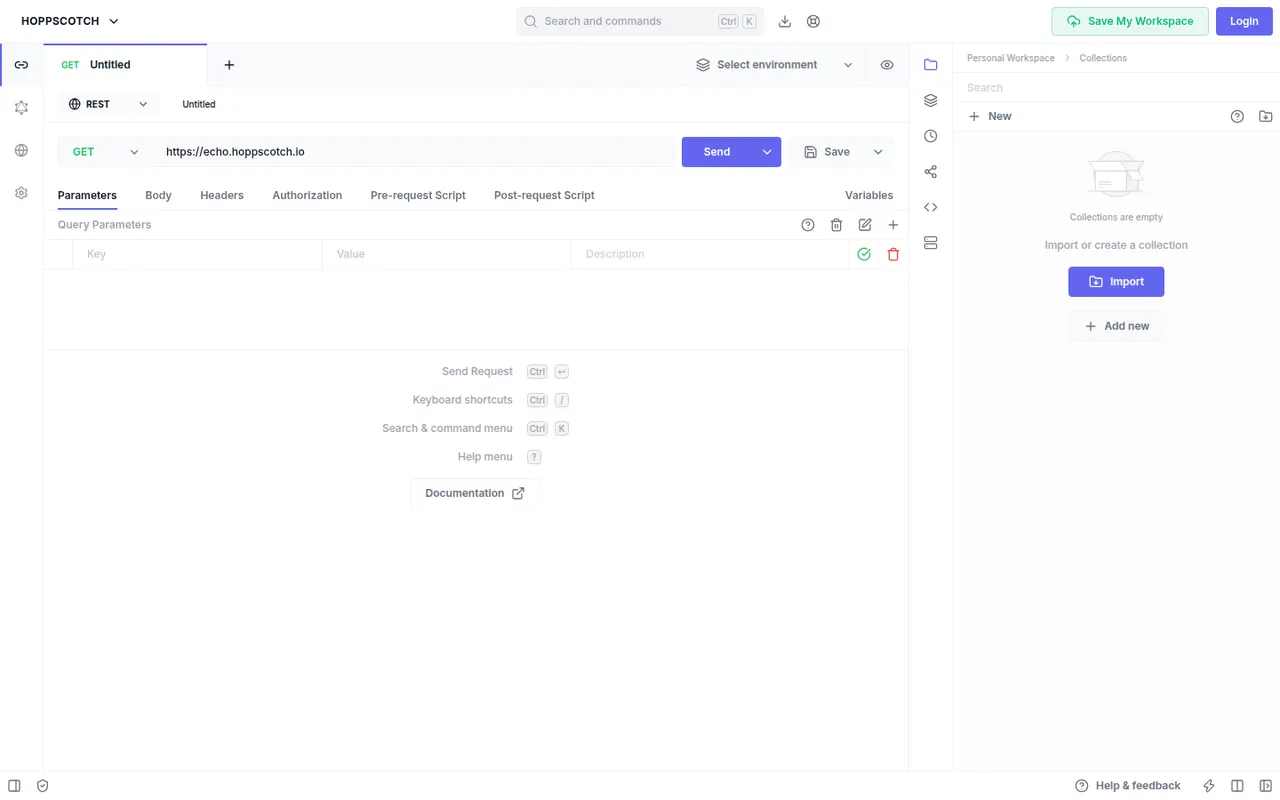
Cost / LicenseFreemiumOpen sourceCategoriesHoppscotch is an open source API client that runs in the browser, as a desktop app or on your own server. It tests REST, GraphQL, WebSocket, Socket.IO, MQTT and server-sent events with collections, environments, pre-request scripts and tests. Teams can share workspaces, and organizations can self-host the whole platform with Docker. A browser extension helps send requests that CORS would otherwise block.
6 Hoppscotch alternativesPros
- Runs in the browser with nothing to install
- Supports REST, GraphQL, WebSocket, Socket.IO, MQTT and SSE
- The whole platform can be self-hosted with Docker
Cons
- In the browser, CORS limits require an extension or proxy
- Some team and enterprise features are paid
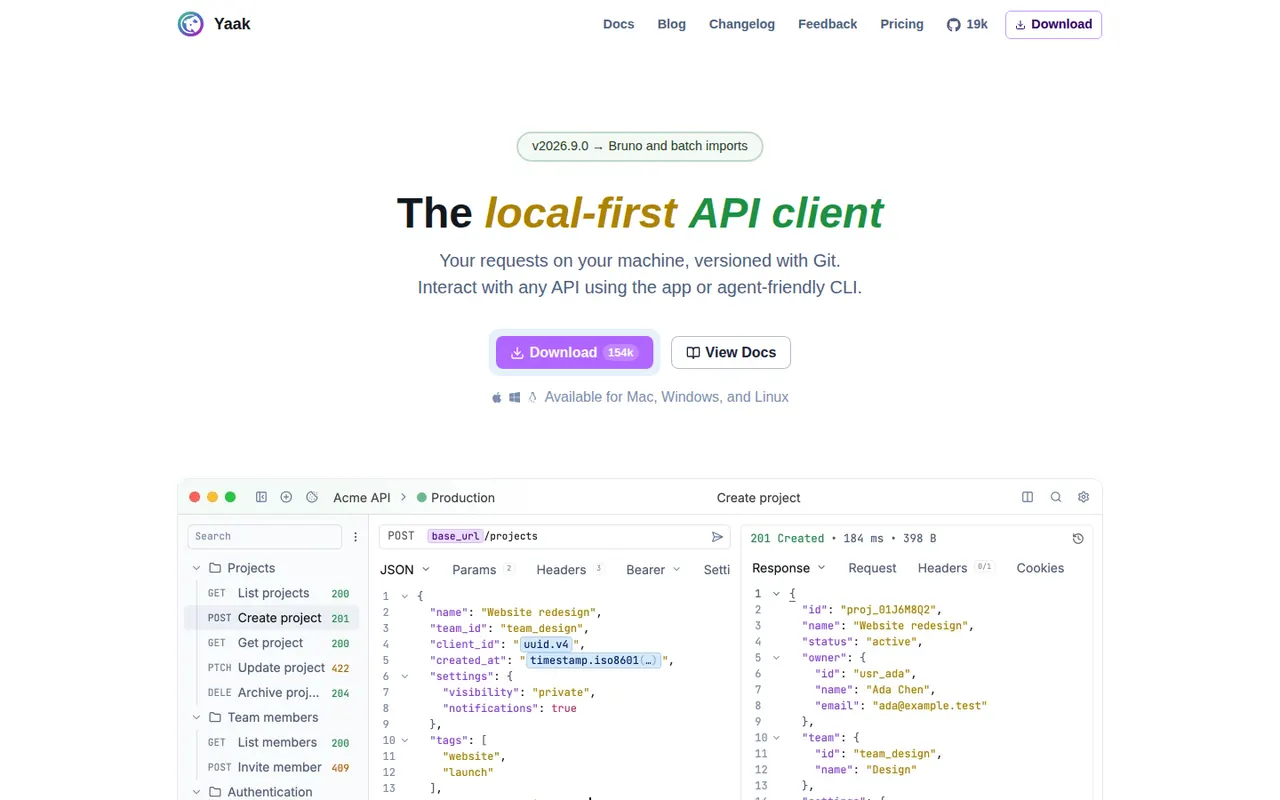
Cost / LicenseFreemiumOpen sourceCategoriesYaak is a desktop API client created by Gregory Schier, the original author of Insomnia. It handles REST, GraphQL, gRPC, WebSocket and server-sent event requests, stores them as files that work with Git, and supports plugins for auth, importers and template functions. No account is required and secrets can be encrypted. Yaak is open source under MIT and free for personal use, with a paid license for use at work.
6 Yaak alternativesPros
- Requests are stored as plain files that work well with Git
- No account needed, with optional encryption for secrets
- Fast, clean desktop app from the original author of Insomnia
Cons
- Use at work requires a paid license
- Younger project with a smaller plugin ecosystem than Postman
- Desktop only, with team sharing handled through Git rather than a cloud workspace
Cost / LicenseFreemiumOpen sourceCategories