Apps with API access
99 apps
Top API access apps ranked by the community
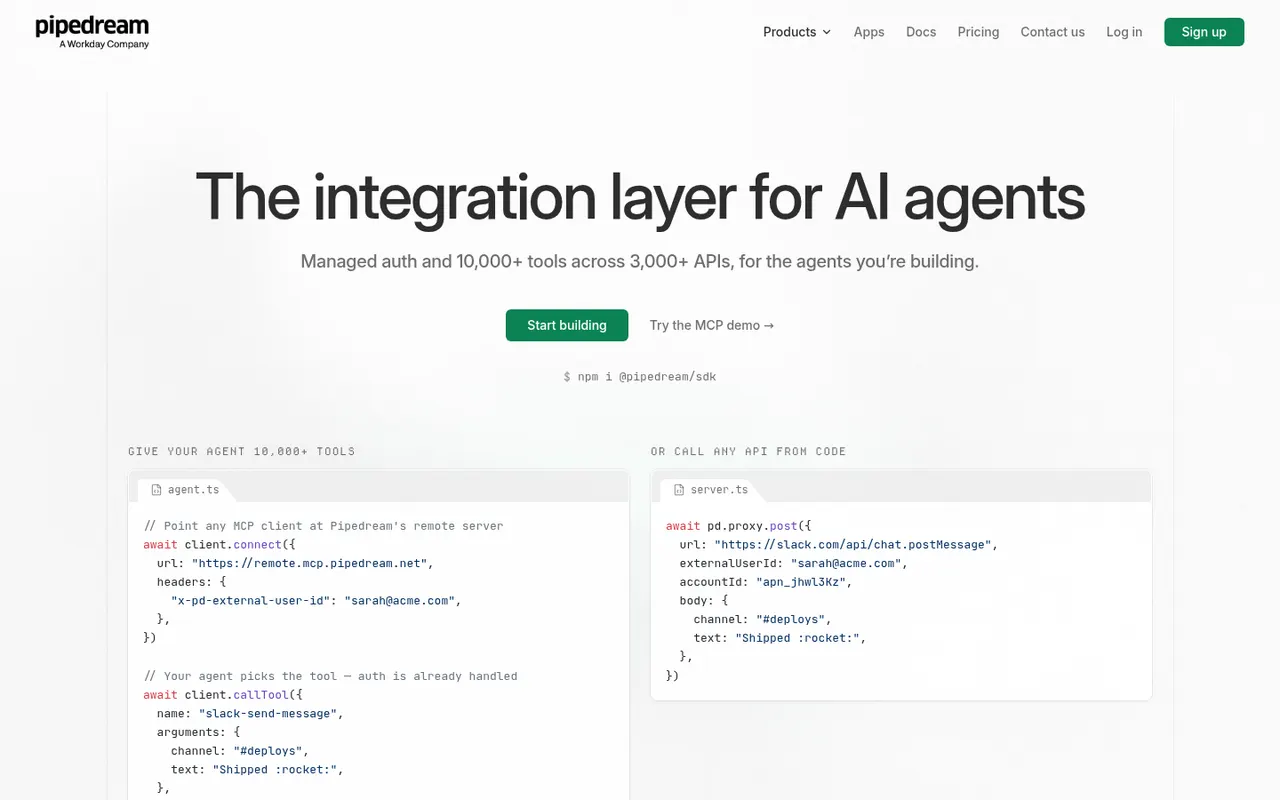
Pipedream is an integration platform for developers that runs event-driven workflows mixing prebuilt actions for thousands of apps with custom Node.js, Python, Go or Bash code. It also provides managed authentication and MCP servers so AI agents can call third-party APIs, and Workday announced its acquisition of the company in late 2025. A free tier with limited credits sits alongside paid plans.
8 Pipedream alternativesPros
- Mixes prebuilt actions with Node.js, Python, Go or Bash code
- Managed authentication for thousands of APIs
- MCP servers let AI agents call third-party apps
Cons
- Aimed at developers, less approachable for non-technical teams
- Free tier credits run out quickly on busy workflows
- The Workday acquisition adds uncertainty about the product’s direction
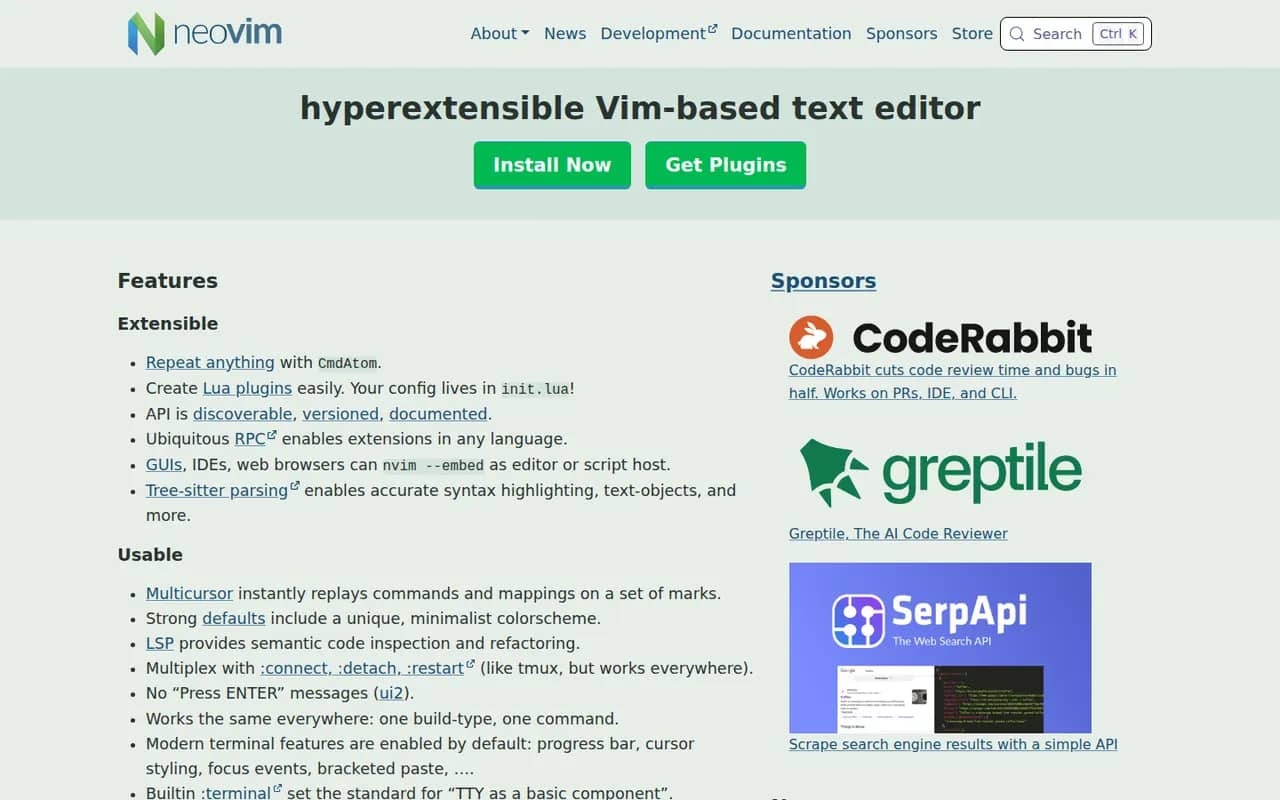
Cost / LicenseFreemiumProprietaryCategoriesPlatformsNeovim is a community-driven fork of Vim that keeps modal editing while modernizing the codebase. It adds first-class Lua scripting, a built-in Language Server Protocol client, Tree-sitter syntax highlighting, an embedded terminal and an RPC API that lets other programs use it as an editing engine. It is free and open source, and popular with developers who build a customized, keyboard-driven setup.
12 Neovim alternativesPros
- Lua scripting makes configuration and plugins easier to write
- Built-in LSP client and Tree-sitter highlighting
- Fast, keyboard-driven editing that runs anywhere in a terminal
Cons
- Modal editing has a steep learning curve
- Turning it into a full IDE takes time and ongoing plugin maintenance
Cost / LicenseFreeOpen sourceCategoriesFly.io runs applications packaged as Docker images in fast-booting Firecracker micro-VMs across regions worldwide, so code can run close to users. It is driven by the flyctl command-line tool and a Machines API, with persistent volumes, private networking and managed Postgres. It suits teams that want more control over placement and infrastructure than a classic platform as a service, with pay-as-you-go pricing.
9 Fly.io alternativesPros
- Runs apps close to users across many regions worldwide
- Fast-booting Firecracker micro-VMs built from standard Docker images
- Fine-grained control through flyctl and the Machines API
Cons
- No free tier, and usage-based pricing can be hard to predict
- More infrastructure concepts to learn than a classic platform as a service
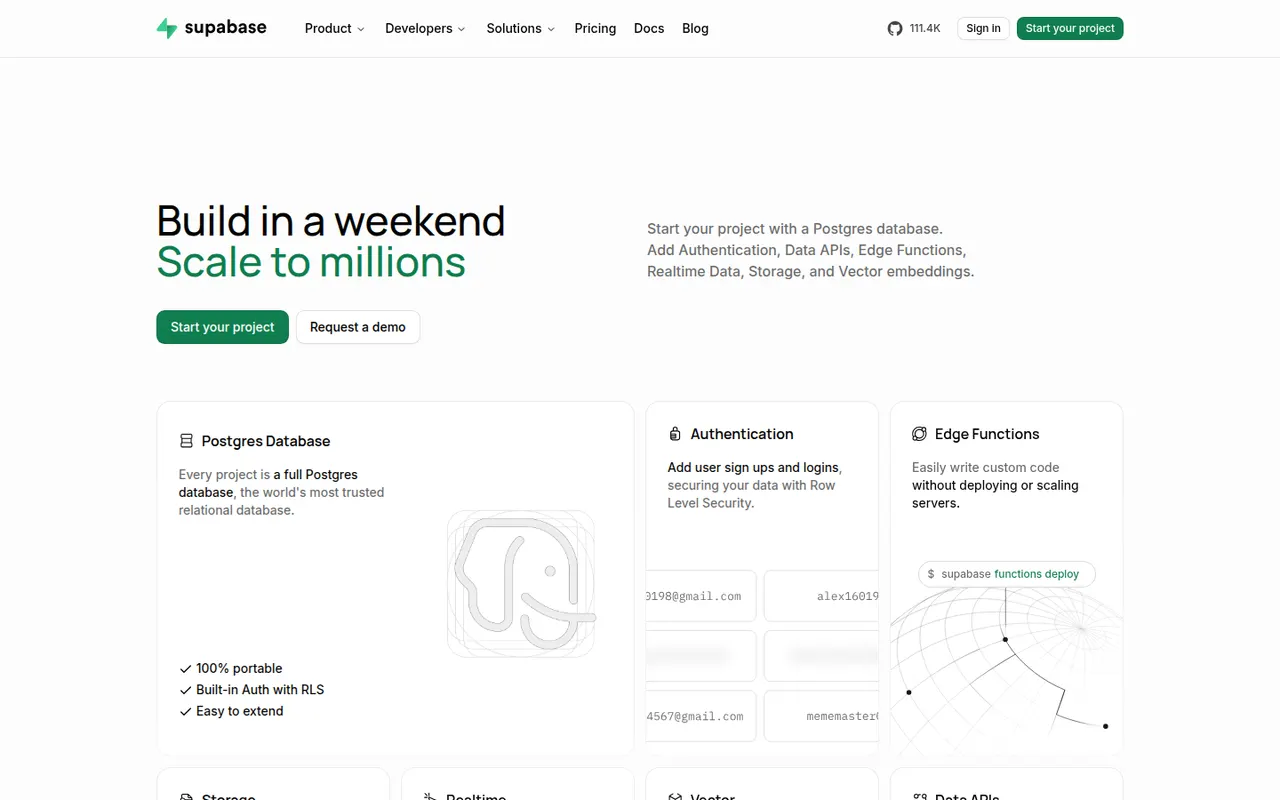
Cost / LicensePaidProprietaryCategoriesPlatformsSupabase is an open source backend platform built on Postgres. Each project gets a full Postgres database with auto-generated REST and GraphQL APIs, authentication, file storage, realtime subscriptions, edge functions and vector support for AI applications. It can be used as a hosted service with a free tier or self-hosted with Docker, and appeals to developers who want SQL rather than a NoSQL backend.
8 Supabase alternativesPros
- Full Postgres database with SQL, extensions and row-level security
- Auto-generated APIs, auth, storage and realtime in one platform
- Open source and self-hostable with Docker
Cons
- Free-tier projects are paused after a period of inactivity
- Self-hosting is more involved to set up than the managed service
- Row-level security policies take time to get right
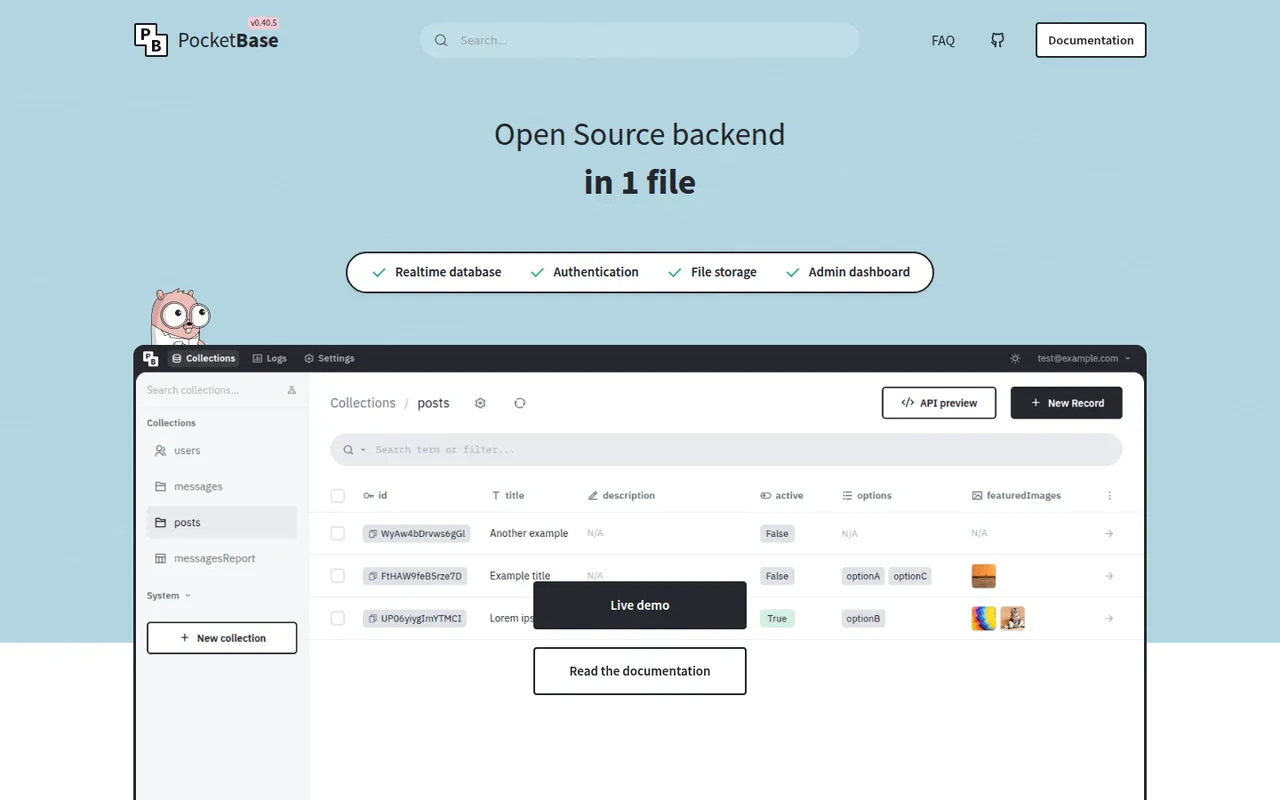
Cost / LicenseFreemiumOpen sourceCategoriesPlatformsPocketBase is an open source backend that ships as a single Go executable with an embedded SQLite database. It provides realtime subscriptions, user authentication including OAuth2, file storage and an admin dashboard, and can be extended in Go or JavaScript. It suits small projects and prototypes that need a backend running in minutes. It has not reached version 1.0, so breaking changes can still happen.
7 PocketBase alternativesPros
- The whole backend ships as one executable that runs in minutes
- Embedded SQLite with realtime, auth and an admin dashboard
- Can be extended in Go or JavaScript
Cons
- Not yet at version 1.0, so breaking changes can still happen
- Single-server SQLite design limits horizontal scaling
- No official managed hosting, so you run and back up the server yourself
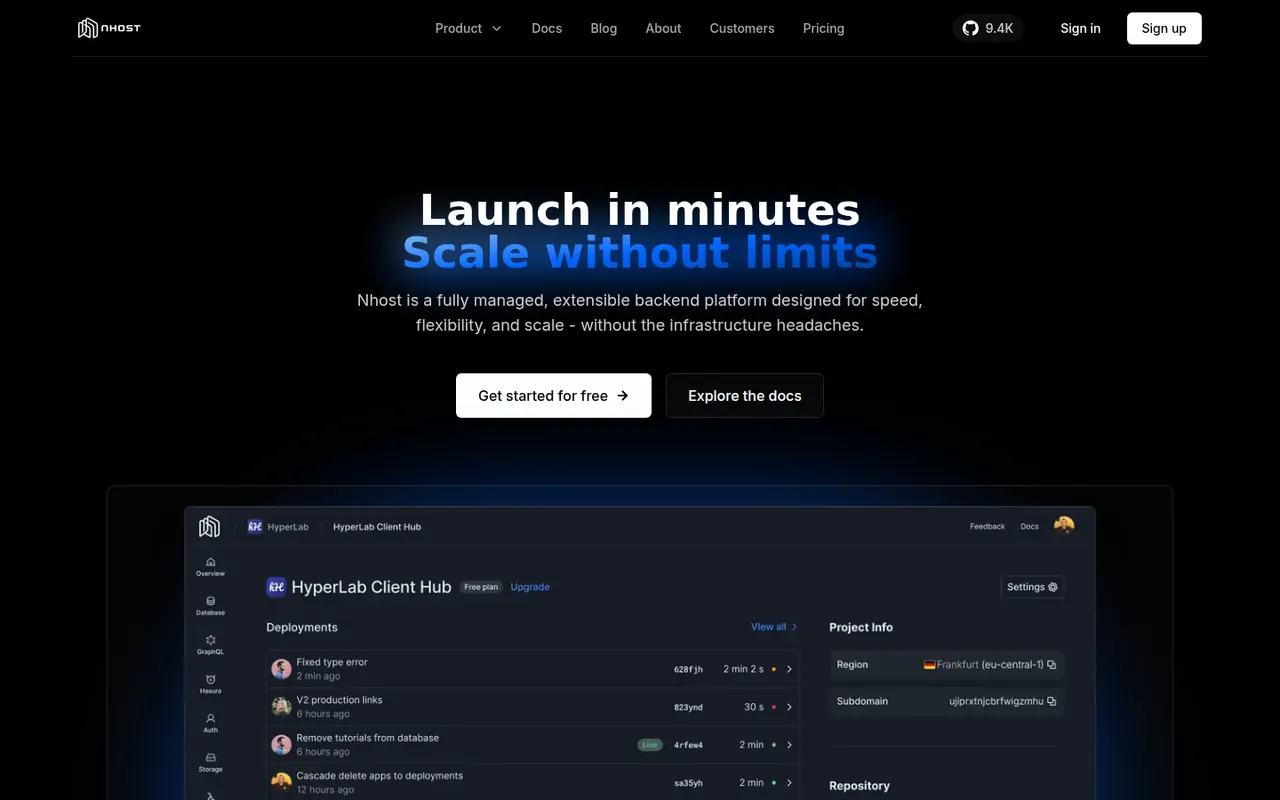
Cost / LicenseFreeOpen sourceCategoriesPlatformsNhost is an open source backend platform that combines a dedicated Postgres database, an instant GraphQL API powered by Hasura with realtime subscriptions, authentication, file storage and serverless functions. It also offers AI tooling such as vector embeddings. Projects run on Nhost Cloud, which has a free starter plan, or can be self-hosted, and a CLI supports local development.
8 Nhost alternativesPros
- Dedicated Postgres database for each project
- Instant GraphQL API with realtime subscriptions through Hasura
- Open source, with a CLI for local development and self-hosting
Cons
- GraphQL-first approach adds a learning curve for REST-oriented teams
- Smaller community and ecosystem than Supabase or Firebase
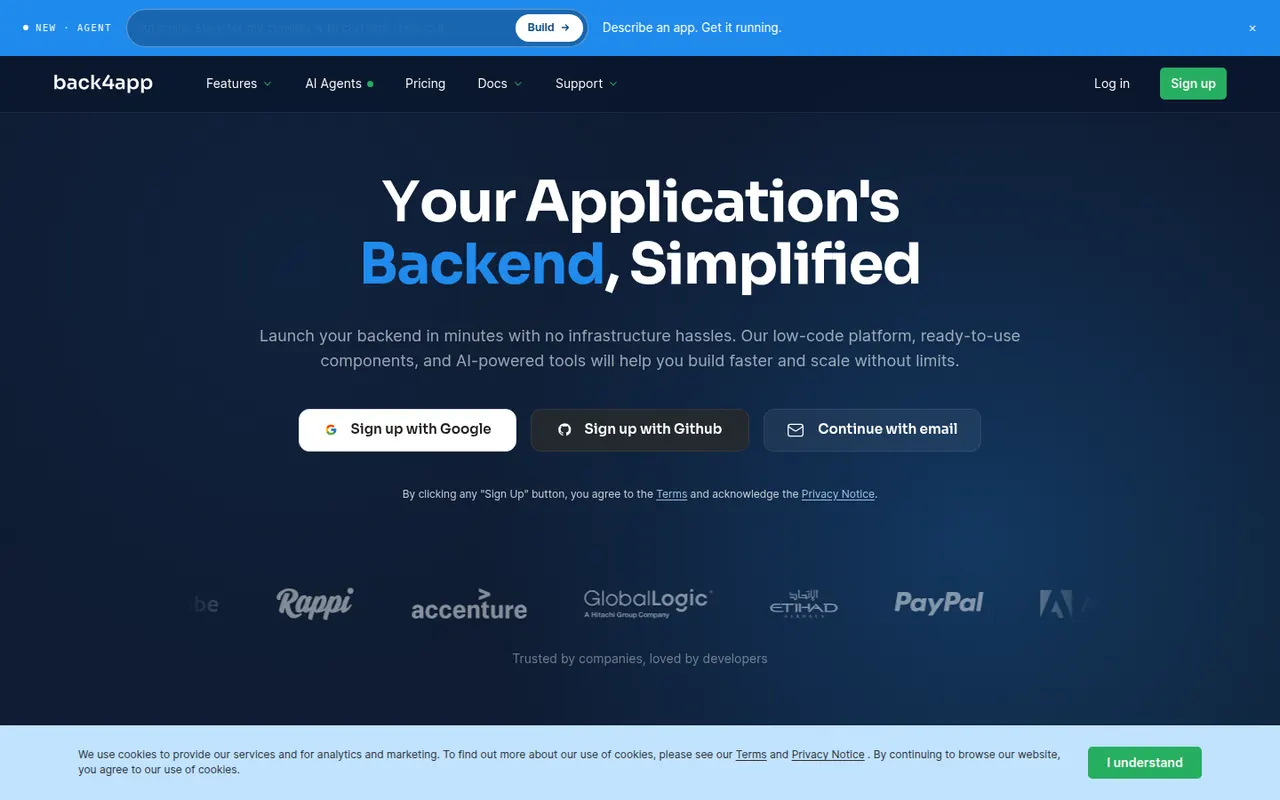
Cost / LicenseFreemiumOpen sourceCategoriesPlatformsBack4app is a backend-as-a-service platform built on the open source Parse Server. It provides a database with auto-generated REST and GraphQL APIs, user authentication, file storage, Cloud Code functions and live queries, managed from a spreadsheet-like dashboard. The company also offers a container-based web deployment platform and an AI agent for building cloud backends. Free plans are available for prototyping.
8 Back4app alternativesPros
- Built on open source Parse Server, which limits lock-in
- Auto-generated REST and GraphQL APIs for your data
- Spreadsheet-like dashboard is approachable for beginners
Cons
- The Parse ecosystem is less active than newer backend platforms
- Free plans are meant for prototypes; production needs a paid plan
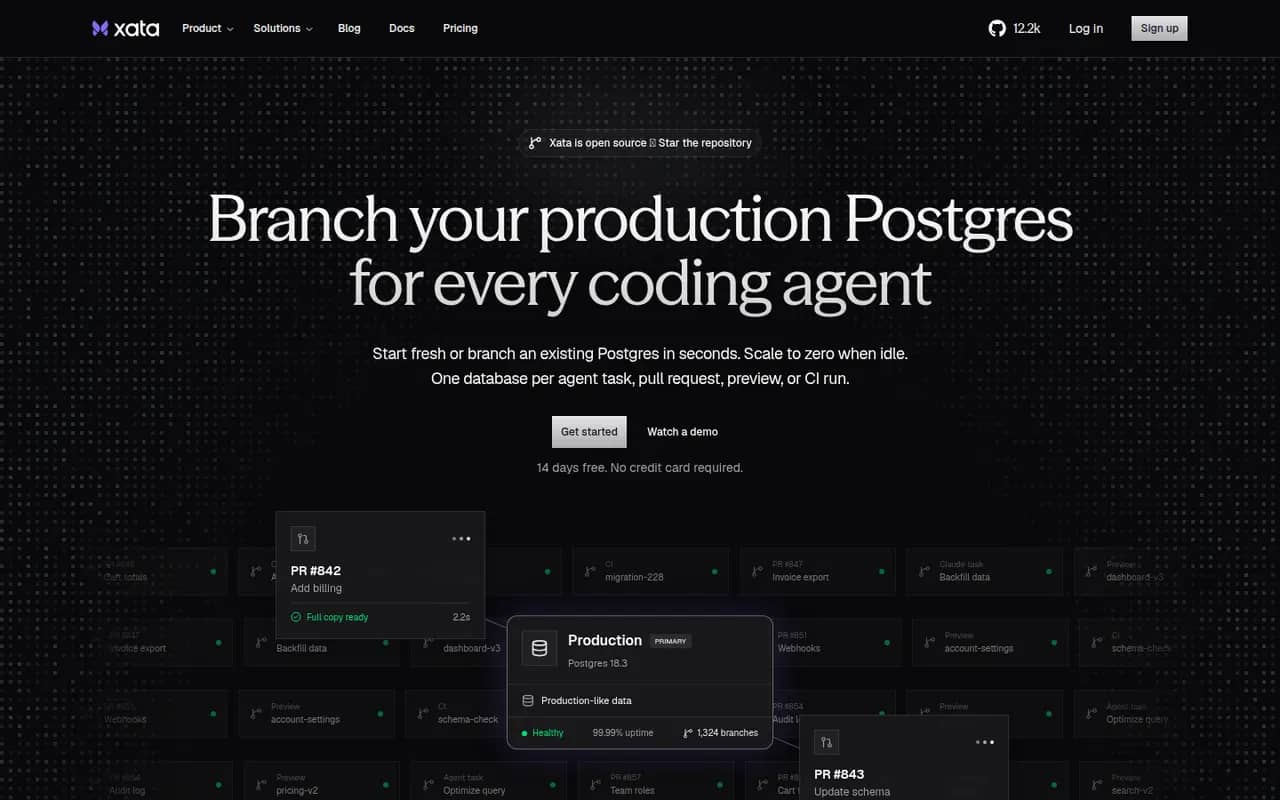
Cost / LicenseFreemiumProprietaryCategoriesPlatformsXata is a Postgres platform built around copy-on-write branching, which lets teams create full copies of large databases in seconds for previews, testing and development. It adds scale-to-zero compute, data anonymization and zero-downtime schema migrations. The platform is open source under Apache-2.0 for self-hosting on Kubernetes, and is also available as the managed Xata Cloud with a free trial.
8 Xata alternativesPros
- Copy-on-write branches clone large databases in seconds
- Built-in data anonymization for safer test environments
- Zero-downtime schema migrations and scale-to-zero compute
Cons
- Self-hosting requires Kubernetes, which is heavy for small teams
- Focused on Postgres, without the auth or file storage of a full backend
- The cloud offers a free trial rather than a permanent free tier
Cost / LicenseFreemiumOpen sourceCategoriesPlatformsmpv is a free, open source media player for the command line with a minimal on-screen controller. Built on FFmpeg and descended from MPlayer, it plays a wide range of formats, renders high-quality video with GPU shaders and hardware decoding, and is configured through text files and key bindings. Lua and JavaScript scripts extend it, and the libmpv library powers front ends such as IINA.
9 mpv alternativesPros
- Excellent video quality with GPU shaders and hardware decoding
- Highly scriptable with Lua and JavaScript
- libmpv powers other front ends such as IINA
Cons
- Minimal interface with no menus or playlist manager by default
- Configuration lives in text files, which deters casual users
Cost / LicenseFreeOpen sourceCategories