Apps with Headless commerce
3 apps
Top Headless commerce apps ranked by the community
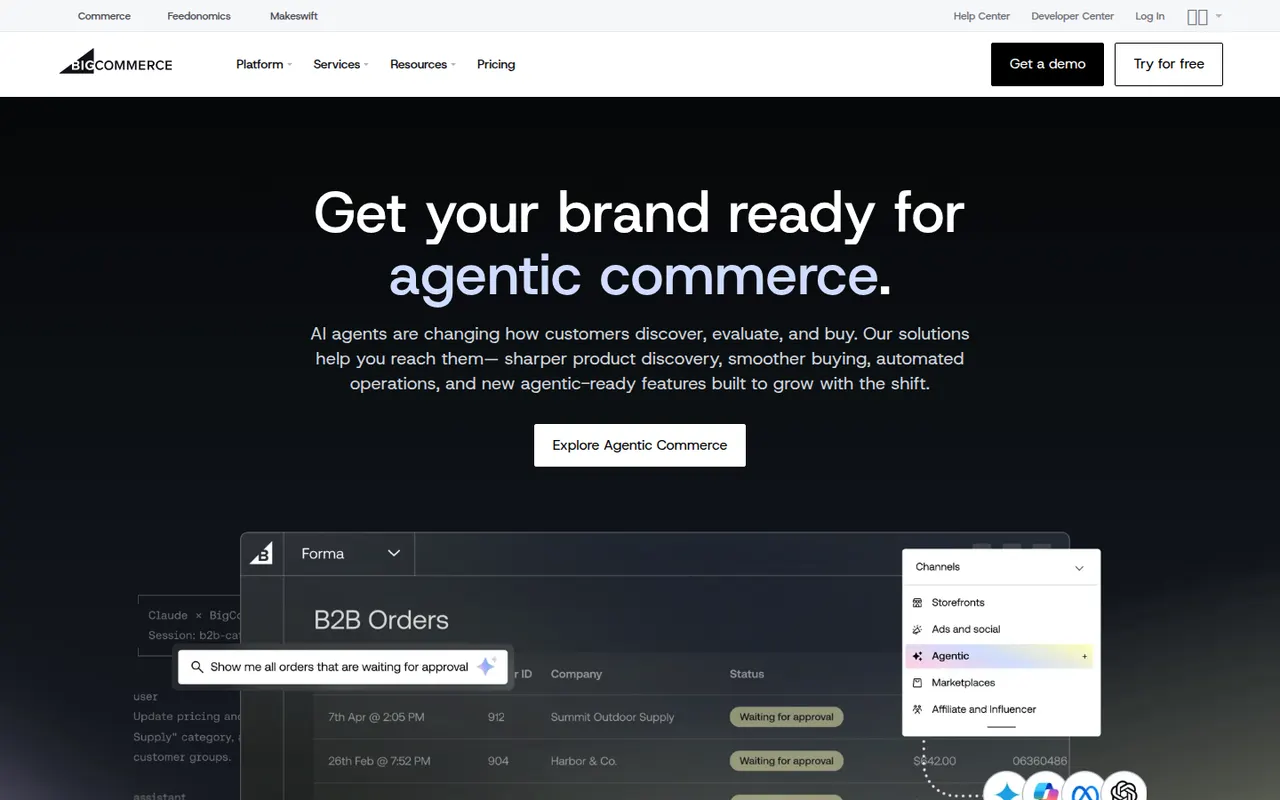
BigCommerce is a hosted e-commerce platform that targets mid-sized and enterprise merchants, including B2B sellers. It includes multi-storefront management, built-in B2B features, multi-currency selling and open APIs, and can serve as a headless back end behind a custom front end. Merchants pick it when they want SaaS convenience with more flexibility around integrations.
8 BigCommerce alternativesPros
- Strong built-in B2B features and multi-storefront management
- Open APIs and headless support for custom front ends
- Hosted platform with multi-currency selling out of the box
Cons
- Plan upgrades are required once annual sales pass set thresholds
- Smaller app and theme ecosystem than Shopify
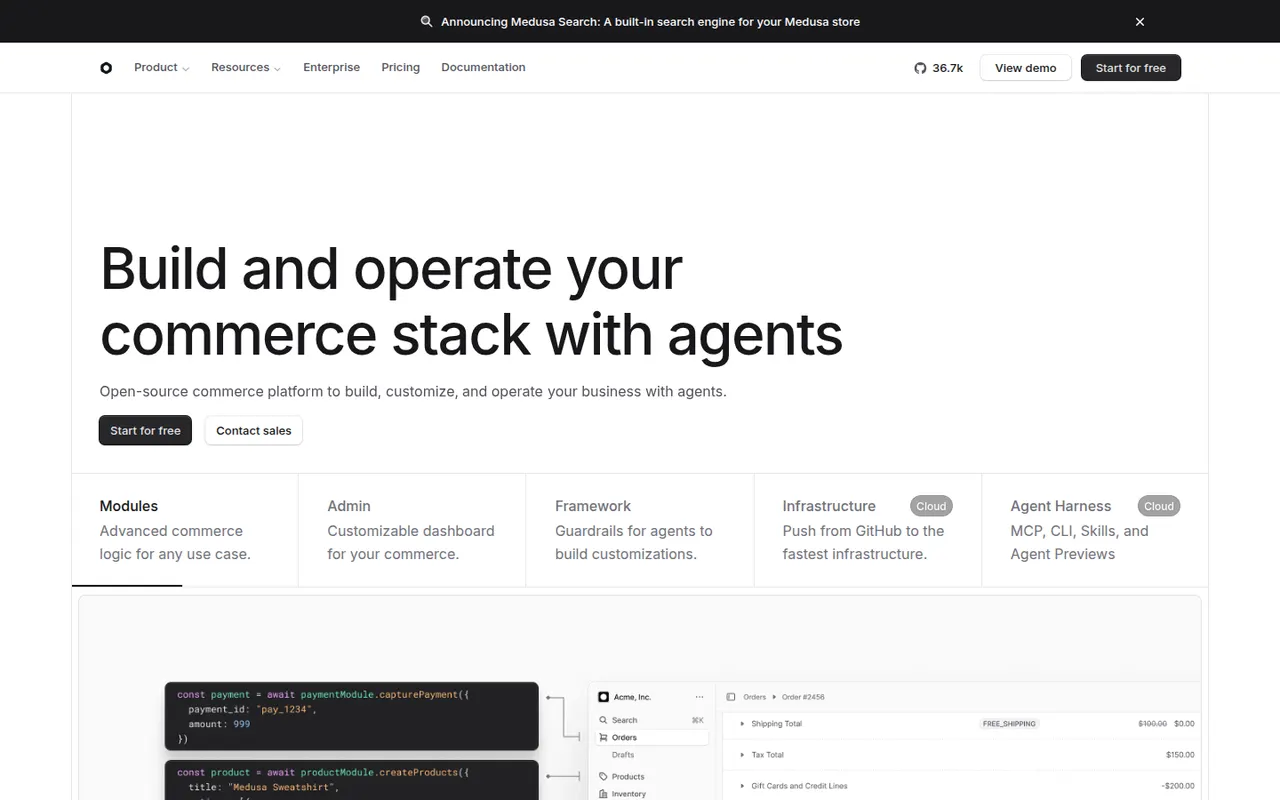
Cost / LicenseFree trialProprietaryCategoriesPlatformsMedusa is an open source commerce platform for developers who want to build a custom store or marketplace rather than adapt a hosted product. It provides modular back-end building blocks for products, carts, orders, payments and fulfillment, an admin dashboard and APIs that any front end can consume. It can be self-hosted for free or deployed on the managed Medusa Cloud.
6 Medusa alternativesPros
- Modular back end for building custom stores and marketplaces
- Open source and free to self-host, with a managed cloud option
- Admin dashboard and APIs work with any front-end framework
Cons
- Needs developers, so it is not a ready-made store for non-technical merchants
- Smaller plugin ecosystem than Shopify or WooCommerce
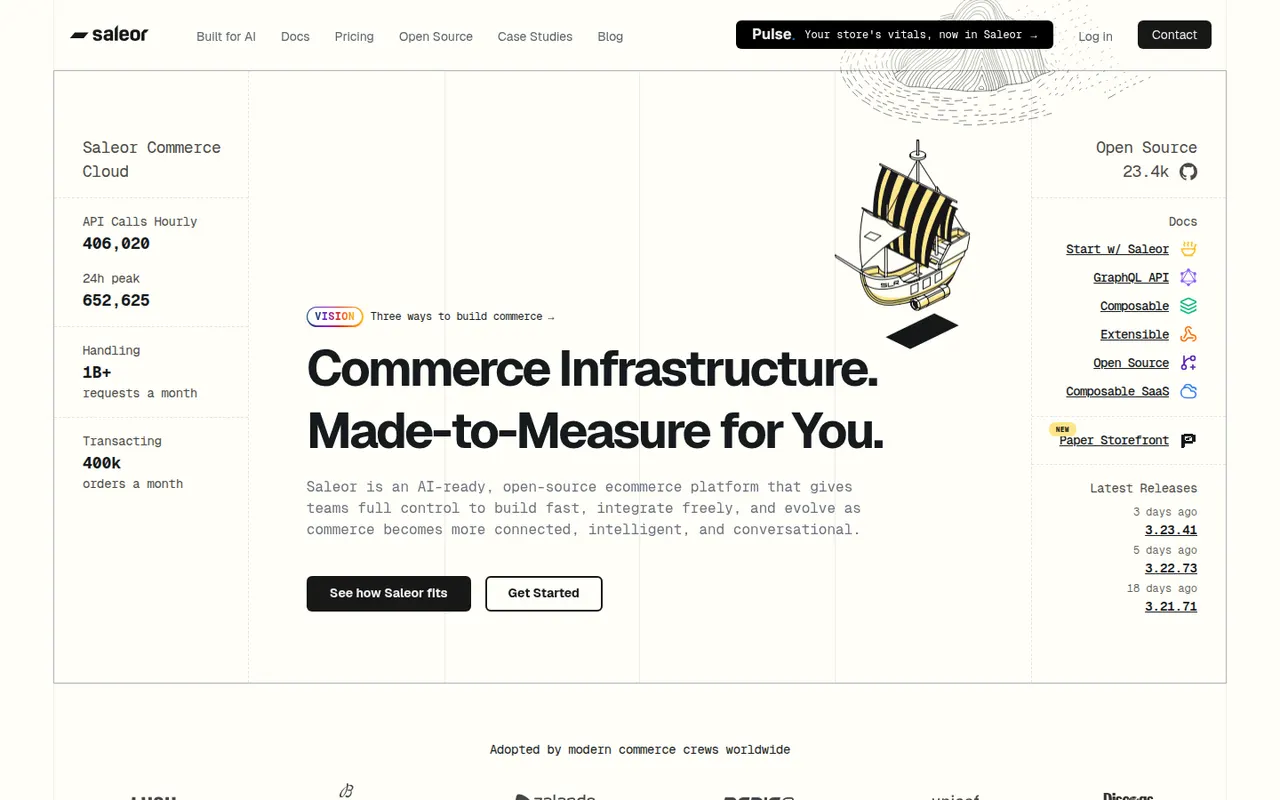
Cost / LicenseFreemiumOpen sourceCategoriesPlatformsSaleor is an open source, API-only commerce platform built with Python and Django, with everything exposed through a GraphQL API. It handles multi-channel catalogs, several currencies and warehouses, and extends through webhooks and apps, while the storefront is built separately with any framework. Teams can self-host it or use the managed Saleor Cloud.
6 Saleor alternativesPros
- GraphQL-first API built for headless storefronts
- Handles multiple channels, currencies and warehouses natively
- Open source Python stack, self-hosted or on Saleor Cloud
Cons
- The storefront must be built separately by developers
- Smaller ecosystem and community than mainstream platforms
Cost / LicenseFreemiumOpen sourceCategoriesPlatforms