Apps with SEO settings
10 apps
Top SEO settings apps ranked by the community
Wix is a hosted website builder that lets you design pages by placing elements freely on a canvas or by starting from a template. Hosting, domains, an online store, bookings and blogging are built in, and an AI tool can draft a first version of a site from a few questions. It suits small businesses and individuals who want everything in one place.
12 Wix alternativesPros
- Free-form canvas lets you place elements anywhere
- Online store, bookings and blog built in
- AI tool drafts a first version from a few questions
Cons
- Switching templates later means rebuilding the site
- Free plan shows Wix ads and uses a Wix subdomain
- Sites cannot be exported to another host
Cost / LicenseFreemiumProprietaryCategoriesSquarespace is a hosted platform for building websites, portfolios and online stores from designer templates. It bundles hosting, domains, e-commerce, email campaigns and appointment scheduling, with a section-based editor that keeps layouts consistent. It appeals to creatives and small businesses who care about design and prefer not to manage plugins.
12 Squarespace alternativesPros
- Polished designer templates with consistent layouts
- Hosting, commerce, email campaigns and scheduling in one place
- No plugins to install or keep updated
Cons
- No free plan beyond the trial
- Less layout freedom than canvas-based builders
- Fewer third-party extensions than WordPress
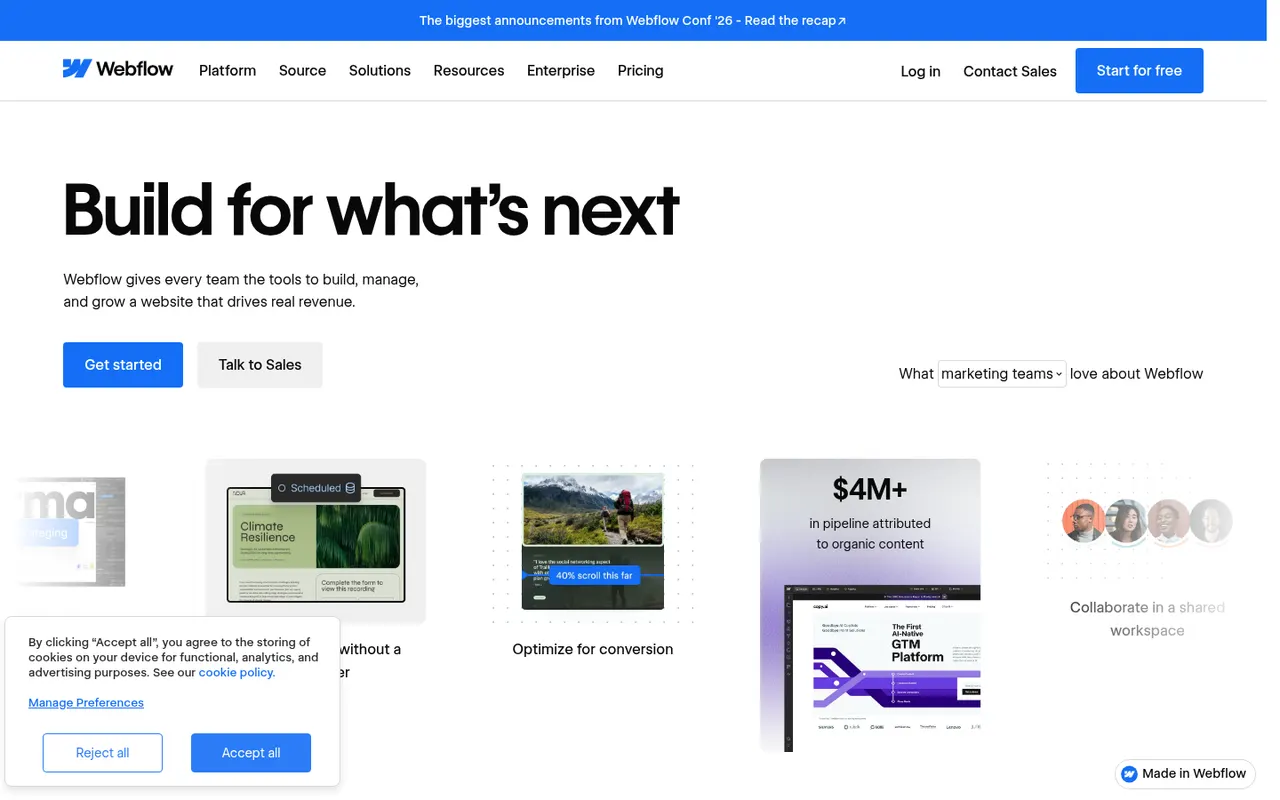
Cost / LicenseFree trialProprietaryCategoriesWebflow is a browser-based visual builder that exposes real HTML and CSS concepts such as boxes, flexbox and classes, so designers can produce custom, responsive sites without writing code. It includes a CMS for structured content, interactions and animations, hosting and localization. It is aimed at designers, agencies and marketing teams who want more control than template builders offer.
9 Webflow alternativesPros
- Visual control over real HTML and CSS concepts
- Flexible CMS for structured content
- Interactions and animations without writing code
Cons
- Steep learning curve for non-designers
- Pricing is complex, with separate site and workspace plans
Cost / LicenseFreemiumProprietaryCategoriesPlatformsGhost is an open source platform for independent publishers that combines a website, a newsletter and paid memberships in one product. Writers publish in a clean editor, send posts by email and charge for subscriptions through Stripe, with no revenue share taken by Ghost. It can be self-hosted for free or run on the managed Ghost(Pro) service, and is maintained by a non-profit foundation.
9 Ghost alternativesPros
- Website, newsletter and paid memberships in one product
- No revenue share taken on subscriptions
- Open source and free to self-host
Cons
- Fewer themes and integrations than WordPress
- Self-hosting needs technical skills and an email delivery service
- Ghost(Pro) gets expensive as your member list grows
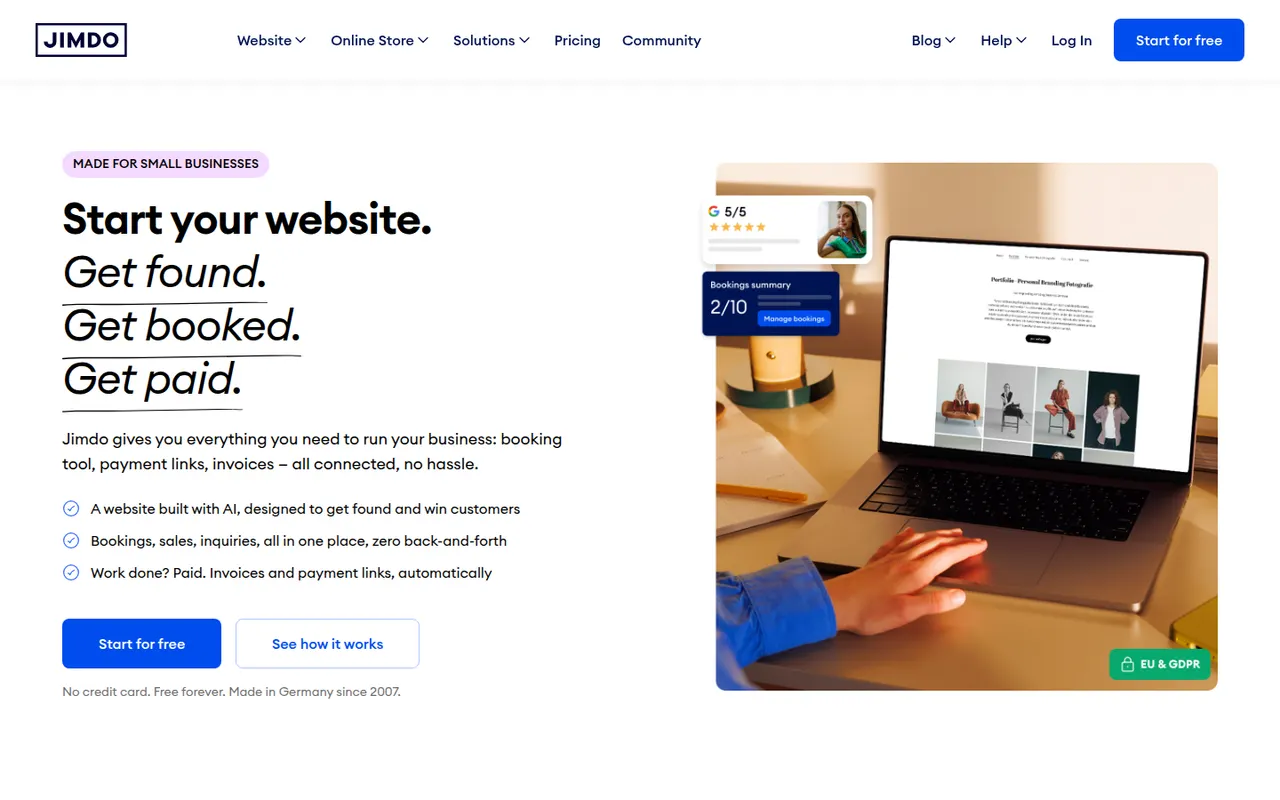
Cost / LicenseFreemiumOpen sourcePlatformsJimdo is a German website builder aimed at small businesses, freelancers and people with no web experience. A guided setup asks a few questions about your business and assembles a site you can then edit, and paid plans add a domain, an online store and basic SEO settings. Options are deliberately limited so that a site can go live and be maintained with little effort.
8 Jimdo alternativesPros
- Guided setup gets a site online quickly
- Easy to maintain for people with no web experience
- Free plan to get started
Cons
- Limited design and layout options
- Free plan shows Jimdo branding on a Jimdo subdomain
- Online store features are basic
Cost / LicenseFreemiumProprietaryCategoriesPlatformsHostinger Website Builder, formerly known as Zyro, is a drag-and-drop editor included with Hostinger hosting plans. It offers templates, an AI generator that creates a first draft of a site from a description, and AI tools for writing text and producing images. Plans include hosting, a domain and basic e-commerce, making it a simple all-in-one option for small sites.
8 Hostinger Website Builder alternativesPros
- Hosting, domain and builder bundled in one plan
- AI generator drafts a first version of the site
- Drag-and-drop editor that is easy for beginners
Cons
- No free plan is available
- Less design flexibility and fewer integrations than larger builders
- Best prices require long upfront commitments
Cost / LicensePaidProprietaryCategoriesPlatformsWordPress.com is the hosted version of WordPress run by Automattic, so you get the WordPress editor, themes and blogging tools without managing a server. Free sites use a wordpress.com address, while paid plans add custom domains, plugins, e-commerce and more storage. It suits bloggers and small businesses who want WordPress without handling updates, backups and security themselves.
11 WordPress.com alternativesPros
- WordPress without managing servers, updates or backups
- Free plan to start a blog quickly
- Same WordPress editor, themes and blogging tools
Cons
- Installing plugins requires a paid plan
- Free sites show ads and use a wordpress.com address
- Less control over hosting than self-hosted WordPress
Cost / LicenseFreemiumProprietaryCategoriesBigCommerce is a hosted e-commerce platform that targets mid-sized and enterprise merchants, including B2B sellers. It includes multi-storefront management, built-in B2B features, multi-currency selling and open APIs, and can serve as a headless back end behind a custom front end. Merchants pick it when they want SaaS convenience with more flexibility around integrations.
8 BigCommerce alternativesPros
- Strong built-in B2B features and multi-storefront management
- Open APIs and headless support for custom front ends
- Hosted platform with multi-currency selling out of the box
Cons
- Plan upgrades are required once annual sales pass set thresholds
- Smaller app and theme ecosystem than Shopify
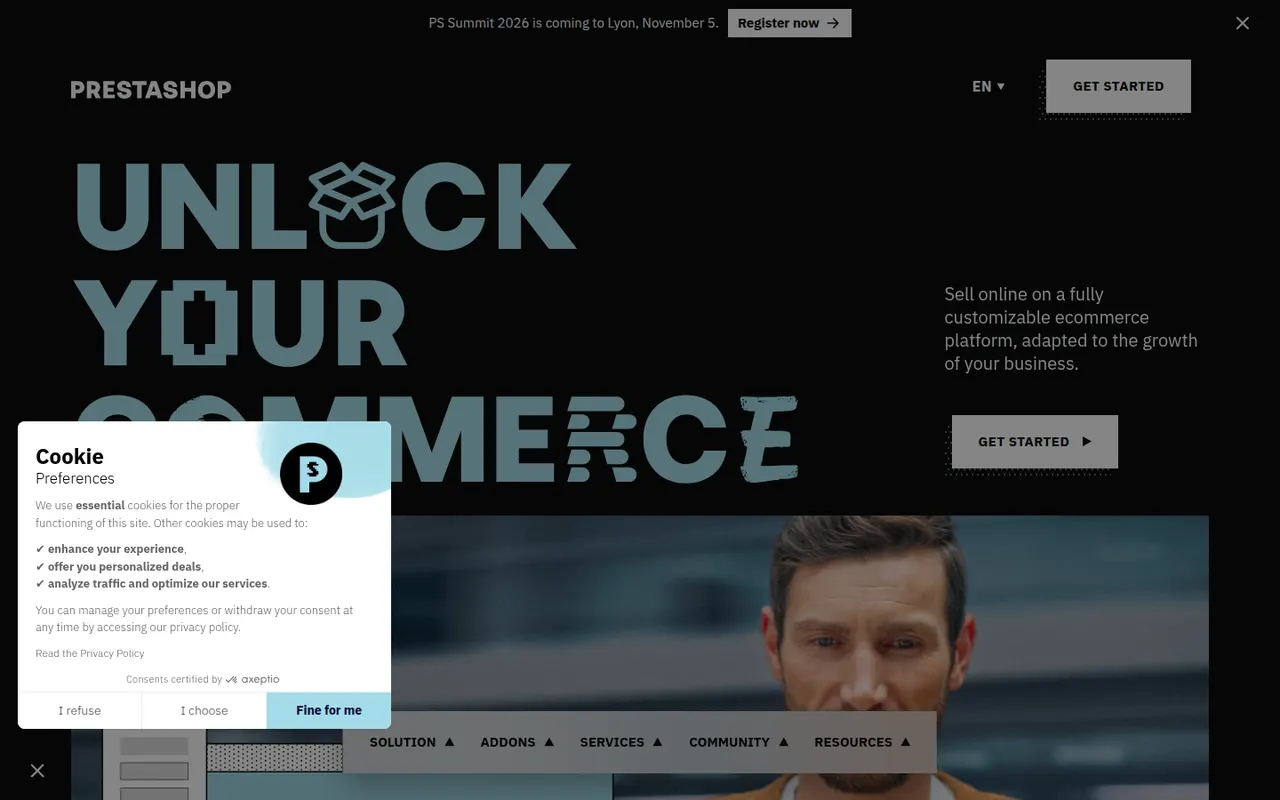
Cost / LicenseFree trialProprietaryCategoriesPlatformsPrestaShop is an open source e-commerce application written in PHP and created in France. You install it on your own server and extend it with modules and themes from its marketplace, covering payment methods, shipping carriers, marketing and multilingual catalogs. It suits merchants who want a full-featured store that they, or an agency, host and customize.
8 PrestaShop alternativesPros
- Free and open source, with full ownership of your store
- Large marketplace of modules and themes
- Widely used in Europe, with many local payment and carrier modules
Cons
- Many essential modules are paid, so costs add up
- Hosting, updates and technical upkeep are your responsibility
- Major version upgrades can break existing modules
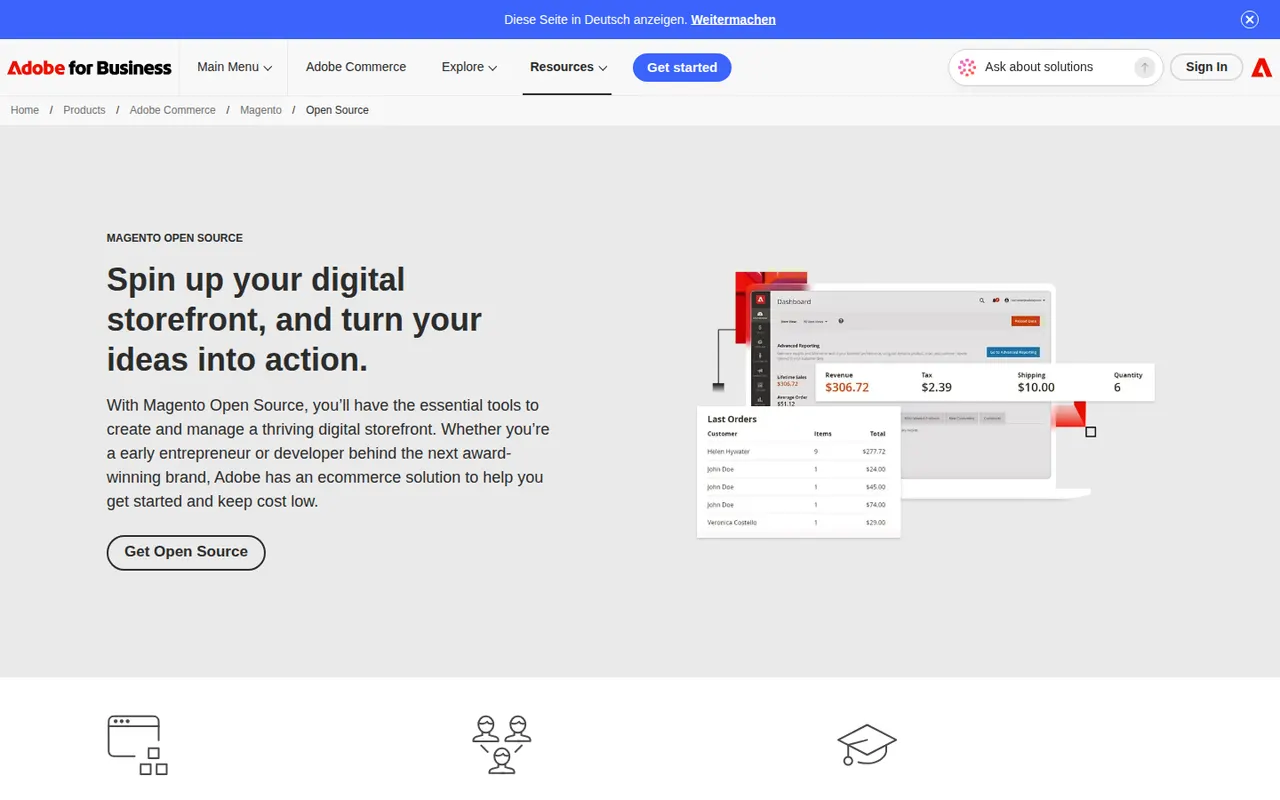
Cost / LicenseFreeOpen sourceCategoriesPlatformsMagento Open Source is the free, self-hosted edition of the Magento e-commerce platform, maintained by Adobe alongside its paid Adobe Commerce product. Written in PHP, it supports multiple stores, languages and currencies, complex catalogs and a large ecosystem of extensions and agencies. It is suited to merchants with development resources who need deep customization.
6 Magento Open Source alternativesPros
- Handles complex catalogs, multiple stores, languages and currencies
- Large ecosystem of extensions and specialized agencies
- Free and open source, with full control over code and hosting
Cons
- Resource-hungry, so it needs well-tuned hosting to perform well
- Development and maintenance require experienced PHP developers
- Some advanced features are reserved for the paid Adobe Commerce
Cost / LicenseFreeOpen sourceCategoriesPlatforms