Apps with Multi-currency
13 apps
Top Multi-currency apps ranked by the community
Shopify is a hosted commerce platform for creating an online store, selling on social networks and marketplaces, and taking payments in person with its point-of-sale app. It handles hosting, checkout, inventory and shipping, while a large app store and theme marketplace extend what a store can do. It scales from first-time sellers to large brands on the Shopify Plus tier.
12 Shopify alternativesPros
- Hosting, checkout, payments and security are handled for you
- Huge app store and theme marketplace
- Sells online, on social channels and in person with its POS app
Cons
- Monthly app subscriptions quickly raise the total cost
- Extra transaction fees apply when not using Shopify Payments
- Checkout customization is limited outside Shopify Plus
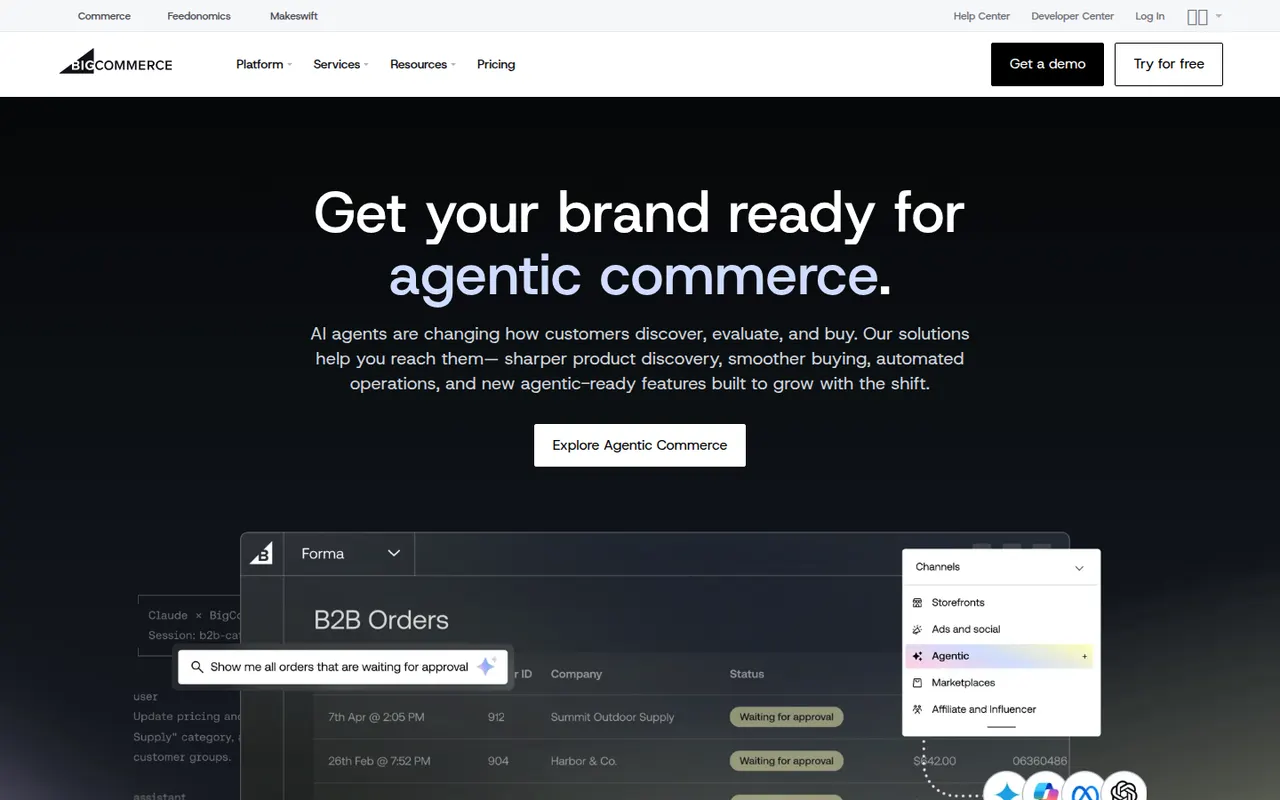
Cost / LicenseFree trialProprietaryCategoriesBigCommerce is a hosted e-commerce platform that targets mid-sized and enterprise merchants, including B2B sellers. It includes multi-storefront management, built-in B2B features, multi-currency selling and open APIs, and can serve as a headless back end behind a custom front end. Merchants pick it when they want SaaS convenience with more flexibility around integrations.
8 BigCommerce alternativesPros
- Strong built-in B2B features and multi-storefront management
- Open APIs and headless support for custom front ends
- Hosted platform with multi-currency selling out of the box
Cons
- Plan upgrades are required once annual sales pass set thresholds
- Smaller app and theme ecosystem than Shopify
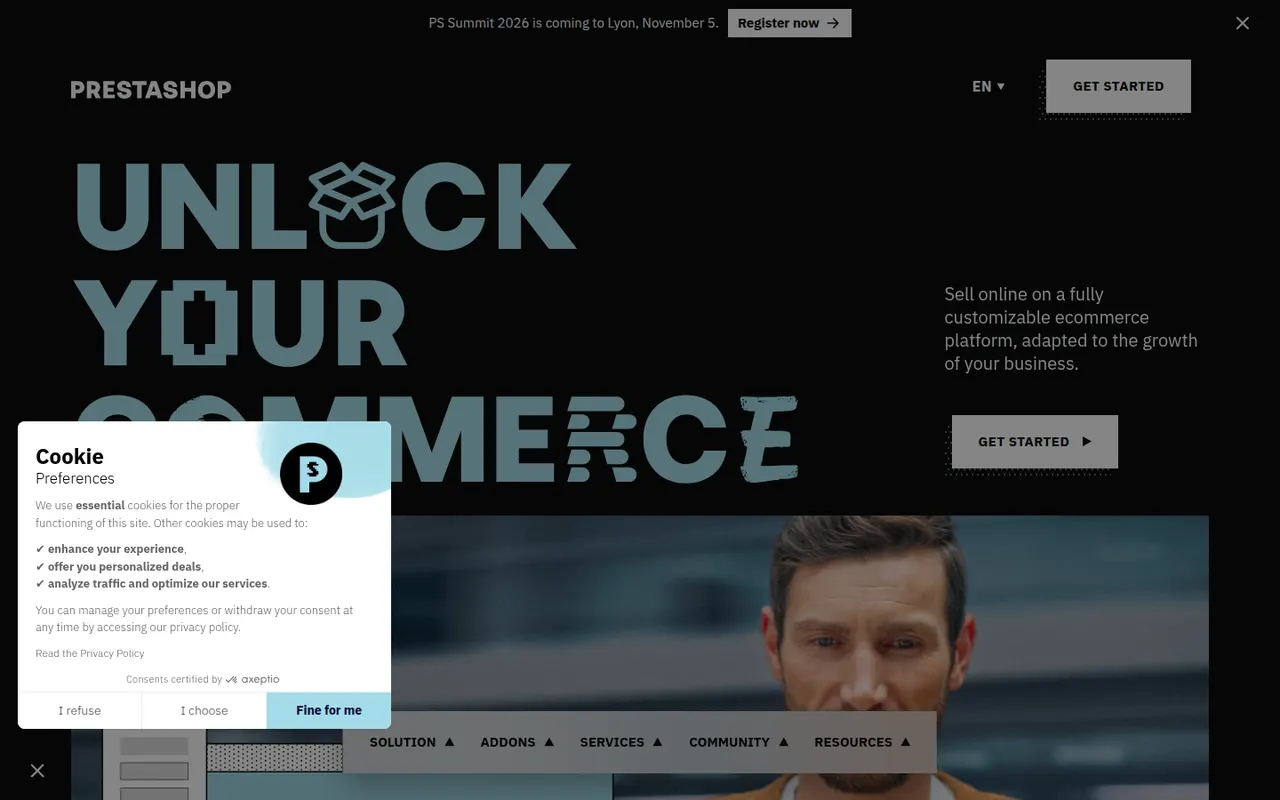
Cost / LicenseFree trialProprietaryCategoriesPlatformsPrestaShop is an open source e-commerce application written in PHP and created in France. You install it on your own server and extend it with modules and themes from its marketplace, covering payment methods, shipping carriers, marketing and multilingual catalogs. It suits merchants who want a full-featured store that they, or an agency, host and customize.
8 PrestaShop alternativesPros
- Free and open source, with full ownership of your store
- Large marketplace of modules and themes
- Widely used in Europe, with many local payment and carrier modules
Cons
- Many essential modules are paid, so costs add up
- Hosting, updates and technical upkeep are your responsibility
- Major version upgrades can break existing modules
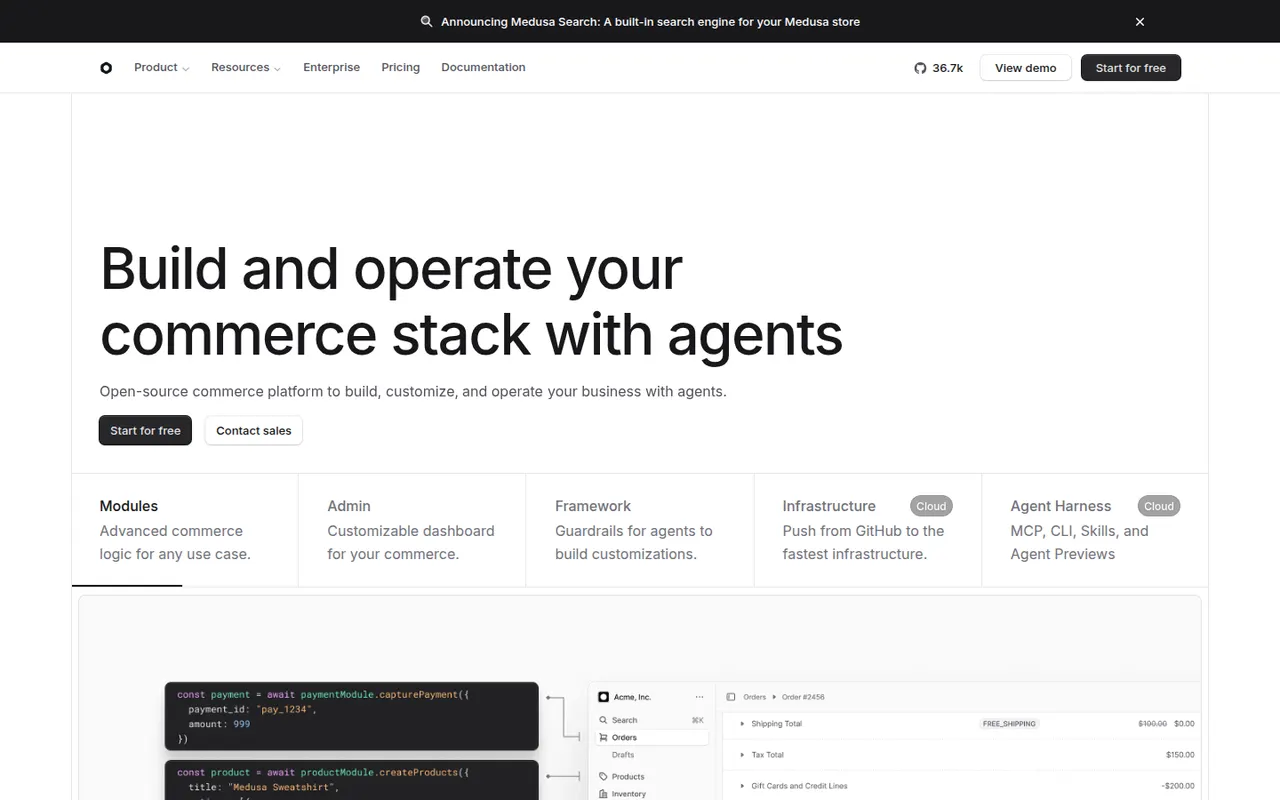
Cost / LicenseFreeOpen sourceCategoriesPlatformsMedusa is an open source commerce platform for developers who want to build a custom store or marketplace rather than adapt a hosted product. It provides modular back-end building blocks for products, carts, orders, payments and fulfillment, an admin dashboard and APIs that any front end can consume. It can be self-hosted for free or deployed on the managed Medusa Cloud.
6 Medusa alternativesPros
- Modular back end for building custom stores and marketplaces
- Open source and free to self-host, with a managed cloud option
- Admin dashboard and APIs work with any front-end framework
Cons
- Needs developers, so it is not a ready-made store for non-technical merchants
- Smaller plugin ecosystem than Shopify or WooCommerce
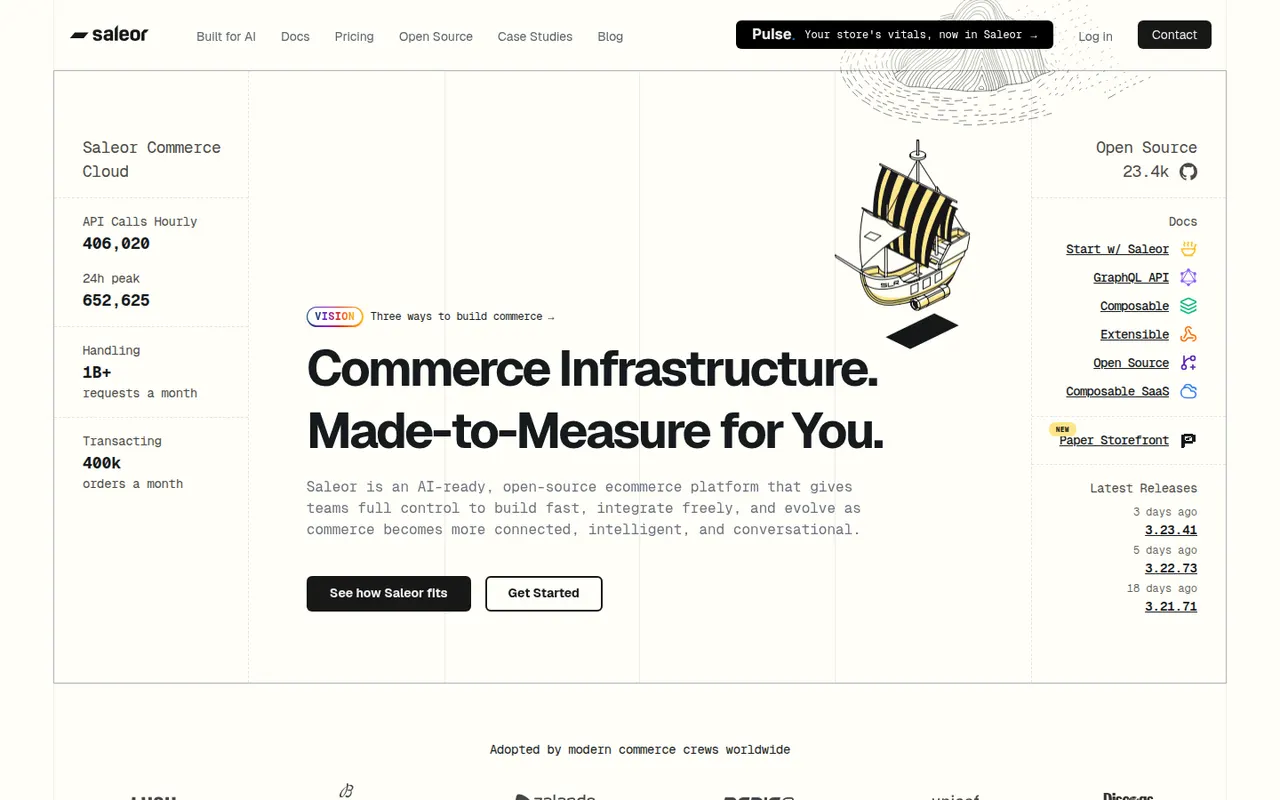
Cost / LicenseFreemiumOpen sourceCategoriesPlatformsSaleor is an open source, API-only commerce platform built with Python and Django, with everything exposed through a GraphQL API. It handles multi-channel catalogs, several currencies and warehouses, and extends through webhooks and apps, while the storefront is built separately with any framework. Teams can self-host it or use the managed Saleor Cloud.
6 Saleor alternativesPros
- GraphQL-first API built for headless storefronts
- Handles multiple channels, currencies and warehouses natively
- Open source Python stack, self-hosted or on Saleor Cloud
Cons
- The storefront must be built separately by developers
- Smaller ecosystem and community than mainstream platforms
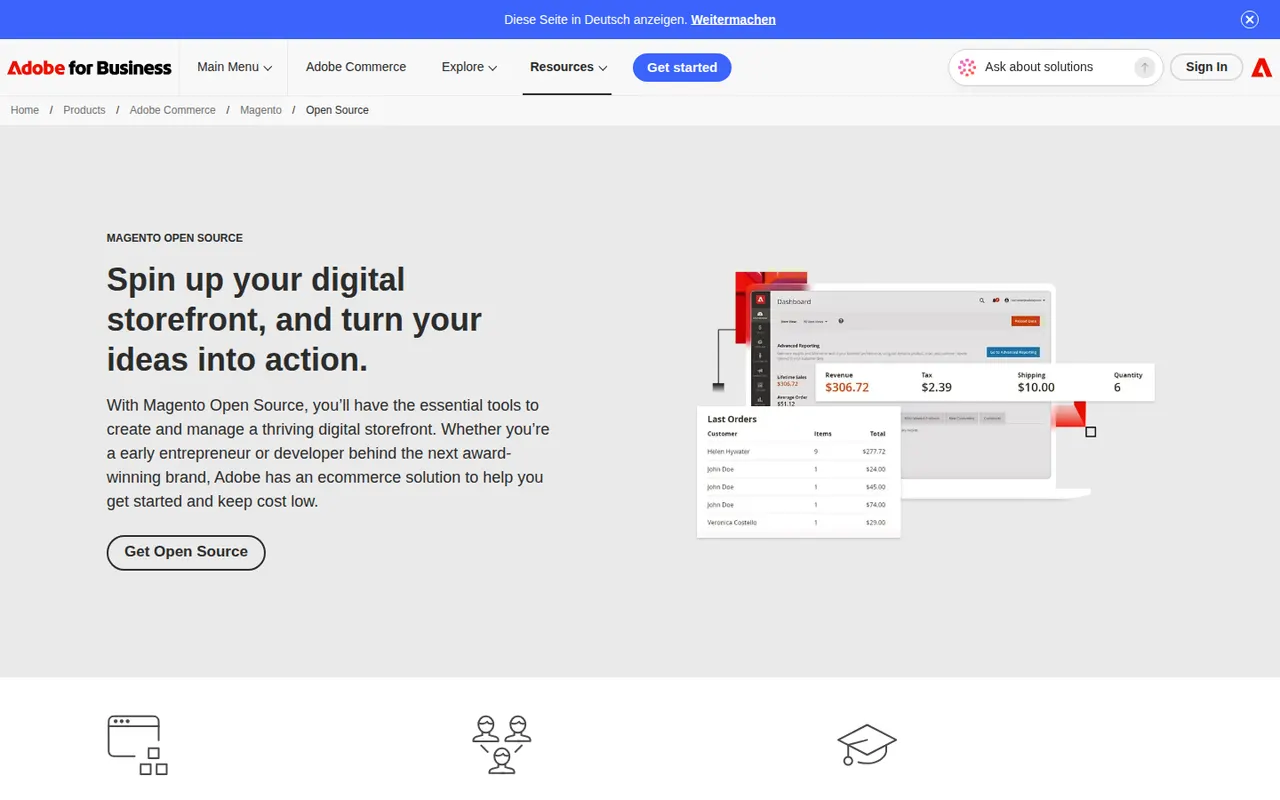
Cost / LicenseFreemiumOpen sourceCategoriesPlatformsMagento Open Source is the free, self-hosted edition of the Magento e-commerce platform, maintained by Adobe alongside its paid Adobe Commerce product. Written in PHP, it supports multiple stores, languages and currencies, complex catalogs and a large ecosystem of extensions and agencies. It is suited to merchants with development resources who need deep customization.
6 Magento Open Source alternativesPros
- Handles complex catalogs, multiple stores, languages and currencies
- Large ecosystem of extensions and specialized agencies
- Free and open source, with full control over code and hosting
Cons
- Resource-hungry, so it needs well-tuned hosting to perform well
- Development and maintenance require experienced PHP developers
- Some advanced features are reserved for the paid Adobe Commerce
Cost / LicenseFreeOpen sourceCategoriesPlatformsQuickBooks is Intuit's accounting software for small businesses and self-employed people, offered mainly as the cloud-based QuickBooks Online, with desktop editions for Windows. It handles invoicing, bank feeds, expense and receipt tracking, sales tax, reports and payroll, and connects to many third-party apps and accountants. Intuit Assist adds AI help, and plans are paid after a free trial.
12 QuickBooks alternativesPros
- Widely known by accountants, which eases collaboration
- Large ecosystem of connected third-party apps
- Covers invoicing, bank feeds, sales tax and payroll
Cons
- Subscription costs add up, especially with payroll on top
- Features vary a lot between countries and editions
- Takes longer to learn than simpler invoicing apps
Cost / LicenseFree trialProprietaryCategoriesXero is a cloud accounting platform from New Zealand used by small businesses together with their accountants and bookkeepers. It reconciles bank feeds, sends invoices and quotes, tracks bills and expenses, handles multiple currencies and offers payroll in several countries, with a large marketplace of connected apps. It is a paid subscription with a free trial.
9 Xero alternativesPros
- Fast bank reconciliation driven by live bank feeds
- Large marketplace of connected apps
- Built for working closely with accountants and bookkeepers
Cons
- No free plan after the trial
- The entry plan caps how many invoices and bills you can create
- Payroll is only available in some countries
Cost / LicenseFree trialProprietaryCategoriesZoho Books is cloud accounting software from Zoho for small and growing businesses. It covers invoicing and quotes, bank feeds and reconciliation, expenses, projects and time billing, multi-currency transactions and local tax reports in supported countries, and connects natively with Zoho CRM, Inventory and other Zoho apps. A free plan is available for very small businesses.
11 Zoho Books alternativesPros
- Native links with Zoho CRM, Inventory and other Zoho apps
- Free plan available for very small businesses
- Handles projects, time billing and multi-currency transactions
Cons
- Best value comes when you already use the Zoho ecosystem
- Local tax features only cover supported countries
- The many settings can feel overwhelming at first
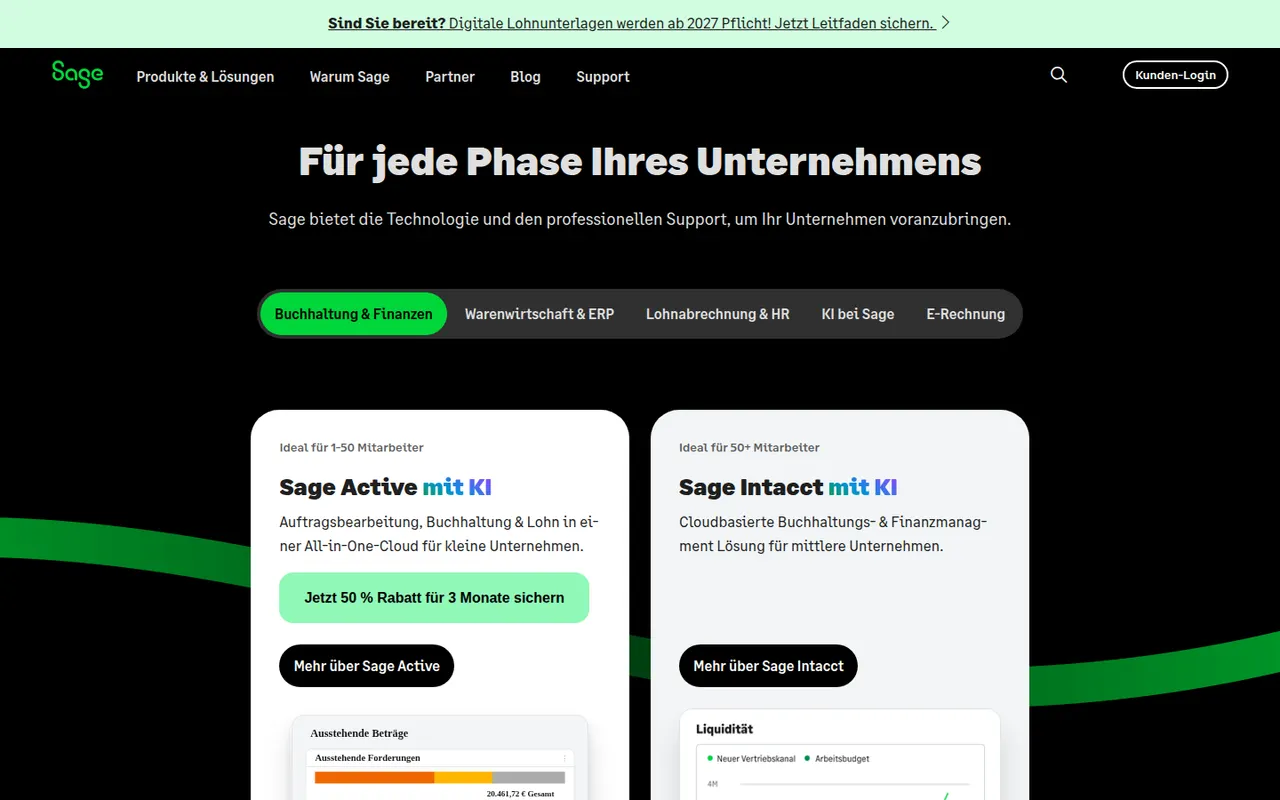
Cost / LicenseFreemiumProprietaryCategoriesSage is a UK software company whose range spans small-business accounting such as Sage Accounting and Sage 50, payroll and HR tools, and Sage Intacct for mid-sized finance teams. Products and features vary by country, covering invoicing, bank feeds, tax returns, payroll and reporting, often used alongside an accountant. Most products are paid subscriptions, some with a free trial.
8 Sage alternativesPros
- Range scales from small-business books to mid-market finance
- Payroll and HR tools available from the same vendor
- Long-established and familiar to many accountants
Cons
- Confusing product lineup that varies by country
- Older desktop products feel dated next to cloud rivals
- Mostly paid subscriptions, with no lasting free plan
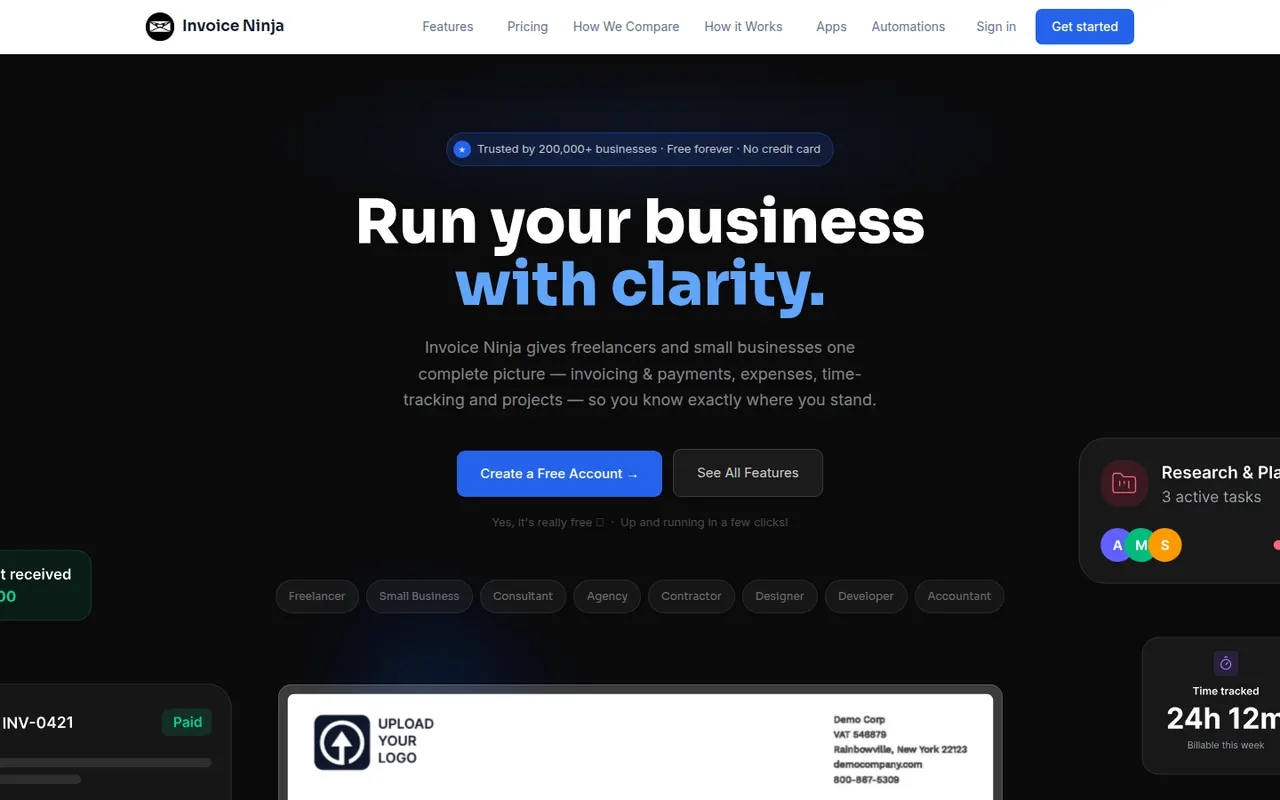
Cost / LicenseFree trialProprietaryCategoriesInvoice Ninja is an invoicing and billing platform for freelancers and small businesses, offered as a hosted service or as software you can install on your own server. It creates quotes, invoices and recurring billing, tracks time, tasks and expenses, supports many currencies and connects to dozens of payment gateways through a client portal. The source code is available under the Elastic License.
8 Invoice Ninja alternativesPros
- Self-hostable or available as a hosted service
- Connects to dozens of payment gateways through a client portal
- Recurring invoices, quotes, time and expense tracking included
Cons
- Not a full double-entry accounting system
- Elastic License code is not open source in the strict sense
- Many settings make the initial setup time-consuming
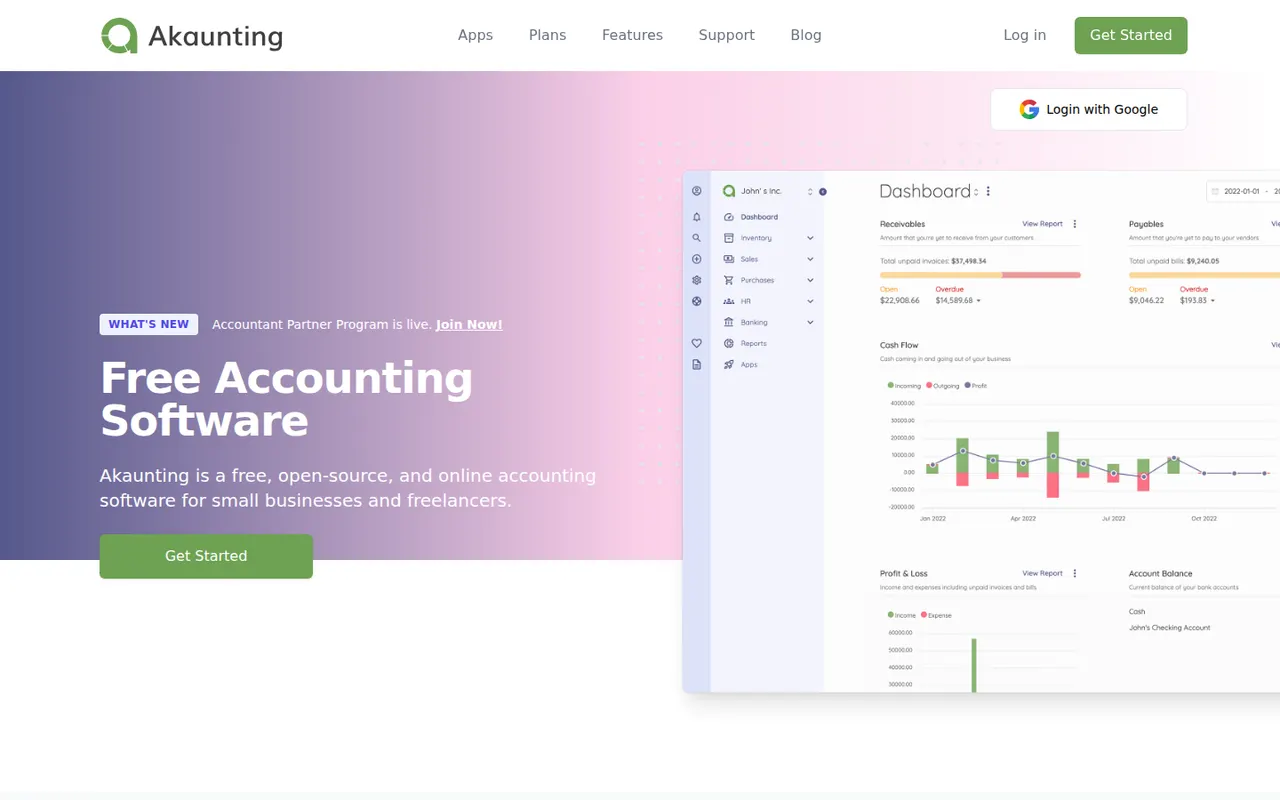
Cost / LicenseFreemiumSource availableCategoriesPlatformsAkaunting is web-based accounting software for small businesses and freelancers that can be installed on your own server or used in the cloud. The core handles invoices, bills, expenses, customers, vendors, multiple currencies and reports, while paid apps from its marketplace add features such as payroll, inventory and bank feeds. Its source code is published under the Business Source License.
8 Akaunting alternativesPros
- Can be self-hosted on your own server or used in the cloud
- Core covers invoices, bills, expenses and multiple currencies
- Marketplace apps add payroll, inventory and bank feeds
Cons
- Many useful features are paid add-ons from the marketplace
- Business Source License code is not open source in the strict sense
- Self-hosting requires technical skills to install and maintain
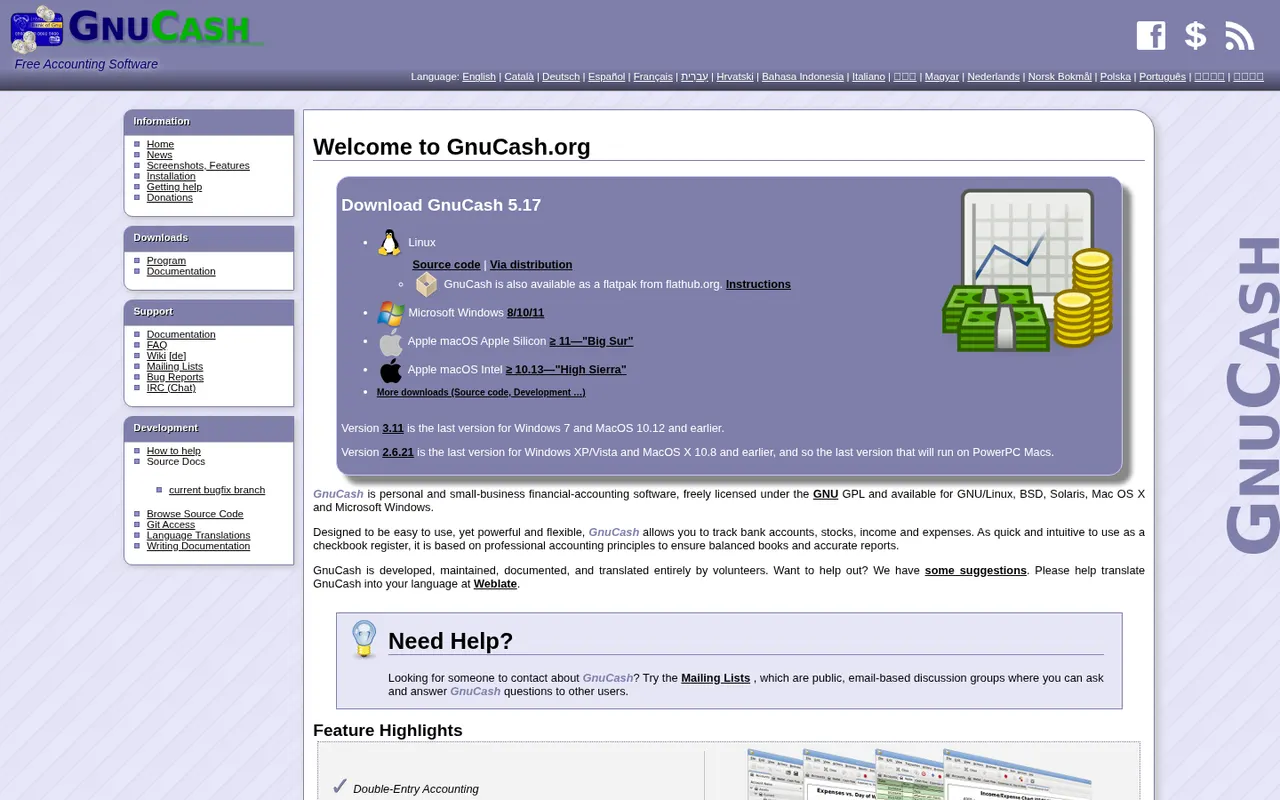
Cost / LicenseFreemiumSource availableCategoriesPlatformsGnuCash is a free, open source desktop accounting program for tracking personal finances or keeping small-business books with double-entry accounting. It manages bank and credit card accounts, investments, multiple currencies, customers, vendors, invoices and bills, and can import QIF, OFX and CSV files or fetch transactions online. It runs offline on Windows, macOS and Linux and is licensed under the GPL.
7 GnuCash alternativesPros
- Free, open source double-entry accounting
- Works offline, with your data kept on your own computer
- Imports QIF, OFX and CSV files from banks
Cons
- Dated interface that feels clunky next to modern apps
- Double-entry concepts can confuse non-accountants
- No built-in cloud sync between devices
Cost / LicenseFreeOpen sourceCategories