Apps with Payments
19 apps
Top Payments apps ranked by the community
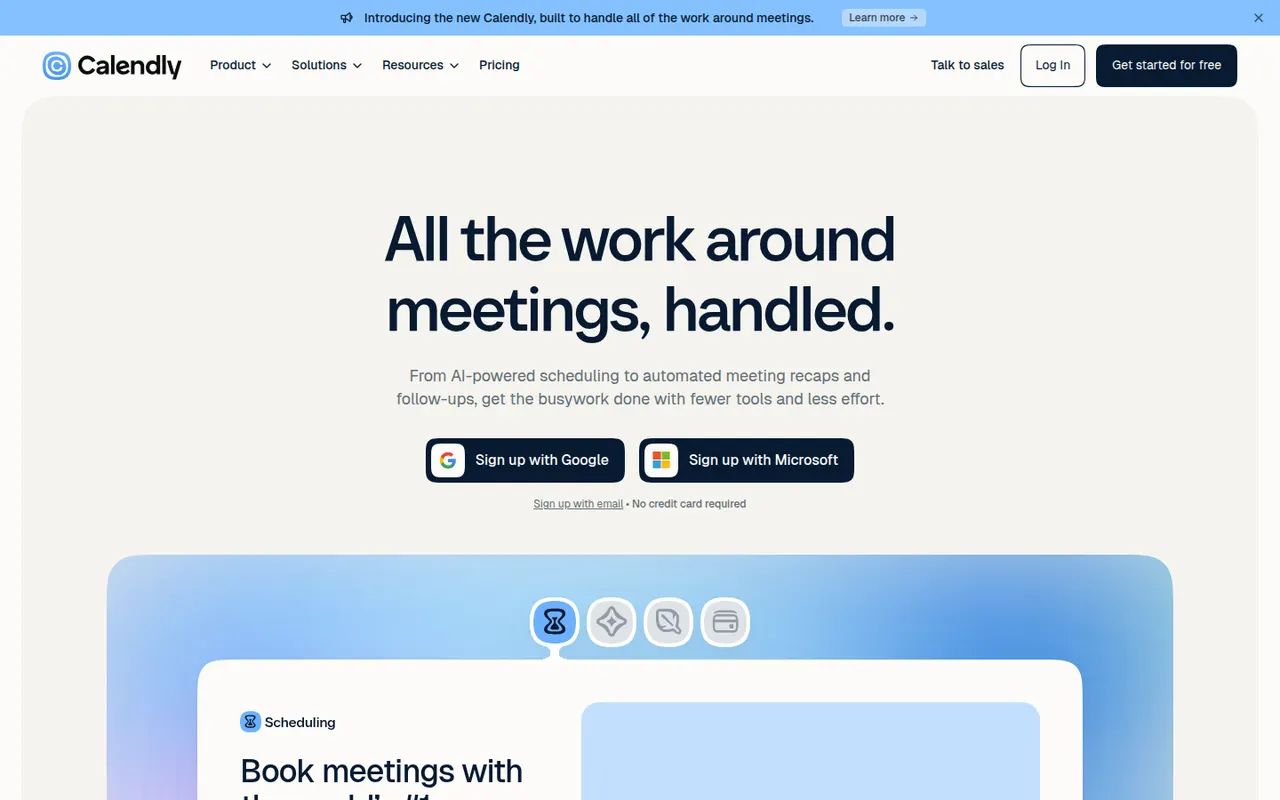
Calendly lets people book time with you through a shareable link that reflects your real availability across Google, Outlook and iCloud calendars. Teams can distribute meetings round robin or book them collectively, collect payments with Stripe or PayPal, and send automatic reminders and follow-ups. It targets sales, recruiting and customer success teams and connects to CRMs such as Salesforce and HubSpot.
12 Calendly alternativesPros
- Booking links reflect real availability across several calendars
- Round-robin and collective scheduling for teams
- CRM integrations with Salesforce and HubSpot
Cons
- The free plan is restrictive, with key features on paid tiers
- Costs add up for teams that need routing and CRM features
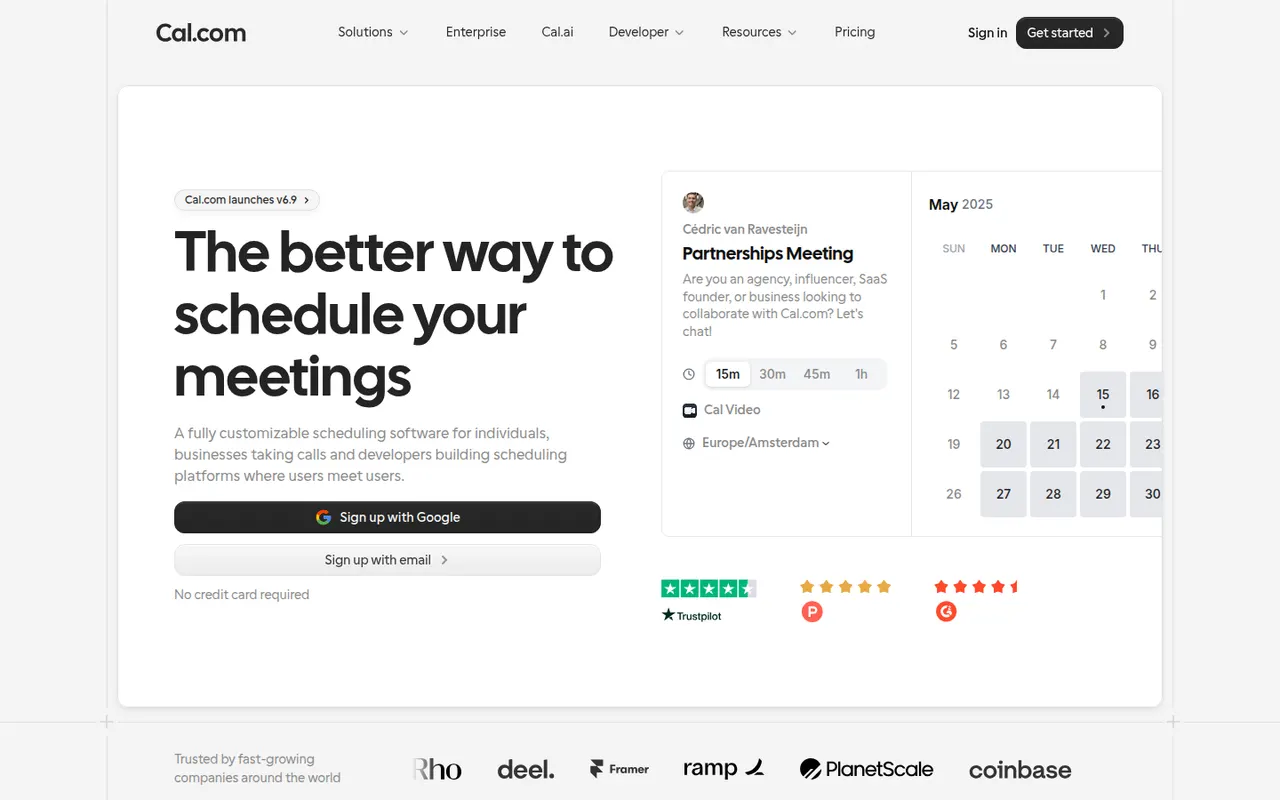
Cost / LicenseFreemiumProprietaryCategoriesPlatformsCal.com is an open source scheduling platform positioned as an alternative to Calendly, with booking pages, team round-robin, routing forms, paid bookings and automated workflows. It can be used as a hosted service with a free plan for individuals or self-hosted, and developers can embed it or build on its API.
7 Cal.com alternativesPros
- Open source and self-hostable, with a hosted option
- Free hosted plan for individuals
- API and embeds let developers build scheduling into their products
Cons
- Self-hosting takes technical effort to set up and maintain
- Team and enterprise features require paid plans
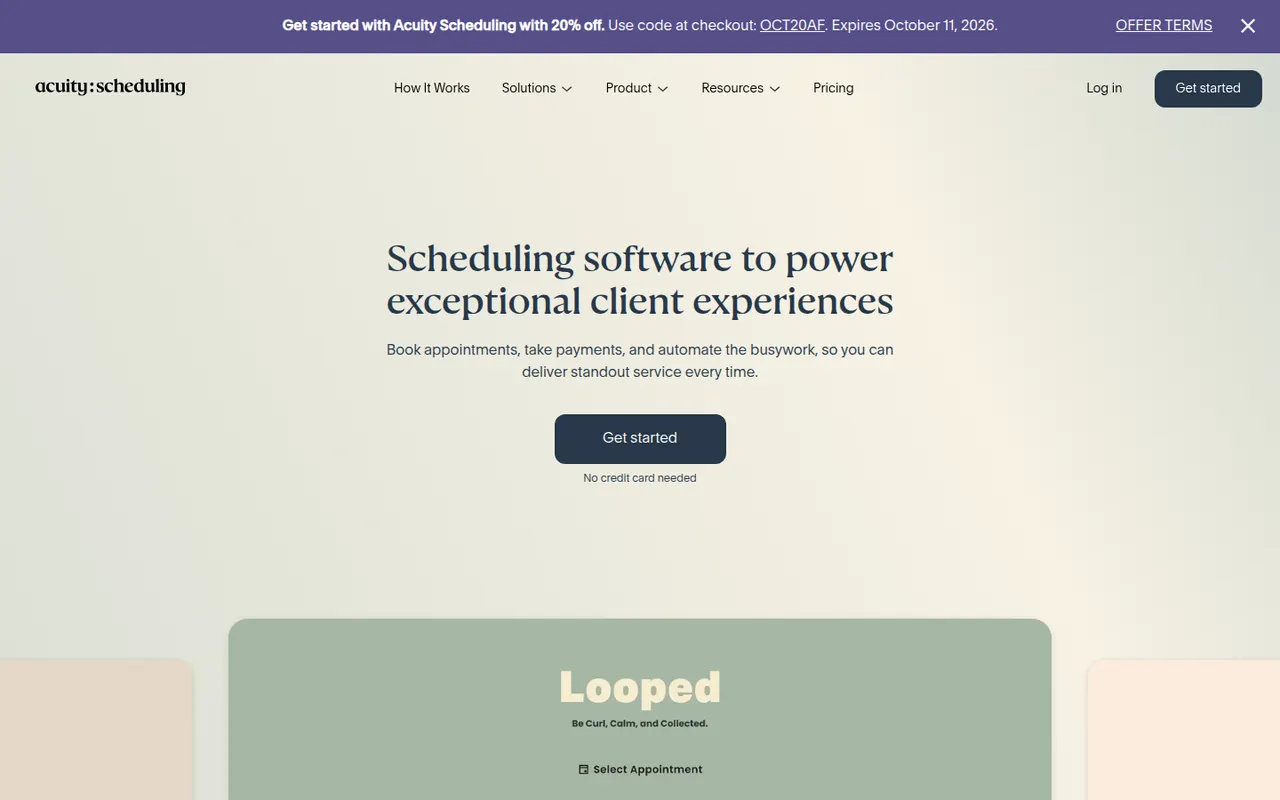
Cost / LicenseFreemiumOpen sourceCategoriesPlatformsAcuity Scheduling, owned by Squarespace, is an appointment booking tool for coaches, salons, clinics and other service businesses. Clients book through a branded page, fill in intake forms and pay or leave a deposit online, while the business manages packages, gift certificates, staff calendars and automatic email and text reminders.
7 Acuity Scheduling alternativesPros
- Intake forms, deposits and online payments built into booking
- Packages and gift certificates suit coaches, salons and clinics
- Automatic email and text reminders help reduce no-shows
Cons
- No free plan, only a trial
- The admin interface feels dated compared with newer schedulers
Cost / LicenseFree trialProprietaryCategoriesTidyCal is a lightweight scheduling tool from AppSumo for freelancers and small businesses. It provides booking pages, group bookings and paid bookings through Stripe or PayPal, and connects to Google and Outlook calendars as well as Zoom and Google Meet. Beyond the free plan, its Pro features are sold as a one-time purchase instead of a subscription.
7 TidyCal alternativesPros
- Pro features are a one-time purchase instead of a subscription
- Paid bookings through Stripe or PayPal, plus group bookings
- Quick setup suited to freelancers
Cons
- Fewer team and routing features than Calendly or Cal.com
- Limited branding and integration options
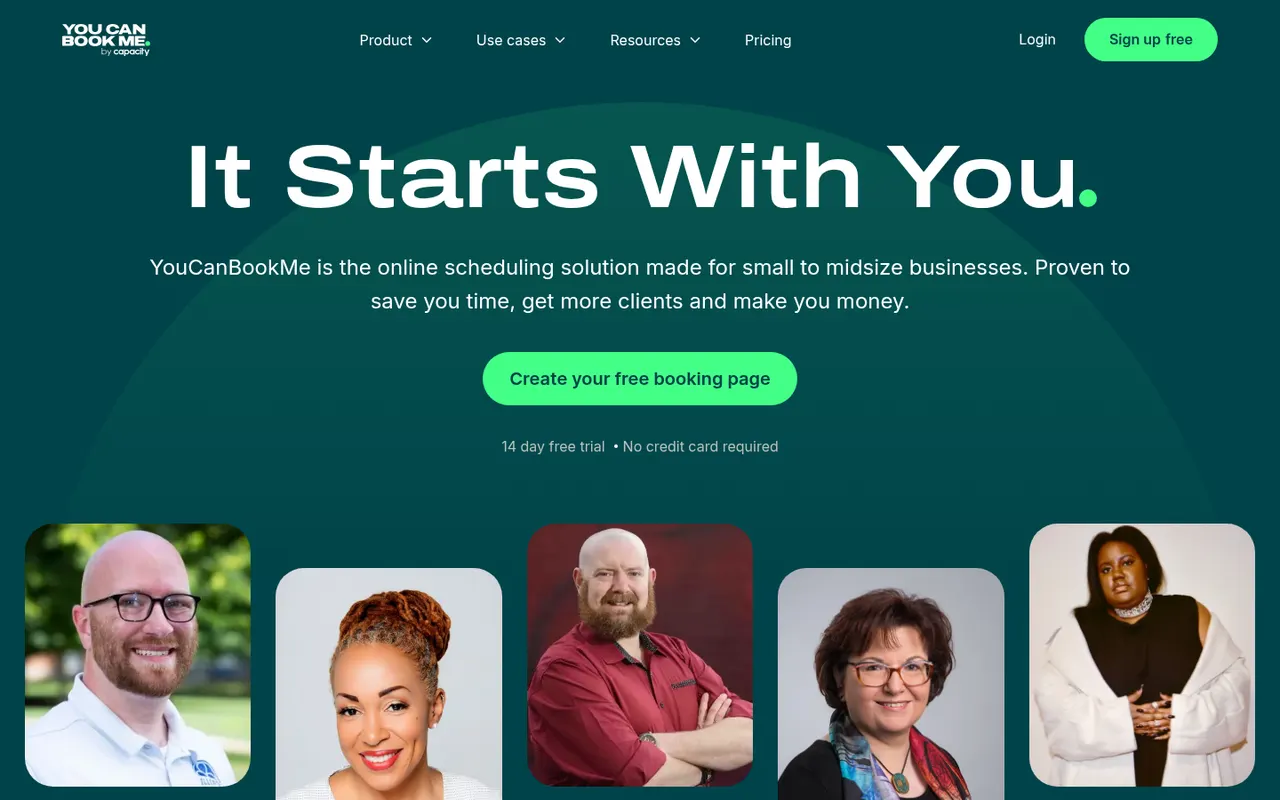
Cost / LicenseFreemiumProprietaryCategoriesPlatformsYouCanBookMe is a UK-based scheduling tool that turns your Google or Microsoft calendar into a customizable booking page. It supports team and round-robin bookings, custom booking forms, Stripe payments and email or SMS reminders, and suits tutors, consultants and universities that need flexible booking rules.
7 YouCanBookMe alternativesPros
- Highly customizable booking pages and forms
- Flexible booking rules suit tutors, consultants and universities
- Email and SMS reminders, plus Stripe payments
Cons
- Web only, with no mobile apps
- The many settings can feel overwhelming at first
- Most useful features require a paid plan
Cost / LicenseFreemiumProprietaryCategoriesPlatformsTypeform is an online form and survey builder that shows one question at a time in a conversational, full-screen layout. It supports logic jumps, calculations, file uploads, payments and quizzes, and connects to tools like HubSpot, Google Sheets and Slack. AI features can generate a form from a prompt, and a free plan allows a limited number of responses per month.
10 Typeform alternativesPros
- One-question-at-a-time layout feels conversational and polished
- Logic jumps, calculations and quizzes for interactive flows
- Integrates with HubSpot, Google Sheets, Slack and many other tools
Cons
- Free plan allows only a small number of responses per month
- Paid plans are expensive compared with most form builders
- One-question format can feel slow for long or data-heavy forms
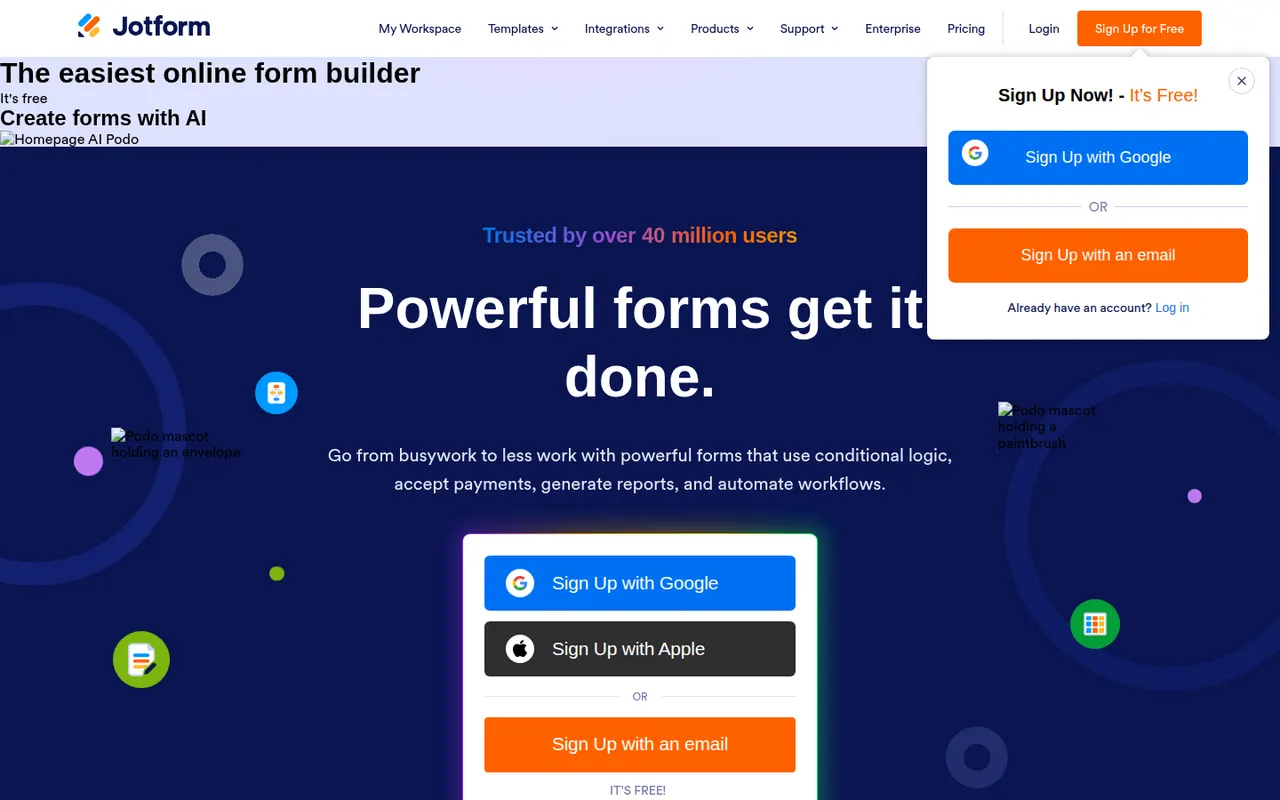
Cost / LicenseFreemiumProprietaryCategoriesPlatformsJotform is an online form builder with a large template library, a drag-and-drop editor, conditional logic and integrations with many payment gateways. Its mobile apps can collect data offline, and the wider suite adds Jotform Tables, an app builder, PDF generation and e-signatures through Jotform Sign. A free plan covers basic use, and HIPAA-compliant options are available for healthcare.
10 Jotform alternativesPros
- Huge template library and a drag-and-drop editor that is easy to learn
- Many payment gateways, plus e-signatures through Jotform Sign
- Mobile apps can collect submissions offline
Cons
- Free plan caps forms and monthly submissions fairly tightly
- Interface can feel cluttered given how many options and products it bundles
- Forms on the free plan display Jotform branding
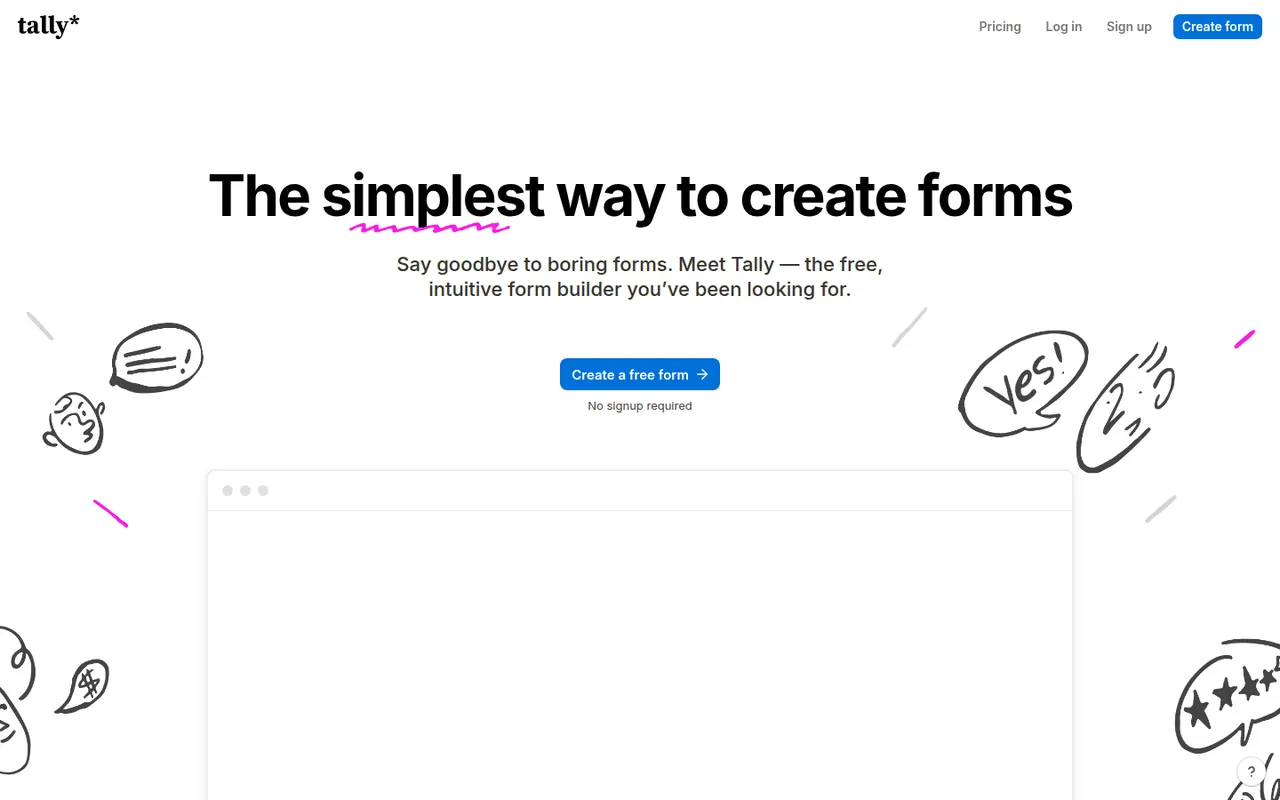
Cost / LicenseFreemiumProprietaryCategoriesTally is a form builder from Belgium where you create forms by typing in a document-like editor, similar to writing in Notion. Its free plan includes unlimited forms and responses along with logic, file uploads, Stripe payments and integrations, while Tally Pro adds branding removal, custom domains and team features. Form data is hosted in the EU.
9 Tally alternativesPros
- Free plan includes unlimited forms and responses, logic and payments
- Building a form feels as fast as typing in a document
- Data hosted in the EU, a plus for GDPR-conscious teams
Cons
- Custom domains, branding removal and team features require Tally Pro
- Fewer design themes and templates than visual drag-and-drop builders
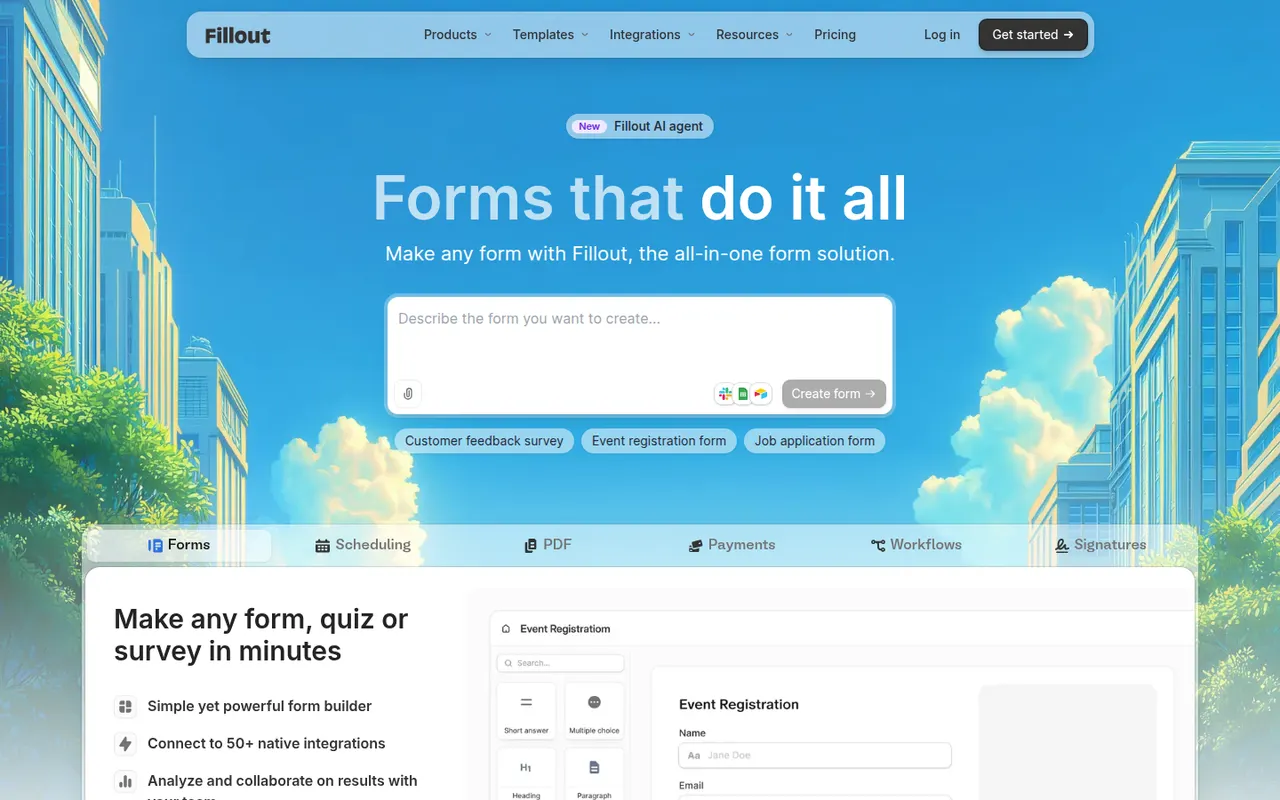
Cost / LicenseFreemiumProprietaryCategoriesPlatformsFillout is an online form builder with a usable free plan, conditional logic, payments, file uploads, scheduling and multi-page forms. Its main distinction is native two-way connections with tools such as Airtable, Notion, Google Sheets, HubSpot and Salesforce, so forms can create new records or update existing ones. It suits no-code builders and operations teams.
8 Fillout alternativesPros
- Two-way sync with Airtable, Notion or HubSpot can update existing records
- Capable free plan that covers most everyday form needs
- Multi-page forms, scheduling and payments in a single builder
Cons
- Higher response volumes and advanced features need a paid plan
- Smaller template library and community than older form builders
Cost / LicenseFreemiumProprietaryCategoriesPlatformsPaperform is an online form builder from Australia with a document-style editor that mixes questions with text, images and video, so forms read like web pages. It supports conditional logic, calculations, quizzes, product payments and appointment booking, and connects to other apps through native integrations and Zapier. Its sister product Papersign handles e-signatures. There is a free trial but no free plan.
7 Paperform alternativesPros
- Document-style editor makes forms read like polished web pages
- Calculations, payments and appointment booking are built in
- Native integrations plus Zapier connect it to many other apps
Cons
- No free plan once the trial ends
- Calculations and complex logic take some time to set up correctly
Cost / LicenseFree trialProprietaryCategoriesPlatformsSquarespace is a hosted platform for building websites, portfolios and online stores from designer templates. It bundles hosting, domains, e-commerce, email campaigns and appointment scheduling, with a section-based editor that keeps layouts consistent. It appeals to creatives and small businesses who care about design and prefer not to manage plugins.
12 Squarespace alternativesPros
- Polished designer templates with consistent layouts
- Hosting, commerce, email campaigns and scheduling in one place
- No plugins to install or keep updated
Cons
- No free plan beyond the trial
- Less layout freedom than canvas-based builders
- Fewer third-party extensions than WordPress
Cost / LicenseFree trialProprietaryCategoriesShopify is a hosted commerce platform for creating an online store, selling on social networks and marketplaces, and taking payments in person with its point-of-sale app. It handles hosting, checkout, inventory and shipping, while a large app store and theme marketplace extend what a store can do. It scales from first-time sellers to large brands on the Shopify Plus tier.
12 Shopify alternativesPros
- Hosting, checkout, payments and security are handled for you
- Huge app store and theme marketplace
- Sells online, on social channels and in person with its POS app
Cons
- Monthly app subscriptions quickly raise the total cost
- Extra transaction fees apply when not using Shopify Payments
- Checkout customization is limited outside Shopify Plus
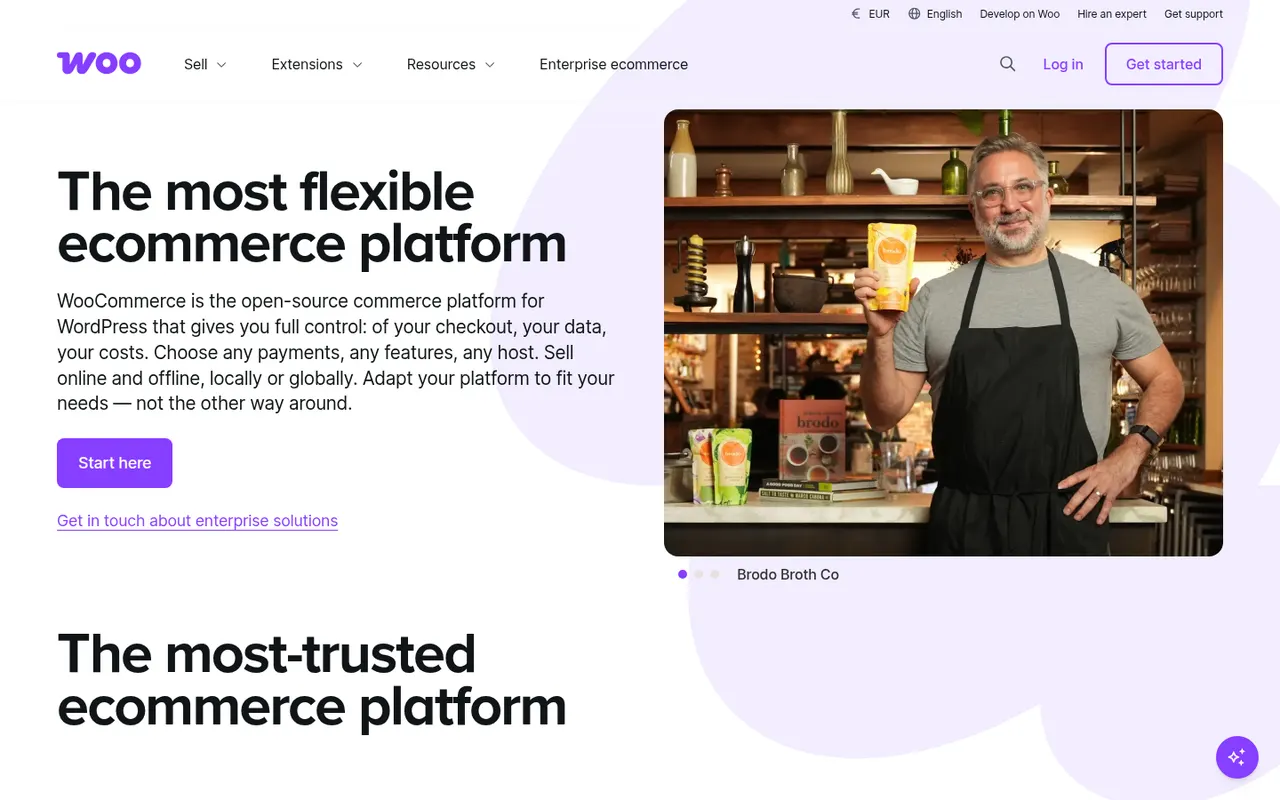
Cost / LicenseFree trialProprietaryCategoriesWooCommerce is a free, open source plugin that adds a full online store to a WordPress site: products, cart, checkout, taxes, shipping and orders. Because it runs on your own hosting, you control the code and data, and a large catalog of free and paid extensions covers payment gateways, subscriptions, bookings and more. It is a natural choice for shops that already use WordPress.
12 WooCommerce alternativesPros
- Free plugin that turns a WordPress site into a full store
- Huge catalog of extensions for payments, subscriptions and bookings
- Full control over code, data and hosting
Cons
- Hosting, security and updates are your responsibility
- Paid extensions add up for features many stores need
- Performance needs tuning as catalogs and traffic grow
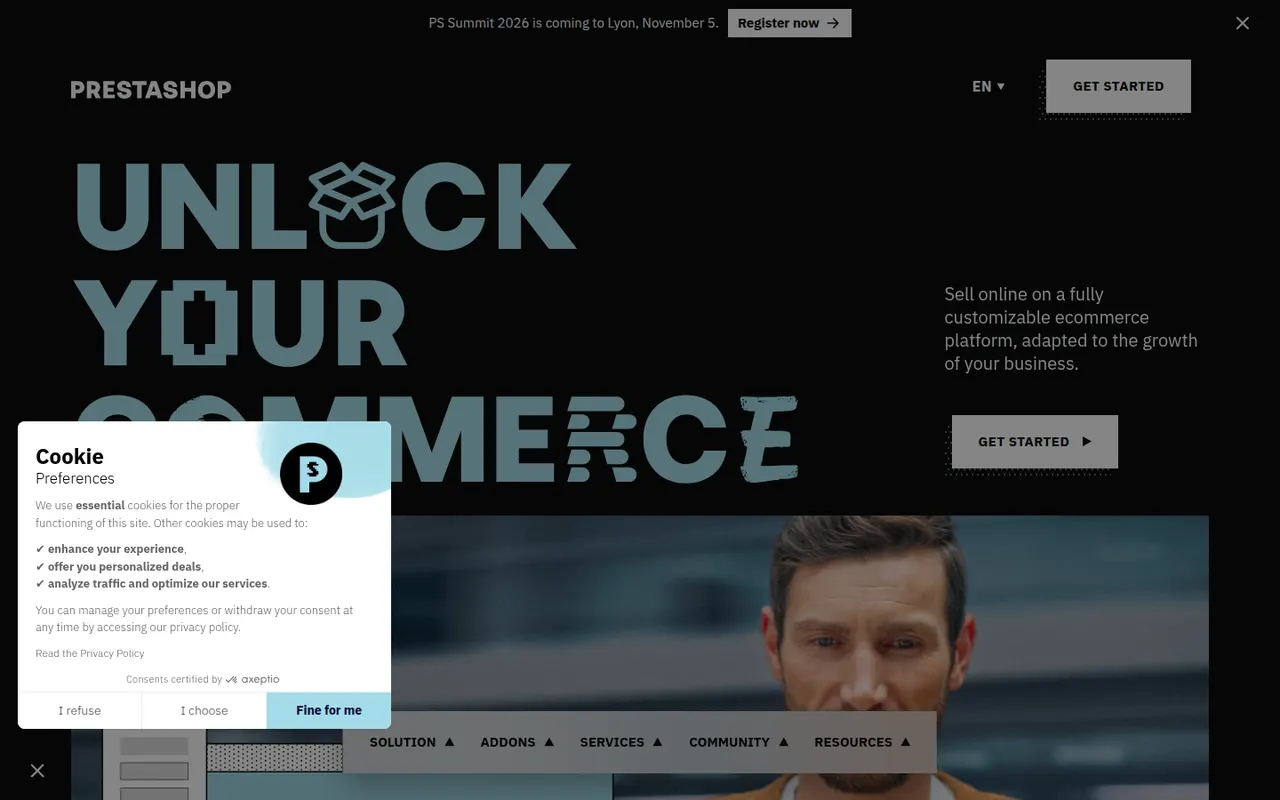
Cost / LicenseFreeOpen sourceCategoriesPlatformsPrestaShop is an open source e-commerce application written in PHP and created in France. You install it on your own server and extend it with modules and themes from its marketplace, covering payment methods, shipping carriers, marketing and multilingual catalogs. It suits merchants who want a full-featured store that they, or an agency, host and customize.
8 PrestaShop alternativesPros
- Free and open source, with full ownership of your store
- Large marketplace of modules and themes
- Widely used in Europe, with many local payment and carrier modules
Cons
- Many essential modules are paid, so costs add up
- Hosting, updates and technical upkeep are your responsibility
- Major version upgrades can break existing modules
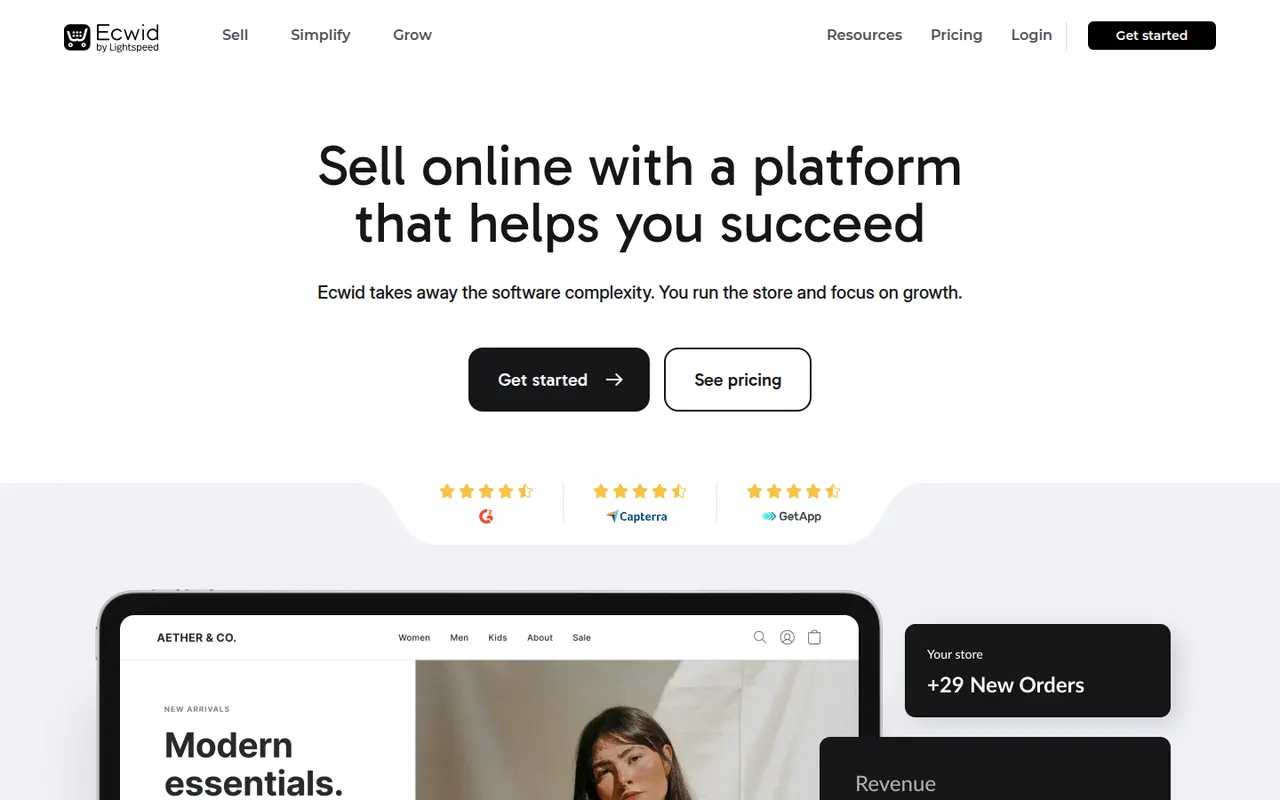
Cost / LicenseFreeOpen sourceCategoriesPlatformsEcwid, now part of Lightspeed, is an e-commerce platform built to be embedded: you manage products in one place and add the store to an existing website, a WordPress site, social networks and marketplaces. It also offers a simple standalone Instant Site and mobile apps to manage orders. It is aimed at small businesses that already have a web presence and want to start selling quickly.
9 Ecwid alternativesPros
- Embeds a store into an existing website, WordPress or social pages
- Manage products once and sell across several channels
- Quick to start, with mobile apps to manage orders
Cons
- Store design options are limited compared with full platforms
- Advanced features and larger catalogs need higher plans
- Instant Site is basic as a standalone website
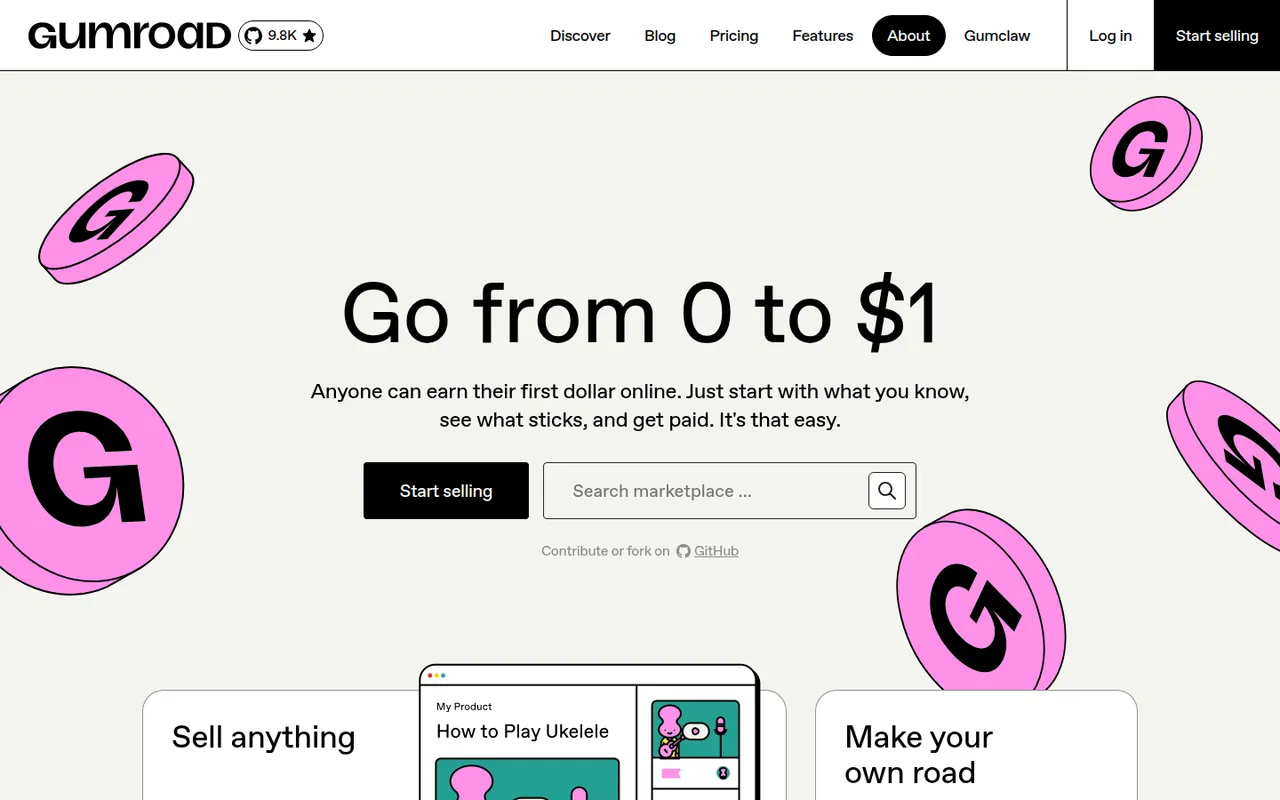
Cost / LicenseFree trialProprietaryCategoriesGumroad lets creators sell digital downloads, courses, memberships and physical items from a simple storefront or checkout links. There is no monthly subscription: Gumroad takes a percentage of each sale instead. It also includes email updates and automated workflows for customers, discount codes and affiliate features, which suits independent writers, artists and developers.
7 Gumroad alternativesPros
- No monthly fee, since you only pay a share of each sale
- Very quick to start selling with a simple checkout link
- Handles memberships, courses, discount codes and affiliates
Cons
- Per-sale fees take a noticeable cut as revenue grows
- Limited storefront customization and branding
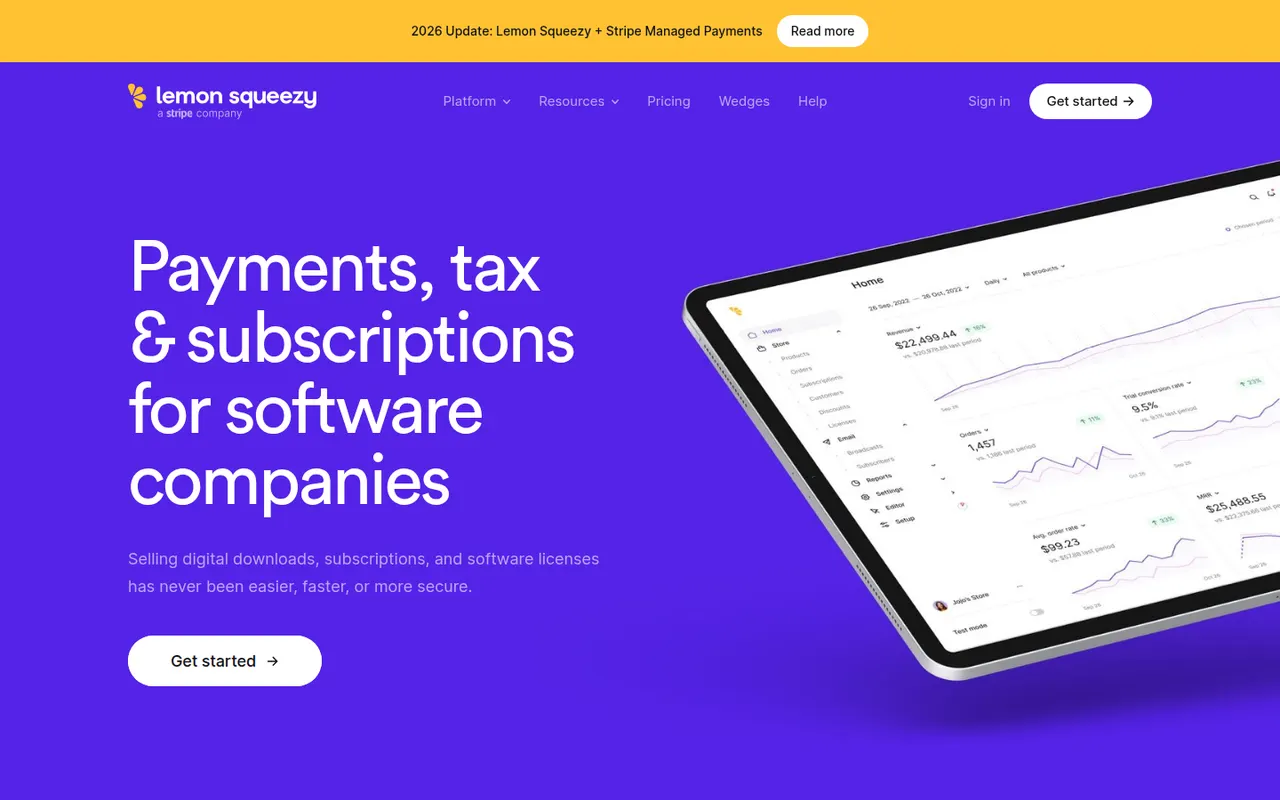
Cost / LicenseFreemiumProprietaryCategoriesPlatformsLemon Squeezy is a payments and storefront platform for software companies and creators. It acts as merchant of record, so it handles international sales tax and VAT, fraud and chargebacks on your behalf. It supports one-time products, subscriptions, software license keys, affiliate programs and email marketing. Stripe acquired it in 2024, and it charges a fee per transaction rather than a monthly plan.
6 Lemon Squeezy alternativesPros
- Acts as merchant of record and handles global sales tax and VAT for you
- Built-in license keys and subscriptions for software sellers
- No monthly plan, only fees per transaction
Cons
- Fees are higher than using a payment processor directly
- Product direction is less clear since the Stripe acquisition
- Storefront customization is fairly limited
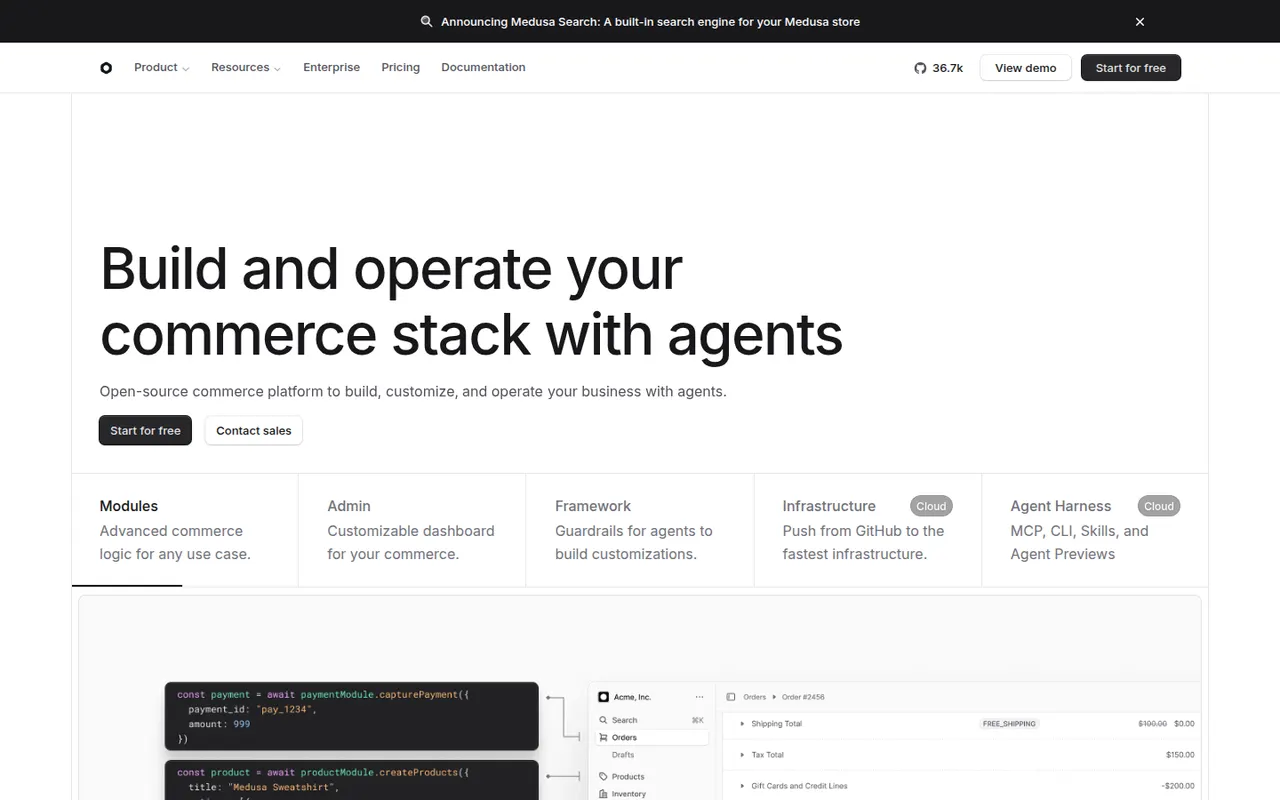
Cost / LicenseFreemiumProprietaryCategoriesPlatformsMedusa is an open source commerce platform for developers who want to build a custom store or marketplace rather than adapt a hosted product. It provides modular back-end building blocks for products, carts, orders, payments and fulfillment, an admin dashboard and APIs that any front end can consume. It can be self-hosted for free or deployed on the managed Medusa Cloud.
6 Medusa alternativesPros
- Modular back end for building custom stores and marketplaces
- Open source and free to self-host, with a managed cloud option
- Admin dashboard and APIs work with any front-end framework
Cons
- Needs developers, so it is not a ready-made store for non-technical merchants
- Smaller plugin ecosystem than Shopify or WooCommerce
Cost / LicenseFreemiumOpen sourceCategoriesPlatformsPayhip is an e-commerce platform for creators selling digital downloads, online courses, coaching, memberships and physical products. It provides a hosted store or embeddable buy buttons, handles EU and UK VAT on digital sales, and includes email marketing, coupons and affiliate tools. The free plan charges a fee on each sale, which paid plans reduce or remove.
7 Payhip alternativesPros
- Free plan to start selling digital products, with fees per sale
- Handles EU and UK VAT on digital sales
- Courses, coaching, memberships and coupons in one storefront
Cons
- Store design options are fairly limited
- Transaction fees on the free plan cut into margins
- Marketing tools are basic compared with dedicated email platforms
Cost / LicenseFreemiumProprietaryCategoriesPlatforms