
Free Ghost alternatives
Top Website Builders like Ghost
The most popular alternative to Ghost is Substack, which has a free version. Other great alternatives to Ghost are WordPress, beehiiv, WordPress.com, and Kit.
Most alternatives to Ghost are in the Website Builders category, compared here by price, platform and features.
All Ghost alternatives
Substack lets writers start a newsletter with a web archive, podcast and video hosting, and turn on paid subscriptions when they are ready. Publishing is free: Substack takes a share of subscription revenue instead of charging for a plan. Its reader app, Notes feed and cross-recommendations connect publications into a network that helps writers find readers.
7 Substack alternativesPros
- Free to publish, with no setup or hosting to manage
- Built-in paid subscriptions, podcasts and video
- Notes and cross-recommendations help writers find readers
Cons
- Takes a share of revenue from paid subscriptions
- Limited design and branding customization
- Your audience lives inside Substack’s network rather than your own brand
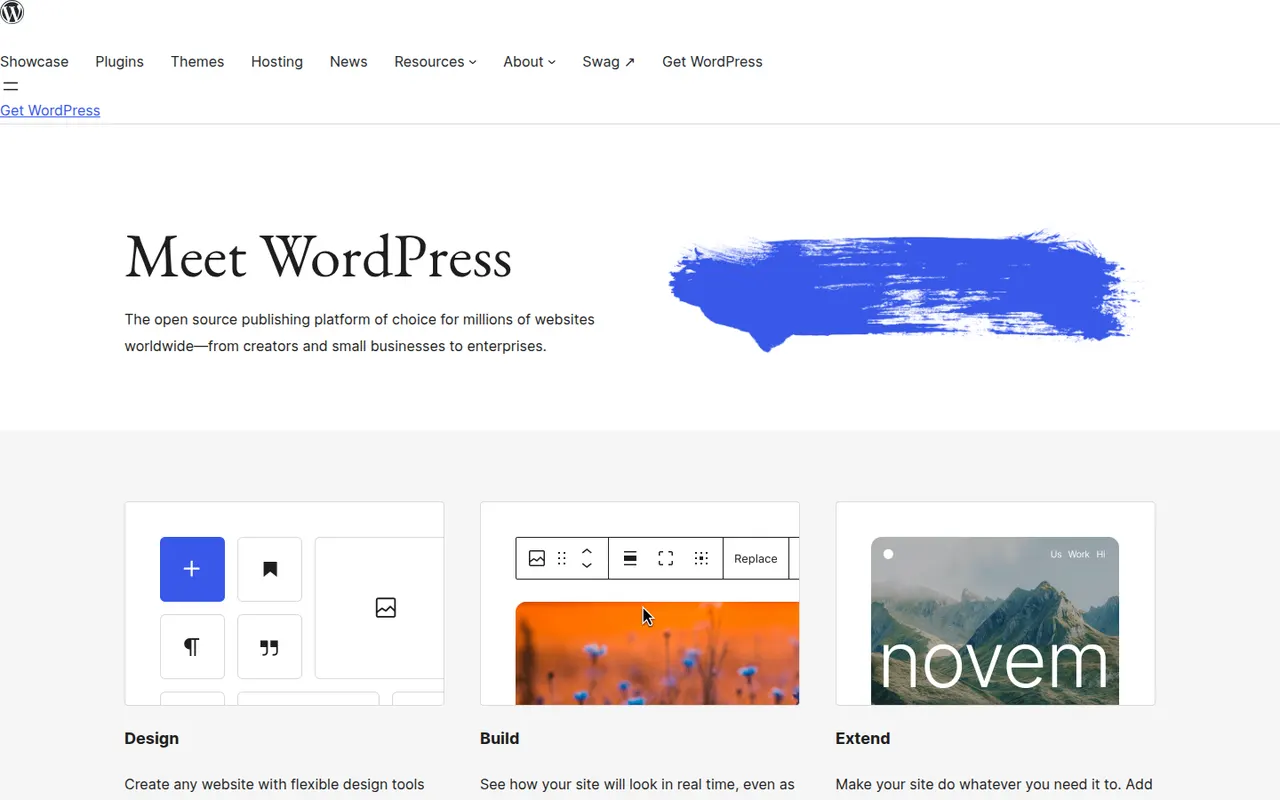
Cost / LicenseFreeProprietaryCategoriesWordPress is a free, open source content management system that you install on your own web hosting. Its block editor handles pages and posts, and thousands of themes and plugins add features such as forms, SEO tools or an online store. Because it is self-hosted, you keep full control over your files, your data and your choice of host.
9 WordPress alternativesPros
- Thousands of themes and plugins for almost any need
- Full control over files, data and choice of host
- Free and open source, with a huge community
Cons
- You handle hosting, updates, backups and security yourself
- Plugin sprawl can slow sites and introduce vulnerabilities
- Block editor takes time to master for complex layouts
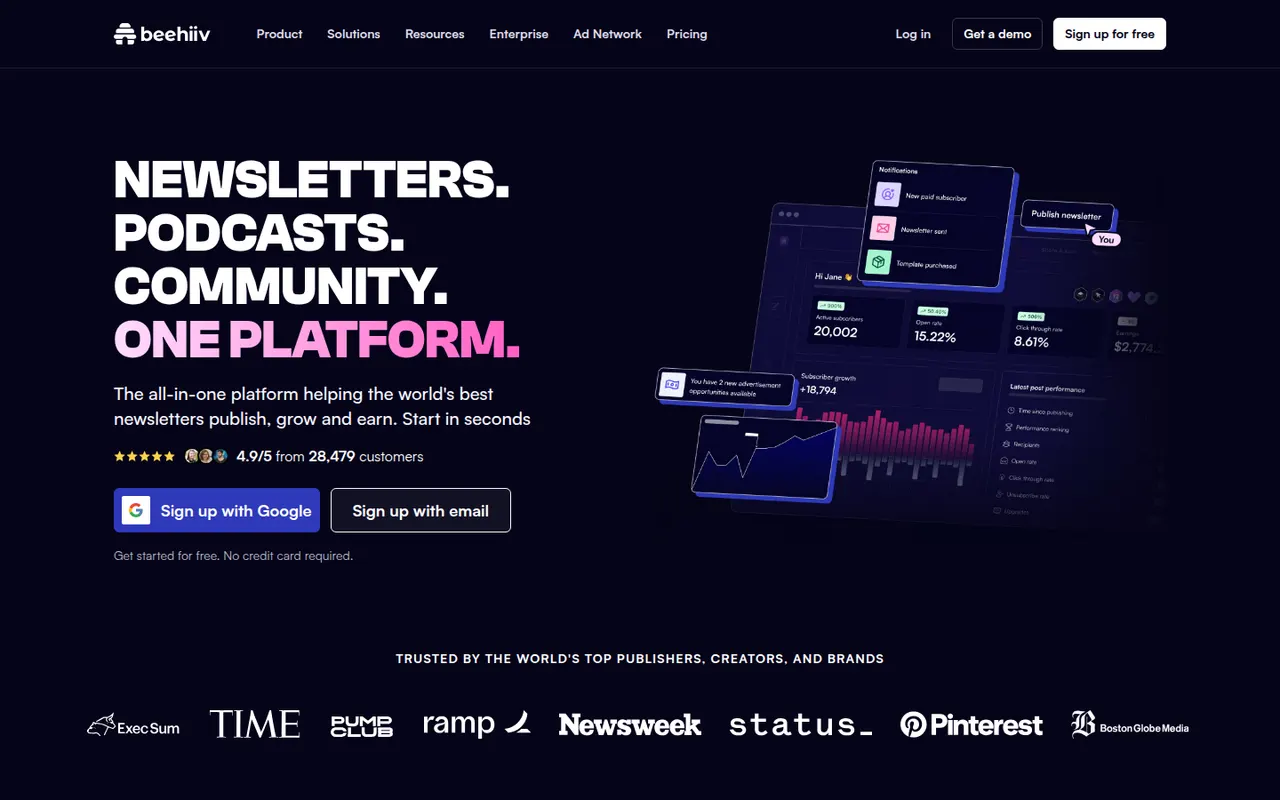
Cost / LicenseFreeOpen sourceCategoriesPlatformsbeehiiv is a newsletter platform created by former Morning Brew team members, combining an editor, a hosted website and email delivery. It focuses on growth and monetization, with a referral program, recommendations between newsletters, an ad network and paid subscriptions. Publishers also get detailed analytics, A/B testing of subject lines and AI writing tools.
6 beehiiv alternativesPros
- Growth tools like referrals and cross-newsletter recommendations
- Monetization through an ad network and paid subscriptions
- Hosted website and detailed analytics included
Cons
- Most monetization and growth features sit on paid plans
- Less suited to advanced marketing automation or e-commerce
Cost / LicenseFreemiumProprietaryCategoriesPlatformsWordPress.com is the hosted version of WordPress run by Automattic, so you get the WordPress editor, themes and blogging tools without managing a server. Free sites use a wordpress.com address, while paid plans add custom domains, plugins, e-commerce and more storage. It suits bloggers and small businesses who want WordPress without handling updates, backups and security themselves.
11 WordPress.com alternativesPros
- WordPress without managing servers, updates or backups
- Free plan to start a blog quickly
- Same WordPress editor, themes and blogging tools
Cons
- Installing plugins requires a paid plan
- Free sites show ads and use a wordpress.com address
- Less control over hosting than self-hosted WordPress
Cost / LicenseFreemiumProprietaryCategoriesKit, previously called ConvertKit, is an email marketing platform designed for creators such as writers, podcasters and course authors. It combines landing pages and forms, visual automations, subscriber tagging and paid newsletters, and lets you sell digital products directly to your list. A recommendations network helps creators grow by promoting each other's newsletters.
12 Kit alternativesPros
- Tag-based subscriber management suited to creators
- Sell digital products and paid newsletters to your list
- Recommendations network helps newsletters grow
Cons
- Email design options are deliberately simple
- Gets expensive as the subscriber count grows
- Advanced automations are reserved for paid plans
Cost / LicenseFreemiumProprietaryCategoriesButtondown is a small, independent newsletter service for writers and developers who prefer a lightweight tool. You write in Markdown or a rich text editor, publish an archive on the web and can charge for subscriptions through Stripe. It offers a complete API, custom domains and RSS-to-email, and is built by a very small team.
6 Buttondown alternativesPros
- Write in Markdown or a rich text editor
- Complete API and RSS-to-email for developers
- Paid subscriptions through Stripe and custom domains
Cons
- Templates and design options are minimal
- Few audience growth tools compared with beehiiv or Substack
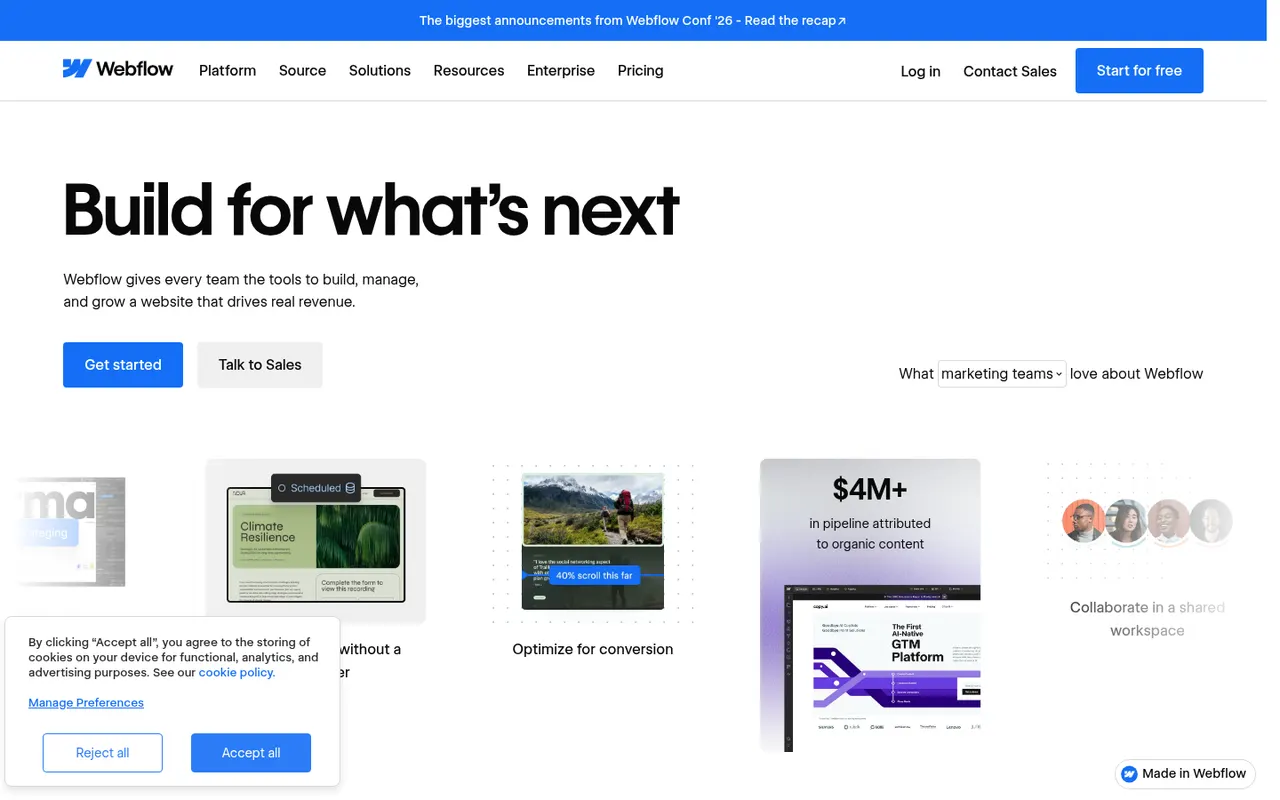
Cost / LicenseFreemiumProprietaryCategoriesPlatformsWebflow is a browser-based visual builder that exposes real HTML and CSS concepts such as boxes, flexbox and classes, so designers can produce custom, responsive sites without writing code. It includes a CMS for structured content, interactions and animations, hosting and localization. It is aimed at designers, agencies and marketing teams who want more control than template builders offer.
9 Webflow alternativesPros
- Visual control over real HTML and CSS concepts
- Flexible CMS for structured content
- Interactions and animations without writing code
Cons
- Steep learning curve for non-designers
- Pricing is complex, with separate site and workspace plans
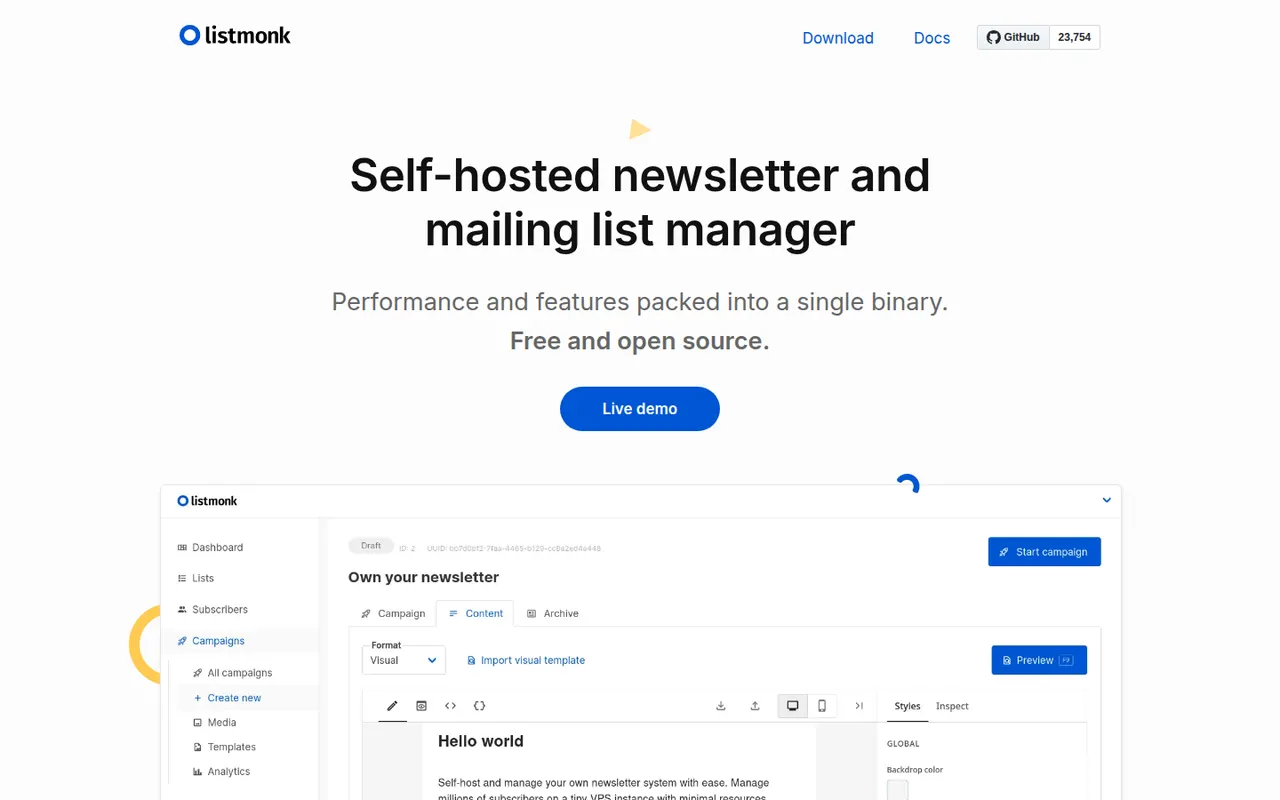
Cost / LicenseFreemiumProprietaryCategoriesPlatformslistmonk is a free, open source newsletter and mailing list manager distributed as a single binary backed by PostgreSQL. It handles large subscriber lists, template-based campaigns, transactional messages via API and segmentation through SQL queries, and can send through any SMTP server or service. It suits developers and organizations that want to keep email marketing and subscriber data on their own servers.
6 listmonk alternativesPros
- Free, open source and distributed as a single binary
- Handles very large lists efficiently on PostgreSQL
- Sends through any SMTP server or email service
Cons
- Requires self-hosting and a separate sending service
- No visual automation builder or drip campaigns
- Segmentation relies on SQL queries rather than a point-and-click tool
Cost / LicenseFreeOpen sourceCategoriesPlatforms


















Ghost vs its alternatives at a glance
Pricing, platforms and the key features of Ghost, compared with its most popular alternatives.
| App | Pricing | Platforms | Blogging | Content management (CMS) | Custom domains | Paid newsletters | SEO settings |
|---|---|---|---|---|---|---|---|
 Ghost Ghost | FreemiumOpen source | Web, Self-hosted | |||||
 Substack Substack | Free | Web, iPhone, Android | |||||
 WordPress WordPress | FreeOpen source | iPhone, Android, Self-hosted | |||||
 beehiiv beehiiv | Freemium | Web | |||||
 WordPress.com WordPress.com | Freemium | Web, iPhone, Android | |||||
 Kit Kit | Freemium | Web, iPhone, Android |
Ghost alternatives: frequently asked questions
What is the best alternative to Ghost?
The most popular alternative to Ghost is Substack: Publish a newsletter and podcast, with optional paid subscriptions. Other great alternatives are WordPress, beehiiv, WordPress.com, and Kit.
Is there a free alternative to Ghost?
Yes, 8 alternatives are free or have a free plan, including Substack, WordPress, beehiiv, and WordPress.com.
Is there an open source alternative to Ghost?
Yes, 2 open source alternatives are listed, including WordPress and listmonk.
Is Ghost free?
Ghost has a free plan, with paid plans that unlock more features.
Compare Ghost with its alternatives


Sponsored listings and products made by the publisher of this site are always labeled. How we rank · Know a good alternative? Submit it