
Payhip alternatives
Top E-commerce Platforms like Payhip
The most popular alternative to Payhip is Gumroad, which has a free version. Other great alternatives to Payhip are Lemon Squeezy, Kit, Shopify, and Ecwid.
Most alternatives to Payhip are in the E-commerce Platforms category, compared here by price, platform and features.

All Payhip alternatives
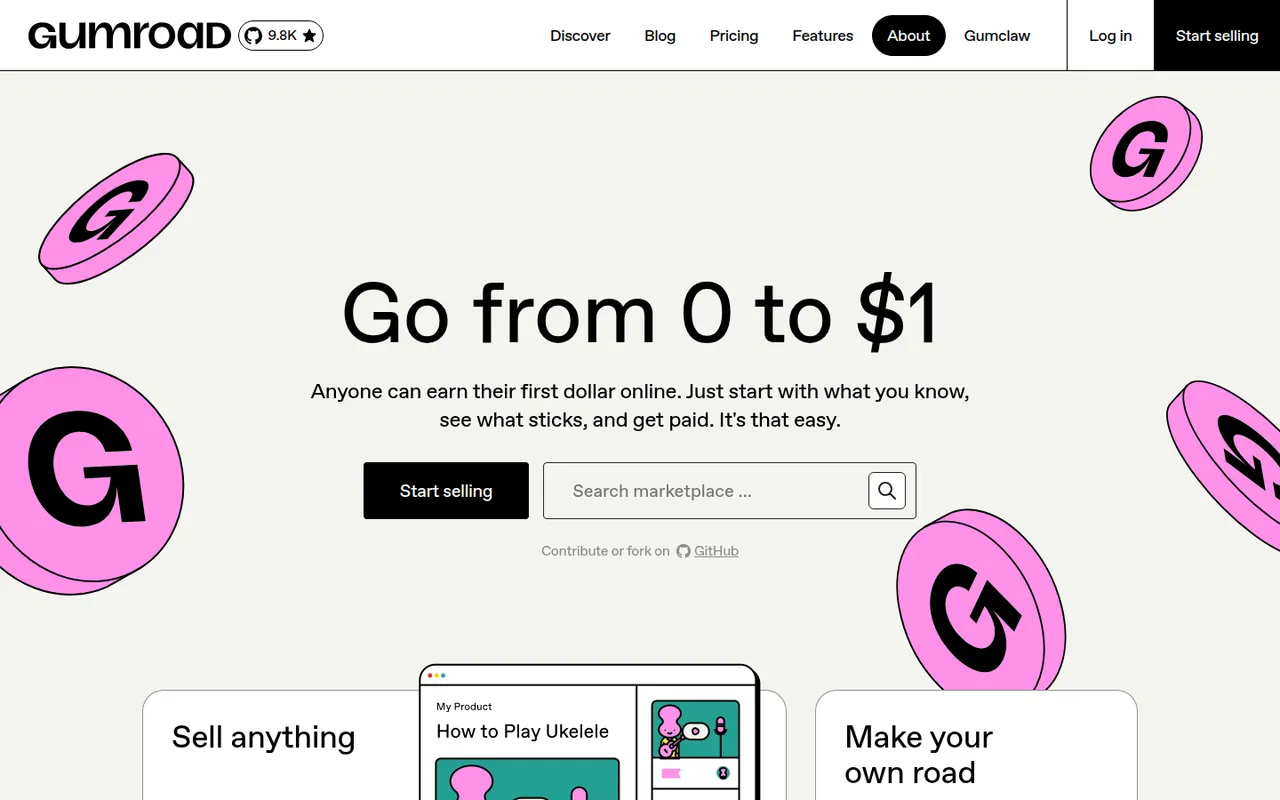
Gumroad lets creators sell digital downloads, courses, memberships and physical items from a simple storefront or checkout links. There is no monthly subscription: Gumroad takes a percentage of each sale instead. It also includes email updates and automated workflows for customers, discount codes and affiliate features, which suits independent writers, artists and developers.
7 Gumroad alternativesPros
- No monthly fee, since you only pay a share of each sale
- Very quick to start selling with a simple checkout link
- Handles memberships, courses, discount codes and affiliates
Cons
- Per-sale fees take a noticeable cut as revenue grows
- Limited storefront customization and branding
Cost / LicenseFreemiumProprietaryCategoriesPlatformsLemon Squeezy is a payments and storefront platform for software companies and creators. It acts as merchant of record, so it handles international sales tax and VAT, fraud and chargebacks on your behalf. It supports one-time products, subscriptions, software license keys, affiliate programs and email marketing. Stripe acquired it in 2024, and it charges a fee per transaction rather than a monthly plan.
6 Lemon Squeezy alternativesPros
- Acts as merchant of record and handles global sales tax and VAT for you
- Built-in license keys and subscriptions for software sellers
- No monthly plan, only fees per transaction
Cons
- Fees are higher than using a payment processor directly
- Product direction is less clear since the Stripe acquisition
- Storefront customization is fairly limited
Cost / LicenseFreemiumProprietaryCategoriesPlatformsKit, previously called ConvertKit, is an email marketing platform designed for creators such as writers, podcasters and course authors. It combines landing pages and forms, visual automations, subscriber tagging and paid newsletters, and lets you sell digital products directly to your list. A recommendations network helps creators grow by promoting each other's newsletters.
12 Kit alternativesPros
- Tag-based subscriber management suited to creators
- Sell digital products and paid newsletters to your list
- Recommendations network helps newsletters grow
Cons
- Email design options are deliberately simple
- Gets expensive as the subscriber count grows
- Advanced automations are reserved for paid plans
Cost / LicenseFreemiumProprietaryCategoriesShopify is a hosted commerce platform for creating an online store, selling on social networks and marketplaces, and taking payments in person with its point-of-sale app. It handles hosting, checkout, inventory and shipping, while a large app store and theme marketplace extend what a store can do. It scales from first-time sellers to large brands on the Shopify Plus tier.
12 Shopify alternativesPros
- Hosting, checkout, payments and security are handled for you
- Huge app store and theme marketplace
- Sells online, on social channels and in person with its POS app
Cons
- Monthly app subscriptions quickly raise the total cost
- Extra transaction fees apply when not using Shopify Payments
- Checkout customization is limited outside Shopify Plus
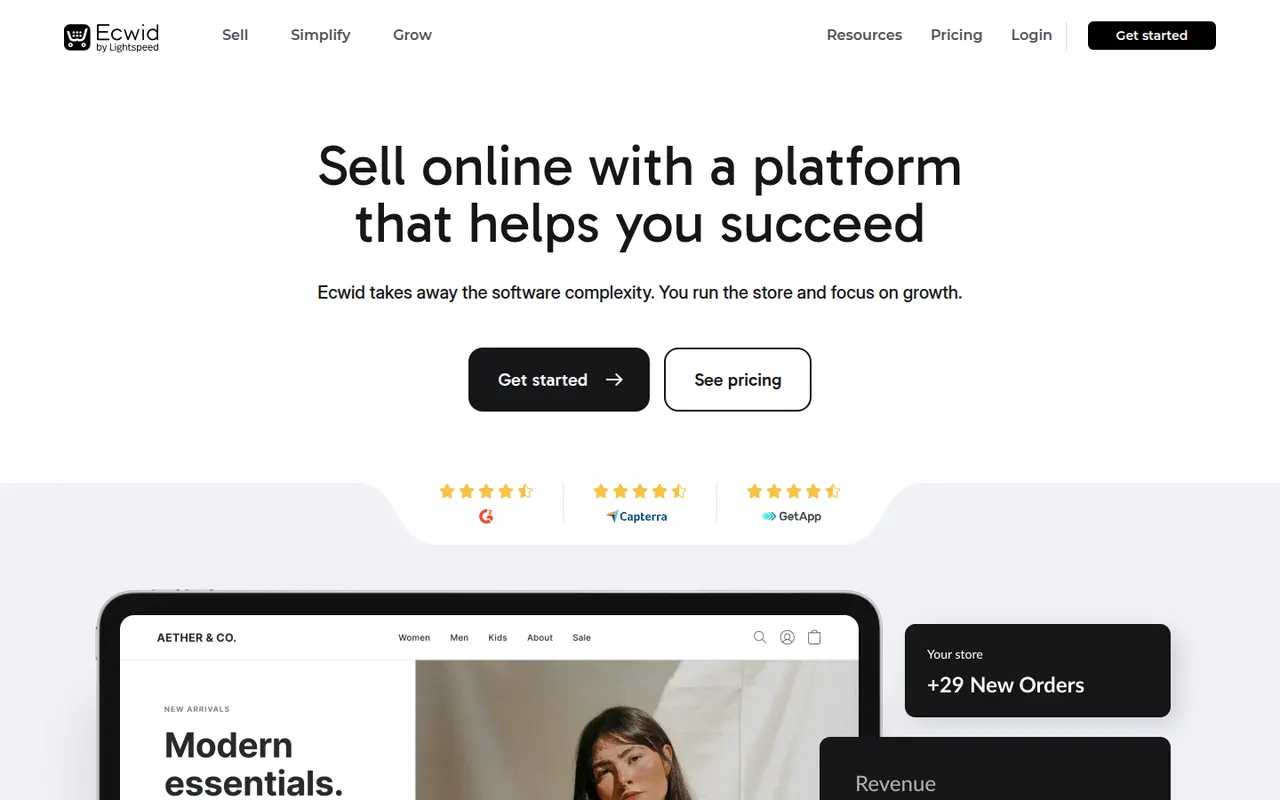
Cost / LicenseFree trialProprietaryCategoriesEcwid, now part of Lightspeed, is an e-commerce platform built to be embedded: you manage products in one place and add the store to an existing website, a WordPress site, social networks and marketplaces. It also offers a simple standalone Instant Site and mobile apps to manage orders. It is aimed at small businesses that already have a web presence and want to start selling quickly.
9 Ecwid alternativesPros
- Embeds a store into an existing website, WordPress or social pages
- Manage products once and sell across several channels
- Quick to start, with mobile apps to manage orders
Cons
- Store design options are limited compared with full platforms
- Advanced features and larger catalogs need higher plans
- Instant Site is basic as a standalone website
Cost / LicenseFree trialProprietaryCategoriesSquarespace is a hosted platform for building websites, portfolios and online stores from designer templates. It bundles hosting, domains, e-commerce, email campaigns and appointment scheduling, with a section-based editor that keeps layouts consistent. It appeals to creatives and small businesses who care about design and prefer not to manage plugins.
12 Squarespace alternativesPros
- Polished designer templates with consistent layouts
- Hosting, commerce, email campaigns and scheduling in one place
- No plugins to install or keep updated
Cons
- No free plan beyond the trial
- Less layout freedom than canvas-based builders
- Fewer third-party extensions than WordPress
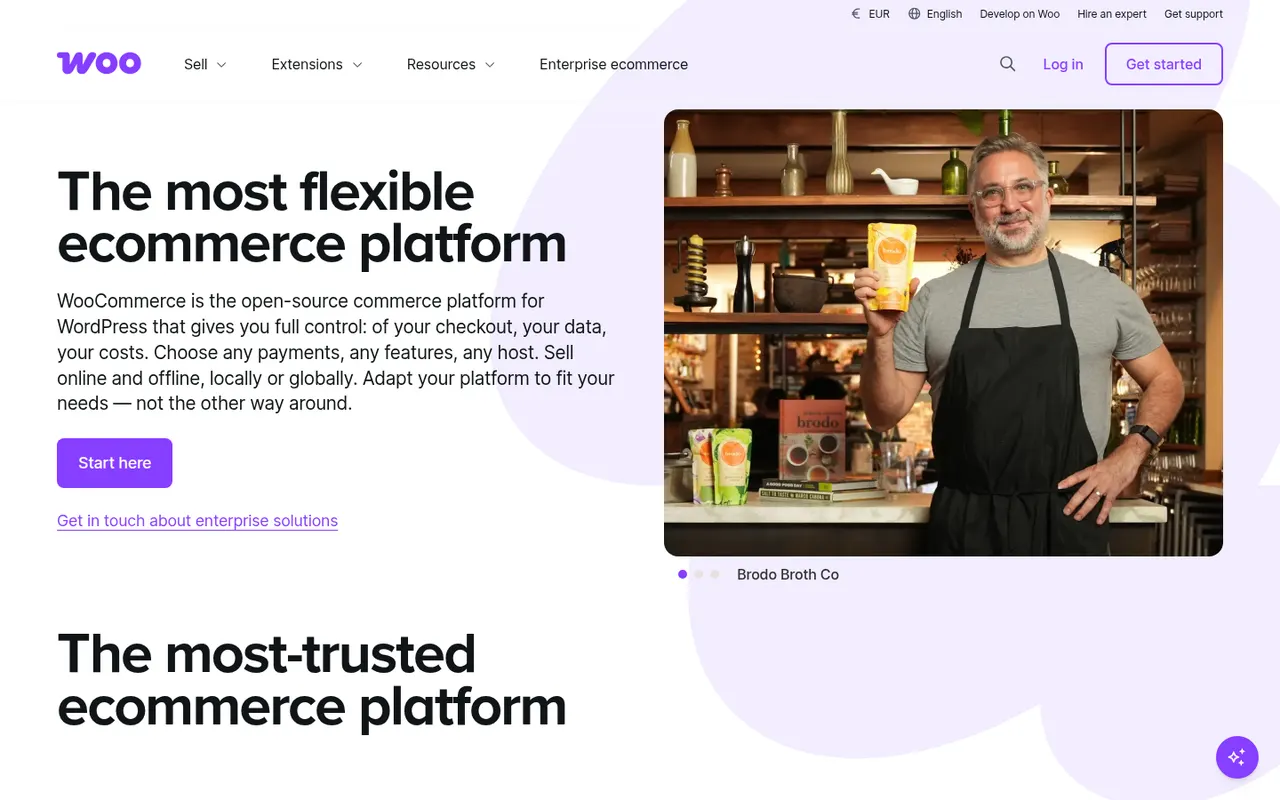
Cost / LicenseFree trialProprietaryCategoriesWooCommerce is a free, open source plugin that adds a full online store to a WordPress site: products, cart, checkout, taxes, shipping and orders. Because it runs on your own hosting, you control the code and data, and a large catalog of free and paid extensions covers payment gateways, subscriptions, bookings and more. It is a natural choice for shops that already use WordPress.
12 WooCommerce alternativesPros
- Free plugin that turns a WordPress site into a full store
- Huge catalog of extensions for payments, subscriptions and bookings
- Full control over code, data and hosting
Cons
- Hosting, security and updates are your responsibility
- Paid extensions add up for features many stores need
- Performance needs tuning as catalogs and traffic grow
Cost / LicenseFreeOpen sourceCategoriesPlatforms

















Payhip vs its alternatives at a glance
Pricing, platforms and the key features of Payhip, compared with its most popular alternatives.


Payhip alternatives: frequently asked questions
What is the best alternative to Payhip?
The most popular alternative to Payhip is Gumroad: Sell digital products, memberships and courses directly to your audience. Other great alternatives are Lemon Squeezy, Kit, Shopify, and Ecwid.
Is there a free alternative to Payhip?
Yes, 4 alternatives are free or have a free plan, including Gumroad, Lemon Squeezy, Kit, and WooCommerce.
Is there an open source alternative to Payhip?
Yes, one open source alternative is listed: WooCommerce.
Is Payhip free?
Payhip has a free plan, with paid plans that unlock more features.
Compare Payhip with its alternatives


Sponsored listings and products made by the publisher of this site are always labeled. How we rank · Know a good alternative? Submit it