Apps with A/B testing
8 apps
Top A/B testing apps ranked by the community
Mailchimp, owned by Intuit, is an email marketing platform for designing campaigns, building automated customer journeys and organizing an audience with tags and segments. It also offers landing pages, signup forms, SMS in some countries and AI tools for content and send times. Its many integrations, including e-commerce platforms, make it easy to connect to an existing stack.
10 Mailchimp alternativesPros
- Familiar, well-documented platform with many templates
- Large integration library, including e-commerce platforms
- Free plan for getting started with a small list
Cons
- Prices rise steeply as your audience grows
- Unsubscribed contacts can still count toward billing
- Free plan is restrictive, and key features require paid tiers
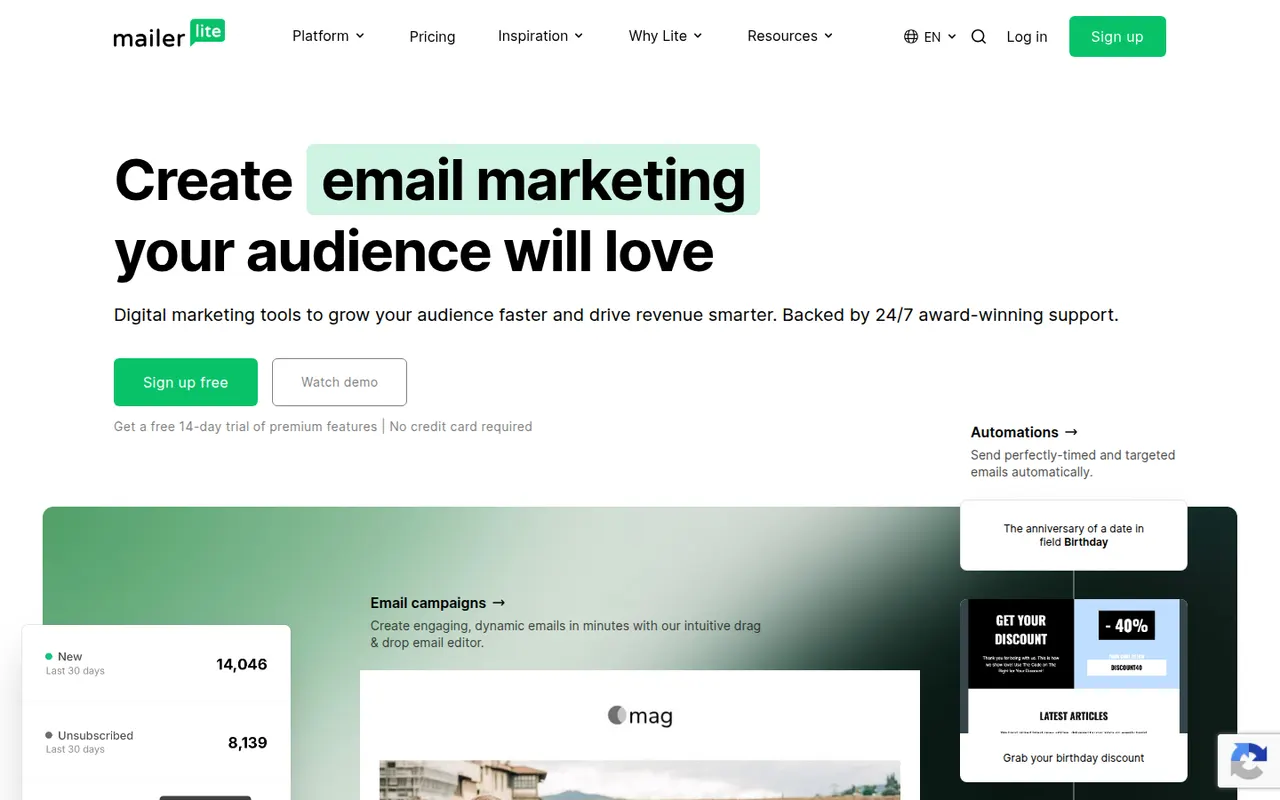
Cost / LicenseFreemiumProprietaryCategoriesMailerLite is an email marketing tool with an uncluttered drag-and-drop editor and an approachable automation builder. Besides campaigns, it can create landing pages, signup forms and simple websites, sell digital products and paid newsletter subscriptions, and run A/B tests. Small businesses and creators often choose it as a lighter alternative to larger marketing suites.
11 MailerLite alternativesPros
- Clean drag-and-drop editor that is easy to learn
- Landing pages, websites and paid newsletters included
- Approachable automation builder for small businesses
Cons
- Account approval process can delay your first campaigns
- Fewer advanced automation and reporting options than larger suites
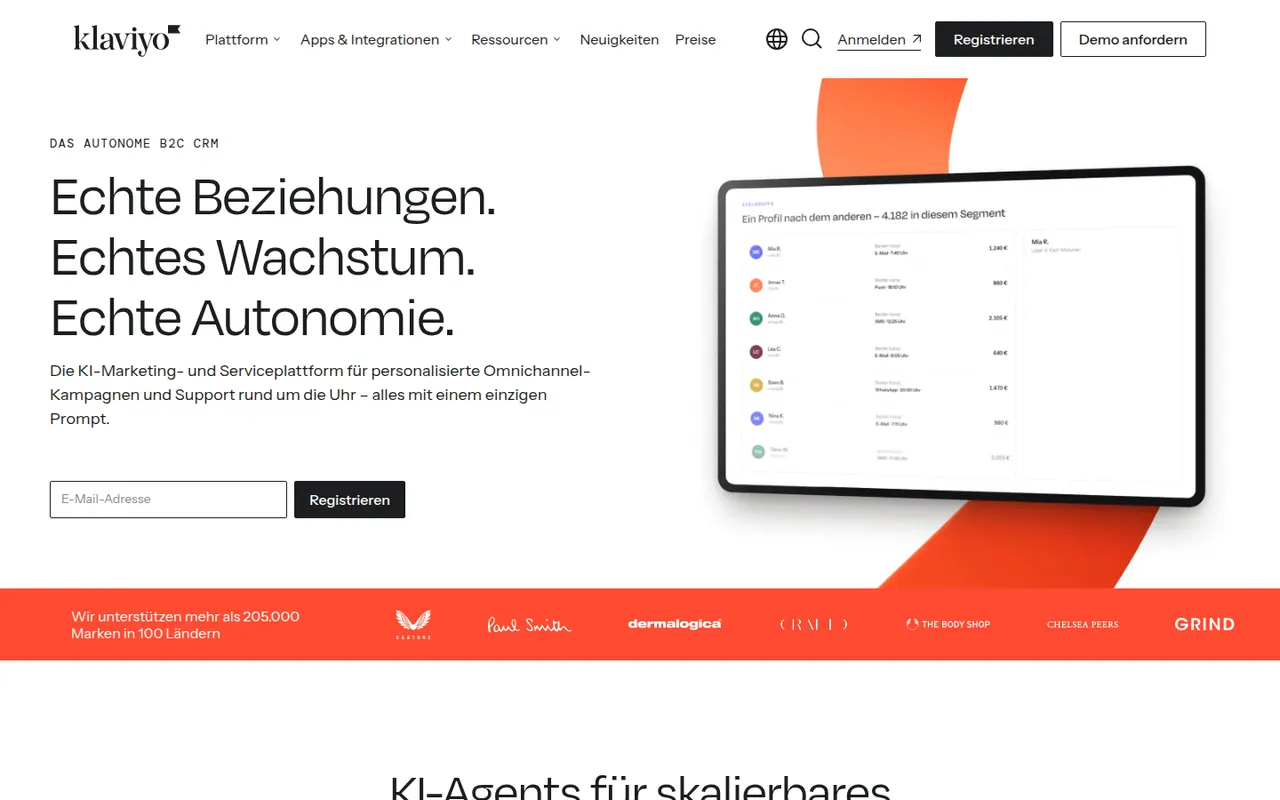
Cost / LicenseFreemiumProprietaryCategoriesPlatformsKlaviyo is a marketing automation platform for online stores that connects to Shopify, WooCommerce and other platforms to use order and browsing data in email and SMS campaigns. Merchants build flows such as abandoned cart or post-purchase sequences, segment customers by behavior and predicted value, and measure revenue per message. AI features help generate content and segments.
7 Klaviyo alternativesPros
- Uses order and browsing data from Shopify and other platforms
- Prebuilt flows for abandoned carts and post-purchase emails
- Revenue attribution per message and predictive segments
Cons
- Becomes expensive as the number of active profiles grows
- Overkill for businesses that don’t sell online
- Advanced segmentation and reporting take time to master
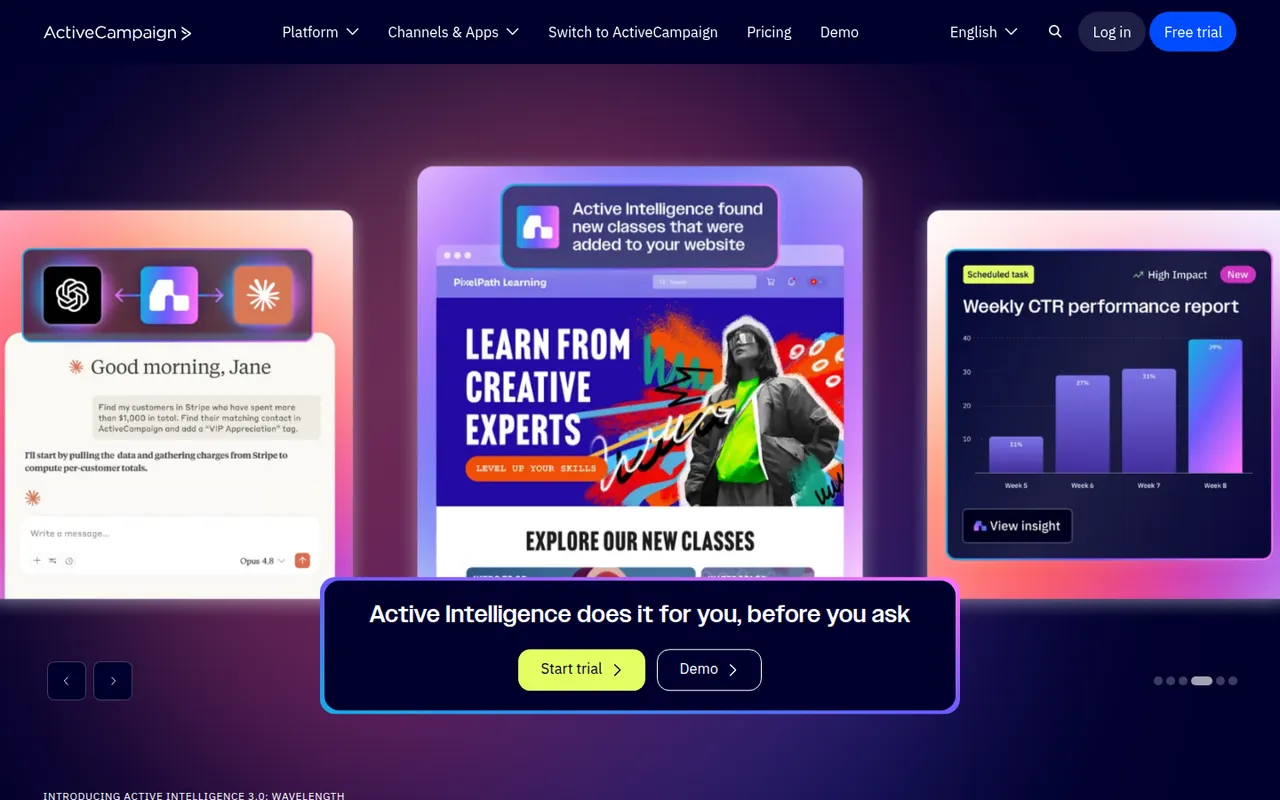
Cost / LicenseFreemiumProprietaryCategoriesActiveCampaign is a customer experience automation platform that combines email marketing, a visual automation builder, lead scoring and a sales CRM with deal pipelines. Automations can branch on behavior, site visits and custom data across email, SMS and connected apps. It is aimed at small and mid-sized businesses that need more advanced automation than basic newsletter tools provide.
8 ActiveCampaign alternativesPros
- Powerful visual automation builder with behavior-based branching
- Built-in CRM with deal pipelines and lead scoring
- Many integrations with e-commerce and business apps
Cons
- Complex automations come with a real learning curve
- Costs rise quickly as the contact list grows
- No free plan beyond the trial
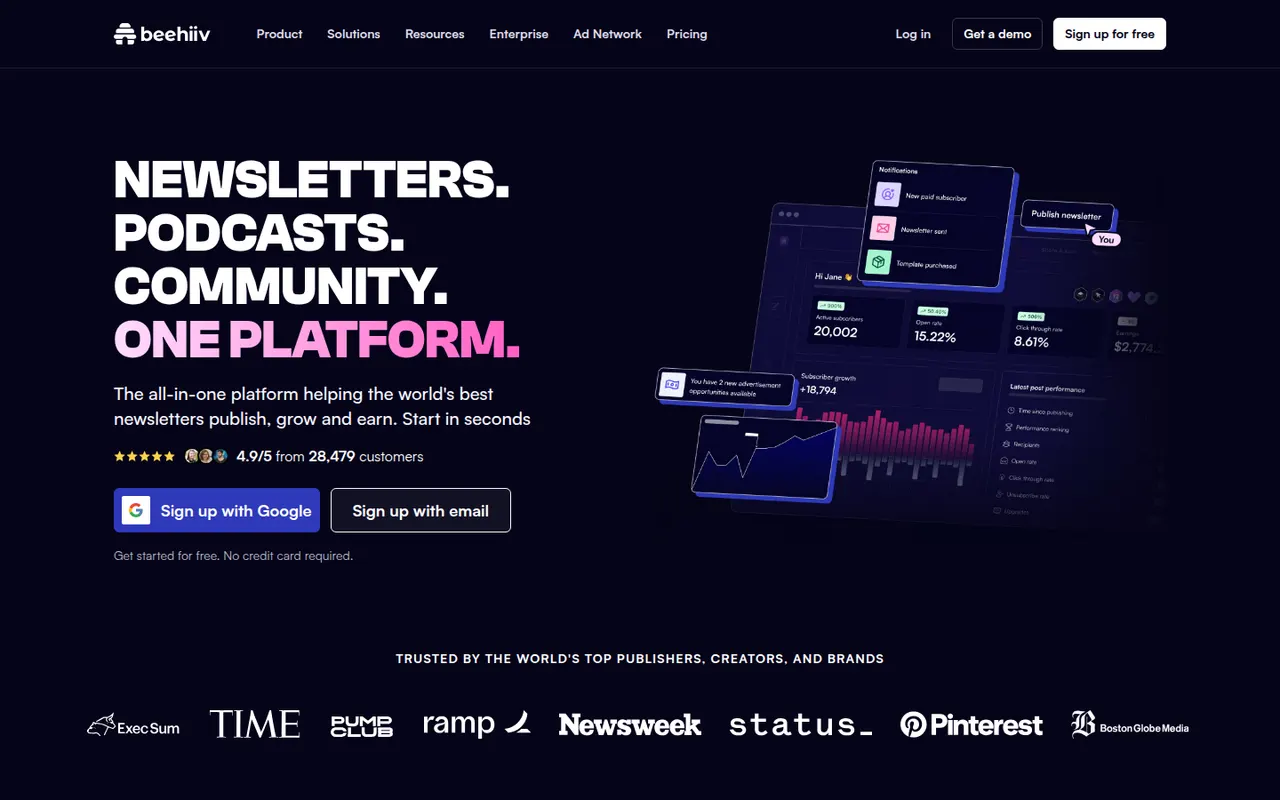
Cost / LicenseFree trialProprietaryCategoriesbeehiiv is a newsletter platform created by former Morning Brew team members, combining an editor, a hosted website and email delivery. It focuses on growth and monetization, with a referral program, recommendations between newsletters, an ad network and paid subscriptions. Publishers also get detailed analytics, A/B testing of subject lines and AI writing tools.
6 beehiiv alternativesPros
- Growth tools like referrals and cross-newsletter recommendations
- Monetization through an ad network and paid subscriptions
- Hosted website and detailed analytics included
Cons
- Most monetization and growth features sit on paid plans
- Less suited to advanced marketing automation or e-commerce
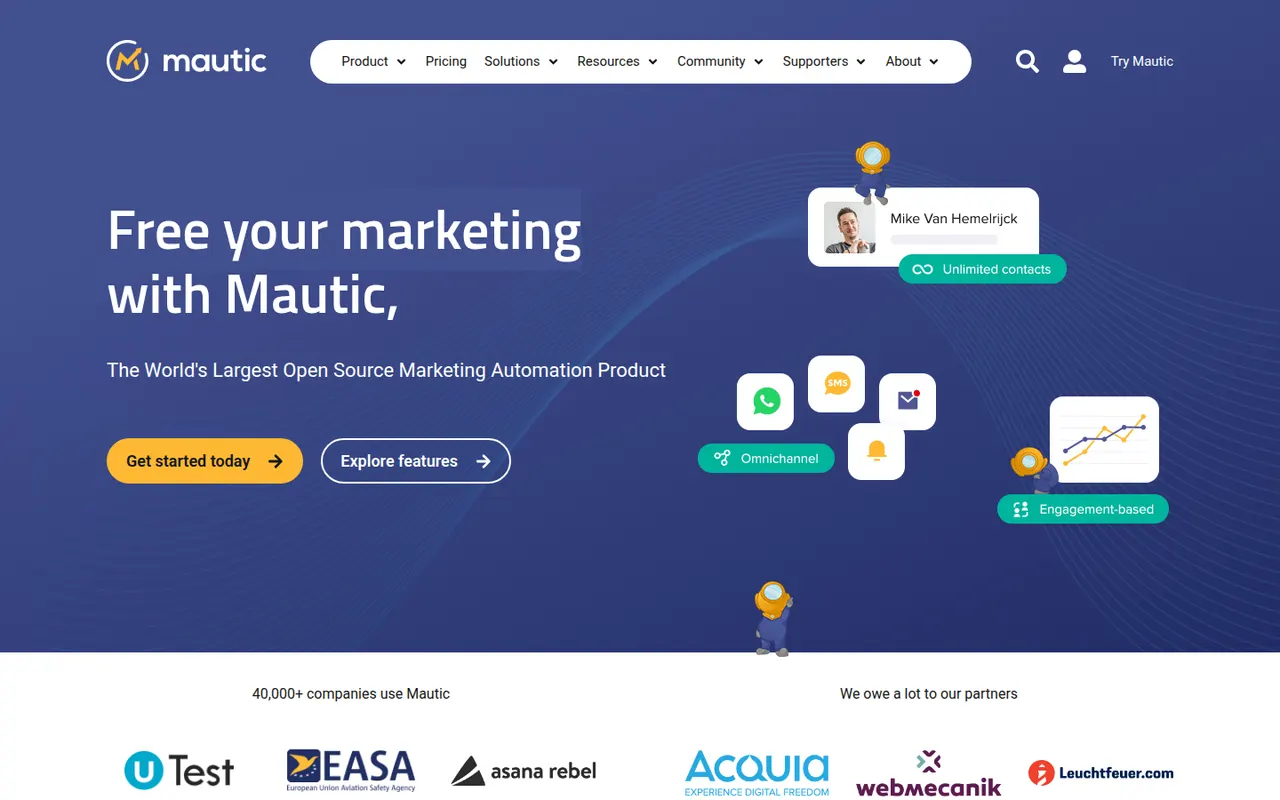
Cost / LicenseFreemiumProprietaryCategoriesPlatformsMautic is an open source marketing automation platform for running email campaigns, landing pages, forms, lead scoring and multi-step customer journeys. Self-hosting it keeps contact data on your own infrastructure, and its plugin system connects it to CRMs and other tools. It suits organizations with technical resources that want an alternative to proprietary automation suites.
7 Mautic alternativesPros
- Free and open source marketing automation
- Contact data stays on your own infrastructure
- Campaign builder with lead scoring, forms and landing pages
Cons
- Installation and maintenance require technical skills
- Needs a separate sending service for good deliverability
- Interface is less polished than commercial automation suites
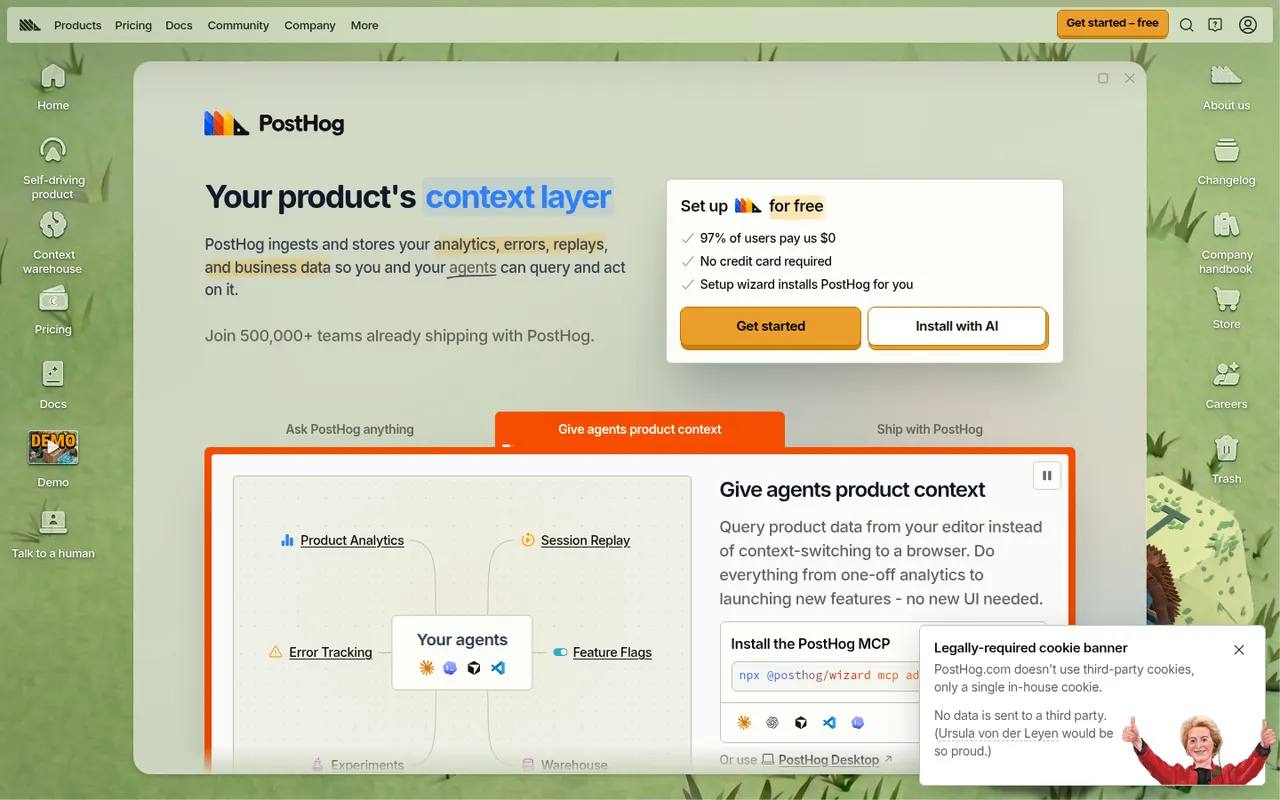
Cost / LicenseFreeOpen sourceCategoriesPlatformsPostHog is an open source product platform that combines product and web analytics, session replay, feature flags, A/B testing, surveys and a data warehouse in one tool. It is built for engineers and product teams, with SQL access, an AI assistant and a free monthly usage allowance on PostHog Cloud. It can also be self-hosted for smaller deployments.
12 PostHog alternativesPros
- Analytics, session replay, feature flags and A/B tests in one tool
- Generous free monthly usage on PostHog Cloud
- Open source with direct SQL access to your data
Cons
- Broad feature set can feel overwhelming for non-technical users
- Usage-based billing is hard to predict as traffic grows
- Self-hosting is only recommended for smaller deployments
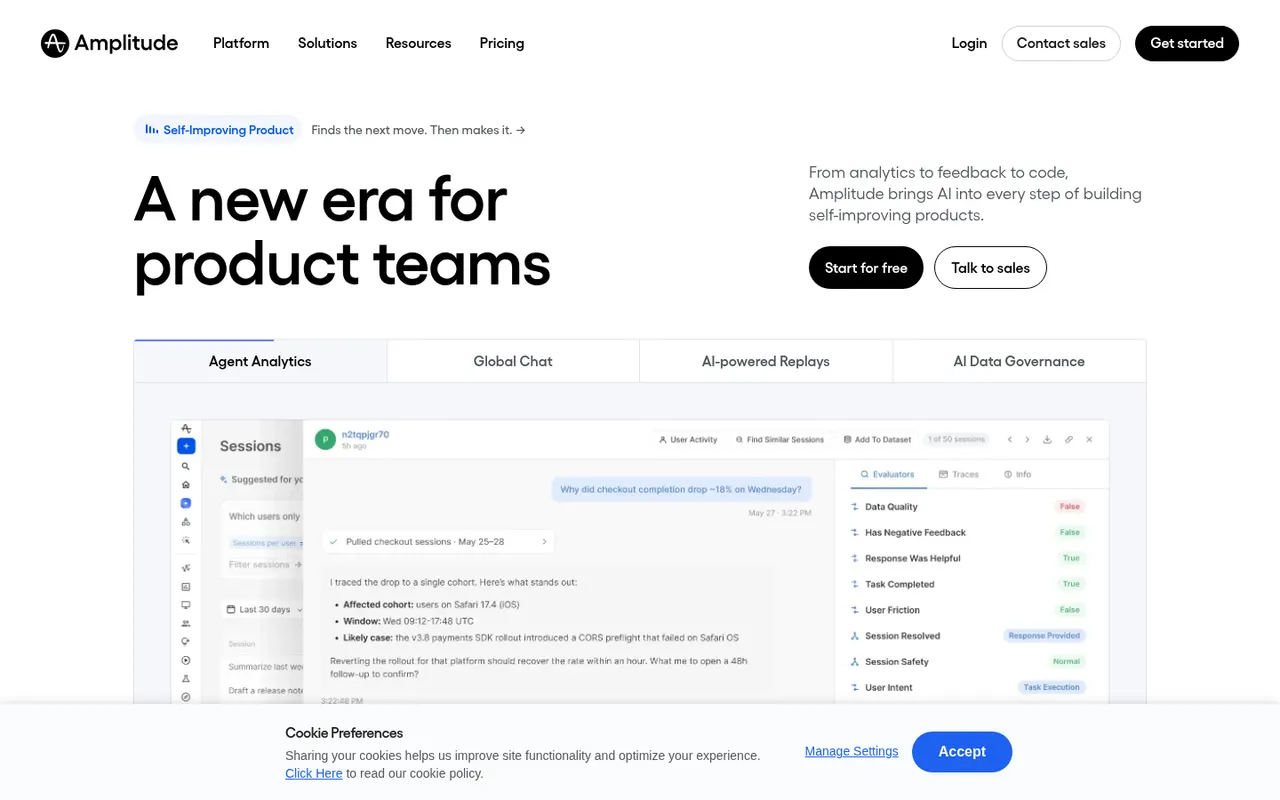
Cost / LicenseFreemiumOpen sourceCategoriesPlatformsAmplitude is a digital analytics platform centered on product analytics, with behavioral charts for funnels, retention, journeys and cohorts. Around that core the company offers experimentation and feature flags, session replay, customer data management and web analytics, along with AI features that surface insights. It is aimed mainly at product-led companies that want one system for analysis and experimentation.
6 Amplitude alternativesPros
- Deep behavioral analysis of funnels, retention and user journeys
- Experimentation and feature flags sit alongside the analytics
- Free plan that covers smaller products
Cons
- Steep learning curve to set up tracking and build charts
- Costs climb quickly as event volumes grow
- Needs careful event planning to produce reliable data
Cost / LicenseFreemiumProprietaryCategoriesPlatforms