
PostHog alternatives
Top Web & Product Analytics like PostHog
The most popular alternative to PostHog is Mixpanel, which has a free version. Other great alternatives to PostHog are Amplitude, Heap, Google Analytics, and Hotjar.
Most alternatives to PostHog are in the Web & Product Analytics category, compared here by price, platform and features.

All PostHog alternatives
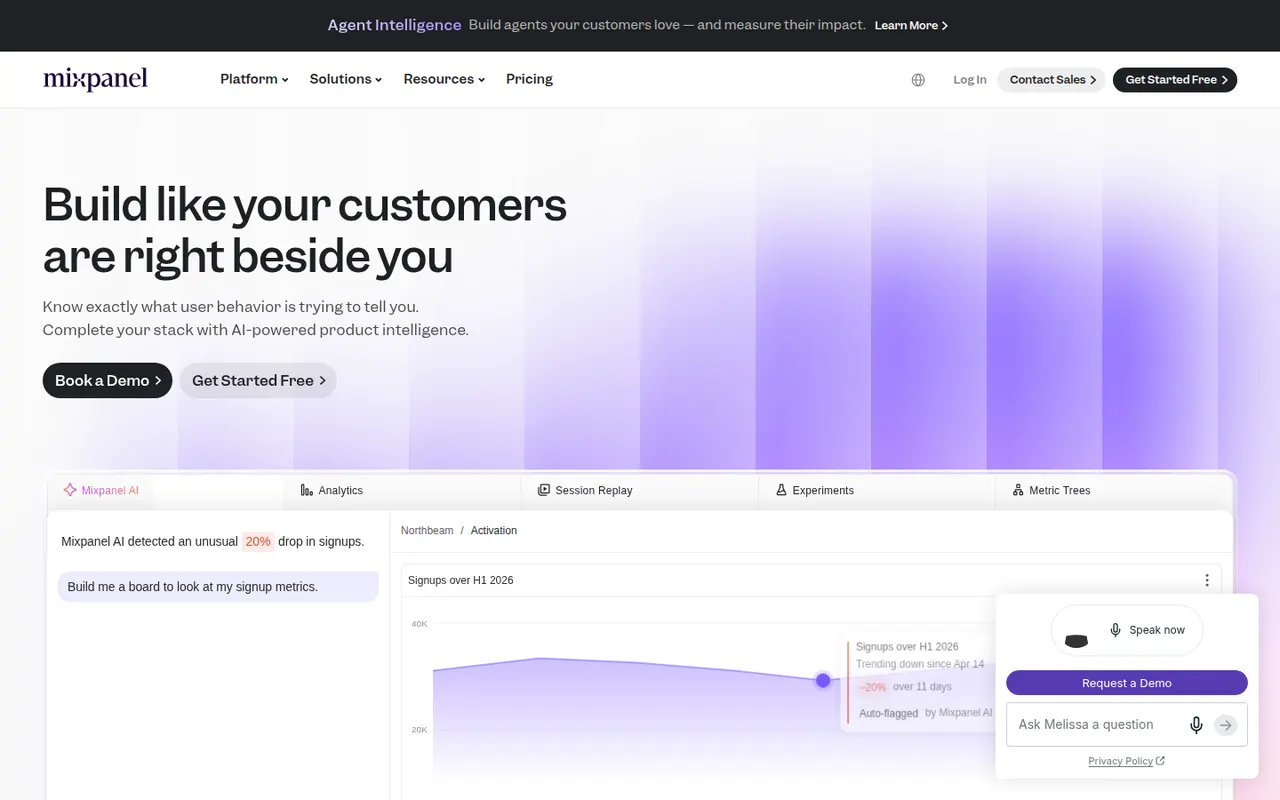
Mixpanel is a product analytics platform that tracks user actions as events and lets teams explore them through funnels, retention curves, flows and cohort segmentation without writing SQL. It also offers session replay and AI-assisted querying, and can sync data from a data warehouse. Product managers, growth teams and analysts use it to understand how features are adopted.
7 Mixpanel alternativesPros
- Funnels, retention and flows explored without writing SQL
- Interactive reports make slicing event data quick
- Usable free plan for smaller products
Cons
- Needs a well-planned event schema before data becomes useful
- Costs grow quickly with event volume on paid plans
- Less suited to marketing attribution than to product analysis
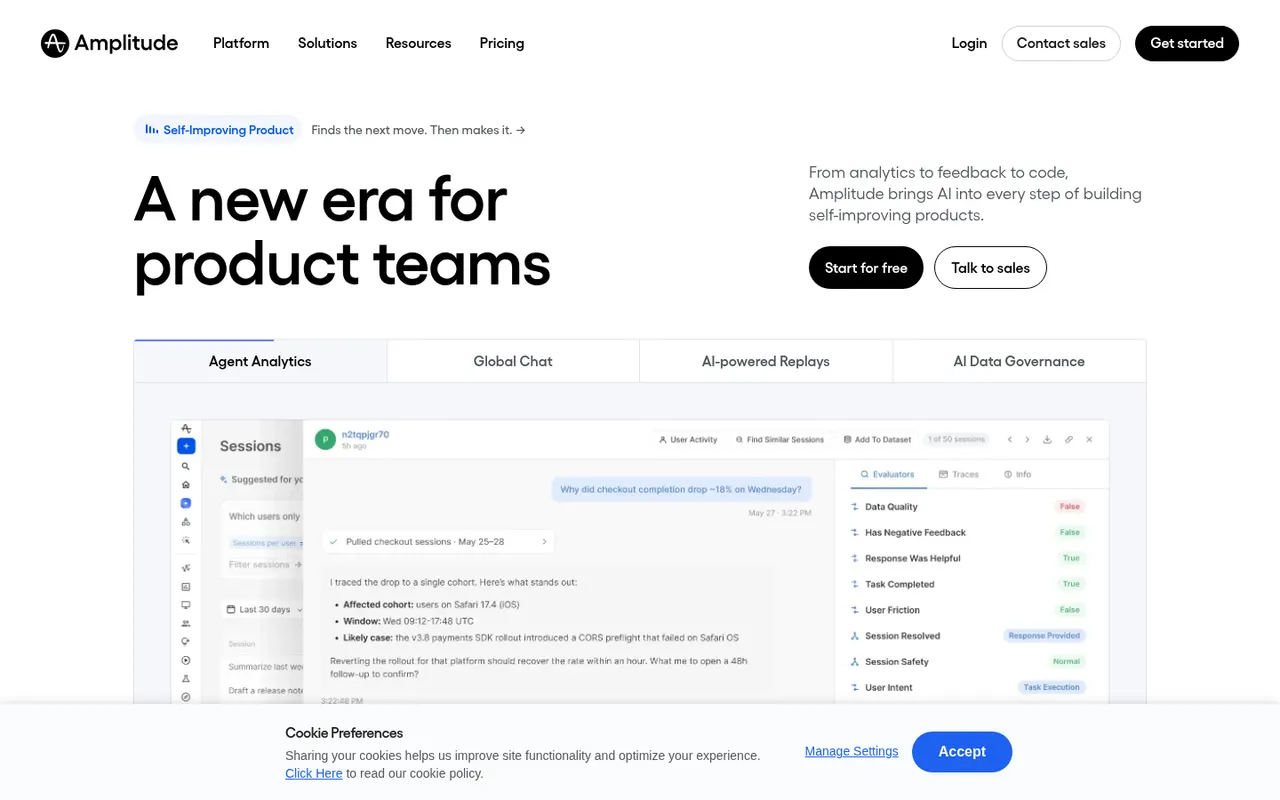
Cost / LicenseFreemiumProprietaryCategoriesPlatformsAmplitude is a digital analytics platform centered on product analytics, with behavioral charts for funnels, retention, journeys and cohorts. Around that core the company offers experimentation and feature flags, session replay, customer data management and web analytics, along with AI features that surface insights. It is aimed mainly at product-led companies that want one system for analysis and experimentation.
6 Amplitude alternativesPros
- Deep behavioral analysis of funnels, retention and user journeys
- Experimentation and feature flags sit alongside the analytics
- Free plan that covers smaller products
Cons
- Steep learning curve to set up tracking and build charts
- Costs climb quickly as event volumes grow
- Needs careful event planning to produce reliable data
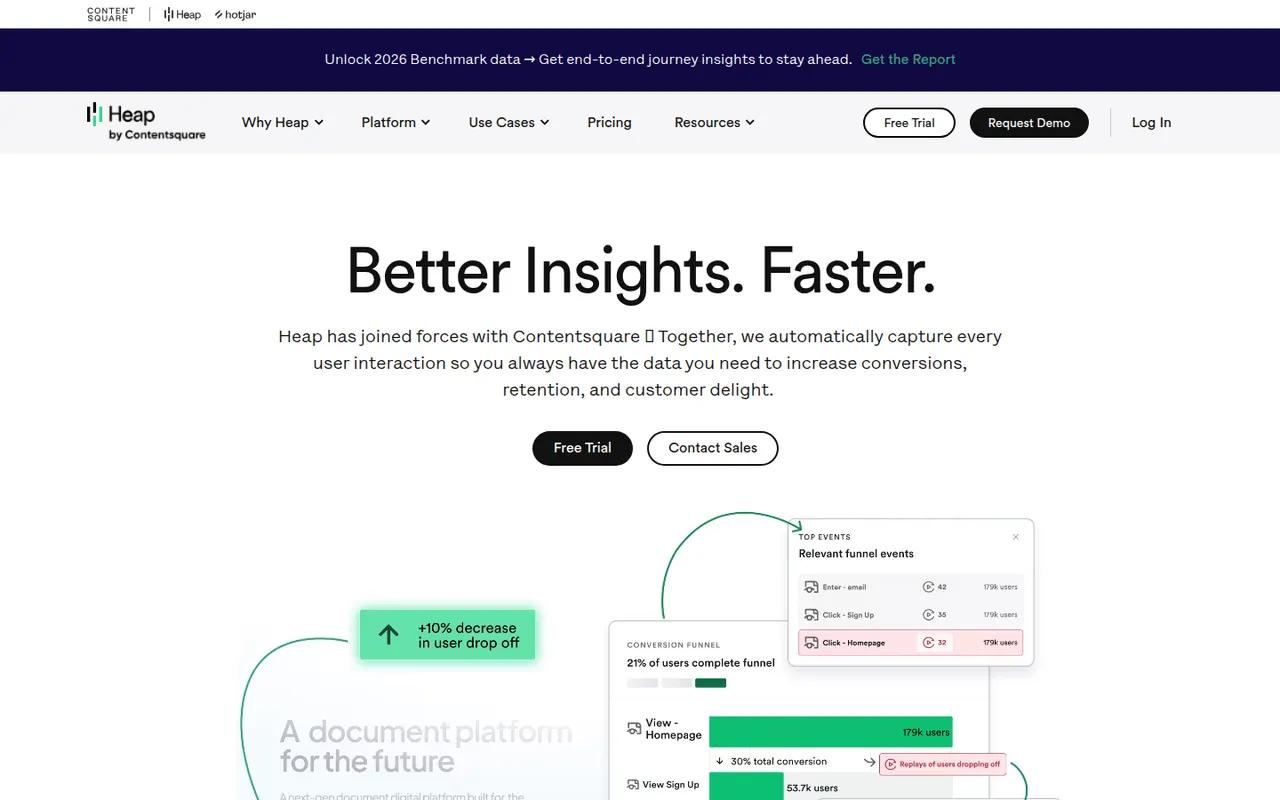
Cost / LicenseFreemiumProprietaryCategoriesPlatformsHeap is a product analytics tool known for autocapture: its snippet records clicks, page views and form changes automatically, so teams can define events and analyze funnels retroactively without new tracking code. It adds session replay, journey analysis and account-level views for B2B products. Heap has been part of Contentsquare since 2023 and targets product and digital teams.
7 Heap alternativesPros
- Autocapture records interactions without writing tracking code
- Events can be defined retroactively on historical data
- Account-level views suited to B2B products
Cons
- Autocaptured data gets noisy without careful naming
- Paid plans become expensive as usage grows
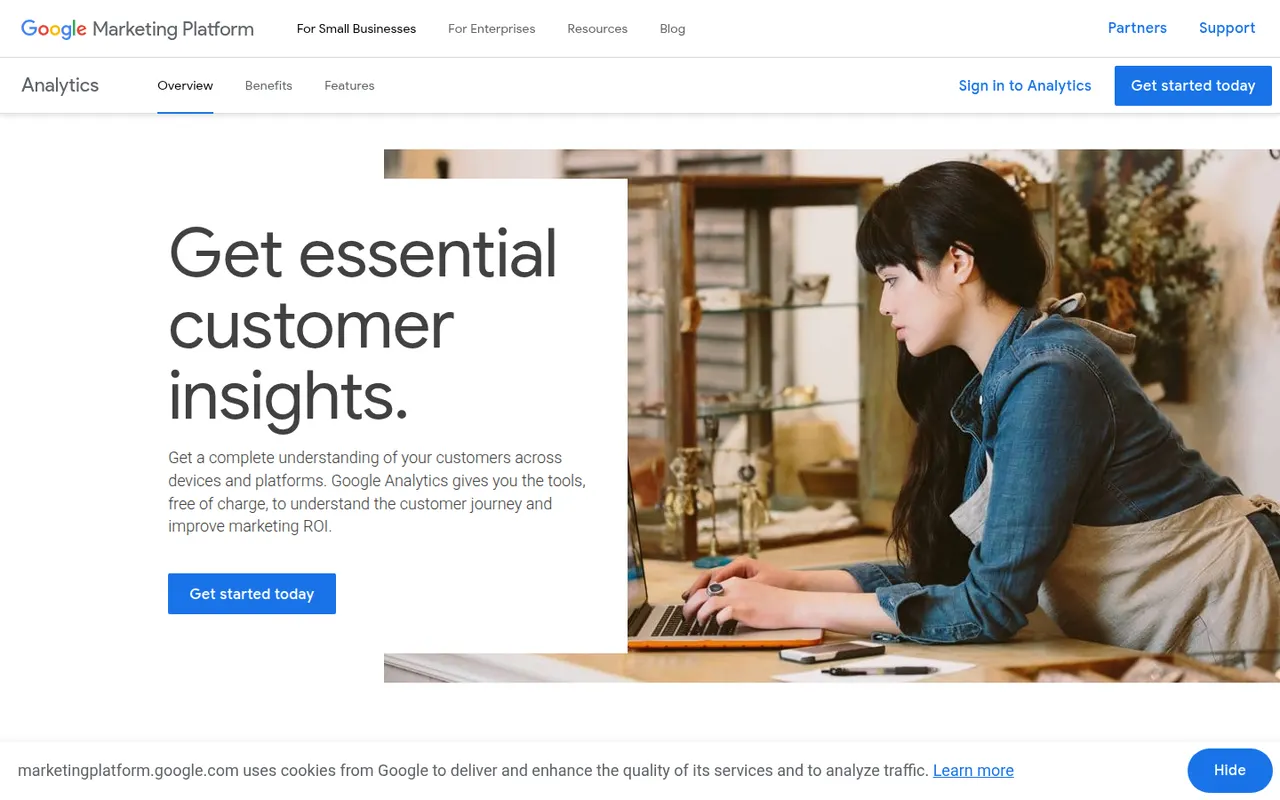
Cost / LicenseFreemiumProprietaryCategoriesPlatformsGoogle Analytics 4 measures traffic and behavior on websites and mobile apps with an event-based model, offering reports on acquisition, engagement, conversions and audiences. It integrates tightly with Google Ads, Search Console and BigQuery, and adds predictive metrics and explorations for funnels and paths. The standard edition is free, and its cookie-based tracking requires a consent banner in many countries.
12 Google Analytics alternativesPros
- Free standard edition with extensive reporting
- Tight integration with Google Ads, Search Console and BigQuery
- Covers websites and mobile apps in one event-based model
Cons
- GA4 interface is complex and hard to navigate for beginners
- Cookie-based tracking needs a consent banner in many countries
- Data is processed by Google, a concern for privacy-sensitive sites
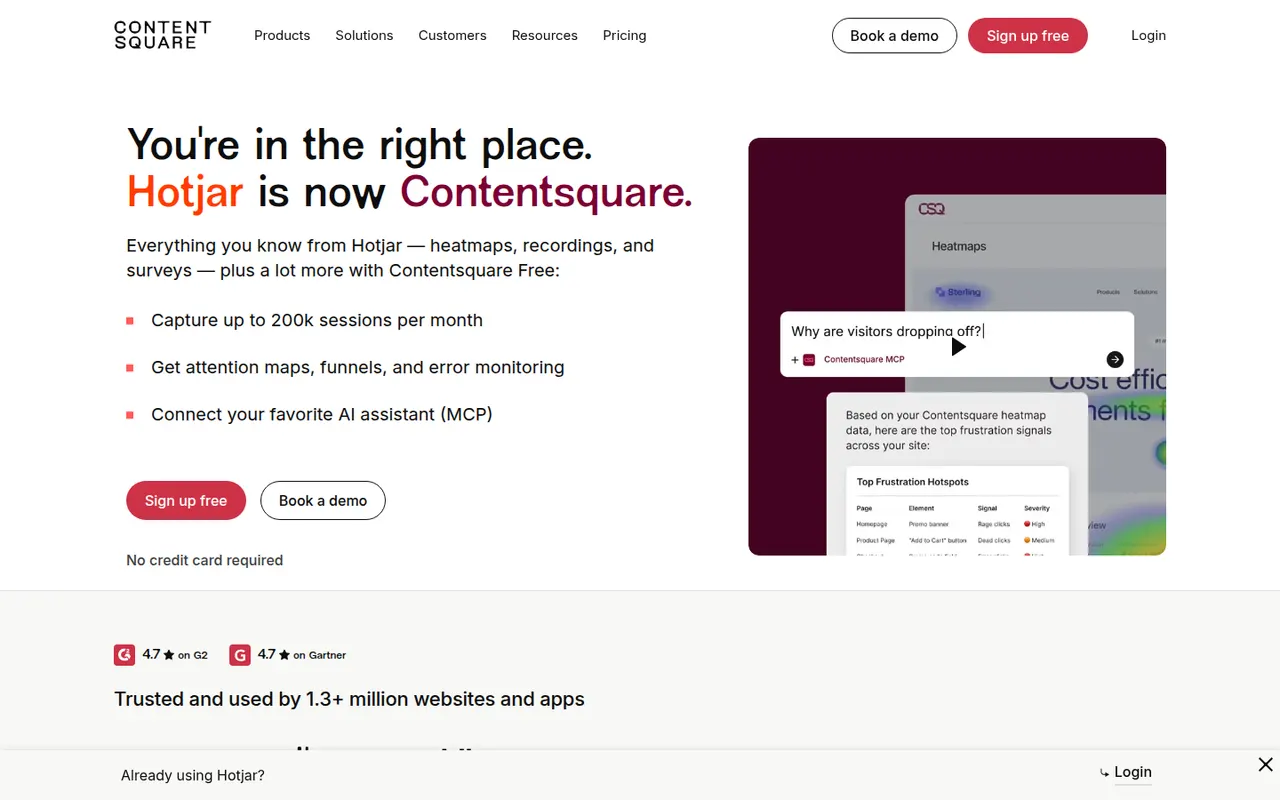
Cost / LicenseFreeProprietaryCategoriesHotjar shows how visitors use a website through heatmaps of clicks and scrolling, recordings of real sessions, and on-site surveys and feedback widgets. It complements traffic analytics by revealing where people get stuck or hesitate, and includes AI help to create surveys and summarize responses. Hotjar is part of Contentsquare and is aimed at marketers, designers and product teams.
8 Hotjar alternativesPros
- Heatmaps and session recordings that are easy to set up
- On-site surveys and feedback widgets in the same tool
- Accessible to marketers and designers without analytics expertise
Cons
- Free plan caps the number of sessions captured
- Costs rise quickly with site traffic
- Does not replace a traffic analytics tool for sources and page views
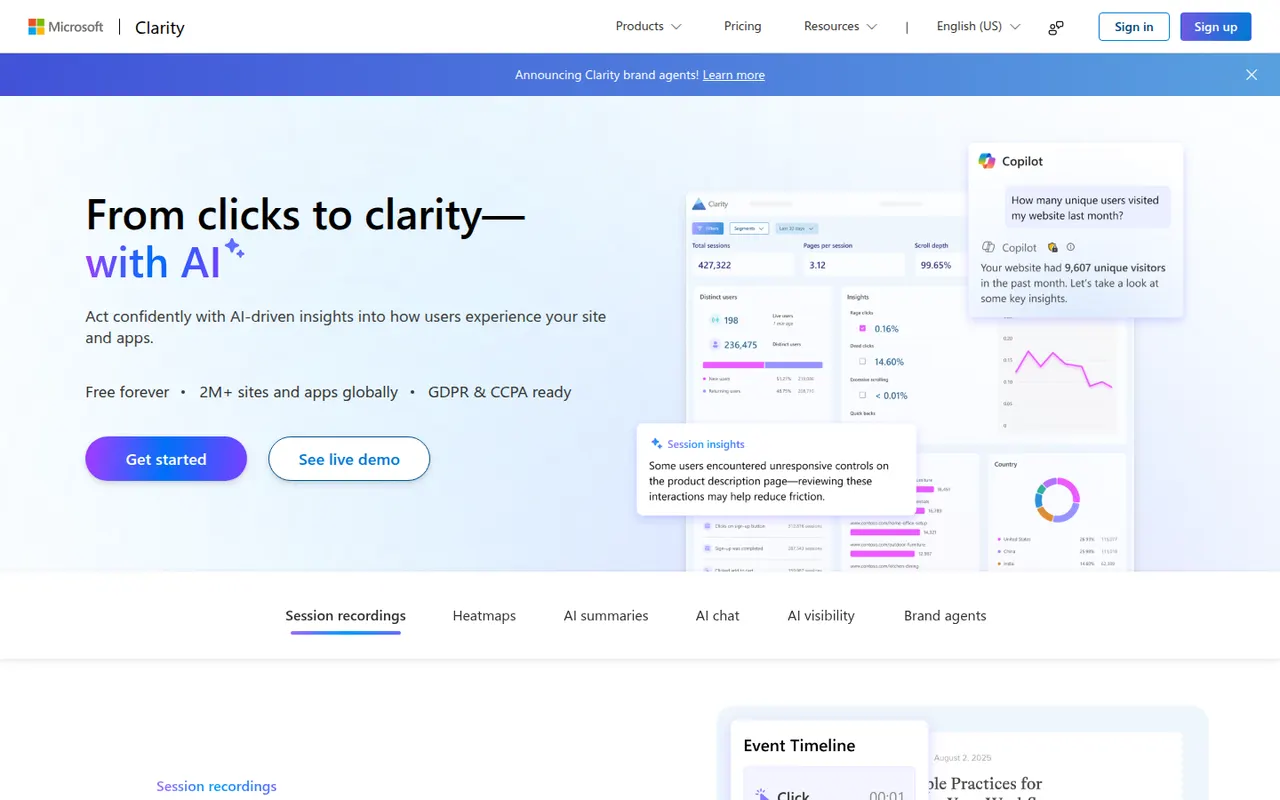
Cost / LicenseFreemiumProprietaryCategoriesPlatformsMicrosoft Clarity is a free behavioral analytics tool that records user sessions and generates click and scroll heatmaps, for websites as well as mobile apps. It flags frustration signals such as rage clicks, dead clicks and quick backs, integrates with Google Analytics, and uses Copilot to summarize sessions and insights. There is no paid tier and no traffic cap.
7 Microsoft Clarity alternativesPros
- Completely free with no traffic cap
- Flags rage clicks, dead clicks and quick backs automatically
- Integrates with Google Analytics and summarizes sessions with Copilot
Cons
- Data is processed by Microsoft, which may not suit privacy-sensitive sites
- No on-site surveys or feedback widgets
- Recordings are only kept for a limited time
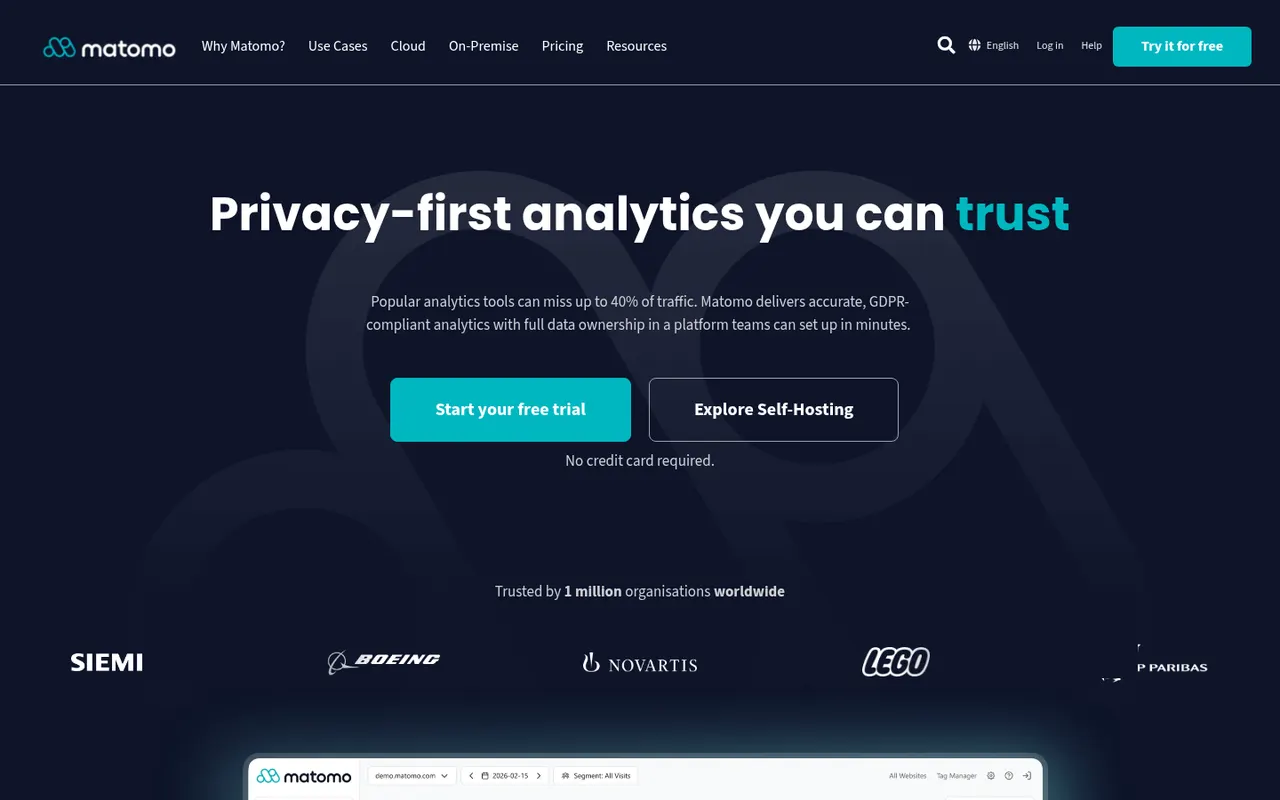
Cost / LicenseFreeProprietaryCategoriesPlatformsMatomo, formerly Piwik, is an open source analytics platform that you can self-host for free or use as a hosted cloud service. It offers reports comparable to Google Analytics, including goals, e-commerce tracking and custom dimensions, while keeping all data under your control, and it can be configured to track without cookies. Premium plugins add heatmaps, session recordings, funnels and A/B testing.
11 Matomo alternativesPros
- Free to self-host with full ownership of your data
- Reports comparable to Google Analytics, including e-commerce
- Can be configured for cookieless tracking
Cons
- Self-hosting means managing updates and database performance
- Heatmaps, recordings and funnels are paid plugins
- Interface feels dated next to newer analytics tools
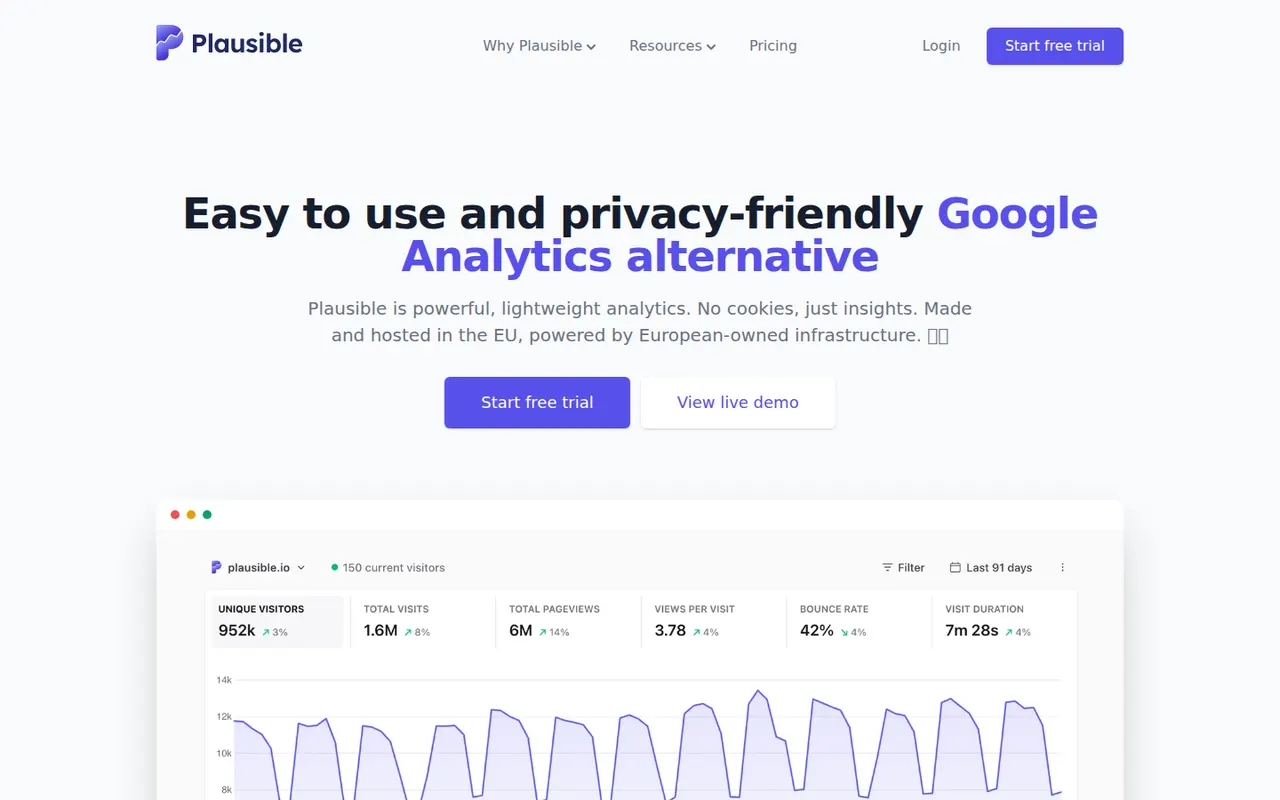
Cost / LicenseFreemiumOpen sourceCategoriesPlatformsPlausible Analytics is a privacy-focused web analytics tool that uses no cookies and collects no personal data, so it can usually run without a consent banner. Its script is very small, and a single-page dashboard shows visitors, sources, pages, goals and funnels at a glance. It is open source under the AGPL, hosted in the EU by an independent team, and can also be self-hosted as a Community Edition.
7 Plausible Analytics alternativesPros
- Cookieless tracking that usually works without a consent banner
- Very small script that barely affects page speed
- Open source and self-hostable as a Community Edition
Cons
- Hosted service is paid after the trial, so free use means self-hosting
- Less detail than Google Analytics on user behavior
- Community Edition lacks some features of the cloud version
Cost / LicenseFreemiumOpen sourceCategoriesPlatformsFathom Analytics is a privacy-focused alternative to Google Analytics that tracks page views, referrers, events and conversions without cookies or personal data. Its single dashboard is easy to read for non-specialists, traffic from the EU is processed in the EU, and email reports are included. It is built by a small, independent Canadian company.
6 Fathom Analytics alternativesPros
- Cookieless tracking that avoids collecting personal data
- Single, easy-to-read dashboard for non-specialists
- EU visitor data is processed within the EU
Cons
- No free plan, only a trial before paying
- Far less depth than Google Analytics for funnels and segments
- Neither open source nor self-hostable, unlike some rivals
Cost / LicenseFree trialProprietaryCategoriesPlatformsUmami is an open source web analytics tool that collects anonymous usage data without cookies. Its clean dashboard covers page views, referrers, devices and events, along with more advanced reports such as funnels, retention and user journeys. It is straightforward to self-host with Docker, and Umami Cloud provides a managed version with a free tier.
6 Umami alternativesPros
- Open source and easy to self-host with Docker
- Cookieless, anonymous tracking with a clean dashboard
- Funnels, retention and journey reports on top of the basics
Cons
- Self-hosting means managing your own server and database
- Fewer integrations than commercial analytics tools
- Umami Cloud's free tier comes with usage limits
Cost / LicenseFreemiumOpen sourceCategoriesPlatformsSimple Analytics is a Dutch web analytics service that does not use cookies or collect personal data, and stores its data in the EU. It provides a clear dashboard of visits, referrers and pages, event and goal tracking, and an AI assistant that answers questions about your traffic in plain language. Its focus on GDPR compliance makes it a fit for European businesses and privacy-conscious sites.
6 Simple Analytics alternativesPros
- No cookies or personal data, with storage in the EU
- Clean dashboard that is quick to read
- AI assistant answers traffic questions in plain language
Cons
- Fewer advanced reports than full analytics suites
- Neither open source nor self-hostable, unlike some rivals
Cost / LicenseFreemiumProprietaryCategoriesPlatformsFormbricks is an open-source experience management tool for collecting feedback through link surveys, website pop-ups and in-app surveys targeted by user attributes or actions. It integrates with tools like Slack, Notion and Airtable, offers an API and webhooks, and can be self-hosted to keep data on your own servers. Its cloud version has a free plan, and the team is based in Germany.
12 Formbricks alternativesPros
- Open source and self-hostable, so feedback data can stay on your servers
- In-app and website surveys can target users by attributes or actions
- API, webhooks and integrations with Slack, Notion and Airtable
Cons
- Self-hosting requires technical skills and ongoing maintenance
- In-app targeting needs an SDK set up by developers
- Younger product with fewer templates than established survey tools
Cost / LicenseFreemiumOpen sourceCategoriesPlatforms
























PostHog vs its alternatives at a glance
Pricing, platforms and the key features of PostHog, compared with its most popular alternatives.


PostHog alternatives: frequently asked questions
What is the best alternative to PostHog?
The most popular alternative to PostHog is Mixpanel: Event-based product analytics for funnels, retention and cohorts. Other great alternatives are Amplitude, Heap, Google Analytics, and Hotjar.
Is there a free alternative to PostHog?
Yes, 11 alternatives are free or have a free plan, including Mixpanel, Amplitude, Heap, and Google Analytics.
Is there an open source alternative to PostHog?
Yes, 4 open source alternatives are listed, including Matomo, Plausible Analytics, Umami, and Formbricks.
Is PostHog free?
PostHog has a free plan, with paid plans that unlock more features.
Compare PostHog with its alternatives


Sponsored listings and products made by the publisher of this site are always labeled. How we rank · Know a good alternative? Submit it