Apps with AI agents
12 apps
Top AI agents apps ranked by the community
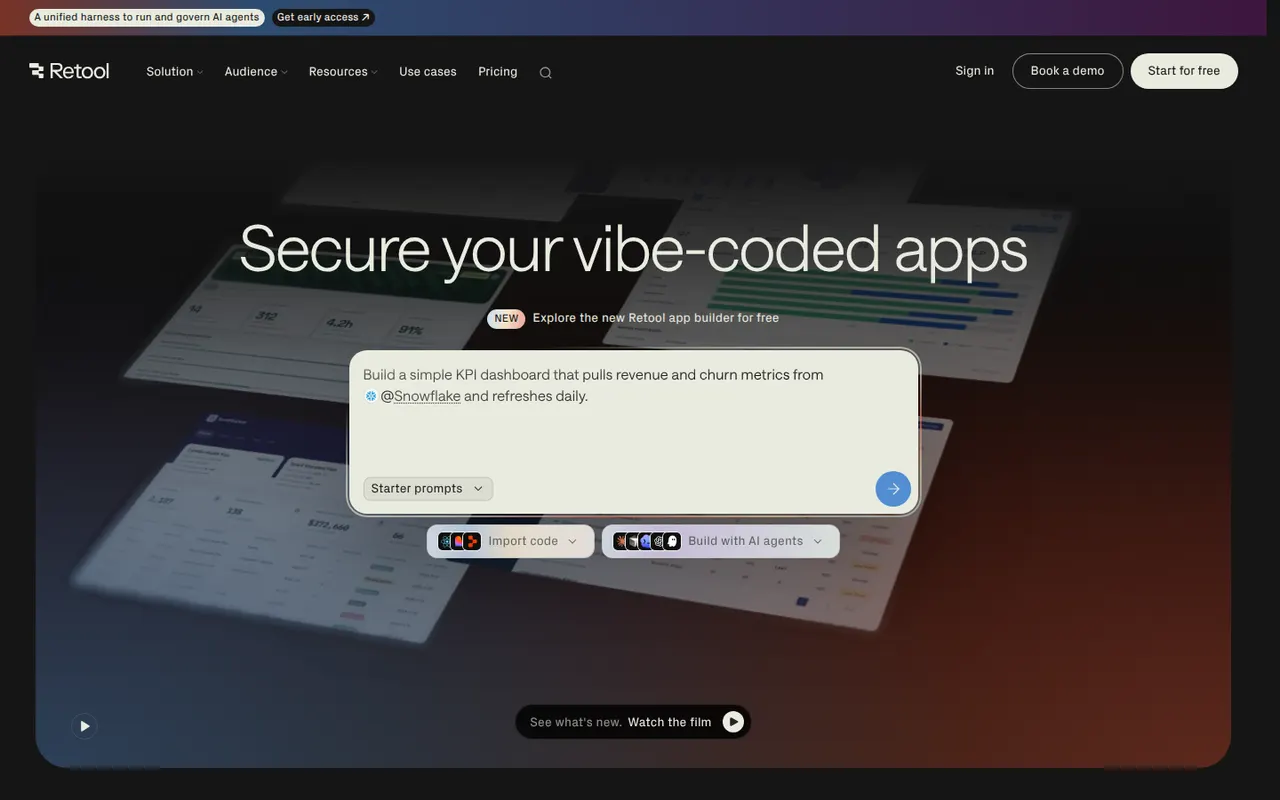
Retool is a developer-focused platform for building internal tools such as admin panels, dashboards and back-office apps. You drag components onto a canvas, connect them to databases and APIs, and write JavaScript or SQL where needed, with AI that can generate apps and agents that automate tasks. It runs in the cloud or self-hosted, with SSO and audit logs for enterprises and a free plan for small teams.
11 Retool alternativesPros
- Fast way to build admin panels and dashboards on your data
- Connects to most databases and APIs, with JavaScript and SQL as needed
- Self-hosting option plus enterprise controls like SSO and audit logs
Cons
- Aimed at developers, so non-technical users may struggle
- Costs rise quickly as more users need access
- Limited design control beyond the standard components
Cost / LicenseFreemiumProprietaryCategoriesPlatformsZendesk is a customer service platform that brings email, chat, phone, social and messaging requests into a single ticketing system. It includes a help center for self-service articles, workflow automation, reporting and AI agents that can resolve common questions. A large marketplace of apps connects it to CRMs and e-commerce tools, and it serves support teams from startups to large enterprises.
12 Zendesk alternativesPros
- Mature ticketing that handles email, chat, phone and social at scale
- Large marketplace of apps for CRMs and e-commerce tools
- Help center and AI agents deflect common questions
Cons
- Expensive per agent, especially with AI and add-ons
- Setup and administration take time for complex workflows
- No free plan beyond the trial
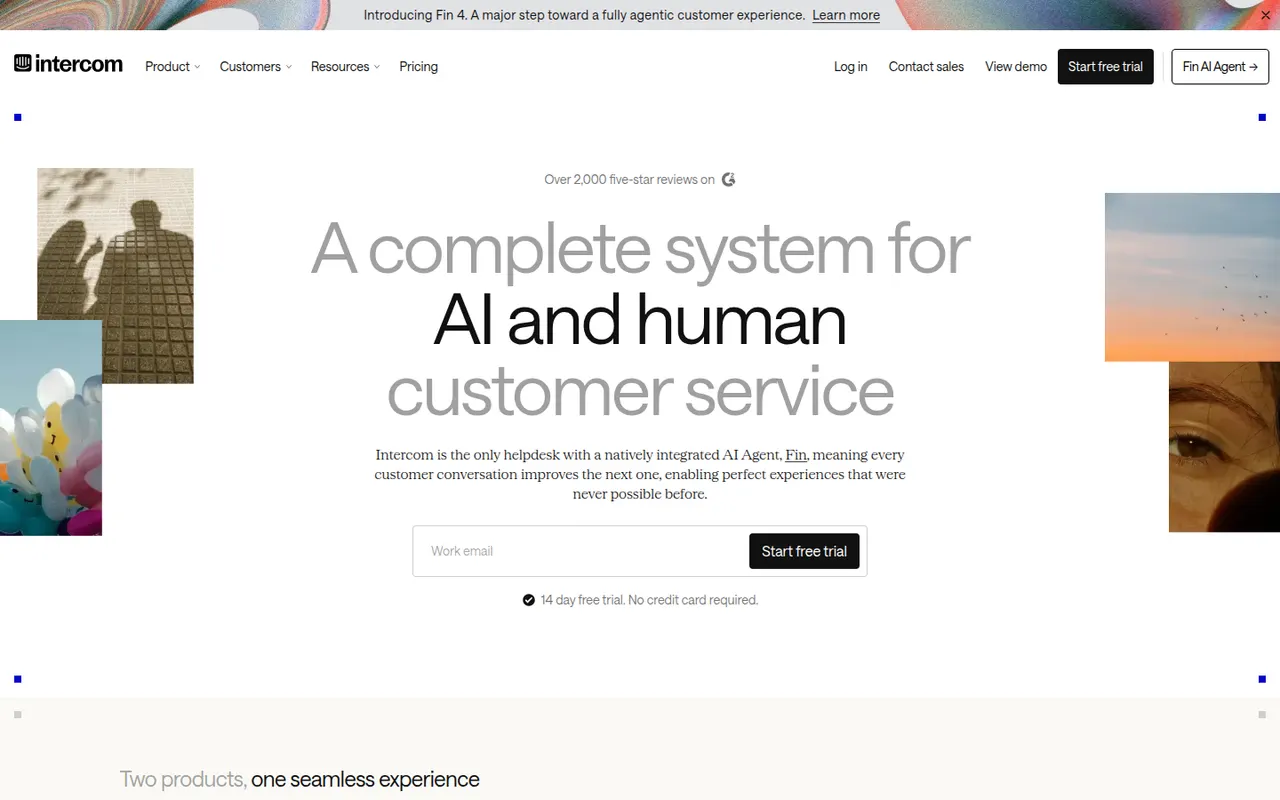
Cost / LicenseFree trialProprietaryCategoriesIntercom is a customer service platform that combines a chat messenger for websites and apps with a shared inbox, ticketing and a help center. Its AI agent, Fin, answers customer questions using your support content and can hand conversations over to human agents; it can also be added to other help desks. Product tours and proactive messages help onboard and engage users.
12 Intercom alternativesPros
- Fin AI agent answers questions from your support content
- Polished messenger for websites and mobile apps
- Product tours and proactive messages help onboard users
Cons
- Expensive, with AI resolutions billed on top of seats
- Pricing structure is complex and hard to predict
- More than a small team needs for basic live chat
Cost / LicenseFree trialProprietaryCategoriesGorgias is a customer support platform designed for online stores, with deep integrations for Shopify and other e-commerce platforms. Agents see order details next to each ticket and can edit, refund or cancel orders without leaving the help desk. It centralizes email, chat, social media and SMS, and its AI Agent can handle common requests such as order tracking and returns.
8 Gorgias alternativesPros
- Order details appear next to each ticket for Shopify stores
- Agents can refund, edit or cancel orders without leaving the help desk
- AI agent handles routine requests like order tracking and returns
Cons
- Built for e-commerce, so less suited to other types of businesses
- Pricing tied to ticket volume can be hard to predict in busy seasons
Cost / LicenseFree trialProprietaryCategoriesPlatformsSalesforce is a cloud CRM platform used mainly by mid-sized and large organizations, with Sales Cloud for pipelines and forecasting, Service Cloud for support and many other clouds and add-ons. It is highly customizable through objects, workflows and code, and the AppExchange marketplace adds a wide range of integrations. Agentforce brings AI agents that can act on CRM data.
9 Salesforce alternativesPros
- Customizable down to objects, workflows and code for any sales process
- AppExchange offers integrations for almost every business tool
- Scales from mid-sized teams to the largest global organizations
Cons
- Steep learning curve that often calls for dedicated admins or consultants
- High per-user cost, with many capabilities sold as add-ons
- Overkill for small teams with simple sales processes
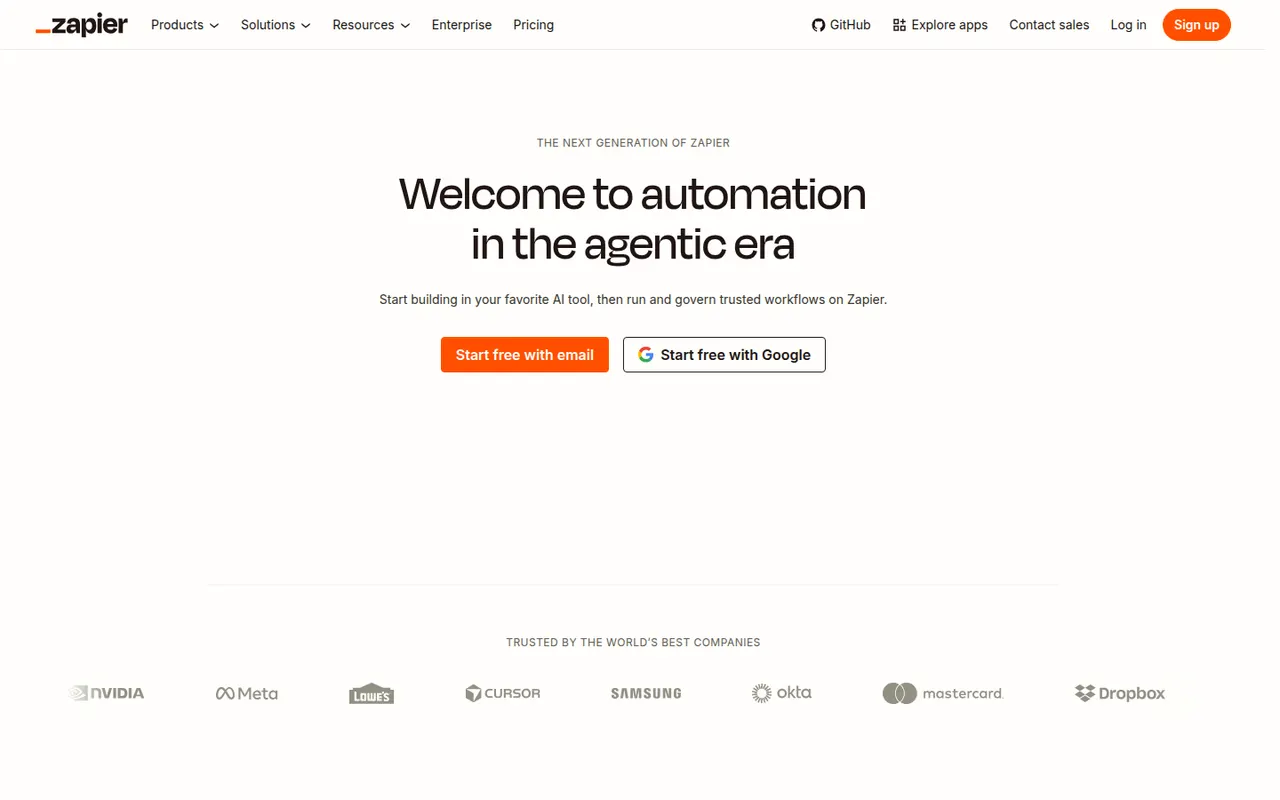
Cost / LicenseFree trialProprietaryCategoriesZapier is a no-code automation platform that connects thousands of web apps so that a trigger in one, such as a new form entry, starts actions in others. Beyond multi-step Zaps with filters and branching, it includes tables, interfaces, AI steps and agents that work across connected tools. A free plan covers simple workflows, and paid plans are priced by task volume.
8 Zapier alternativesPros
- Connects thousands of apps, so most tools are already supported
- Very easy to start with for non-technical users
- Tables, interfaces and AI agents go beyond simple Zaps
Cons
- Costs rise quickly as task volume grows
- Complex logic is clumsier to build than on a visual canvas like Make
- Cloud only, with no self-hosting option
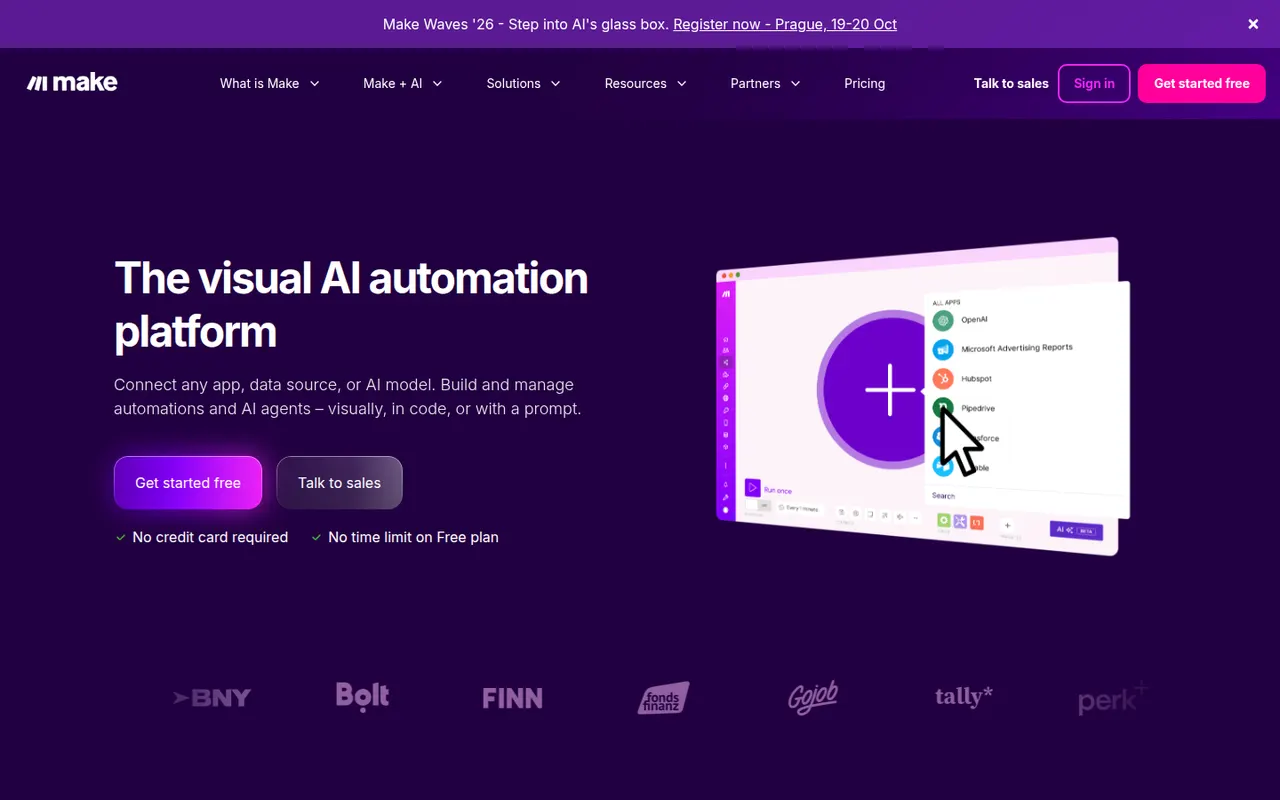
Cost / LicenseFreemiumProprietaryCategoriesPlatformsMake, formerly Integromat and now part of Celonis, is a visual automation platform where workflows are built as scenarios on a canvas of connected modules. It handles routers, iterators, error handling and data mapping for complex processes across thousands of apps, plus HTTP calls, webhooks and AI agents. A free plan includes a monthly allowance of operations, with paid plans for more volume.
8 Make alternativesPros
- Visual canvas handles routers, iterators and error handling
- Finer data mapping than simpler automation tools
- HTTP module and webhooks connect to almost any API
Cons
- Steeper learning curve than Zapier for simple automations
- Operation counts add up quickly on complex or frequent scenarios
- Cloud only, with no self-hosting option
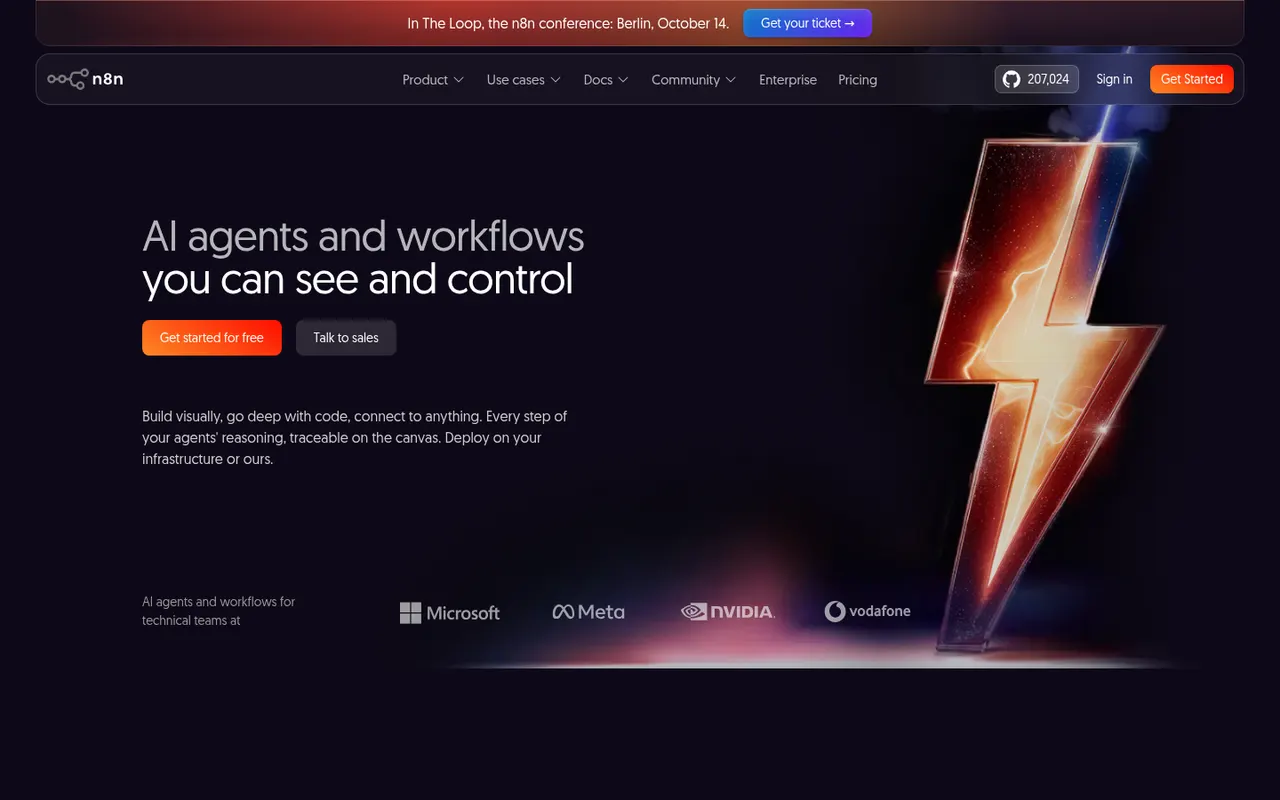
Cost / LicenseFreemiumProprietaryCategoriesPlatformsn8n is a workflow automation tool from Berlin that combines a visual node editor with the option to write JavaScript or Python, which suits technical teams. It offers hundreds of integrations, webhooks and AI agent nodes for building workflows around large language models. It can be self-hosted for free under the Sustainable Use License or used through the paid n8n Cloud.
9 n8n alternativesPros
- Free self-hosting keeps workflows and data on your own servers
- JavaScript or Python code nodes alongside the visual editor
- Capable AI agent nodes for building LLM workflows
Cons
- Sustainable Use License restricts some commercial uses, so it is not open source
- More technical than Zapier for non-developers
- Self-hosting means maintaining servers and updates yourself
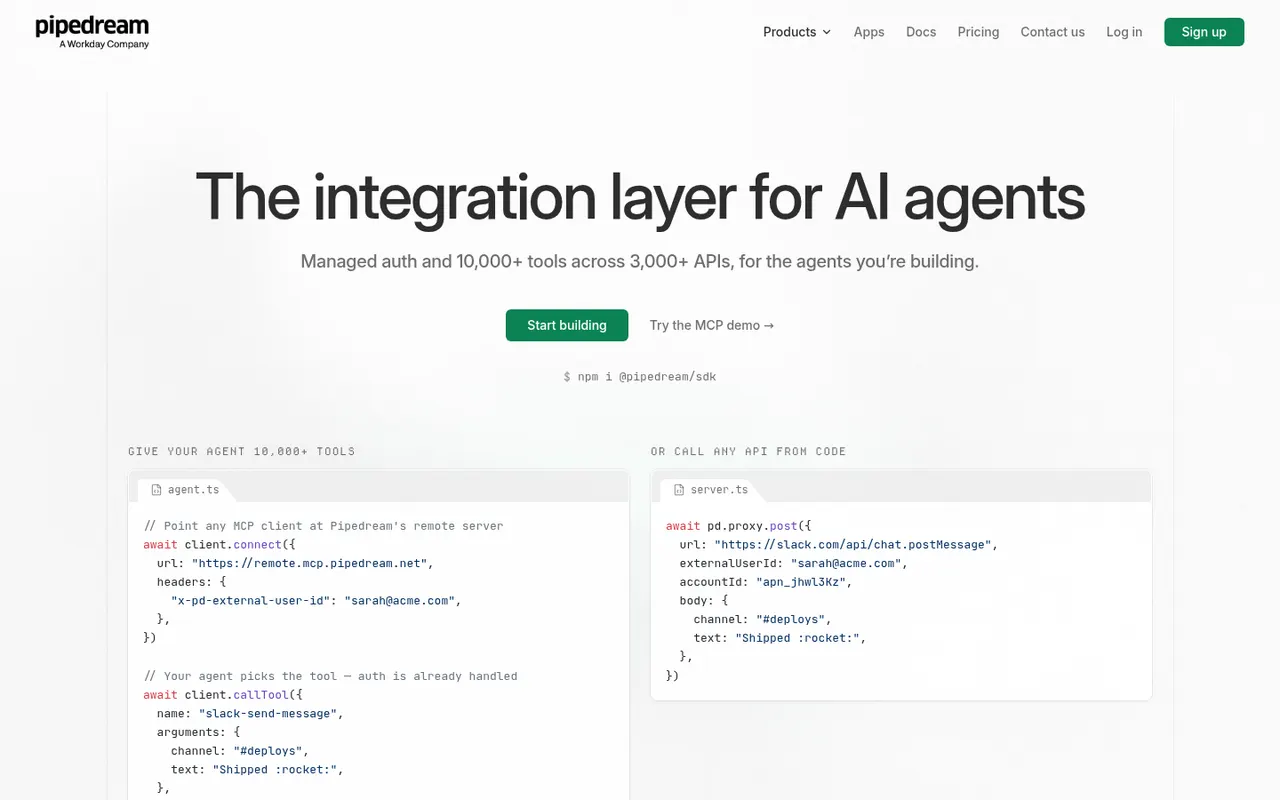
Cost / LicenseFreemiumSource availableCategoriesPlatformsPipedream is an integration platform for developers that runs event-driven workflows mixing prebuilt actions for thousands of apps with custom Node.js, Python, Go or Bash code. It also provides managed authentication and MCP servers so AI agents can call third-party APIs, and Workday announced its acquisition of the company in late 2025. A free tier with limited credits sits alongside paid plans.
8 Pipedream alternativesPros
- Mixes prebuilt actions with Node.js, Python, Go or Bash code
- Managed authentication for thousands of APIs
- MCP servers let AI agents call third-party apps
Cons
- Aimed at developers, less approachable for non-technical teams
- Free tier credits run out quickly on busy workflows
- The Workday acquisition adds uncertainty about the product’s direction
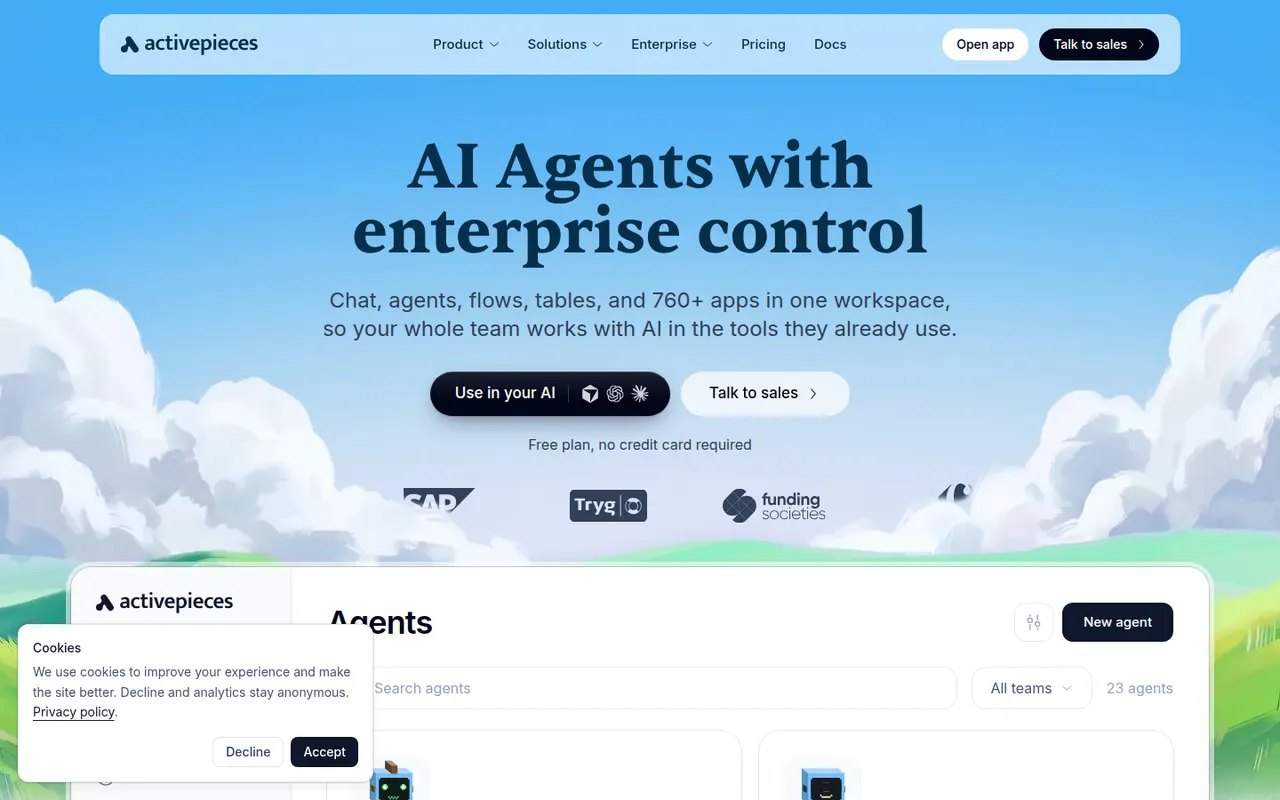
Cost / LicenseFreemiumProprietaryCategoriesPlatformsActivepieces is an open source automation platform positioned as an alternative to Zapier, with a visual flow builder, hundreds of integrations called pieces and AI agent steps. Pieces are written in TypeScript and are also exposed as MCP servers for AI assistants. The community edition is MIT-licensed and can be self-hosted; a hosted cloud version and an enterprise edition are also offered.
8 Activepieces alternativesPros
- MIT-licensed community edition can be self-hosted
- Pieces double as MCP servers for AI assistants
- Clean visual builder that is approachable for non-developers
Cons
- Smaller integration catalog than Zapier or Make
- Some enterprise features are reserved for paid editions
- Self-hosting means handling updates and scaling yourself
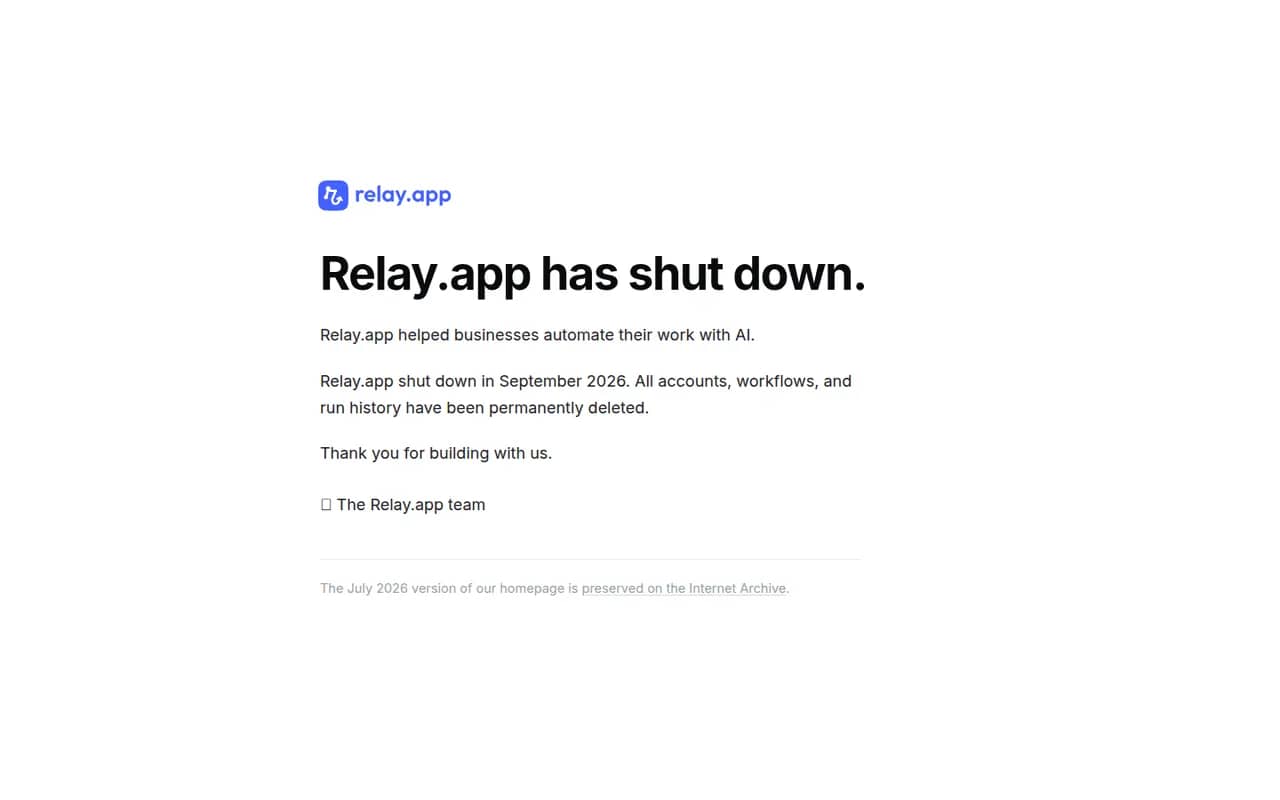
Cost / LicenseFreemiumOpen sourceCategoriesPlatformsRelay.app is a workflow automation tool that mixes app integrations, AI steps and human-in-the-loop checkpoints, where a teammate can review, edit or approve output before the workflow continues. It targets business teams automating processes such as lead handling, content review or onboarding without code. A free plan includes a monthly allowance of runs and AI credits.
8 Relay.app alternativesPros
- Human approval steps let teammates review output before a run continues
- AI steps are built in, with credits included in the free plan
- Clean interface designed for business teams who do not code
Cons
- Smaller integration catalog than Zapier or Make
- Younger product with fewer advanced options than established platforms
Cost / LicenseFreemiumProprietaryCategoriesPlatformsGumloop is a no-code platform for building AI workflows and agents on a visual canvas, connecting language models from OpenAI, Anthropic and Google to business apps, web scraping and data enrichment nodes. An assistant can draft flows from a description, and a Chrome extension records browser actions for sites without an API. A free plan with monthly credits is available.
8 Gumloop alternativesPros
- Visual canvas connects AI models to business apps without code
- Assistant drafts flows from a plain-language description
- Chrome extension automates sites that have no API
Cons
- Credit-based usage can be hard to predict for heavy workflows
- Fewer app integrations than long-established automation platforms
Cost / LicenseFreemiumProprietaryCategoriesPlatforms