Best CRM software
Manage contacts, deals and sales pipelines.
14 apps
Top CRM apps ranked by the community
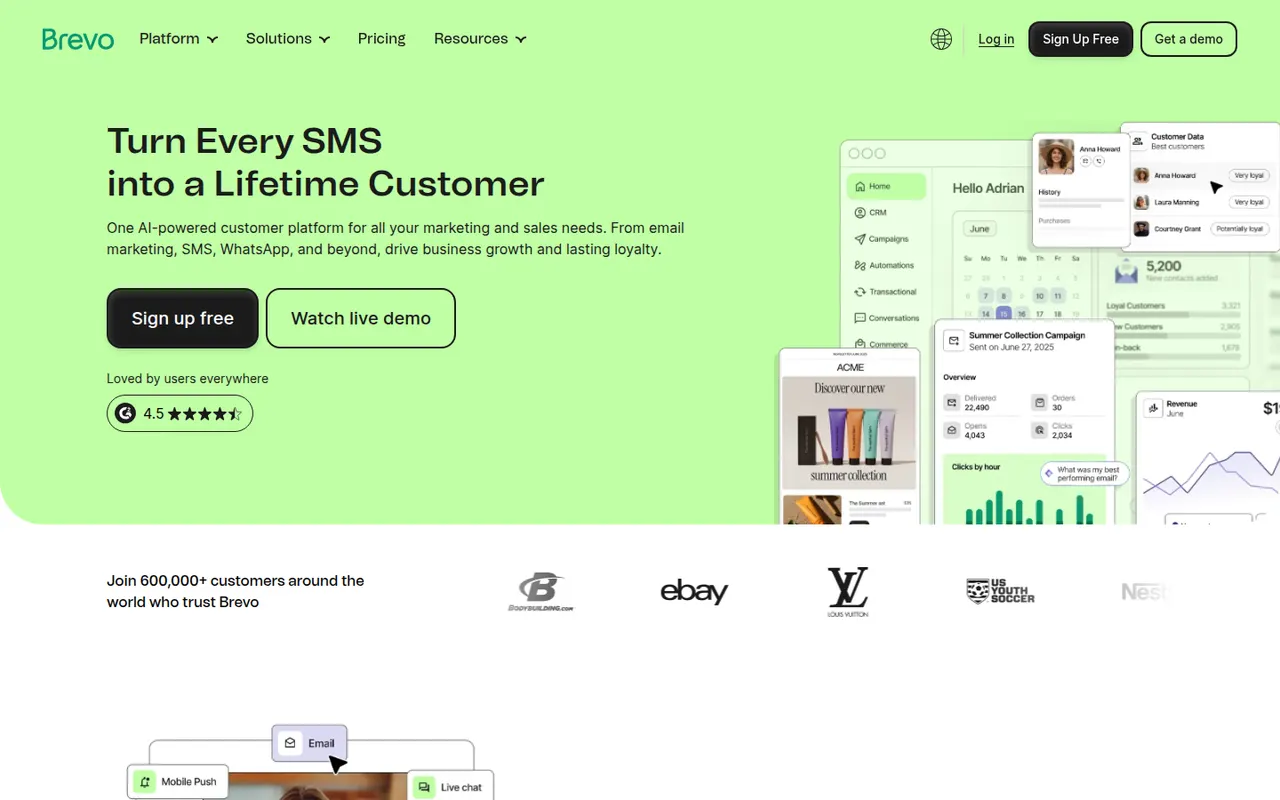
Brevo, formerly Sendinblue, is a French marketing platform covering email campaigns, transactional email, SMS, WhatsApp messages and marketing automation, plus a sales CRM and live chat. Its plans are based mainly on the volume of emails sent rather than the number of contacts, which suits large lists that are mailed occasionally. Data is hosted in the EU, a plus for GDPR-conscious teams.
9 Brevo alternativesPros
- Pricing based on emails sent rather than contacts stored
- Email, SMS, WhatsApp and transactional email in one platform
- EU data hosting suits GDPR-conscious teams
Cons
- Free plan has a daily sending limit and Brevo branding
- Automation builder is less advanced than specialist tools
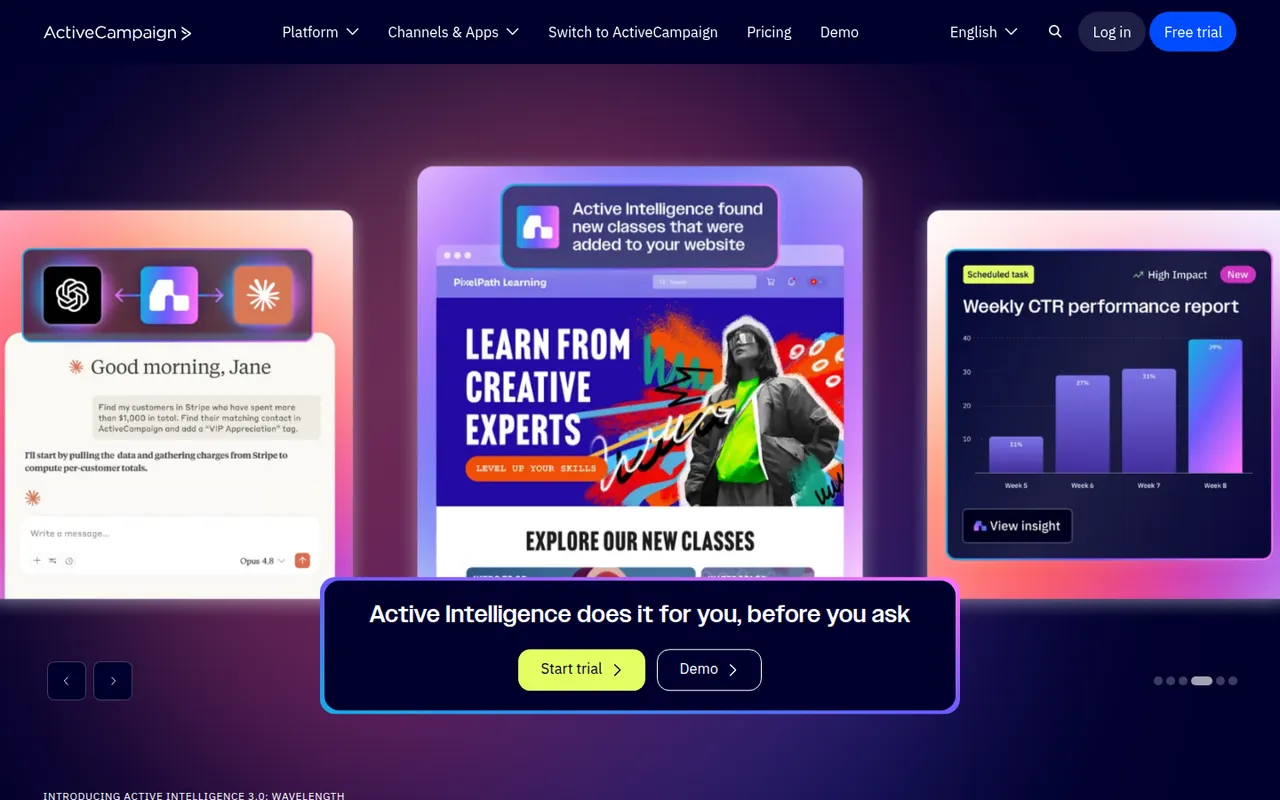
Cost / LicenseFreemiumProprietaryCategoriesActiveCampaign is a customer experience automation platform that combines email marketing, a visual automation builder, lead scoring and a sales CRM with deal pipelines. Automations can branch on behavior, site visits and custom data across email, SMS and connected apps. It is aimed at small and mid-sized businesses that need more advanced automation than basic newsletter tools provide.
8 ActiveCampaign alternativesPros
- Powerful visual automation builder with behavior-based branching
- Built-in CRM with deal pipelines and lead scoring
- Many integrations with e-commerce and business apps
Cons
- Complex automations come with a real learning curve
- Costs rise quickly as the contact list grows
- No free plan beyond the trial
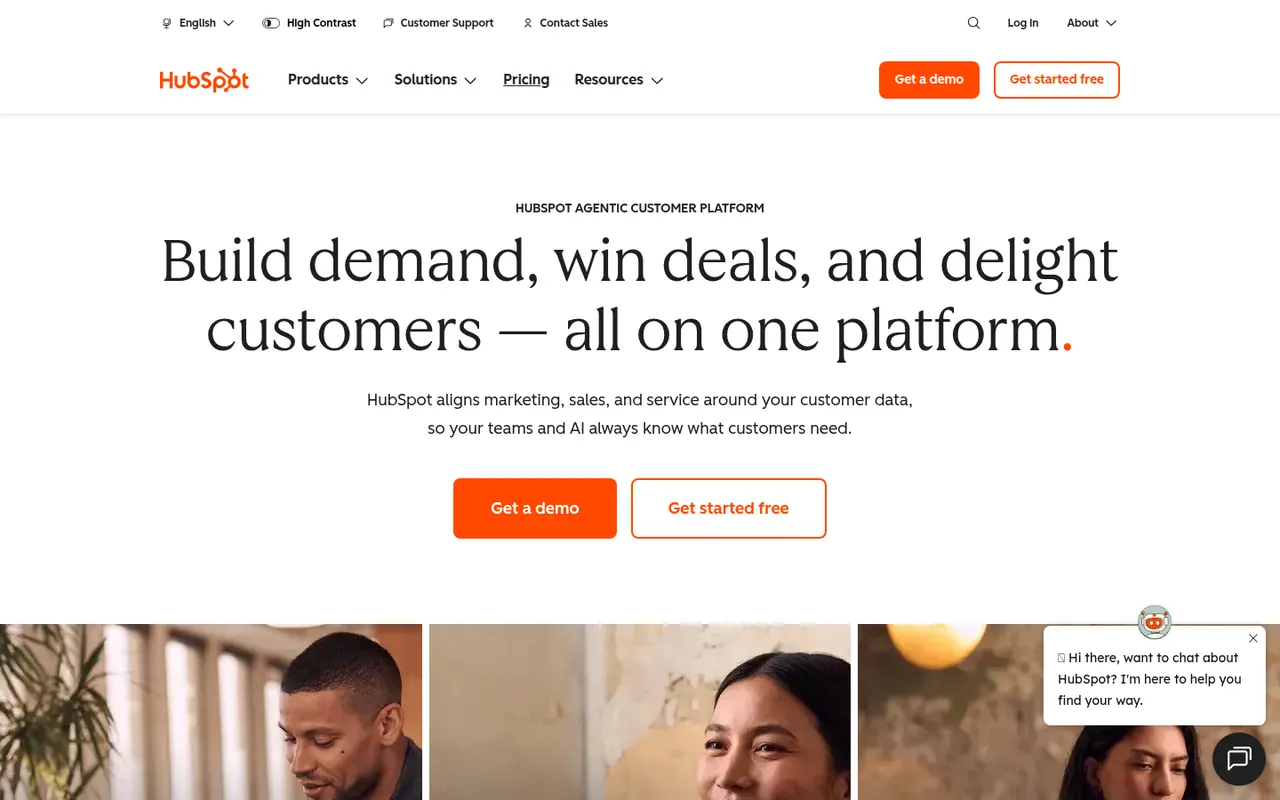
Cost / LicenseFree trialProprietaryCategoriesHubSpot is a customer platform built around a free CRM, with paid hubs for marketing automation, sales engagement, customer service, content management and operations. Contacts, deals, emails and support tickets share one record, and the Breeze AI tools help with writing, research and agents. It suits small and mid-sized companies that want marketing, sales and support in a single system.
12 HubSpot alternativesPros
- Free CRM that covers contacts, deals and basic email tracking
- Marketing, sales and service share one customer record
- Large integration marketplace and extensive free training via HubSpot Academy
Cons
- Costs rise steeply once you need Professional-tier features
- Marketing pricing grows with the number of marketing contacts
- Upper tiers can involve onboarding fees and annual contracts
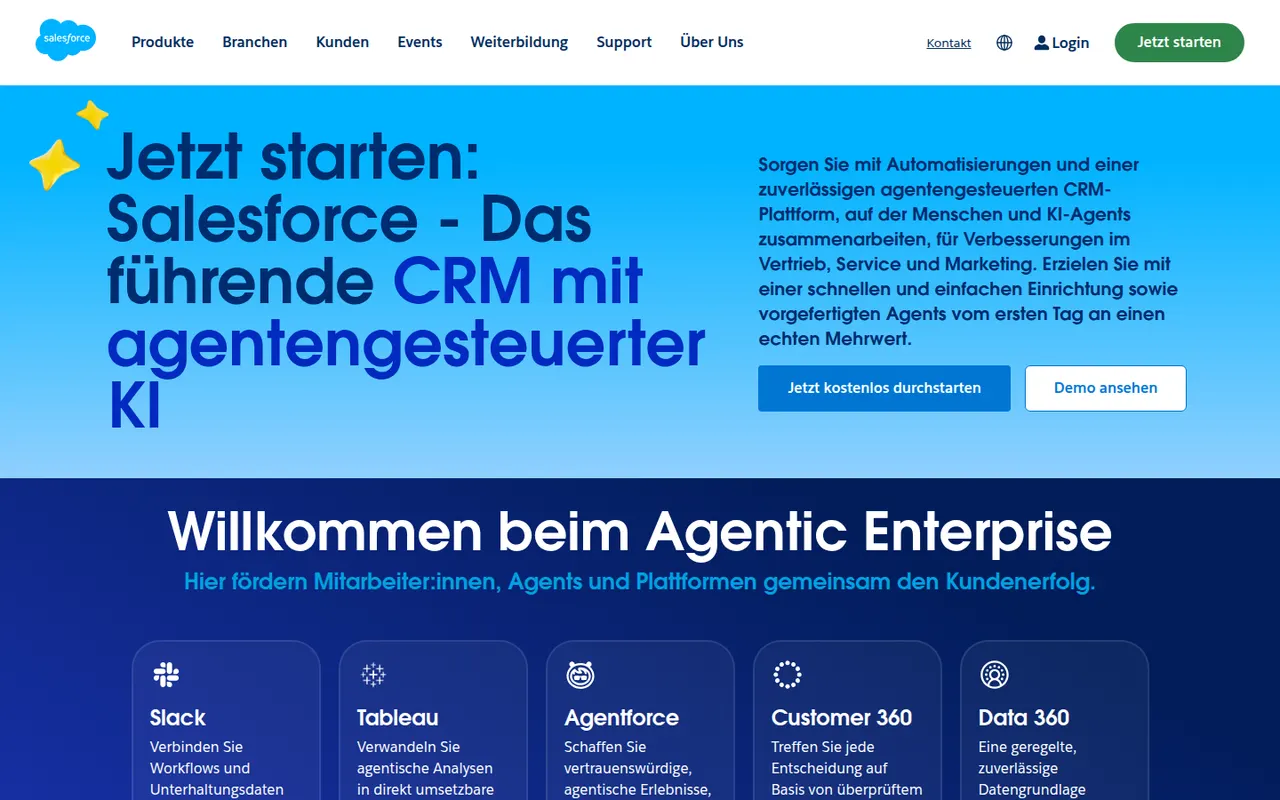
Cost / LicenseFreemiumProprietarySalesforce is a cloud CRM platform used mainly by mid-sized and large organizations, with Sales Cloud for pipelines and forecasting, Service Cloud for support and many other clouds and add-ons. It is highly customizable through objects, workflows and code, and the AppExchange marketplace adds a wide range of integrations. Agentforce brings AI agents that can act on CRM data.
9 Salesforce alternativesPros
- Customizable down to objects, workflows and code for any sales process
- AppExchange offers integrations for almost every business tool
- Scales from mid-sized teams to the largest global organizations
Cons
- Steep learning curve that often calls for dedicated admins or consultants
- High per-user cost, with many capabilities sold as add-ons
- Overkill for small teams with simple sales processes
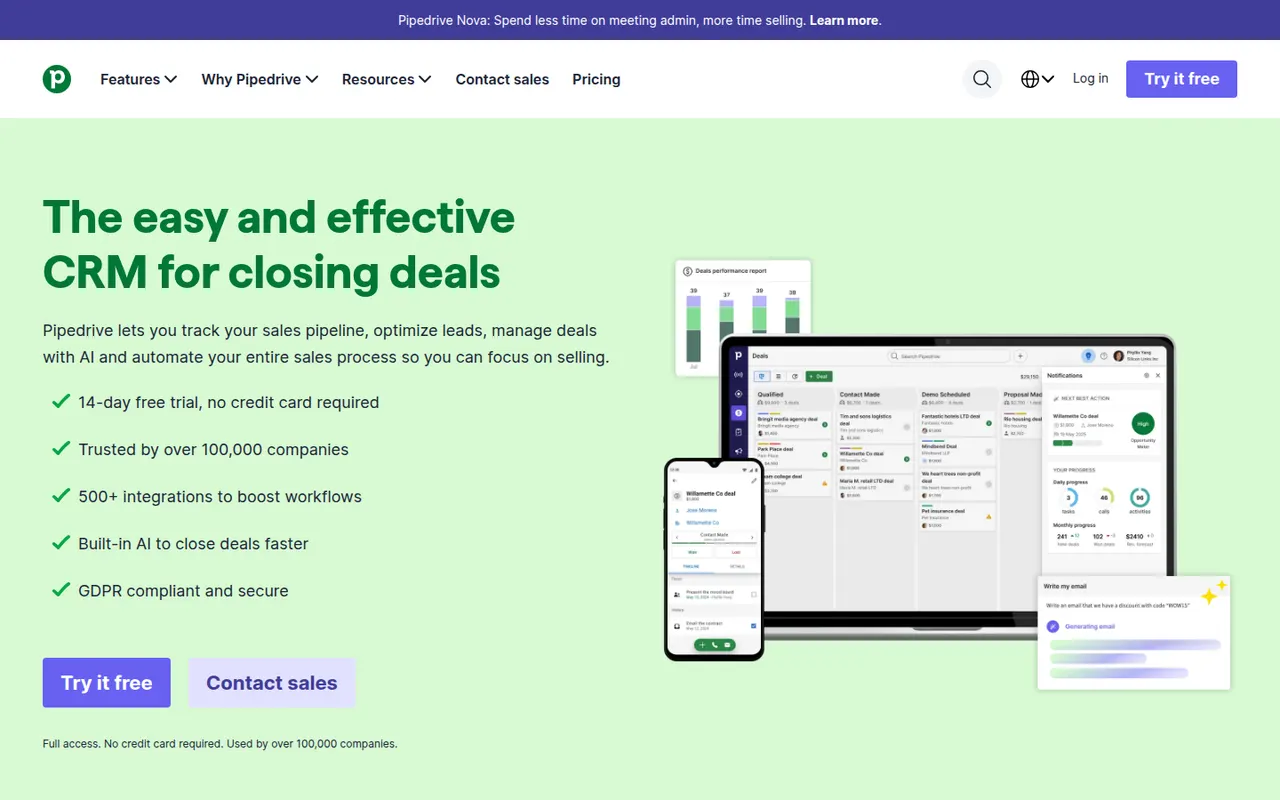
Cost / LicenseFree trialProprietaryCategoriesPipedrive is a sales CRM designed around a visual pipeline where deals move through stages, keeping salespeople focused on the next action for each opportunity. It includes email sync and tracking, activity scheduling, workflow automation, forecasting and an AI sales assistant, with add-ons for lead generation and documents. It targets small and mid-sized sales teams that want a CRM they can adopt quickly.
11 Pipedrive alternativesPros
- Visual pipeline makes it easy to see where every deal stands
- Quick to set up, so small sales teams adopt it fast
- Activity reminders keep salespeople focused on the next action
Cons
- Lead generation and document tools are sold as add-ons
- Little built-in marketing or support compared with all-in-one suites
- Reporting can feel limited for complex, multi-team sales processes
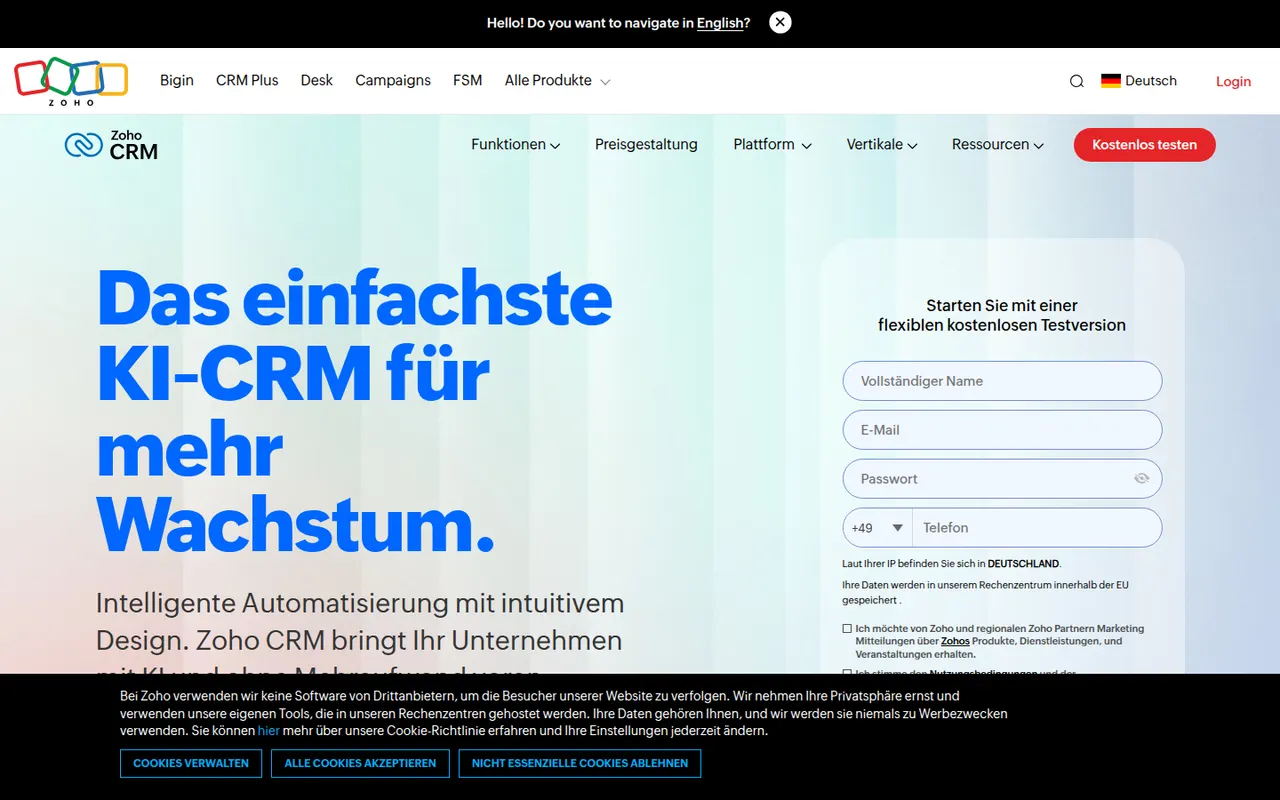
Cost / LicenseFree trialProprietaryCategoriesZoho CRM is a cloud CRM for managing leads, contacts, deals and sales processes, with workflow automation, territory management, forecasting and the Zia AI assistant. It is highly customizable without code and connects natively to the many other Zoho apps for email, support, finance and analytics. A free edition covers very small teams, and paid editions scale to larger organizations.
9 Zoho CRM alternativesPros
- Deep no-code customization of modules, fields and workflows
- Connects natively to the wider Zoho suite for email, support and finance
- Free edition for very small teams, with paid editions that scale up
Cons
- Interface and settings can feel overwhelming at first
- Third-party integrations are less polished than Zoho’s own apps
- Getting the most out of it often means adopting more Zoho apps
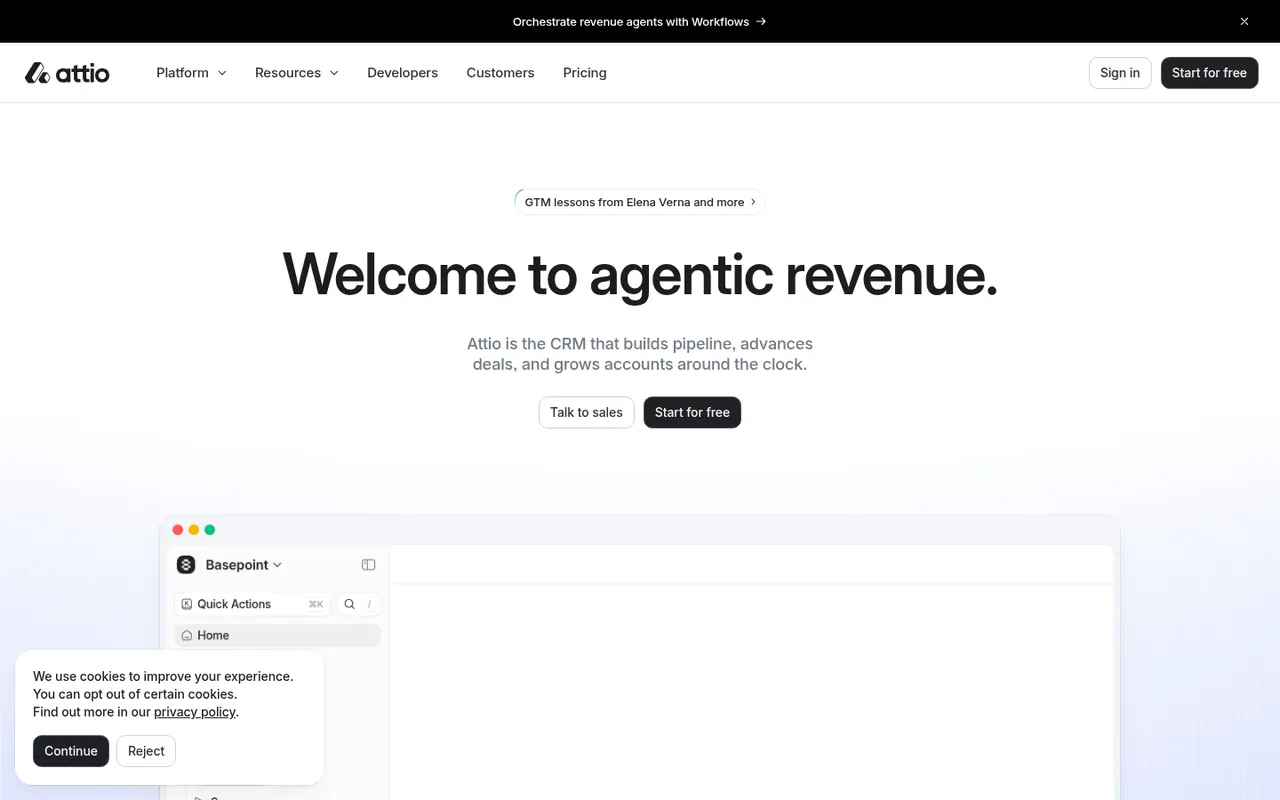
Cost / LicenseFreemiumProprietaryCategoriesAttio is a modern CRM that builds itself from your email and calendar, then lets you model any kind of relationship data with custom objects, attributes and views. It offers real-time collaboration, workflow automation, reporting and an API, and is aimed at startups, investors and teams that find traditional CRMs rigid.
11 Attio alternativesPros
- Builds itself automatically from your email and calendar
- Custom objects and views adapt to almost any data model
- Modern, fast interface with real-time collaboration
Cons
- Its flexibility means more setup than an opinionated CRM
- Advanced features and higher limits require paid plans
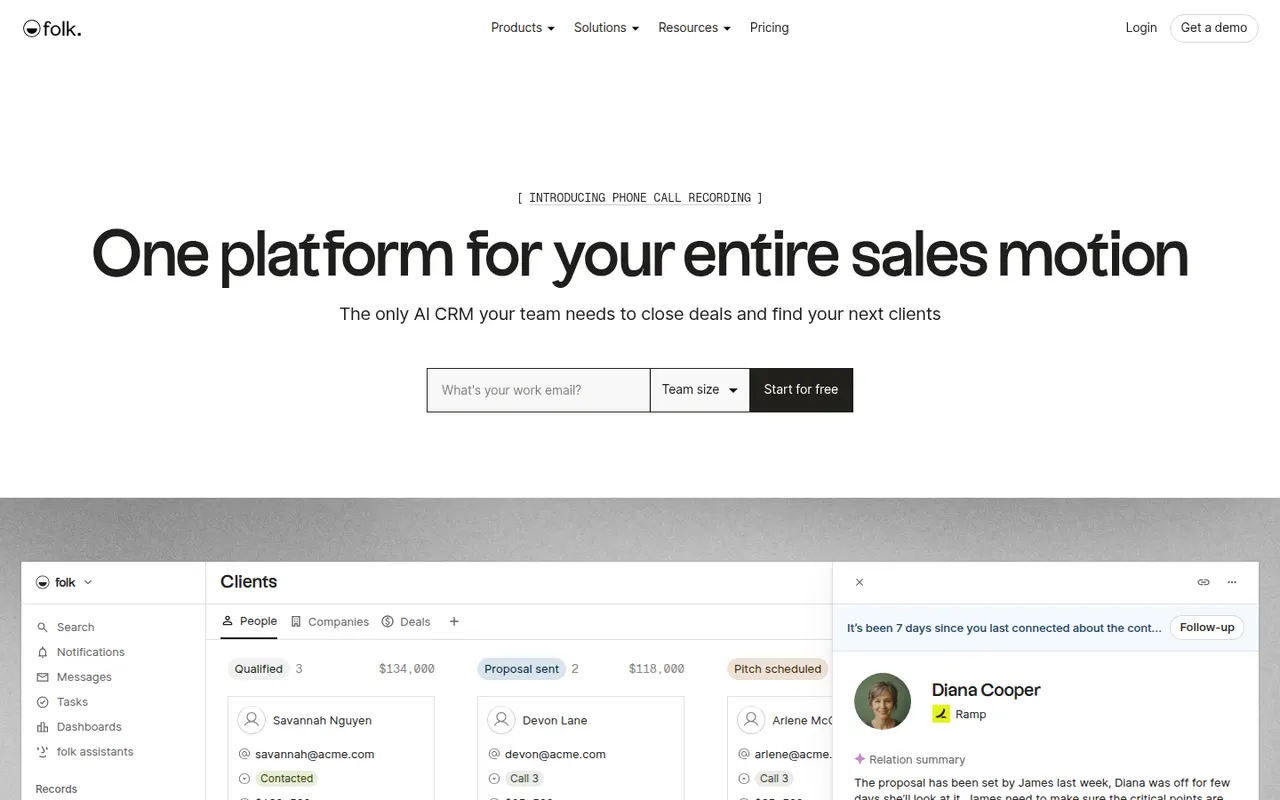
Cost / LicenseFreemiumProprietaryCategoriesPlatformsfolk is a relationship-focused CRM from a Paris-based startup, aimed at founders, agencies, recruiters and small sales teams. A browser extension imports contacts from LinkedIn and other sites, while pipelines, email sequences and AI-assisted enrichment and writing help with follow-up. Its spreadsheet-like interface keeps it simpler than traditional sales CRMs.
8 folk alternativesPros
- Spreadsheet-like interface that feels simpler than traditional sales CRMs
- Browser extension imports contacts from LinkedIn in a click
- Built-in email sequences and AI enrichment for follow-ups
Cons
- Reporting and forecasting stay basic for structured sales teams
- Smaller integration ecosystem than long-established CRMs
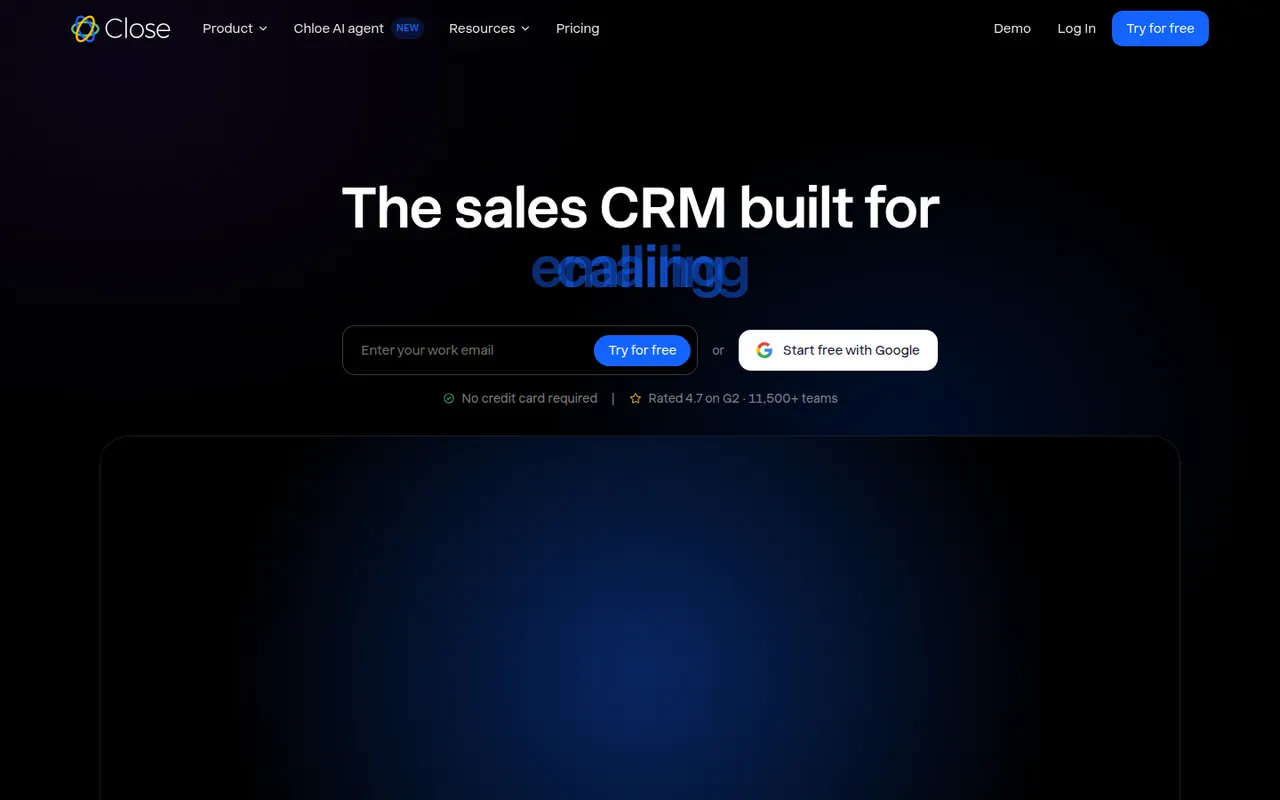
Cost / LicenseFree trialProprietaryCategoriesPlatformsClose is a CRM built for inside sales teams that spend their day on the phone and in email. Calling, power dialing, SMS, email sequences and meeting notes live inside the CRM, so reps rarely need separate tools, and every interaction is logged automatically. It targets startups and small businesses with high-volume outbound or inbound sales processes.
8 Close alternativesPros
- Calling, power dialing, SMS and email built into the CRM
- Every call and email is logged automatically
- Email sequences keep outbound follow-ups on track
Cons
- No free plan, only a trial
- Less suited to complex enterprise sales or marketing automation
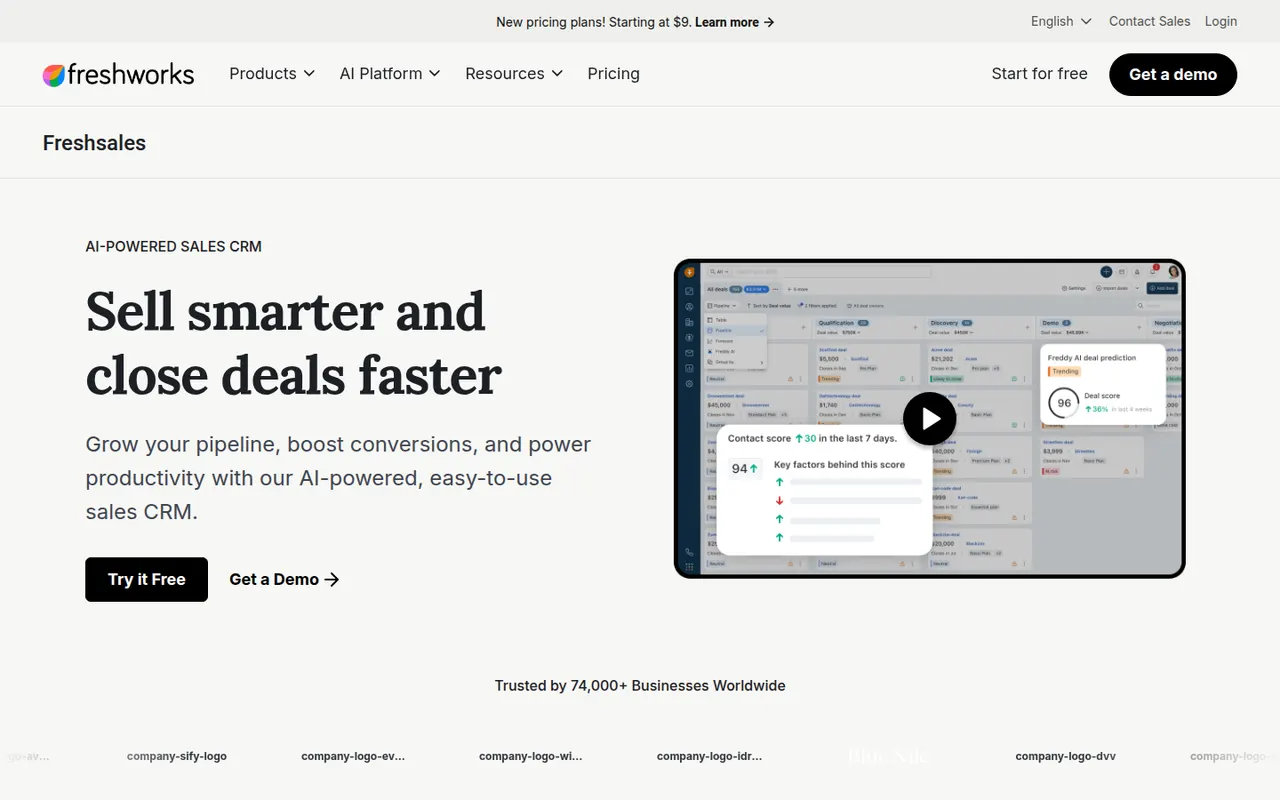
Cost / LicenseFree trialProprietaryCategoriesFreshsales is the sales CRM from Freshworks, offering contact and account management, visual deal pipelines, built-in email and phone, and workflow automation. Its Freddy AI assistant scores leads, surfaces deal insights and suggests next steps. It integrates closely with Freshdesk and other Freshworks products, which suits companies that want sales and support from the same vendor.
8 Freshsales alternativesPros
- Built-in phone and email keep sales conversations in one place
- Freddy AI scores leads and suggests next steps on deals
- Pairs naturally with Freshdesk for teams wanting sales and support together
Cons
- Key AI and automation features are reserved for higher tiers
- Smaller integration marketplace than HubSpot or Salesforce
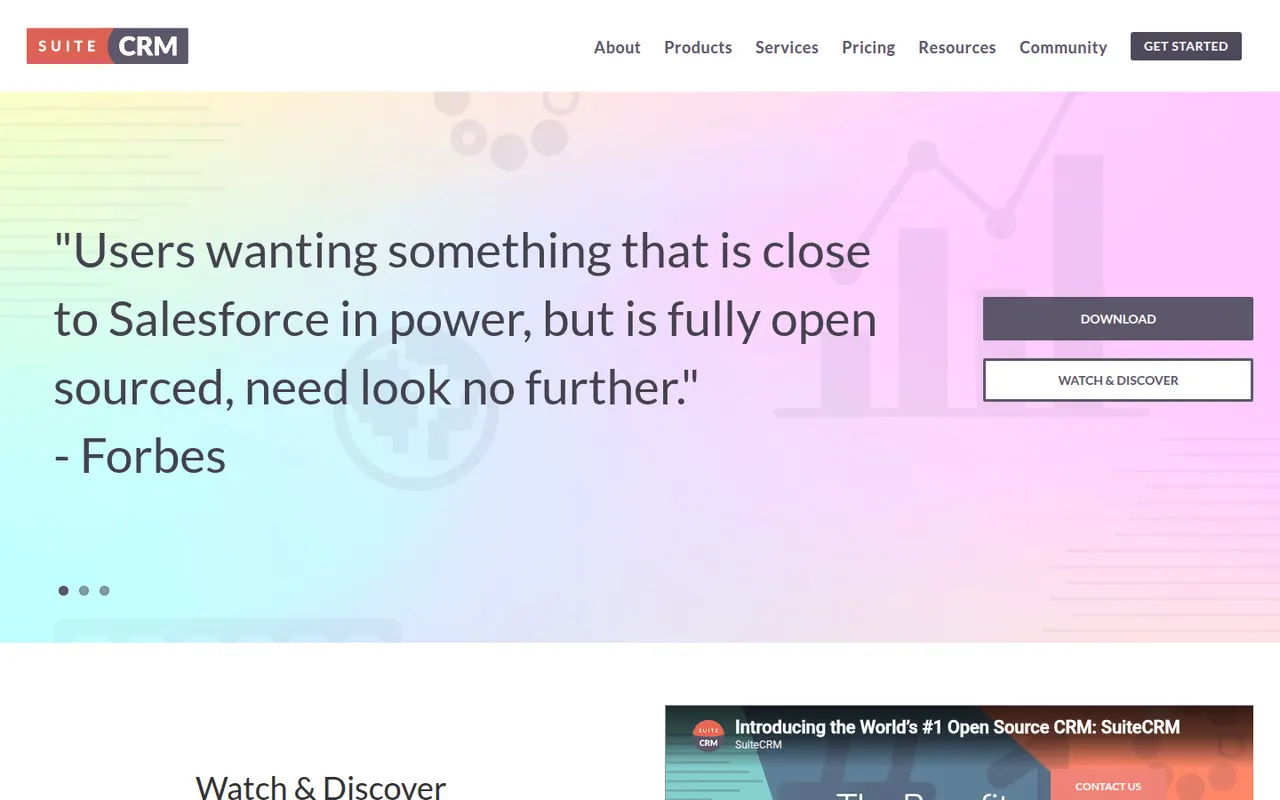
Cost / LicenseFree trialProprietaryCategoriesSuiteCRM is an open source CRM maintained by SalesAgility, originally forked from SugarCRM Community Edition. It covers sales, marketing campaigns, customer service cases, quotes and workflows, and because it is self-hosted you keep complete control over data and code. Organizations with in-house IT or an implementation partner choose it to avoid depending on a single vendor.
7 SuiteCRM alternativesPros
- Free and open source, with full control over data and code
- Covers sales, campaigns, support cases and quotes in one system
- No vendor lock-in, since you choose the hosting and the partner
Cons
- Needs a server and technical skills to install, secure and update
- Interface feels dated next to modern cloud CRMs
- Upgrades and custom modules can take real development effort
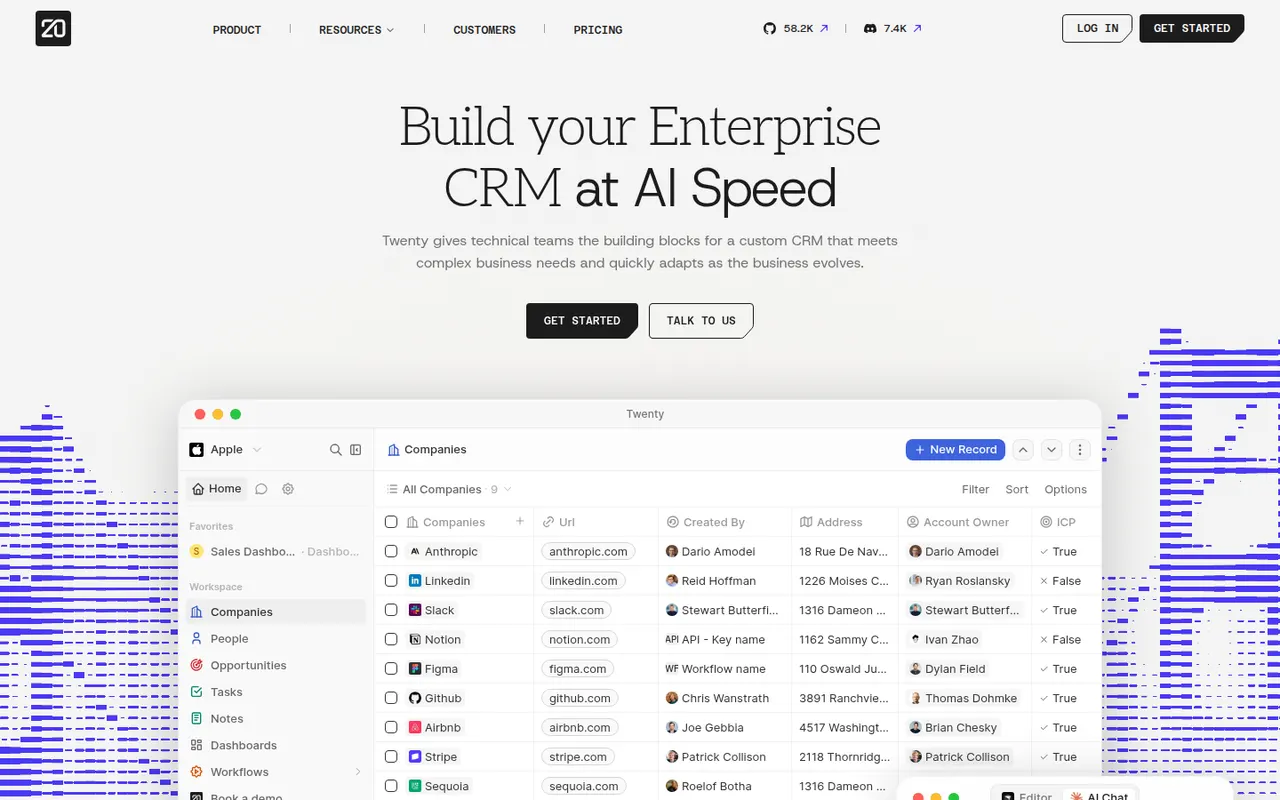
Cost / LicenseFreeOpen sourceCategoriesPlatformsTwenty is an open source CRM positioned as a community-driven alternative to Salesforce, with a modern interface inspired by tools like Notion and Airtable. You can define custom objects and fields, work in table and kanban views, automate tasks with workflows and connect other tools through GraphQL and REST APIs. It can be self-hosted or used through the company's cloud offering.
7 Twenty alternativesPros
- Modern, Notion-like interface with table and kanban views
- Custom objects and fields adapt the data model to your business
- Open source with GraphQL and REST APIs, self-hosted or in the cloud
Cons
- Young product with fewer integrations than established CRMs
- Some advanced sales features of mature CRMs are still missing
- Self-hosting means handling deployment and updates yourself
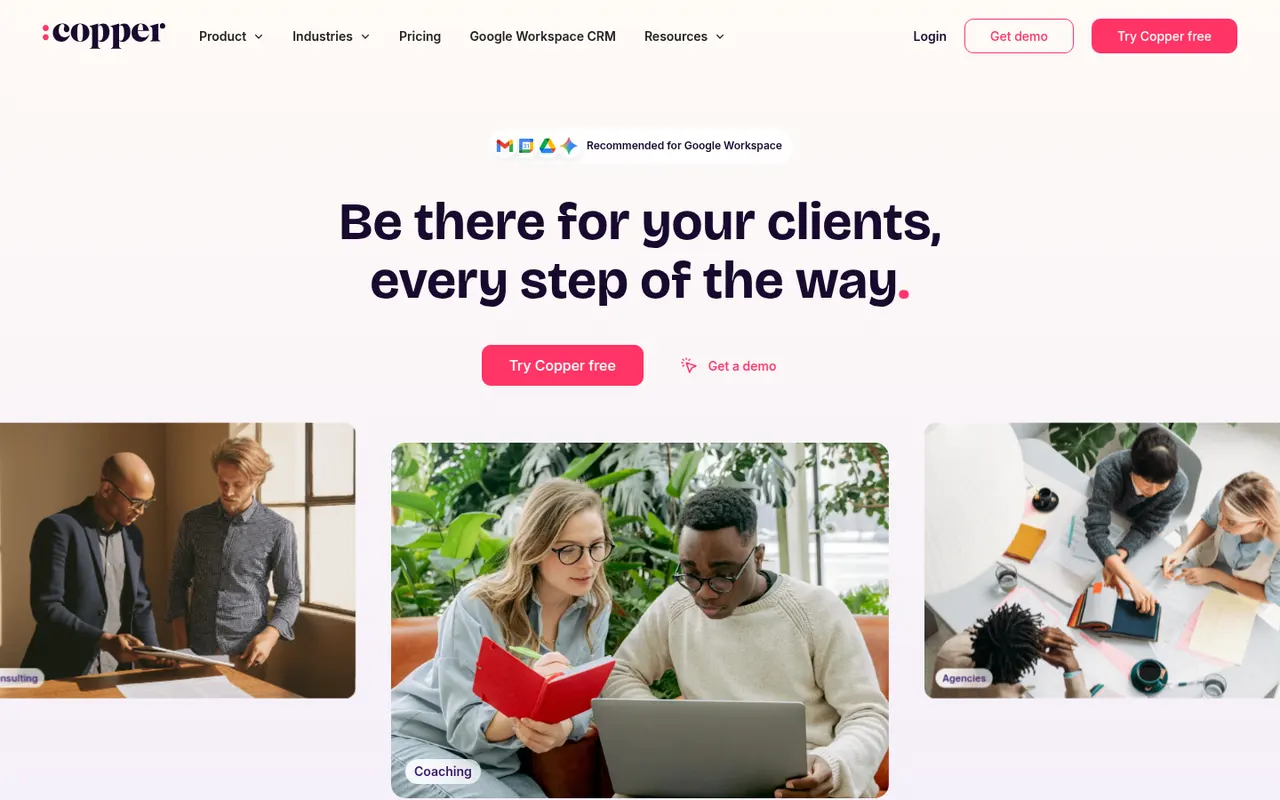
Cost / LicenseFreemiumOpen sourceCategoriesPlatformsCopper is a CRM built for teams that live in Google Workspace. A Chrome extension shows contacts, deals and tasks directly in Gmail, and it syncs with Google Calendar, Drive and Sheets to log activity without manual data entry. It offers pipelines, workflow automation and reporting, and suits small businesses and agencies managing relationships rather than high-volume sales.
8 Copper alternativesPros
- Works inside Gmail through a Chrome extension, so contacts sit next to email
- Syncs with Google Calendar, Drive and Sheets to log activity automatically
- Clean interface that small teams can adopt with little training
Cons
- Much less useful for teams that don’t run on Google Workspace
- Reporting and customization are shallower than in larger CRMs
- No free plan, and advanced automation sits on higher tiers
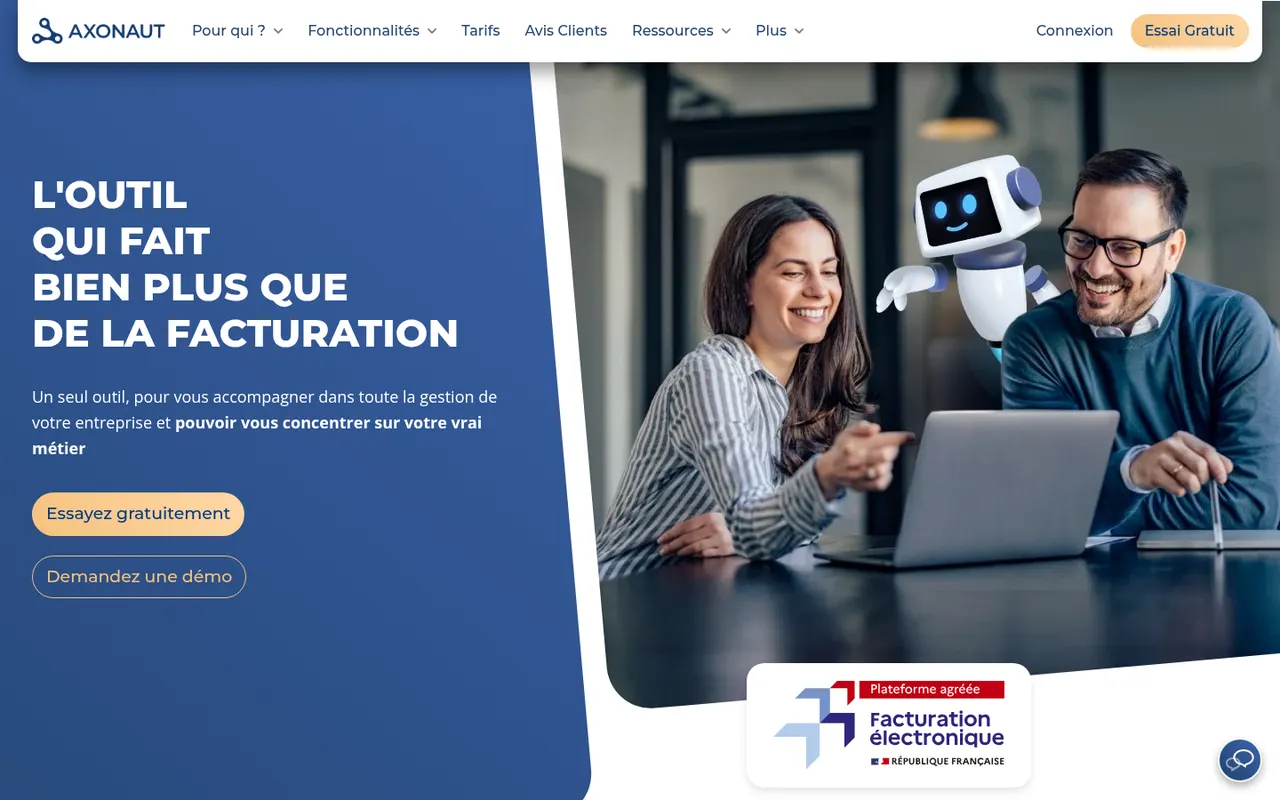
Cost / LicenseFree trialProprietaryCategoriesPlatformsAxonaut is a French business management software for small companies and freelancers that combines a CRM, quotes and invoicing, expense tracking, cash flow and bank synchronization in one tool. It also offers project tracking and simple HR features, so a small team can replace several separate apps. It is designed around the practices and obligations of French businesses.
9 Axonaut alternativesPros
- CRM, quotes, invoicing and cash flow in one tool
- Designed around French business practices and obligations
- Bank sync makes expense and payment tracking easier
Cons
- Geared to the French market, less suited to companies elsewhere
- Each module is less deep than a dedicated specialist tool
- No free plan beyond the trial period
Cost / LicenseFree trialProprietaryCategoriesPlatforms