Apps with Analytics
55 apps
Top Analytics apps ranked by the community
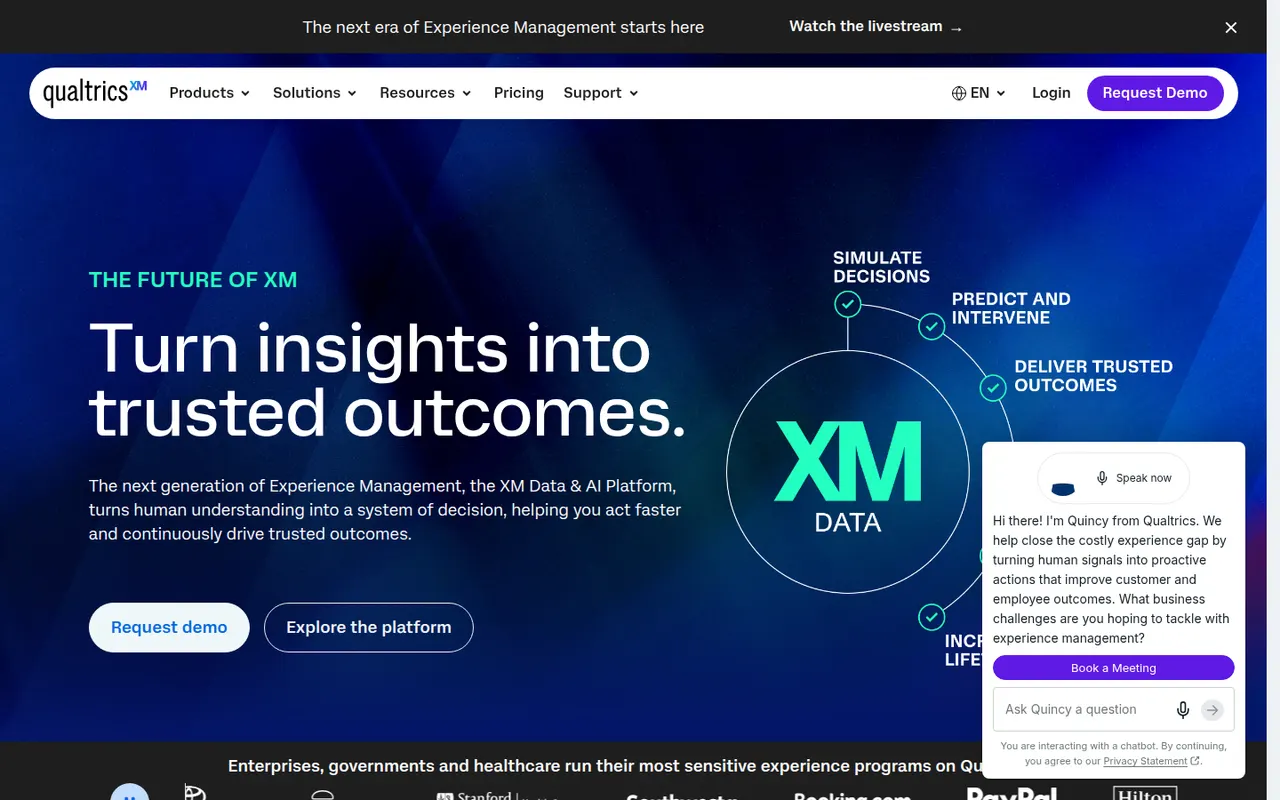
Qualtrics is an experience management (XM) platform used by large companies and universities to run advanced surveys and analyze customer, employee and market feedback. It offers complex survey logic, panel management, statistical analysis, text analytics and AI-generated insights, with dashboards for different teams. It is sold mainly through custom enterprise contracts, and a basic free account is also offered.
7 Qualtrics alternativesPros
- Very deep survey logic, panel management and statistical analysis
- Text analytics and AI insights help process large volumes of feedback
- Dashboards tailored to customer, employee and market research teams
Cons
- Custom enterprise contracts with no public pricing, costly for small teams
- Steep learning curve given the breadth of features
- Free account is very limited compared with paid plans
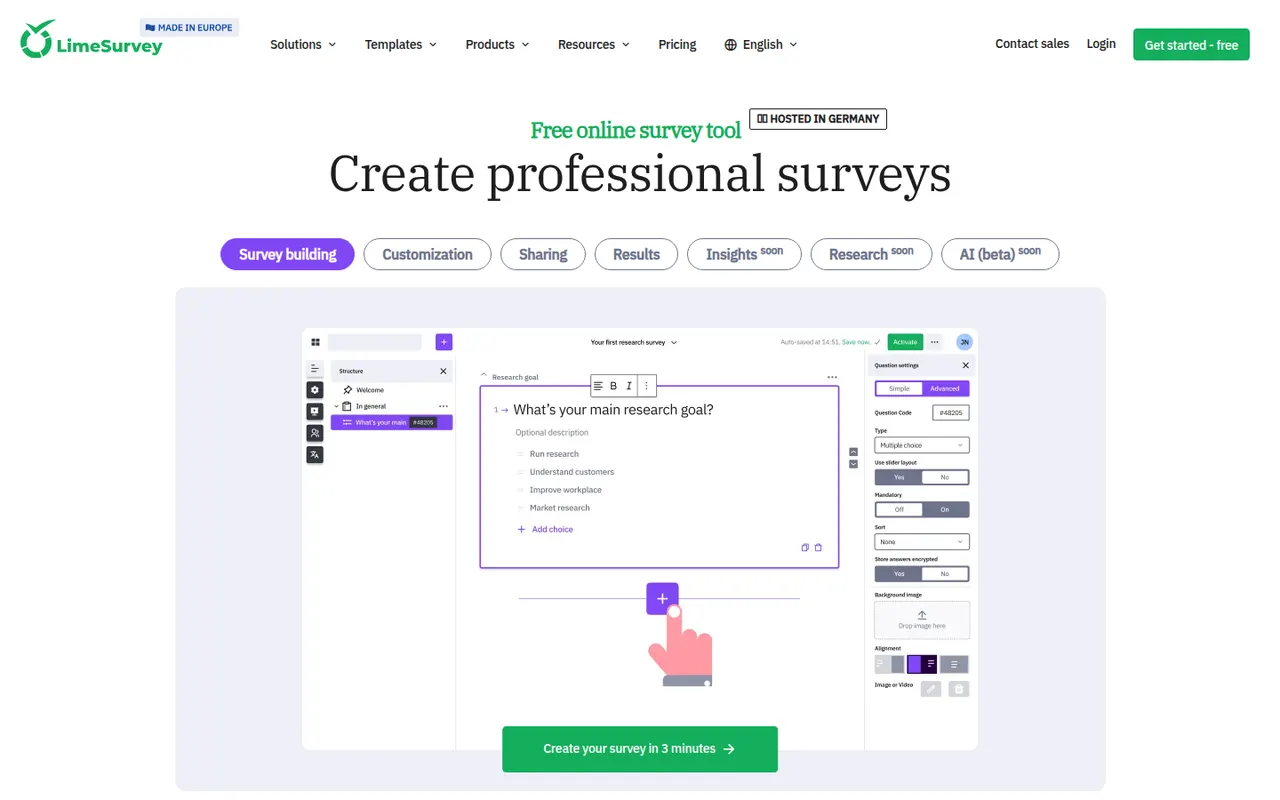
Cost / LicenseFreemiumProprietaryCategoriesLimeSurvey is an open-source online survey tool from Germany, suited to academic and public-sector research. It supports many question types, complex conditions, quotas, multilingual surveys and anonymous responses, with results exportable to SPSS, R and spreadsheets. The Community Edition can be self-hosted for free, and LimeSurvey Cloud offers hosted plans, including a free tier.
8 LimeSurvey alternativesPros
- Advanced logic with quotas, conditions and a wide range of question types
- Free self-hosted edition keeps research data under your control
- Exports results to SPSS, R and spreadsheets for statistical analysis
Cons
- Interface feels dated and takes time to learn
- Survey design looks less polished than modern form builders
- Self-hosting means handling updates and server security yourself
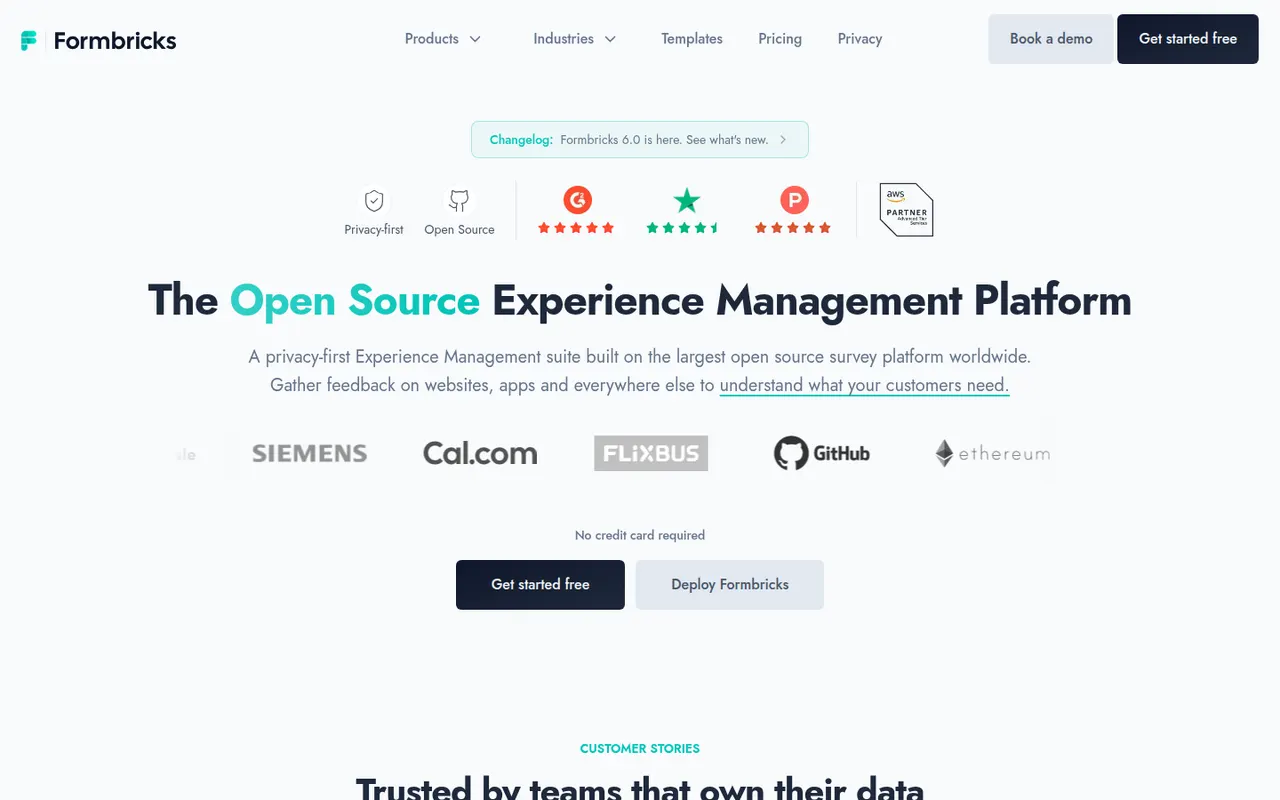
Cost / LicenseFreemiumOpen sourceCategoriesPlatformsFormbricks is an open-source experience management tool for collecting feedback through link surveys, website pop-ups and in-app surveys targeted by user attributes or actions. It integrates with tools like Slack, Notion and Airtable, offers an API and webhooks, and can be self-hosted to keep data on your own servers. Its cloud version has a free plan, and the team is based in Germany.
12 Formbricks alternativesPros
- Open source and self-hostable, so feedback data can stay on your servers
- In-app and website surveys can target users by attributes or actions
- API, webhooks and integrations with Slack, Notion and Airtable
Cons
- Self-hosting requires technical skills and ongoing maintenance
- In-app targeting needs an SDK set up by developers
- Younger product with fewer templates than established survey tools
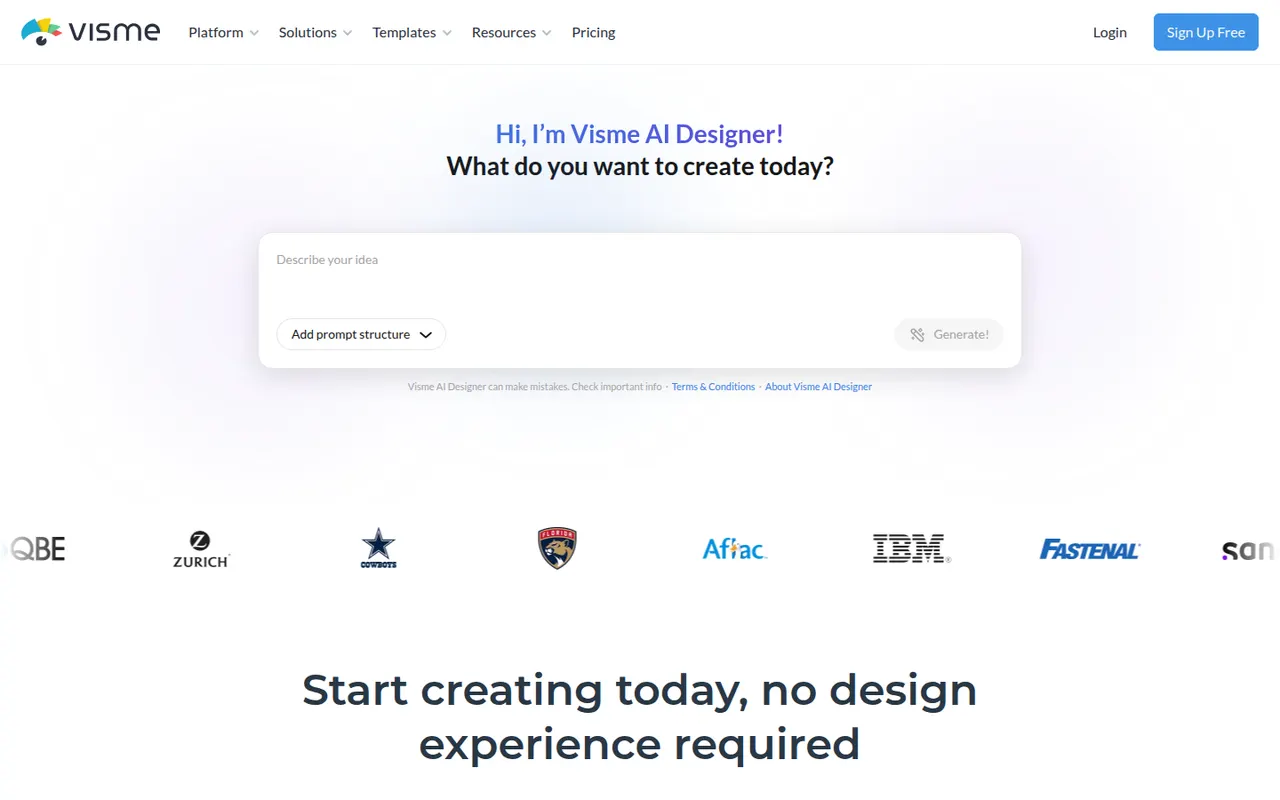
Cost / LicenseFreemiumOpen sourceCategoriesPlatformsVisme is an online design tool for visual content that has to communicate data or ideas, such as presentations, infographics, reports, charts and social graphics. It offers templates, brand kits, animated and interactive elements, team workspaces and viewer analytics for shared projects. Marketing, training and communications teams use it in place of separate slide and graphics tools.
8 Visme alternativesPros
- Presentations, infographics, reports and charts in one tool
- Animated and interactive elements make content more engaging
- Viewer analytics show how shared projects are consumed
Cons
- Free plan is limited and adds Visme branding to designs
- Broad feature set comes with a learning curve
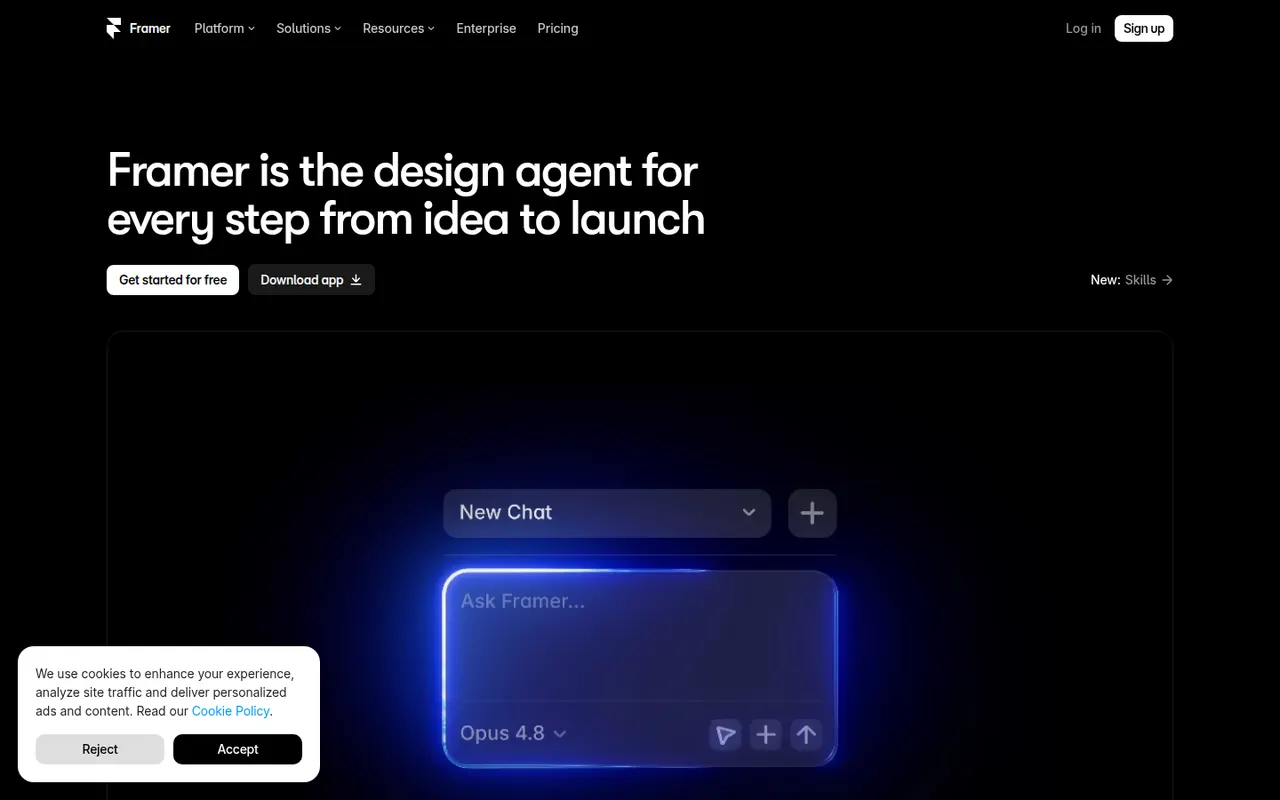
Cost / LicenseFreemiumProprietaryCategoriesPlatformsFramer is a website builder that works like a design tool: you lay out pages on a canvas, add animations and effects, then publish directly with hosting included. It offers a CMS, localization, built-in analytics and AI features that can generate a starting layout from a prompt. Designers and startups use it for landing pages, portfolios and marketing sites.
12 Framer alternativesPros
- Design-tool canvas with fine control over layout and animation
- Publishing and hosting included in one step
- Built-in CMS, localization and analytics
Cons
- Paid plans get costly as sites grow
- Learning curve for people new to design tools
- Sites stay hosted on Framer, with no official code export
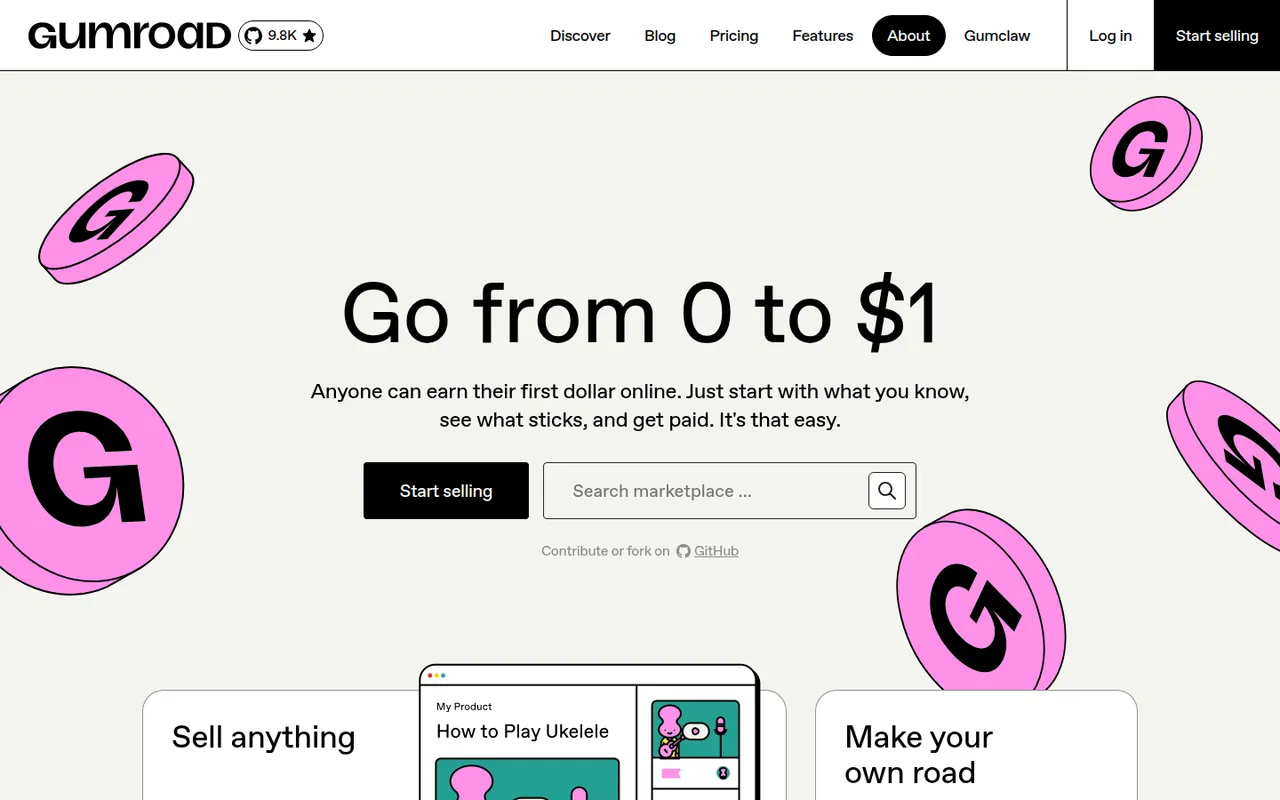
Cost / LicenseFreemiumProprietaryCategoriesGumroad lets creators sell digital downloads, courses, memberships and physical items from a simple storefront or checkout links. There is no monthly subscription: Gumroad takes a percentage of each sale instead. It also includes email updates and automated workflows for customers, discount codes and affiliate features, which suits independent writers, artists and developers.
7 Gumroad alternativesPros
- No monthly fee, since you only pay a share of each sale
- Very quick to start selling with a simple checkout link
- Handles memberships, courses, discount codes and affiliates
Cons
- Per-sale fees take a noticeable cut as revenue grows
- Limited storefront customization and branding
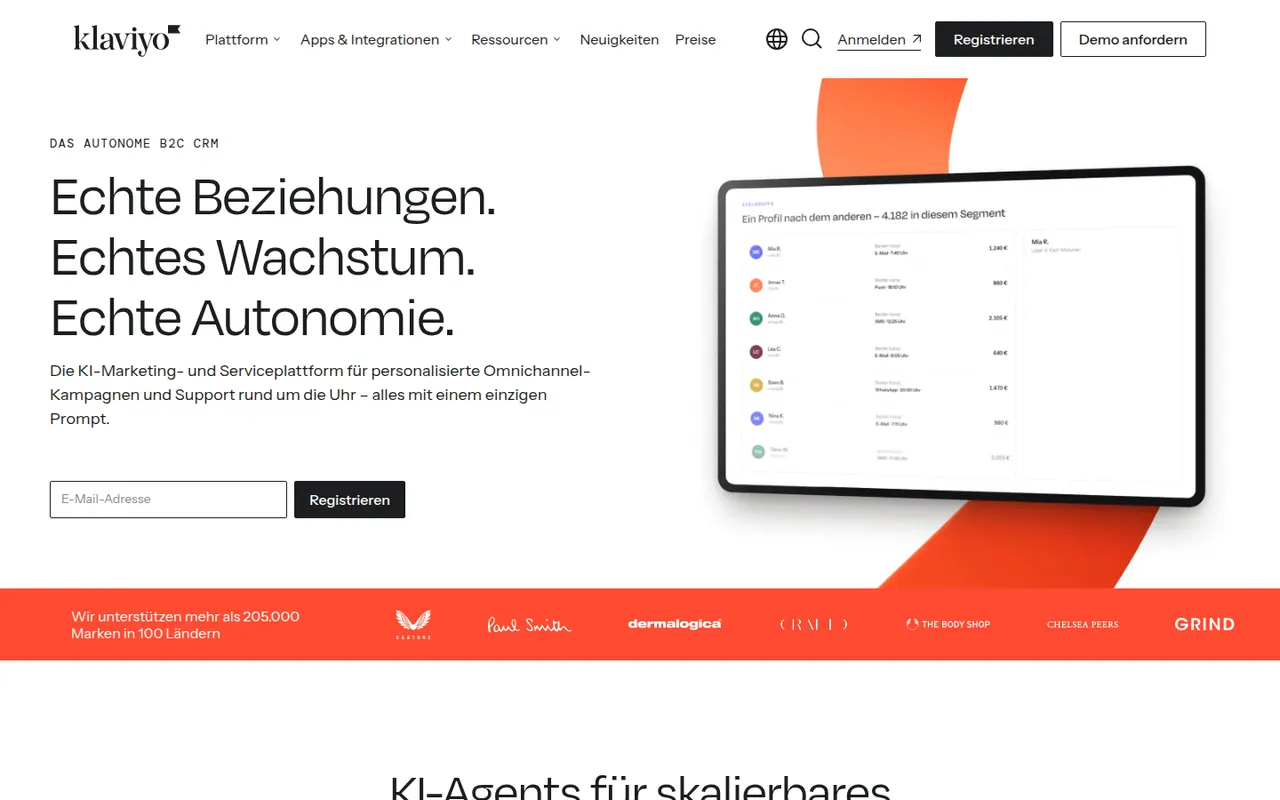
Cost / LicenseFreemiumProprietaryCategoriesPlatformsKlaviyo is a marketing automation platform for online stores that connects to Shopify, WooCommerce and other platforms to use order and browsing data in email and SMS campaigns. Merchants build flows such as abandoned cart or post-purchase sequences, segment customers by behavior and predicted value, and measure revenue per message. AI features help generate content and segments.
7 Klaviyo alternativesPros
- Uses order and browsing data from Shopify and other platforms
- Prebuilt flows for abandoned carts and post-purchase emails
- Revenue attribution per message and predictive segments
Cons
- Becomes expensive as the number of active profiles grows
- Overkill for businesses that don’t sell online
- Advanced segmentation and reporting take time to master
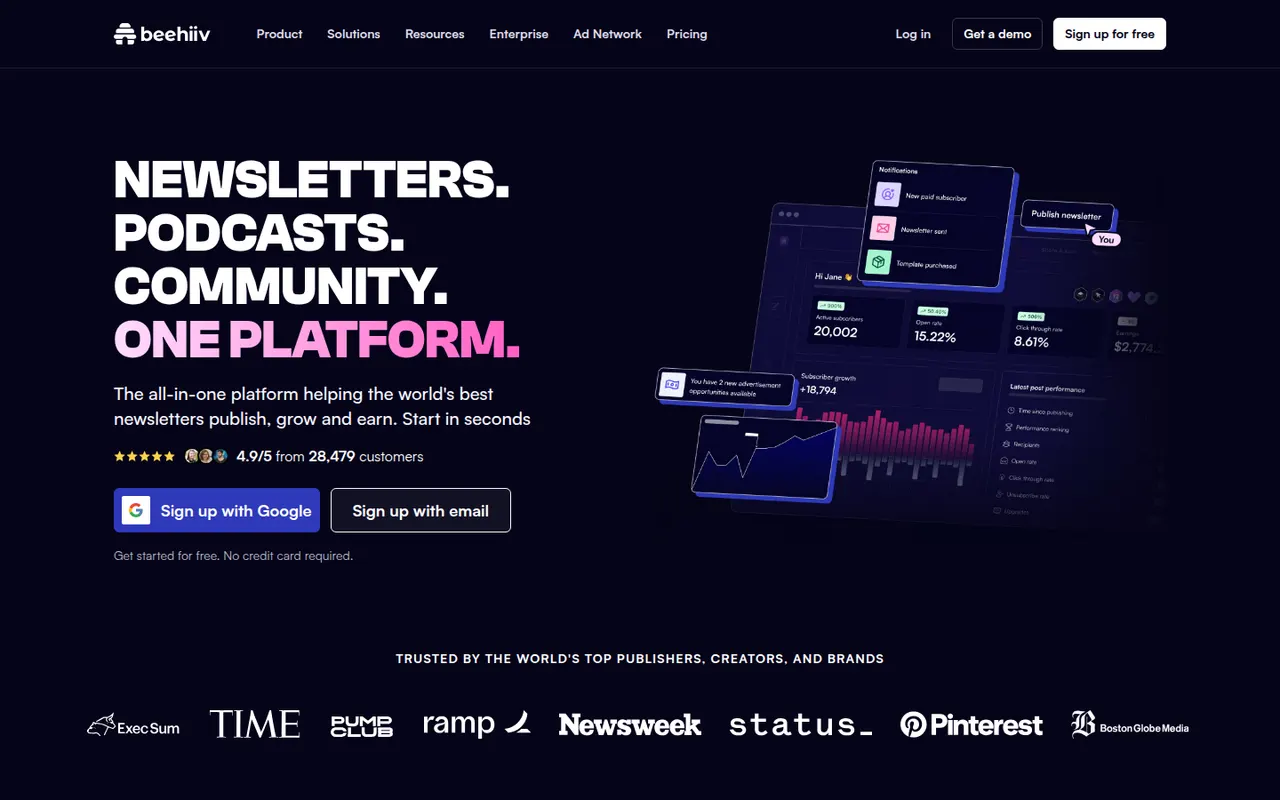
Cost / LicenseFreemiumProprietaryCategoriesbeehiiv is a newsletter platform created by former Morning Brew team members, combining an editor, a hosted website and email delivery. It focuses on growth and monetization, with a referral program, recommendations between newsletters, an ad network and paid subscriptions. Publishers also get detailed analytics, A/B testing of subject lines and AI writing tools.
6 beehiiv alternativesPros
- Growth tools like referrals and cross-newsletter recommendations
- Monetization through an ad network and paid subscriptions
- Hosted website and detailed analytics included
Cons
- Most monetization and growth features sit on paid plans
- Less suited to advanced marketing automation or e-commerce
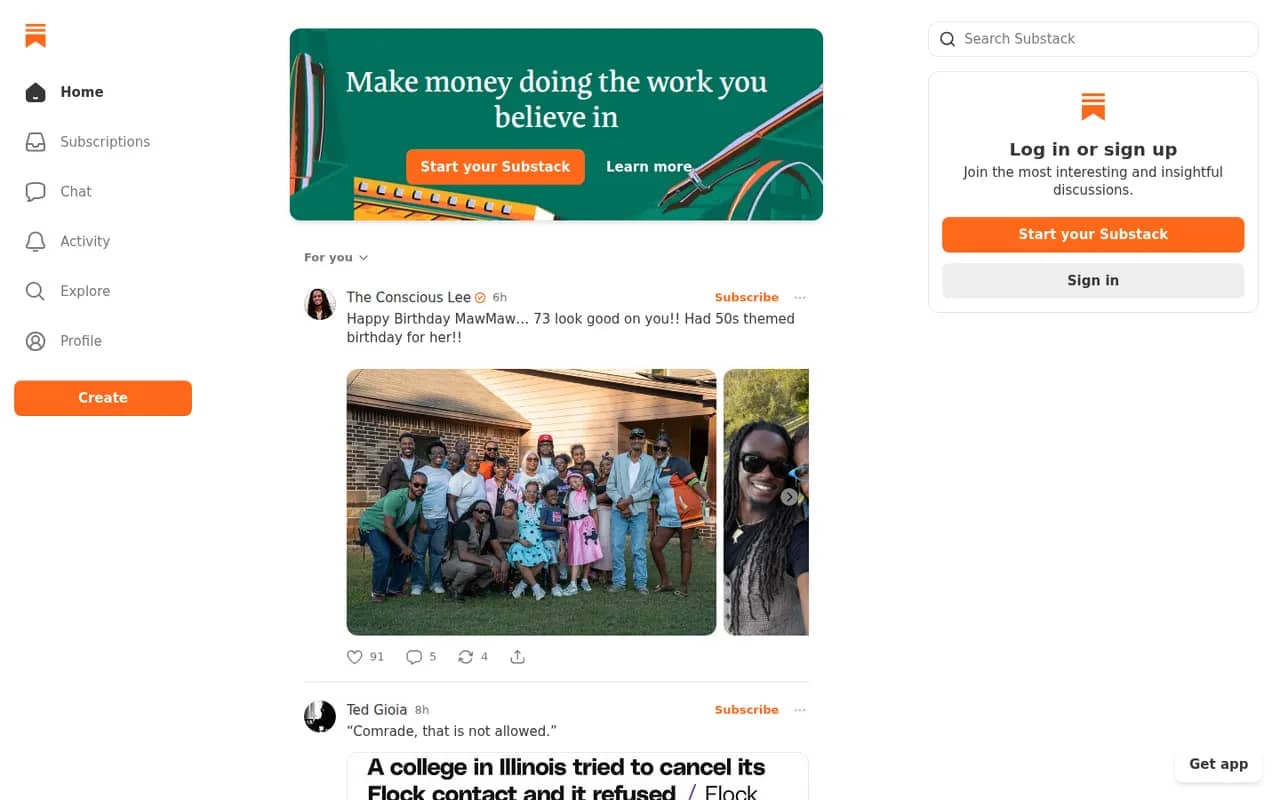
Cost / LicenseFreemiumProprietaryCategoriesPlatformsSubstack lets writers start a newsletter with a web archive, podcast and video hosting, and turn on paid subscriptions when they are ready. Publishing is free: Substack takes a share of subscription revenue instead of charging for a plan. Its reader app, Notes feed and cross-recommendations connect publications into a network that helps writers find readers.
7 Substack alternativesPros
- Free to publish, with no setup or hosting to manage
- Built-in paid subscriptions, podcasts and video
- Notes and cross-recommendations help writers find readers
Cons
- Takes a share of revenue from paid subscriptions
- Limited design and branding customization
- Your audience lives inside Substack’s network rather than your own brand
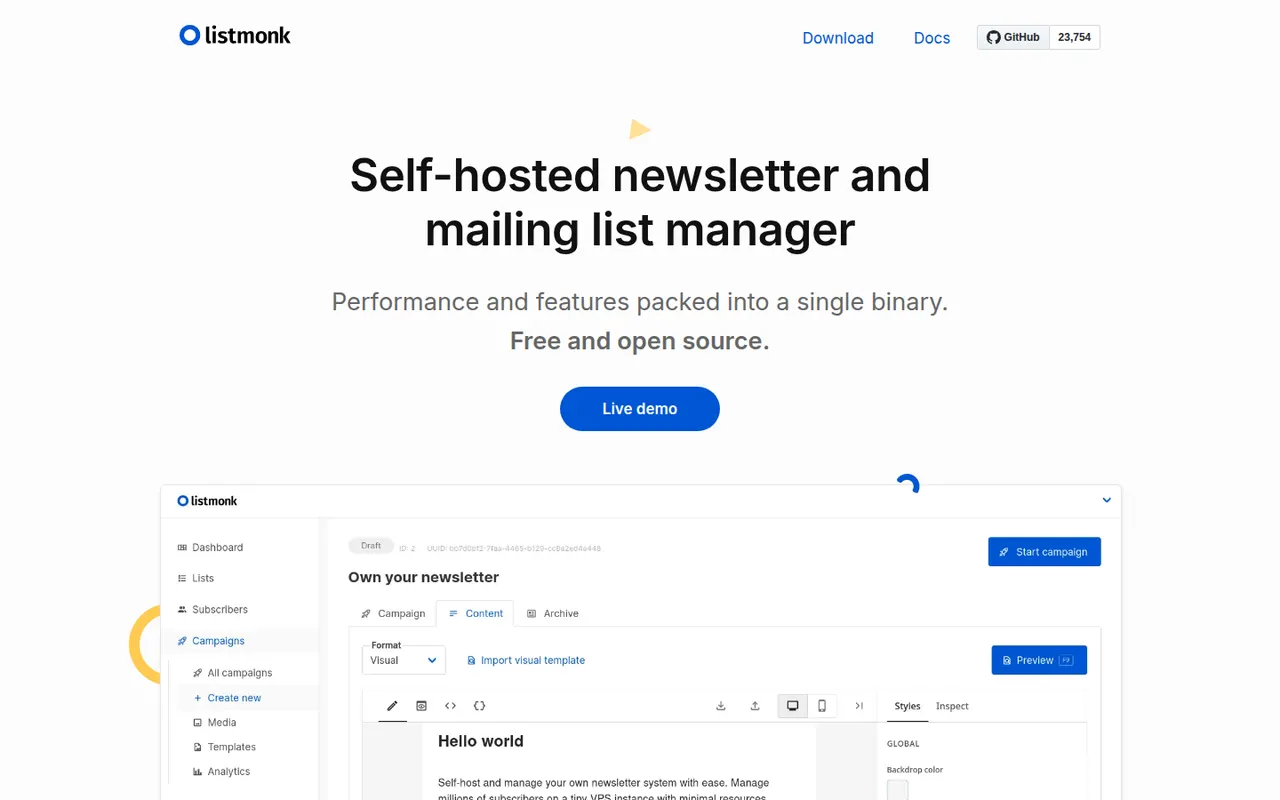
Cost / LicenseFreeProprietaryCategorieslistmonk is a free, open source newsletter and mailing list manager distributed as a single binary backed by PostgreSQL. It handles large subscriber lists, template-based campaigns, transactional messages via API and segmentation through SQL queries, and can send through any SMTP server or service. It suits developers and organizations that want to keep email marketing and subscriber data on their own servers.
6 listmonk alternativesPros
- Free, open source and distributed as a single binary
- Handles very large lists efficiently on PostgreSQL
- Sends through any SMTP server or email service
Cons
- Requires self-hosting and a separate sending service
- No visual automation builder or drip campaigns
- Segmentation relies on SQL queries rather than a point-and-click tool
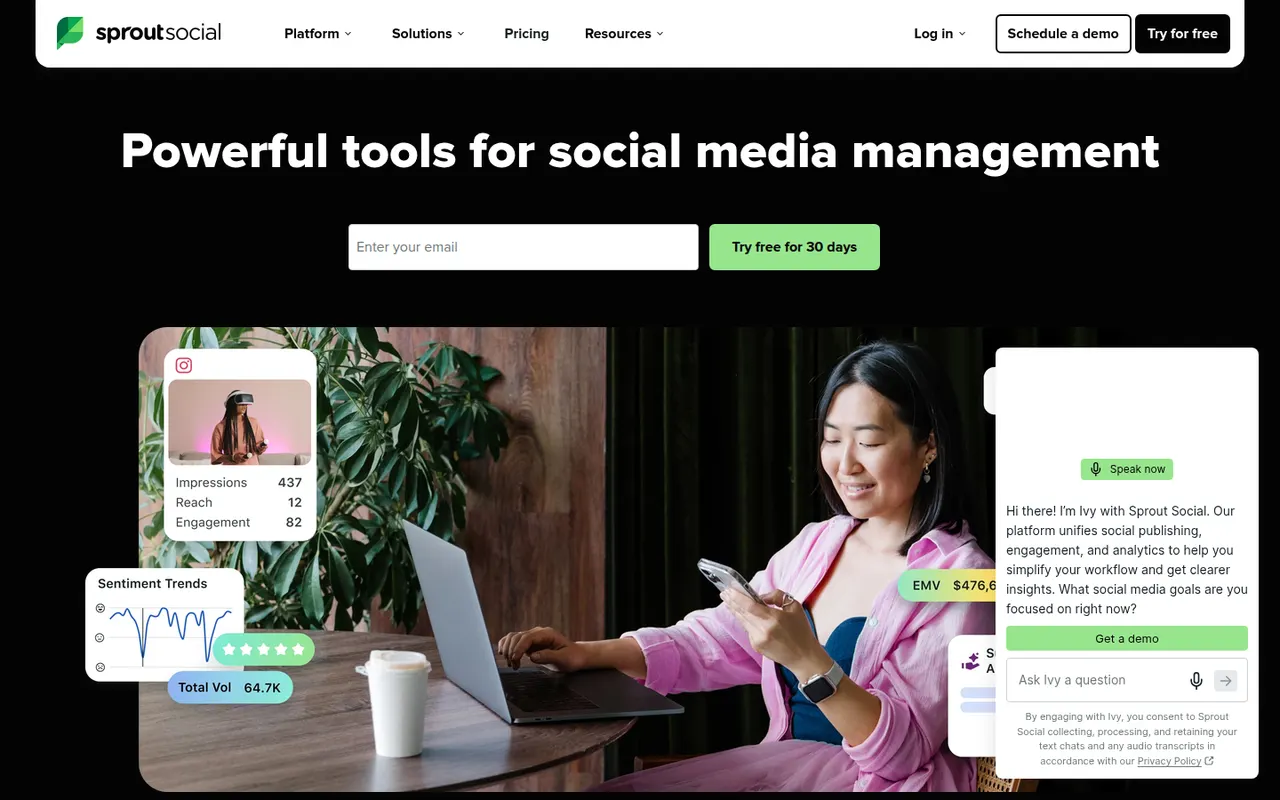
Cost / LicenseFreeOpen sourceCategoriesPlatformsSprout Social is a social media management platform for brands and agencies, combining scheduling and a shared content calendar, a unified inbox for messages and comments, analytics reports and social listening. It includes approval workflows, team permissions and conversation histories per contact. It is aimed at mid-sized and larger teams that need detailed reporting across many profiles.
9 Sprout Social alternativesPros
- Unified inbox gathers messages and comments from every profile
- Detailed analytics reports suited to client and management reviews
- Approval workflows and permissions built for larger social teams
Cons
- Per-seat pricing gets expensive as the team grows
- No free plan beyond the trial period
- Feature depth can feel heavy for solo creators
Cost / LicenseFree trialProprietaryCategoriesAgorapulse is a social media management tool founded in France that brings publishing, a unified inbox, social listening and reporting into one interface. Its inbox lets teams process comments, mentions and messages like email, with assignment and saved replies, and its reports can tie social activity to website traffic and conversions. Agencies use it for client approvals and shared calendars.
10 Agorapulse alternativesPros
- Unified inbox handles comments and messages like email
- Reports can tie social activity to website traffic and conversions
- Client approvals and shared calendars suit agencies
Cons
- Per-user pricing gets costly as teams grow
- The free plan is very limited
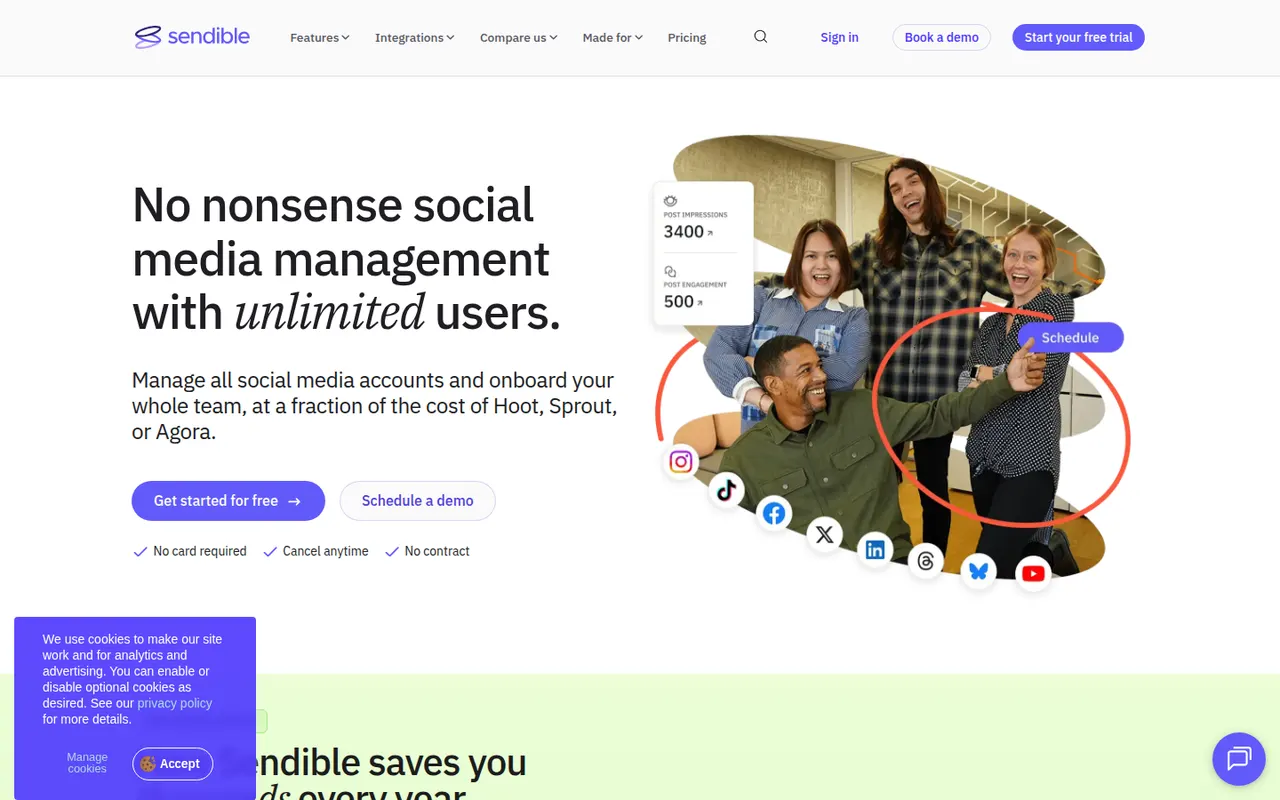
Cost / LicenseFreemiumProprietaryCategoriesSendible is a social media management platform designed for agencies that handle many client brands. It offers scheduling across the major networks, a content calendar, a unified inbox, client approval workflows and reports that can be white-labeled with the agency's own domain and logo. Integrations with Canva and stock image libraries let teams create posts inside the tool.
8 Sendible alternativesPros
- White-label reports and dashboards with the agency's own branding
- Client approval workflows built for agencies
- Canva and stock image integrations for creating posts
Cons
- No free plan, only a trial
- The interface feels less modern than newer tools
- Costs rise with the number of client brands
Cost / LicenseFree trialProprietaryCategoriesPubler is a social media scheduling tool that publishes to networks such as Facebook, Instagram, X, LinkedIn, TikTok, Pinterest and YouTube. It offers a calendar view, recurring and bulk scheduling, an AI assistant for captions and images, a link-in-bio page and analytics. Its free plan covers a few accounts, which suits freelancers and small businesses.
9 Publer alternativesPros
- Recurring and bulk scheduling save time
- Link-in-bio page and AI assistant included
- The free plan covers a few accounts
Cons
- Analytics are less detailed than in agency-focused tools
- Advanced features are reserved for paid plans
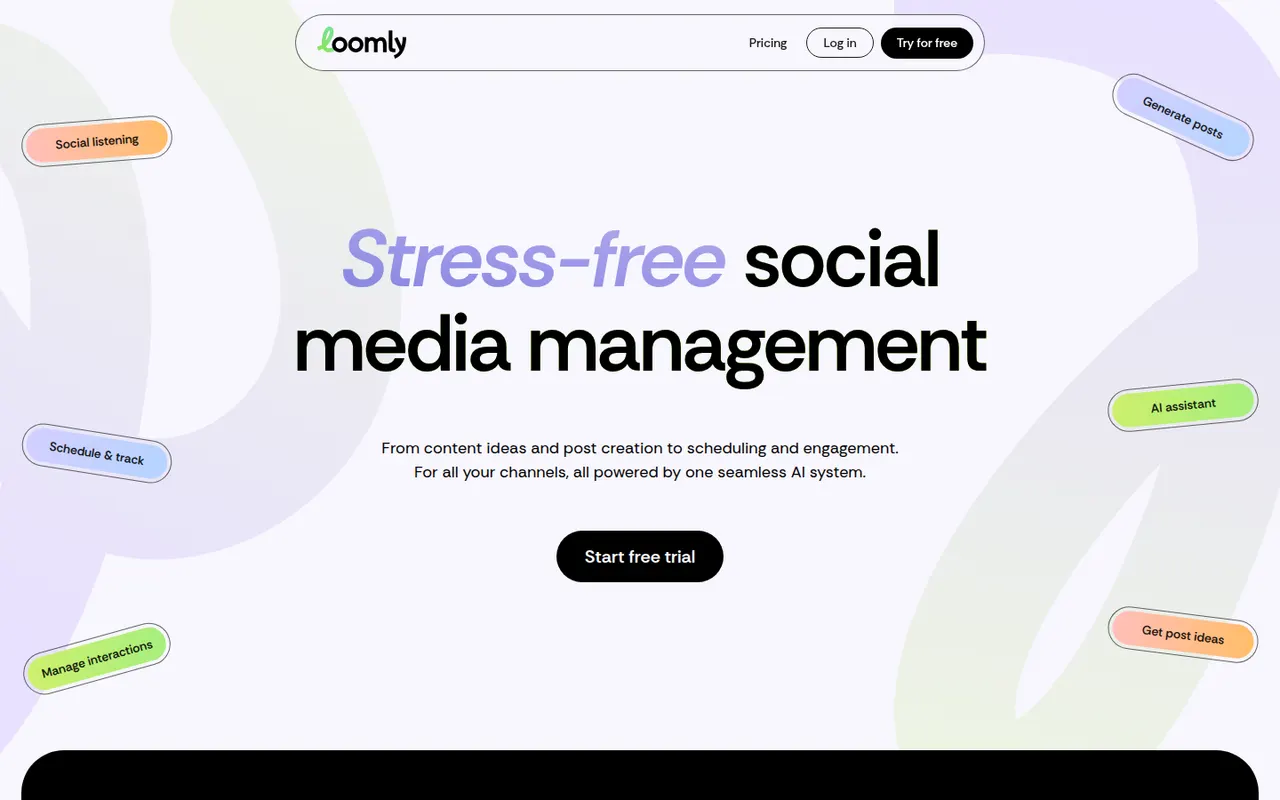
Cost / LicenseFreemiumProprietaryCategoriesPlatformsLoomly is a social media management tool organized around a content calendar where teams plan posts, collaborate on drafts and run approval workflows before publishing. It suggests post ideas based on trends and key dates, previews content for each network, and includes an inbox for comments and messages plus analytics. It is aimed at marketing teams and agencies that coordinate several brands.
9 Loomly alternativesPros
- Content calendar with built-in approval workflows
- Post ideas based on trends and key dates
- Previews show how posts will look on each network
Cons
- No free plan beyond the trial
- Analytics are less detailed than dedicated reporting tools
- Costs rise as you add brands and users
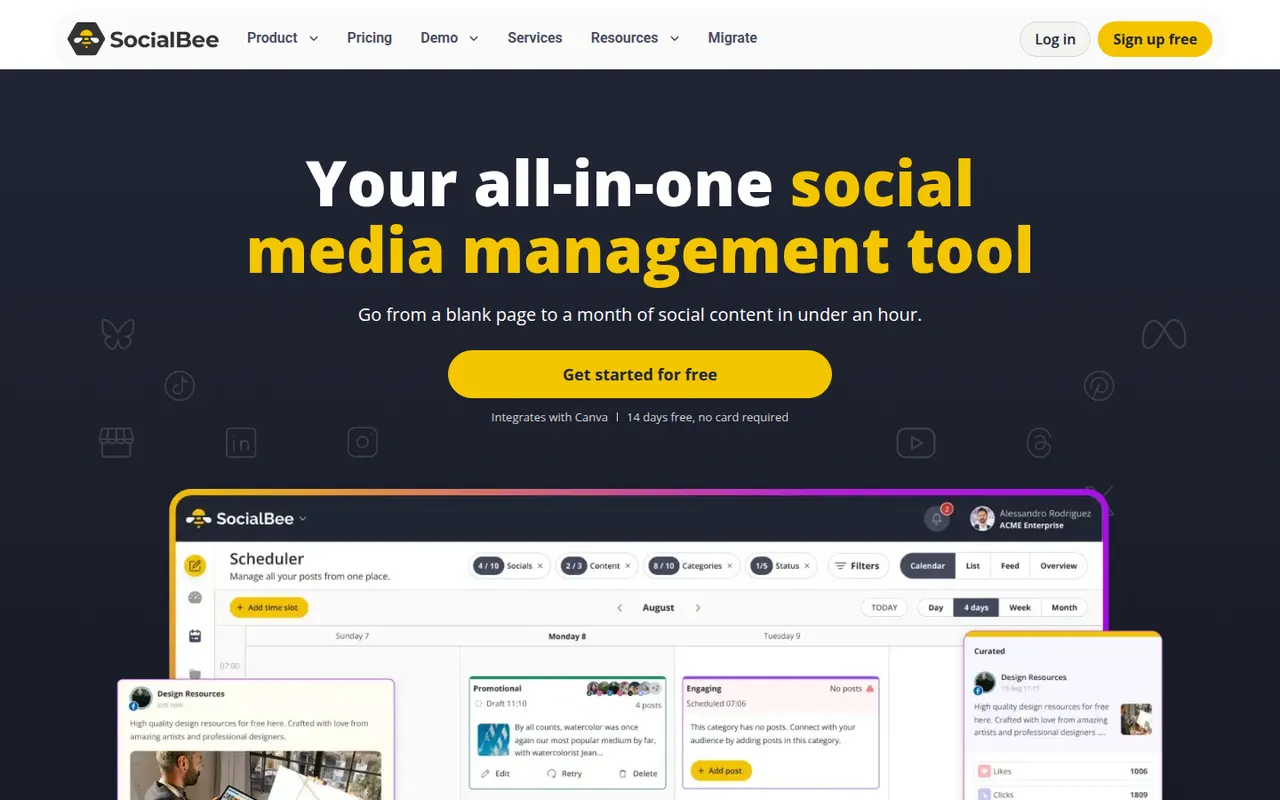
Cost / LicenseFree trialProprietaryCategoriesSocialBee is a social media scheduler that sorts posts into content categories, such as tips, promotions or blog links, each with its own posting schedule, and can recycle evergreen posts automatically. It supports the main networks, offers an AI copilot for generating posts and strategy, and includes an engagement inbox and analytics. Optional done-for-you services can also handle content creation.
11 SocialBee alternativesPros
- Content categories each get their own posting schedule
- Automatic recycling of evergreen posts
- AI copilot for generating posts and strategy
Cons
- No free plan beyond the trial
- Setting up categories takes time before it pays off
- Analytics are basic compared with dedicated reporting tools
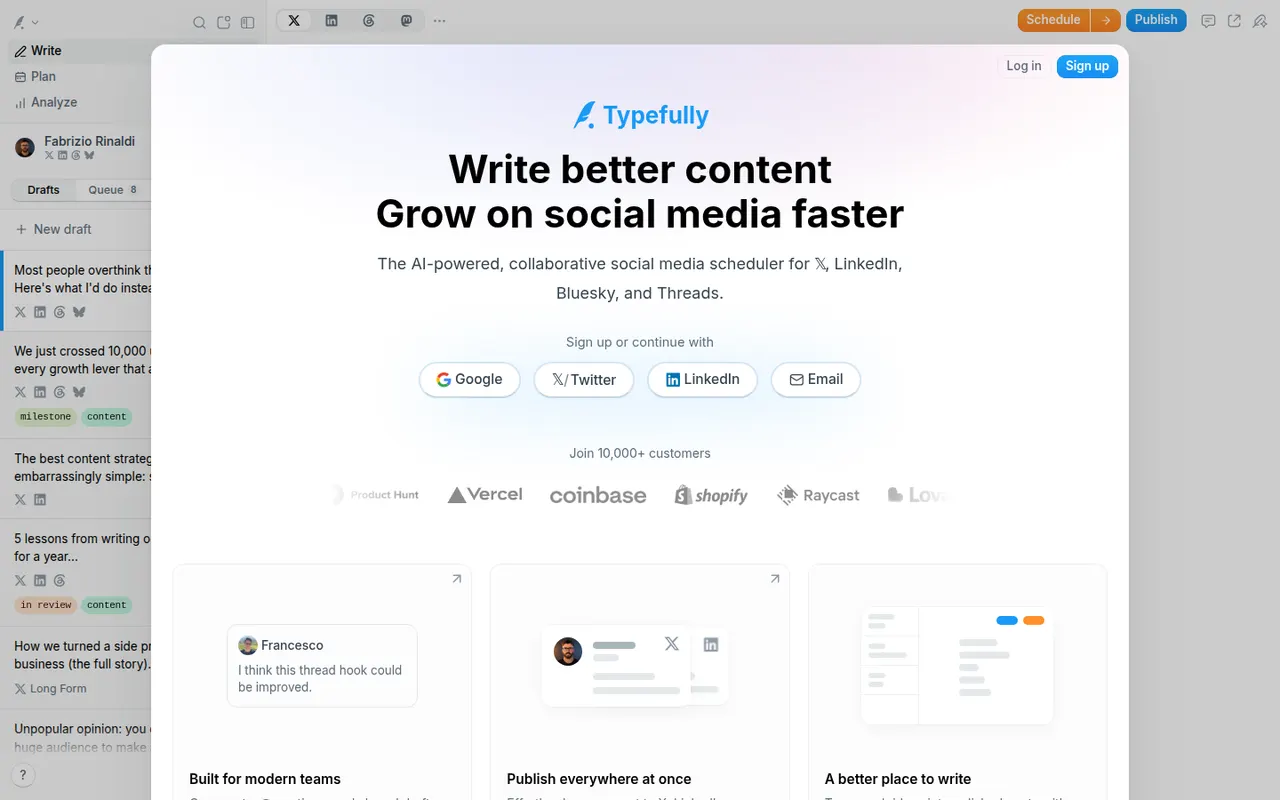
Cost / LicenseFree trialProprietaryCategoriesPlatformsTypefully is a writing-first tool for creators and teams who publish on X, LinkedIn, Threads, Bluesky and Mastodon. Its distraction-free editor makes it easy to draft threads and long posts, preview them, then schedule or queue them, while AI features suggest improvements and rewrites. Analytics, team workspaces and shareable drafts for feedback round out the product.
7 Typefully alternativesPros
- Clean, distraction-free editor built for threads and long posts
- Publishes to X, LinkedIn, Threads, Bluesky and Mastodon from one place
- Shareable drafts make it easy to collect feedback before posting
Cons
- Built for text posts rather than image- or video-first networks
- No social inbox or listening tools like full social media suites
- Advanced scheduling and analytics require a paid plan
Cost / LicenseFreemiumProprietaryCategoriesPlatformsGoogle Search Console is a free service from Google that shows how a website appears in Google Search: the queries that bring clicks and impressions, average positions, the indexing status of pages and Core Web Vitals. Site owners use it to submit sitemaps, inspect URLs, fix crawl and structured data issues and get alerts about security problems or manual actions. Its data can be exported through an API.
7 Google Search Console alternativesPros
- Free, first-party data on queries, clicks and impressions
- URL inspection and indexing reports straight from Google
- Alerts for security issues and manual actions
Cons
- Covers only Google Search, not other search engines
- Performance history is limited, so long-term data must be exported
- Some queries are hidden for privacy reasons
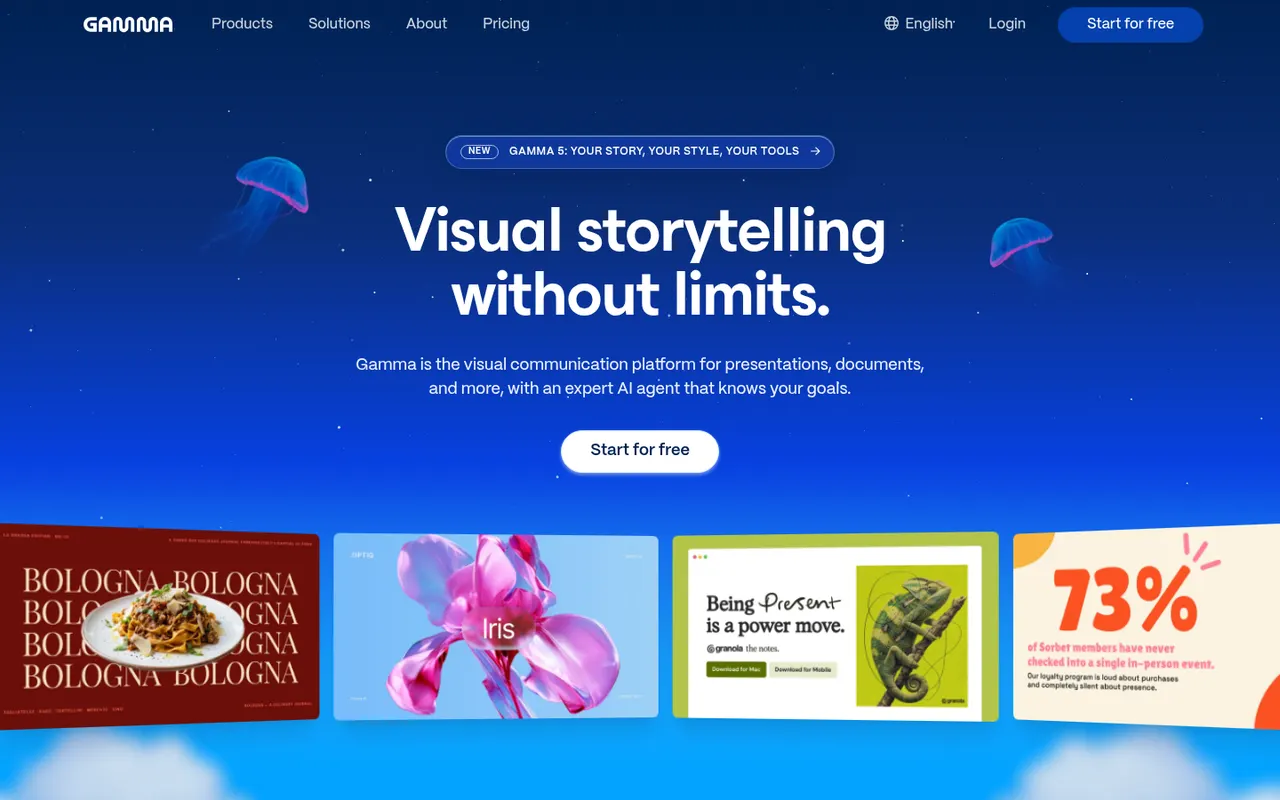
Cost / LicenseFreeProprietaryCategoriesPlatformsFeaturesGamma generates presentations, documents, social posts and simple websites from a prompt, notes or an imported file, using a card-based layout instead of fixed slides. Content can then be refined with an AI agent, themes and templates, shared as a link with viewer analytics or exported to PowerPoint, Google Slides or PDF. A free plan with limited AI credits is available.
9 Gamma alternativesPros
- Generates decks, documents and simple sites from a prompt
- Card-based layouts adapt well to any screen size
- Shareable links with viewer analytics
Cons
- The free plan has limited AI credits
- The card format does not always translate well to PowerPoint
- Generated content often needs editing to be accurate and on-brand
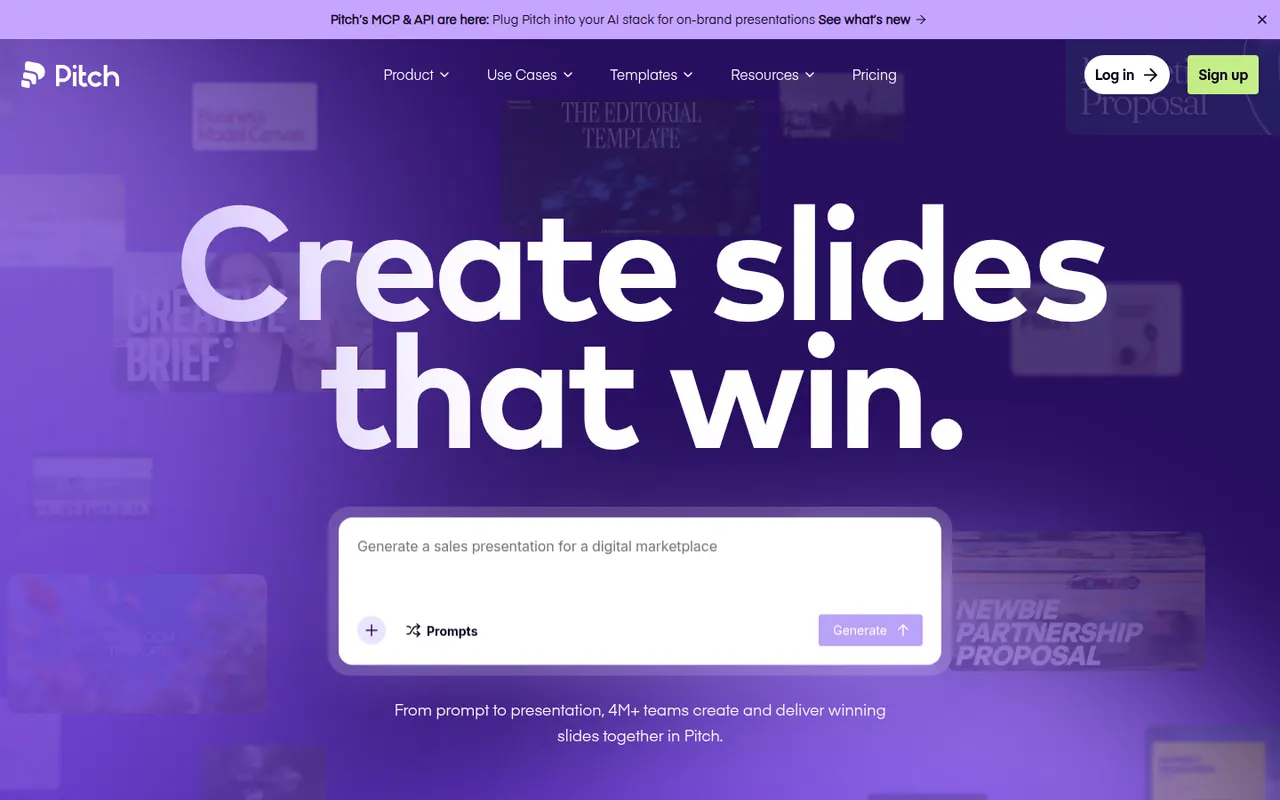
Cost / LicenseFreemiumProprietaryCategoriesPitch is a presentation tool from Berlin-based Pitch Software, built for teams that create decks together, from sales proposals to investor updates. It offers shared templates and brand settings, comments and slide assignments, link sharing with engagement analytics, and an AI agent that drafts decks from prompts and files. It runs in the browser, on desktop and on mobile, with a free plan and paid team tiers.
9 Pitch alternativesPros
- Built for decks made as a team, with comments and slide assignments
- Brand settings and shared templates keep decks consistent
- Link sharing with analytics shows how viewers engage
Cons
- Fewer advanced animation options than PowerPoint or Keynote
- Advanced team features are reserved for paid plans
- Exporting to PowerPoint may not keep every design detail
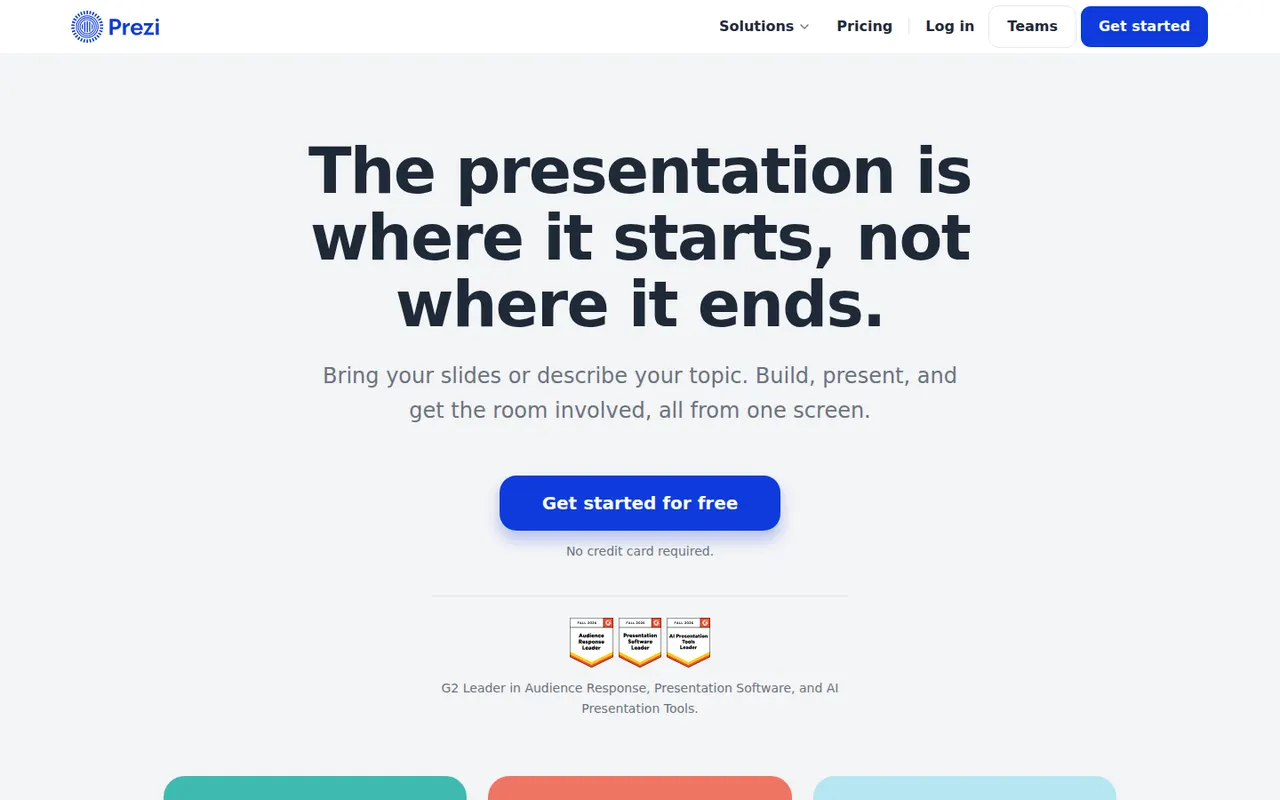
Cost / LicenseFreemiumProprietaryCategoriesPrezi is a presentation tool known for its zoomable canvas, where topics are laid out on one large surface and the presentation moves between them instead of flipping linear slides. It also offers Prezi Video for appearing on camera next to your content, and AI help to turn text into a presentation. A free plan publishes presentations publicly with a watermark; paid plans add privacy and exports.
9 Prezi alternativesPros
- Zoomable canvas offers a non-linear alternative to slides
- Prezi Video puts you on camera next to your content
- AI help turns text into a first presentation draft
Cons
- Free plan presentations are public and watermarked
- Overused zoom effects can distract or disorient the audience
- Designing a good canvas takes longer than building classic slides
Cost / LicenseFreemiumProprietaryCategoriesPandaDoc is a document automation platform for sales and operations teams to create proposals, quotes and contracts from templates, send them for e-signature and collect payments. It tracks when recipients open and read documents, supports approval workflows and syncs with CRMs such as HubSpot and Salesforce. A free eSign plan with a monthly document cap sits alongside paid plans.
9 PandaDoc alternativesPros
- Builds proposals, quotes and contracts from templates
- Shows when recipients open and read documents
- Syncs with HubSpot and Salesforce and can collect payments
Cons
- CRM integrations and key features need higher-priced plans
- Template editor has a learning curve for complex documents
- Free plan is limited to basic e-signatures
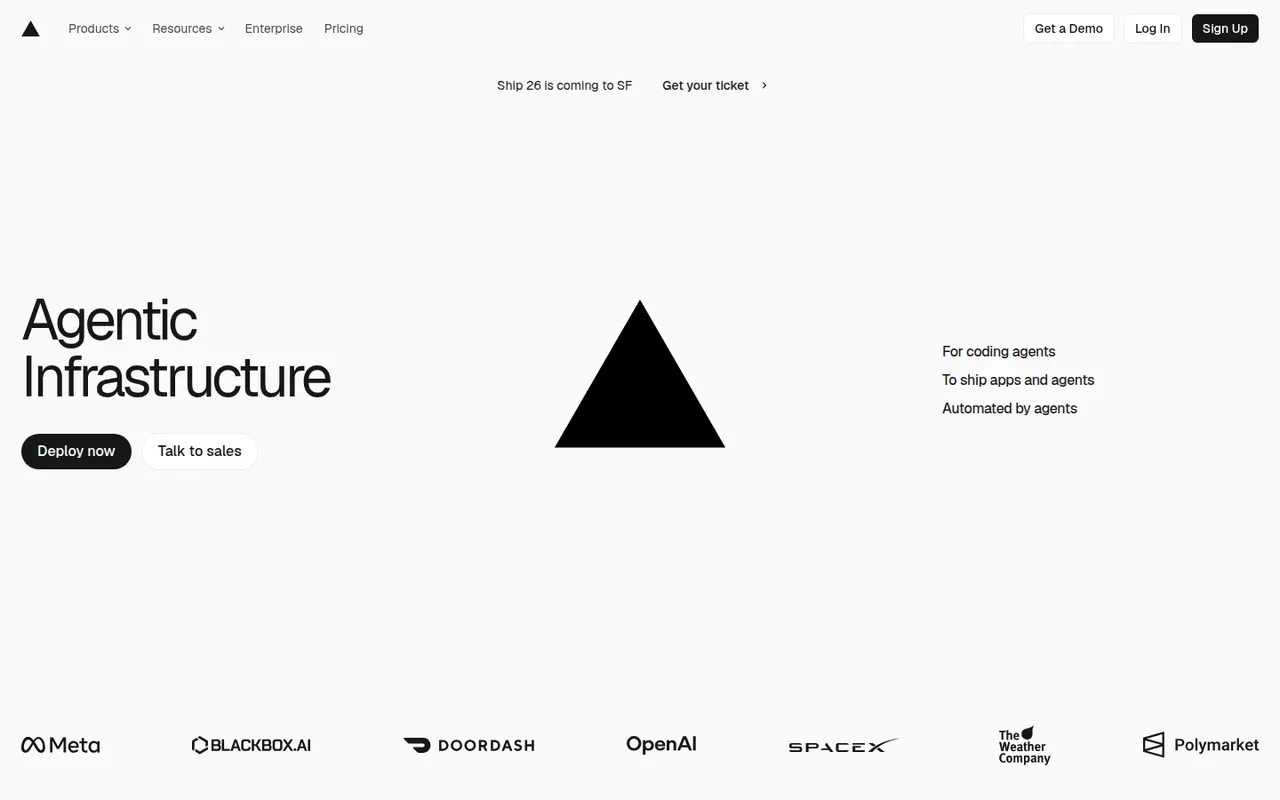
Cost / LicenseFreemiumProprietaryCategoriesVercel is a cloud platform for deploying web apps, run by the company behind Next.js. Connecting a Git repository gives automatic builds, a preview URL for every pull request and delivery from a global edge network, with serverless and edge functions for dynamic code. It also offers analytics, storage integrations and AI tooling. A free Hobby plan suits personal projects; paid plans cover teams.
10 Vercel alternativesPros
- First-class Next.js support from the company that builds it
- Automatic builds and a preview URL for every pull request
- Global edge network with serverless and edge functions
Cons
- Usage-based costs can jump sharply when traffic spikes
- The free Hobby plan is limited to personal, non-commercial use
- Some features are tied to Next.js, which raises lock-in concerns
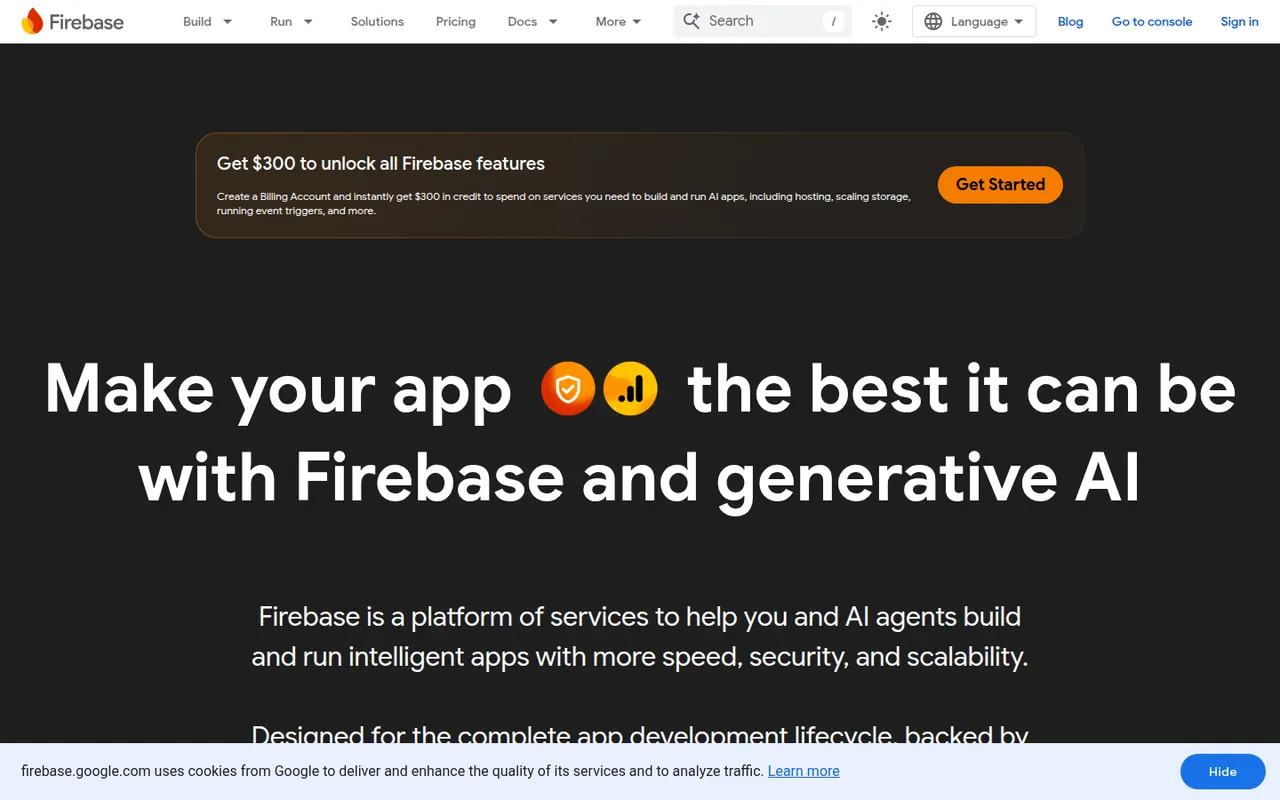
Cost / LicenseFreemiumProprietaryCategoriesPlatformsFirebase is Google's platform for building web and mobile apps without running your own servers. It provides Cloud Firestore and the Realtime Database, authentication, Cloud Storage, Cloud Functions, hosting, analytics, crash reporting and push messaging, with SDKs for iOS, Android, web, Flutter and Unity, plus Gemini-based AI features. A free Spark plan suits prototypes, with usage-based billing beyond it.
8 Firebase alternativesPros
- Complete toolkit from auth and databases to hosting and crash reports
- Mature SDKs for iOS, Android, web, Flutter and Unity
- The free Spark plan is enough for prototypes
Cons
- Usage-based billing can spike unexpectedly with traffic or inefficient queries
- Firestore’s NoSQL model makes complex queries and reporting awkward
- Strong lock-in to Google Cloud services
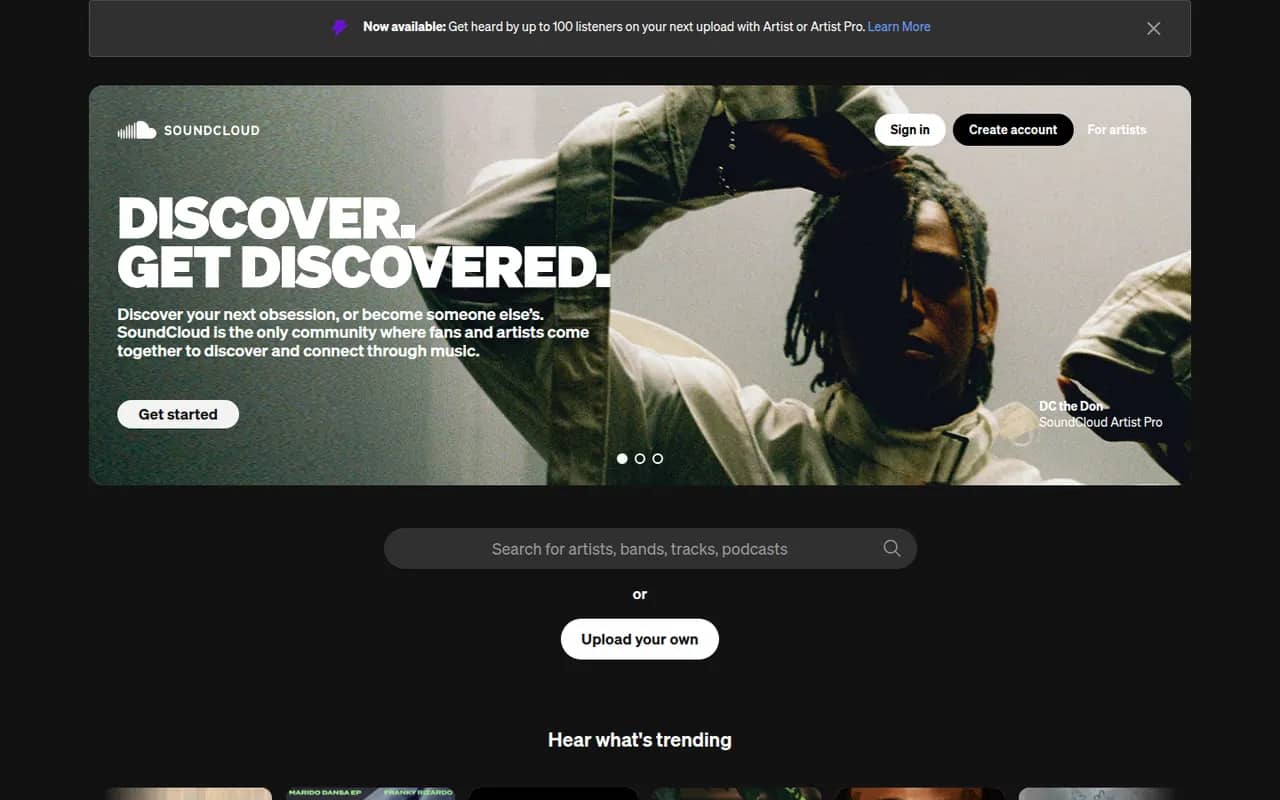
Cost / LicenseFreemiumProprietaryCategoriesPlatformsSoundCloud is an audio streaming platform where independent artists, producers and DJs upload original tracks, remixes, mixes and podcasts alongside major-label catalog. Listeners can comment at specific moments in a track, follow creators and build playlists. Listening is free with ads; SoundCloud Go plans add offline listening and remove ads, and Artist plans give creators more uploads, statistics and distribution.
9 SoundCloud alternativesPros
- Home to independent artists, remixes and DJ mixes found nowhere else
- Timed comments let listeners react at precise moments in a track
- Free listening, plus Artist plans with stats and distribution
Cons
- Free listening comes with ads and no offline mode
- Audio quality is uneven since tracks are uploaded by users
Cost / LicenseFreemiumProprietaryCategories