Best apps for Mac
286 apps
Top Mac apps ranked by the community
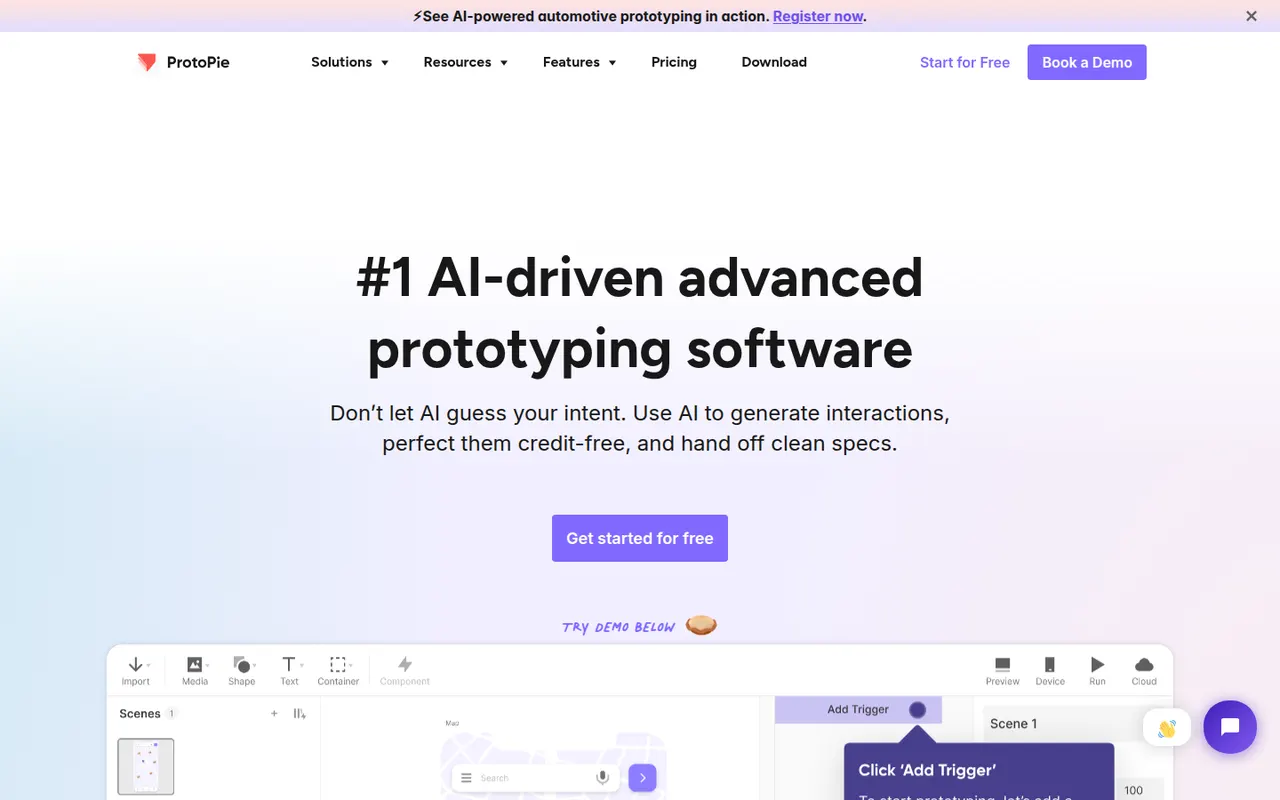
ProtoPie is a prototyping tool for building realistic interactions without writing code, using triggers, responses, variables and formulas. Prototypes can use device sensors and connect several screens or hardware, which makes it useful for mobile, automotive and IoT interfaces. Designs can be imported from Figma, Sketch or Adobe XD and previewed on phones with the ProtoPie Player app.
8 ProtoPie alternativesPros
- Realistic interactions built with variables, formulas and conditions
- Uses device sensors and connects multiple screens or hardware
- Imports designs from Figma, Sketch and Adobe XD
Cons
- The logic-based approach takes time to learn
- Not a full design tool, so visuals are usually made elsewhere
Cost / LicenseFreemiumProprietaryCategoriesAdobe XD is a vector-based tool for designing and prototyping websites and mobile apps, with repeat grids, components with states, auto-animate transitions and shareable links for review and developer specs. Adobe put it in maintenance mode in 2023: it is no longer sold as a standalone app and gets no new features, so it mainly serves Creative Cloud users with existing projects.
8 Adobe XD alternativesPros
- Repeat grids and auto-animate speed up UI and prototype work
- Fits alongside Creative Cloud apps like Photoshop and Illustrator
- Shareable links for review comments and developer specs
Cons
- In maintenance mode, with no new features planned
- No longer sold as a standalone app
- Less collaborative than browser-based tools like Figma
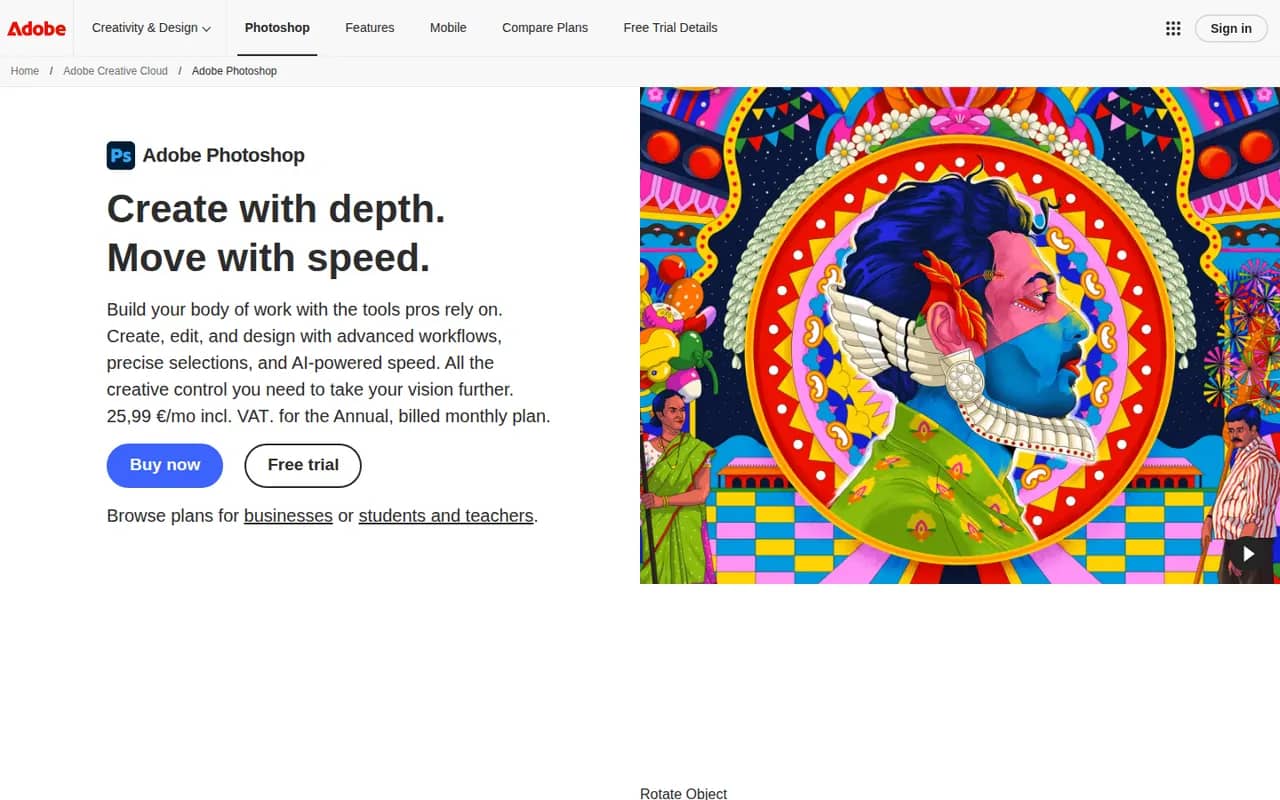
Cost / LicensePaidProprietaryCategoriesAdobe Photoshop is a professional image editor used for retouching, compositing, graphic design and digital painting. It combines layers, masks, adjustment layers, Camera Raw processing and a large plugin ecosystem with Firefly-powered tools such as Generative Fill and object removal. It runs on Windows and macOS, with web, iPad and iPhone versions that sync through Creative Cloud.
12 Adobe Photoshop alternativesPros
- Industry standard for retouching and compositing
- Generative Fill and object removal powered by Firefly
- Vast ecosystem of plugins and tutorials
Cons
- Subscription only, which adds up over time
- Steep learning curve for beginners
- Demanding on hardware with large files
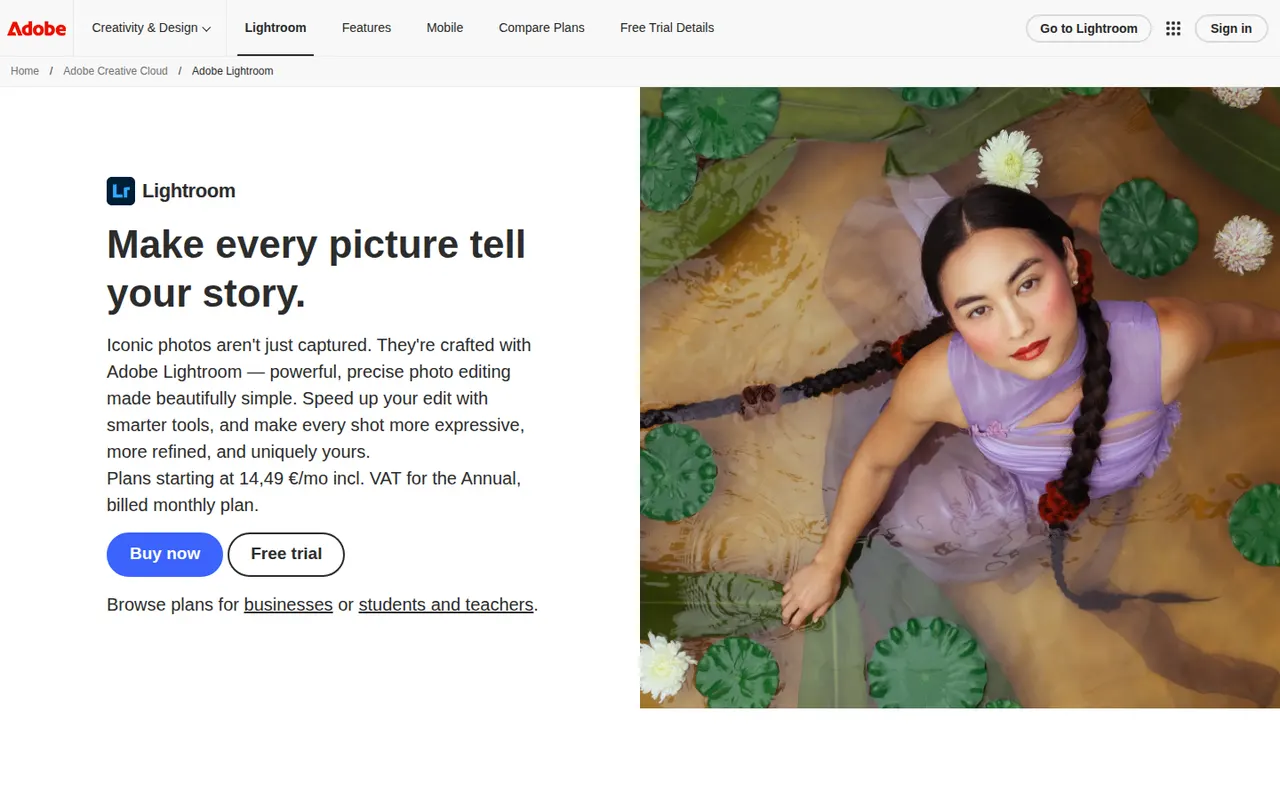
Cost / LicenseFree trialProprietaryCategoriesAdobe Lightroom is a non-destructive photo editor and organizer for processing RAW files, adjusting color and light, and managing large libraries with ratings, keywords and AI-based search. The cloud-based Lightroom syncs edits across desktop, web and mobile, while Lightroom Classic keeps catalogs on the local disk. Presets, masking and AI removal tools serve both enthusiasts and professionals.
9 Adobe Lightroom alternativesPros
- Non-destructive RAW editing with powerful masking
- Library tools with ratings, keywords and AI search
- The cloud version syncs edits across desktop, web and mobile
Cons
- Subscription only, with no perpetual license
- Choosing between Lightroom and Lightroom Classic can be confusing
- Cloud storage adds to the cost for large libraries
Cost / LicenseFreemiumProprietaryCategoriesGIMP (GNU Image Manipulation Program) is a free, open source image editor used for photo retouching, image composition and digital artwork. It offers layers, masks, selection tools, a wide range of filters and scripts and plugins in Python or Script-Fu. GIMP 3.0 added non-destructive filters and a refreshed interface, and it is a common Photoshop alternative for people who want to avoid subscriptions.
12 GIMP alternativesPros
- Free, open source and available on Windows, macOS and Linux
- Layers, masks, filters and scripting in Python or Script-Fu
- Non-destructive filters since version 3.0
Cons
- Interface and workflows differ from Photoshop, which slows switchers
- Fewer AI and generative tools than commercial editors
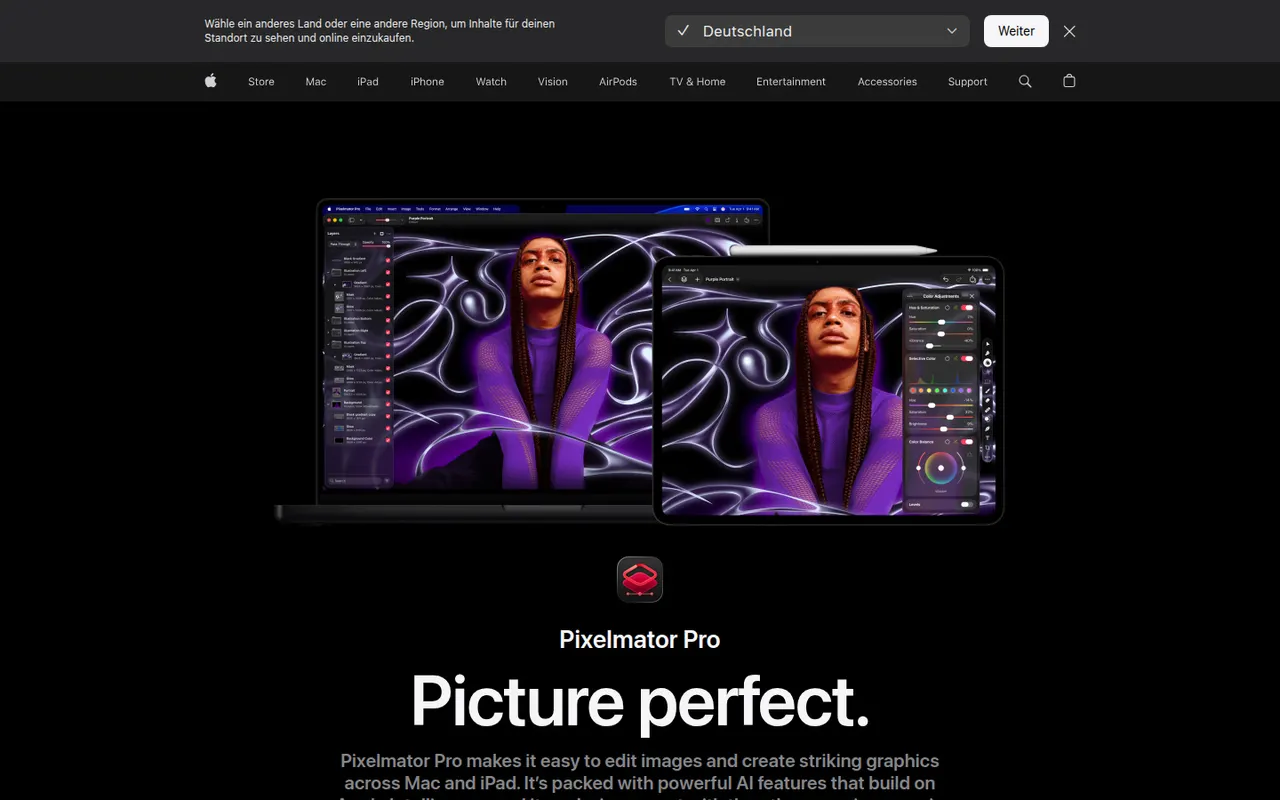
Cost / LicenseFreeOpen sourceCategoriesPixelmator Pro is an image editor designed for macOS that brings photo editing, retouching, illustration and graphic design into one app. It offers non-destructive layer-based editing, RAW processing and machine learning tools for upscaling, denoising, background removal and automatic enhancement. Pixelmator was acquired by Apple in 2024, and the app is sold on the Mac App Store.
9 Pixelmator Pro alternativesPros
- Native Mac design with a clean interface
- Machine learning tools for upscaling, denoising and background removal
- Combines photo editing, painting and vector design
Cons
- No version for Windows or Linux
- Fewer plugins and pro integrations than Photoshop
Cost / LicensePaidProprietaryCategoriesPlatformsKrita is a free, open source digital painting program developed by the KDE community for illustrators, comic artists, concept artists and texture painters. It offers customizable brush engines, a brush stabilizer, layers and masks, a wrap-around mode for seamless textures and frame-by-frame 2D animation. It runs on Windows, macOS and Linux, with a version for Android tablets and Chromebooks.
8 Krita alternativesPros
- Free, open source painting app with powerful brush engines
- Brush stabilizer and wrap-around mode for seamless textures
- Frame-by-frame 2D animation built in
Cons
- Not designed for photo editing
- Can be demanding on hardware with large canvases
- No version available for iPad
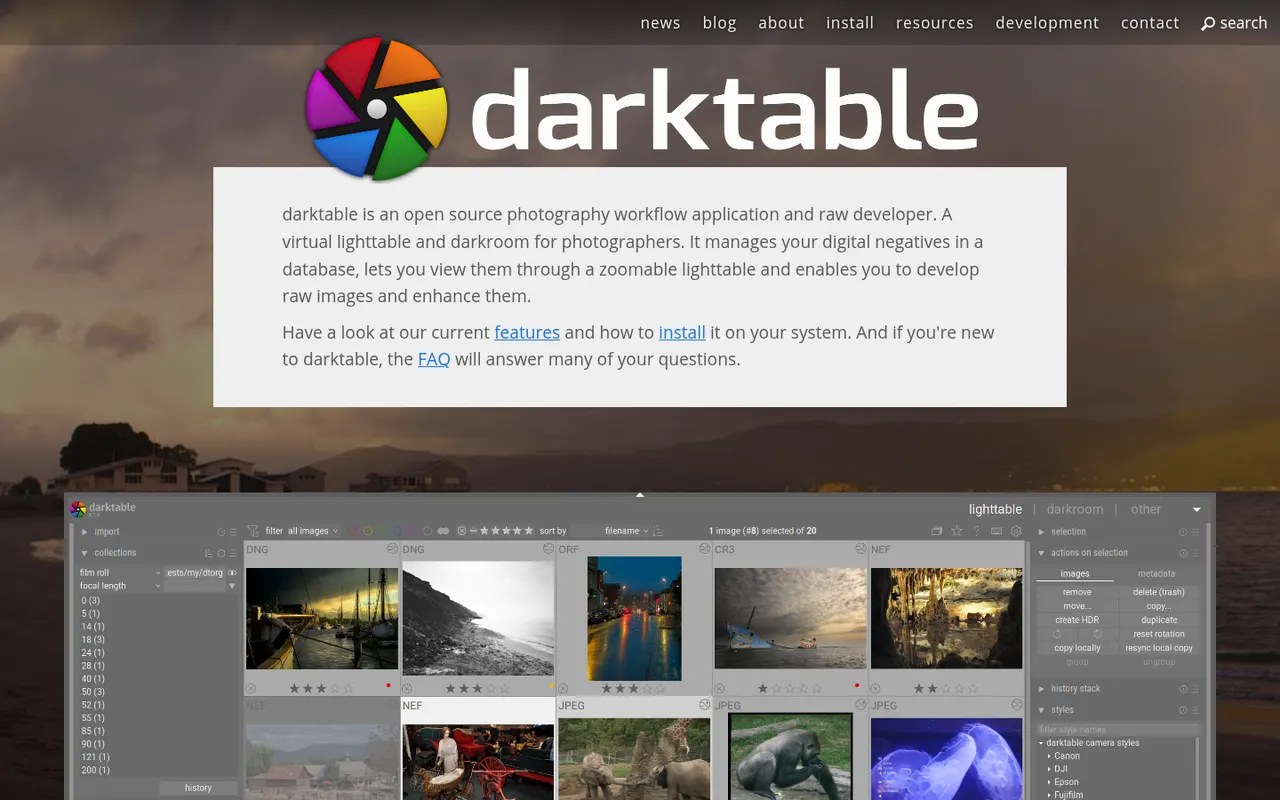
Cost / LicenseFreeOpen sourceCategoriesdarktable is a free, open source photography workflow application that acts as a virtual light table and darkroom for RAW files. It offers non-destructive editing with a scene-referred pipeline, parametric and drawn masks, color calibration tools, tethered shooting and a tagged image library. It runs on Linux, Windows and macOS and suits photographers who want advanced RAW processing without a subscription.
6 darktable alternativesPros
- Free, open source RAW processing with no subscription
- Scene-referred pipeline with advanced masks and color calibration
- Runs on Linux, Windows and macOS, with tethered shooting
Cons
- Steep learning curve and a dense interface
- No mobile apps or cloud sync
Cost / LicenseFreeOpen sourceCategoriesCapture One is a photo editing and asset management application known for its RAW color rendering and tethered shooting, used in studio, fashion and commercial photography. It offers layer-based local adjustments, advanced color editing, sessions and catalogs for organizing shoots, and live sharing tools for clients. It runs on Windows and macOS, with an app for iPad and iPhone.
7 Capture One alternativesPros
- Renowned RAW color rendering and advanced color tools
- Fast, reliable tethered shooting for studio work
- Layer-based local adjustments and session workflows
Cons
- Pricing is high for hobbyist photographers
- Steep learning curve for newcomers
- Fewer mobile and cloud features than Lightroom
Cost / LicenseFree trialProprietaryCategoriesLuminar Neo is a photo editor from Skylum that relies on AI tools to simplify complex edits such as sky replacement, portrait retouching, relighting and object removal. It works as a standalone app on Windows and macOS or as a plugin for Lightroom Classic and Photoshop, with extensions for upscaling, background removal and noise reduction. It targets photographers who prefer fast results to manual masking.
7 Luminar Neo alternativesPros
- AI tools make sky replacement and relighting quick
- Works standalone or as a plugin for Lightroom Classic and Photoshop
- Portrait retouching and object removal with little manual work
Cons
- Some tools come as extensions on top of the base app
- Can feel slow with large photo libraries
- AI results can look artificial without careful tuning
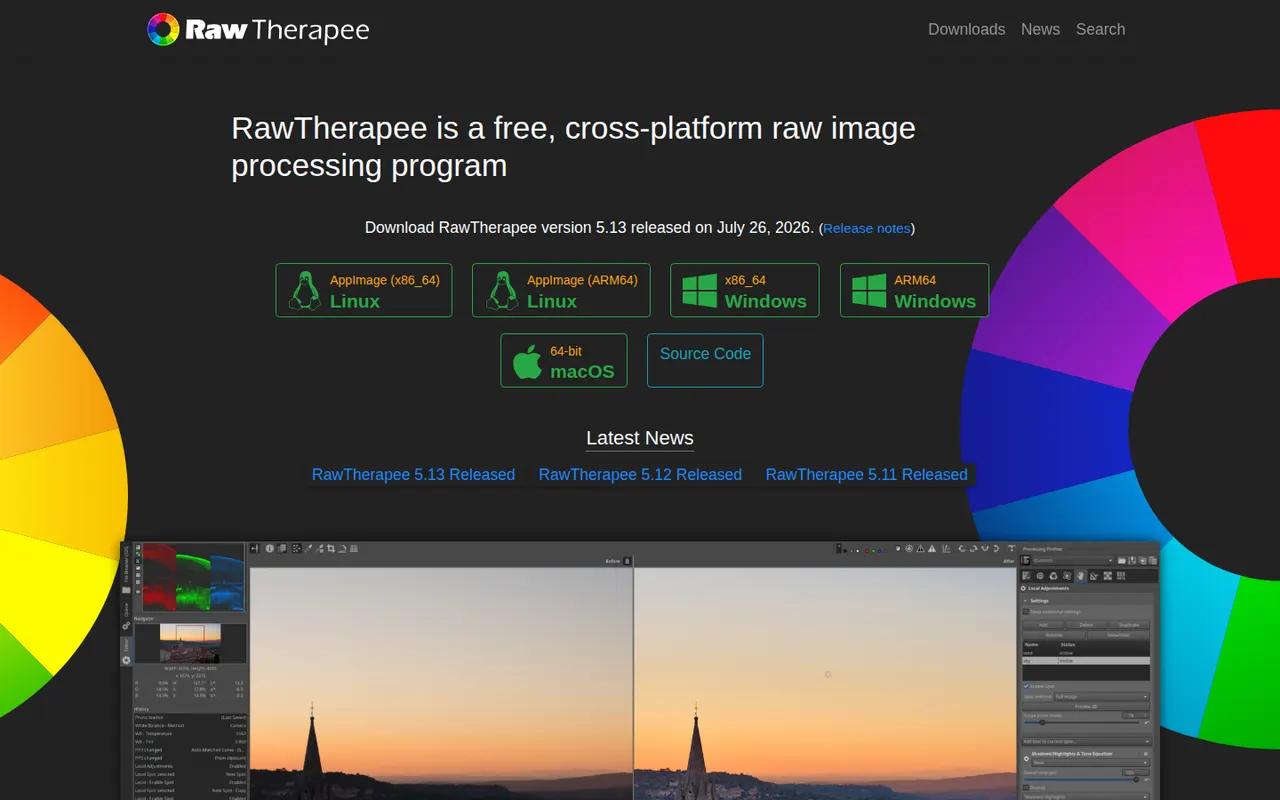
Cost / LicenseFree trialProprietaryCategoriesRawTherapee is a free, open source program for developing RAW photos on Windows, macOS and Linux. It focuses on image quality, with several demosaicing algorithms, advanced noise reduction, color management and detailed tone and color tools, all applied non-destructively through processing profiles. It includes a file browser and batch queue but no catalog, so it suits photographers who organize files themselves.
6 RawTherapee alternativesPros
- Free, open source RAW development with fine-grained controls
- Several demosaicing algorithms and advanced noise reduction
- Batch queue and processing profiles for consistent results
Cons
- No catalog or library management
- Technical interface with a steep learning curve
Cost / LicenseFreeOpen sourceCategoriesBlender is a free, open source 3D creation suite covering modeling, sculpting, rigging, animation, simulation, rendering with Cycles and EEVEE, compositing and video editing. Its Grease Pencil tools also allow 2D animation inside a 3D space. Developed by the Blender Foundation and a large community, it is used by hobbyists, studios and game developers and can be extended with Python add-ons.
12 Blender alternativesPros
- Completely free and open source, with no license or subscription
- Covers modeling, sculpting, animation, rendering and video editing
- Large community with countless tutorials and Python add-ons
Cons
- Dense interface that takes newcomers time to learn
- Less established than Maya or 3ds Max in some studio pipelines
Cost / LicenseFreeOpen sourceCategoriesAutodesk Maya is a 3D application used in film, television and game studios for character animation, rigging, modeling, simulation and visual effects. It includes the Arnold renderer, Bifrost for procedural effects and simulations, and Python and MEL scripting for building custom pipelines. It runs on Windows, macOS and Linux, and free educational licenses are available to students.
6 Autodesk Maya alternativesPros
- Industry-standard tools for character animation and rigging
- Python and MEL scripting for building custom studio pipelines
- Runs on Windows, macOS and Linux, with free licenses for students
Cons
- Subscription pricing is steep for freelancers and small studios
- Dense interface with a long learning curve for beginners
Cost / LicenseFree trialProprietaryCategoriesCinema 4D is a 3D application from Maxon known for its approachable interface and its MoGraph toolset for procedural motion graphics. Designers use it for broadcast graphics, product visuals, title sequences and abstract animation, often alongside After Effects. It integrates the Redshift renderer, simulation tools and character animation features, and runs on Windows and macOS.
8 Cinema 4D alternativesPros
- Approachable interface compared with most 3D suites
- MoGraph tools make procedural motion graphics fast to build
- Fits smoothly alongside After Effects for broadcast and title work
Cons
- Subscription pricing is costly for individual designers
- Runs on Windows and macOS only, with no Linux version
- Less common than Houdini or Maya for heavy simulation and film VFX
Cost / LicenseFree trialProprietaryCategoriesSketchUp is a 3D modeling tool from Trimble built around simple push-pull geometry, used by architects, interior designers, landscape designers and woodworkers. The 3D Warehouse offers a large library of ready-made models, and the Extension Warehouse adds plugins for rendering, layout and analysis. A free web version exists for personal use; paid plans add the desktop app, LayOut for 2D drawings and the iPad app.
8 SketchUp alternativesPros
- Push-pull modeling is quick to pick up for beginners
- 3D Warehouse offers a vast library of ready-made models
- Extensions add rendering, layout and analysis tools
Cons
- The free web version is limited to personal use
- Struggles with complex curved and organic shapes
- The desktop app and LayOut require a paid subscription
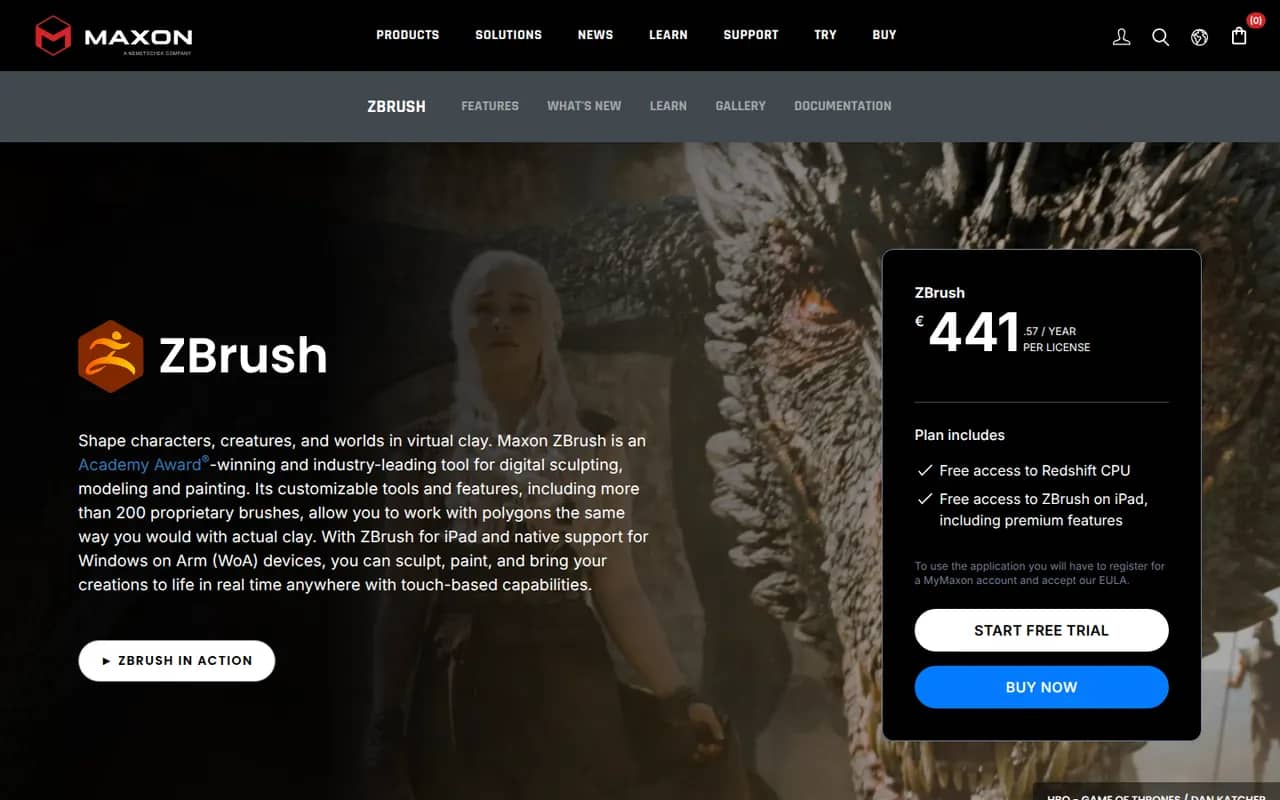
Cost / LicenseFreemiumProprietaryCategoriesZBrush is a digital sculpting and painting application used for characters, creatures, collectibles and 3D-printed figures in film, games and toy design. It handles models with millions of polygons using brush-based sculpting, DynaMesh, ZRemesher retopology and Polypaint for surface color. Created by Pixologic and now owned by Maxon, it runs on Windows and macOS, and an iPad version is also available.
6 ZBrush alternativesPros
- Handles models with millions of polygons smoothly
- DynaMesh and ZRemesher speed up sculpting and retopology
- Reference tool for character and creature sculpting
Cons
- Unconventional interface that takes a long time to master
- Not a full 3D suite, so animation and scene work need other tools
Cost / LicenseFreemiumProprietaryCategoriesHoudini is a 3D animation and visual effects application from SideFX built on a node-based procedural workflow, where every step stays editable. Studios use it for simulations such as fire, smoke, fluids, destruction and crowds, and game developers use it to generate environments and assets procedurally. A free Apprentice edition allows non-commercial learning, alongside paid Indie and studio licenses.
7 Houdini alternativesPros
- Node-based procedural workflow keeps every step editable
- Leading toolset for fire, smoke, fluid and destruction simulations
- Free Apprentice edition for non-commercial learning
Cons
- One of the steepest learning curves among 3D applications
- The free edition watermarks renders and is non-commercial only
- Overkill for simple modeling or quick motion graphics jobs
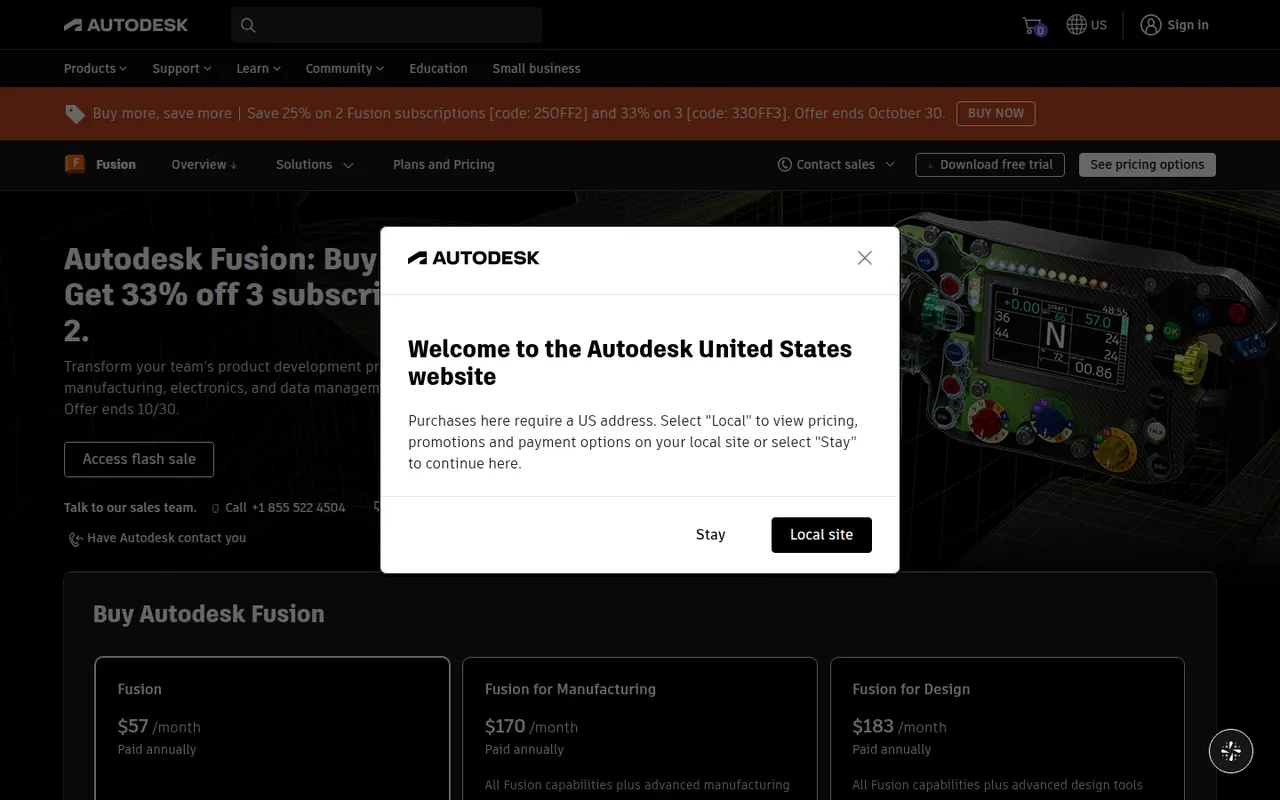
Cost / LicenseFreemiumProprietaryCategoriesAutodesk Fusion, formerly Fusion 360, is a product design and engineering platform that combines parametric and freeform 3D modeling, simulation, generative design, electronics design and CAM toolpaths for CNC machining. Projects are stored in the cloud with version history and team sharing. It is used by engineers, makers and small manufacturers, and a free personal-use license with reduced features is available.
6 Autodesk Fusion alternativesPros
- CAD, CAM, simulation and electronics design in one application
- Cloud storage with version history makes sharing designs simple
- Free personal-use license is a good fit for hobbyists and makers
Cons
- The free personal license is non-commercial and has reduced features
- Cloud-based file storage limits offline work and control over files
- Available on Windows and macOS only, with no Linux version
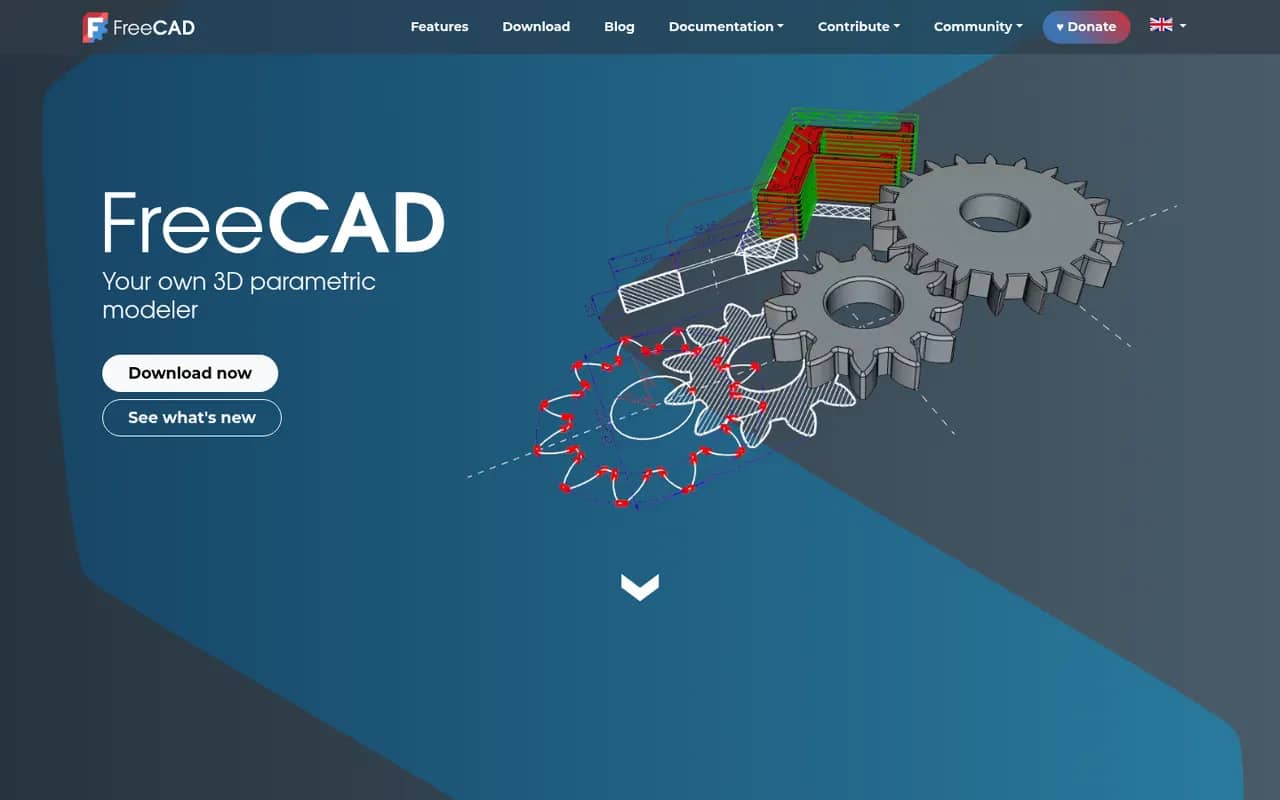
Cost / LicenseFreemiumProprietaryCategoriesFreeCAD is a free, open source parametric 3D modeler for mechanical engineering, product design, architecture (BIM) and 3D printing. It is organized into workbenches for part design, sketching, assemblies, technical drawings, finite element analysis and CAM, and can be fully scripted in Python. Version 1.0, released in 2024, added a built-in assembly workbench and fixes for the topological naming problem.
6 FreeCAD alternativesPros
- Free and open source parametric CAD with no license fees
- Workbenches cover parts, assemblies, drawings, FEM and CAM
- Fully scriptable in Python for automation and custom tools
Cons
- Interface feels less polished than commercial CAD packages
- Workflows differ between workbenches, which slows down learning
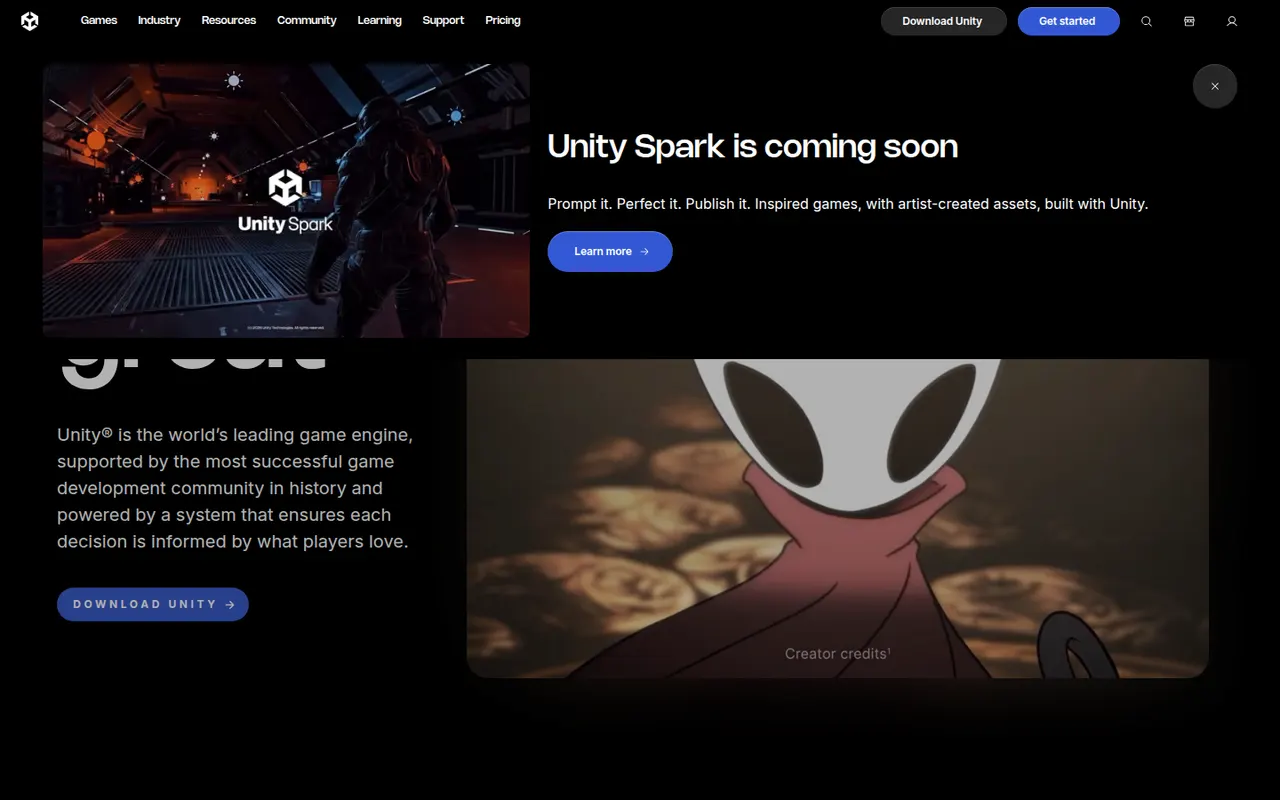
Cost / LicenseFreeOpen sourceCategoriesUnity is a game engine and editor used to build 2D, 3D, mobile, console, VR and AR games and interactive applications, scripted in C# or with its built-in visual scripting. It exports to a wide range of platforms, from phones and PCs to consoles and headsets, and the Asset Store offers ready-made tools, models and templates. A free Personal plan exists, with paid Pro and Enterprise tiers above a revenue threshold.
8 Unity alternativesPros
- Exports to almost every platform, from phones to consoles and headsets
- Huge Asset Store, extensive documentation and a large community
- C# scripting plus visual scripting, for both 2D and 3D
Cons
- Past licensing changes have shaken trust among developers
- Editor can feel heavy and slow on large projects
- Paid tiers become mandatory above a revenue threshold
Cost / LicenseFreemiumProprietaryCategoriesUnreal Engine is a real-time 3D engine from Epic Games used for games as well as virtual production, architectural visualization and automotive design. It offers Blueprints visual scripting alongside C++, Nanite geometry, Lumen dynamic lighting and export to PC, consoles and mobile. Its source code is available on GitHub under Epic's license; use is free until revenue thresholds trigger royalties or seat fees.
9 Unreal Engine alternativesPros
- Top-tier visuals with Nanite geometry and Lumen lighting
- Blueprints let designers build logic without writing C++
- Full source code access on GitHub
Cons
- Demanding hardware requirements and very large project sizes
- Steep learning curve, especially on the C++ side
- Royalties or seat fees apply past revenue thresholds
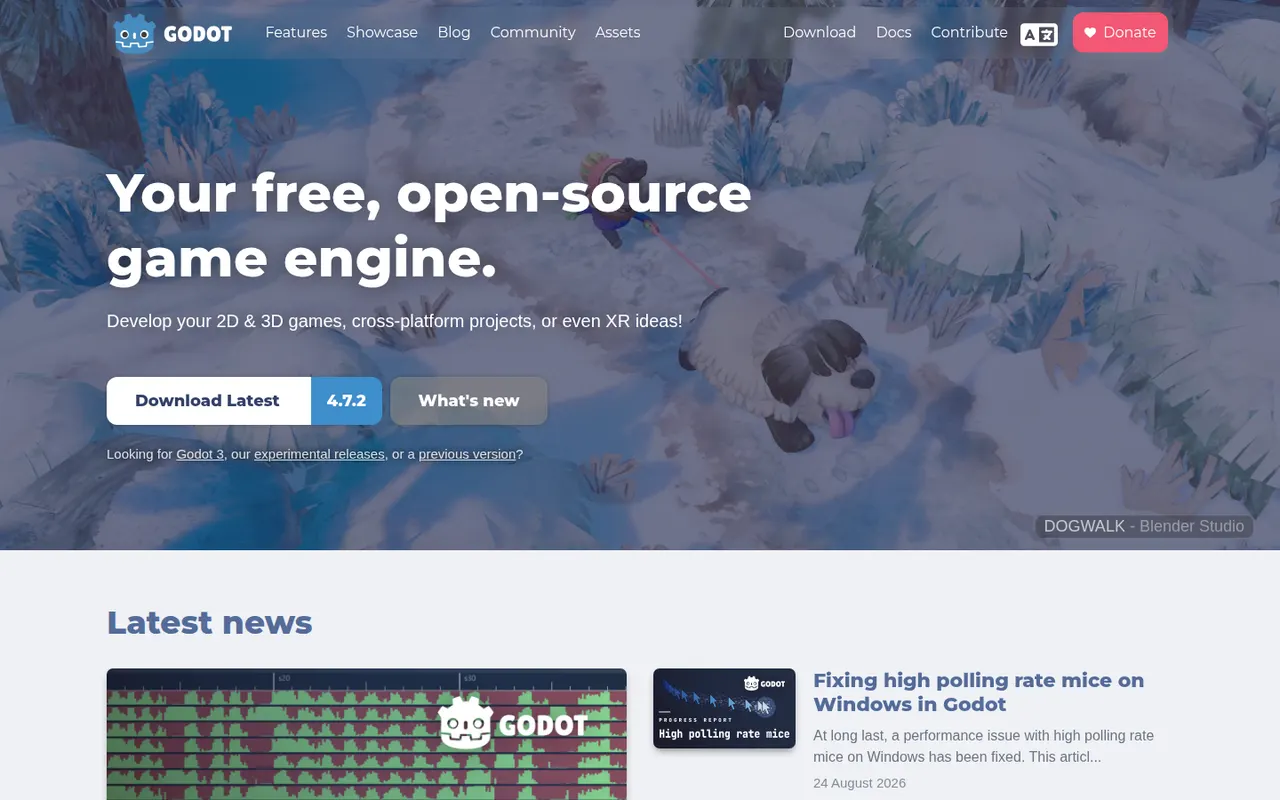
Cost / LicenseFreemiumSource availableCategoriesGodot is a free, open source game engine released under the MIT license, with no royalties or fees. It provides dedicated 2D and 3D renderers, a scene and node system, its own Python-like GDScript language plus C# support, and a lightweight editor for Windows, macOS and Linux. Games export to desktop, mobile and the web, while console ports go through third-party partners. It is backed by the Godot Foundation.
7 Godot Engine alternativesPros
- MIT licensed, with no royalties, fees or revenue thresholds
- Lightweight editor with a dedicated 2D renderer, not 3D in disguise
- Easy-to-learn GDScript, C# support and a clean scene and node system
Cons
- Console ports have to go through third-party partners
- Asset store and third-party ecosystem are smaller than Unity’s
- High-end 3D rendering still trails Unreal and Unity
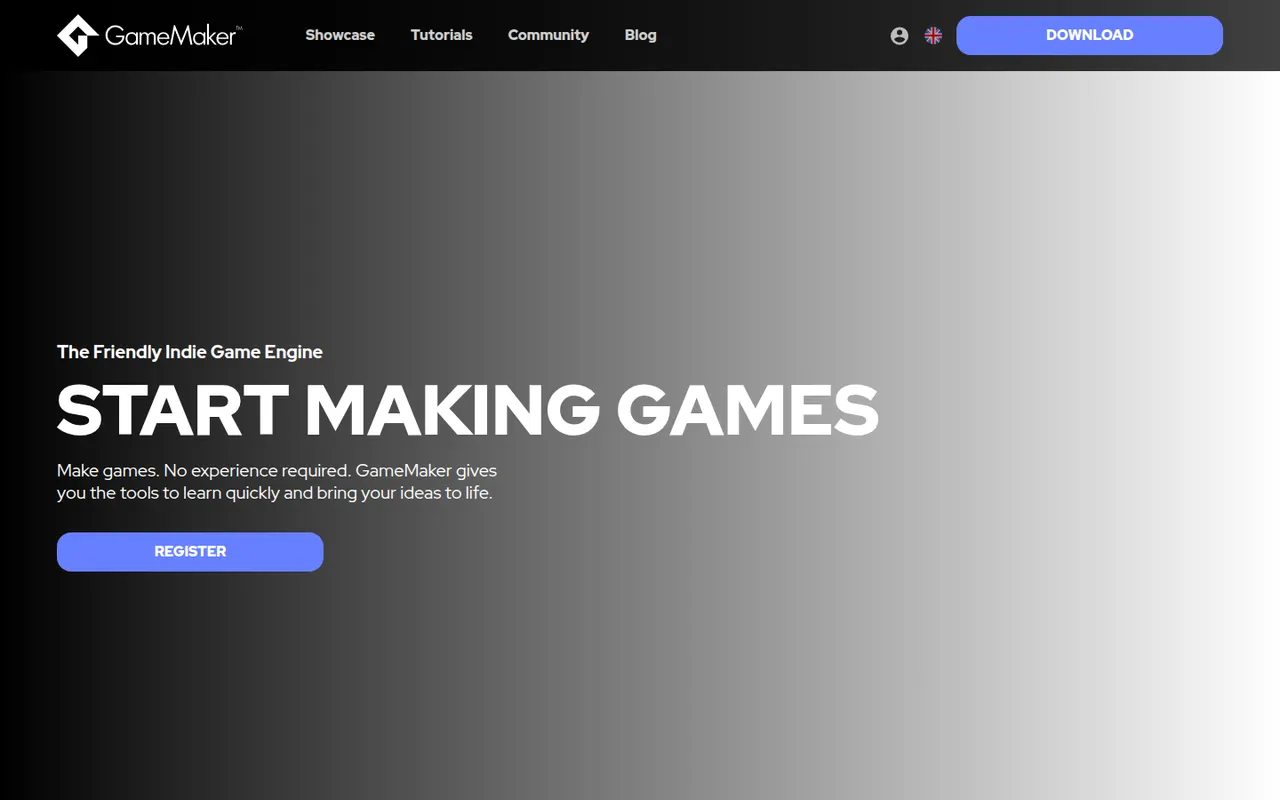
Cost / LicenseFreeOpen sourceCategoriesGameMaker is a 2D game engine owned by Opera, used by indie developers and beginners to create platformers, RPGs and arcade games. Logic can be written in GML Code or built with GML Visual, a drag-and-drop system, and projects export to desktop, mobile, web and consoles. It is free for non-commercial use, with paid licenses for commercial releases and console export.
7 GameMaker alternativesPros
- Beginner-friendly, with GML Visual drag-and-drop alongside GML Code
- Mature, focused toolset for 2D platformers, RPGs and arcade games
- Exports to desktop, mobile, web and consoles
Cons
- Commercial releases and console export require paid licenses
- Not suited to 3D projects
- GML is specific to the engine, so skills transfer less easily elsewhere
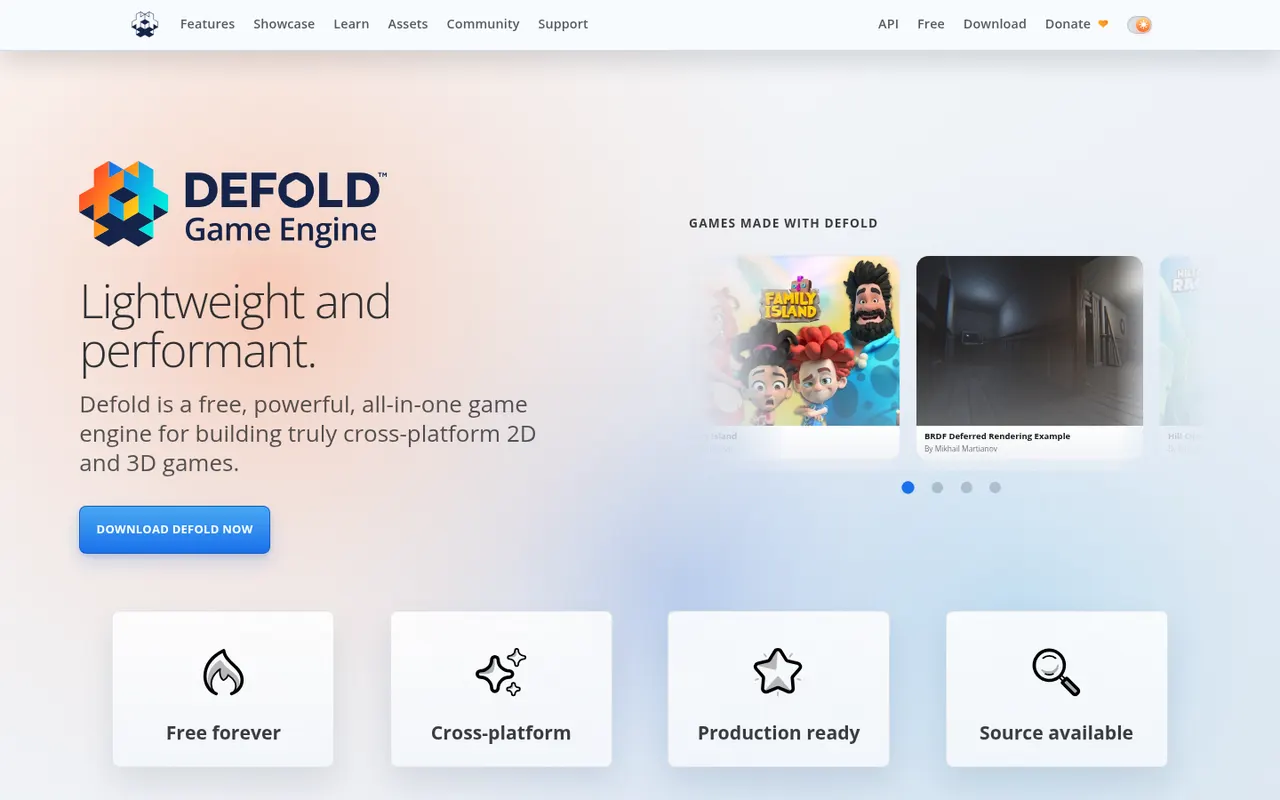
Cost / LicenseFreemiumProprietaryCategoriesDefold is a free game engine first released by King and now maintained by the independent Defold Foundation. It is known for small build sizes and fast iteration, uses Lua for scripting and exports to Windows, macOS, Linux, iOS, Android and HTML5, with console support available to approved developers. Its source code is public on GitHub under the Defold License, a permissive license with some restrictions.
7 Defold alternativesPros
- Free to use with no royalties, backed by an independent foundation
- Small build sizes and fast iteration, ideal for mobile and web games
- Lightweight Lua scripting and broad export targets including HTML5
Cons
- Smaller community and fewer tutorials than Unity or Godot
- 3D tooling is basic, as the engine shines mostly in 2D
- No visual scripting, so coding in Lua is required
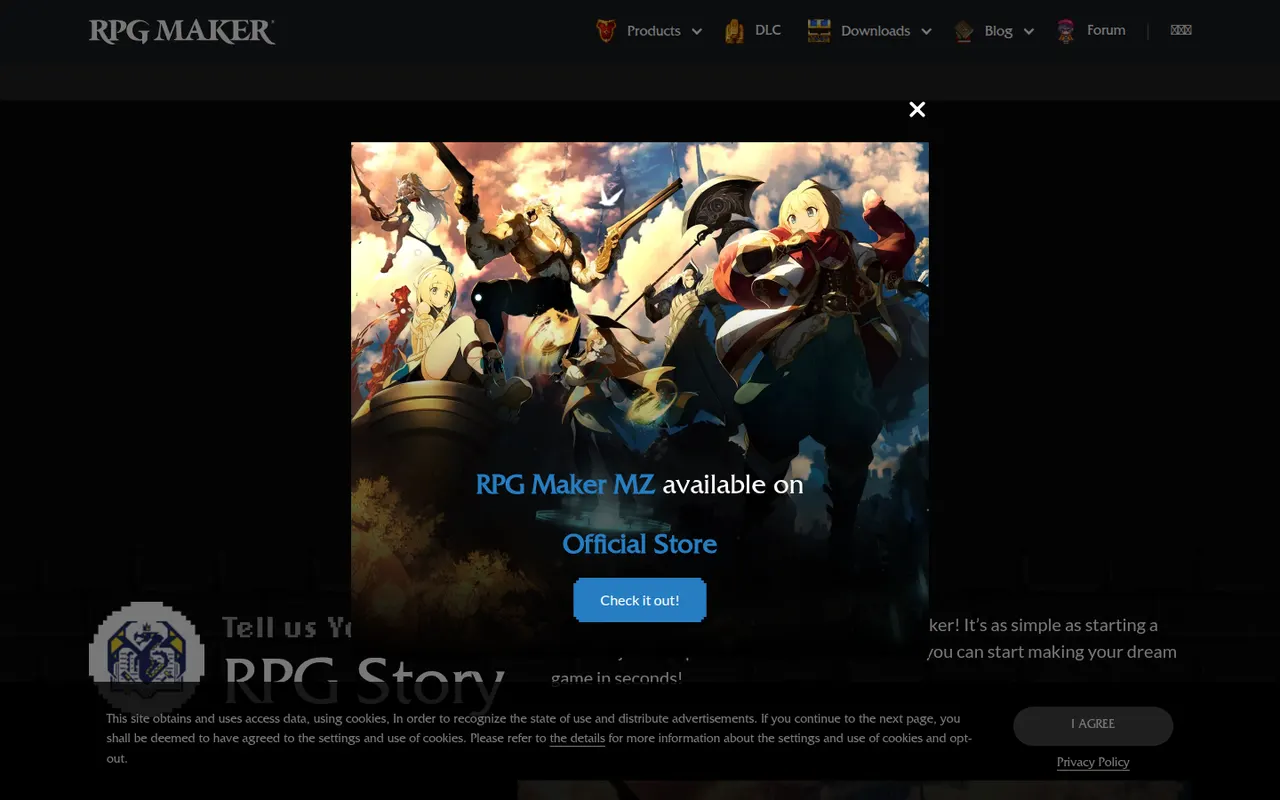
Cost / LicenseFreeSource availableCategoriesRPG Maker is a long-running series of tools for making Japanese-style 2D role-playing games without programming. Recent versions such as RPG Maker MZ provide tile-based map editors, a database for characters, items and battles, an event system for story logic and bundled art and music, with JavaScript plugins for deeper customization. Each version is sold as a one-time purchase.
6 RPG Maker alternativesPros
- Makes classic Japanese-style RPGs possible without programming
- Bundled tilesets, characters and music to start right away
- JavaScript plugins allow deeper customization in recent versions
Cons
- Locked into the classic tile-based JRPG style
- Default assets are widely recognized, so games can look generic
- Each new version is a separate purchase
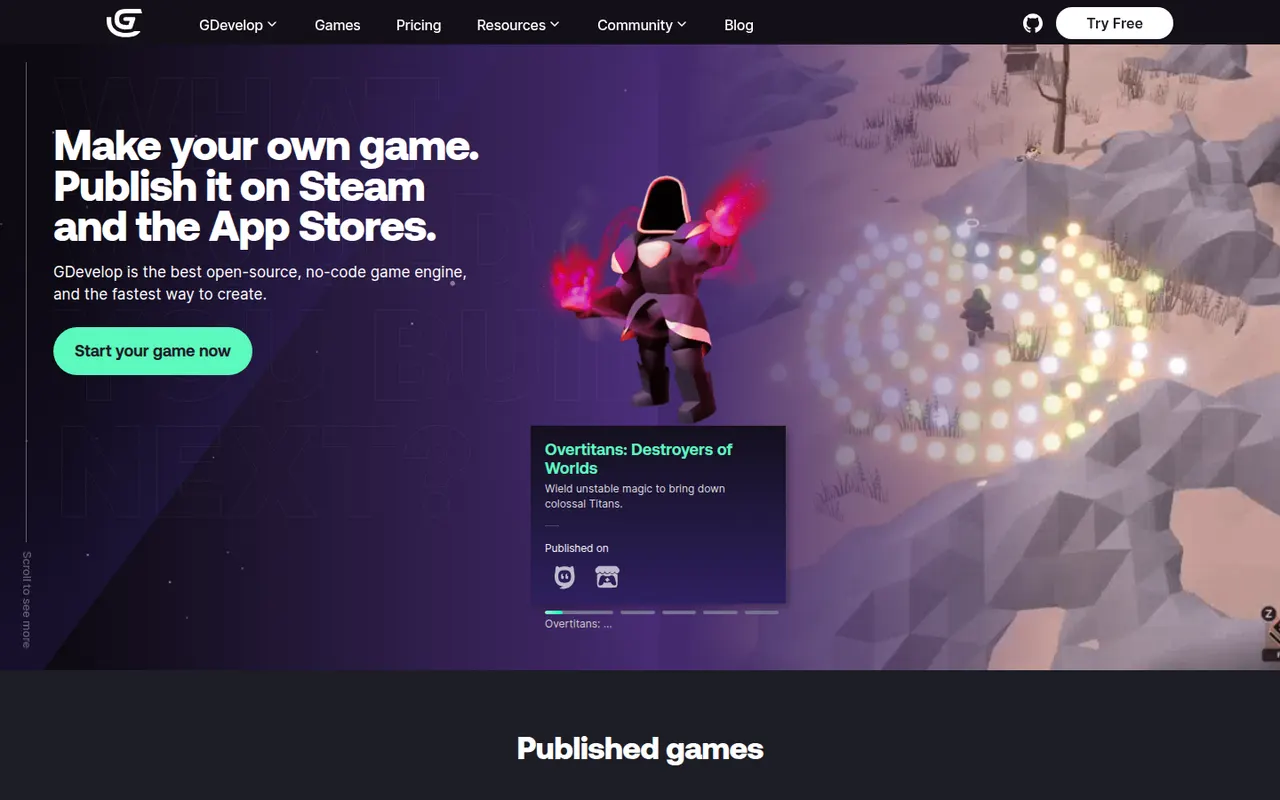
Cost / LicenseFree trialProprietaryCategoriesGDevelop is a free, open source game engine that lets creators build 2D and 3D games with an event-based visual logic system instead of code. It runs in the browser or as a desktop app, includes templates, an asset store and ready-made behaviors for platformers, physics and pathfinding, and exports to web, Windows, macOS, Linux, Android and iOS. Optional subscriptions add cloud builds and other services.
7 GDevelop alternativesPros
- Free and open source, usable in the browser or as a desktop app
- Event-based logic and ready-made behaviors avoid writing code
- Exports to web, desktop, Android and iOS
Cons
- 3D support is newer and less mature than its 2D tools
- Cloud builds and some services require a subscription
- Complex games can outgrow the event system
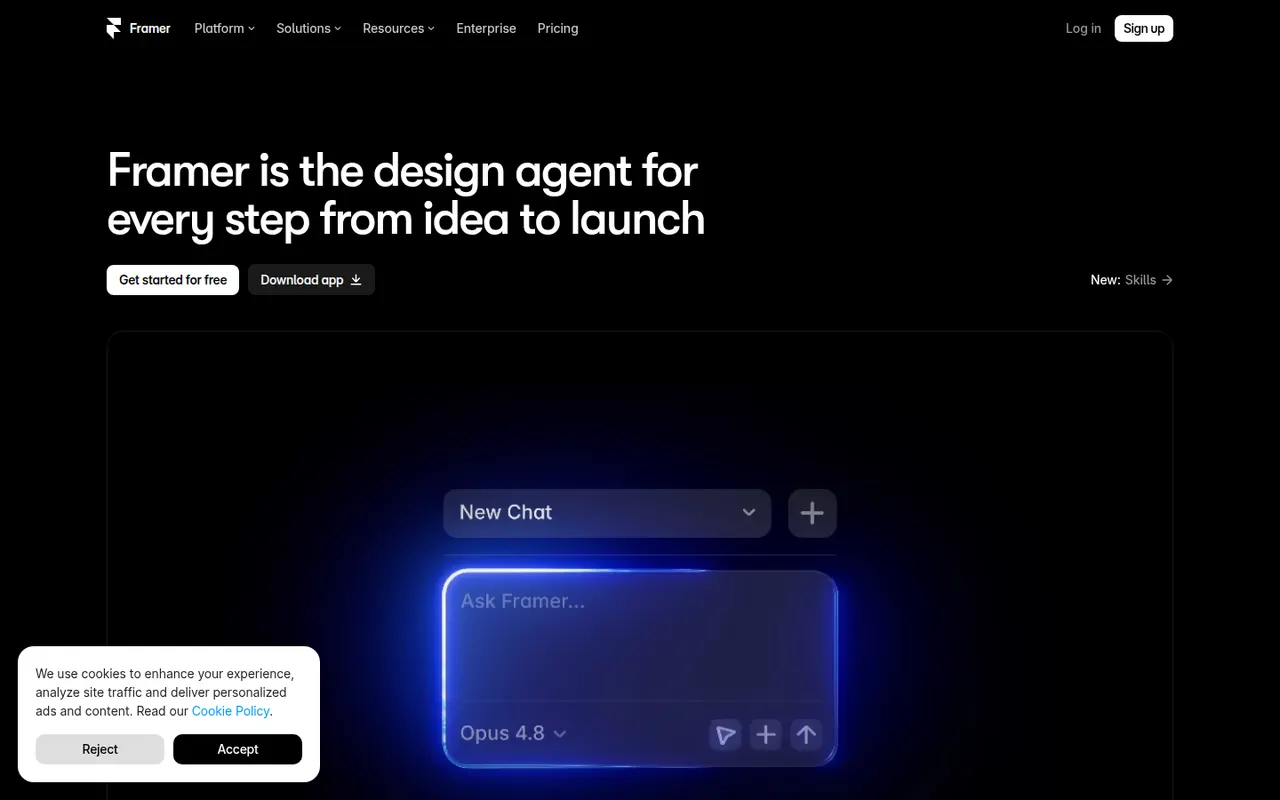
Cost / LicenseFreemiumOpen sourceCategoriesFramer is a website builder that works like a design tool: you lay out pages on a canvas, add animations and effects, then publish directly with hosting included. It offers a CMS, localization, built-in analytics and AI features that can generate a starting layout from a prompt. Designers and startups use it for landing pages, portfolios and marketing sites.
12 Framer alternativesPros
- Design-tool canvas with fine control over layout and animation
- Publishing and hosting included in one step
- Built-in CMS, localization and analytics
Cons
- Paid plans get costly as sites grow
- Learning curve for people new to design tools
- Sites stay hosted on Framer, with no official code export
Cost / LicenseFreemiumProprietaryCategoriesClose is a CRM built for inside sales teams that spend their day on the phone and in email. Calling, power dialing, SMS, email sequences and meeting notes live inside the CRM, so reps rarely need separate tools, and every interaction is logged automatically. It targets startups and small businesses with high-volume outbound or inbound sales processes.
8 Close alternativesPros
- Calling, power dialing, SMS and email built into the CRM
- Every call and email is logged automatically
- Email sequences keep outbound follow-ups on track
Cons
- No free plan, only a trial
- Less suited to complex enterprise sales or marketing automation
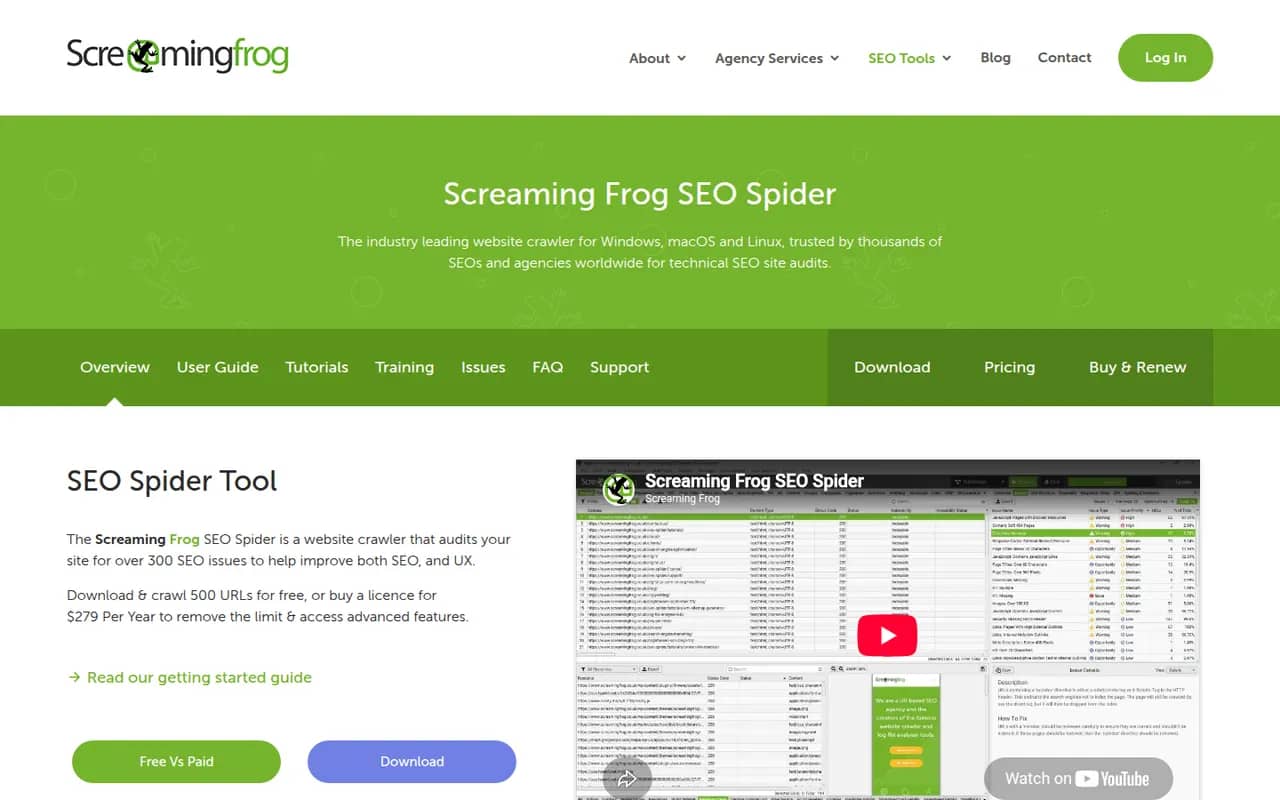
Cost / LicenseFree trialProprietaryCategoriesScreaming Frog SEO Spider is a desktop crawler that scans a website the way a search engine bot does and reports technical SEO issues such as broken links, redirects, duplicate titles, missing meta data and canonical problems. It can render JavaScript, check spelling and grammar, generate XML sitemaps and connect to Google Analytics, Search Console and PageSpeed Insights. The free version crawls up to 500 URLs.
6 Screaming Frog SEO Spider alternativesPros
- Thorough crawl that finds broken links, redirects and duplicates
- Renders JavaScript and connects to Analytics, Search Console and PageSpeed
- Runs locally on Windows, Mac and Linux
Cons
- The free version is capped at a small number of URLs
- Dense, technical interface for non-specialists
- Large crawls consume a lot of memory
Cost / LicenseFreemiumProprietaryCategoriesMicrosoft 365 bundles Word, Excel, PowerPoint, Outlook, OneDrive and Teams in a single subscription for individuals, families and businesses. Files sync across Windows, Mac, mobile and the browser, with co-authoring and Copilot AI features in eligible plans. Free web versions of the core apps are available with a Microsoft account.
9 Microsoft 365 alternativesPros
- Industry-standard Word, Excel and PowerPoint with their full features
- Co-authoring and OneDrive sync across all devices
- Free web versions of the core apps
Cons
- Full desktop apps require an ongoing subscription
- Copilot features are limited to eligible plans
- The sheer number of features can overwhelm simple needs
Cost / LicenseFreemiumProprietary