Best apps for Web
433 apps
Top Web apps ranked by the community
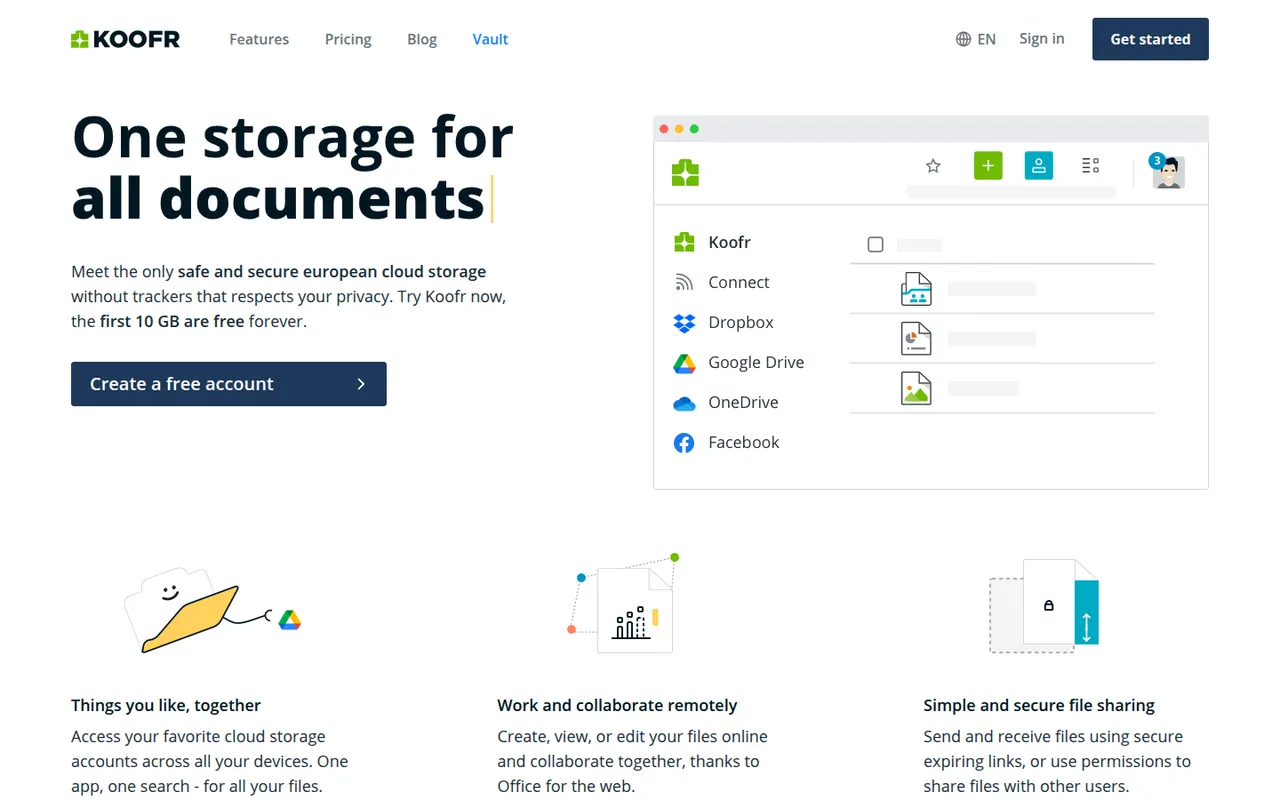
Koofr is a privacy-focused cloud storage service from Slovenia that keeps data in the EU. Besides its own storage, it can connect Dropbox, Google Drive and OneDrive accounts so you can browse and move files between them in one place. It has desktop sync apps, mobile photo backup, share links and Koofr Vault, an open source end-to-end encrypted folder.
9 Koofr alternativesPros
- Data stays in the EU with a privacy-focused European provider
- Connects Dropbox, Google Drive and OneDrive in one interface
- Koofr Vault adds an open source end-to-end encrypted folder
Cons
- Standard storage is not end-to-end encrypted outside Vault
- Fewer collaboration features than the big cloud providers
Cost / LicenseFreemiumProprietaryCategories1Password stores passwords, passkeys, credit cards, secure notes and documents in encrypted vaults that sync across devices and fill into browsers and apps. Watchtower flags weak, reused or breached passwords, and shared vaults make it practical for families and teams. It is a paid service with a free trial, and it also offers developer tools such as an SSH agent and a command-line interface.
10 1Password alternativesPros
- Polished apps on every platform with reliable autofill
- Watchtower flags weak, reused or breached passwords
- Shared vaults, plus developer tools like an SSH agent and a CLI
Cons
- No free plan, only a trial before paying
- Cloud-only vaults, with no self-hosting option
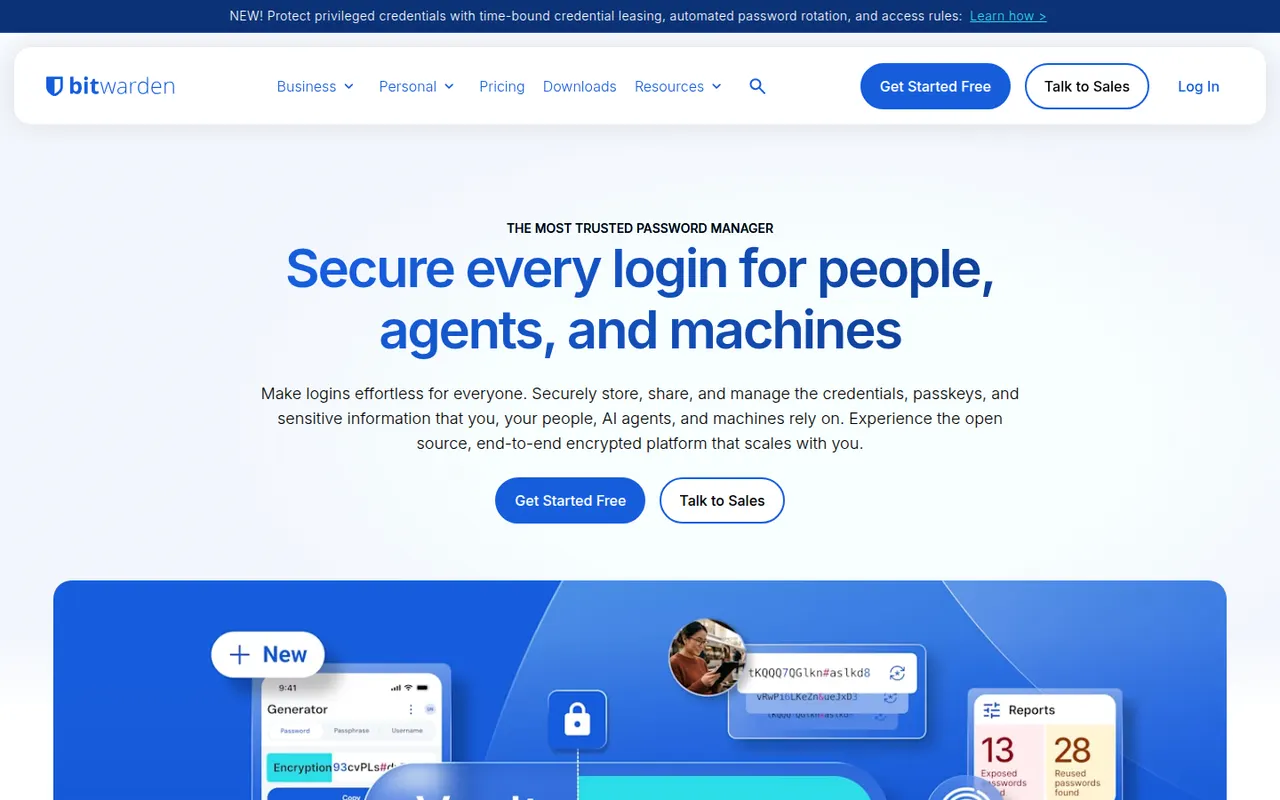
Cost / LicenseFree trialProprietaryCategoriesBitwarden is an open source password manager that keeps logins, passkeys, cards and notes in an end-to-end encrypted vault available on every major platform. The free plan covers unlimited passwords on unlimited devices, while paid plans add encrypted attachments, vault health reports, an integrated authenticator and sharing for families or teams. The server can also be self-hosted.
10 Bitwarden alternativesPros
- Free plan with unlimited passwords on unlimited devices
- Open source code with published third-party audits
- The server can be self-hosted
Cons
- Interface is more functional than polished
- Attachments, vault health reports and the authenticator need a paid plan
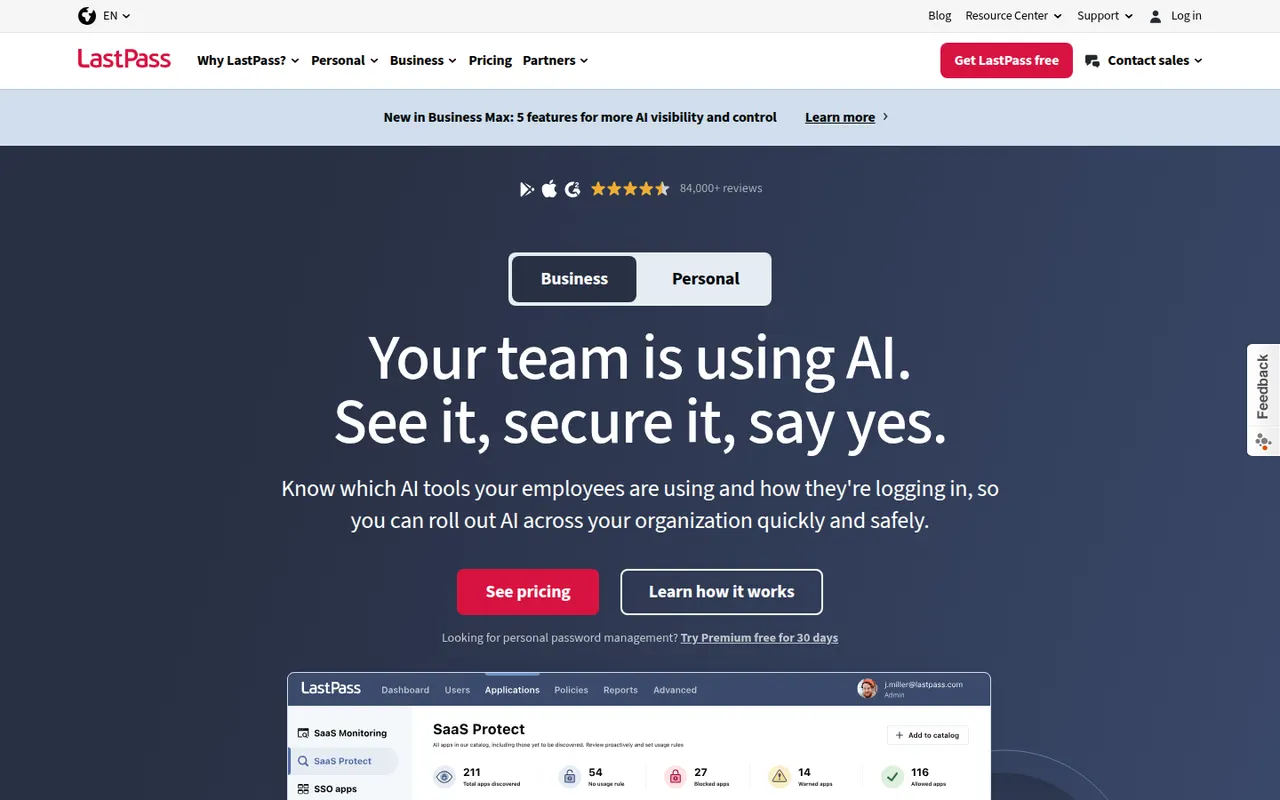
Cost / LicenseFreemiumOpen sourceCategoriesLastPass is a long-standing password manager that saves and fills logins through browser extensions, a web vault and mobile apps. It includes a password generator, secure notes, sharing, dark web monitoring and passkey support, with a free plan limited to one device type. A major breach disclosed in 2022, in which encrypted vault backups were stolen, led many users to switch to other services.
10 LastPass alternativesPros
- Browser extensions and a web vault work on any computer
- Easy setup, with sharing and secure notes included
- Dark web monitoring and passkey support
Cons
- A major breach led to the theft of encrypted vault backups
- The free plan is limited to one device type
Cost / LicenseFreemiumProprietaryCategoriesPlatformsDashlane is a password manager, originally founded in France, that works through browser extensions, a web app and mobile apps. It saves and autofills passwords, passkeys and payment details, flags weak or compromised credentials and monitors the dark web for leaked personal data. Its personal and business plans are paid, with a free trial, after the former free plan was discontinued.
10 Dashlane alternativesPros
- Dark web monitoring for leaked personal data
- Clean browser extension that fills passkeys and payment details
- Flags weak and compromised credentials
Cons
- No free plan anymore, only a trial
- No desktop apps, only browser extensions and mobile apps
- Pricier than many competing password managers
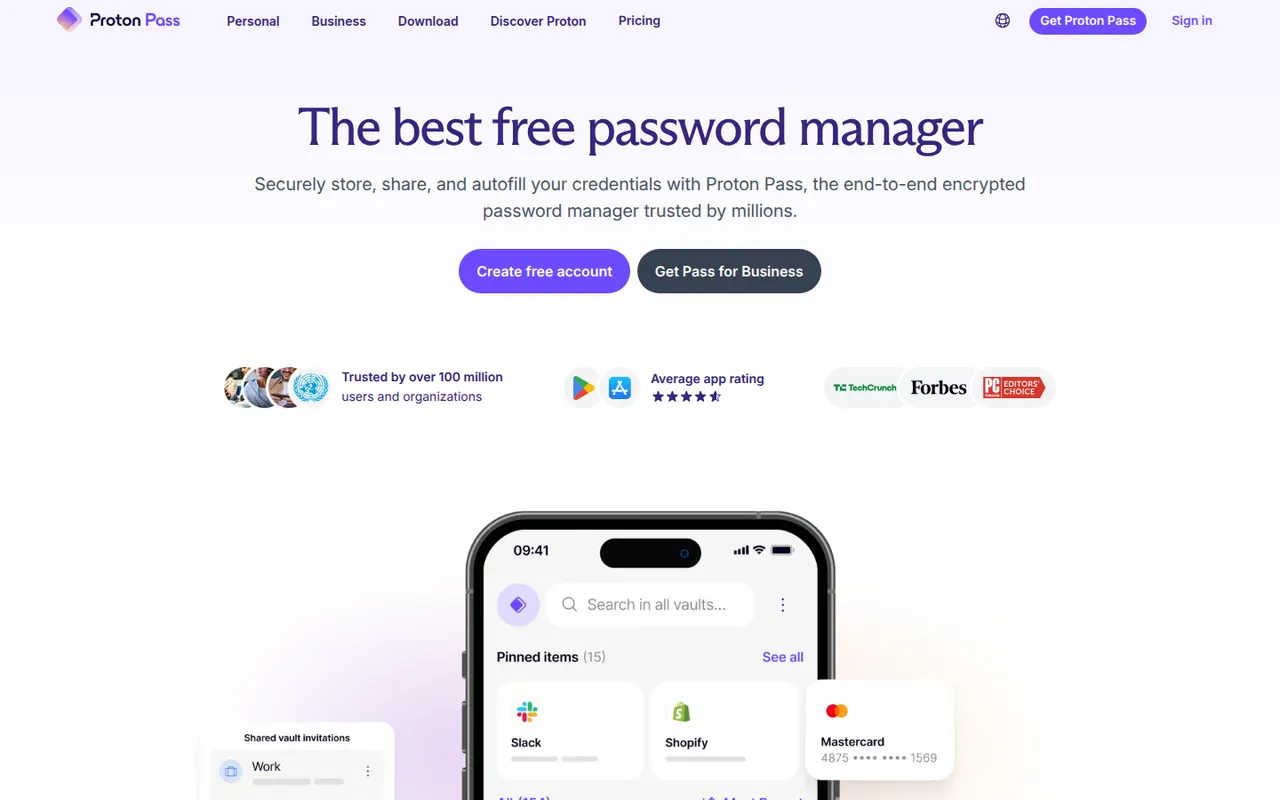
Cost / LicenseFree trialProprietaryCategoriesPlatformsProton Pass is the password manager of Proton, the Swiss company behind Proton Mail and Proton VPN. Everything in the vault is end-to-end encrypted and the apps are open source. It supports passkeys, has a built-in 2FA code generator and creates hide-my-email aliases that protect your real address, with a free plan that allows unlimited logins and devices.
10 Proton Pass alternativesPros
- Free plan with unlimited logins and devices
- Hide-my-email aliases protect your real address
- Open source, end-to-end encrypted apps with a built-in 2FA generator
Cons
- Younger product with fewer advanced features than long-standing rivals
- The free plan limits the number of email aliases
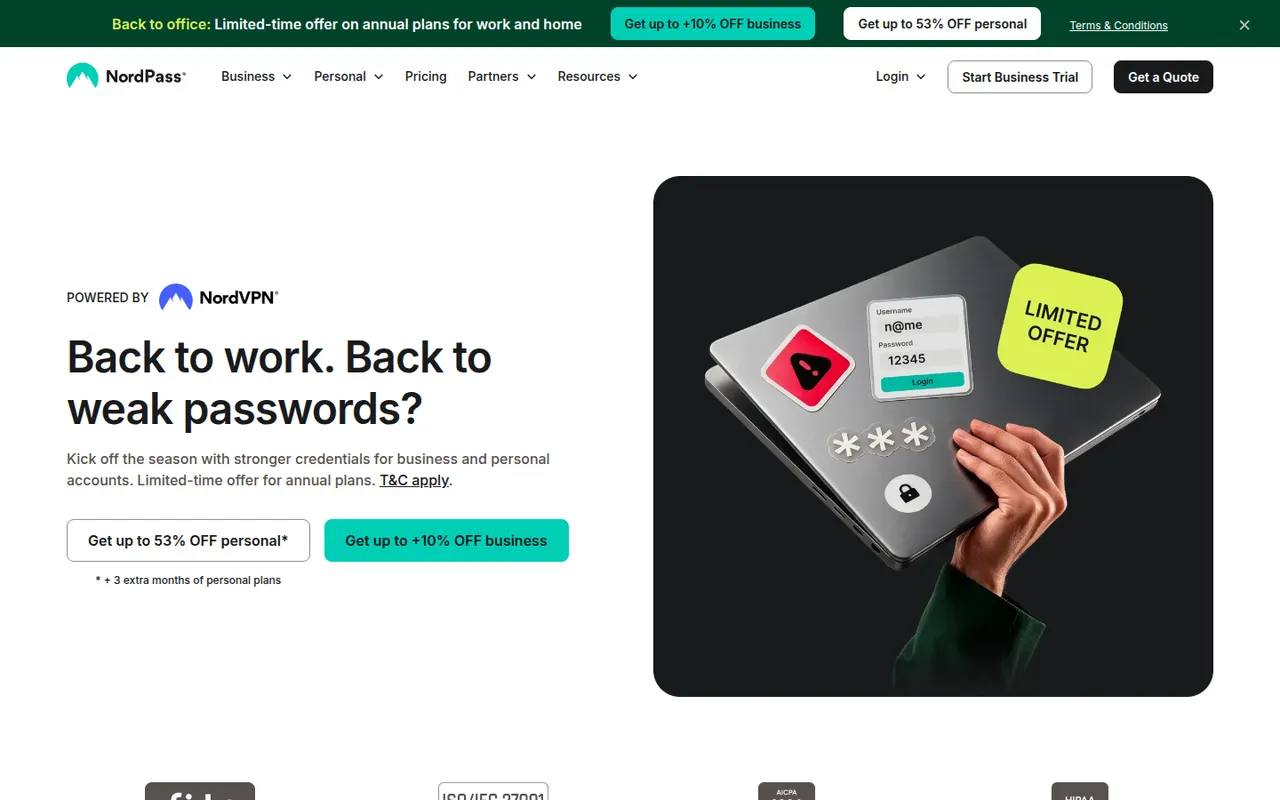
Cost / LicenseFreemiumOpen sourceCategoriesNordPass is the password manager of Nord Security, the company behind NordVPN. It stores passwords, passkeys, credit cards and notes in a vault encrypted with XChaCha20 and fills them through browser extensions and apps on desktop and mobile. Premium adds a data breach scanner, password health reports, email masking and sharing, while a free plan covers basic password storage.
8 NordPass alternativesPros
- XChaCha20-encrypted vault with apps on every major platform
- Clean, simple interface for everyday use
- Autofills passwords, passkeys and cards via extensions and apps
Cons
- Breach scanner, password health and sharing require Premium
- Closed source, unlike Bitwarden or Proton Pass
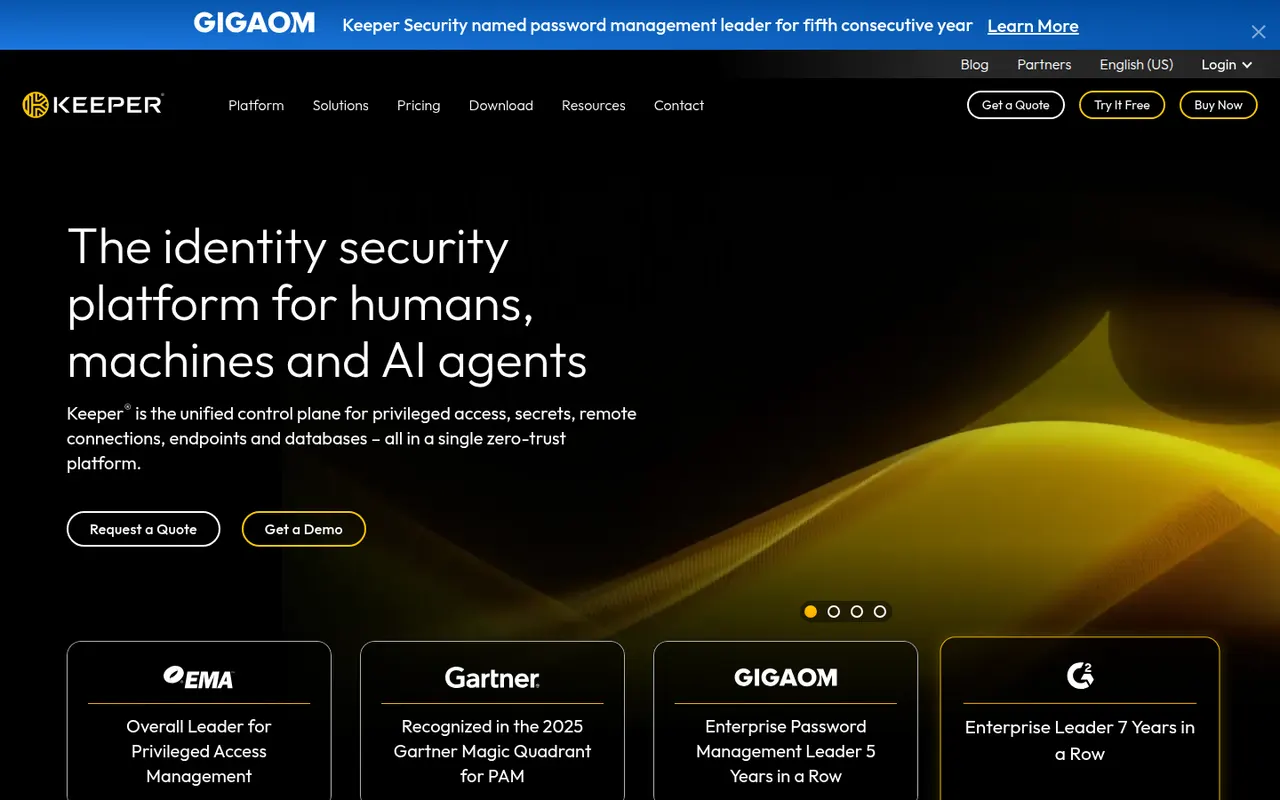
Cost / LicenseFreemiumProprietaryCategoriesKeeper is a password manager with a strong focus on businesses and public-sector organizations, offering zero-knowledge encrypted vaults, role-based policies and single sign-on integration. Its apps cover desktop, mobile and browser extensions, with passkey storage, built-in 2FA codes and secure file storage. The optional BreachWatch add-on monitors the dark web for leaked credentials.
7 Keeper alternativesPros
- Zero-knowledge vaults with role-based policies for businesses
- SSO integration and admin controls for large organizations
- Secure file storage plus built-in 2FA codes
Cons
- BreachWatch dark web monitoring is a paid add-on
- The free plan is very limited compared with paid tiers
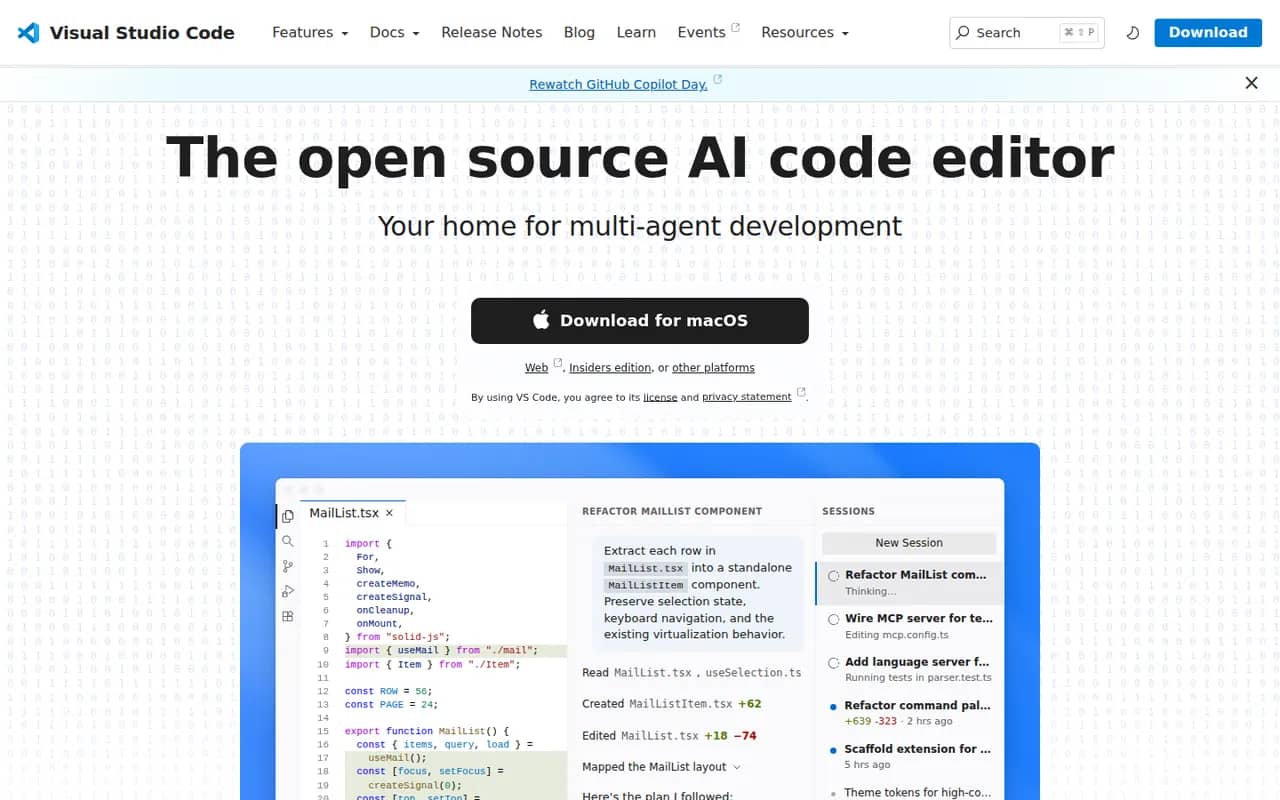
Cost / LicenseFreemiumProprietaryCategoriesVisual Studio Code is a free source code editor from Microsoft that runs on Windows, macOS, Linux and in the browser. It combines IntelliSense completion, a built-in debugger, Git tools and an integrated terminal with a large extensions marketplace. It is built on the MIT-licensed Code - OSS project and integrates GitHub Copilot for AI chat and agent workflows.
12 Visual Studio Code alternativesPros
- Huge extensions marketplace for almost any language or tool
- Integrated terminal, debugger and Git tools
- Remote development over SSH, in containers and with WSL
Cons
- Official builds include Microsoft telemetry and proprietary components
- As an Electron app it uses more memory than native editors
- Large extension setups can slow it down
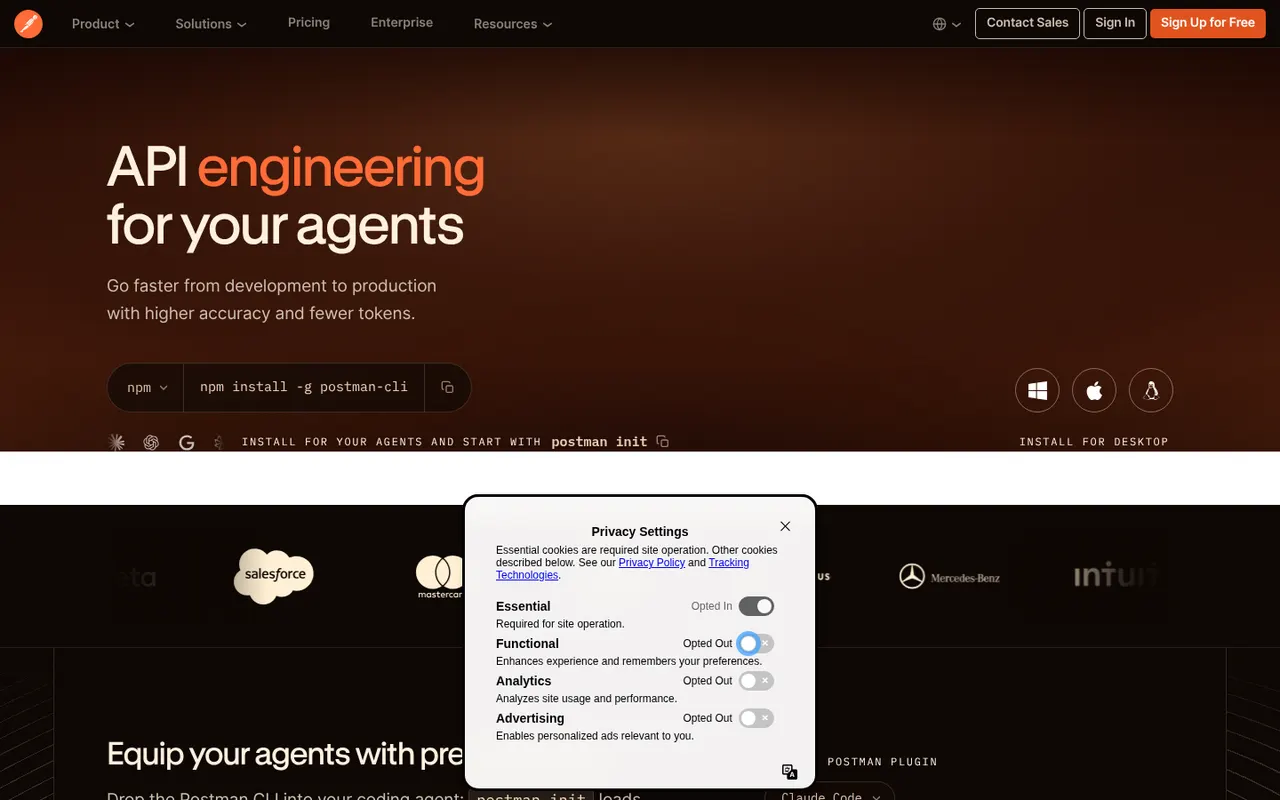
Cost / LicenseFreeOpen sourceCategoriesPostman is an API platform for sending HTTP, GraphQL, gRPC and WebSocket requests, organizing them in collections and automating tests. It also covers API design, documentation, mock servers, monitors and AI-assisted features, with shared workspaces for teams. Postman runs on the web and as a desktop app; the free plan is limited to a single user, and team collaboration requires a paid plan.
6 Postman alternativesPros
- Covers the API lifecycle from design and testing to docs and monitors
- Large public network of shared API collections to start from
- Collection runner and scripts automate test suites, including in CI
Cons
- Free plan is limited to one user; team collaboration requires a paid plan
- The app feels heavy and cluttered for sending a quick request
- Cloud-centric workflow is a concern for teams handling sensitive APIs
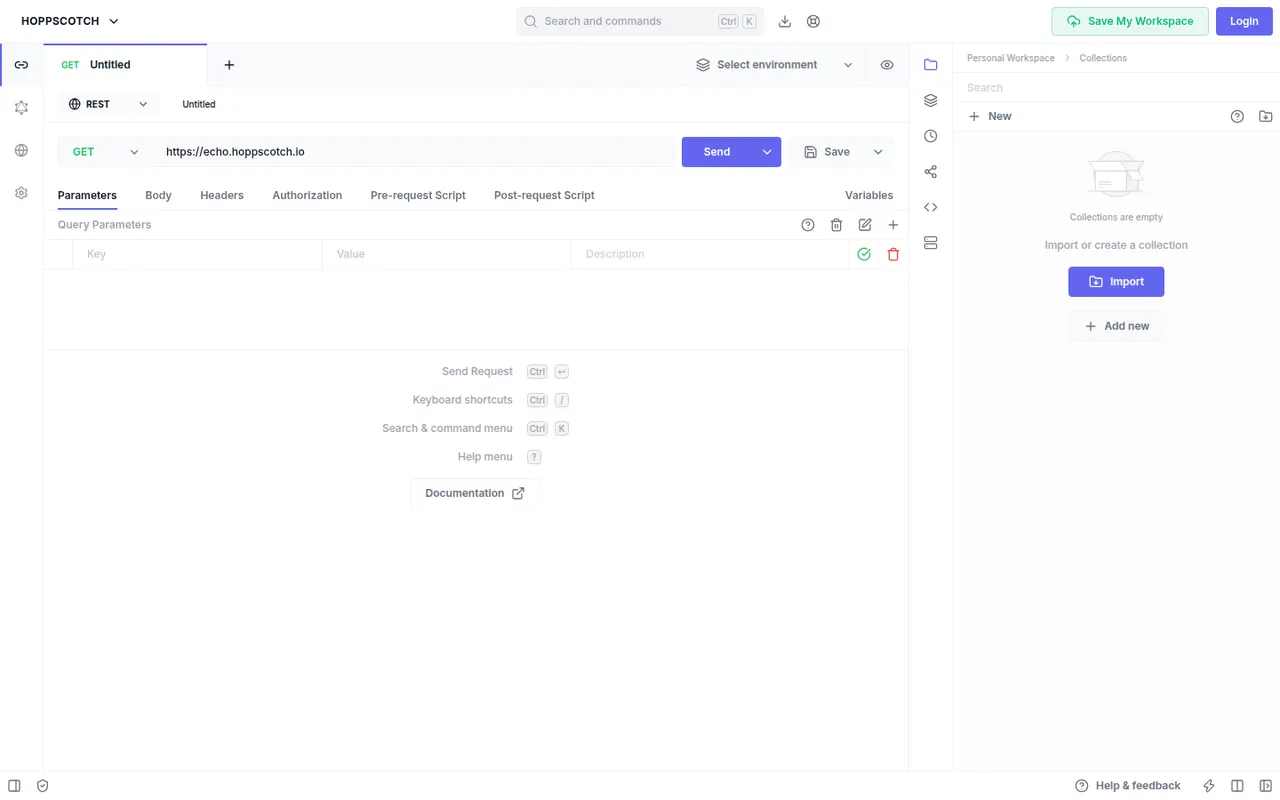
Cost / LicenseFreemiumProprietaryCategoriesHoppscotch is an open source API client that runs in the browser, as a desktop app or on your own server. It tests REST, GraphQL, WebSocket, Socket.IO, MQTT and server-sent events with collections, environments, pre-request scripts and tests. Teams can share workspaces, and organizations can self-host the whole platform with Docker. A browser extension helps send requests that CORS would otherwise block.
6 Hoppscotch alternativesPros
- Runs in the browser with nothing to install
- Supports REST, GraphQL, WebSocket, Socket.IO, MQTT and SSE
- The whole platform can be self-hosted with Docker
Cons
- In the browser, CORS limits require an extension or proxy
- Some team and enterprise features are paid
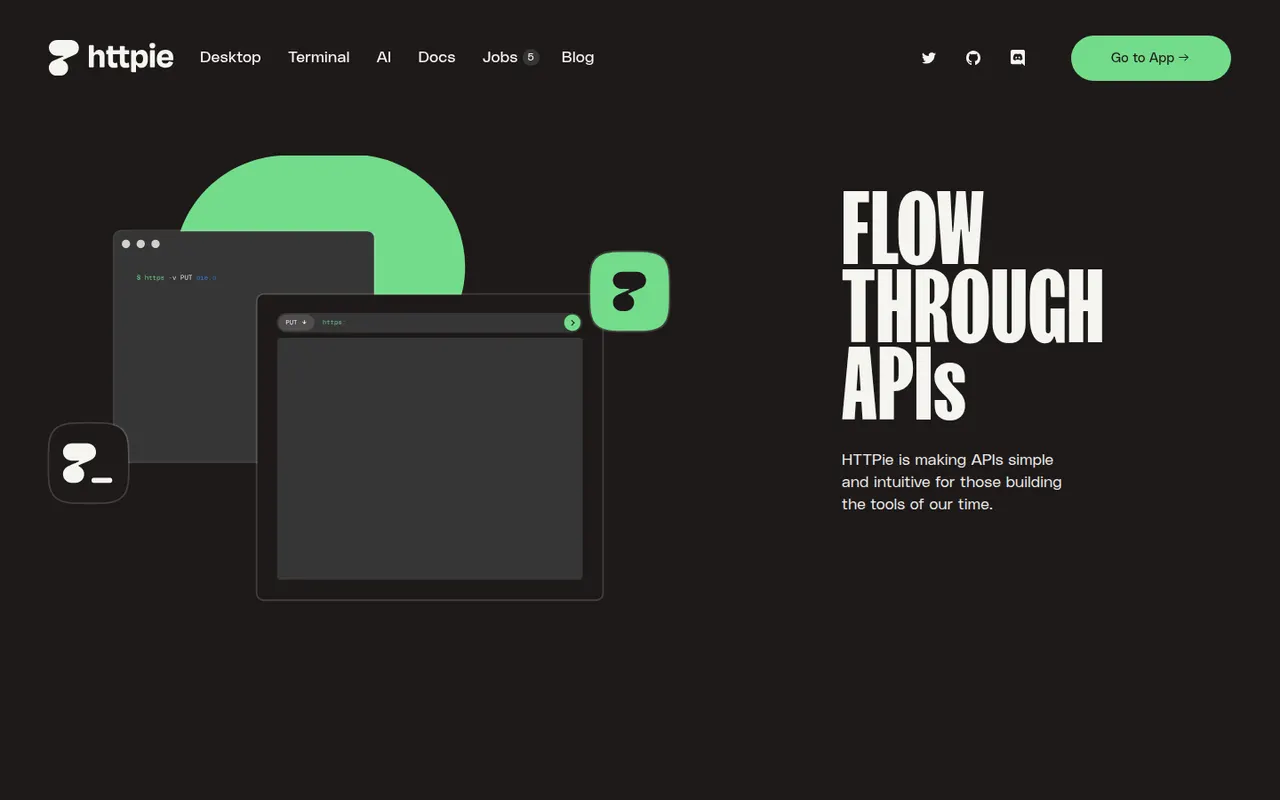
Cost / LicenseFreemiumOpen sourceCategoriesHTTPie is a family of HTTP clients designed to make working with APIs readable and quick. The open source command-line tool offers an intuitive syntax, built-in JSON support, colorized output, sessions and plugins, and is widely used in scripts and documentation. HTTPie for Web and Desktop adds a graphical interface with collections and environments, and HTTPie AI turns plain-language prompts into requests.
6 HTTPie alternativesPros
- Readable command-line syntax that is easier to type than curl
- Formatted, colorized JSON output makes responses quick to scan
- One tool covers terminal scripts and a graphical app on desktop and web
Cons
- The graphical app has fewer testing and automation features than full API platforms
- Not preinstalled like curl, so scripts carry an extra dependency
Cost / LicenseFreeOpen sourceCategoriesVercel is a cloud platform for deploying web apps, run by the company behind Next.js. Connecting a Git repository gives automatic builds, a preview URL for every pull request and delivery from a global edge network, with serverless and edge functions for dynamic code. It also offers analytics, storage integrations and AI tooling. A free Hobby plan suits personal projects; paid plans cover teams.
10 Vercel alternativesPros
- First-class Next.js support from the company that builds it
- Automatic builds and a preview URL for every pull request
- Global edge network with serverless and edge functions
Cons
- Usage-based costs can jump sharply when traffic spikes
- The free Hobby plan is limited to personal, non-commercial use
- Some features are tied to Next.js, which raises lock-in concerns
Cost / LicenseFreemiumProprietaryCategoriesPlatformsNetlify is a hosting and deployment platform that builds sites straight from a Git repository and serves them from a global network. Every pull request gets a deploy preview, and serverless functions, edge functions, form handling and build plugins cover dynamic needs without managing a server. It works with most frontend frameworks and static site generators, and offers a free plan alongside paid tiers for teams.
10 Netlify alternativesPros
- Deploy previews for every pull request, straight from Git
- Built-in forms, serverless and edge functions without managing servers
- Works with most frontend frameworks and static site generators
Cons
- Costs can rise quickly as traffic and build usage grow
- Less suited to long-running backends or heavy server workloads
Cost / LicenseFreemiumProprietaryCategoriesPlatformsHeroku is a platform as a service owned by Salesforce that runs applications in managed containers called dynos. Developers deploy with git push or from GitHub, get review apps for pull requests and attach add-ons such as Postgres and Redis. There is no free tier. Since 2026, Salesforce has kept Heroku in a sustaining engineering mode focused on stability and security rather than new features.
9 Heroku alternativesPros
- Famously simple deploys with git push or from GitHub
- Review apps for pull requests and a large add-on marketplace
- Mature platform with managed Postgres and Redis add-ons
Cons
- No free tier, and pricing is high for the resources provided
- In sustaining mode, with no major new features expected
Cost / LicensePaidProprietaryCategoriesPlatformsRender is a cloud application platform for hosting web services, static sites, background workers, cron jobs and managed Postgres and key-value databases. Apps deploy automatically from Git or a Docker image, with free TLS, custom domains, private networking and preview environments for pull requests. It is often chosen as a simpler alternative to Heroku, and free instances let you try services before upgrading.
10 Render alternativesPros
- Heroku-like simplicity for services, workers, cron jobs and databases
- Auto-deploys from Git or Docker with free TLS and private networking
- Preview environments for pull requests
Cons
- Free instances spin down when idle, which causes slow cold starts
- Costs add up as services and databases multiply
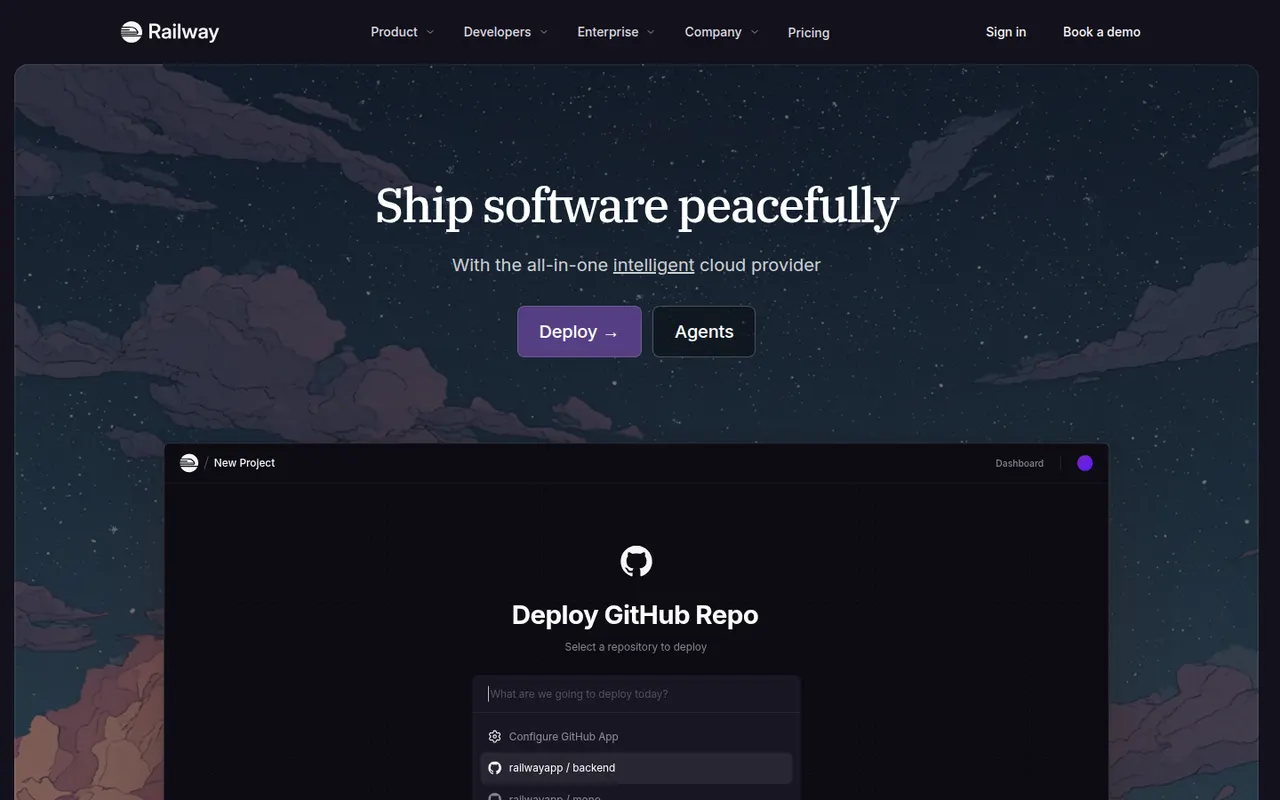
Cost / LicenseFreemiumProprietaryCategoriesPlatformsRailway is a deployment platform where apps, databases and workers sit on a visual canvas and talk over private networking. Services deploy from a GitHub repository, a Dockerfile or a template, and Postgres, MySQL, Redis or MongoDB can be added in a few clicks. Billing follows actual resource usage, and pull requests can spin up temporary environments. A trial with credits leads to a small free plan or paid tiers.
9 Railway alternativesPros
- Visual canvas makes multi-service architectures easy to follow
- Add Postgres, MySQL, Redis or MongoDB in a few clicks
- Temporary environments spin up for pull requests
Cons
- Usage-based billing makes monthly costs harder to predict
- Free plan is small once the trial credits run out
- Fewer regions and less control than the large cloud providers
Cost / LicenseFreemiumProprietaryCategoriesPlatformsFly.io runs applications packaged as Docker images in fast-booting Firecracker micro-VMs across regions worldwide, so code can run close to users. It is driven by the flyctl command-line tool and a Machines API, with persistent volumes, private networking and managed Postgres. It suits teams that want more control over placement and infrastructure than a classic platform as a service, with pay-as-you-go pricing.
9 Fly.io alternativesPros
- Runs apps close to users across many regions worldwide
- Fast-booting Firecracker micro-VMs built from standard Docker images
- Fine-grained control through flyctl and the Machines API
Cons
- No free tier, and usage-based pricing can be hard to predict
- More infrastructure concepts to learn than a classic platform as a service
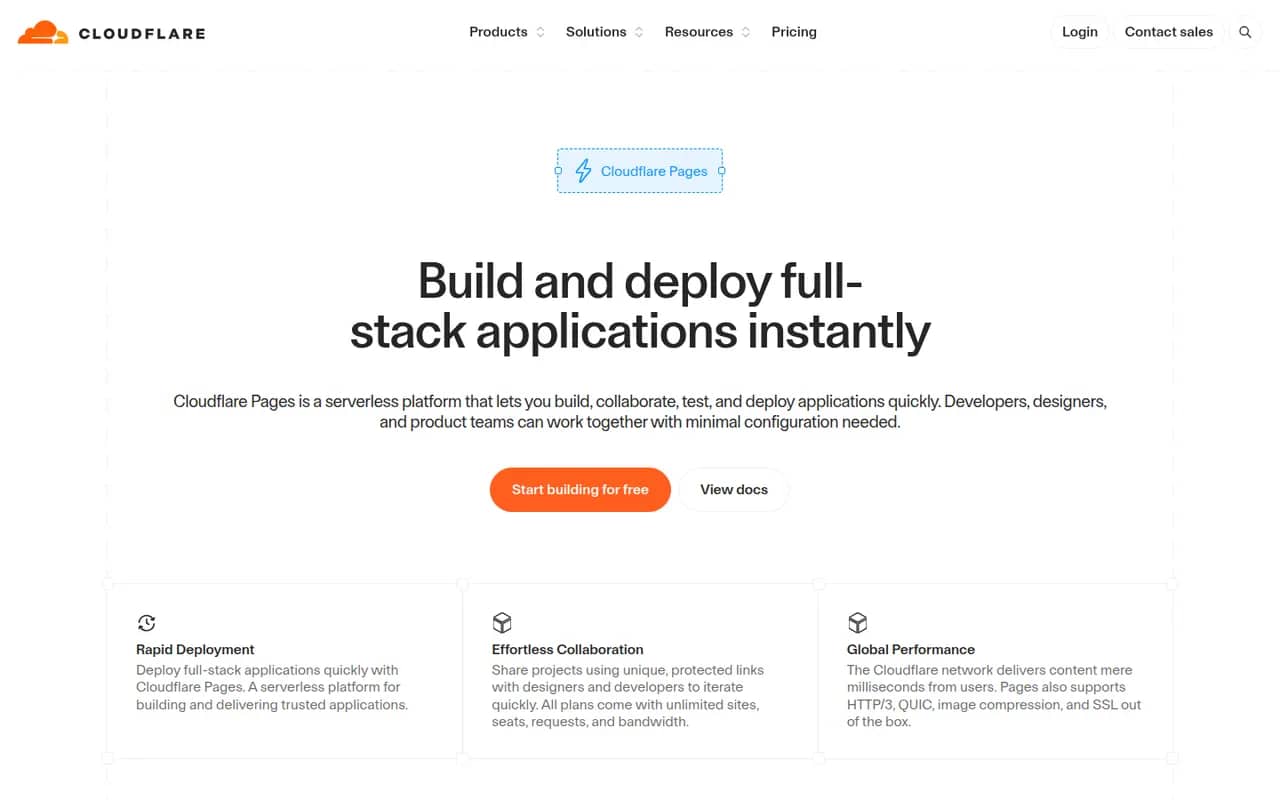
Cost / LicensePaidProprietaryCategoriesPlatformsCloudflare Pages builds sites from a Git repository or direct uploads and serves them from Cloudflare's global network. It provides preview URLs for every branch, custom domains with automatic TLS and Pages Functions for server-side code on Workers. The free plan covers many small sites. Cloudflare now recommends Workers with static assets for new projects, while existing Pages projects remain supported.
8 Cloudflare Pages alternativesPros
- Generous free plan for static and small sites
- Served from Cloudflare’s global network with automatic TLS
- Preview URL for every branch, plus Functions running on Workers
Cons
- Cloudflare now steers new projects toward Workers instead
- Workers runtime is not full Node.js, so some libraries need adapting
- Poorly suited to traditional backends or long-running processes
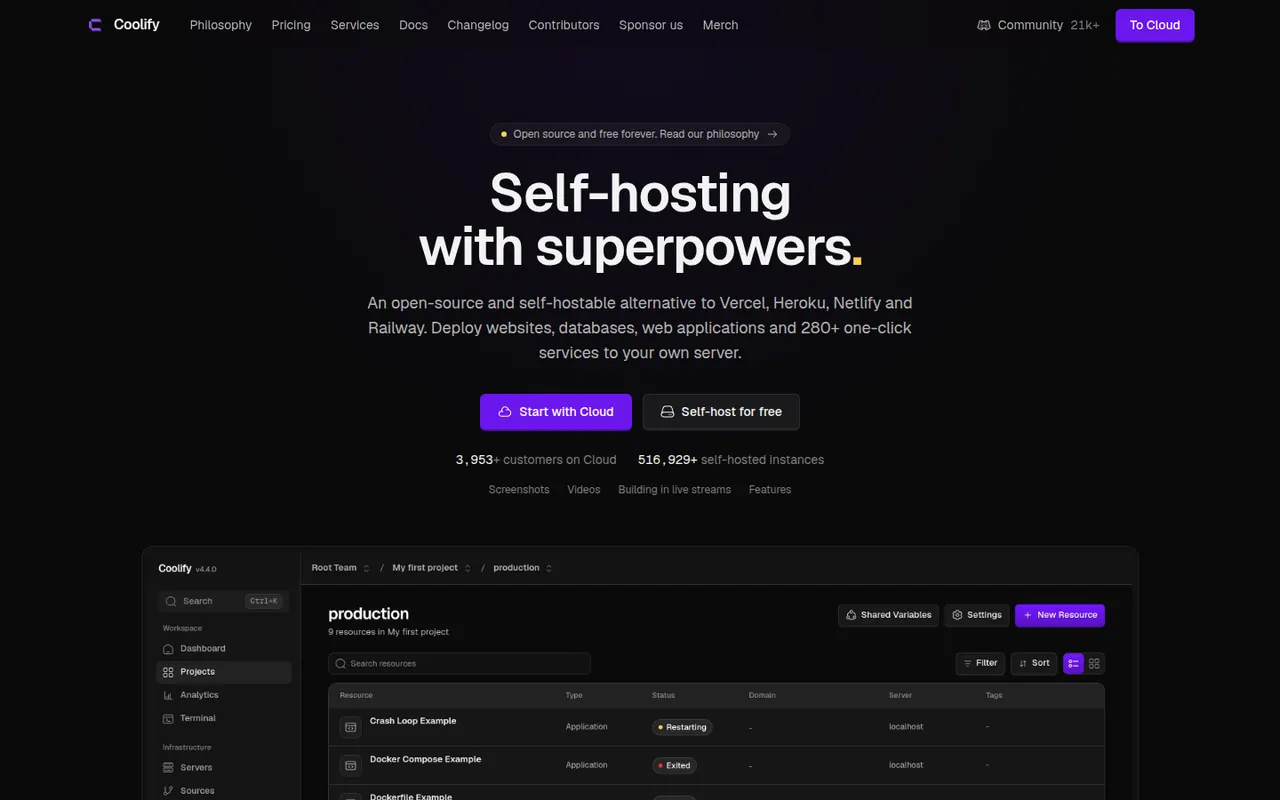
Cost / LicenseFreemiumProprietaryCategoriesPlatformsCoolify is an open source platform as a service you install on your own servers to deploy apps, databases and services. It builds apps from Git repositories, Dockerfiles or Docker Compose files, handles the reverse proxy and automatic SSL, and creates pull request previews. A catalog of one-click services covers common tools. Self-hosting is free; the paid Coolify Cloud hosts the control panel for you.
9 Coolify alternativesPros
- Free and open source, running on your own servers
- Deploys from Git, Dockerfiles or Docker Compose with automatic SSL
- One-click catalog for databases and common self-hosted tools
Cons
- You remain responsible for servers, backups and security
- Troubleshooting failed builds can require Docker and Linux knowledge
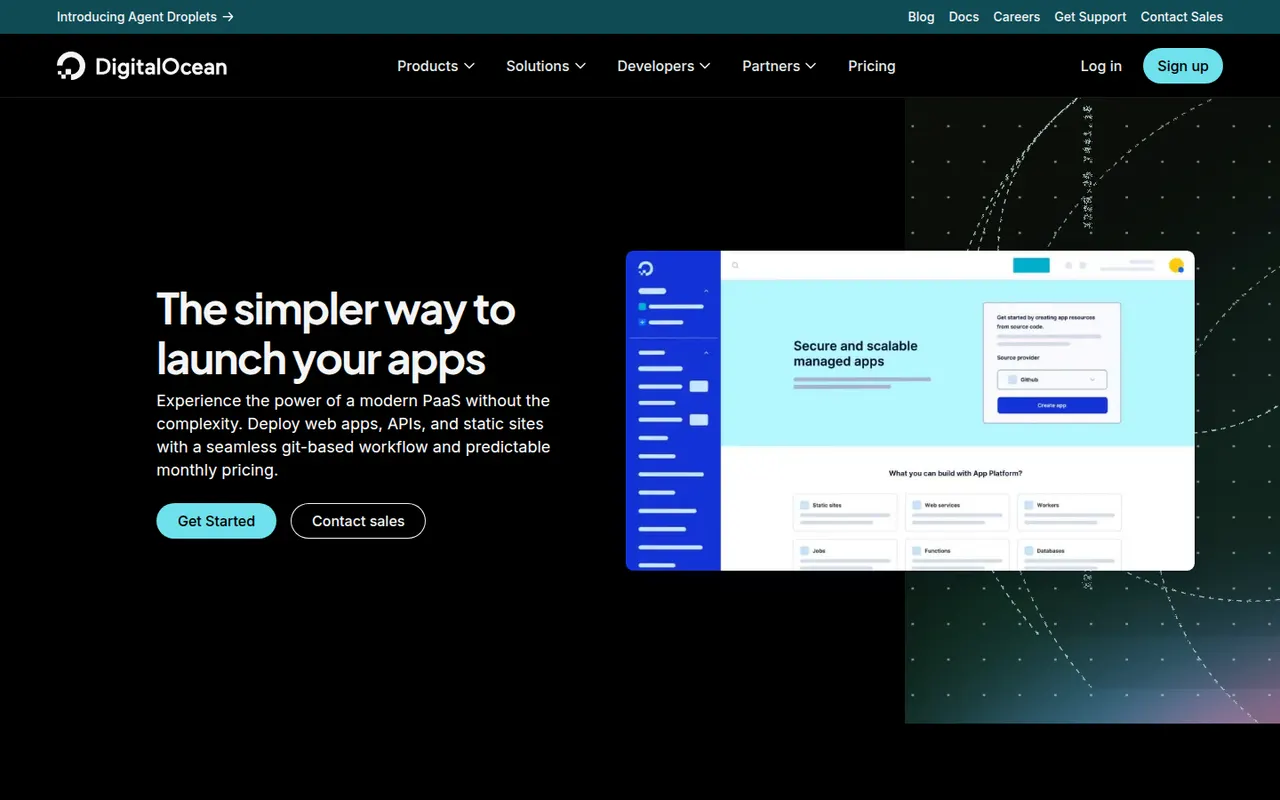
Cost / LicenseFreemiumOpen sourceCategoriesPlatformsDigitalOcean App Platform is a managed platform as a service that builds and runs web services, static sites, workers and jobs from a Git repository or a container image. It handles TLS, scaling and zero-downtime deploys, and connects to DigitalOcean managed databases and Spaces storage. It suits DigitalOcean users who want to deploy without managing Droplets, and static sites can be hosted for free.
10 DigitalOcean App Platform alternativesPros
- Simple deploys from Git or container images, with TLS and scaling handled
- Integrates with DigitalOcean managed databases and Spaces storage
- Static sites can be hosted for free
Cons
- Fewer services and regions than the largest cloud providers
- Costs more for the same resources than managing your own Droplet
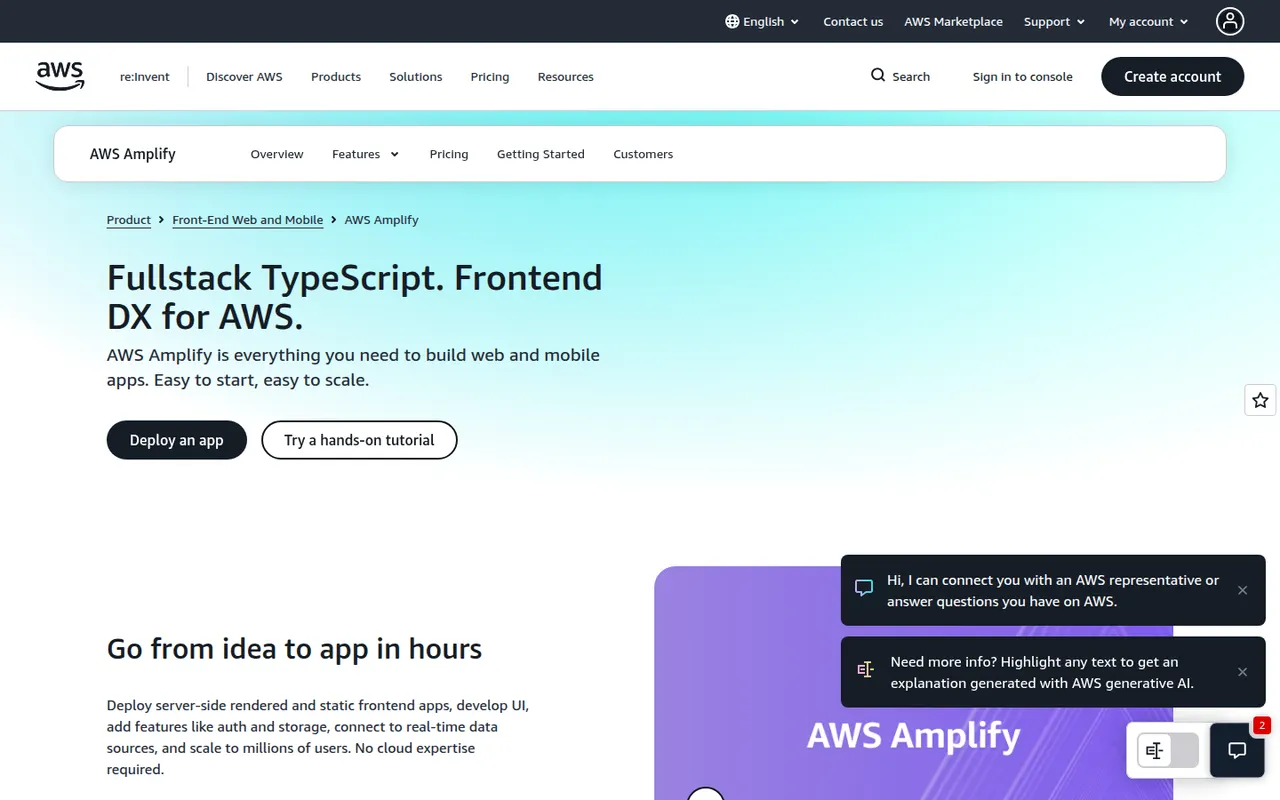
Cost / LicenseFreemiumProprietaryCategoriesPlatformsAWS Amplify is a set of tools and services from Amazon Web Services for building full-stack web and mobile apps. Amplify Hosting deploys frontends from Git with pull request previews and custom domains, while the backend side sets up authentication, data, storage and functions on AWS services, defined in TypeScript code. Its open source client libraries cover JavaScript, React Native, Swift, Android and Flutter.
12 AWS Amplify alternativesPros
- Git-based hosting with pull request previews and custom domains
- Sets up auth, data, storage and functions on AWS from TypeScript code
- Client libraries for JavaScript, React Native, Swift, Android and Flutter
Cons
- Ties your backend closely to AWS services
- Debugging often means digging into the underlying AWS consoles
- Usage-based AWS billing can be hard to predict
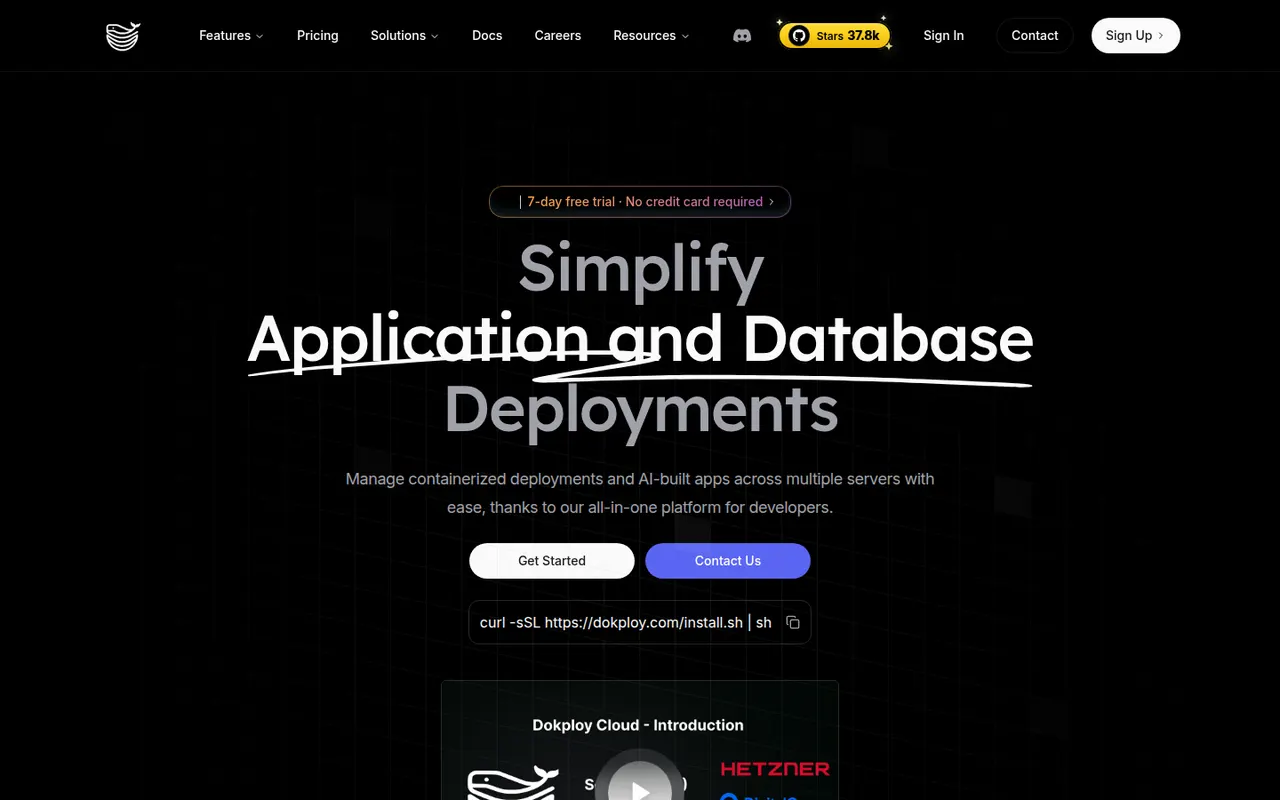
Cost / LicenseFreemiumProprietaryCategoriesPlatformsDokploy is an open source platform as a service for deploying applications and databases on your own servers. It builds from Git, Dockerfiles, buildpacks or Docker Compose, manages domains and certificates through Traefik, schedules database backups and can spread workloads across nodes with Docker Swarm. Templates cover popular self-hosted tools. The core is Apache-2.0 licensed, and a managed Dokploy Cloud exists.
8 Dokploy alternativesPros
- Apache-2.0 open source core you can run on your own servers
- Builds from Git, Dockerfiles, buildpacks or Docker Compose
- Scheduled database backups and multi-node setups with Docker Swarm
Cons
- Self-hosting leaves maintenance and security to you
- Younger project with a smaller community than more established tools
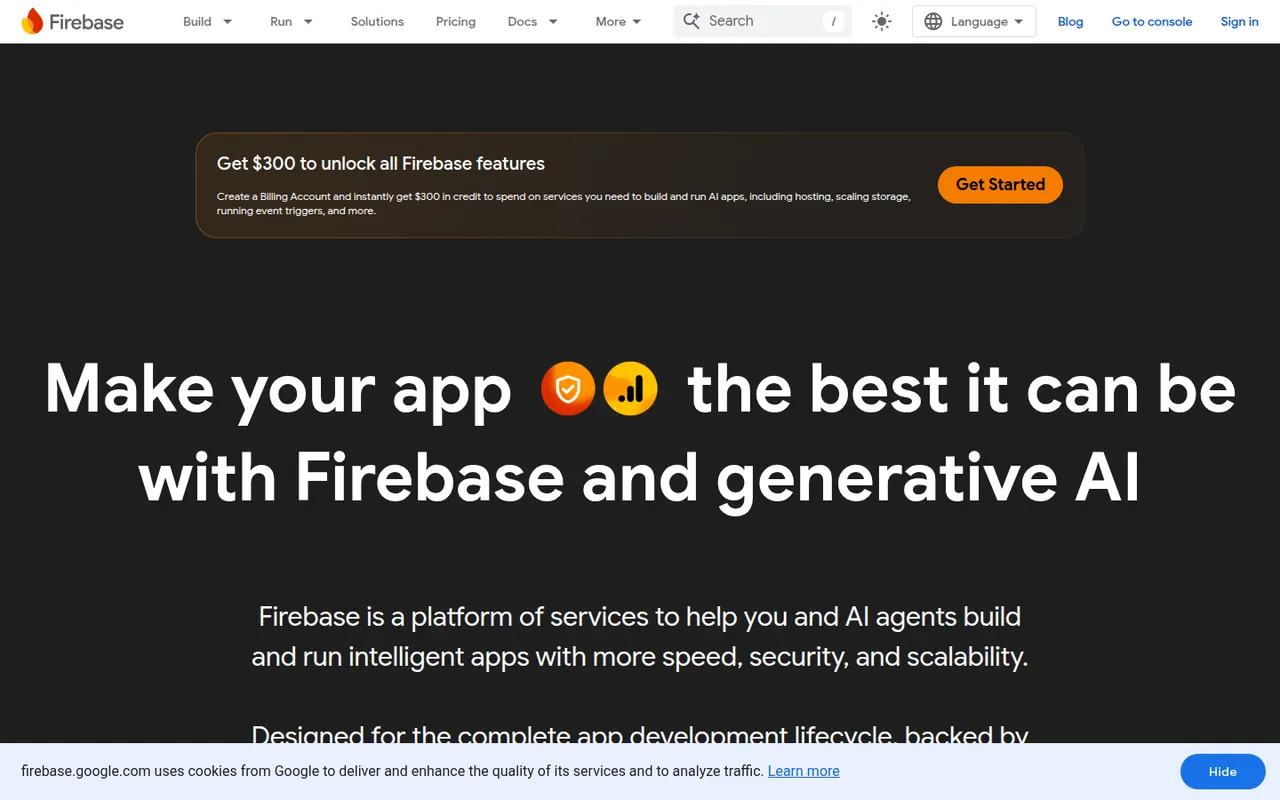
Cost / LicenseFreemiumOpen sourceCategoriesPlatformsFirebase is Google's platform for building web and mobile apps without running your own servers. It provides Cloud Firestore and the Realtime Database, authentication, Cloud Storage, Cloud Functions, hosting, analytics, crash reporting and push messaging, with SDKs for iOS, Android, web, Flutter and Unity, plus Gemini-based AI features. A free Spark plan suits prototypes, with usage-based billing beyond it.
8 Firebase alternativesPros
- Complete toolkit from auth and databases to hosting and crash reports
- Mature SDKs for iOS, Android, web, Flutter and Unity
- The free Spark plan is enough for prototypes
Cons
- Usage-based billing can spike unexpectedly with traffic or inefficient queries
- Firestore’s NoSQL model makes complex queries and reporting awkward
- Strong lock-in to Google Cloud services
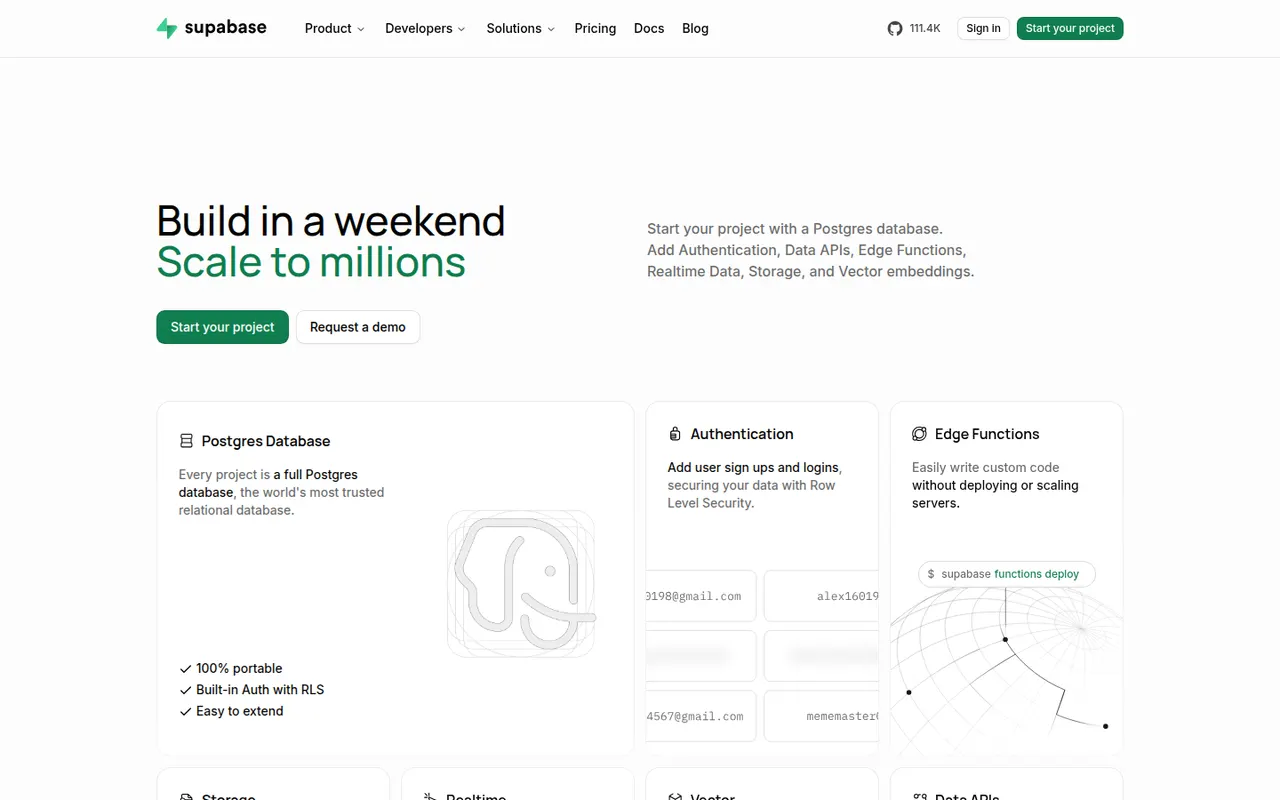
Cost / LicenseFreemiumProprietaryCategoriesPlatformsSupabase is an open source backend platform built on Postgres. Each project gets a full Postgres database with auto-generated REST and GraphQL APIs, authentication, file storage, realtime subscriptions, edge functions and vector support for AI applications. It can be used as a hosted service with a free tier or self-hosted with Docker, and appeals to developers who want SQL rather than a NoSQL backend.
8 Supabase alternativesPros
- Full Postgres database with SQL, extensions and row-level security
- Auto-generated APIs, auth, storage and realtime in one platform
- Open source and self-hostable with Docker
Cons
- Free-tier projects are paused after a period of inactivity
- Self-hosting is more involved to set up than the managed service
- Row-level security policies take time to get right
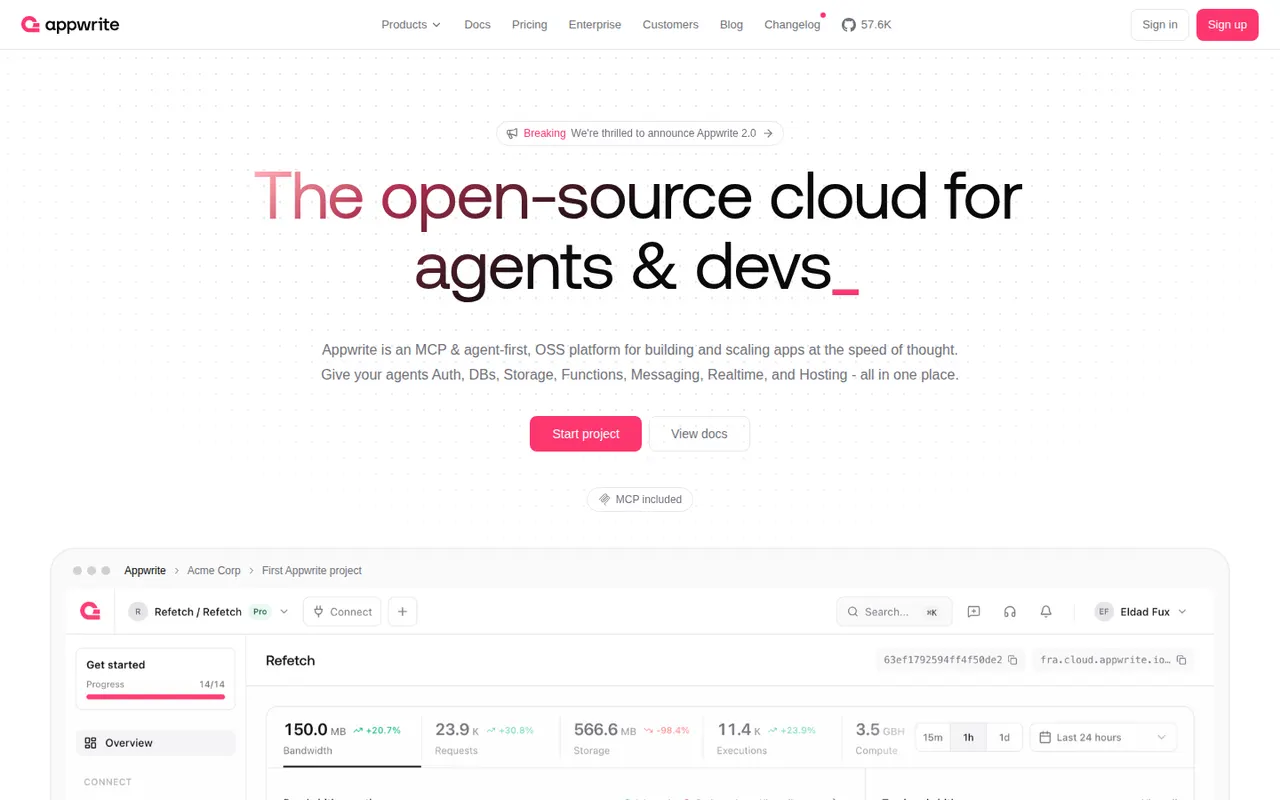
Cost / LicenseFreemiumOpen sourceCategoriesPlatformsAppwrite is an open source backend server that bundles authentication, databases, file storage, serverless functions, messaging and realtime events behind one consistent API, with SDKs for web, mobile and Flutter. Since 2025 it also hosts websites and web apps through Appwrite Sites. It can be self-hosted with Docker or used through Appwrite Cloud, which has a free plan.
8 Appwrite alternativesPros
- Auth, database, storage, functions and messaging behind one API
- Open source and straightforward to self-host with Docker
- SDKs for web, mobile and Flutter apps
Cons
- Database queries are more limited than raw SQL
- Self-hosted upgrades between versions can require careful migrations
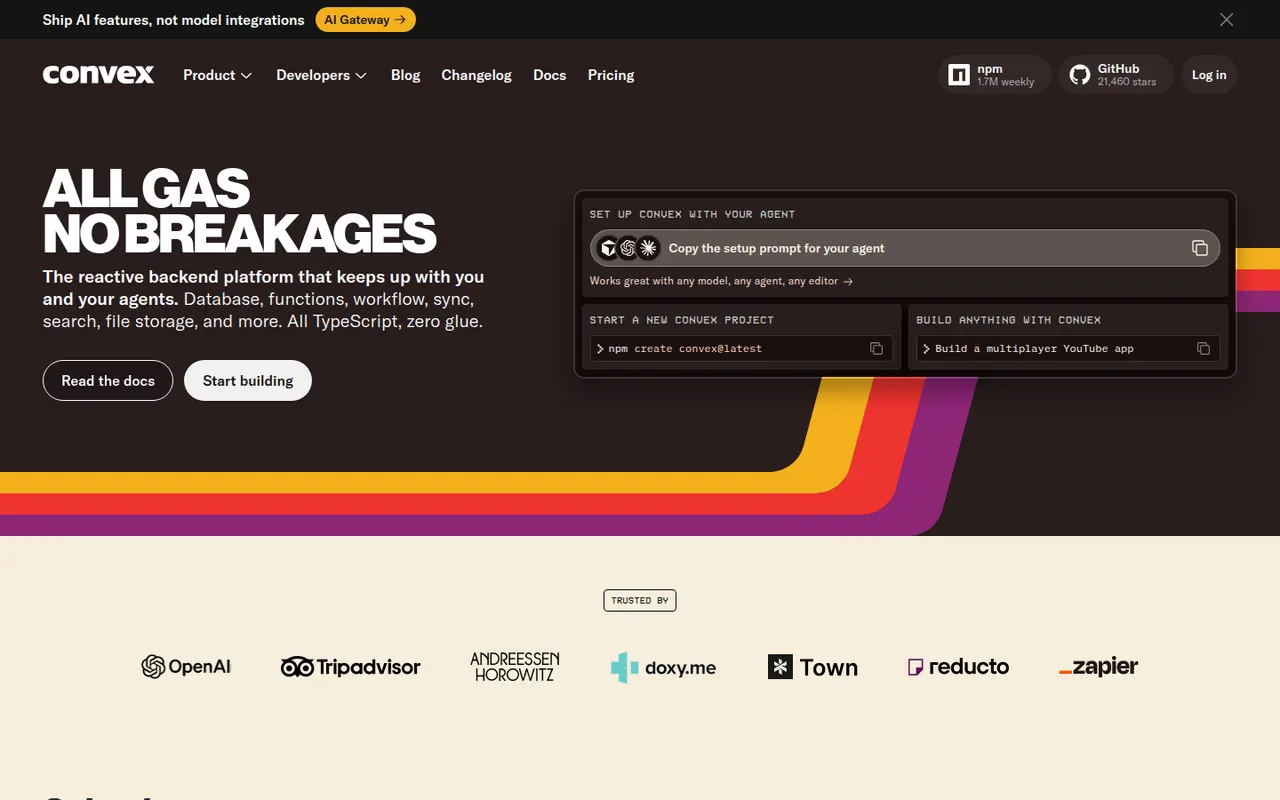
Cost / LicenseFreemiumOpen sourceCategoriesPlatformsConvex is a backend platform for app developers in which the database schema, queries, mutations and server functions are all written in TypeScript. Queries are reactive, so connected clients update automatically when data changes, with no manual caching. It also includes file storage, scheduled jobs, search and authentication. Convex Cloud has a free tier, and the backend can be self-hosted under the FSL license.
8 Convex alternativesPros
- Schema, queries and functions are all written in TypeScript
- Reactive queries update clients automatically, with no caching code
- Scheduled jobs, search, file storage and auth included
Cons
- Its own data model differs from SQL, which makes migrating away harder
- The FSL license is source available, not open source
- TypeScript-centric, less suited to teams using other backend languages
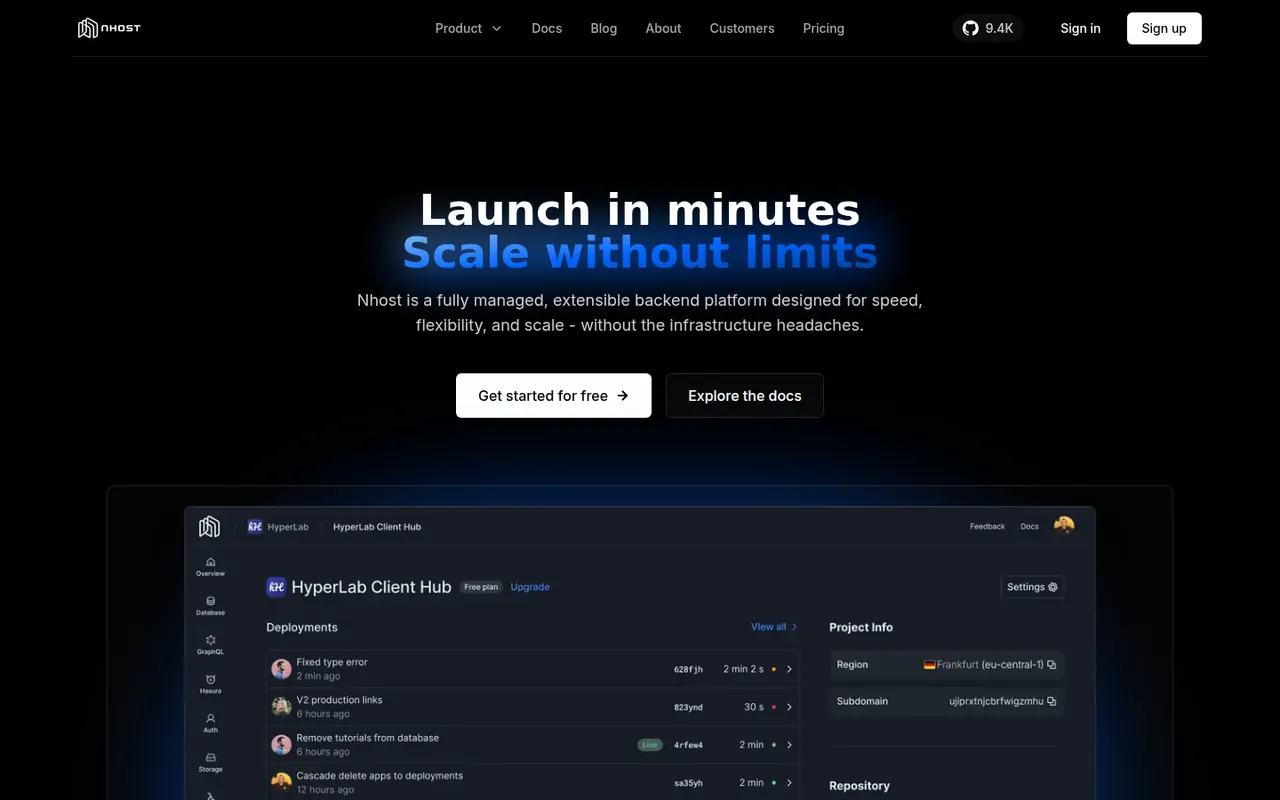
Cost / LicenseFreemiumSource availableCategoriesPlatformsNhost is an open source backend platform that combines a dedicated Postgres database, an instant GraphQL API powered by Hasura with realtime subscriptions, authentication, file storage and serverless functions. It also offers AI tooling such as vector embeddings. Projects run on Nhost Cloud, which has a free starter plan, or can be self-hosted, and a CLI supports local development.
8 Nhost alternativesPros
- Dedicated Postgres database for each project
- Instant GraphQL API with realtime subscriptions through Hasura
- Open source, with a CLI for local development and self-hosting
Cons
- GraphQL-first approach adds a learning curve for REST-oriented teams
- Smaller community and ecosystem than Supabase or Firebase
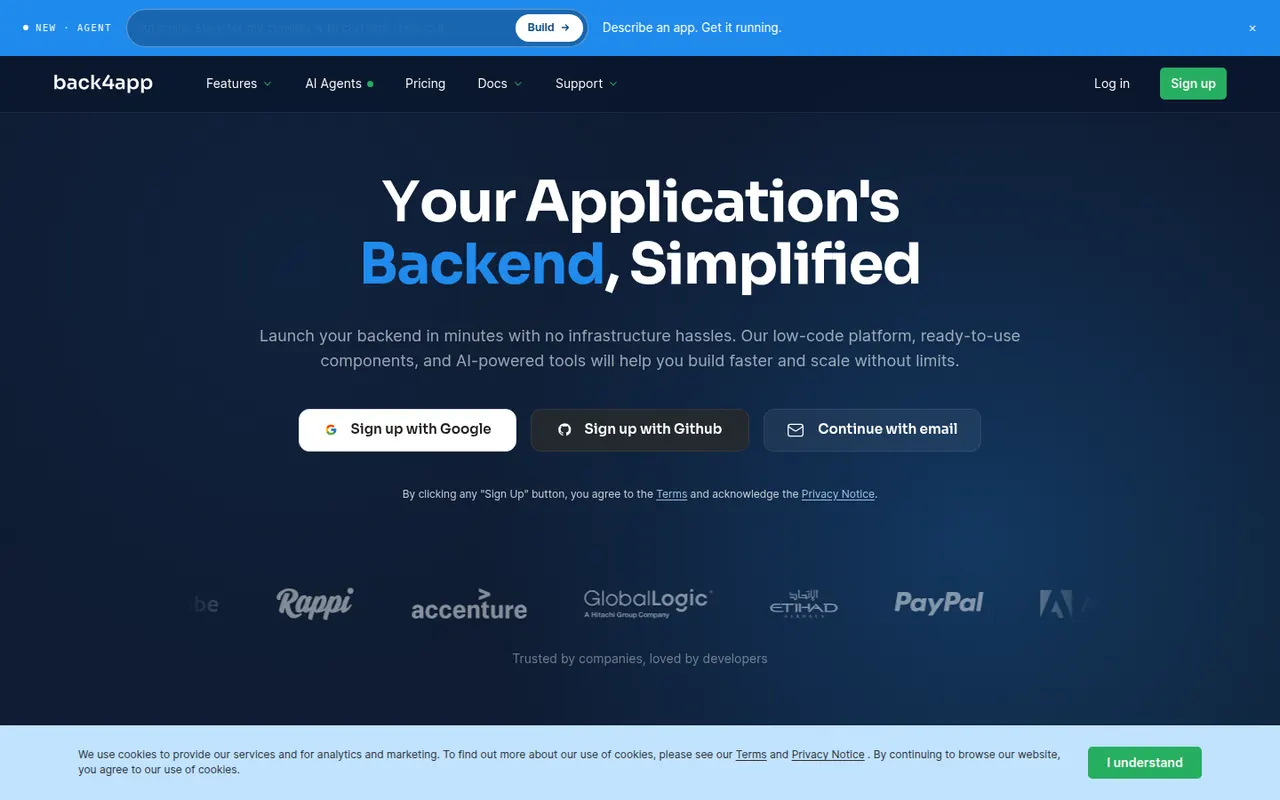
Cost / LicenseFreemiumOpen sourceCategoriesPlatformsBack4app is a backend-as-a-service platform built on the open source Parse Server. It provides a database with auto-generated REST and GraphQL APIs, user authentication, file storage, Cloud Code functions and live queries, managed from a spreadsheet-like dashboard. The company also offers a container-based web deployment platform and an AI agent for building cloud backends. Free plans are available for prototyping.
8 Back4app alternativesPros
- Built on open source Parse Server, which limits lock-in
- Auto-generated REST and GraphQL APIs for your data
- Spreadsheet-like dashboard is approachable for beginners
Cons
- The Parse ecosystem is less active than newer backend platforms
- Free plans are meant for prototypes; production needs a paid plan
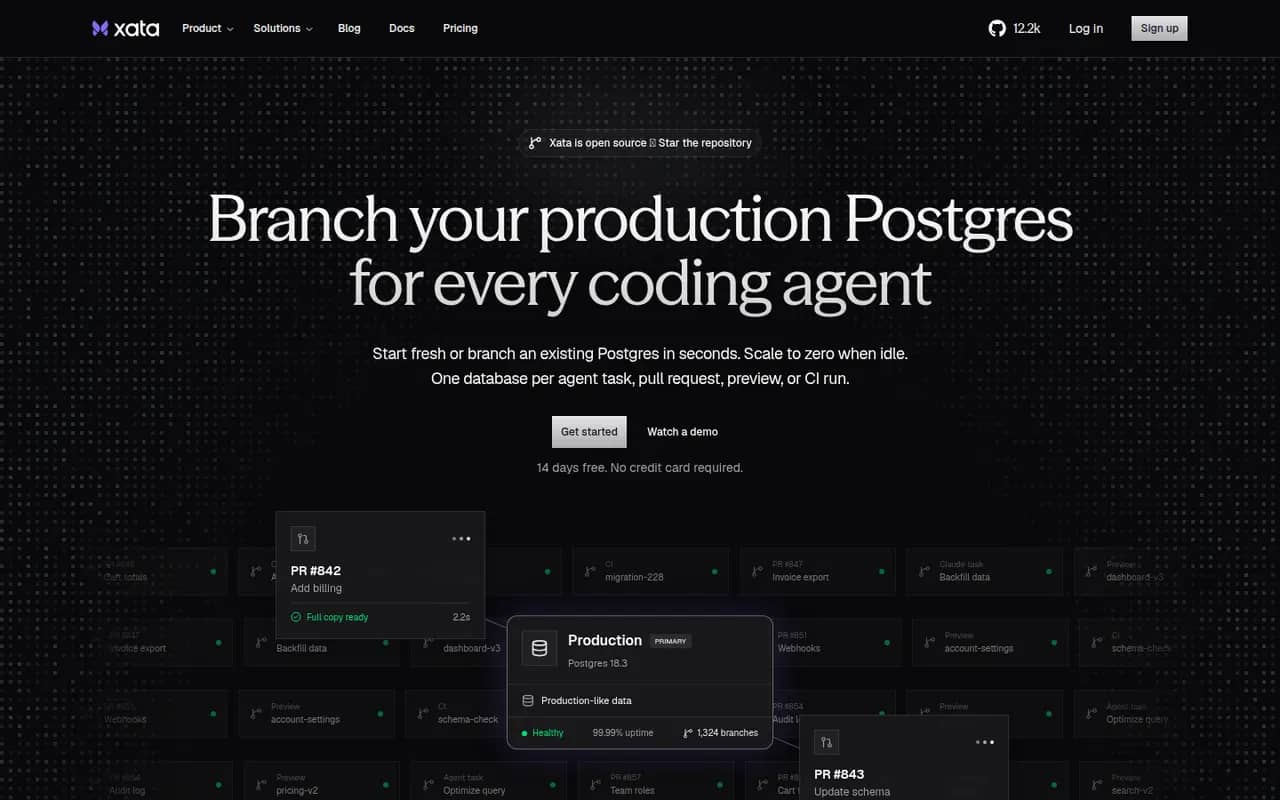
Cost / LicenseFreemiumProprietaryCategoriesPlatformsXata is a Postgres platform built around copy-on-write branching, which lets teams create full copies of large databases in seconds for previews, testing and development. It adds scale-to-zero compute, data anonymization and zero-downtime schema migrations. The platform is open source under Apache-2.0 for self-hosting on Kubernetes, and is also available as the managed Xata Cloud with a free trial.
8 Xata alternativesPros
- Copy-on-write branches clone large databases in seconds
- Built-in data anonymization for safer test environments
- Zero-downtime schema migrations and scale-to-zero compute
Cons
- Self-hosting requires Kubernetes, which is heavy for small teams
- Focused on Postgres, without the auth or file storage of a full backend
- The cloud offers a free trial rather than a permanent free tier
Cost / LicenseFreemiumOpen sourceCategoriesPlatforms