Best apps for Web
433 apps
Top Web apps ranked by the community
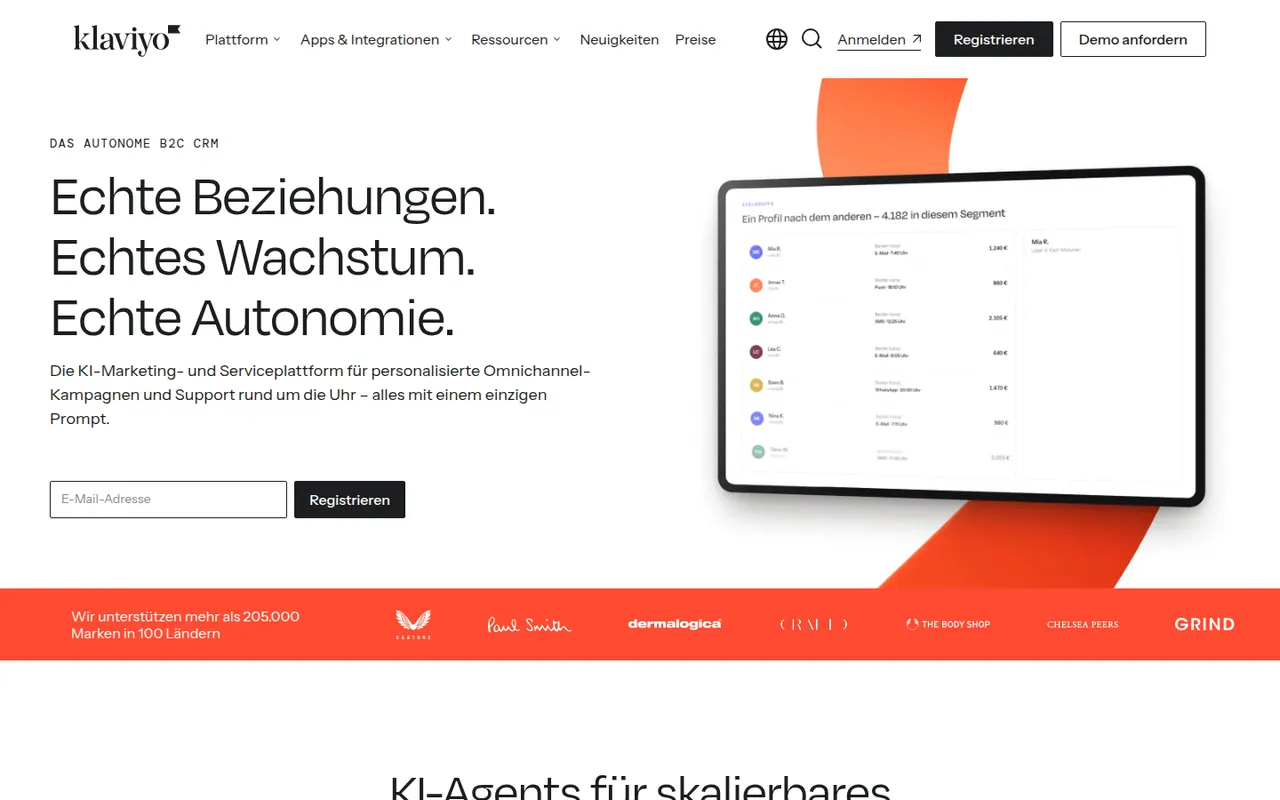
Klaviyo is a marketing automation platform for online stores that connects to Shopify, WooCommerce and other platforms to use order and browsing data in email and SMS campaigns. Merchants build flows such as abandoned cart or post-purchase sequences, segment customers by behavior and predicted value, and measure revenue per message. AI features help generate content and segments.
7 Klaviyo alternativesPros
- Uses order and browsing data from Shopify and other platforms
- Prebuilt flows for abandoned carts and post-purchase emails
- Revenue attribution per message and predictive segments
Cons
- Becomes expensive as the number of active profiles grows
- Overkill for businesses that don’t sell online
- Advanced segmentation and reporting take time to master
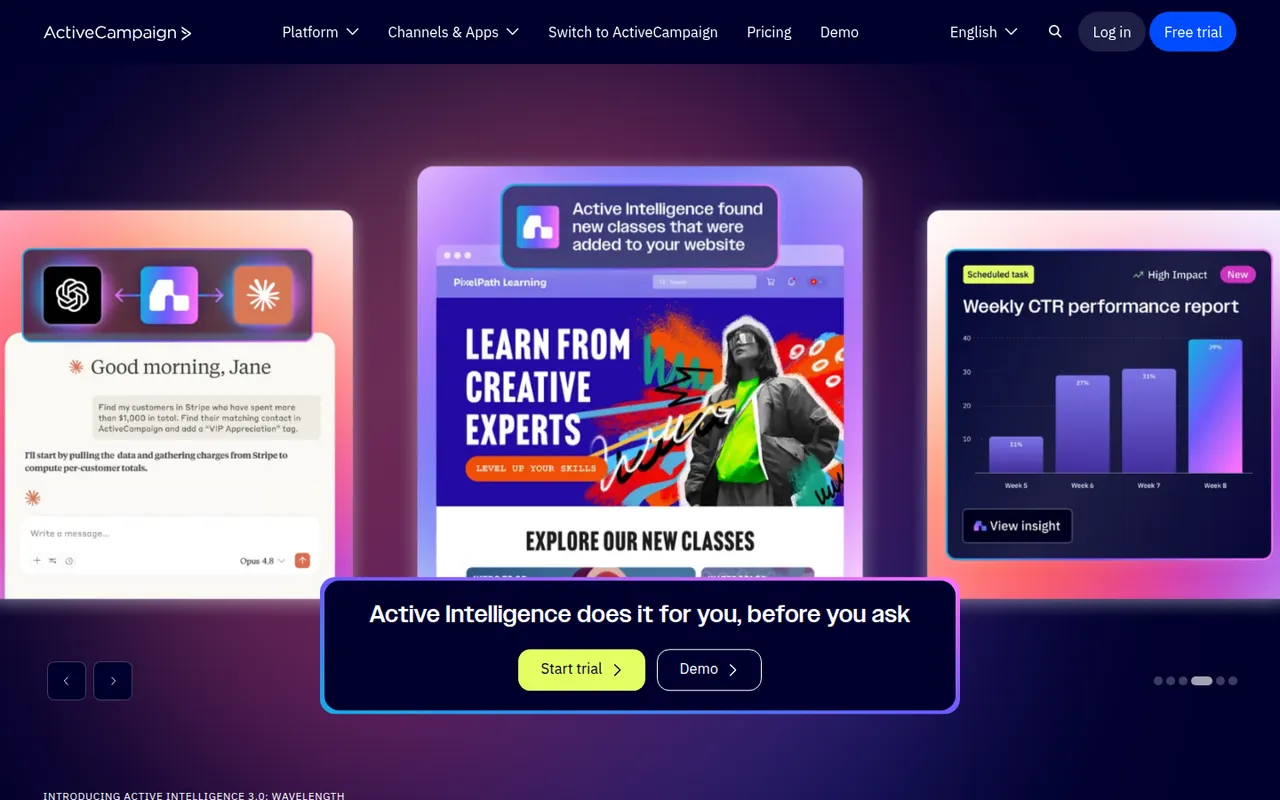
Cost / LicenseFreemiumProprietaryCategoriesActiveCampaign is a customer experience automation platform that combines email marketing, a visual automation builder, lead scoring and a sales CRM with deal pipelines. Automations can branch on behavior, site visits and custom data across email, SMS and connected apps. It is aimed at small and mid-sized businesses that need more advanced automation than basic newsletter tools provide.
8 ActiveCampaign alternativesPros
- Powerful visual automation builder with behavior-based branching
- Built-in CRM with deal pipelines and lead scoring
- Many integrations with e-commerce and business apps
Cons
- Complex automations come with a real learning curve
- Costs rise quickly as the contact list grows
- No free plan beyond the trial
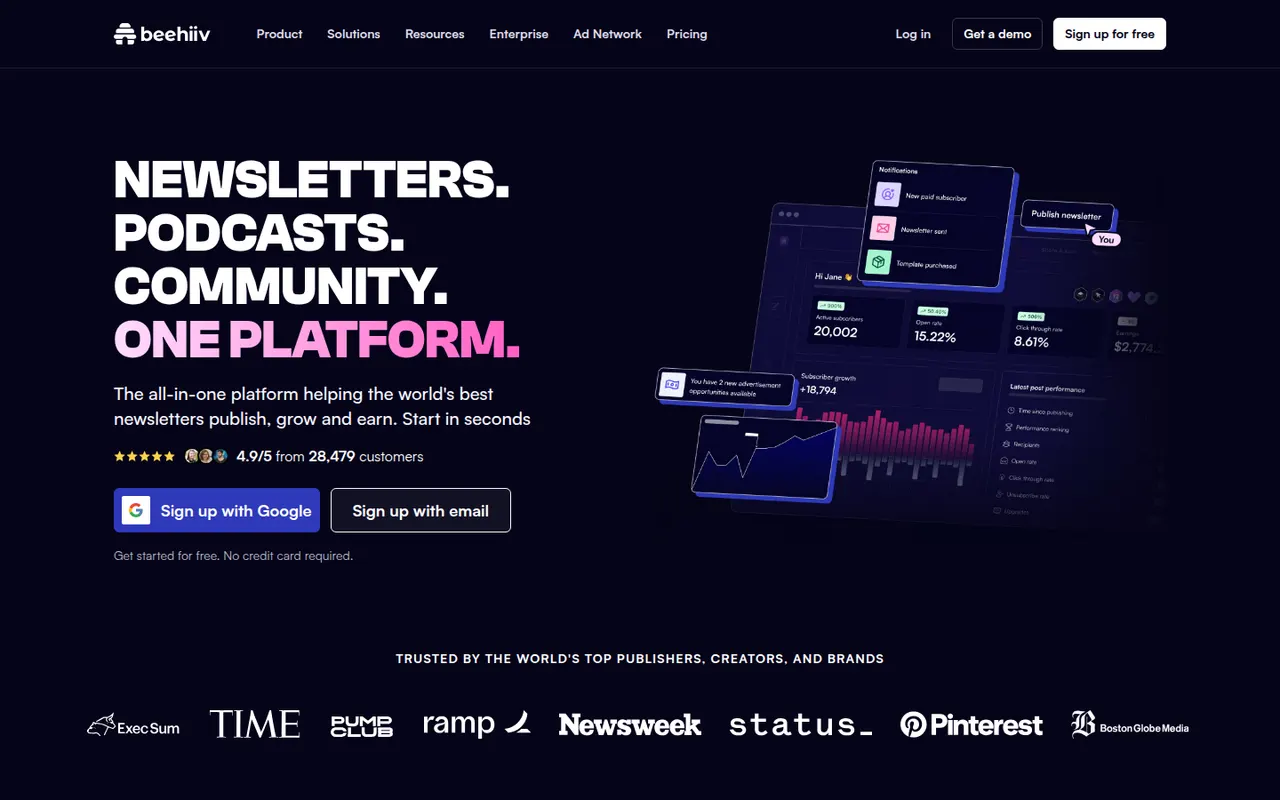
Cost / LicenseFree trialProprietaryCategoriesbeehiiv is a newsletter platform created by former Morning Brew team members, combining an editor, a hosted website and email delivery. It focuses on growth and monetization, with a referral program, recommendations between newsletters, an ad network and paid subscriptions. Publishers also get detailed analytics, A/B testing of subject lines and AI writing tools.
6 beehiiv alternativesPros
- Growth tools like referrals and cross-newsletter recommendations
- Monetization through an ad network and paid subscriptions
- Hosted website and detailed analytics included
Cons
- Most monetization and growth features sit on paid plans
- Less suited to advanced marketing automation or e-commerce
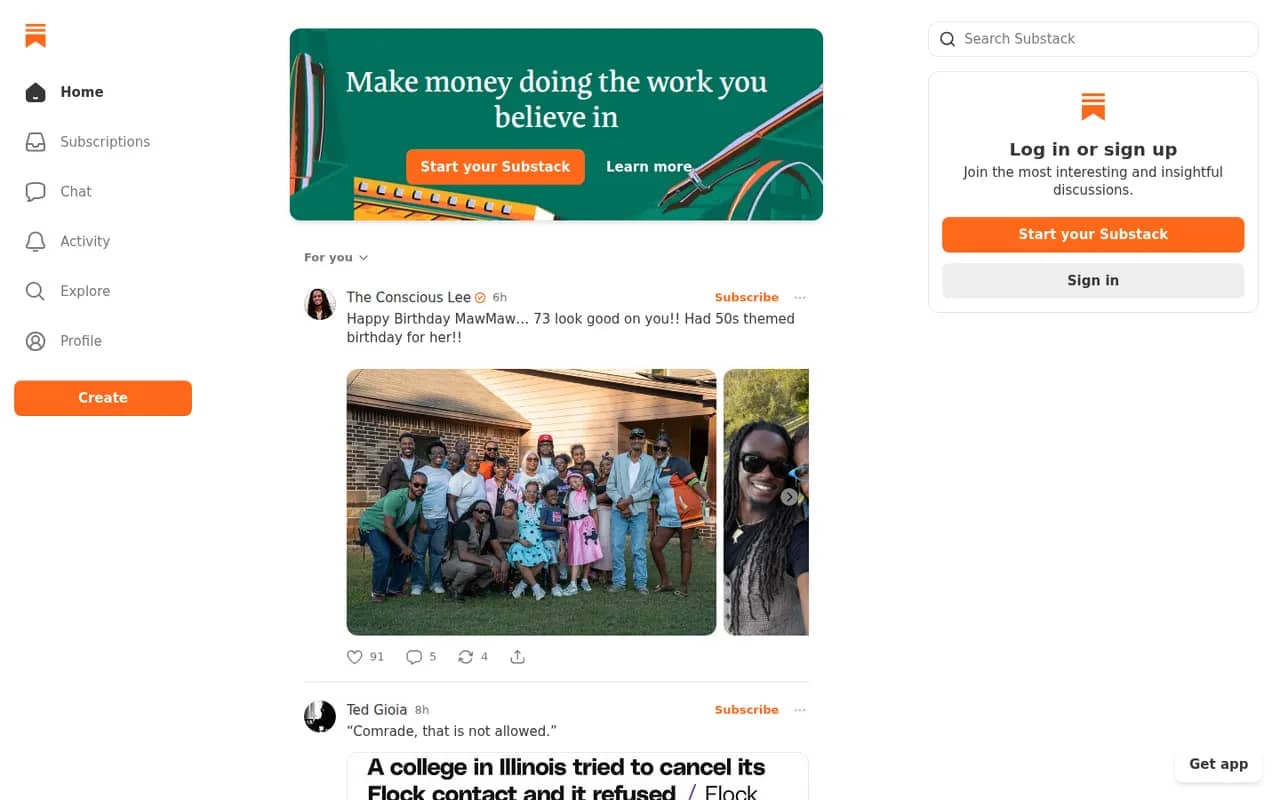
Cost / LicenseFreemiumProprietaryCategoriesPlatformsSubstack lets writers start a newsletter with a web archive, podcast and video hosting, and turn on paid subscriptions when they are ready. Publishing is free: Substack takes a share of subscription revenue instead of charging for a plan. Its reader app, Notes feed and cross-recommendations connect publications into a network that helps writers find readers.
7 Substack alternativesPros
- Free to publish, with no setup or hosting to manage
- Built-in paid subscriptions, podcasts and video
- Notes and cross-recommendations help writers find readers
Cons
- Takes a share of revenue from paid subscriptions
- Limited design and branding customization
- Your audience lives inside Substack’s network rather than your own brand
Cost / LicenseFreeProprietaryCategoriesConstant Contact is a long-established email marketing service aimed at small businesses and nonprofits. It offers a drag-and-drop editor with templates, automated series, list segmentation, SMS, event registration and social posting, backed by phone support. It favors ease of use over advanced automation, which suits teams without a dedicated marketer.
7 Constant Contact alternativesPros
- Easy drag-and-drop editor with many templates
- Phone support for small businesses and nonprofits
- Event registration, SMS and social posting in one tool
Cons
- Automation is basic compared with ActiveCampaign or Klaviyo
- Pricing climbs quickly with list size
- No free plan beyond the trial
Cost / LicenseFree trialProprietaryCategoriesButtondown is a small, independent newsletter service for writers and developers who prefer a lightweight tool. You write in Markdown or a rich text editor, publish an archive on the web and can charge for subscriptions through Stripe. It offers a complete API, custom domains and RSS-to-email, and is built by a very small team.
6 Buttondown alternativesPros
- Write in Markdown or a rich text editor
- Complete API and RSS-to-email for developers
- Paid subscriptions through Stripe and custom domains
Cons
- Templates and design options are minimal
- Few audience growth tools compared with beehiiv or Substack
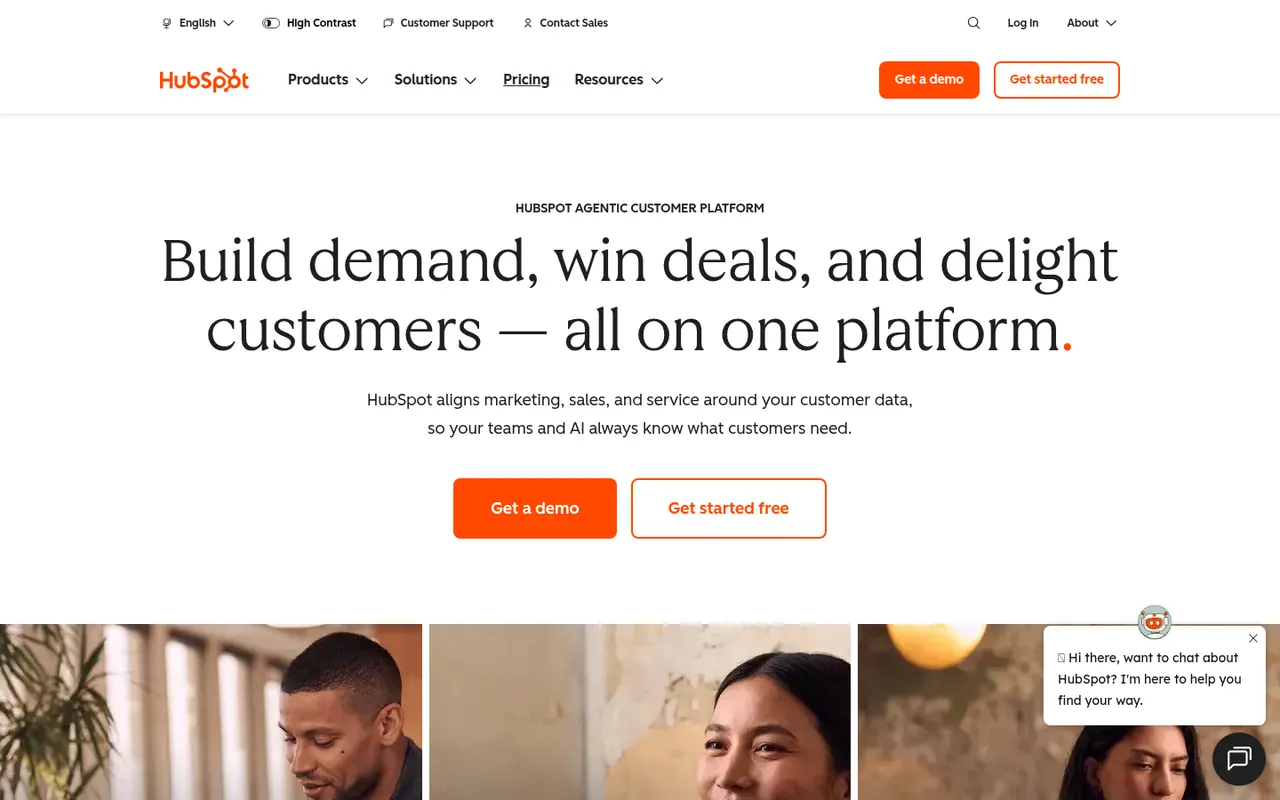
Cost / LicenseFreemiumProprietaryCategoriesPlatformsHubSpot is a customer platform built around a free CRM, with paid hubs for marketing automation, sales engagement, customer service, content management and operations. Contacts, deals, emails and support tickets share one record, and the Breeze AI tools help with writing, research and agents. It suits small and mid-sized companies that want marketing, sales and support in a single system.
12 HubSpot alternativesPros
- Free CRM that covers contacts, deals and basic email tracking
- Marketing, sales and service share one customer record
- Large integration marketplace and extensive free training via HubSpot Academy
Cons
- Costs rise steeply once you need Professional-tier features
- Marketing pricing grows with the number of marketing contacts
- Upper tiers can involve onboarding fees and annual contracts
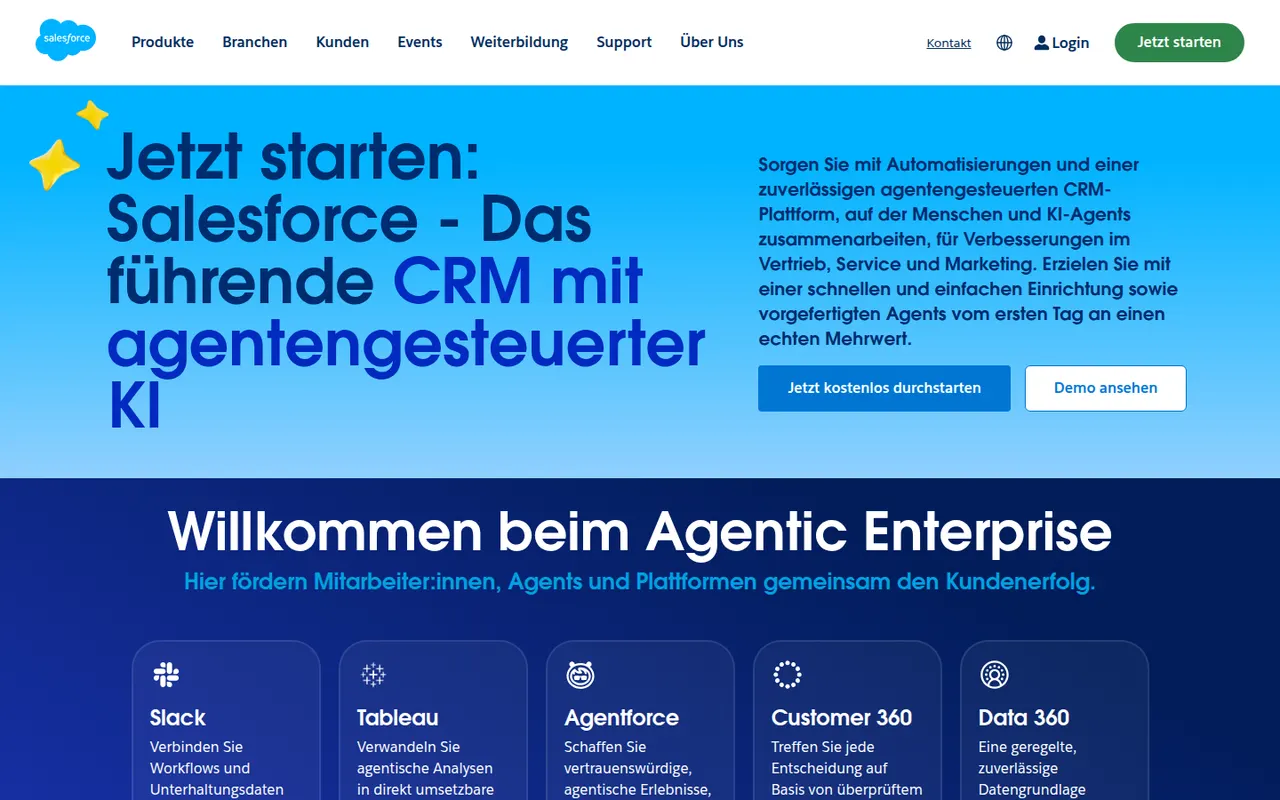
Cost / LicenseFreemiumProprietarySalesforce is a cloud CRM platform used mainly by mid-sized and large organizations, with Sales Cloud for pipelines and forecasting, Service Cloud for support and many other clouds and add-ons. It is highly customizable through objects, workflows and code, and the AppExchange marketplace adds a wide range of integrations. Agentforce brings AI agents that can act on CRM data.
9 Salesforce alternativesPros
- Customizable down to objects, workflows and code for any sales process
- AppExchange offers integrations for almost every business tool
- Scales from mid-sized teams to the largest global organizations
Cons
- Steep learning curve that often calls for dedicated admins or consultants
- High per-user cost, with many capabilities sold as add-ons
- Overkill for small teams with simple sales processes
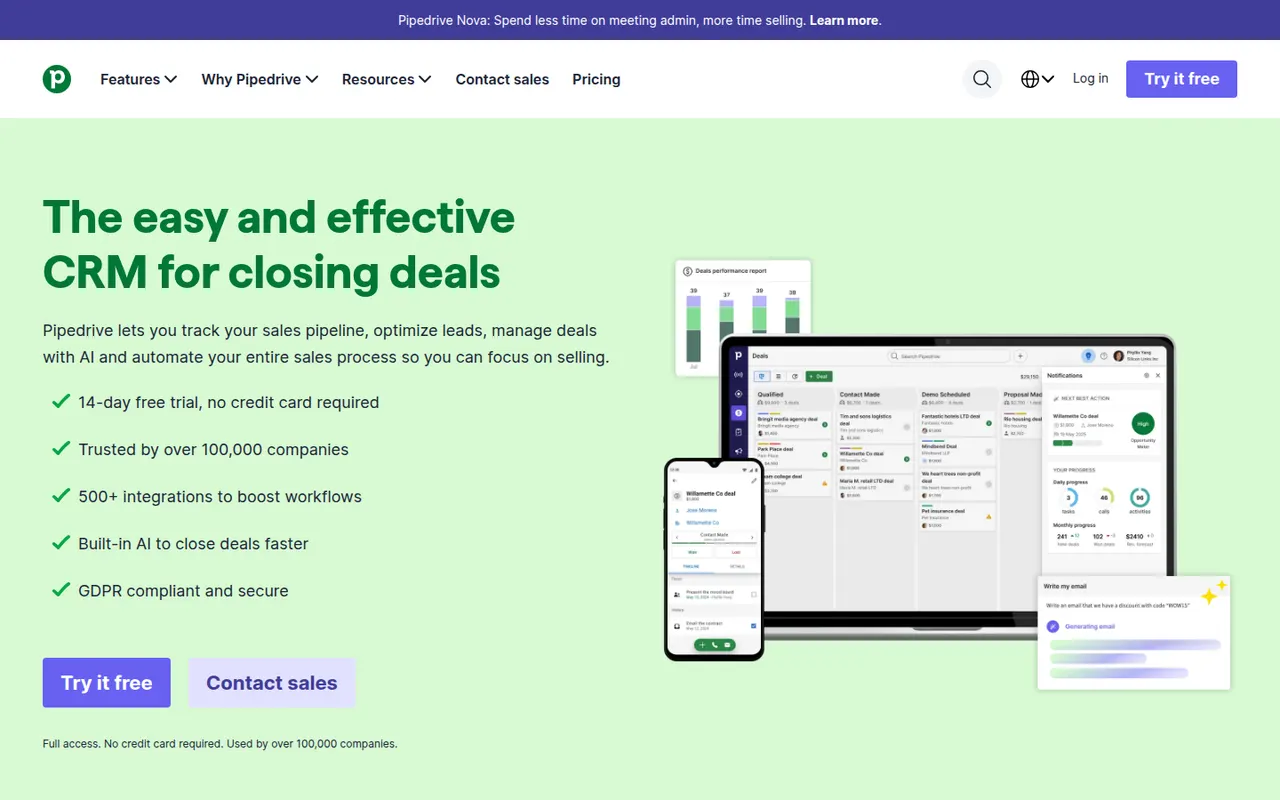
Cost / LicenseFree trialProprietaryCategoriesPipedrive is a sales CRM designed around a visual pipeline where deals move through stages, keeping salespeople focused on the next action for each opportunity. It includes email sync and tracking, activity scheduling, workflow automation, forecasting and an AI sales assistant, with add-ons for lead generation and documents. It targets small and mid-sized sales teams that want a CRM they can adopt quickly.
11 Pipedrive alternativesPros
- Visual pipeline makes it easy to see where every deal stands
- Quick to set up, so small sales teams adopt it fast
- Activity reminders keep salespeople focused on the next action
Cons
- Lead generation and document tools are sold as add-ons
- Little built-in marketing or support compared with all-in-one suites
- Reporting can feel limited for complex, multi-team sales processes
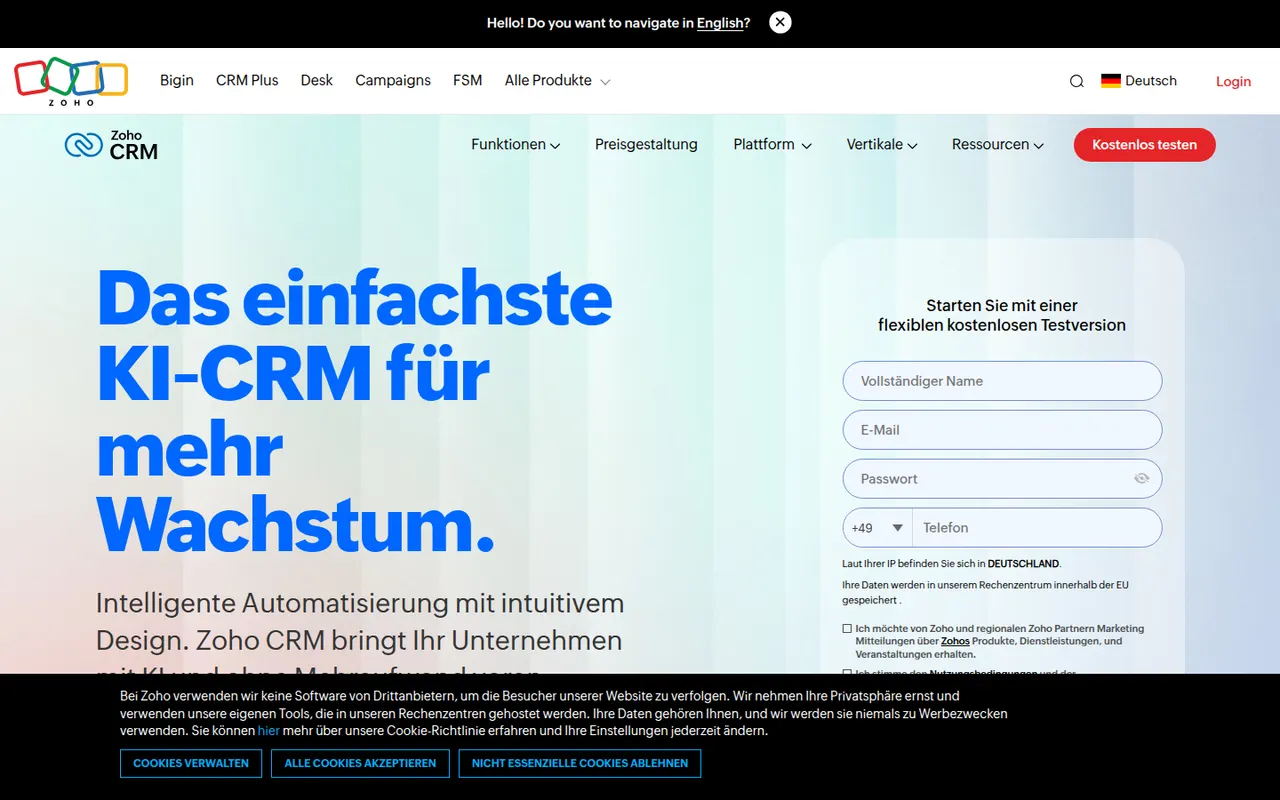
Cost / LicenseFree trialProprietaryCategoriesZoho CRM is a cloud CRM for managing leads, contacts, deals and sales processes, with workflow automation, territory management, forecasting and the Zia AI assistant. It is highly customizable without code and connects natively to the many other Zoho apps for email, support, finance and analytics. A free edition covers very small teams, and paid editions scale to larger organizations.
9 Zoho CRM alternativesPros
- Deep no-code customization of modules, fields and workflows
- Connects natively to the wider Zoho suite for email, support and finance
- Free edition for very small teams, with paid editions that scale up
Cons
- Interface and settings can feel overwhelming at first
- Third-party integrations are less polished than Zoho’s own apps
- Getting the most out of it often means adopting more Zoho apps
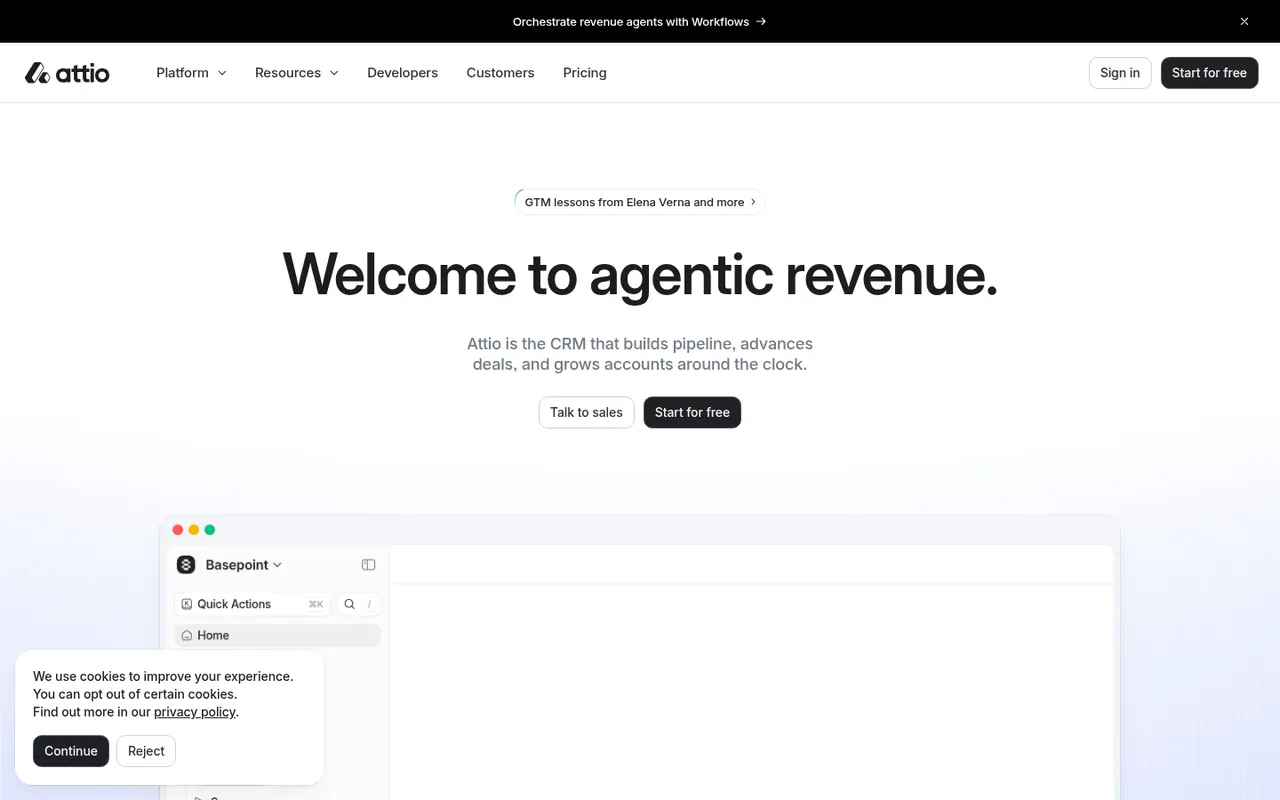
Cost / LicenseFreemiumProprietaryCategoriesAttio is a modern CRM that builds itself from your email and calendar, then lets you model any kind of relationship data with custom objects, attributes and views. It offers real-time collaboration, workflow automation, reporting and an API, and is aimed at startups, investors and teams that find traditional CRMs rigid.
11 Attio alternativesPros
- Builds itself automatically from your email and calendar
- Custom objects and views adapt to almost any data model
- Modern, fast interface with real-time collaboration
Cons
- Its flexibility means more setup than an opinionated CRM
- Advanced features and higher limits require paid plans
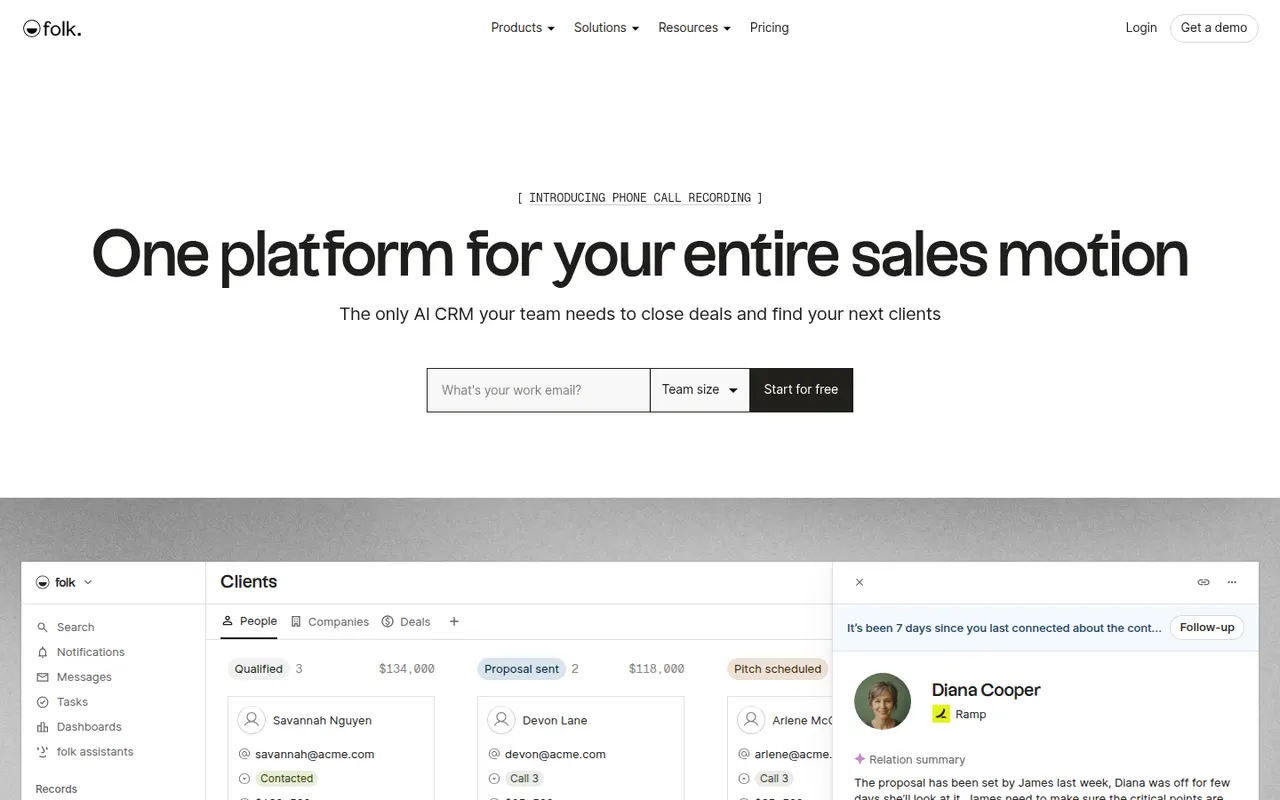
Cost / LicenseFreemiumProprietaryCategoriesPlatformsfolk is a relationship-focused CRM from a Paris-based startup, aimed at founders, agencies, recruiters and small sales teams. A browser extension imports contacts from LinkedIn and other sites, while pipelines, email sequences and AI-assisted enrichment and writing help with follow-up. Its spreadsheet-like interface keeps it simpler than traditional sales CRMs.
8 folk alternativesPros
- Spreadsheet-like interface that feels simpler than traditional sales CRMs
- Browser extension imports contacts from LinkedIn in a click
- Built-in email sequences and AI enrichment for follow-ups
Cons
- Reporting and forecasting stay basic for structured sales teams
- Smaller integration ecosystem than long-established CRMs
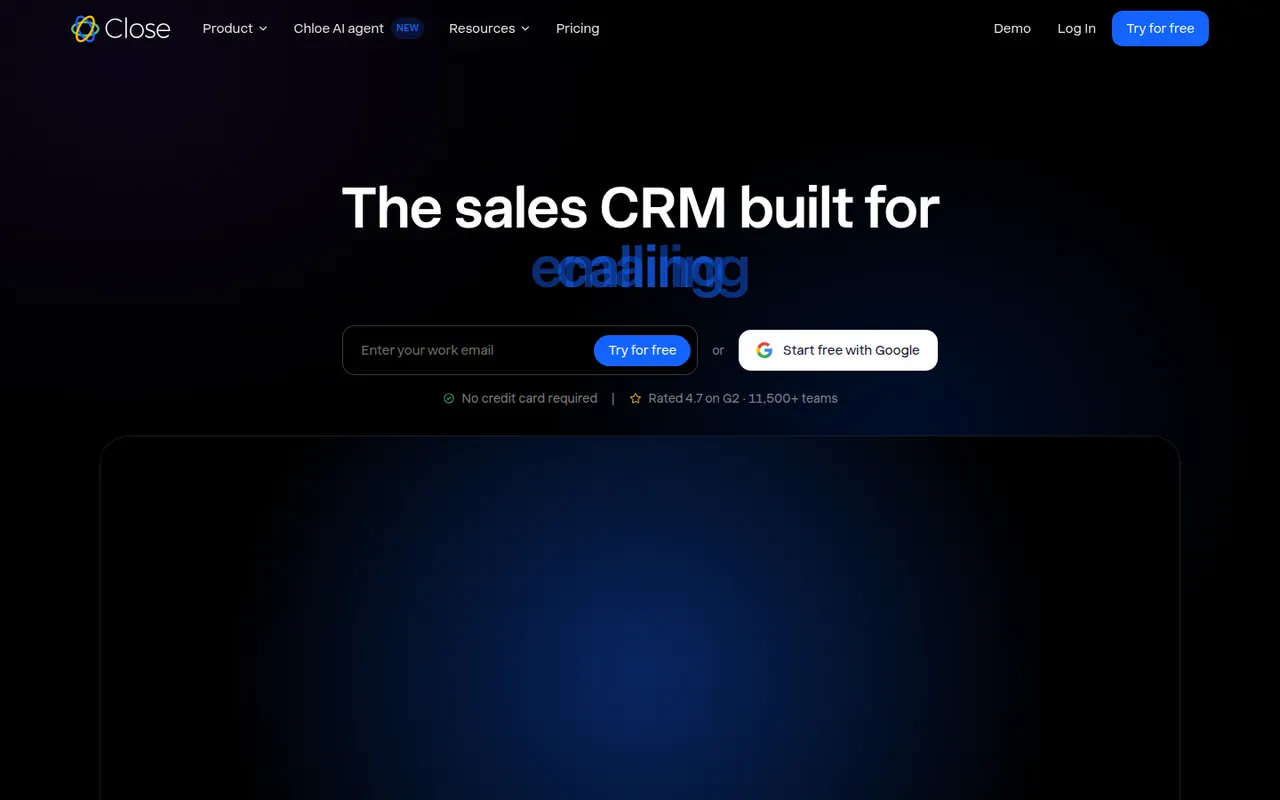
Cost / LicenseFree trialProprietaryCategoriesPlatformsClose is a CRM built for inside sales teams that spend their day on the phone and in email. Calling, power dialing, SMS, email sequences and meeting notes live inside the CRM, so reps rarely need separate tools, and every interaction is logged automatically. It targets startups and small businesses with high-volume outbound or inbound sales processes.
8 Close alternativesPros
- Calling, power dialing, SMS and email built into the CRM
- Every call and email is logged automatically
- Email sequences keep outbound follow-ups on track
Cons
- No free plan, only a trial
- Less suited to complex enterprise sales or marketing automation
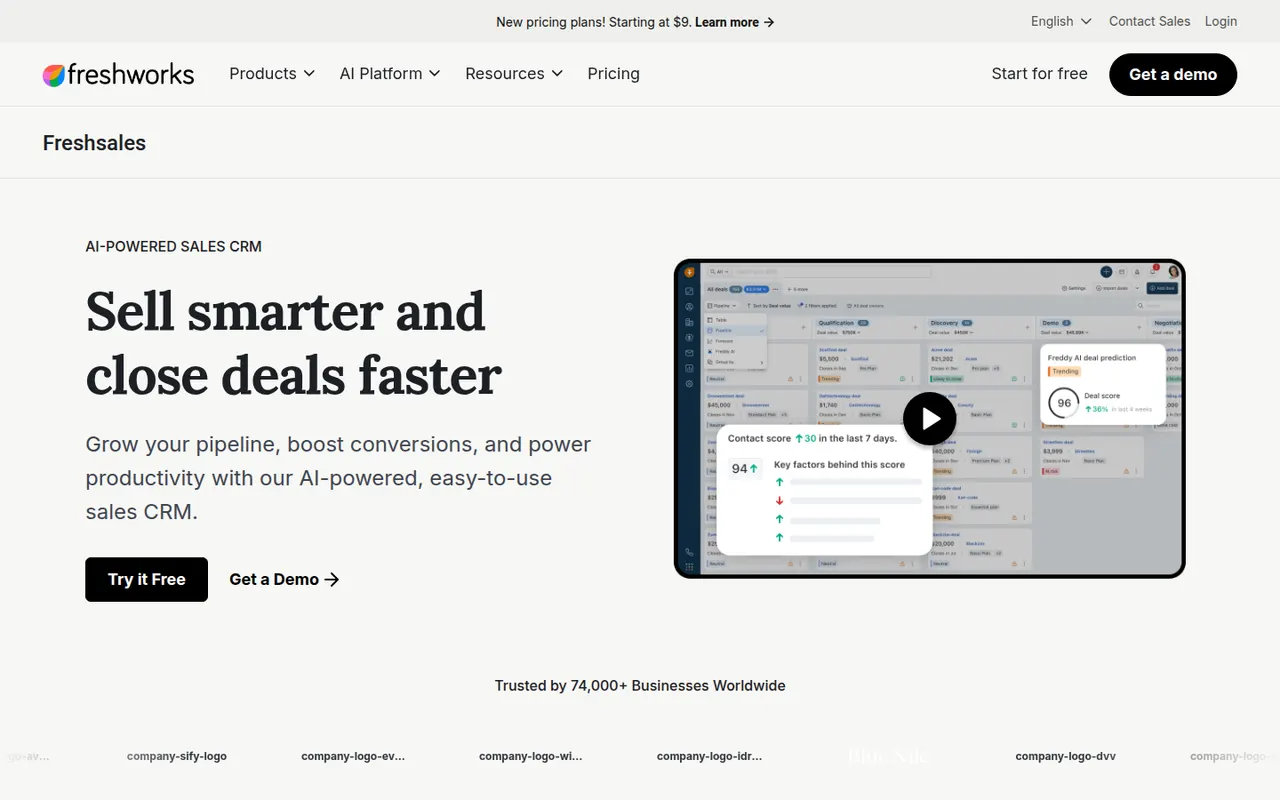
Cost / LicenseFree trialProprietaryCategoriesFreshsales is the sales CRM from Freshworks, offering contact and account management, visual deal pipelines, built-in email and phone, and workflow automation. Its Freddy AI assistant scores leads, surfaces deal insights and suggests next steps. It integrates closely with Freshdesk and other Freshworks products, which suits companies that want sales and support from the same vendor.
8 Freshsales alternativesPros
- Built-in phone and email keep sales conversations in one place
- Freddy AI scores leads and suggests next steps on deals
- Pairs naturally with Freshdesk for teams wanting sales and support together
Cons
- Key AI and automation features are reserved for higher tiers
- Smaller integration marketplace than HubSpot or Salesforce
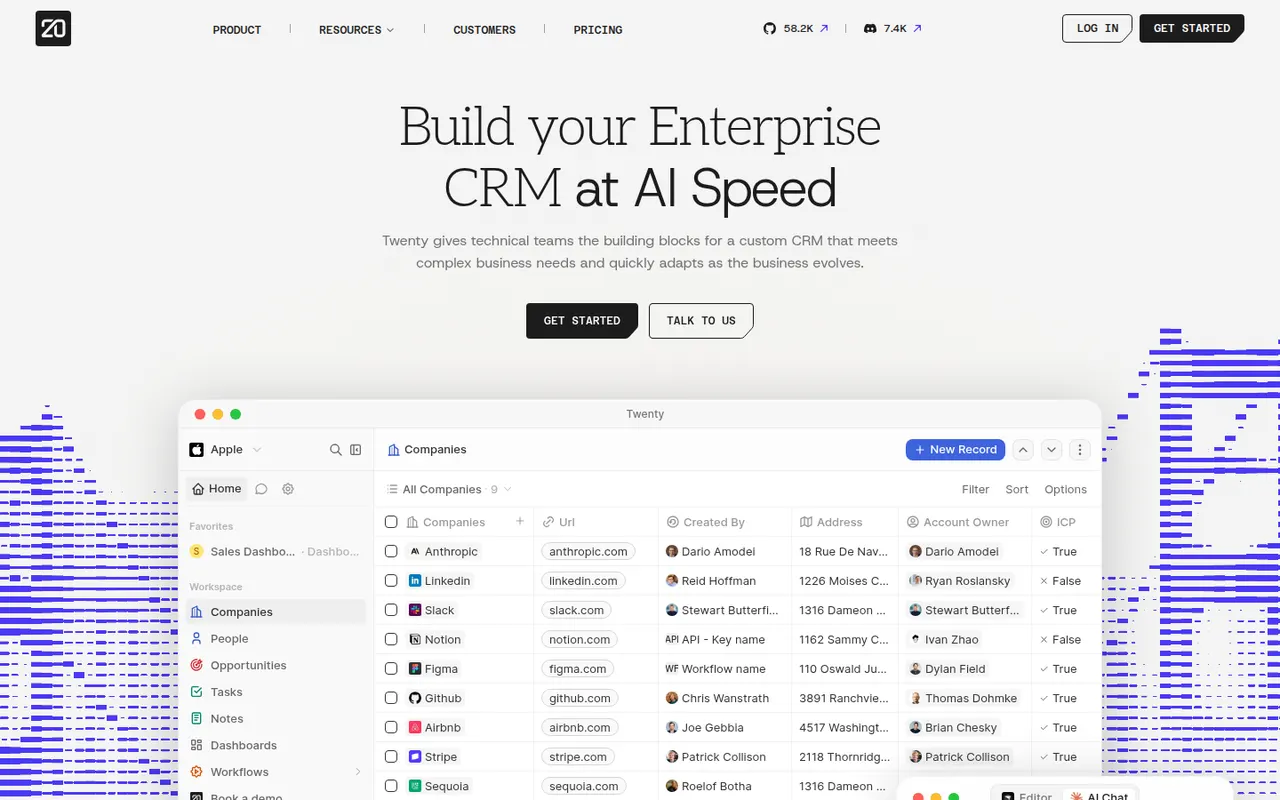
Cost / LicenseFree trialProprietaryCategoriesTwenty is an open source CRM positioned as a community-driven alternative to Salesforce, with a modern interface inspired by tools like Notion and Airtable. You can define custom objects and fields, work in table and kanban views, automate tasks with workflows and connect other tools through GraphQL and REST APIs. It can be self-hosted or used through the company's cloud offering.
7 Twenty alternativesPros
- Modern, Notion-like interface with table and kanban views
- Custom objects and fields adapt the data model to your business
- Open source with GraphQL and REST APIs, self-hosted or in the cloud
Cons
- Young product with fewer integrations than established CRMs
- Some advanced sales features of mature CRMs are still missing
- Self-hosting means handling deployment and updates yourself
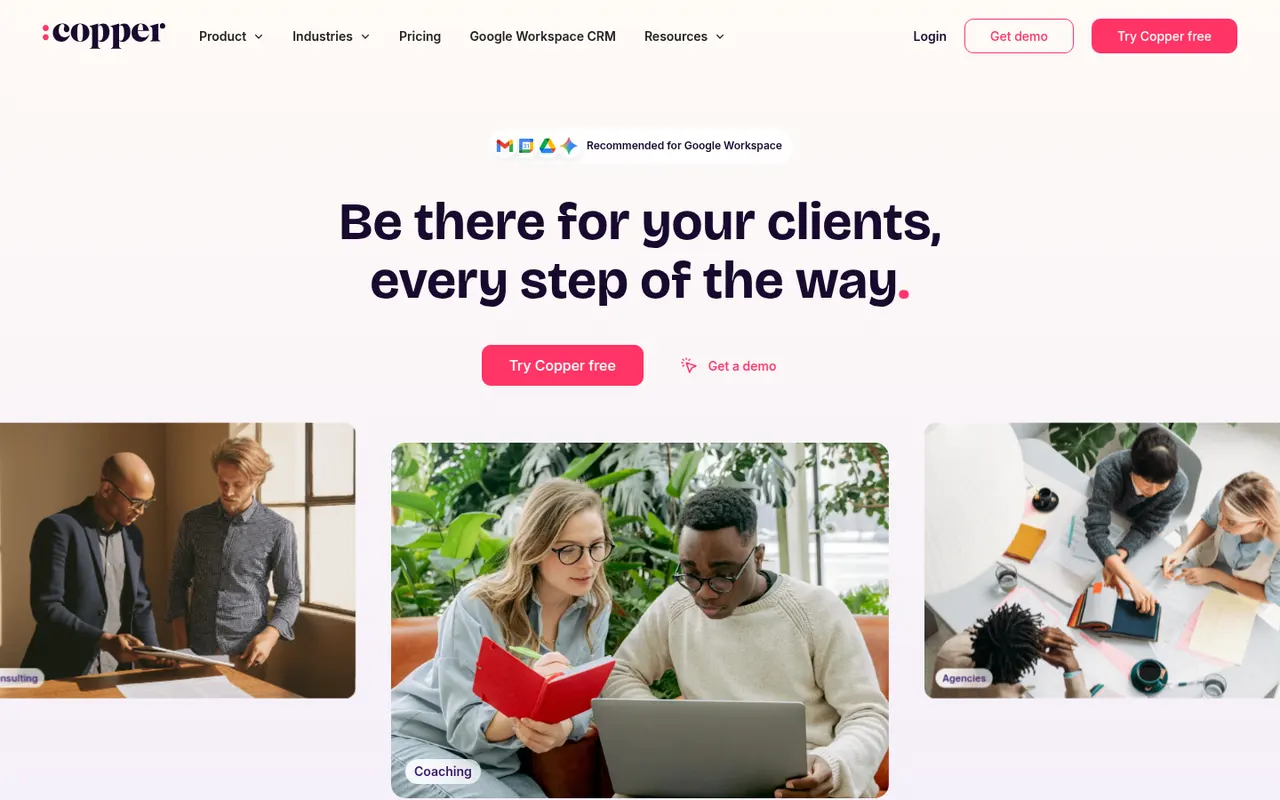
Cost / LicenseFreemiumOpen sourceCategoriesPlatformsCopper is a CRM built for teams that live in Google Workspace. A Chrome extension shows contacts, deals and tasks directly in Gmail, and it syncs with Google Calendar, Drive and Sheets to log activity without manual data entry. It offers pipelines, workflow automation and reporting, and suits small businesses and agencies managing relationships rather than high-volume sales.
8 Copper alternativesPros
- Works inside Gmail through a Chrome extension, so contacts sit next to email
- Syncs with Google Calendar, Drive and Sheets to log activity automatically
- Clean interface that small teams can adopt with little training
Cons
- Much less useful for teams that don’t run on Google Workspace
- Reporting and customization are shallower than in larger CRMs
- No free plan, and advanced automation sits on higher tiers
Cost / LicenseFree trialProprietaryCategoriesPlatformsAxonaut is a French business management software for small companies and freelancers that combines a CRM, quotes and invoicing, expense tracking, cash flow and bank synchronization in one tool. It also offers project tracking and simple HR features, so a small team can replace several separate apps. It is designed around the practices and obligations of French businesses.
9 Axonaut alternativesPros
- CRM, quotes, invoicing and cash flow in one tool
- Designed around French business practices and obligations
- Bank sync makes expense and payment tracking easier
Cons
- Geared to the French market, less suited to companies elsewhere
- Each module is less deep than a dedicated specialist tool
- No free plan beyond the trial period
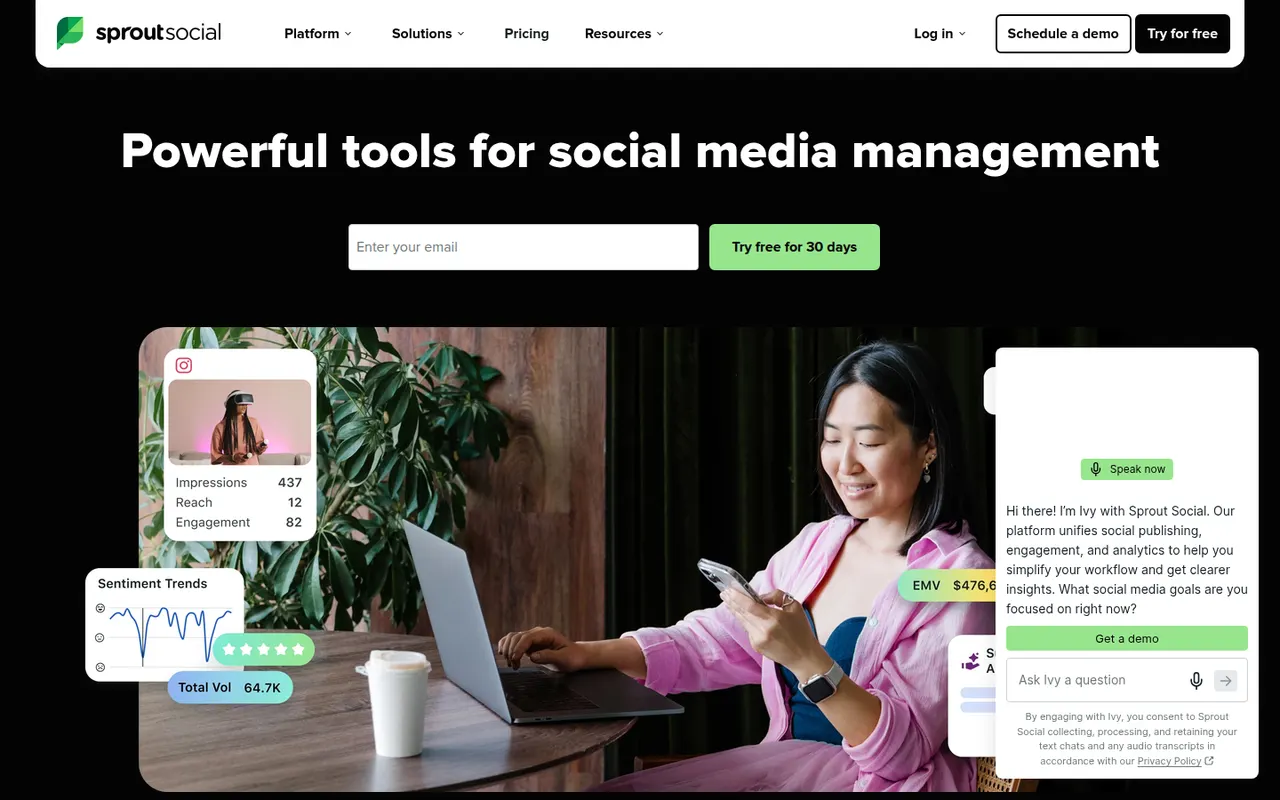
Cost / LicenseFree trialProprietaryCategoriesPlatformsSprout Social is a social media management platform for brands and agencies, combining scheduling and a shared content calendar, a unified inbox for messages and comments, analytics reports and social listening. It includes approval workflows, team permissions and conversation histories per contact. It is aimed at mid-sized and larger teams that need detailed reporting across many profiles.
9 Sprout Social alternativesPros
- Unified inbox gathers messages and comments from every profile
- Detailed analytics reports suited to client and management reviews
- Approval workflows and permissions built for larger social teams
Cons
- Per-seat pricing gets expensive as the team grows
- No free plan beyond the trial period
- Feature depth can feel heavy for solo creators
Cost / LicenseFree trialProprietaryCategoriesAgorapulse is a social media management tool founded in France that brings publishing, a unified inbox, social listening and reporting into one interface. Its inbox lets teams process comments, mentions and messages like email, with assignment and saved replies, and its reports can tie social activity to website traffic and conversions. Agencies use it for client approvals and shared calendars.
10 Agorapulse alternativesPros
- Unified inbox handles comments and messages like email
- Reports can tie social activity to website traffic and conversions
- Client approvals and shared calendars suit agencies
Cons
- Per-user pricing gets costly as teams grow
- The free plan is very limited
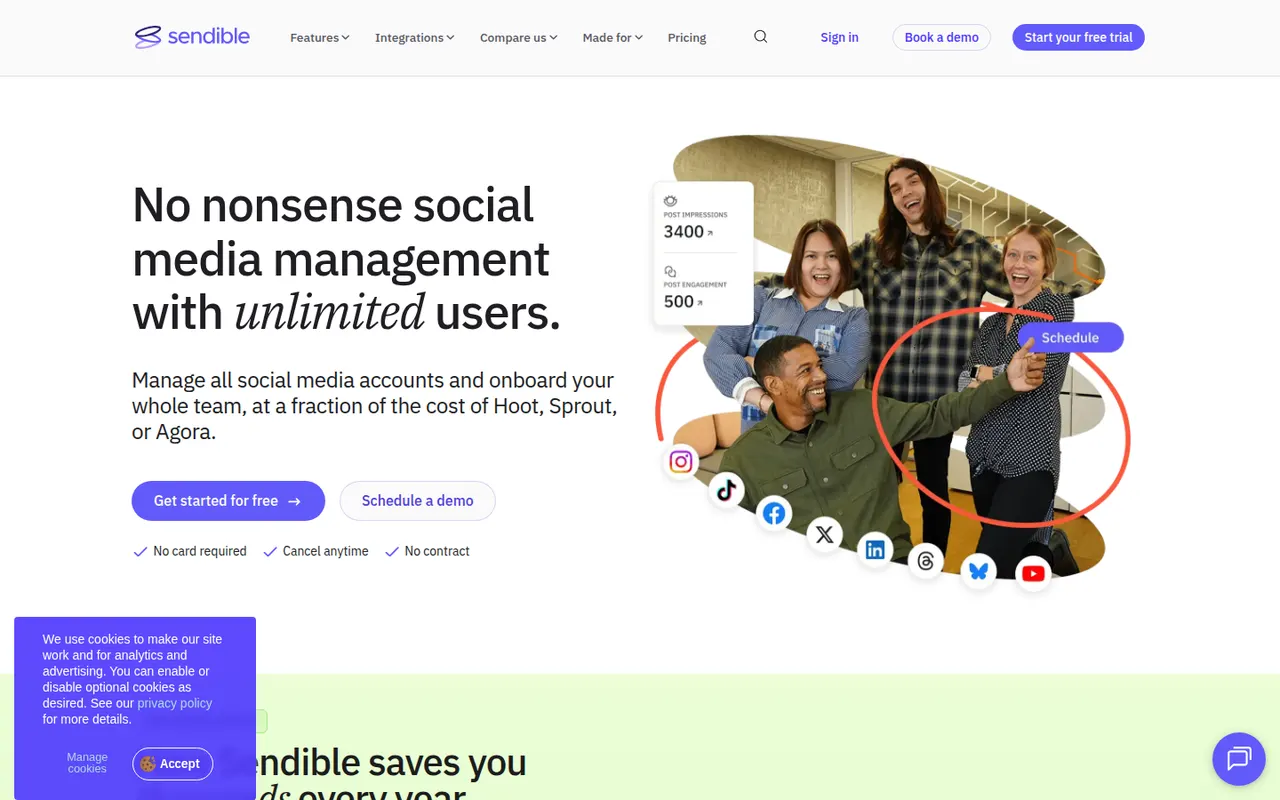
Cost / LicenseFreemiumProprietaryCategoriesSendible is a social media management platform designed for agencies that handle many client brands. It offers scheduling across the major networks, a content calendar, a unified inbox, client approval workflows and reports that can be white-labeled with the agency's own domain and logo. Integrations with Canva and stock image libraries let teams create posts inside the tool.
8 Sendible alternativesPros
- White-label reports and dashboards with the agency's own branding
- Client approval workflows built for agencies
- Canva and stock image integrations for creating posts
Cons
- No free plan, only a trial
- The interface feels less modern than newer tools
- Costs rise with the number of client brands
Cost / LicenseFree trialProprietaryCategoriesPubler is a social media scheduling tool that publishes to networks such as Facebook, Instagram, X, LinkedIn, TikTok, Pinterest and YouTube. It offers a calendar view, recurring and bulk scheduling, an AI assistant for captions and images, a link-in-bio page and analytics. Its free plan covers a few accounts, which suits freelancers and small businesses.
9 Publer alternativesPros
- Recurring and bulk scheduling save time
- Link-in-bio page and AI assistant included
- The free plan covers a few accounts
Cons
- Analytics are less detailed than in agency-focused tools
- Advanced features are reserved for paid plans
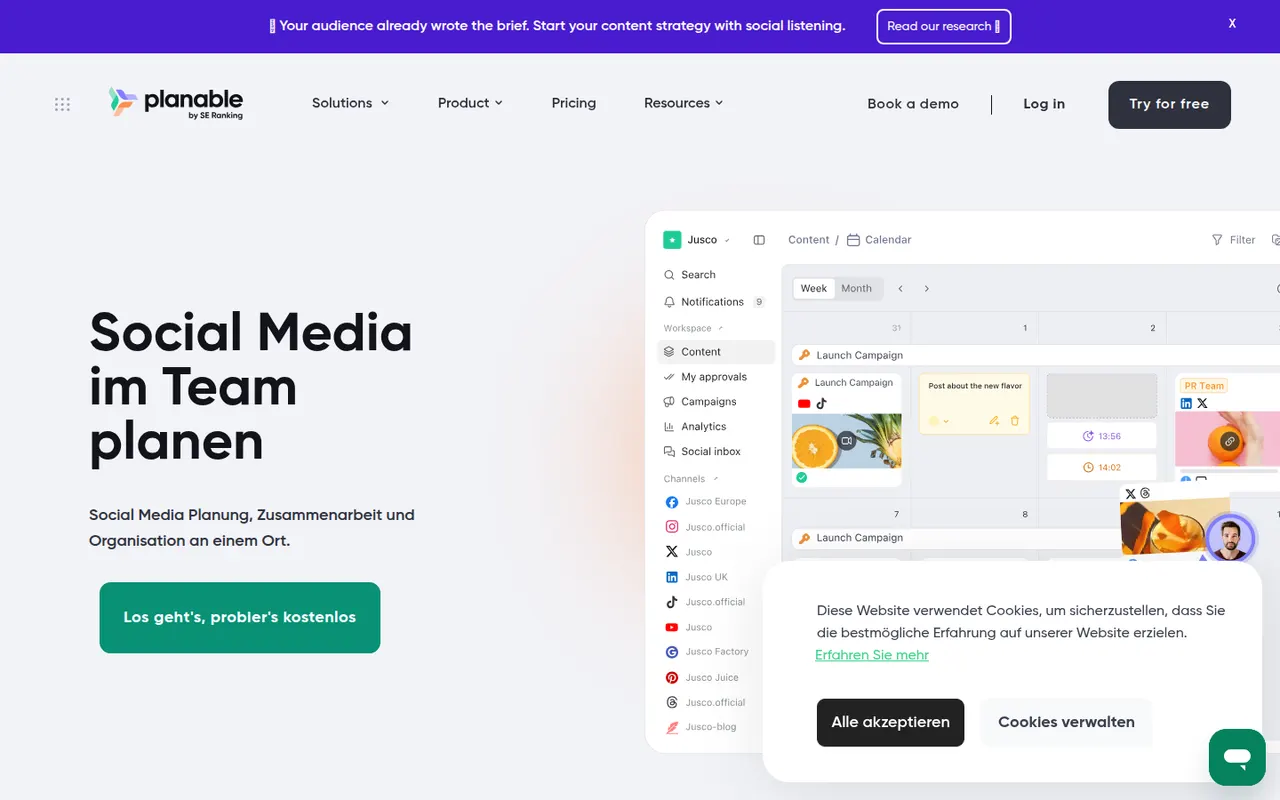
Cost / LicenseFreemiumProprietaryCategoriesPlatformsPlanable is a collaboration tool where marketing teams and agencies draft social media posts, preview them as they will appear on each network and gather feedback and approvals from colleagues or clients. Posts can be commented on in context, moved through multi-level approval and then scheduled. It also handles other content such as blog posts and emails, and suits teams whose review cycles slow down publishing.
8 Planable alternativesPros
- Realistic previews show posts as they will appear on each network
- In-context comments and multi-level approvals
- Also handles blog posts and emails
Cons
- Lighter on analytics and engagement than full social suites
- The free plan caps the number of posts
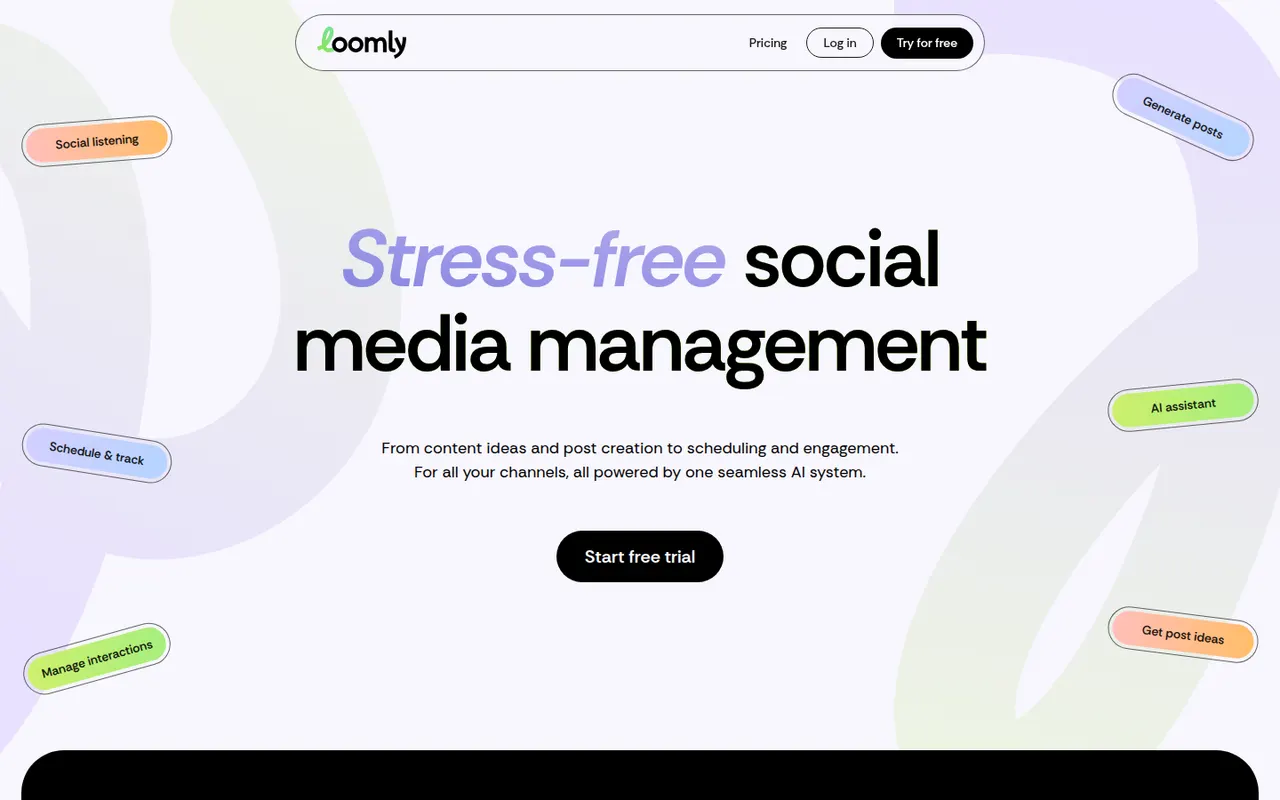
Cost / LicenseFreemiumProprietaryCategoriesPlatformsLoomly is a social media management tool organized around a content calendar where teams plan posts, collaborate on drafts and run approval workflows before publishing. It suggests post ideas based on trends and key dates, previews content for each network, and includes an inbox for comments and messages plus analytics. It is aimed at marketing teams and agencies that coordinate several brands.
9 Loomly alternativesPros
- Content calendar with built-in approval workflows
- Post ideas based on trends and key dates
- Previews show how posts will look on each network
Cons
- No free plan beyond the trial
- Analytics are less detailed than dedicated reporting tools
- Costs rise as you add brands and users
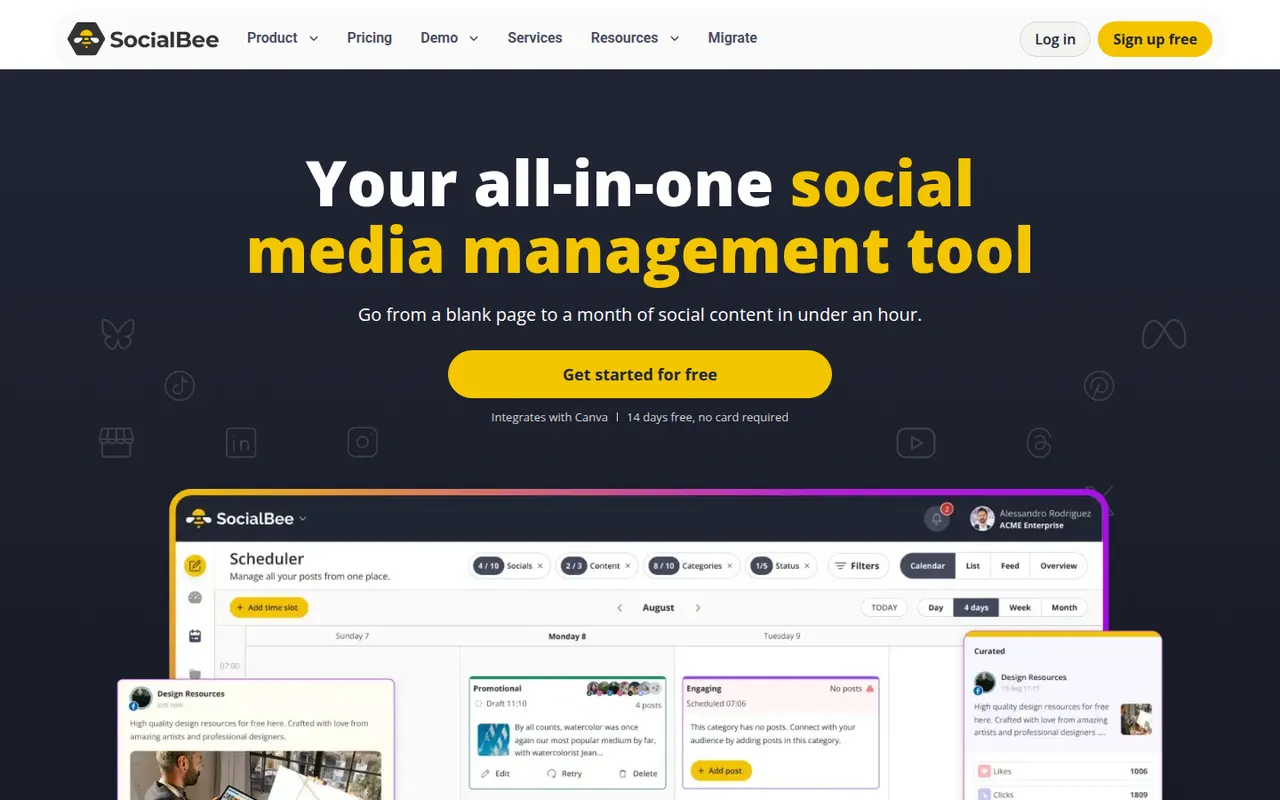
Cost / LicenseFree trialProprietaryCategoriesSocialBee is a social media scheduler that sorts posts into content categories, such as tips, promotions or blog links, each with its own posting schedule, and can recycle evergreen posts automatically. It supports the main networks, offers an AI copilot for generating posts and strategy, and includes an engagement inbox and analytics. Optional done-for-you services can also handle content creation.
11 SocialBee alternativesPros
- Content categories each get their own posting schedule
- Automatic recycling of evergreen posts
- AI copilot for generating posts and strategy
Cons
- No free plan beyond the trial
- Setting up categories takes time before it pays off
- Analytics are basic compared with dedicated reporting tools
Cost / LicenseFree trialProprietaryCategoriesPlatformsTypefully is a writing-first tool for creators and teams who publish on X, LinkedIn, Threads, Bluesky and Mastodon. Its distraction-free editor makes it easy to draft threads and long posts, preview them, then schedule or queue them, while AI features suggest improvements and rewrites. Analytics, team workspaces and shareable drafts for feedback round out the product.
7 Typefully alternativesPros
- Clean, distraction-free editor built for threads and long posts
- Publishes to X, LinkedIn, Threads, Bluesky and Mastodon from one place
- Shareable drafts make it easy to collect feedback before posting
Cons
- Built for text posts rather than image- or video-first networks
- No social inbox or listening tools like full social media suites
- Advanced scheduling and analytics require a paid plan
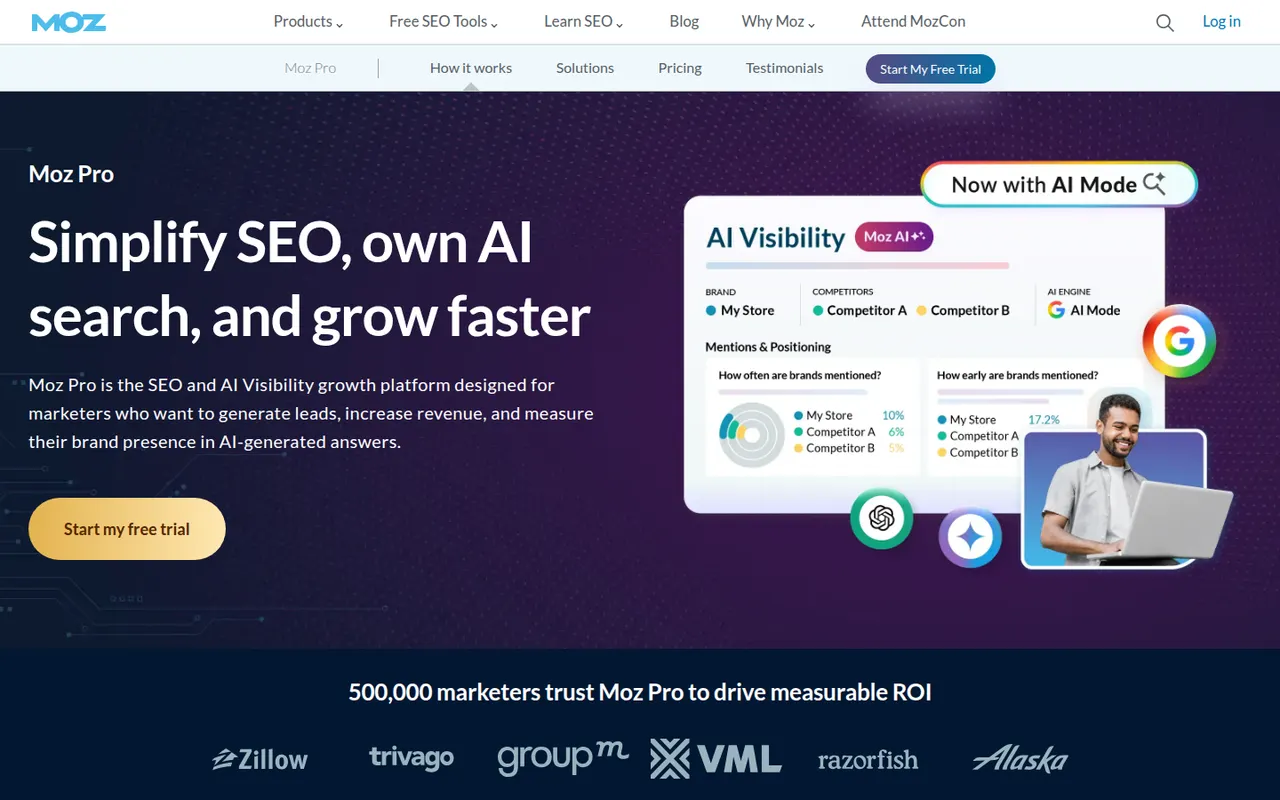
Cost / LicenseFreemiumProprietaryCategoriesPlatformsMoz Pro is the SEO software suite from Moz, the company behind the Domain Authority metric. It provides keyword research, rank tracking, site crawls with issue reports, backlink analysis through Link Explorer and competitor comparisons. The free MozBar browser extension shows link metrics on any page, and the suite suits marketers who want established SEO metrics and learning resources.
10 Moz Pro alternativesPros
- Domain Authority is a widely recognized SEO metric
- The free MozBar extension shows link metrics on any page
- Extensive learning resources for SEO beginners
Cons
- Link and keyword data are less extensive than in Ahrefs or Semrush
- Tracking and crawl limits are tight on entry plans
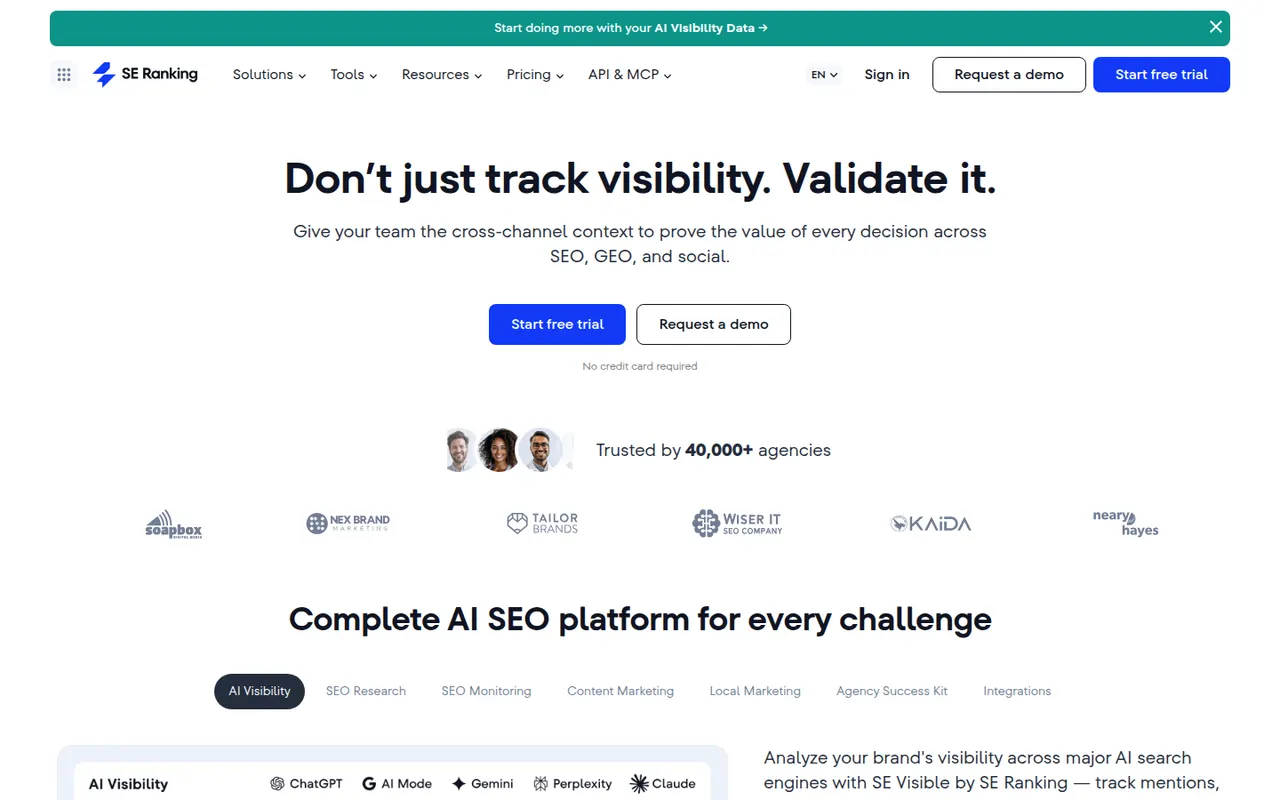
Cost / LicenseFree trialProprietaryCategoriesPlatformsSE Ranking is an SEO platform covering rank tracking, keyword research, competitor analysis, backlink monitoring, website audits and on-page content tools. It also tracks brand visibility in AI search results and offers white-label reports and client portals for agencies. Agencies and in-house marketers use it to bring these tools together under one subscription.
10 SE Ranking alternativesPros
- Broad toolset for rank tracking, audits, keywords and backlinks
- White-label reports and client portals for agencies
- Tracks brand visibility in AI search results
Cons
- Keyword and backlink data are less extensive than market leaders
- No free plan beyond the trial
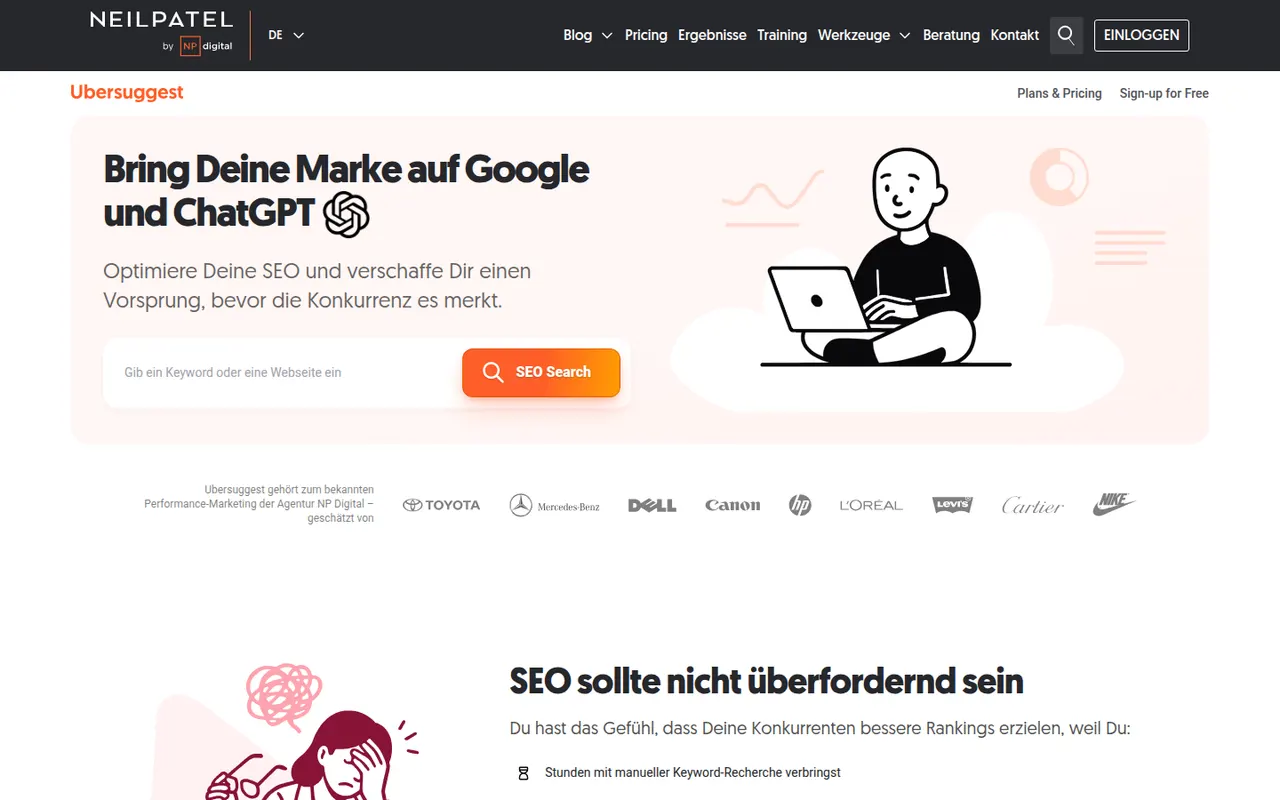
Cost / LicenseFree trialProprietaryCategoriesPlatformsUbersuggest is an SEO tool from Neil Patel's agency that offers keyword ideas with search volume and difficulty, content ideas, site audits, rank tracking and basic backlink data. Its interface is aimed at small business owners and bloggers rather than SEO specialists, and a Chrome extension shows keyword data on search results. A limited number of free searches is available before upgrading.
8 Ubersuggest alternativesPros
- Simple interface aimed at small businesses and bloggers
- Keyword ideas with volume, difficulty and content suggestions
- Chrome extension shows keyword data on search results
Cons
- Free searches are capped at a few per day
- Data is less precise than in professional SEO suites
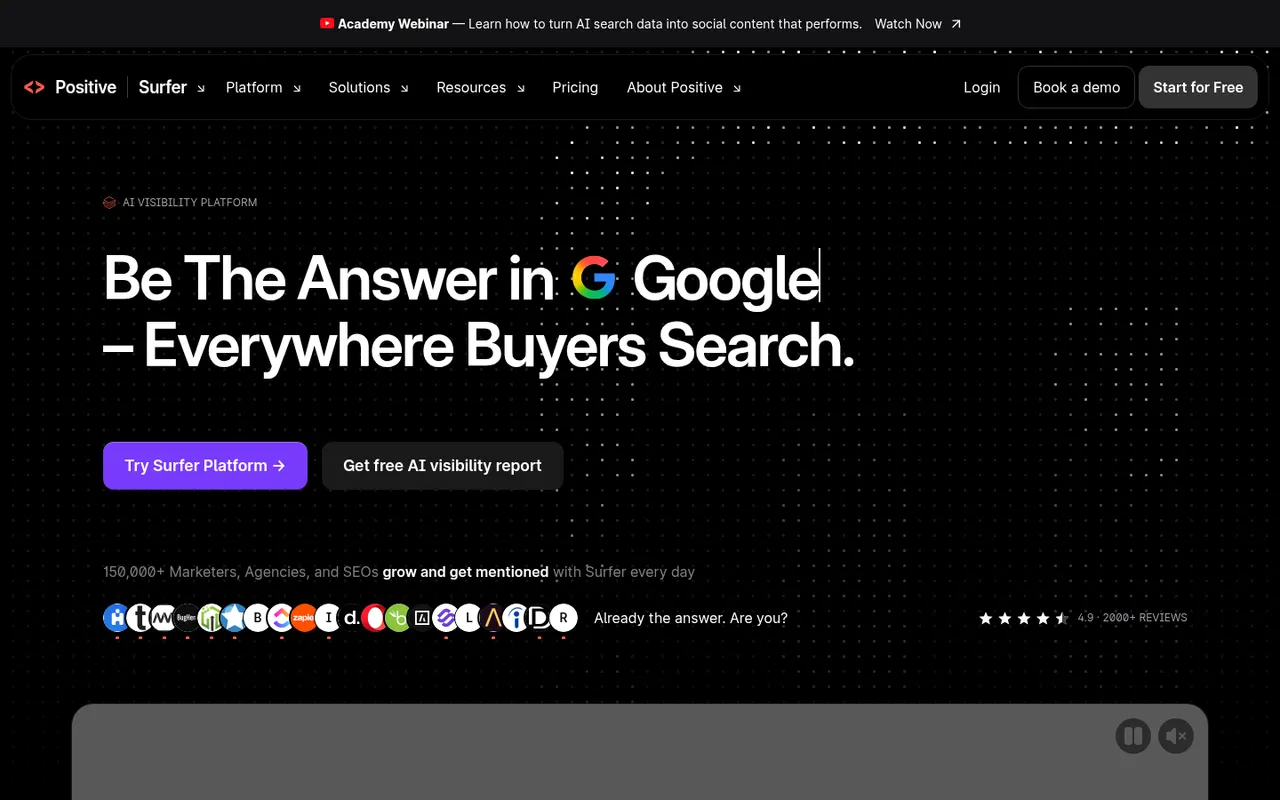
Cost / LicenseFreemiumProprietaryCategoriesPlatformsSurfer is a content optimization platform that analyzes the pages ranking for a keyword and turns them into guidelines for length, headings and terms to include, with a live content score as you write. It also offers topic and keyword research, an AI article writer and audits of existing pages. Writers can work in Surfer itself or in Google Docs and WordPress through integrations.
7 Surfer alternativesPros
- Live content score guides length, headings and terms to include
- Works inside Google Docs and WordPress
- Audits existing pages against top-ranking competitors
Cons
- No free plan, paid subscriptions only
- Following term suggestions too closely can make text sound unnatural
- Based on patterns in top pages, with no guarantee of rankings
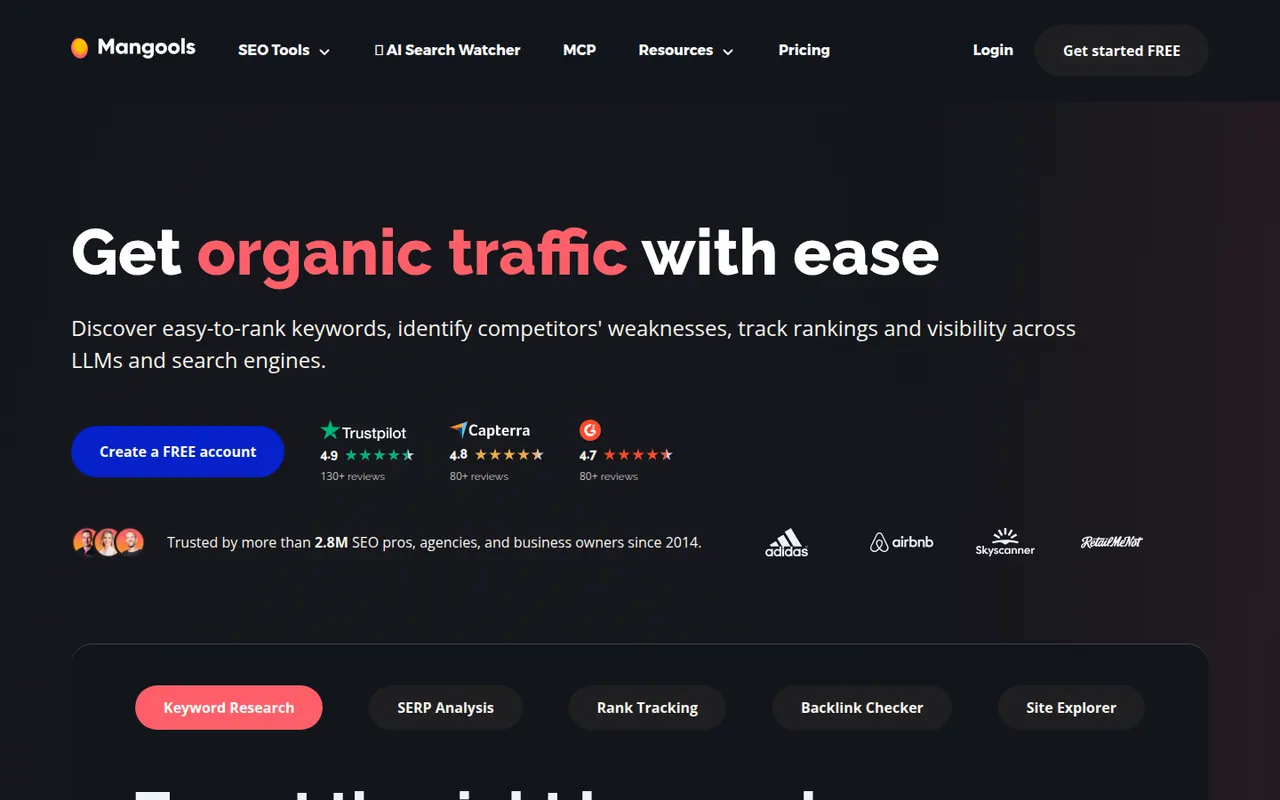
Cost / LicensePaidProprietaryCategoriesPlatformsMangools is a Slovak suite of five SEO tools: KWFinder for keyword research, SERPChecker for search result analysis, SERPWatcher for rank tracking, LinkMiner for backlinks and SiteProfiler for domain metrics. The tools share one account and a clean interface aimed at bloggers, small businesses and freelancers who find enterprise SEO suites too complex. A browser extension gives quick access to metrics.
8 Mangools alternativesPros
- Clean, beginner-friendly interface across all five tools
- KWFinder makes keyword difficulty easy to read
- One account for keywords, SERP analysis, rank tracking and backlinks
Cons
- Backlink data is less extensive than in larger SEO suites
- Daily lookup limits can be restrictive
- No technical site audit tool
Cost / LicenseFree trialProprietaryCategoriesPlatforms