Best apps for Self-hosted
71 apps
Top Self-hosted apps ranked by the community
Postiz is a self-hostable social media scheduler with AI-assisted writing, team workflows and support for many networks.
6 Postiz alternativesPros
- Open source and self-hostable, keeping your data under your control
- Supports many social networks from one dashboard
- AI-assisted writing and team workflows
Cons
- Younger project, less polished than established tools
- Self-hosting requires technical setup and maintenance
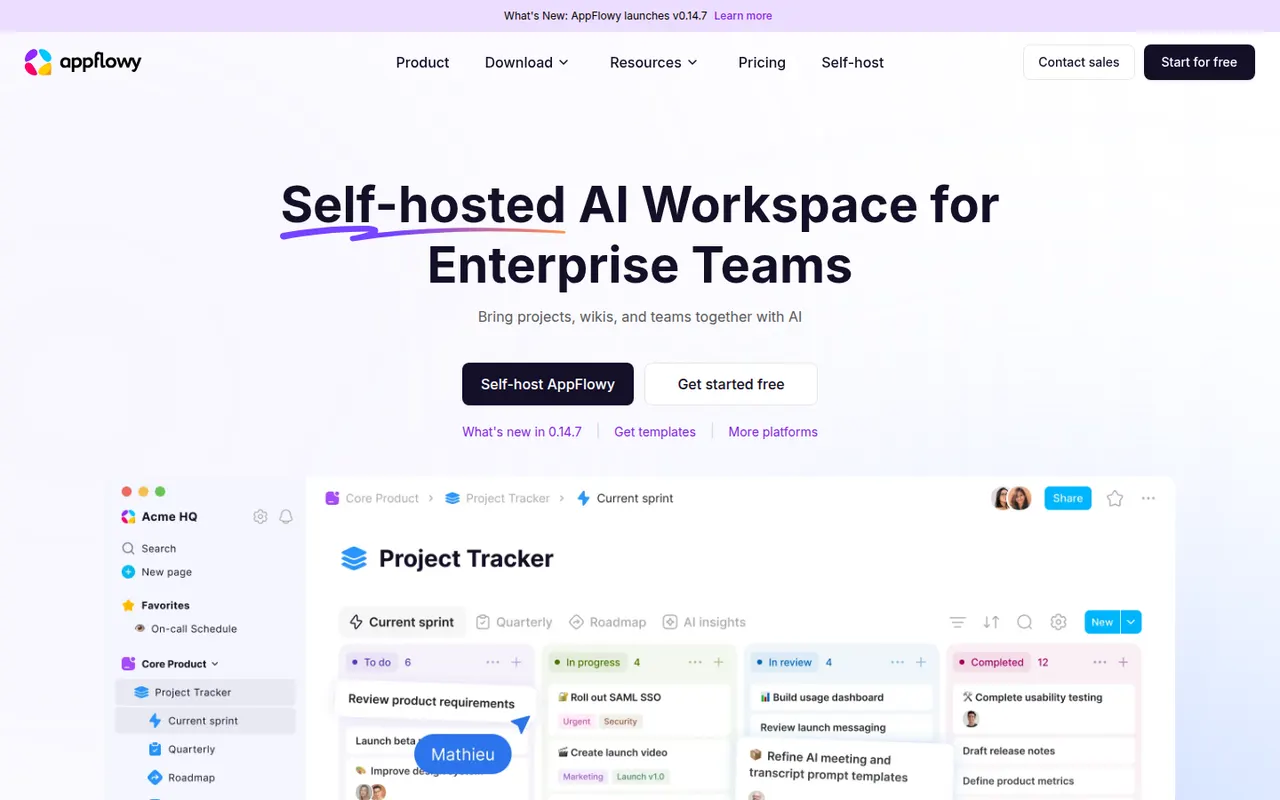
Cost / LicenseFreemiumOpen sourceCategoriesPlatformsAppFlowy is an open source workspace for docs, databases and kanban boards that you can self-host, with AI features and offline support.
7 AppFlowy alternativesPros
- Open source Notion alternative that you can self-host
- Docs, databases and kanban boards in one workspace
- Offline support with apps on desktop and mobile
Cons
- Fewer templates and integrations than Notion
- Some features still feel less polished than in mature rivals
- Advanced AI features are reserved for paid plans
Cost / LicenseFreemiumOpen sourceCategoriesDeepSeek is the chat assistant from the Chinese AI lab of the same name, running on its own models. The web and mobile apps are free and offer web search, file reading and a DeepThink reasoning mode. The model weights are published under the MIT license and can run on your own hardware. A pay-as-you-go API is offered to developers, and data from the hosted service is processed in China.
9 DeepSeek alternativesPros
- Free web and mobile apps with a reasoning mode
- Open-weight models under the MIT license can run locally
- Low-cost pay-as-you-go API for developers
Cons
- The hosted service processes data in China, a privacy concern
- Answers on politically sensitive topics are censored
- No image generation in the chat app
Cost / LicenseFreeOpen sourceCategoriesPlatformsLanguageTool checks grammar, spelling, punctuation and style in dozens of languages, including English, French, German, Spanish and Portuguese. It integrates with browsers, Microsoft Word, Google Docs, LibreOffice and desktop apps, and Premium adds AI rephrasing and deeper style checks. The core engine is open source under the LGPL, so organizations can run their own server for privacy.
6 LanguageTool alternativesPros
- Checks grammar and style in dozens of languages
- Open source core can run on your own server for privacy
- Integrates with Word, Google Docs, LibreOffice and browsers
Cons
- AI rephrasing and deeper style checks require Premium
- A self-hosted server lacks the Premium checks
Cost / LicenseFreemiumOpen sourceCategoriesStable Diffusion is a family of text-to-image models released by Stability AI with downloadable weights. Because they run locally on a capable GPU, a large ecosystem has grown around them: interfaces such as ComfyUI and AUTOMATIC1111, fine-tuned community models, LoRAs and ControlNet. Recent versions use the Stability AI Community License, and Stability also sells hosted API access.
9 Stable Diffusion alternativesPros
- Downloadable weights run locally, offline and in private
- Huge ecosystem of interfaces, community models, LoRAs and ControlNet
- Deeply customizable, from fine-tuning to precise pose control
Cons
- Needs a capable GPU and some technical setup
- Raw results take more prompt work than polished hosted services
- Recent versions use a license that restricts larger commercial users
Cost / LicenseFreemiumSource availableCategoriesPlatformsFLUX is a family of image generation and editing models from Black Forest Labs, a German lab founded by former Stable Diffusion researchers. Some variants have open weights, under Apache 2.0 or a non-commercial license, and can run locally or be fine-tuned. The most capable Pro and Kontext models are offered through a paid API and many partner platforms. Kontext edits existing images from text instructions.
7 FLUX alternativesPros
- Detailed, photorealistic images that follow prompts closely
- Some variants have open weights you can run locally or fine-tune
- Kontext edits existing images from plain text instructions
Cons
- The most capable Pro models are only available through a paid API
- Running the open weights locally requires a powerful GPU
- Licenses differ by variant, and some forbid commercial use
Cost / LicenseFreemiumSource availableCategoriesPlatformsTabnine is an AI coding assistant focused on privacy and control for companies. It provides code completion and a chat that helps generate tests, write documentation and review code in VS Code, JetBrains IDEs, Visual Studio and Eclipse. Tabnine can be deployed as SaaS, in a private VPC, on-premises or fully air-gapped, does not retain customer code, and can use an organization's repositories as context.
8 Tabnine alternativesPros
- Can be deployed on-premises or fully air-gapped
- Does not retain customer code
- Supports Eclipse and Visual Studio as well as VS Code and JetBrains
Cons
- Paid after the trial, with no free tier
- Offer and pricing target companies more than individuals
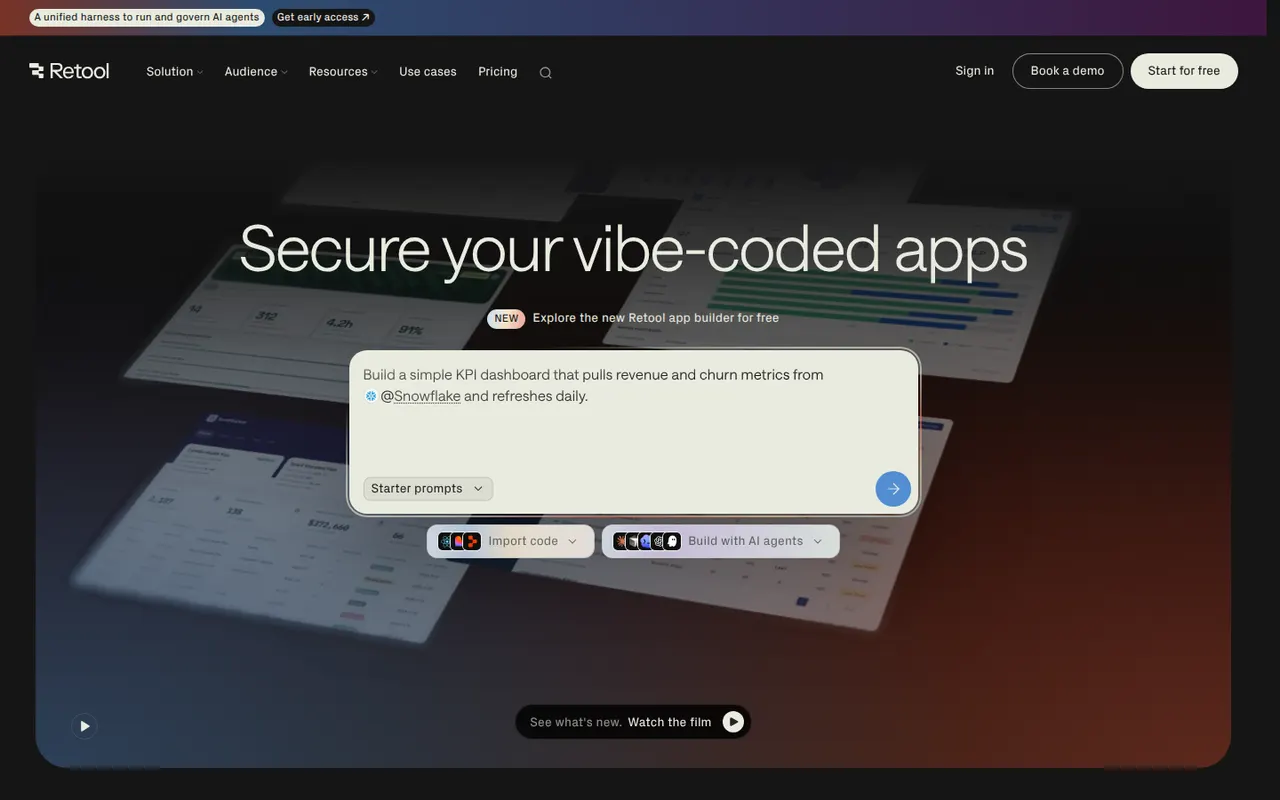
Cost / LicenseFree trialProprietaryCategoriesPlatformsRetool is a developer-focused platform for building internal tools such as admin panels, dashboards and back-office apps. You drag components onto a canvas, connect them to databases and APIs, and write JavaScript or SQL where needed, with AI that can generate apps and agents that automate tasks. It runs in the cloud or self-hosted, with SSO and audit logs for enterprises and a free plan for small teams.
11 Retool alternativesPros
- Fast way to build admin panels and dashboards on your data
- Connects to most databases and APIs, with JavaScript and SQL as needed
- Self-hosting option plus enterprise controls like SSO and audit logs
Cons
- Aimed at developers, so non-technical users may struggle
- Costs rise quickly as more users need access
- Limited design control beyond the standard components
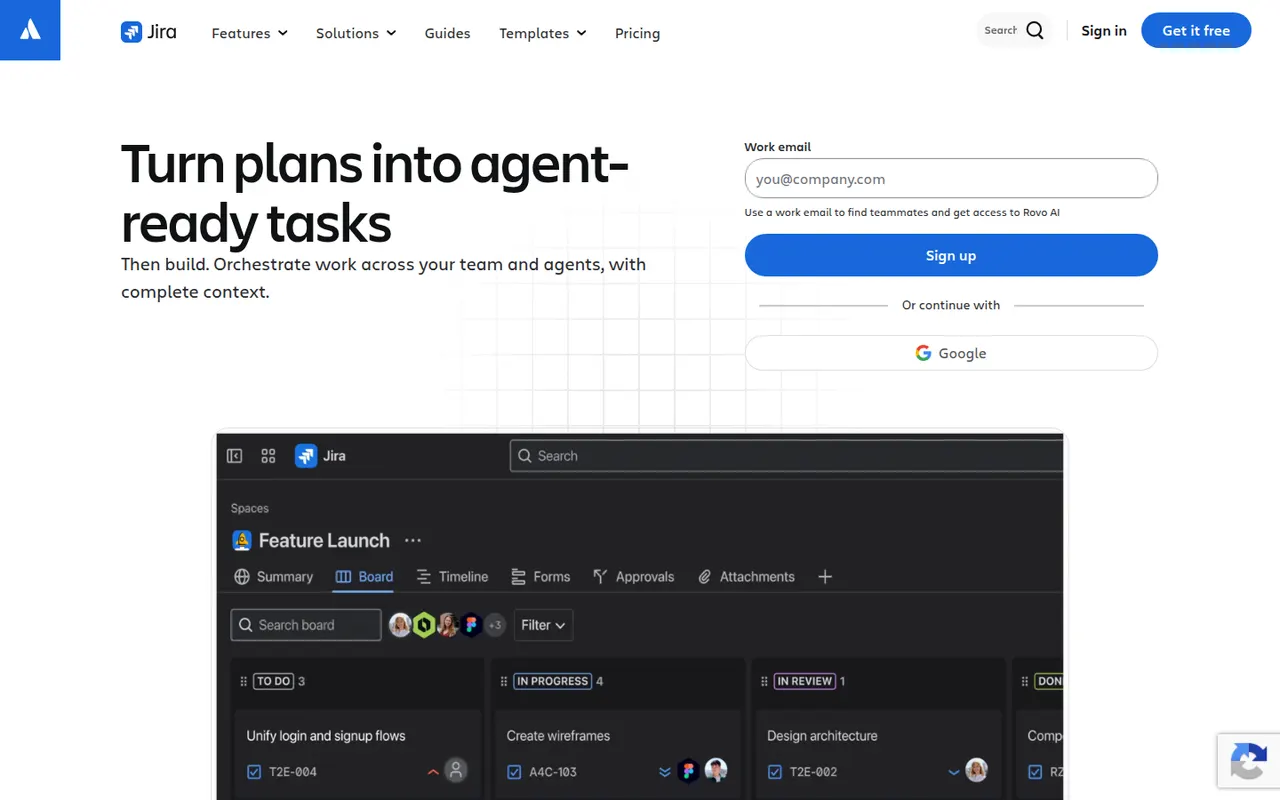
Cost / LicenseFreemiumProprietaryCategoriesPlatformsJira is Atlassian's tracker for software teams, built around issues, Scrum and Kanban boards, backlogs, sprints and configurable workflows. It connects to Confluence, Bitbucket and GitHub, offers a large marketplace of apps and rule-based automation, and is available in the cloud or as a self-managed Data Center edition for large organizations.
12 Jira alternativesPros
- Mature Scrum and Kanban boards with backlogs and sprints
- Highly configurable workflows, fields and automation rules
- Tight links with Confluence, Bitbucket and GitHub, plus a large app marketplace
Cons
- Complex to set up and administer without a dedicated admin
- Can feel heavy and slow for small teams or simple projects
- Marketplace apps add to the cost on top of per-user pricing
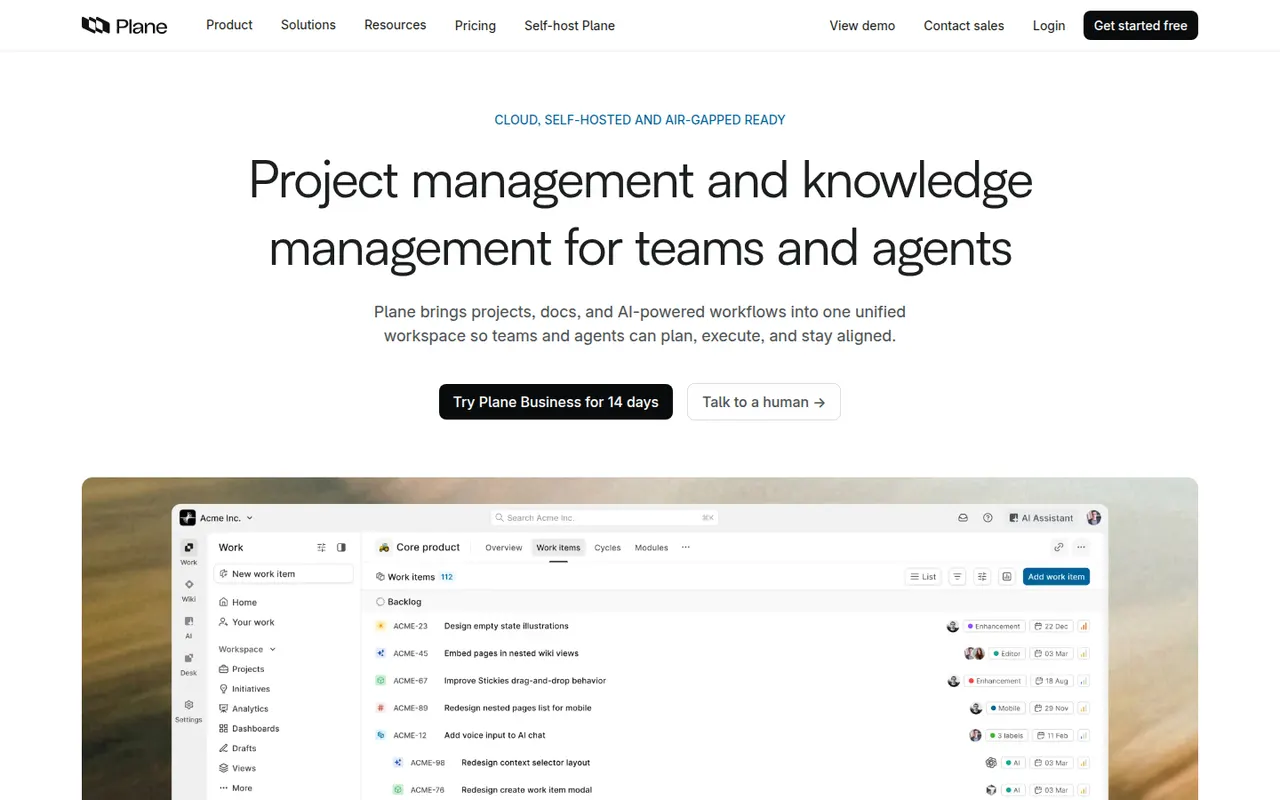
Cost / LicenseFreemiumProprietaryCategoriesPlatformsPlane is an open source project management tool for software teams, covering issues, cycles, modules, pages and several layouts including list, Kanban, calendar and spreadsheet. It positions itself as a self-hostable alternative to Jira and Linear, and is also offered as a hosted cloud service with a free tier and paid plans.
8 Plane alternativesPros
- Open source, self-hostable alternative to Jira and Linear
- Modern interface with list, Kanban, calendar and spreadsheet layouts
- Cycles, modules and pages cover planning and docs in one place
Cons
- Younger product with fewer integrations than established trackers
- Some advanced features are limited to paid editions
- Self-hosting means handling upgrades and backups yourself
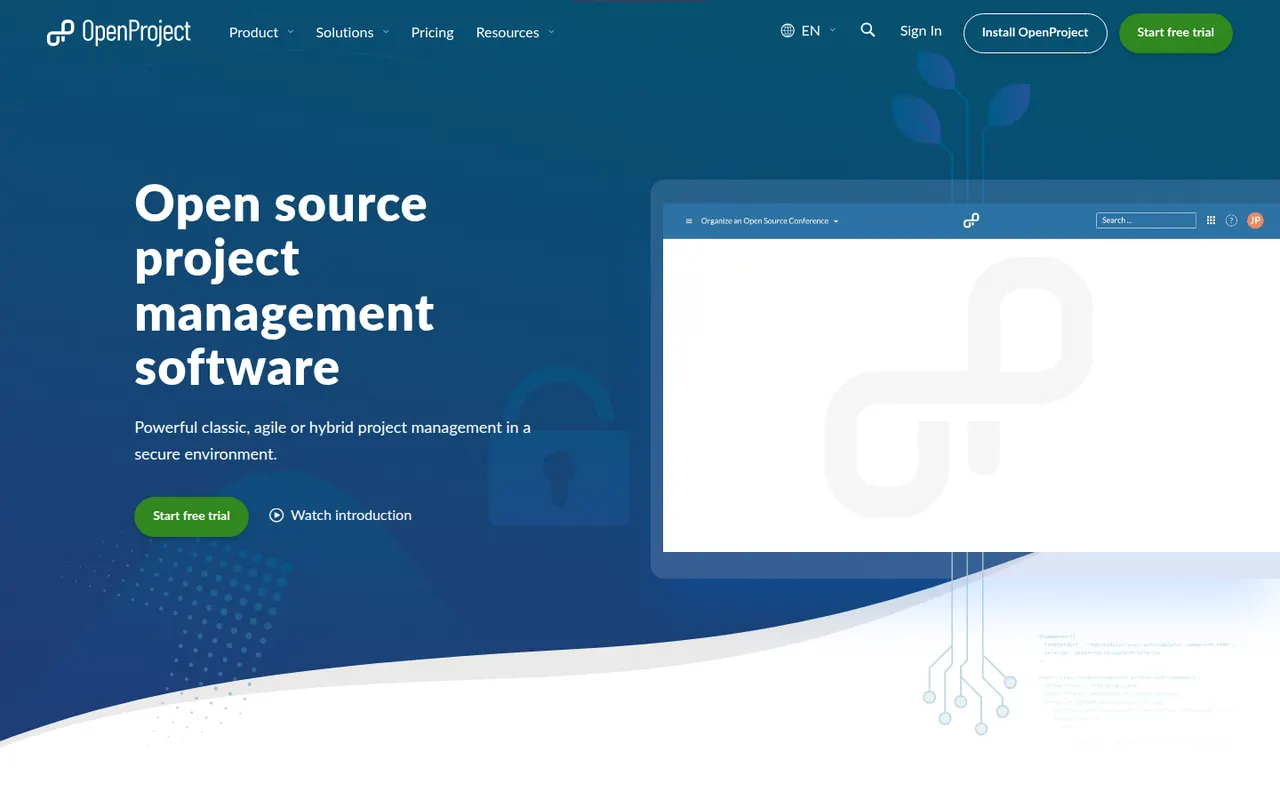
Cost / LicenseFreemiumOpen sourceCategoriesPlatformsOpenProject is an open source project management platform developed in Germany, covering classic, agile and hybrid methods with Gantt charts, Scrum and Kanban boards, time and cost tracking, wikis and meetings. The Community edition is free to self-host, and the company sells an Enterprise edition and a hosted cloud aimed at organizations that care about data sovereignty.
9 OpenProject alternativesPros
- Open source and free to self-host with the Community edition
- Gantt charts, agile boards, time and cost tracking in one tool
- Developed in Germany with a focus on data sovereignty and GDPR
Cons
- The interface feels dated and dense next to newer tools
- Several advanced features are reserved for the Enterprise edition
- Self-hosting requires server setup and ongoing maintenance
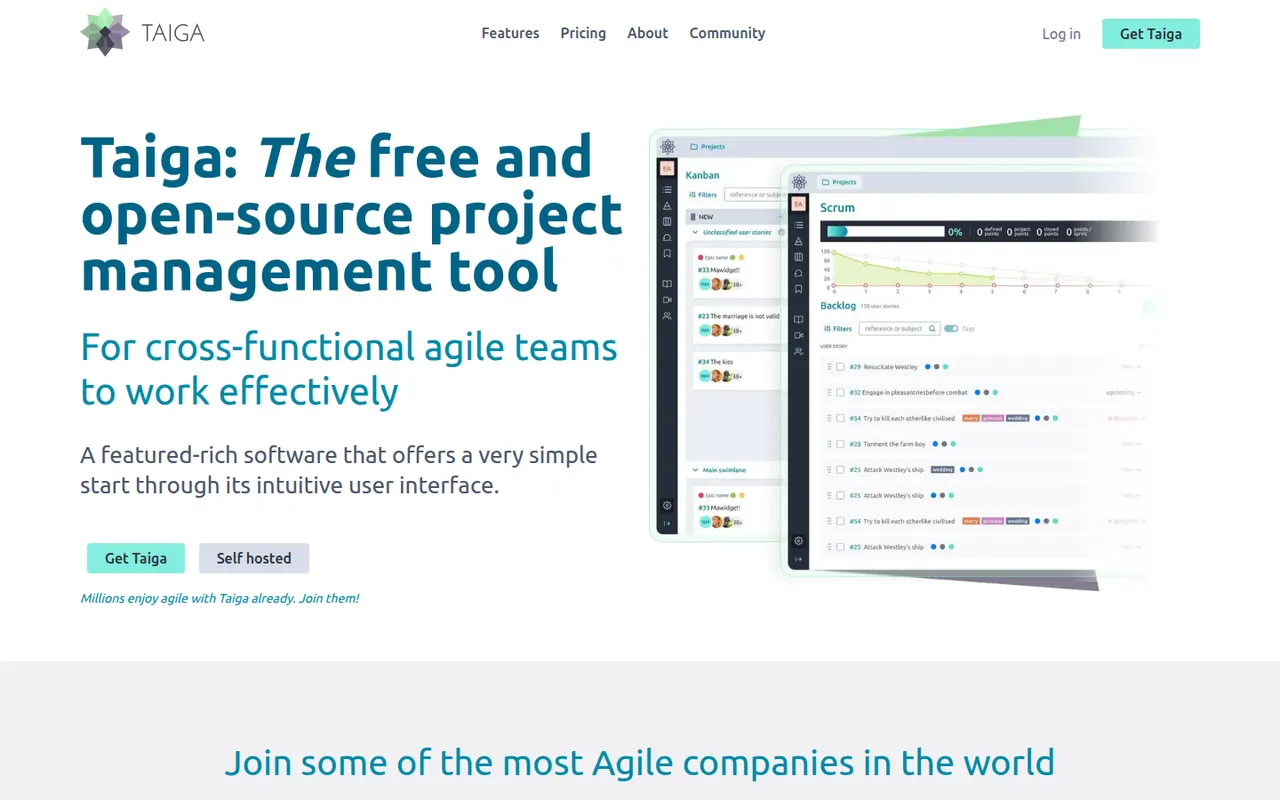
Cost / LicenseFreemiumOpen sourceCategoriesPlatformsTaiga is an open source project management tool for agile teams, offering Scrum backlogs with sprints and user stories, Kanban boards, issue tracking and a project wiki. Developed by Kaleidos, it can be self-hosted or used as a hosted service at taiga.io, and its clean interface also suits designers and product people, not only developers.
7 Taiga alternativesPros
- Open source, with Scrum backlogs, sprints and Kanban boards
- Clean interface that also suits designers and product people
- Can be self-hosted or used as a hosted service
Cons
- Fewer integrations than mainstream project management tools
- Limited reporting and cross-project views for larger organizations
- Self-hosting requires technical know-how
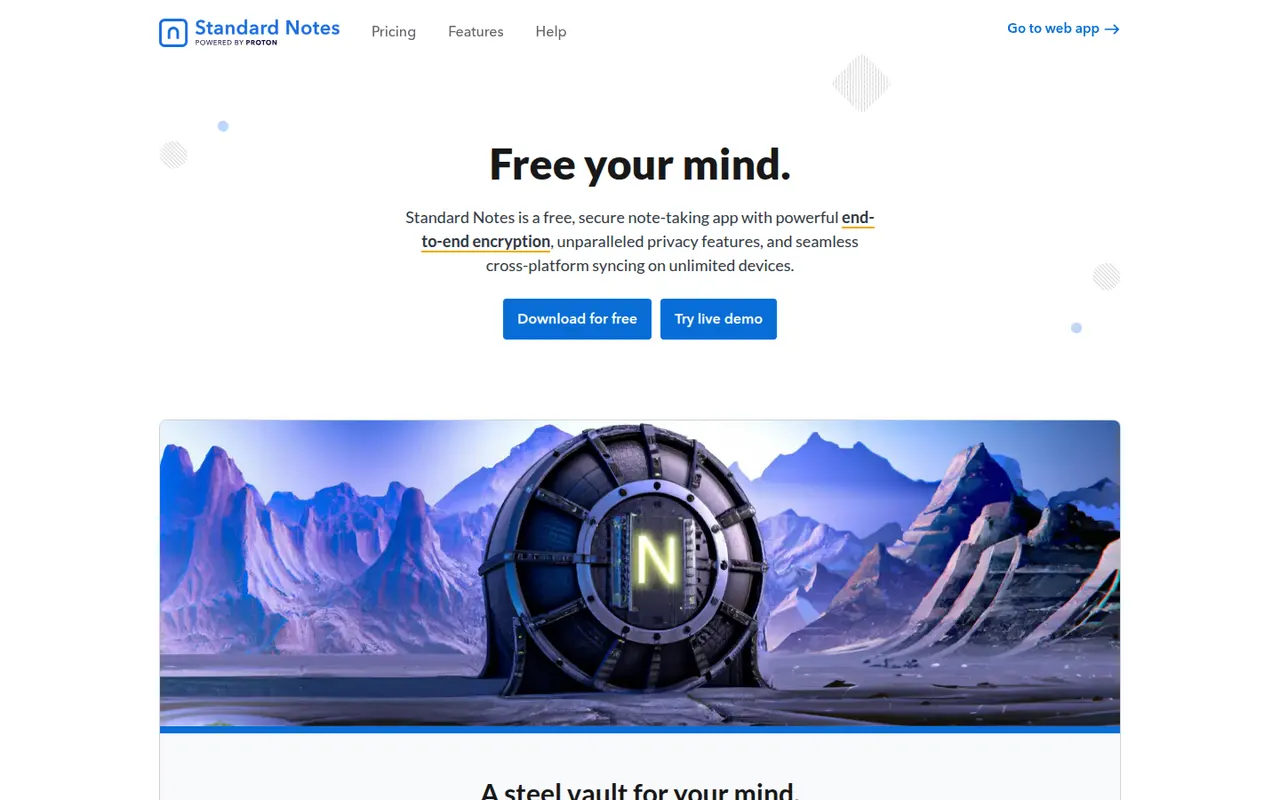
Cost / LicenseFreemiumOpen sourceCategoriesPlatformsStandard Notes is an open source note-taking app focused on privacy, with end-to-end encryption for every note and file and apps on all major platforms. Notes work offline and sync across devices, and paid plans add rich editors, file storage and longer revision history. The company became part of Proton in 2024, and the sync server can be self-hosted.
9 Standard Notes alternativesPros
- End-to-end encryption for every note and file
- Open source apps on all major platforms
- The sync server can be self-hosted
Cons
- Rich editors, file storage and longer history need a paid plan
- Collaboration features are minimal compared with mainstream apps
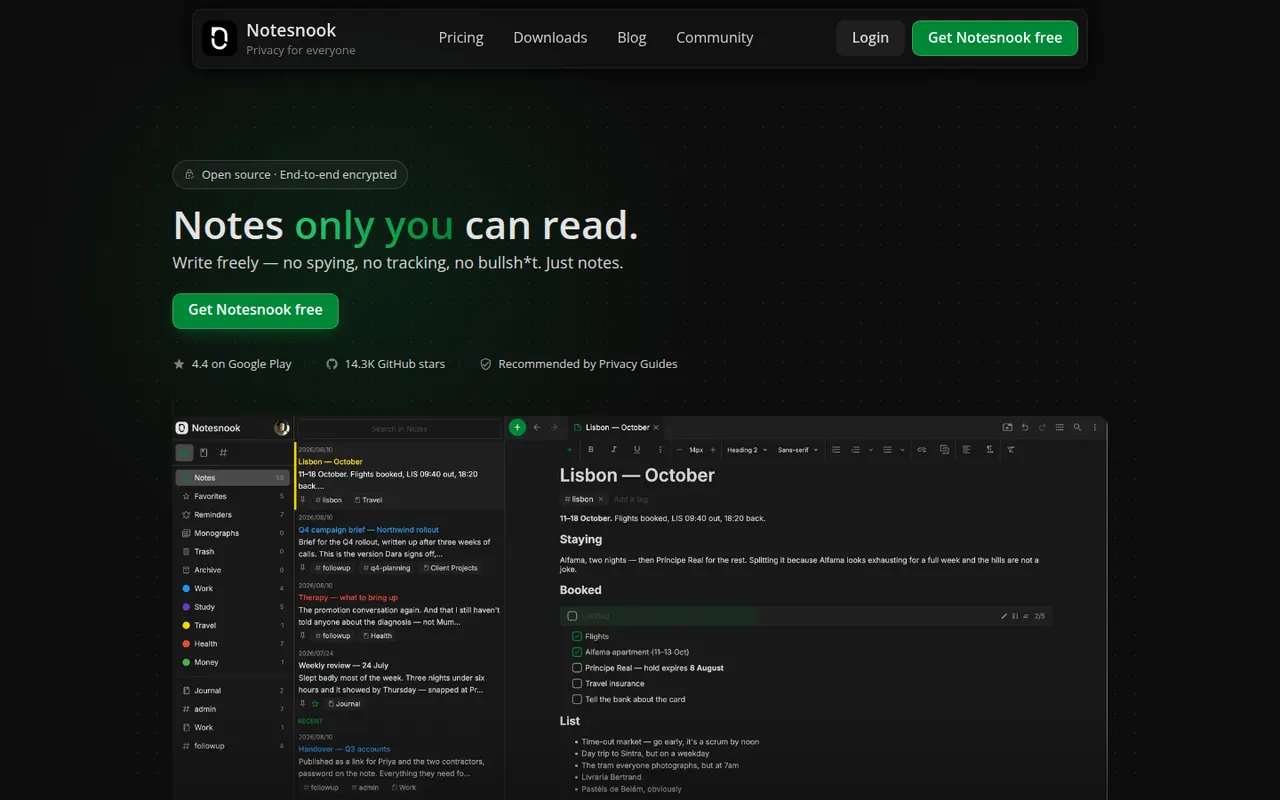
Cost / LicenseFreemiumOpen sourceCategoriesNotesnook is an open source note-taking app that encrypts every note end to end on your device before syncing it. It offers notebooks, tags, rich text with Markdown shortcuts, an app lock, a private vault and a web clipper, on the web, desktop and mobile. A free plan is available, and the sync server can also be self-hosted.
9 Notesnook alternativesPros
- Every note is end-to-end encrypted on your device before syncing
- Open source apps on web, desktop and mobile
- The sync server can be self-hosted
Cons
- Fewer integrations and plugins than mainstream note apps
- Some features are limited on the free plan
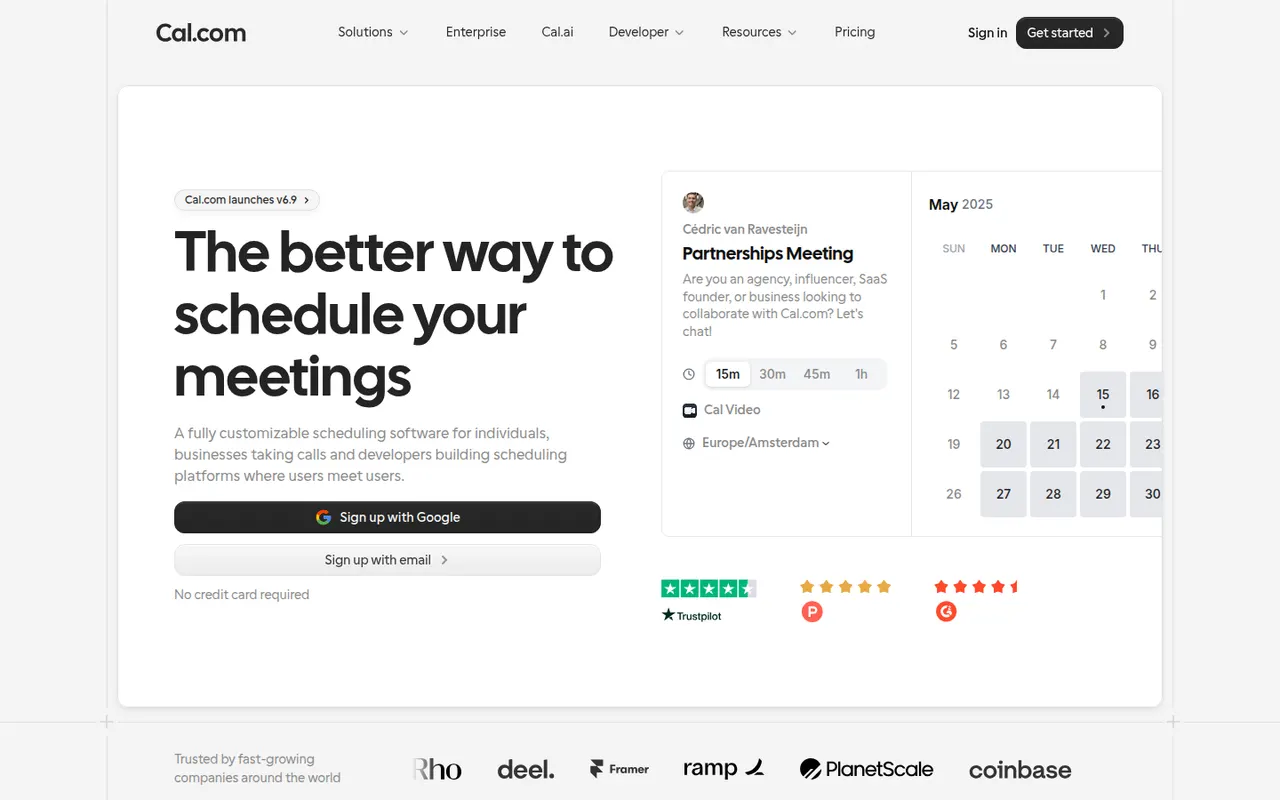
Cost / LicenseFreemiumOpen sourceCategoriesCal.com is an open source scheduling platform positioned as an alternative to Calendly, with booking pages, team round-robin, routing forms, paid bookings and automated workflows. It can be used as a hosted service with a free plan for individuals or self-hosted, and developers can embed it or build on its API.
7 Cal.com alternativesPros
- Open source and self-hostable, with a hosted option
- Free hosted plan for individuals
- API and embeds let developers build scheduling into their products
Cons
- Self-hosting takes technical effort to set up and maintain
- Team and enterprise features require paid plans
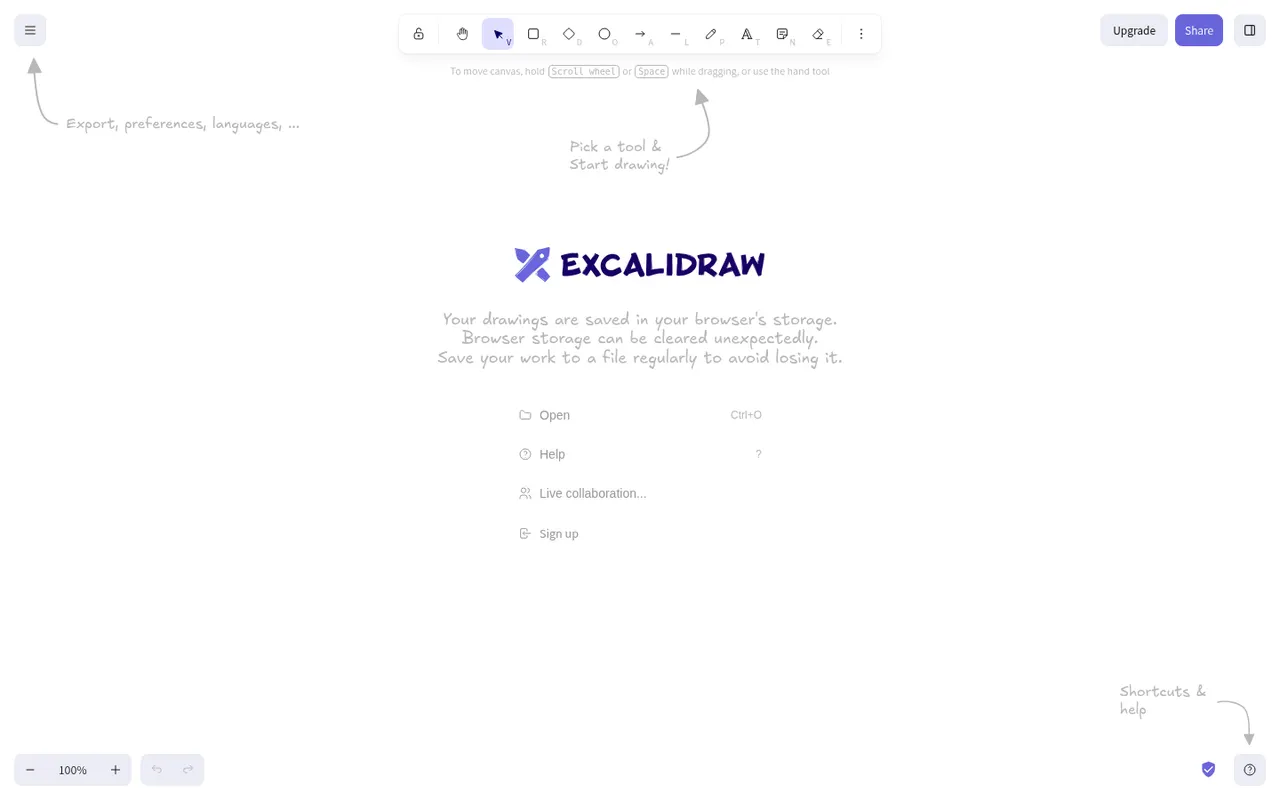
Cost / LicenseFreemiumOpen sourceCategoriesPlatformsExcalidraw is an open source virtual whiteboard that produces diagrams and sketches with a hand-drawn look. It runs in the browser without an account, works offline, offers end-to-end encrypted live collaboration and shareable links, and has a large community library of shapes. Excalidraw+ adds cloud workspaces and team features, and the editor can be embedded as a React component.
11 Excalidraw alternativesPros
- Hand-drawn style that makes sketches feel approachable
- Works in the browser offline and without an account
- End-to-end encrypted live collaboration
Cons
- Hand-drawn look is less suited to formal diagrams
- Cloud workspaces and team features require Excalidraw+
- Fewer diagramming features than dedicated tools
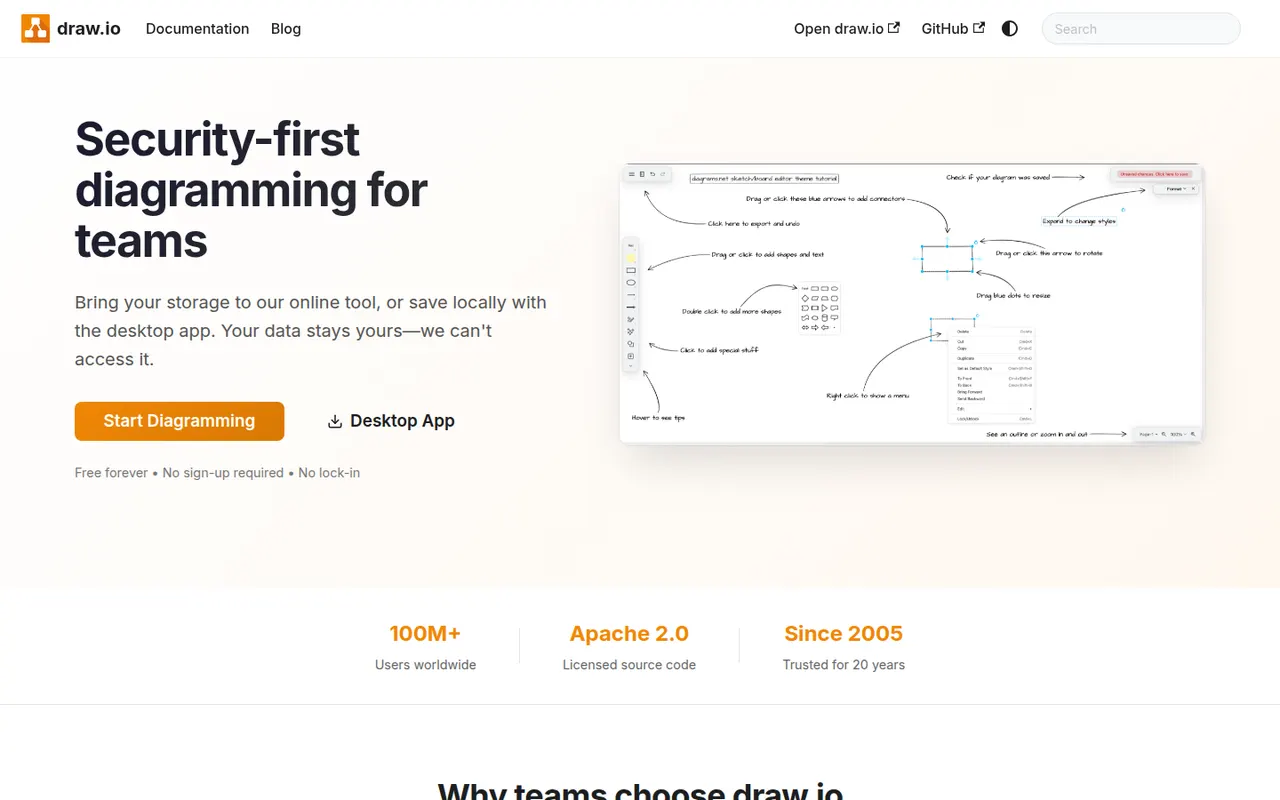
Cost / LicenseFreemiumOpen sourceCategoriesPlatformsdraw.io, also known as diagrams.net, is a free and open source diagramming tool from JGraph for flowcharts, UML, network, BPMN and org charts. It requires no account, saves diagrams wherever you choose, such as your device, Google Drive, OneDrive or GitHub, and is available as a desktop app for offline use and as an integration for Confluence and Jira.
10 draw.io alternativesPros
- Completely free and open source, with no account required
- Saves diagrams to your device, Google Drive, OneDrive or GitHub
- Offline desktop app plus Confluence and Jira integrations
Cons
- Interface looks dated next to modern whiteboard tools
- Real-time collaboration is more limited than in paid rivals
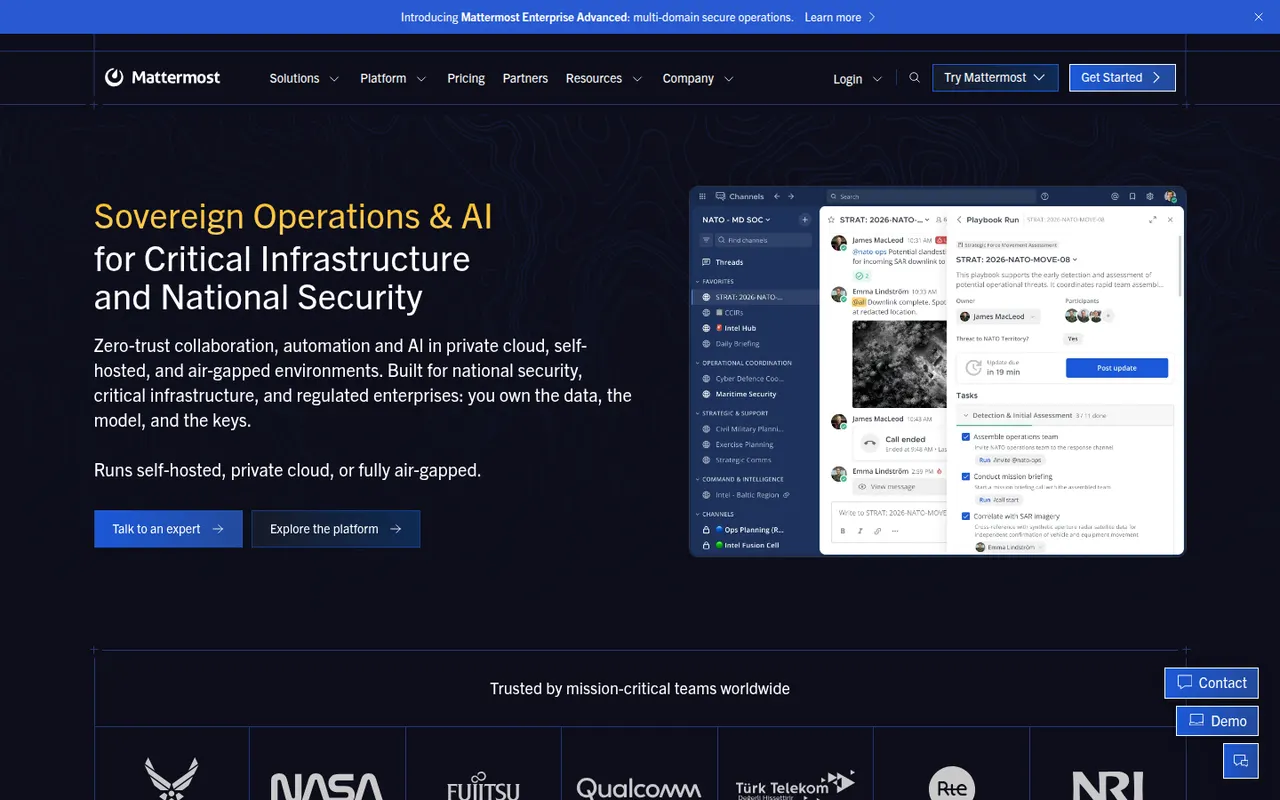
Cost / LicenseFreeOpen sourceCategoriesPlatformsMattermost is an open-source collaboration platform offering channels, threads, calls and playbooks for structured workflows. Organizations can run it on their own servers or in a private cloud to keep full control of their data, which appeals to engineering teams, public agencies and regulated industries. Plugins, webhooks and an API connect it to DevOps tools like GitLab, Jira and Jenkins.
8 Mattermost alternativesPros
- Self-hosting keeps full control over data and infrastructure
- Strong DevOps integrations with GitLab, Jira and Jenkins
- Playbooks structure incident response and repeatable workflows
Cons
- Self-hosted deployments need ongoing admin work
- Smaller app ecosystem than Slack
- Advanced compliance and enterprise features require paid plans
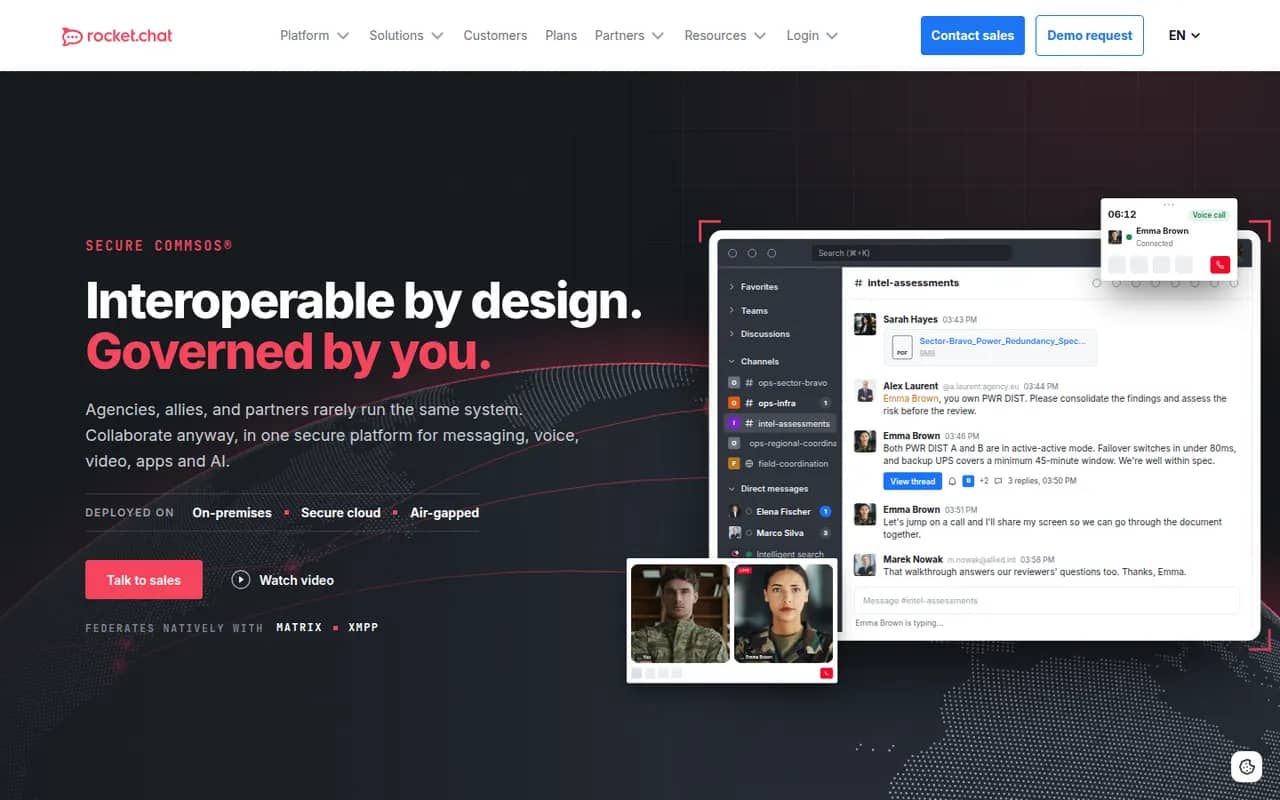
Cost / LicenseFreemiumOpen sourceCategoriesRocket.Chat is an open-source communications platform that can be self-hosted or used as a cloud service. Besides team channels, threads, direct messages and calls, it includes an omnichannel module that routes website chat, email and messaging apps to support agents. Its marketplace and APIs let organizations customize it heavily, and self-hosting suits teams with strict data residency needs.
9 Rocket.Chat alternativesPros
- Omnichannel module routes website chat, email and messaging apps
- Self-hostable open source platform for strict data residency needs
- Marketplace and APIs allow deep customization
Cons
- Self-hosted setups require regular maintenance and upgrades
- Some features are reserved for paid editions
- The wide range of settings makes administration complex
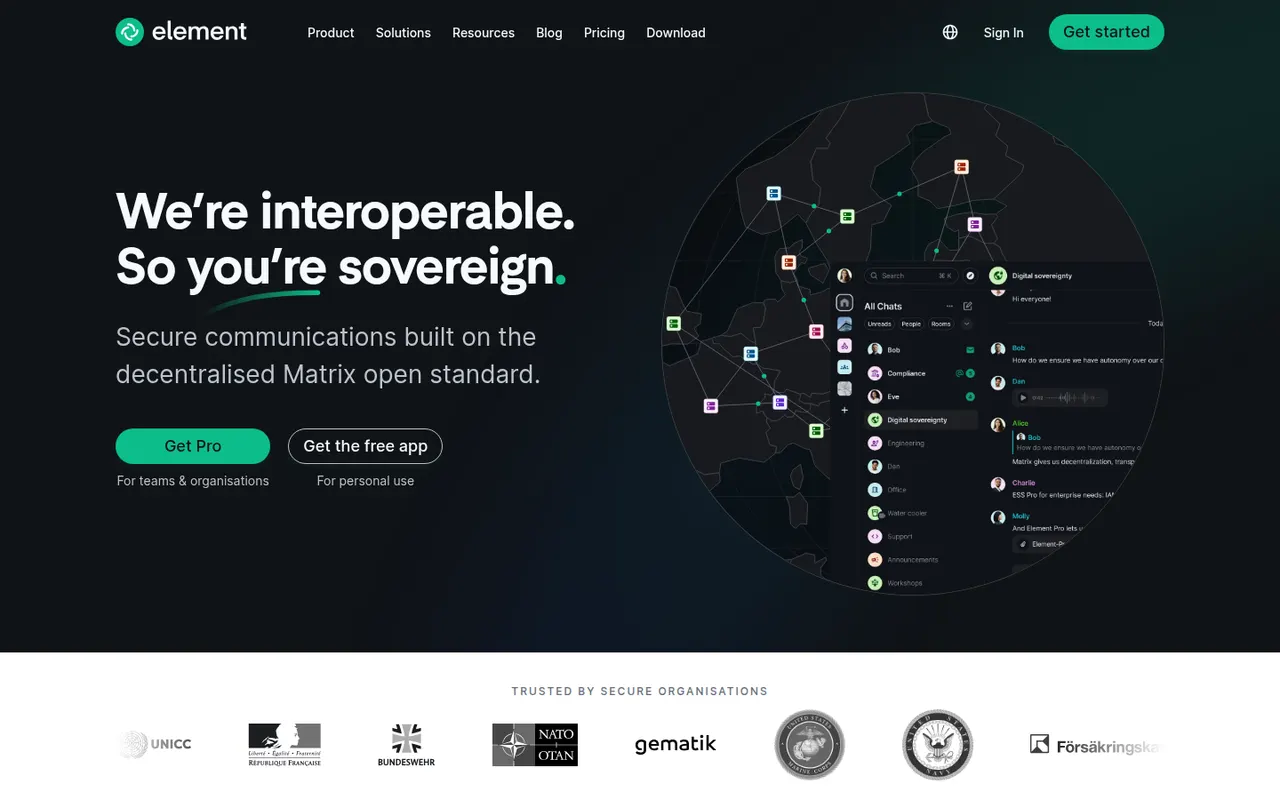
Cost / LicenseFreemiumOpen sourceCategoriesElement is a messaging app from the team that created Matrix, an open standard for decentralized, federated chat. Rooms, direct messages and calls are end-to-end encrypted, and people on different Matrix servers can talk to each other like email. Individuals can join a public server for free, while organizations and governments self-host or buy Element's enterprise server suite, with bridges to other chat networks.
12 Element alternativesPros
- End-to-end encryption by default for private rooms and messages
- Federated Matrix network, so no single company controls your chats
- Open source and self-hostable, popular with public sector bodies
Cons
- Encryption keys and device verification can confuse newcomers
- Running your own Matrix server takes real technical effort
- Fewer business integrations than mainstream team chat apps
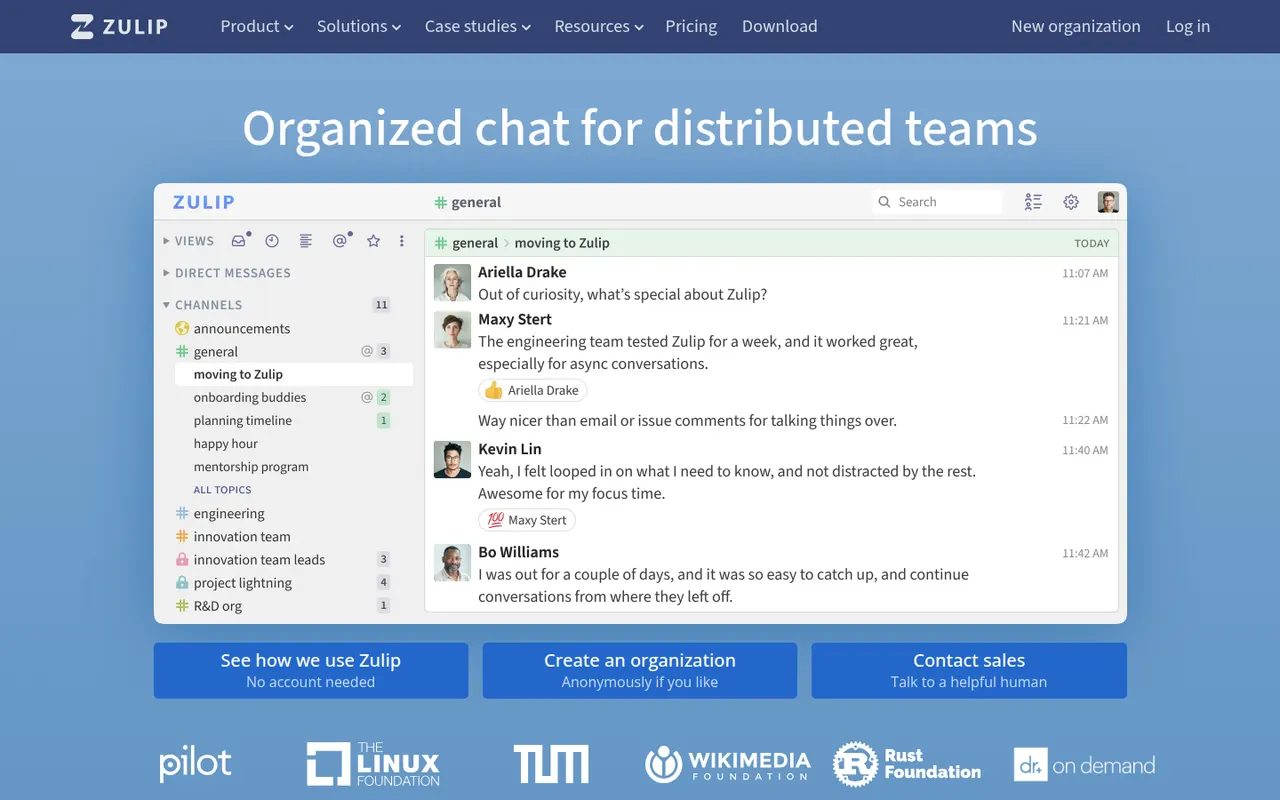
Cost / LicenseFreemiumOpen sourceCategoriesZulip is an open-source team chat app whose threading model files every channel message under a named topic, so people can catch up on several discussions without losing context. It supports Markdown, code blocks and LaTeX math, and integrates with common developer tools. It can be self-hosted for free or used through Zulip Cloud, which suits open-source projects, research groups and remote teams.
8 Zulip alternativesPros
- Topic-based threading makes catching up on discussions easy
- Markdown, code blocks and LaTeX suit technical teams
- Free to self-host under an open source license
Cons
- The topic model takes some getting used to after Slack
- Video calls rely on external services such as Jitsi or Zoom
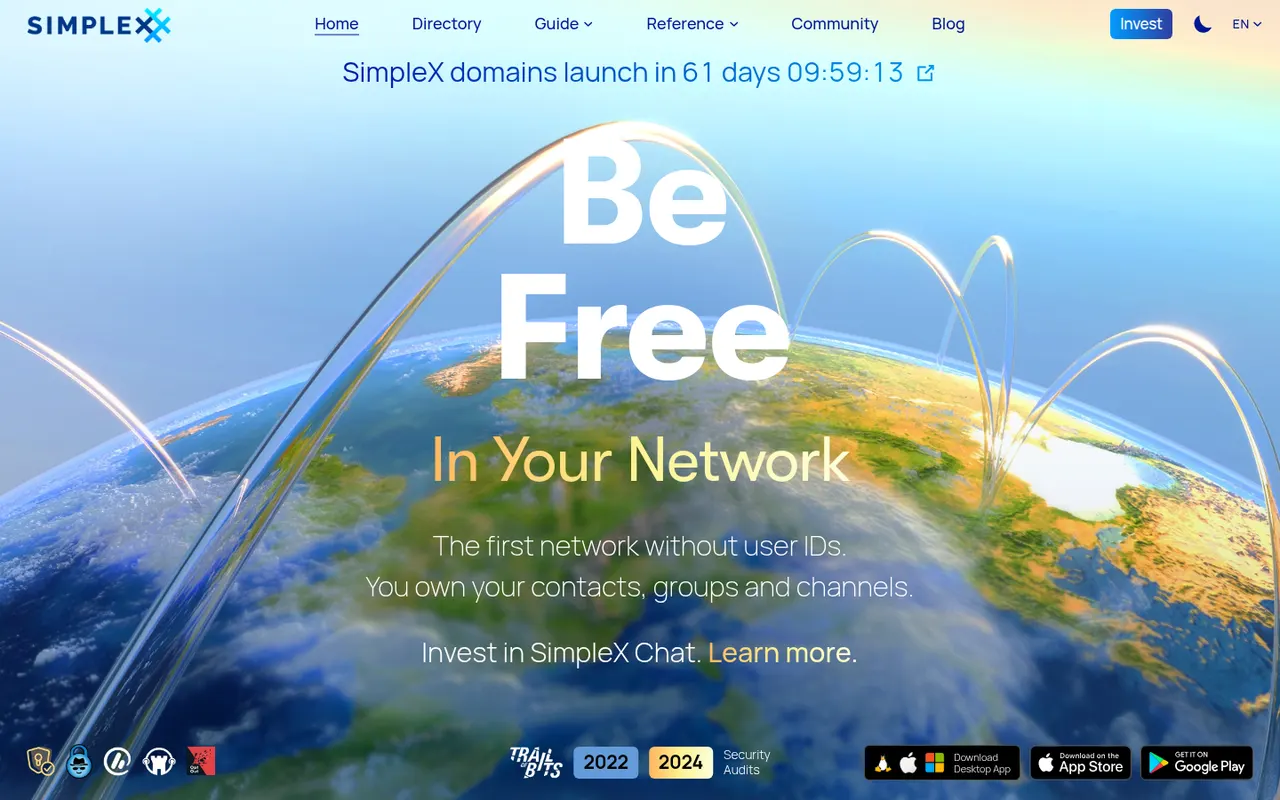
Cost / LicenseFreemiumOpen sourceCategoriesSimpleX Chat is an open-source messenger that does not assign users any identifier, not even a random one: contacts connect through one-time links or QR codes. Messages are end-to-end encrypted and pass through relay servers that keep no user profiles, and anyone can run their own relays. It supports groups, voice and video calls, disappearing messages and multiple chat profiles.
9 SimpleX Chat alternativesPros
- No user identifiers at all, not even random ones
- Anyone can run their own relay servers
- Groups, calls, disappearing messages and multiple chat profiles
Cons
- Connecting through one-time links is less convenient than a contact list
- Small user base, so few contacts will already be on it
- Using one account across several devices is limited
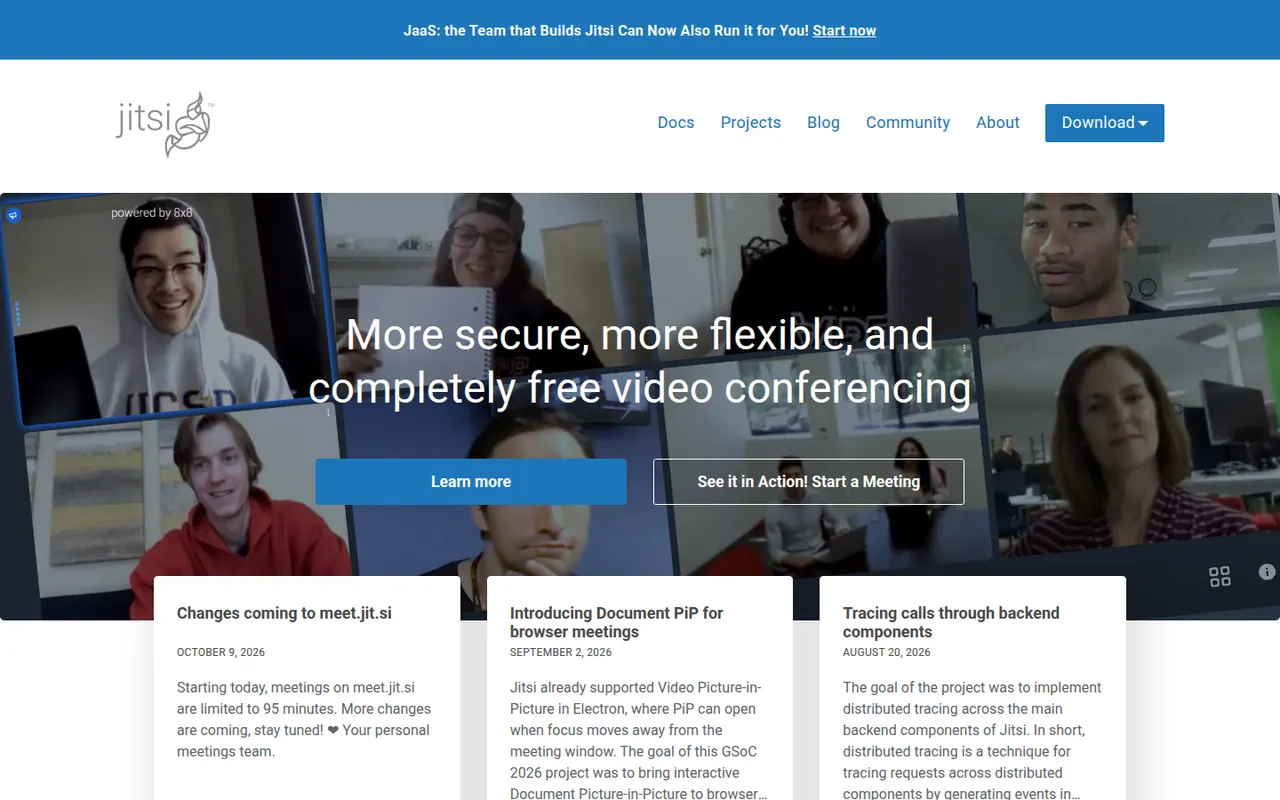
Cost / LicenseFreeOpen sourceCategoriesJitsi Meet is an open-source video conferencing app that runs in the browser, with mobile and desktop apps as well. Anyone can host meetings for free on the public meet.jit.si service or deploy their own server for full control. It includes screen sharing, chat, breakout rooms, background blur, live streaming to YouTube and optional end-to-end encryption. The project is maintained by 8x8.
9 Jitsi Meet alternativesPros
- Free meetings on meet.jit.si, with guests joining from the browser
- Open source and self-hostable for full control
- Optional end-to-end encryption and live streaming to YouTube
Cons
- Call quality can degrade with many participants
- Fewer admin and scheduling features than commercial suites
- Self-hosting at scale needs tuning and plenty of bandwidth
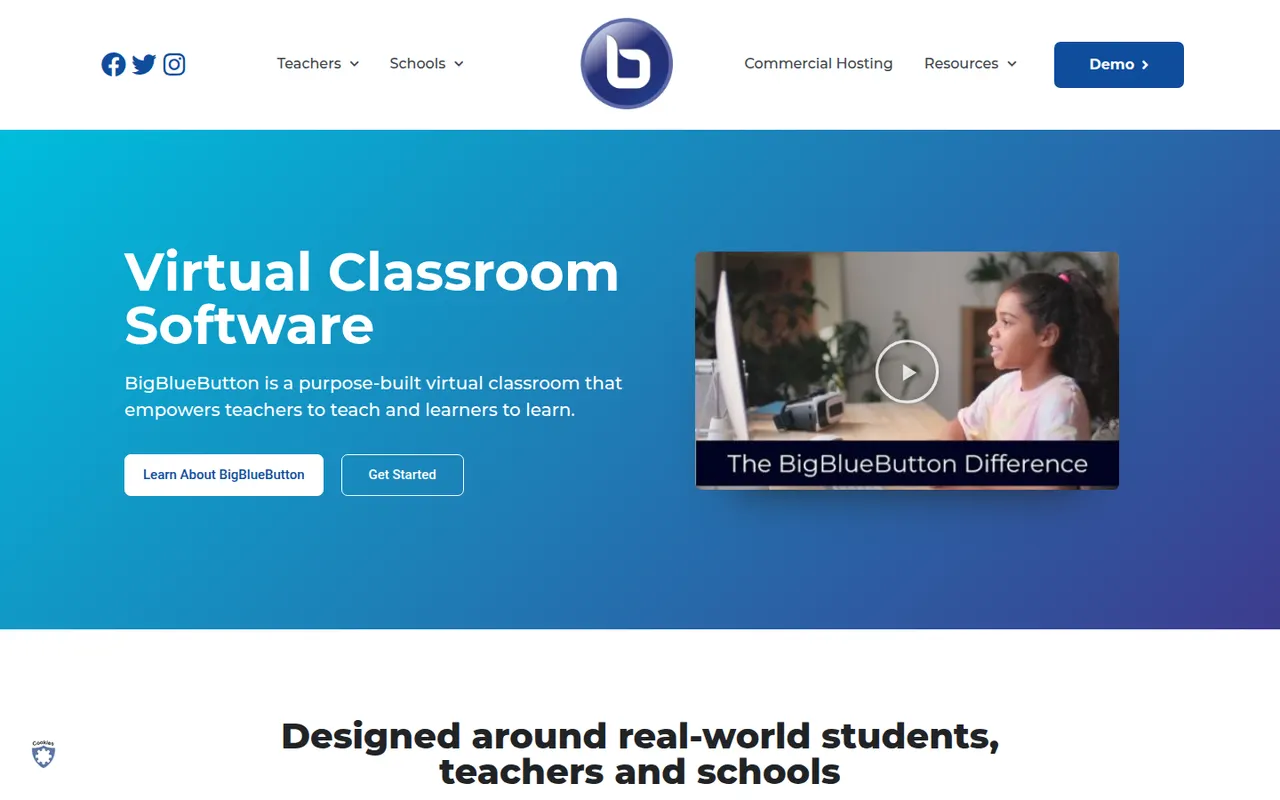
Cost / LicenseFreeOpen sourceCategoriesBigBlueButton is an open-source web conferencing system designed for online teaching. It includes a multi-user whiteboard, shared notes, polls, breakout rooms, screen sharing and recordings that can be replayed later. Schools and universities typically self-host it or use a hosting provider, and it plugs into learning management systems such as Moodle, Canvas and Sakai.
8 BigBlueButton alternativesPros
- Designed for teaching, with whiteboard, polls and breakout rooms
- Integrates with Moodle, Canvas and other learning platforms
- Free and open source, with recordings that can be replayed later
Cons
- Self-hosting requires a dedicated server and admin skills
- Interface feels dated next to Zoom or Teams
- Less suited to business meetings than to online classes
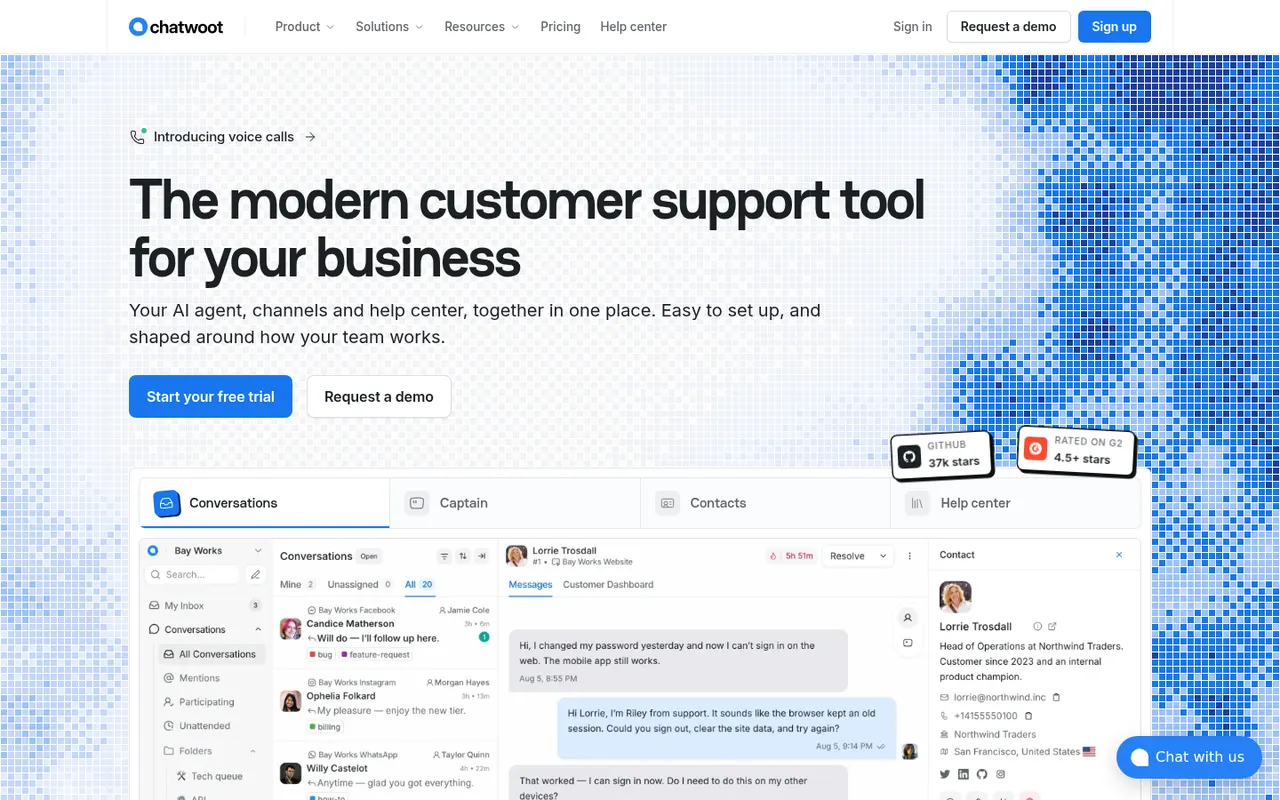
Cost / LicenseFreeOpen sourceCategoriesPlatformsChatwoot is an open-source customer engagement platform positioned as an alternative to Intercom and Zendesk. It unifies website live chat, email, WhatsApp, Facebook, Instagram, Telegram and SMS in one shared inbox, with a help center, canned responses, automation rules and an AI assistant called Captain. Teams can self-host it for free or use the paid cloud version.
11 Chatwoot alternativesPros
- Open source and free to self-host, keeping conversations on your servers
- One inbox for chat, email, WhatsApp, social channels and SMS
- Includes a help center, canned responses and automation rules
Cons
- Self-hosting requires maintaining the server, updates and integrations
- Reporting and workflows are less deep than in Zendesk or Intercom
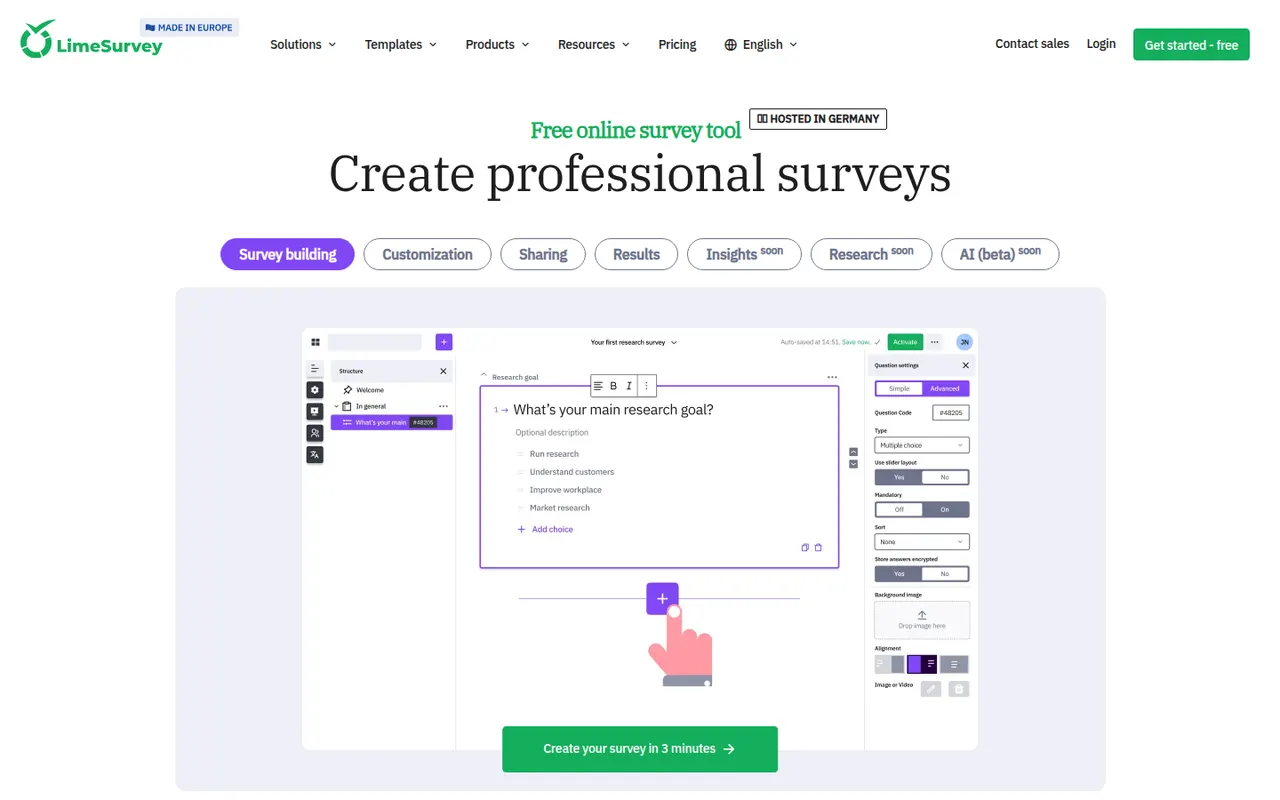
Cost / LicenseFreemiumOpen sourceCategoriesPlatformsLimeSurvey is an open-source online survey tool from Germany, suited to academic and public-sector research. It supports many question types, complex conditions, quotas, multilingual surveys and anonymous responses, with results exportable to SPSS, R and spreadsheets. The Community Edition can be self-hosted for free, and LimeSurvey Cloud offers hosted plans, including a free tier.
8 LimeSurvey alternativesPros
- Advanced logic with quotas, conditions and a wide range of question types
- Free self-hosted edition keeps research data under your control
- Exports results to SPSS, R and spreadsheets for statistical analysis
Cons
- Interface feels dated and takes time to learn
- Survey design looks less polished than modern form builders
- Self-hosting means handling updates and server security yourself
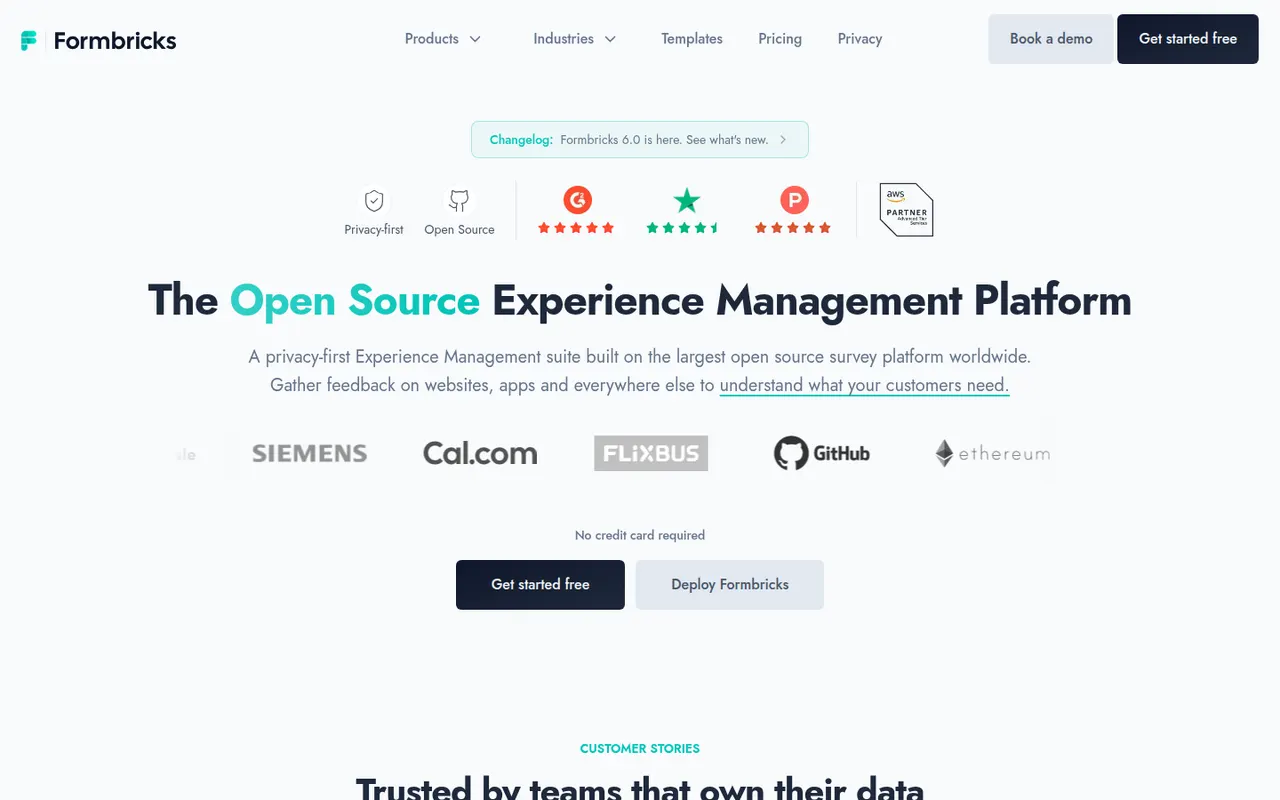
Cost / LicenseFreemiumOpen sourceCategoriesPlatformsFormbricks is an open-source experience management tool for collecting feedback through link surveys, website pop-ups and in-app surveys targeted by user attributes or actions. It integrates with tools like Slack, Notion and Airtable, offers an API and webhooks, and can be self-hosted to keep data on your own servers. Its cloud version has a free plan, and the team is based in Germany.
12 Formbricks alternativesPros
- Open source and self-hostable, so feedback data can stay on your servers
- In-app and website surveys can target users by attributes or actions
- API, webhooks and integrations with Slack, Notion and Airtable
Cons
- Self-hosting requires technical skills and ongoing maintenance
- In-app targeting needs an SDK set up by developers
- Younger product with fewer templates than established survey tools
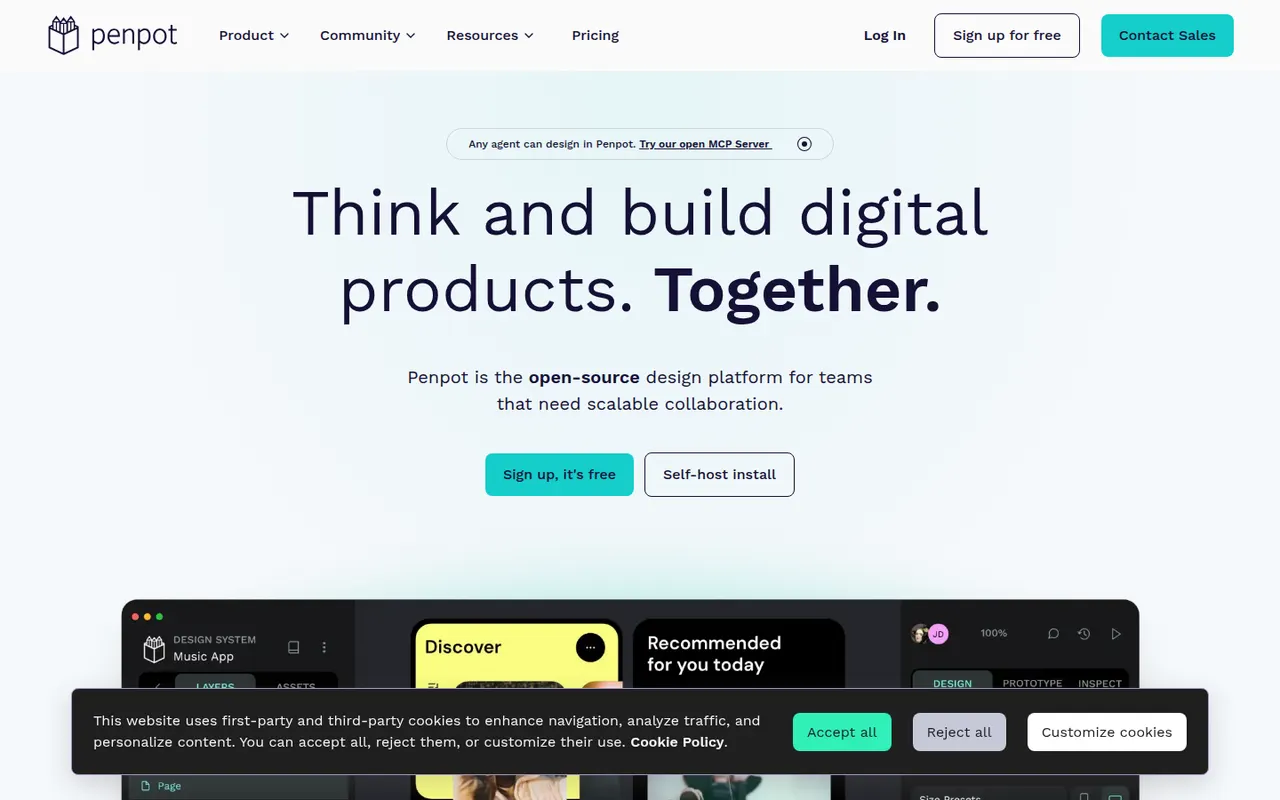
Cost / LicenseFreemiumOpen sourceCategoriesPlatformsPenpot is an open source alternative to Figma for designing interfaces and prototypes in the browser. Its data model is based on SVG, CSS and HTML, so developers can inspect designs and copy usable code, while teams work with components, design tokens and real-time collaboration. It is available as a hosted cloud service or can be self-hosted with Docker to keep full control over data.
10 Penpot alternativesPros
- Open source and self-hostable for full control over data
- Built on SVG, CSS and HTML, so developers get usable code
- Components, design tokens and real-time collaboration
Cons
- Performance can lag on large, complex files
- Smaller plugin ecosystem and fewer community resources than Figma
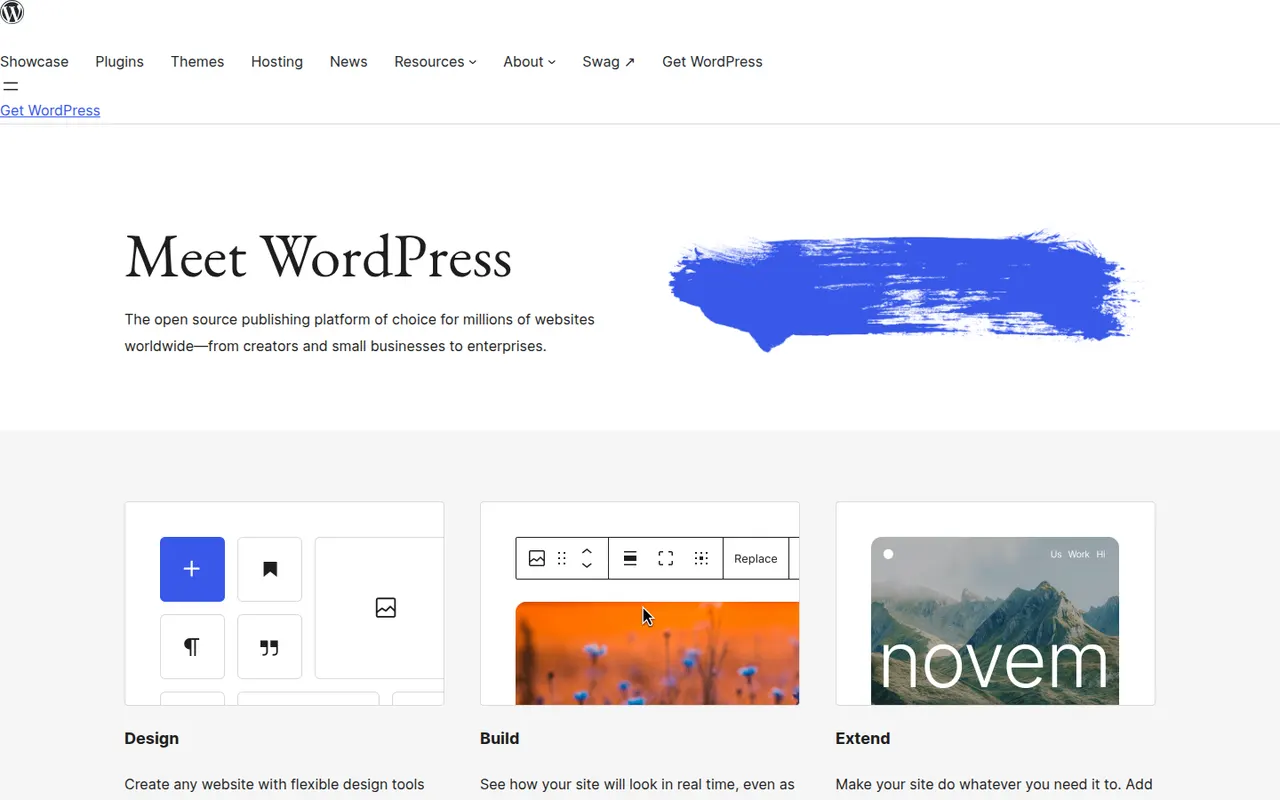
Cost / LicenseFreemiumOpen sourceCategoriesPlatformsWordPress is a free, open source content management system that you install on your own web hosting. Its block editor handles pages and posts, and thousands of themes and plugins add features such as forms, SEO tools or an online store. Because it is self-hosted, you keep full control over your files, your data and your choice of host.
9 WordPress alternativesPros
- Thousands of themes and plugins for almost any need
- Full control over files, data and choice of host
- Free and open source, with a huge community
Cons
- You handle hosting, updates, backups and security yourself
- Plugin sprawl can slow sites and introduce vulnerabilities
- Block editor takes time to master for complex layouts
Cost / LicenseFreeOpen sourceCategoriesPlatformsGhost is an open source platform for independent publishers that combines a website, a newsletter and paid memberships in one product. Writers publish in a clean editor, send posts by email and charge for subscriptions through Stripe, with no revenue share taken by Ghost. It can be self-hosted for free or run on the managed Ghost(Pro) service, and is maintained by a non-profit foundation.
9 Ghost alternativesPros
- Website, newsletter and paid memberships in one product
- No revenue share taken on subscriptions
- Open source and free to self-host
Cons
- Fewer themes and integrations than WordPress
- Self-hosting needs technical skills and an email delivery service
- Ghost(Pro) gets expensive as your member list grows
Cost / LicenseFreemiumOpen sourcePlatforms