Apps with Integrations
152 apps
Top Integrations apps ranked by the community
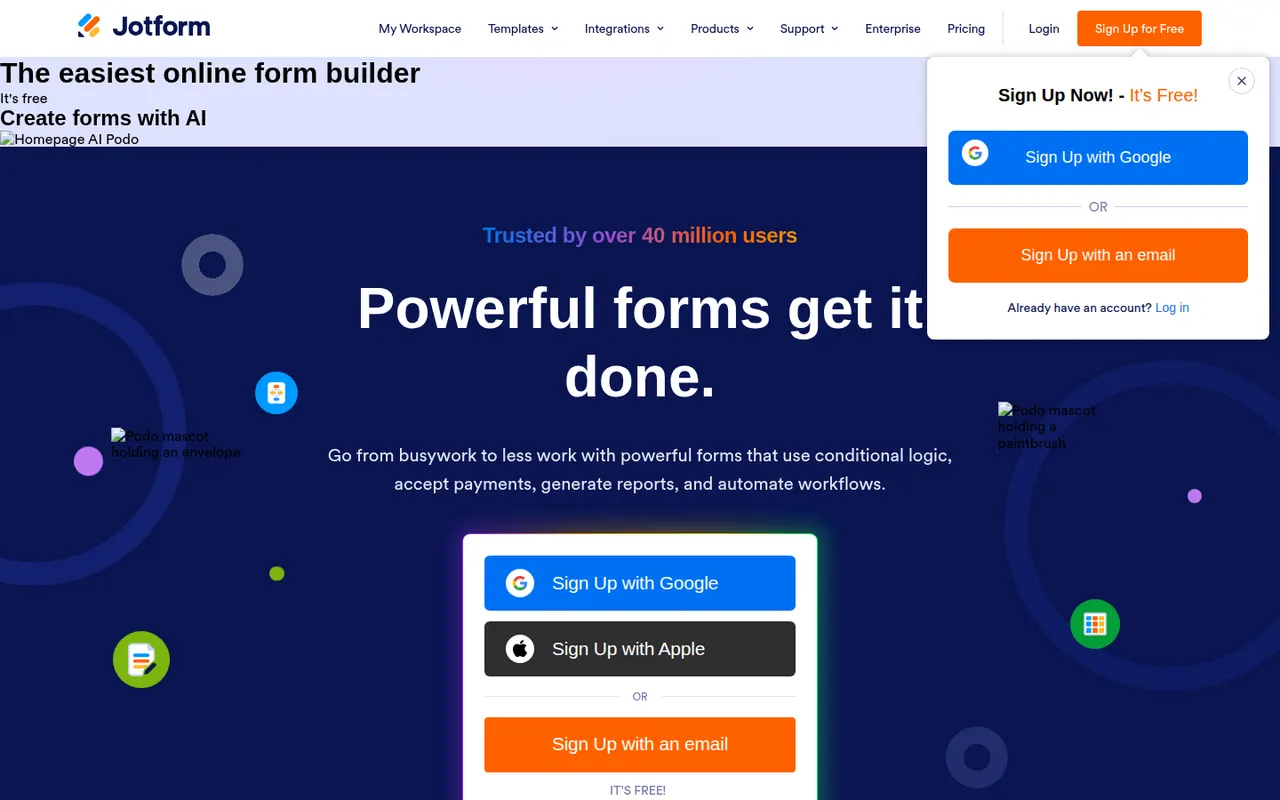
Jotform is an online form builder with a large template library, a drag-and-drop editor, conditional logic and integrations with many payment gateways. Its mobile apps can collect data offline, and the wider suite adds Jotform Tables, an app builder, PDF generation and e-signatures through Jotform Sign. A free plan covers basic use, and HIPAA-compliant options are available for healthcare.
10 Jotform alternativesPros
- Huge template library and a drag-and-drop editor that is easy to learn
- Many payment gateways, plus e-signatures through Jotform Sign
- Mobile apps can collect submissions offline
Cons
- Free plan caps forms and monthly submissions fairly tightly
- Interface can feel cluttered given how many options and products it bundles
- Forms on the free plan display Jotform branding
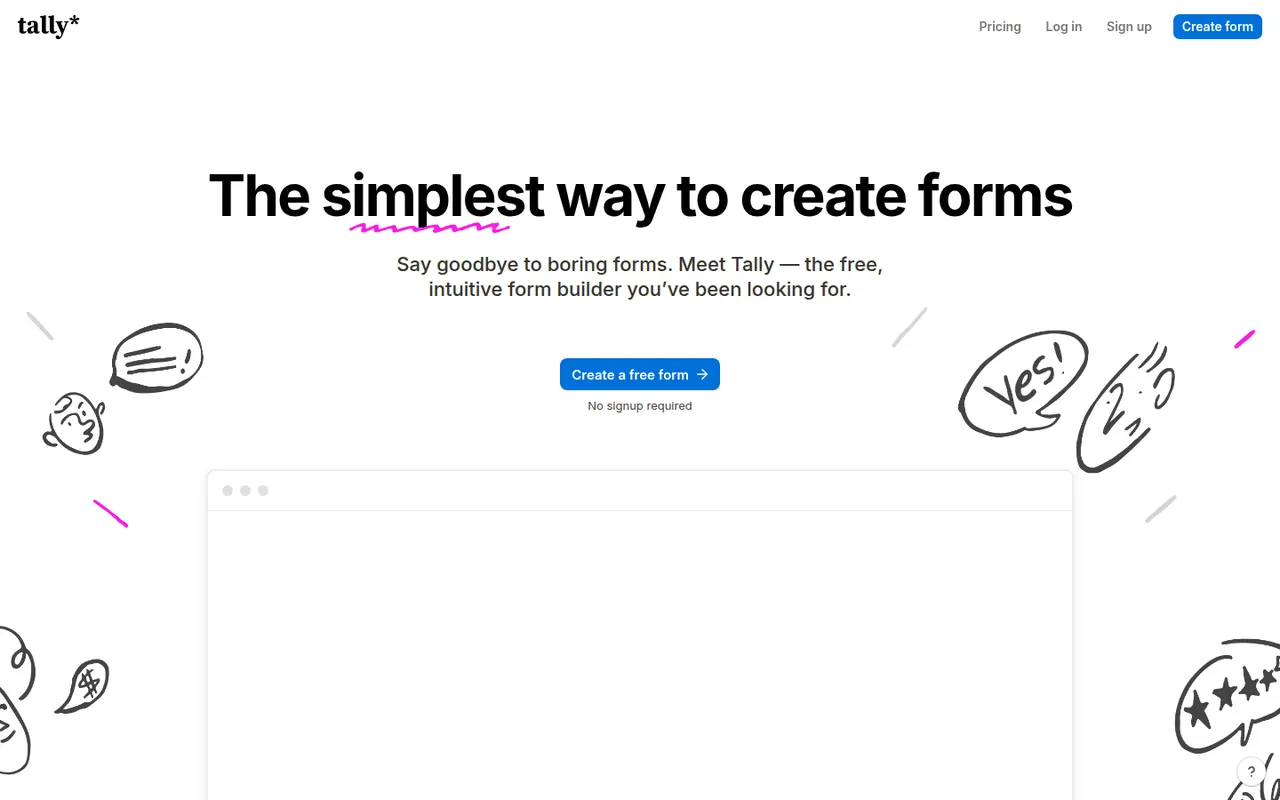
Cost / LicenseFreemiumProprietaryCategoriesTally is a form builder from Belgium where you create forms by typing in a document-like editor, similar to writing in Notion. Its free plan includes unlimited forms and responses along with logic, file uploads, Stripe payments and integrations, while Tally Pro adds branding removal, custom domains and team features. Form data is hosted in the EU.
9 Tally alternativesPros
- Free plan includes unlimited forms and responses, logic and payments
- Building a form feels as fast as typing in a document
- Data hosted in the EU, a plus for GDPR-conscious teams
Cons
- Custom domains, branding removal and team features require Tally Pro
- Fewer design themes and templates than visual drag-and-drop builders
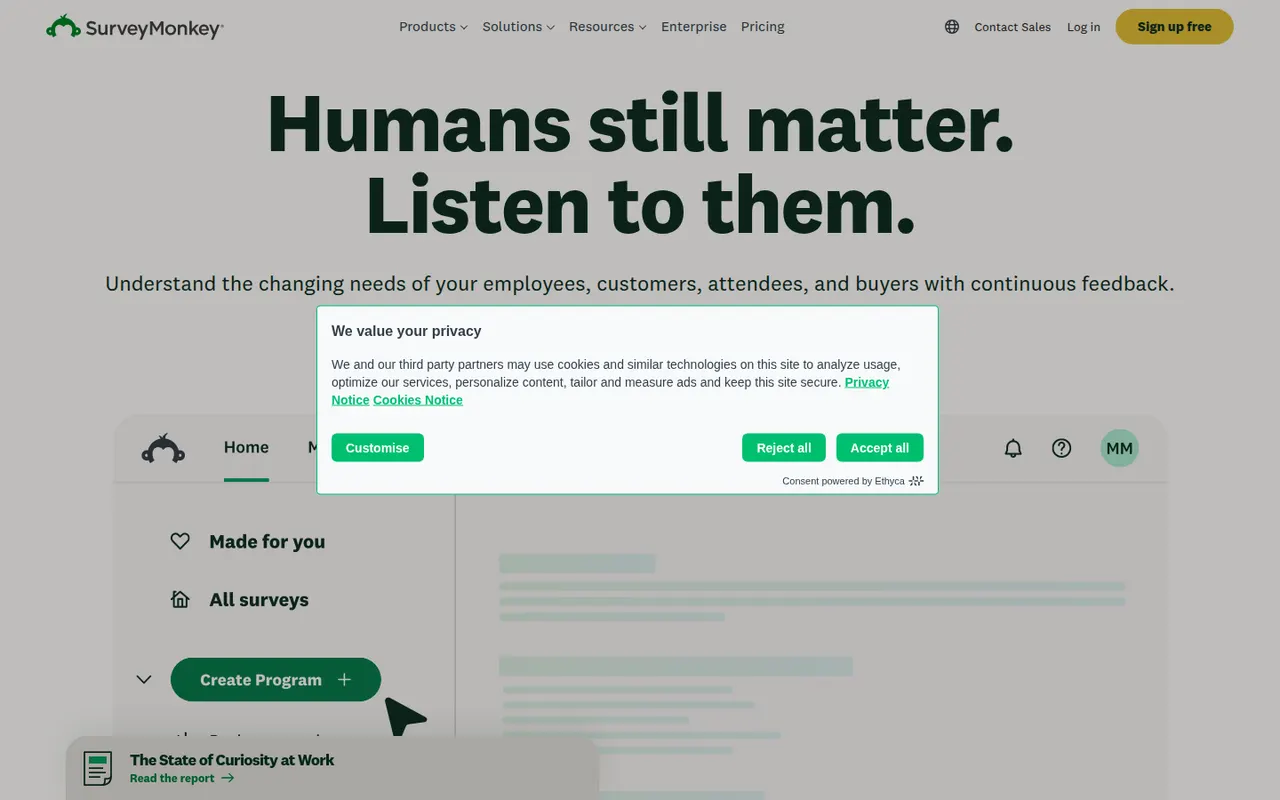
Cost / LicenseFreemiumProprietaryCategoriesPlatformsSurveyMonkey is an online survey platform used for customer feedback, employee engagement, event planning and market research. It offers survey templates, a question bank, skip logic, AI-assisted survey creation and analysis dashboards, and can supply paid respondents through its audience panel. A free Basic plan has limited features, alongside paid individual and team plans.
9 SurveyMonkey alternativesPros
- Large question bank and templates speed up survey creation
- Built-in audience panel can supply paid respondents
- Analysis dashboards and AI help make results easy to read
Cons
- Free Basic plan is very restricted, notably for results and exports
- Paid plans are expensive compared with many form builders
Cost / LicenseFreemiumProprietaryCategoriesMicrosoft Forms is a simple form builder for surveys, polls and quizzes, available free with a Microsoft account and included in Microsoft 365. Results can be viewed in real time, exported to Excel, and used in Teams or automated with Power Automate. It supports branching, auto-graded quizzes for education and Copilot suggestions for drafting questions.
9 Microsoft Forms alternativesPros
- Free with a Microsoft account and included in Microsoft 365
- Results export to Excel and plug into Teams and Power Automate
- Auto-graded quizzes suit classrooms already using Microsoft tools
Cons
- Limited design customization and question types
- Lacks payments and the advanced logic found in dedicated builders
- Most useful for people already inside the Microsoft ecosystem
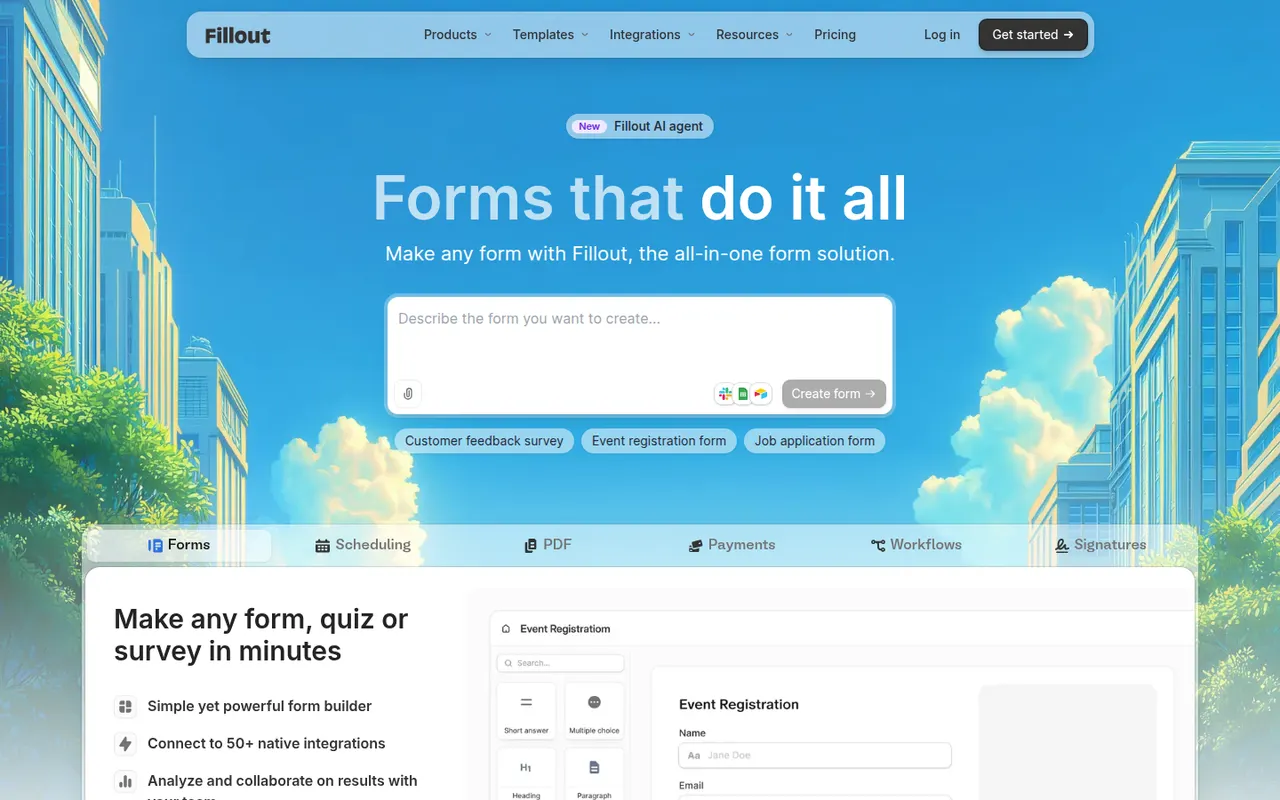
Cost / LicenseFreeProprietaryCategoriesPlatformsFillout is an online form builder with a usable free plan, conditional logic, payments, file uploads, scheduling and multi-page forms. Its main distinction is native two-way connections with tools such as Airtable, Notion, Google Sheets, HubSpot and Salesforce, so forms can create new records or update existing ones. It suits no-code builders and operations teams.
8 Fillout alternativesPros
- Two-way sync with Airtable, Notion or HubSpot can update existing records
- Capable free plan that covers most everyday form needs
- Multi-page forms, scheduling and payments in a single builder
Cons
- Higher response volumes and advanced features need a paid plan
- Smaller template library and community than older form builders
Cost / LicenseFreemiumProprietaryCategoriesPlatformsPaperform is an online form builder from Australia with a document-style editor that mixes questions with text, images and video, so forms read like web pages. It supports conditional logic, calculations, quizzes, product payments and appointment booking, and connects to other apps through native integrations and Zapier. Its sister product Papersign handles e-signatures. There is a free trial but no free plan.
7 Paperform alternativesPros
- Document-style editor makes forms read like polished web pages
- Calculations, payments and appointment booking are built in
- Native integrations plus Zapier connect it to many other apps
Cons
- No free plan once the trial ends
- Calculations and complex logic take some time to set up correctly
Cost / LicenseFree trialProprietaryCategoriesPlatformsQualtrics is an experience management (XM) platform used by large companies and universities to run advanced surveys and analyze customer, employee and market feedback. It offers complex survey logic, panel management, statistical analysis, text analytics and AI-generated insights, with dashboards for different teams. It is sold mainly through custom enterprise contracts, and a basic free account is also offered.
7 Qualtrics alternativesPros
- Very deep survey logic, panel management and statistical analysis
- Text analytics and AI insights help process large volumes of feedback
- Dashboards tailored to customer, employee and market research teams
Cons
- Custom enterprise contracts with no public pricing, costly for small teams
- Steep learning curve given the breadth of features
- Free account is very limited compared with paid plans
Cost / LicenseFreemiumProprietaryCategoriesFormbricks is an open-source experience management tool for collecting feedback through link surveys, website pop-ups and in-app surveys targeted by user attributes or actions. It integrates with tools like Slack, Notion and Airtable, offers an API and webhooks, and can be self-hosted to keep data on your own servers. Its cloud version has a free plan, and the team is based in Germany.
12 Formbricks alternativesPros
- Open source and self-hostable, so feedback data can stay on your servers
- In-app and website surveys can target users by attributes or actions
- API, webhooks and integrations with Slack, Notion and Airtable
Cons
- Self-hosting requires technical skills and ongoing maintenance
- In-app targeting needs an SDK set up by developers
- Younger product with fewer templates than established survey tools
Cost / LicenseFreemiumOpen sourceCategoriesPlatformsBalsamiq is a wireframing tool that deliberately keeps mockups rough and sketch-like, so discussions focus on structure and flow rather than visual polish. It offers a drag-and-drop library of UI controls, links between screens for simple click-through prototypes and comments for feedback. It is available as a web app and a desktop app for Windows and macOS, with integrations for Confluence, Jira and Google Drive.
8 Balsamiq alternativesPros
- Sketch style keeps discussions on structure, not visual polish
- Very easy to learn, even for non-designers
- Integrations with Confluence, Jira and Google Drive
Cons
- Not suited to high-fidelity designs or detailed prototypes
- No free plan once the trial ends
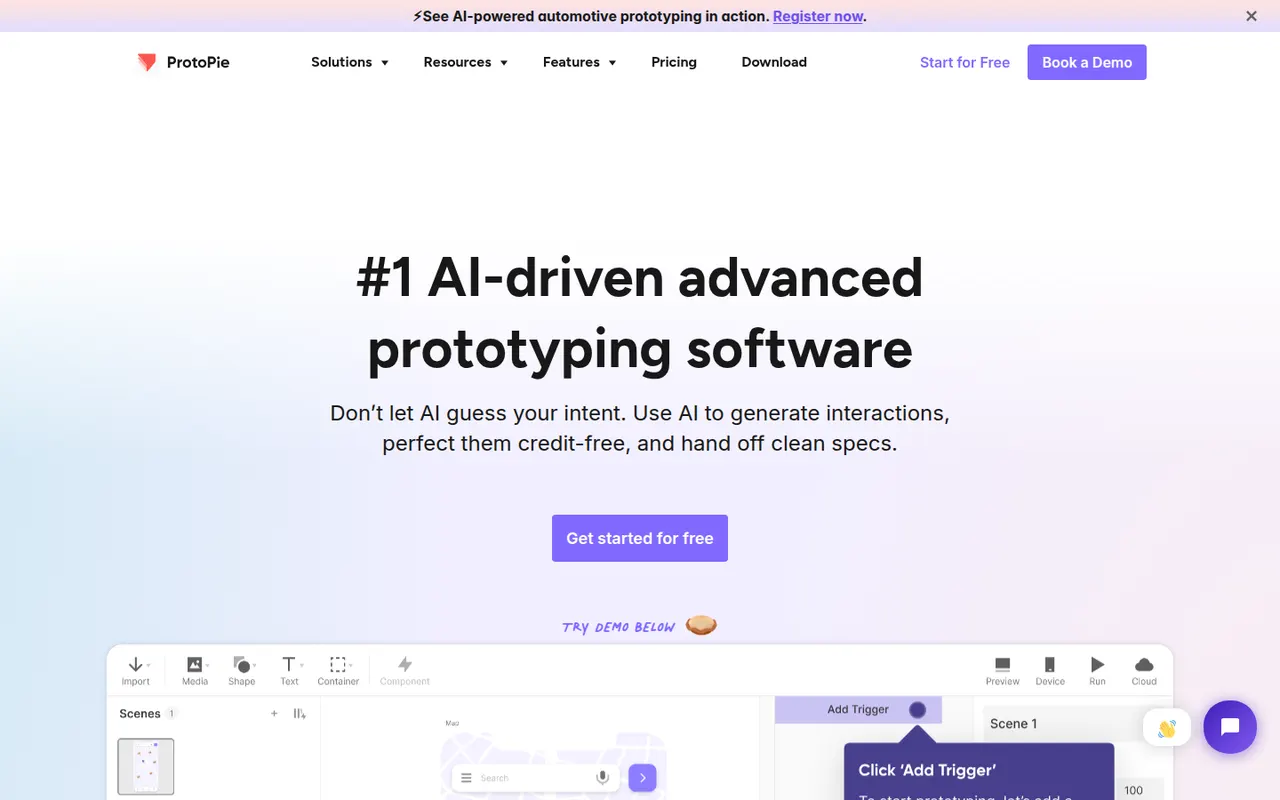
Cost / LicenseFree trialProprietaryCategoriesProtoPie is a prototyping tool for building realistic interactions without writing code, using triggers, responses, variables and formulas. Prototypes can use device sensors and connect several screens or hardware, which makes it useful for mobile, automotive and IoT interfaces. Designs can be imported from Figma, Sketch or Adobe XD and previewed on phones with the ProtoPie Player app.
8 ProtoPie alternativesPros
- Realistic interactions built with variables, formulas and conditions
- Uses device sensors and connects multiple screens or hardware
- Imports designs from Figma, Sketch and Adobe XD
Cons
- The logic-based approach takes time to learn
- Not a full design tool, so visuals are usually made elsewhere
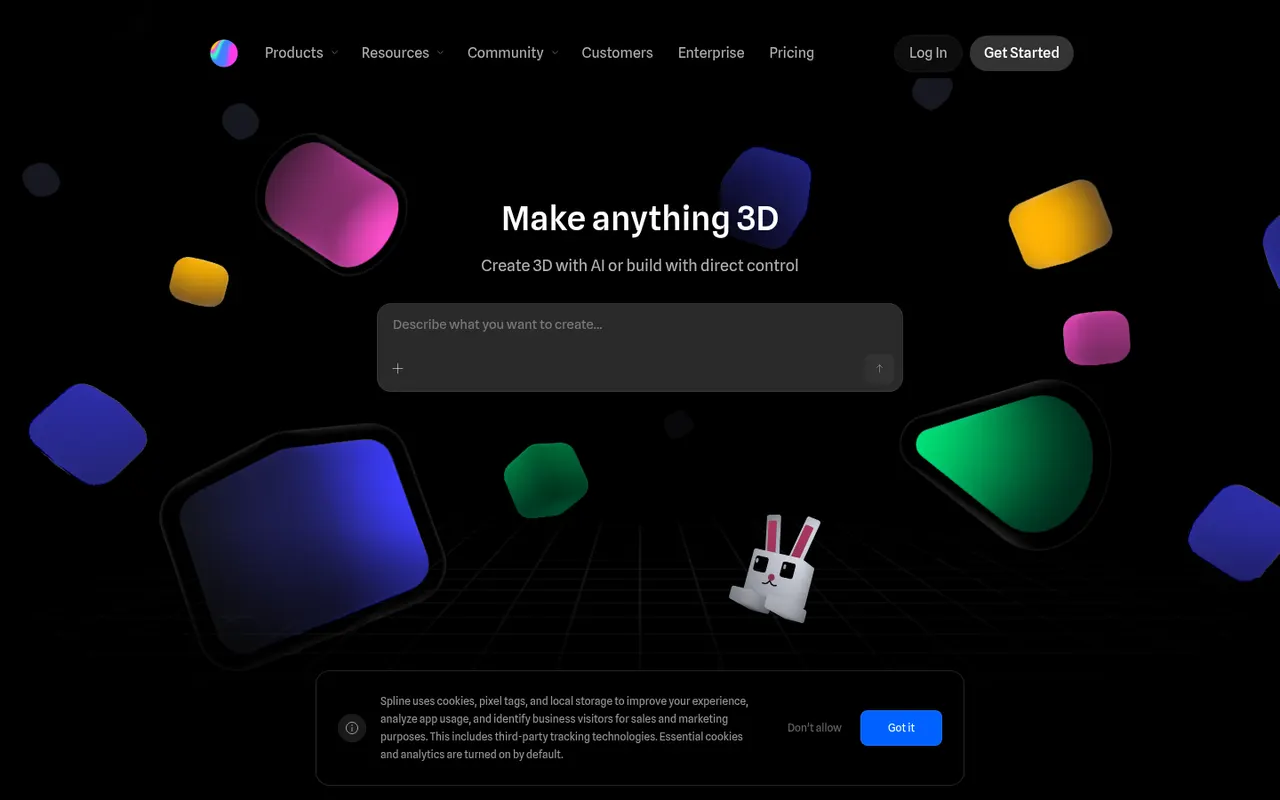
Cost / LicenseFreemiumProprietaryCategoriesSpline is a collaborative 3D design tool that runs in the browser, aimed at designers who want to create interactive 3D scenes, animations and interface elements without learning traditional 3D software. Scenes can react to hover, scroll and clicks, and can be exported as embeddable web code, images or videos, or used in Framer, Webflow and React projects. Teams edit files together in real time.
8 Spline alternativesPros
- Lets designers create 3D scenes without traditional 3D software
- Interactive states respond to hover, scroll and clicks
- Exports to web embeds, Framer, Webflow and React projects
Cons
- Complex scenes can weigh down web pages and slow loading
- Less capable than full 3D suites for detailed modeling
- Advanced exports and team features require a paid plan
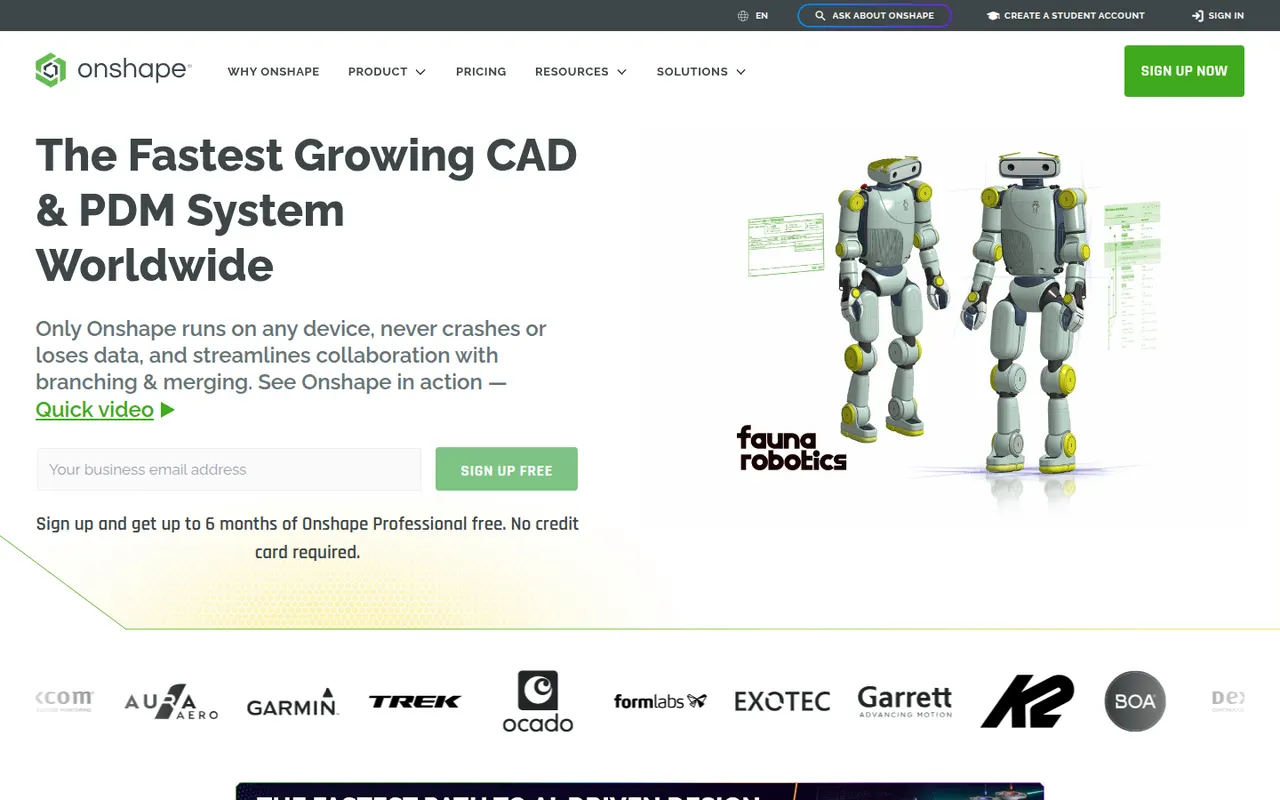
Cost / LicenseFreemiumProprietaryPlatformsOnshape is a professional 3D CAD system that runs entirely in the browser and on mobile devices, with no software to install and no files to manage. It combines parametric part and assembly modeling with Git-like branching, merging and version history, and lets several engineers edit the same design at once. Developed by PTC, it offers a free plan for hobbyists with public documents and paid plans for companies.
6 Onshape alternativesPros
- Runs entirely in the browser with nothing to install
- Built-in branching, merging and version history for designs
- Several engineers can edit the same model at the same time
Cons
- Documents created on the free plan are public
- Needs a reliable internet connection to work
- Professional plans weigh heavily on small companies' budgets
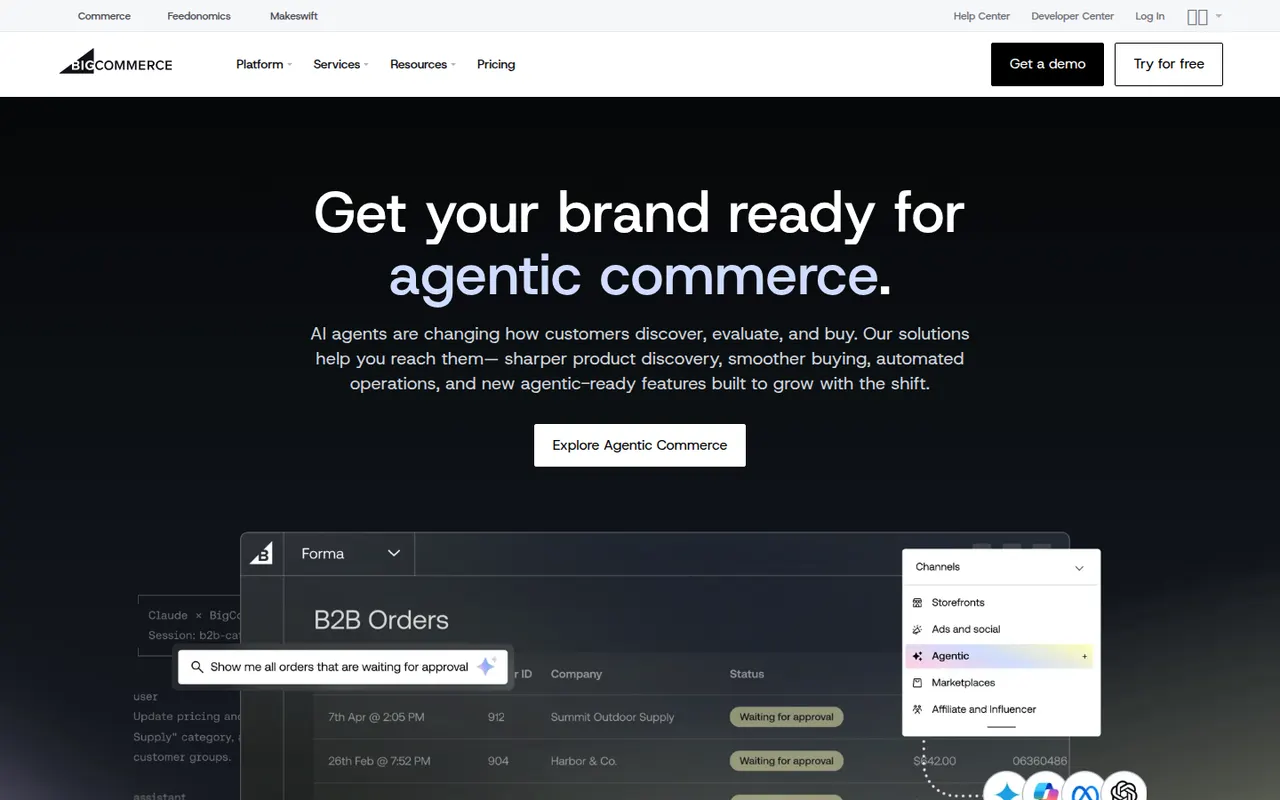
Cost / LicenseFreemiumProprietaryCategoriesBigCommerce is a hosted e-commerce platform that targets mid-sized and enterprise merchants, including B2B sellers. It includes multi-storefront management, built-in B2B features, multi-currency selling and open APIs, and can serve as a headless back end behind a custom front end. Merchants pick it when they want SaaS convenience with more flexibility around integrations.
8 BigCommerce alternativesPros
- Strong built-in B2B features and multi-storefront management
- Open APIs and headless support for custom front ends
- Hosted platform with multi-currency selling out of the box
Cons
- Plan upgrades are required once annual sales pass set thresholds
- Smaller app and theme ecosystem than Shopify
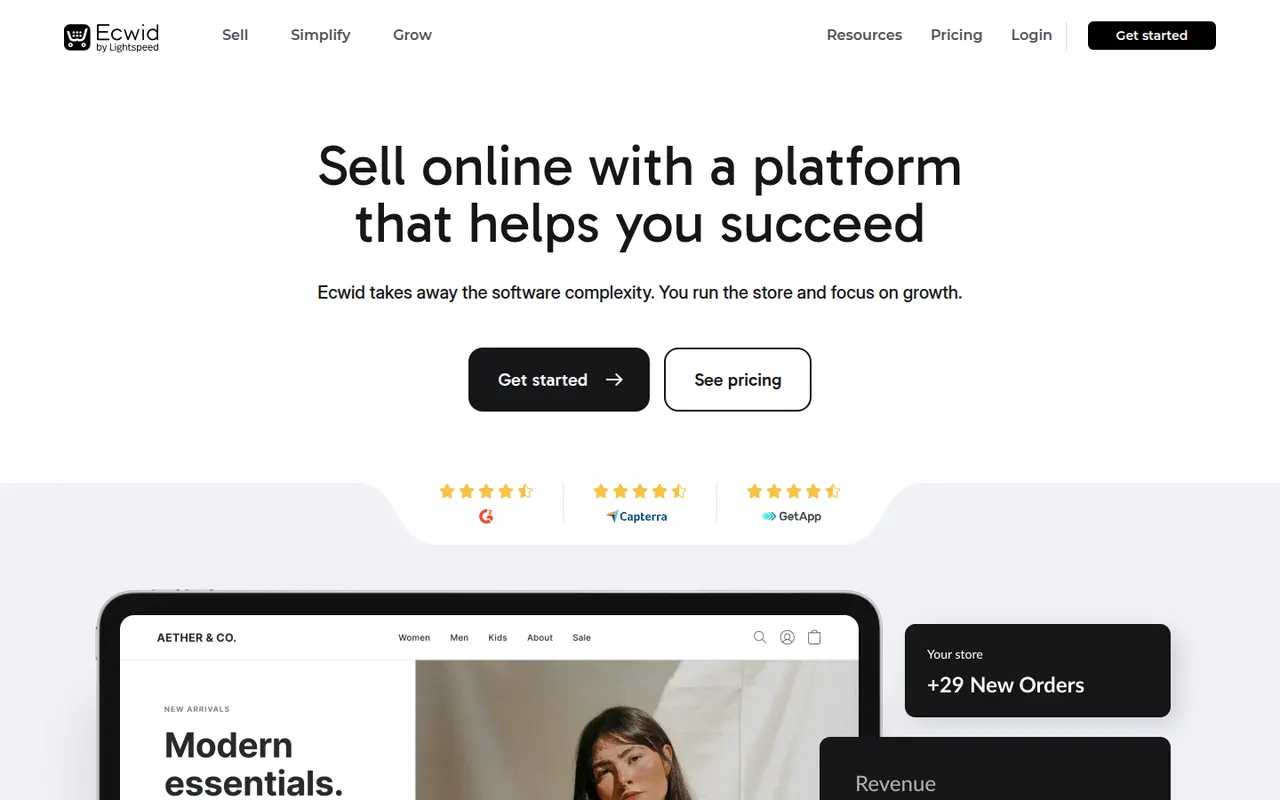
Cost / LicenseFree trialProprietaryCategoriesPlatformsEcwid, now part of Lightspeed, is an e-commerce platform built to be embedded: you manage products in one place and add the store to an existing website, a WordPress site, social networks and marketplaces. It also offers a simple standalone Instant Site and mobile apps to manage orders. It is aimed at small businesses that already have a web presence and want to start selling quickly.
9 Ecwid alternativesPros
- Embeds a store into an existing website, WordPress or social pages
- Manage products once and sell across several channels
- Quick to start, with mobile apps to manage orders
Cons
- Store design options are limited compared with full platforms
- Advanced features and larger catalogs need higher plans
- Instant Site is basic as a standalone website
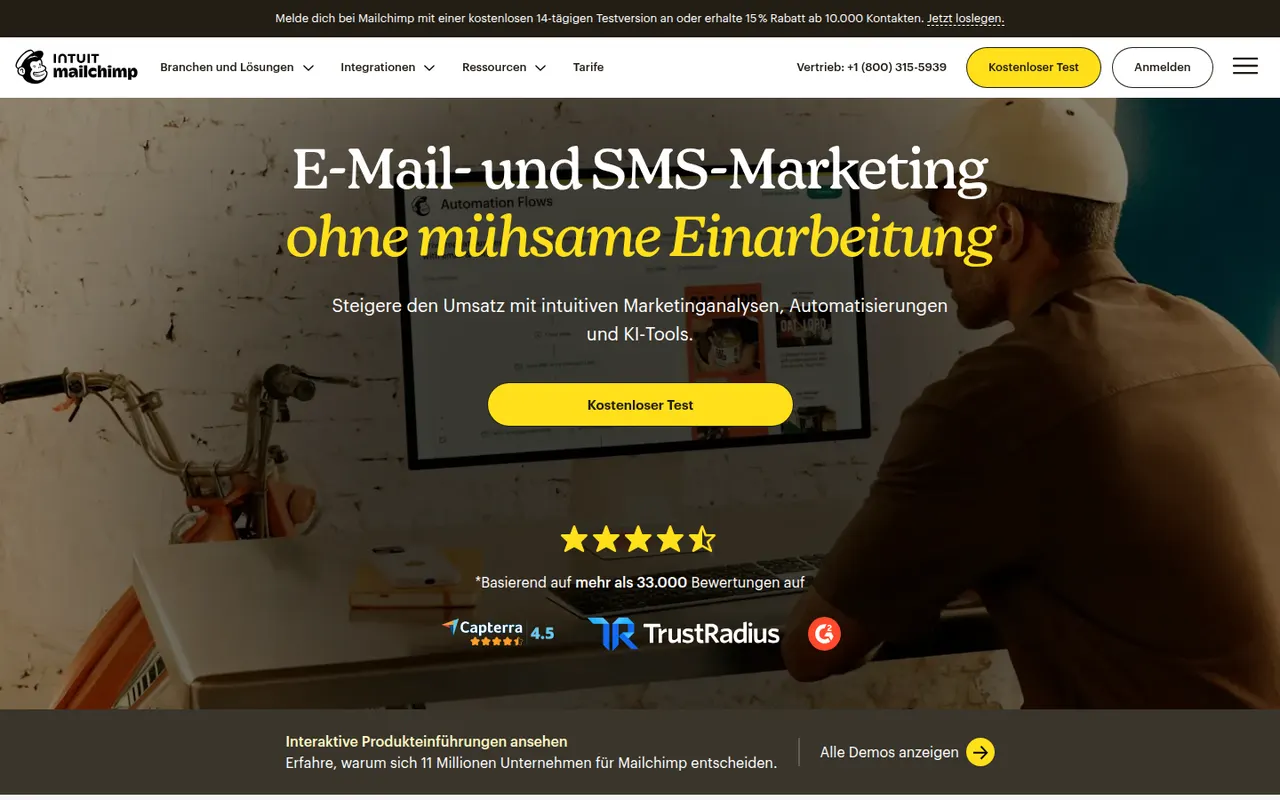
Cost / LicenseFree trialProprietaryCategoriesMailchimp, owned by Intuit, is an email marketing platform for designing campaigns, building automated customer journeys and organizing an audience with tags and segments. It also offers landing pages, signup forms, SMS in some countries and AI tools for content and send times. Its many integrations, including e-commerce platforms, make it easy to connect to an existing stack.
10 Mailchimp alternativesPros
- Familiar, well-documented platform with many templates
- Large integration library, including e-commerce platforms
- Free plan for getting started with a small list
Cons
- Prices rise steeply as your audience grows
- Unsubscribed contacts can still count toward billing
- Free plan is restrictive, and key features require paid tiers
Cost / LicenseFreemiumProprietaryCategoriesKit, previously called ConvertKit, is an email marketing platform designed for creators such as writers, podcasters and course authors. It combines landing pages and forms, visual automations, subscriber tagging and paid newsletters, and lets you sell digital products directly to your list. A recommendations network helps creators grow by promoting each other's newsletters.
12 Kit alternativesPros
- Tag-based subscriber management suited to creators
- Sell digital products and paid newsletters to your list
- Recommendations network helps newsletters grow
Cons
- Email design options are deliberately simple
- Gets expensive as the subscriber count grows
- Advanced automations are reserved for paid plans
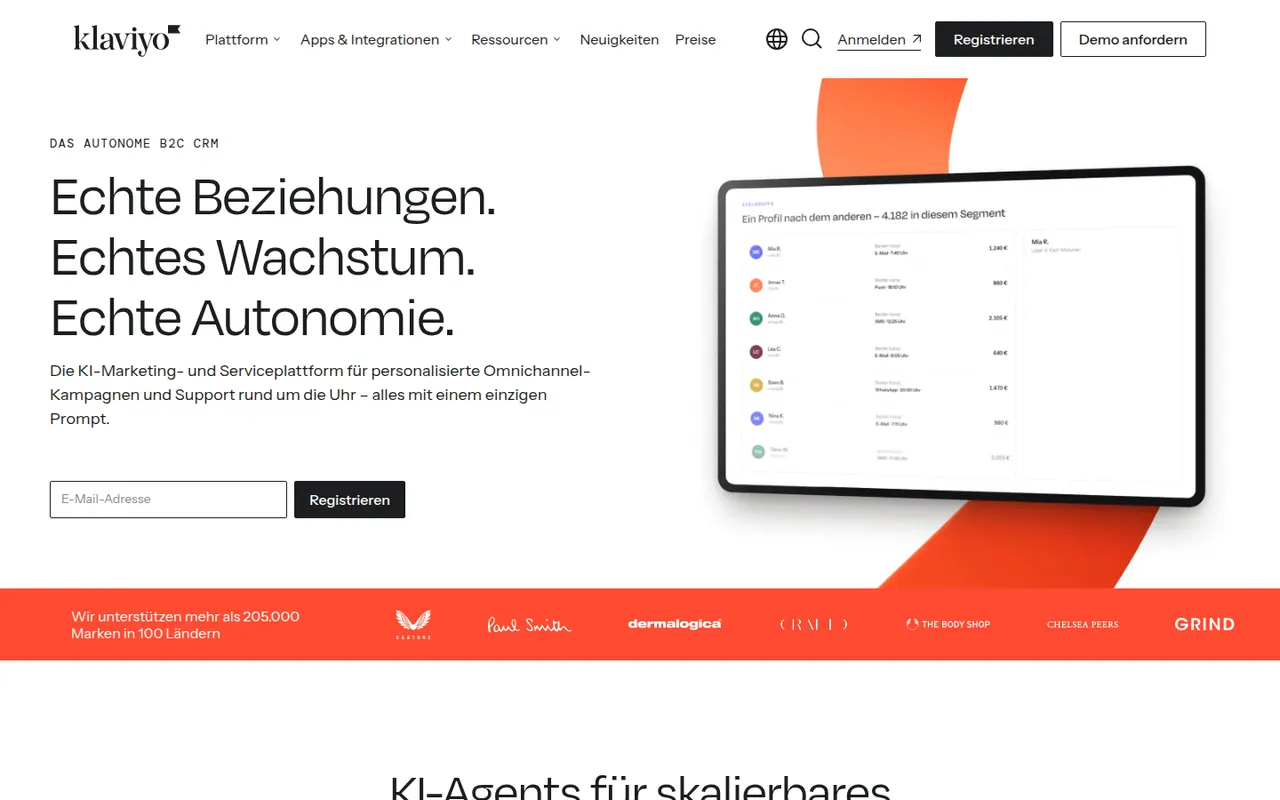
Cost / LicenseFreemiumProprietaryCategoriesKlaviyo is a marketing automation platform for online stores that connects to Shopify, WooCommerce and other platforms to use order and browsing data in email and SMS campaigns. Merchants build flows such as abandoned cart or post-purchase sequences, segment customers by behavior and predicted value, and measure revenue per message. AI features help generate content and segments.
7 Klaviyo alternativesPros
- Uses order and browsing data from Shopify and other platforms
- Prebuilt flows for abandoned carts and post-purchase emails
- Revenue attribution per message and predictive segments
Cons
- Becomes expensive as the number of active profiles grows
- Overkill for businesses that don’t sell online
- Advanced segmentation and reporting take time to master
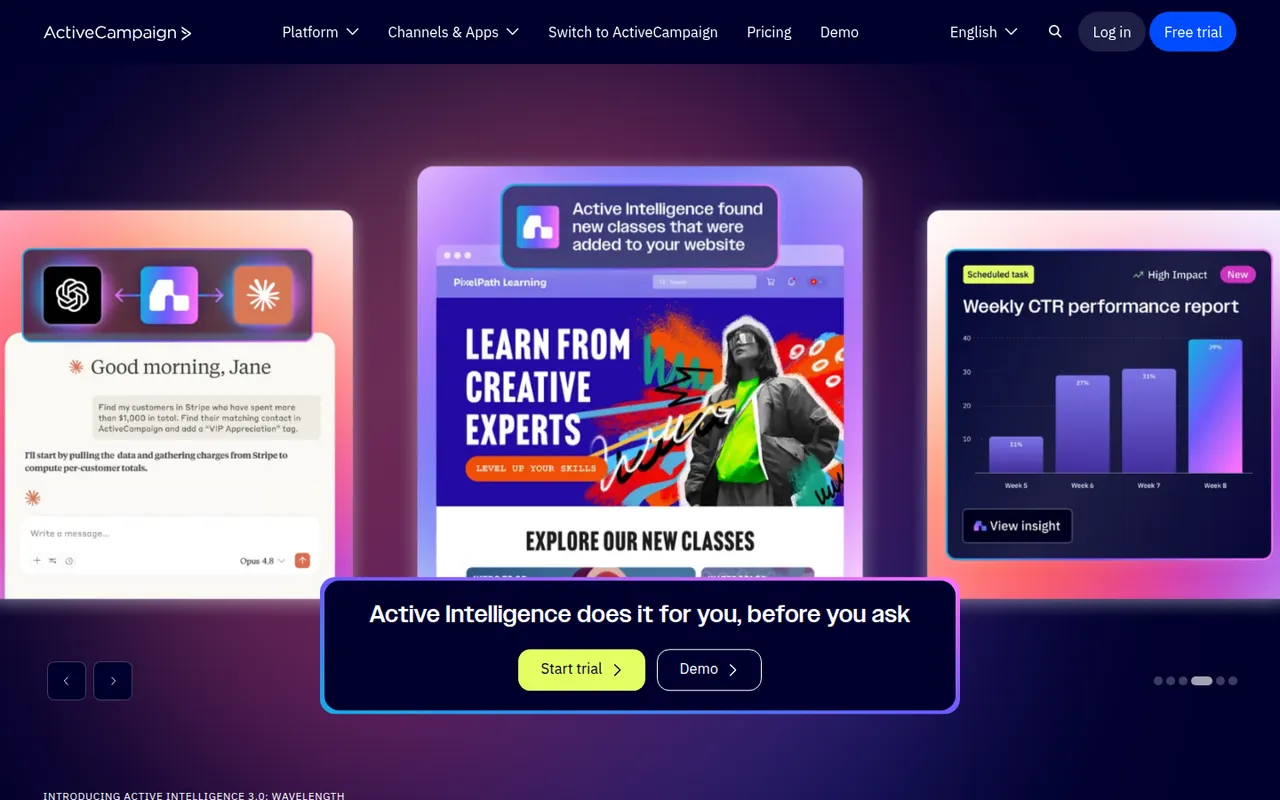
Cost / LicenseFreemiumProprietaryCategoriesActiveCampaign is a customer experience automation platform that combines email marketing, a visual automation builder, lead scoring and a sales CRM with deal pipelines. Automations can branch on behavior, site visits and custom data across email, SMS and connected apps. It is aimed at small and mid-sized businesses that need more advanced automation than basic newsletter tools provide.
8 ActiveCampaign alternativesPros
- Powerful visual automation builder with behavior-based branching
- Built-in CRM with deal pipelines and lead scoring
- Many integrations with e-commerce and business apps
Cons
- Complex automations come with a real learning curve
- Costs rise quickly as the contact list grows
- No free plan beyond the trial
Cost / LicenseFree trialProprietaryCategoriesConstant Contact is a long-established email marketing service aimed at small businesses and nonprofits. It offers a drag-and-drop editor with templates, automated series, list segmentation, SMS, event registration and social posting, backed by phone support. It favors ease of use over advanced automation, which suits teams without a dedicated marketer.
7 Constant Contact alternativesPros
- Easy drag-and-drop editor with many templates
- Phone support for small businesses and nonprofits
- Event registration, SMS and social posting in one tool
Cons
- Automation is basic compared with ActiveCampaign or Klaviyo
- Pricing climbs quickly with list size
- No free plan beyond the trial
Cost / LicenseFree trialProprietaryCategoriesHubSpot is a customer platform built around a free CRM, with paid hubs for marketing automation, sales engagement, customer service, content management and operations. Contacts, deals, emails and support tickets share one record, and the Breeze AI tools help with writing, research and agents. It suits small and mid-sized companies that want marketing, sales and support in a single system.
12 HubSpot alternativesPros
- Free CRM that covers contacts, deals and basic email tracking
- Marketing, sales and service share one customer record
- Large integration marketplace and extensive free training via HubSpot Academy
Cons
- Costs rise steeply once you need Professional-tier features
- Marketing pricing grows with the number of marketing contacts
- Upper tiers can involve onboarding fees and annual contracts
Cost / LicenseFreemiumProprietarySalesforce is a cloud CRM platform used mainly by mid-sized and large organizations, with Sales Cloud for pipelines and forecasting, Service Cloud for support and many other clouds and add-ons. It is highly customizable through objects, workflows and code, and the AppExchange marketplace adds a wide range of integrations. Agentforce brings AI agents that can act on CRM data.
9 Salesforce alternativesPros
- Customizable down to objects, workflows and code for any sales process
- AppExchange offers integrations for almost every business tool
- Scales from mid-sized teams to the largest global organizations
Cons
- Steep learning curve that often calls for dedicated admins or consultants
- High per-user cost, with many capabilities sold as add-ons
- Overkill for small teams with simple sales processes
Cost / LicenseFree trialProprietaryCategoriesZoho CRM is a cloud CRM for managing leads, contacts, deals and sales processes, with workflow automation, territory management, forecasting and the Zia AI assistant. It is highly customizable without code and connects natively to the many other Zoho apps for email, support, finance and analytics. A free edition covers very small teams, and paid editions scale to larger organizations.
9 Zoho CRM alternativesPros
- Deep no-code customization of modules, fields and workflows
- Connects natively to the wider Zoho suite for email, support and finance
- Free edition for very small teams, with paid editions that scale up
Cons
- Interface and settings can feel overwhelming at first
- Third-party integrations are less polished than Zoho’s own apps
- Getting the most out of it often means adopting more Zoho apps
Cost / LicenseFreemiumProprietaryCategoriesAttio is a modern CRM that builds itself from your email and calendar, then lets you model any kind of relationship data with custom objects, attributes and views. It offers real-time collaboration, workflow automation, reporting and an API, and is aimed at startups, investors and teams that find traditional CRMs rigid.
11 Attio alternativesPros
- Builds itself automatically from your email and calendar
- Custom objects and views adapt to almost any data model
- Modern, fast interface with real-time collaboration
Cons
- Its flexibility means more setup than an opinionated CRM
- Advanced features and higher limits require paid plans
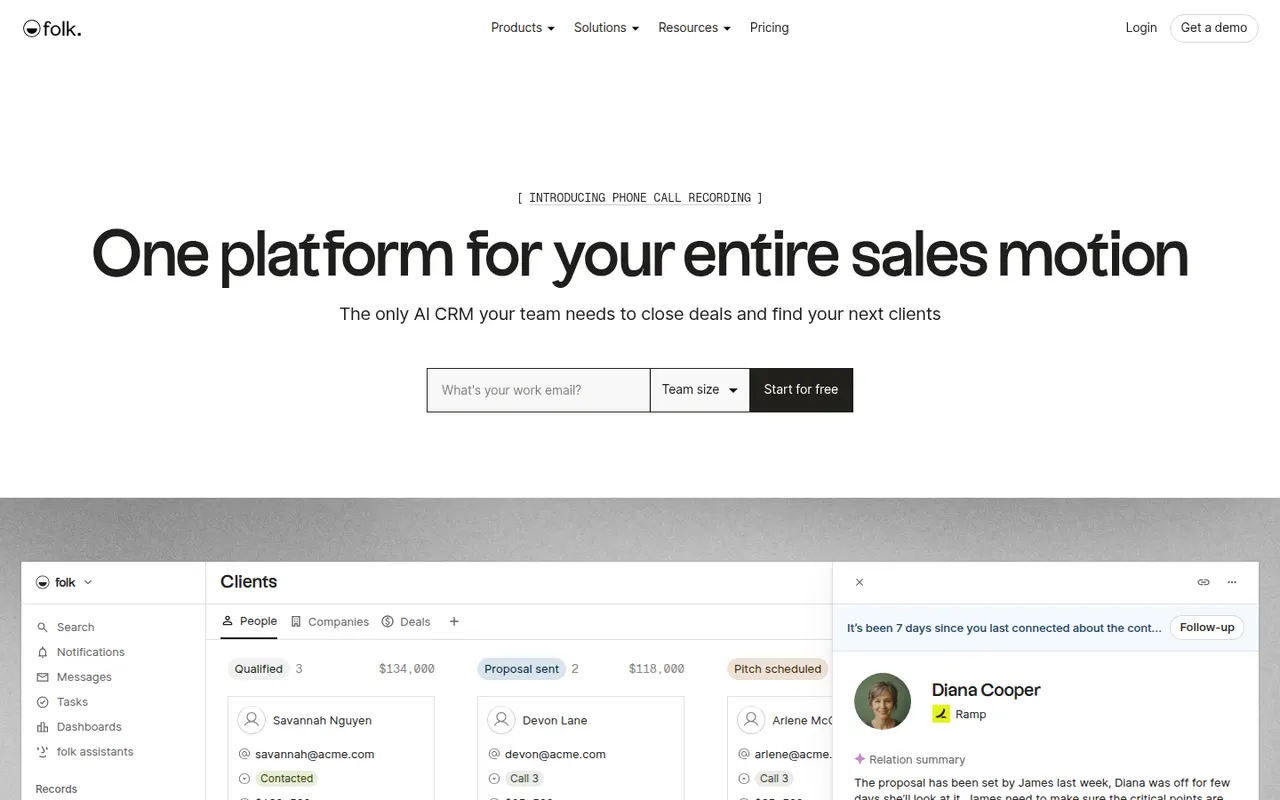
Cost / LicenseFreemiumProprietaryCategoriesPlatformsfolk is a relationship-focused CRM from a Paris-based startup, aimed at founders, agencies, recruiters and small sales teams. A browser extension imports contacts from LinkedIn and other sites, while pipelines, email sequences and AI-assisted enrichment and writing help with follow-up. Its spreadsheet-like interface keeps it simpler than traditional sales CRMs.
8 folk alternativesPros
- Spreadsheet-like interface that feels simpler than traditional sales CRMs
- Browser extension imports contacts from LinkedIn in a click
- Built-in email sequences and AI enrichment for follow-ups
Cons
- Reporting and forecasting stay basic for structured sales teams
- Smaller integration ecosystem than long-established CRMs
Cost / LicenseFree trialProprietaryCategoriesPlatformsCopper is a CRM built for teams that live in Google Workspace. A Chrome extension shows contacts, deals and tasks directly in Gmail, and it syncs with Google Calendar, Drive and Sheets to log activity without manual data entry. It offers pipelines, workflow automation and reporting, and suits small businesses and agencies managing relationships rather than high-volume sales.
8 Copper alternativesPros
- Works inside Gmail through a Chrome extension, so contacts sit next to email
- Syncs with Google Calendar, Drive and Sheets to log activity automatically
- Clean interface that small teams can adopt with little training
Cons
- Much less useful for teams that don’t run on Google Workspace
- Reporting and customization are shallower than in larger CRMs
- No free plan, and advanced automation sits on higher tiers
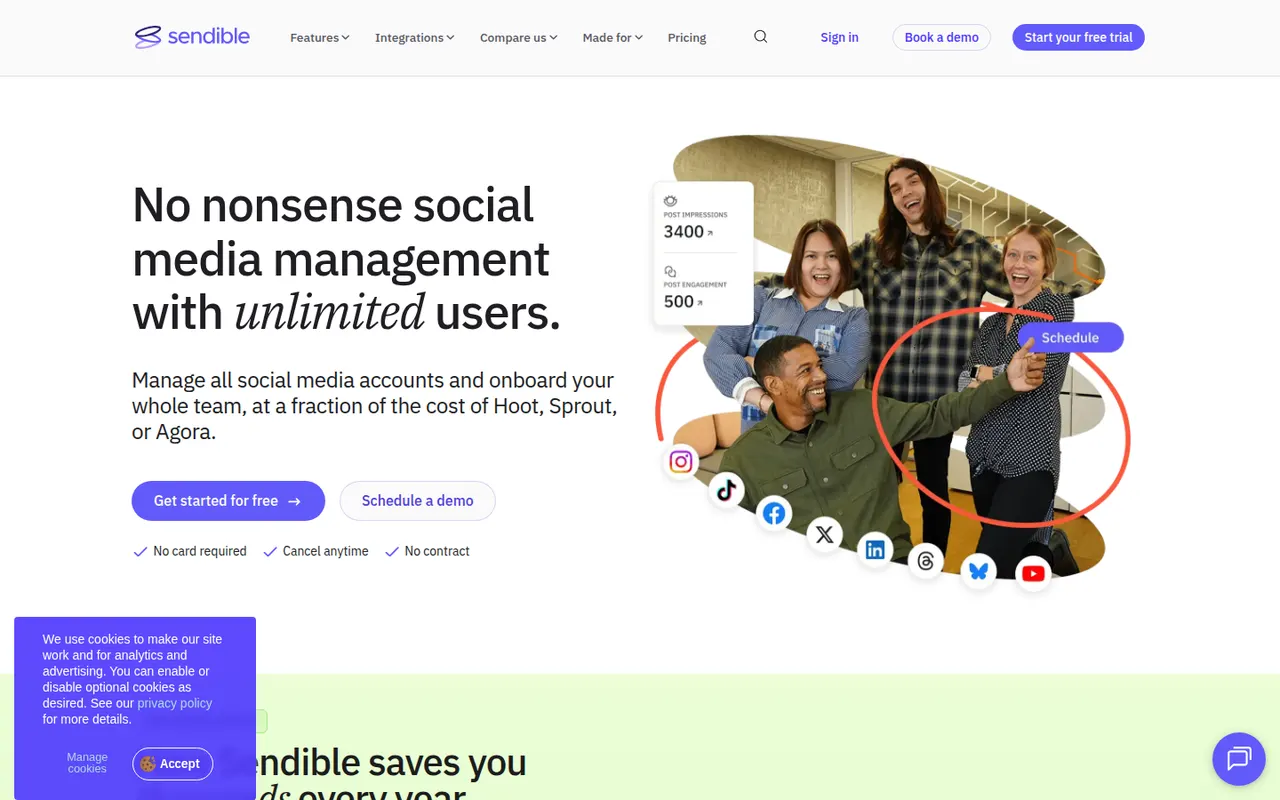
Cost / LicenseFree trialProprietaryCategoriesPlatformsSendible is a social media management platform designed for agencies that handle many client brands. It offers scheduling across the major networks, a content calendar, a unified inbox, client approval workflows and reports that can be white-labeled with the agency's own domain and logo. Integrations with Canva and stock image libraries let teams create posts inside the tool.
8 Sendible alternativesPros
- White-label reports and dashboards with the agency's own branding
- Client approval workflows built for agencies
- Canva and stock image integrations for creating posts
Cons
- No free plan, only a trial
- The interface feels less modern than newer tools
- Costs rise with the number of client brands
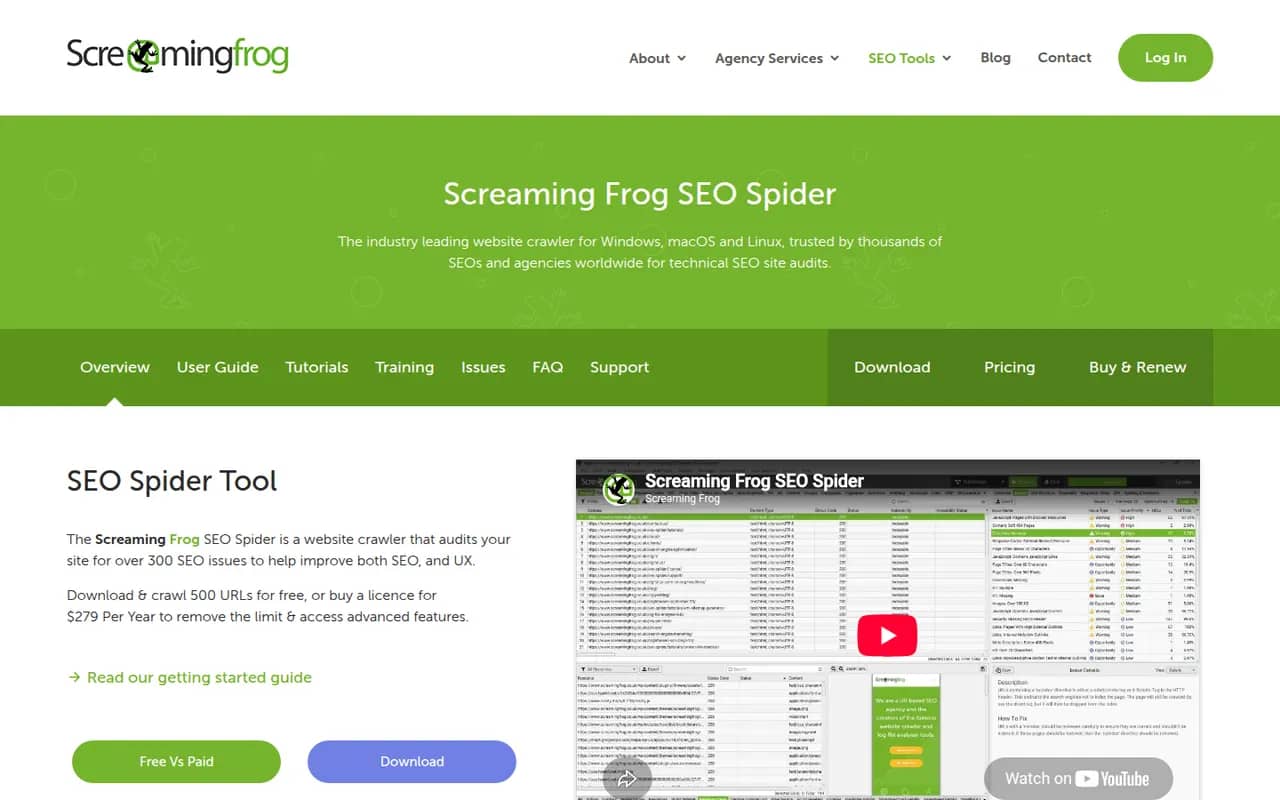
Cost / LicenseFree trialProprietaryCategoriesScreaming Frog SEO Spider is a desktop crawler that scans a website the way a search engine bot does and reports technical SEO issues such as broken links, redirects, duplicate titles, missing meta data and canonical problems. It can render JavaScript, check spelling and grammar, generate XML sitemaps and connect to Google Analytics, Search Console and PageSpeed Insights. The free version crawls up to 500 URLs.
6 Screaming Frog SEO Spider alternativesPros
- Thorough crawl that finds broken links, redirects and duplicates
- Renders JavaScript and connects to Analytics, Search Console and PageSpeed
- Runs locally on Windows, Mac and Linux
Cons
- The free version is capped at a small number of URLs
- Dense, technical interface for non-specialists
- Large crawls consume a lot of memory
Cost / LicenseFreemiumProprietaryCategoriesSurfer is a content optimization platform that analyzes the pages ranking for a keyword and turns them into guidelines for length, headings and terms to include, with a live content score as you write. It also offers topic and keyword research, an AI article writer and audits of existing pages. Writers can work in Surfer itself or in Google Docs and WordPress through integrations.
7 Surfer alternativesPros
- Live content score guides length, headings and terms to include
- Works inside Google Docs and WordPress
- Audits existing pages against top-ranking competitors
Cons
- No free plan, paid subscriptions only
- Following term suggestions too closely can make text sound unnatural
- Based on patterns in top pages, with no guarantee of rankings
Cost / LicensePaidProprietaryCategoriesPlatformsGoogle Analytics 4 measures traffic and behavior on websites and mobile apps with an event-based model, offering reports on acquisition, engagement, conversions and audiences. It integrates tightly with Google Ads, Search Console and BigQuery, and adds predictive metrics and explorations for funnels and paths. The standard edition is free, and its cookie-based tracking requires a consent banner in many countries.
12 Google Analytics alternativesPros
- Free standard edition with extensive reporting
- Tight integration with Google Ads, Search Console and BigQuery
- Covers websites and mobile apps in one event-based model
Cons
- GA4 interface is complex and hard to navigate for beginners
- Cookie-based tracking needs a consent banner in many countries
- Data is processed by Google, a concern for privacy-sensitive sites
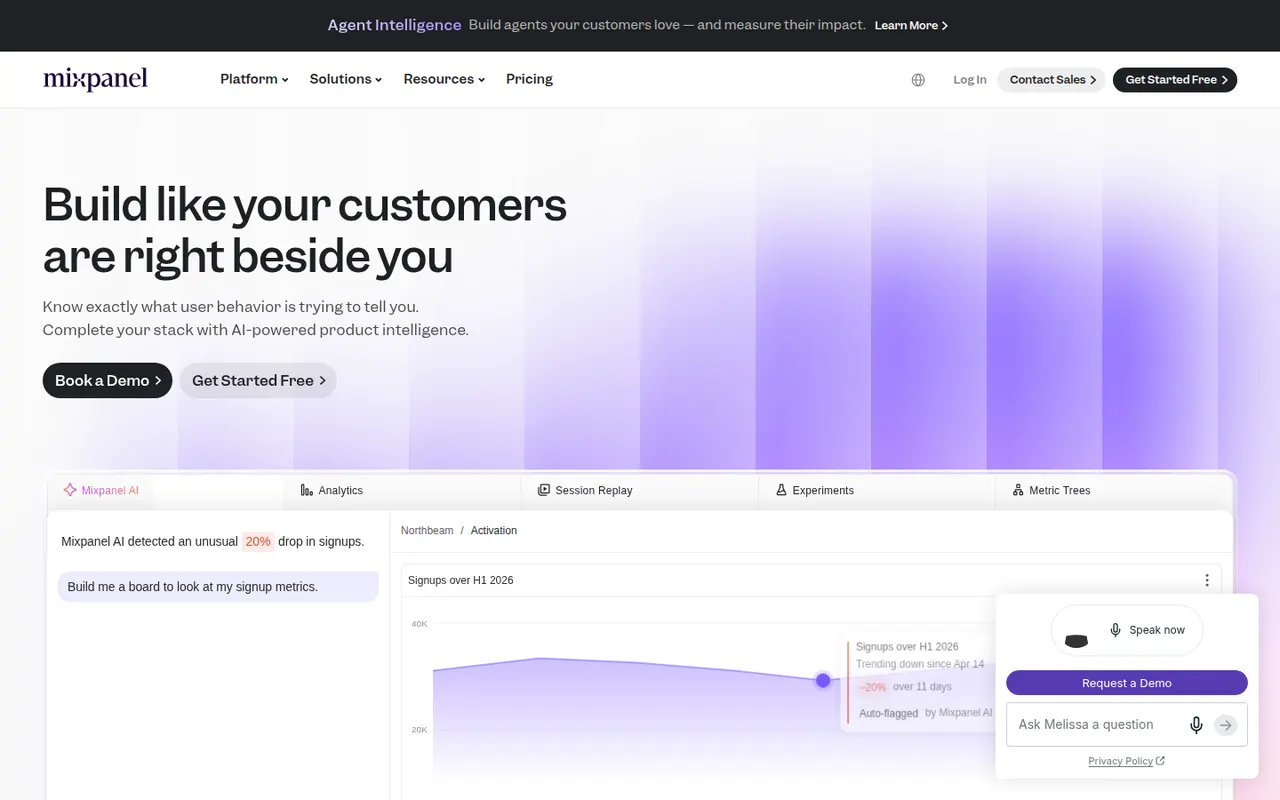
Cost / LicenseFreeProprietaryCategoriesMixpanel is a product analytics platform that tracks user actions as events and lets teams explore them through funnels, retention curves, flows and cohort segmentation without writing SQL. It also offers session replay and AI-assisted querying, and can sync data from a data warehouse. Product managers, growth teams and analysts use it to understand how features are adopted.
7 Mixpanel alternativesPros
- Funnels, retention and flows explored without writing SQL
- Interactive reports make slicing event data quick
- Usable free plan for smaller products
Cons
- Needs a well-planned event schema before data becomes useful
- Costs grow quickly with event volume on paid plans
- Less suited to marketing attribution than to product analysis
Cost / LicenseFreemiumProprietaryCategoriesPlatforms