Apps with API access
99 apps
Top API access apps ranked by the community
Recraft is an AI design tool that generates both raster images and editable vector graphics (SVG), which suits icons, illustrations, logos and marketing assets. You can create custom styles from reference images so a whole set stays on brand, and its canvas includes background removal, upscaling, inpainting and mockups. It targets designers and marketers, with a free plan and an API for developers.
11 Recraft alternativesPros
- Generates editable SVG vector graphics, not just raster images
- Custom styles from reference images keep asset sets on brand
- Canvas includes background removal, upscaling and mockups
Cons
- Complex vector output can still need manual cleanup
- Higher limits and advanced features are reserved for paid plans
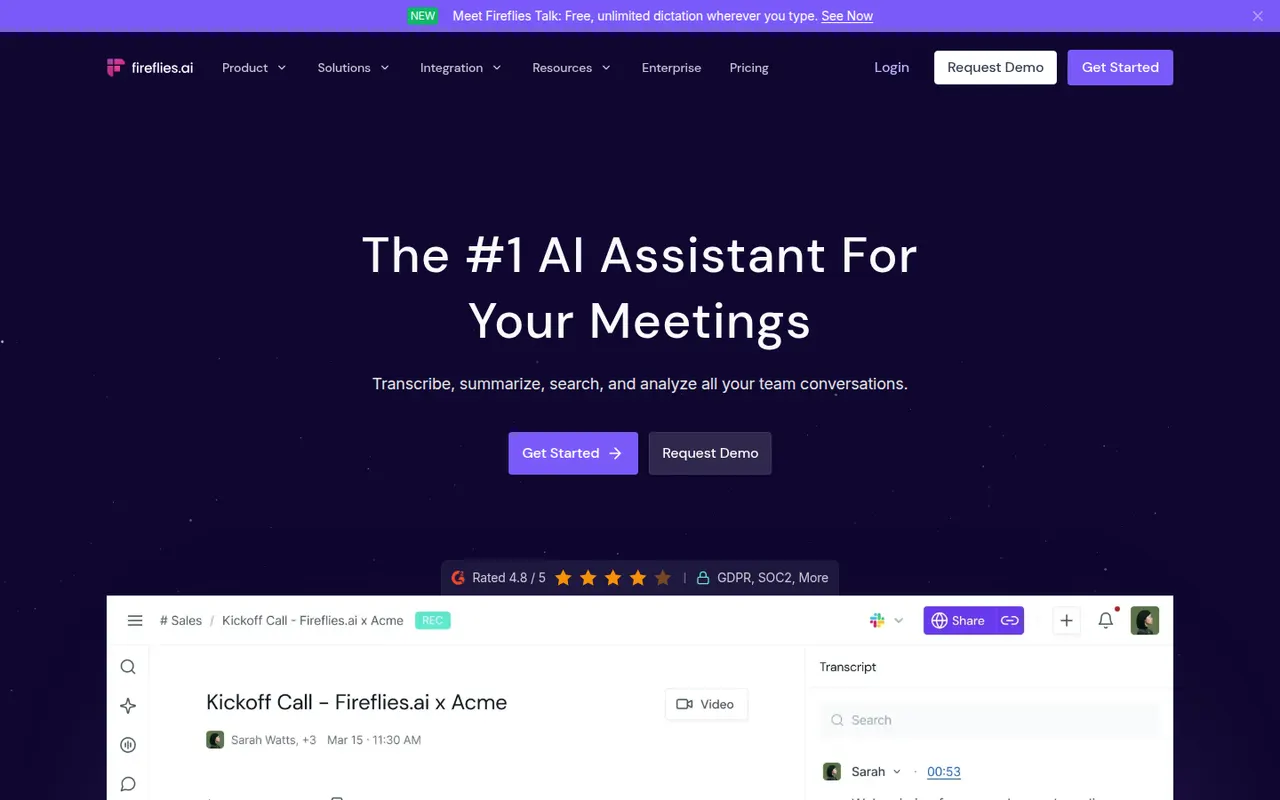
Cost / LicenseFreemiumProprietaryCategoriesPlatformsFireflies.ai joins video calls on Zoom, Google Meet, Microsoft Teams and other platforms to record and transcribe them in many languages. It produces summaries and action items, offers conversation analytics such as talk time and topic tracking, and pushes notes to CRMs like Salesforce and HubSpot or to Slack and Notion. You can search across meetings, query them with an AI assistant and start on a free plan.
9 Fireflies.ai alternativesPros
- Works across Zoom, Meet, Teams and other call platforms
- Transcribes in many languages, with search across all meetings
- Pushes notes to CRMs, Slack and Notion
Cons
- Auto-join settings can bring the bot into calls unexpectedly
- Free plan limits storage and advanced AI features
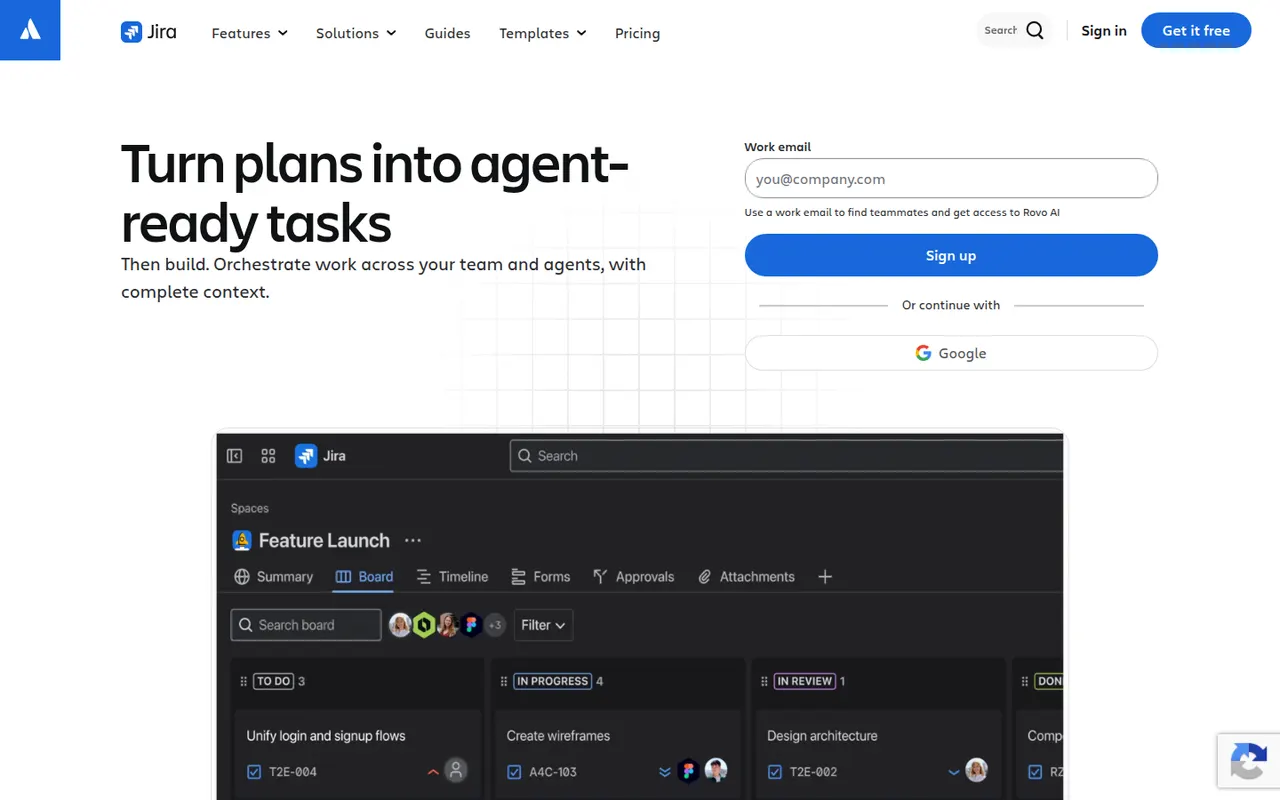
Cost / LicenseFreemiumProprietaryCategoriesPlatformsJira is Atlassian's tracker for software teams, built around issues, Scrum and Kanban boards, backlogs, sprints and configurable workflows. It connects to Confluence, Bitbucket and GitHub, offers a large marketplace of apps and rule-based automation, and is available in the cloud or as a self-managed Data Center edition for large organizations.
12 Jira alternativesPros
- Mature Scrum and Kanban boards with backlogs and sprints
- Highly configurable workflows, fields and automation rules
- Tight links with Confluence, Bitbucket and GitHub, plus a large app marketplace
Cons
- Complex to set up and administer without a dedicated admin
- Can feel heavy and slow for small teams or simple projects
- Marketplace apps add to the cost on top of per-user pricing
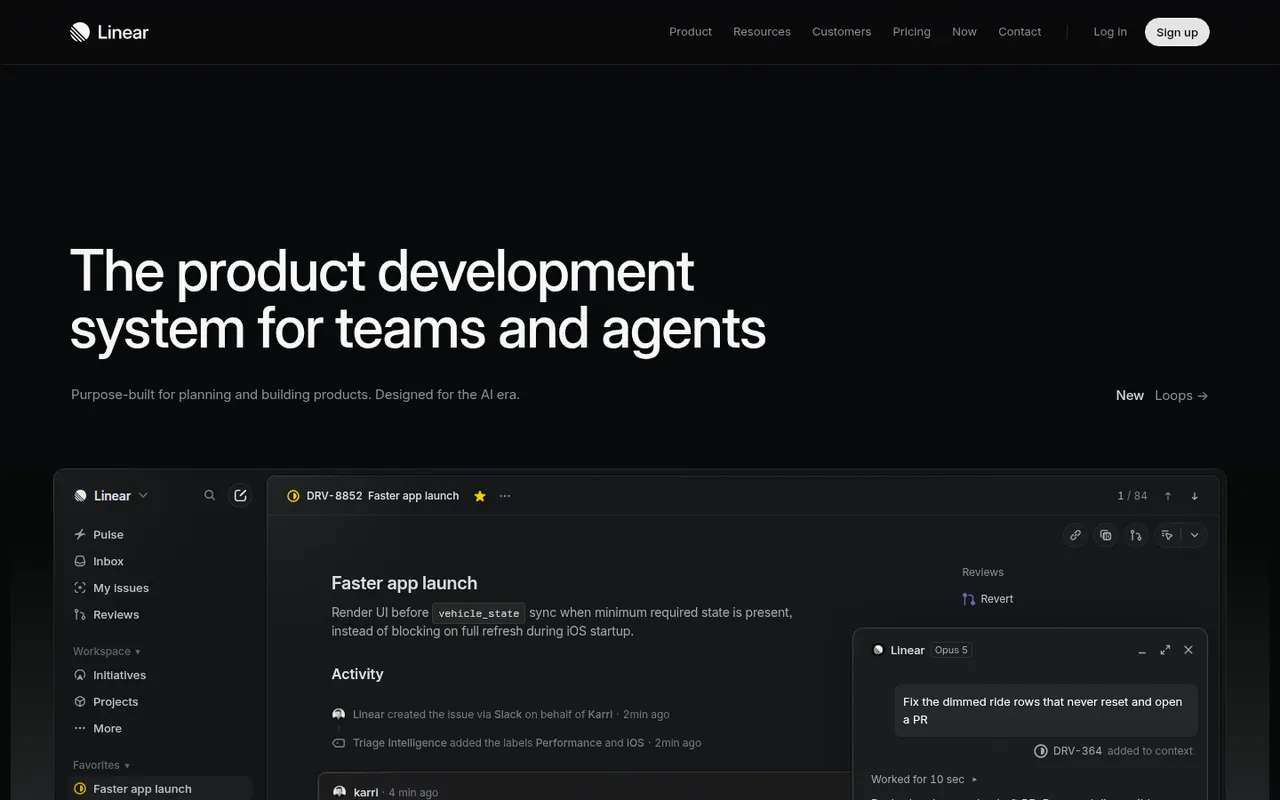
Cost / LicenseFreemiumProprietaryCategoriesPlatformsLinear is an issue tracker for software teams that emphasizes speed, keyboard shortcuts and an opinionated workflow with cycles, projects, roadmaps and triage. It syncs with GitHub and GitLab to update issues from pull requests, integrates with Slack and support tools, and exposes a GraphQL API for custom automation.
9 Linear alternativesPros
- Fast interface built around keyboard shortcuts
- GitHub and GitLab sync updates issues from pull requests
- Cycles, projects and roadmaps follow a clear, opinionated workflow
Cons
- The opinionated workflow leaves little room for custom processes
- Designed for software teams, less suited to other departments
- Cloud only, with no self-hosted option
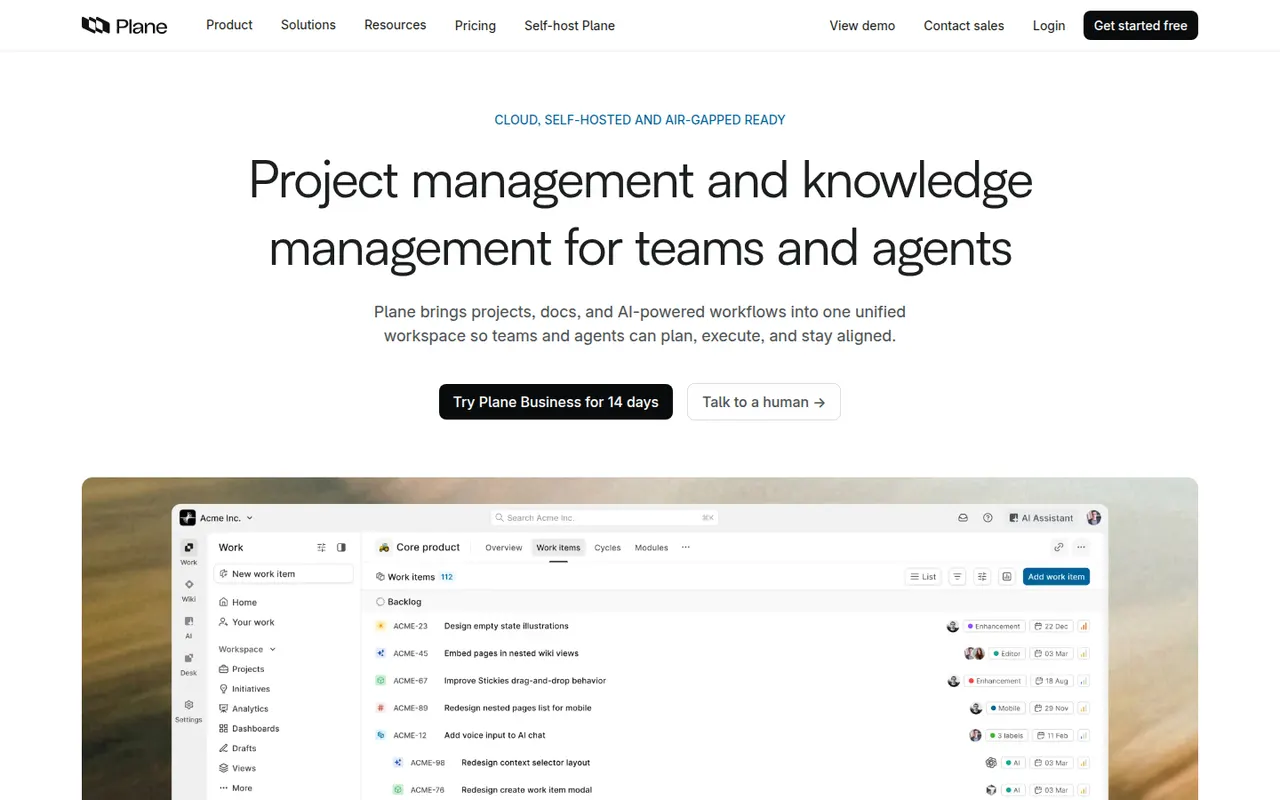
Cost / LicenseFreemiumProprietaryCategoriesPlane is an open source project management tool for software teams, covering issues, cycles, modules, pages and several layouts including list, Kanban, calendar and spreadsheet. It positions itself as a self-hostable alternative to Jira and Linear, and is also offered as a hosted cloud service with a free tier and paid plans.
8 Plane alternativesPros
- Open source, self-hostable alternative to Jira and Linear
- Modern interface with list, Kanban, calendar and spreadsheet layouts
- Cycles, modules and pages cover planning and docs in one place
Cons
- Younger product with fewer integrations than established trackers
- Some advanced features are limited to paid editions
- Self-hosting means handling upgrades and backups yourself
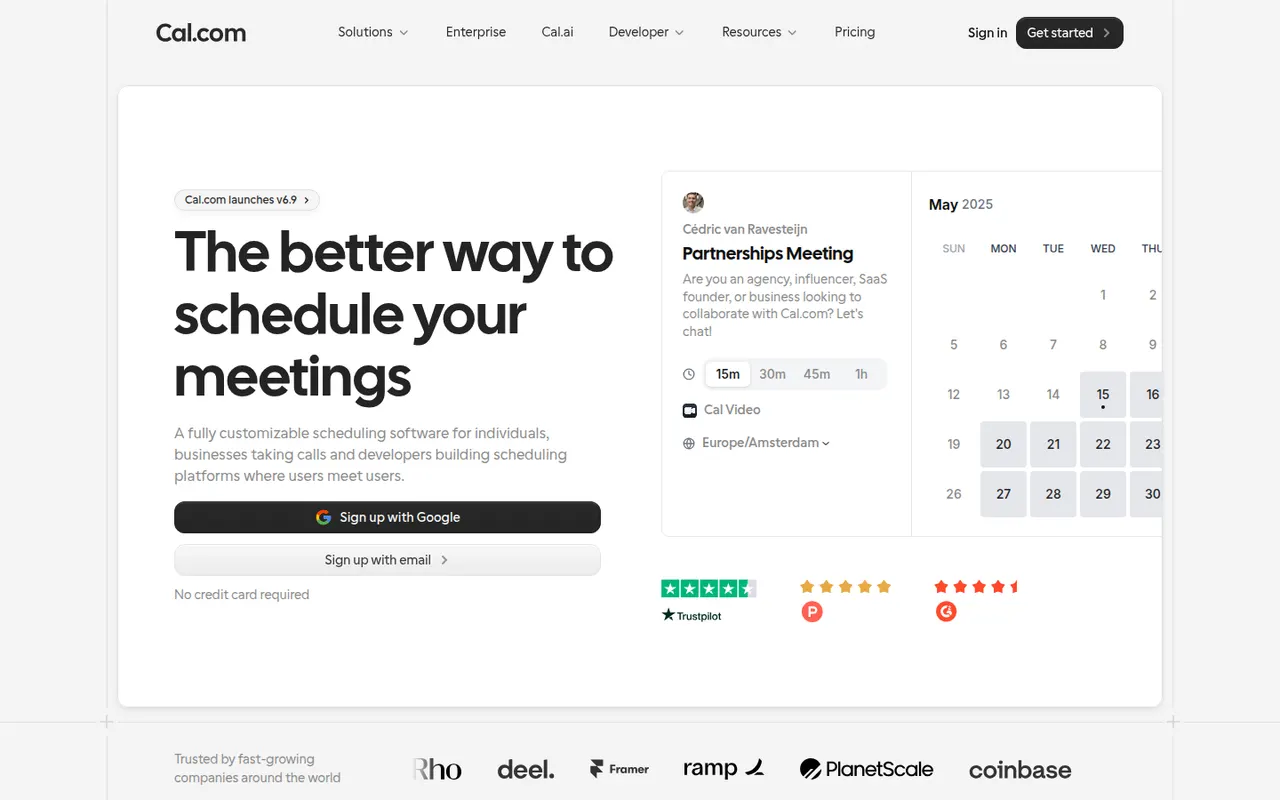
Cost / LicenseFreemiumOpen sourceCategoriesPlatformsCal.com is an open source scheduling platform positioned as an alternative to Calendly, with booking pages, team round-robin, routing forms, paid bookings and automated workflows. It can be used as a hosted service with a free plan for individuals or self-hosted, and developers can embed it or build on its API.
7 Cal.com alternativesPros
- Open source and self-hostable, with a hosted option
- Free hosted plan for individuals
- API and embeds let developers build scheduling into their products
Cons
- Self-hosting takes technical effort to set up and maintain
- Team and enterprise features require paid plans
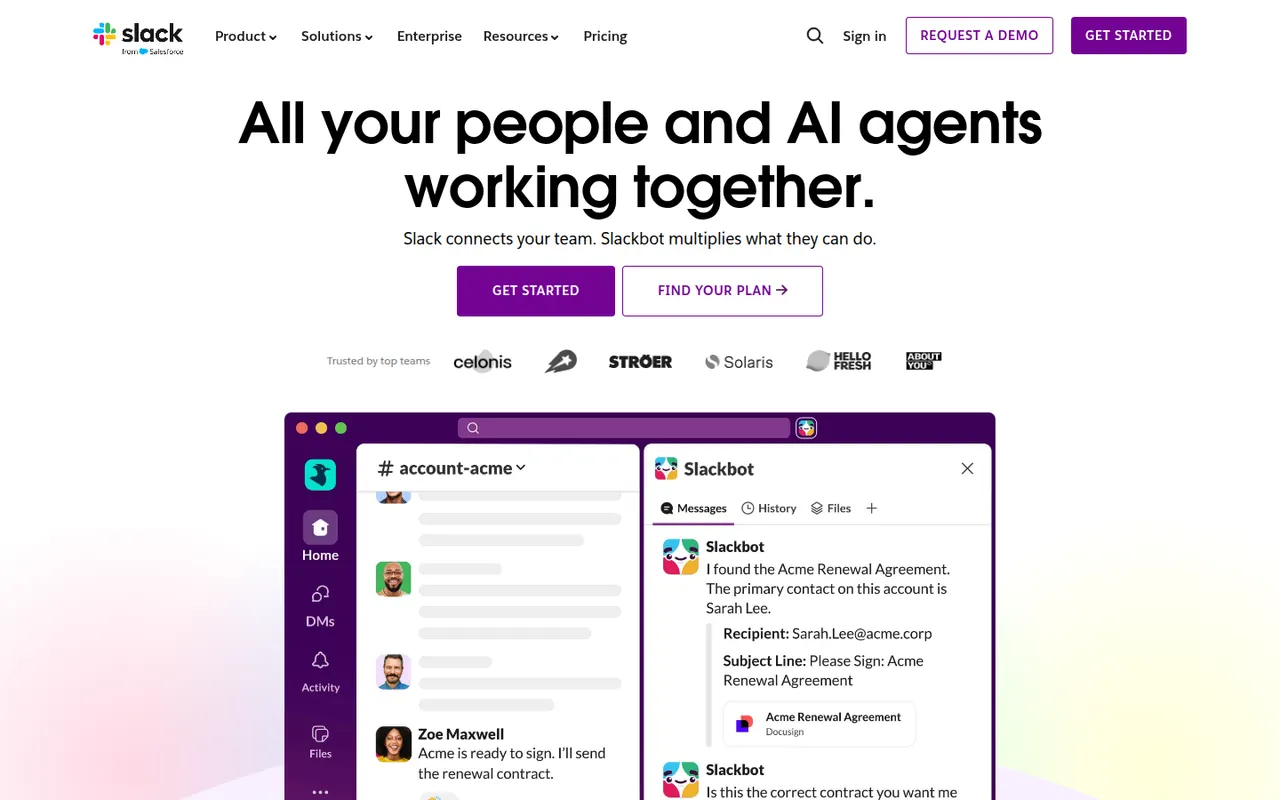
Cost / LicenseFreemiumOpen sourceCategoriesPlatformsSlack is a workplace messaging app that organizes conversations into channels by team, project or topic, with threads, direct messages and huddles for quick audio or video calls. A large app directory and an open API connect it to most business tools, and Slack Connect lets companies share channels with clients and partners. AI summaries and search are available on paid plans.
9 Slack alternativesPros
- Huge app directory connects to almost any business tool
- Slack Connect shares channels with clients and partners
- Huddles make quick audio and video calls effortless
Cons
- Free plan hides older message history
- Paid plans get costly for large teams
- Constant notifications can hurt focus
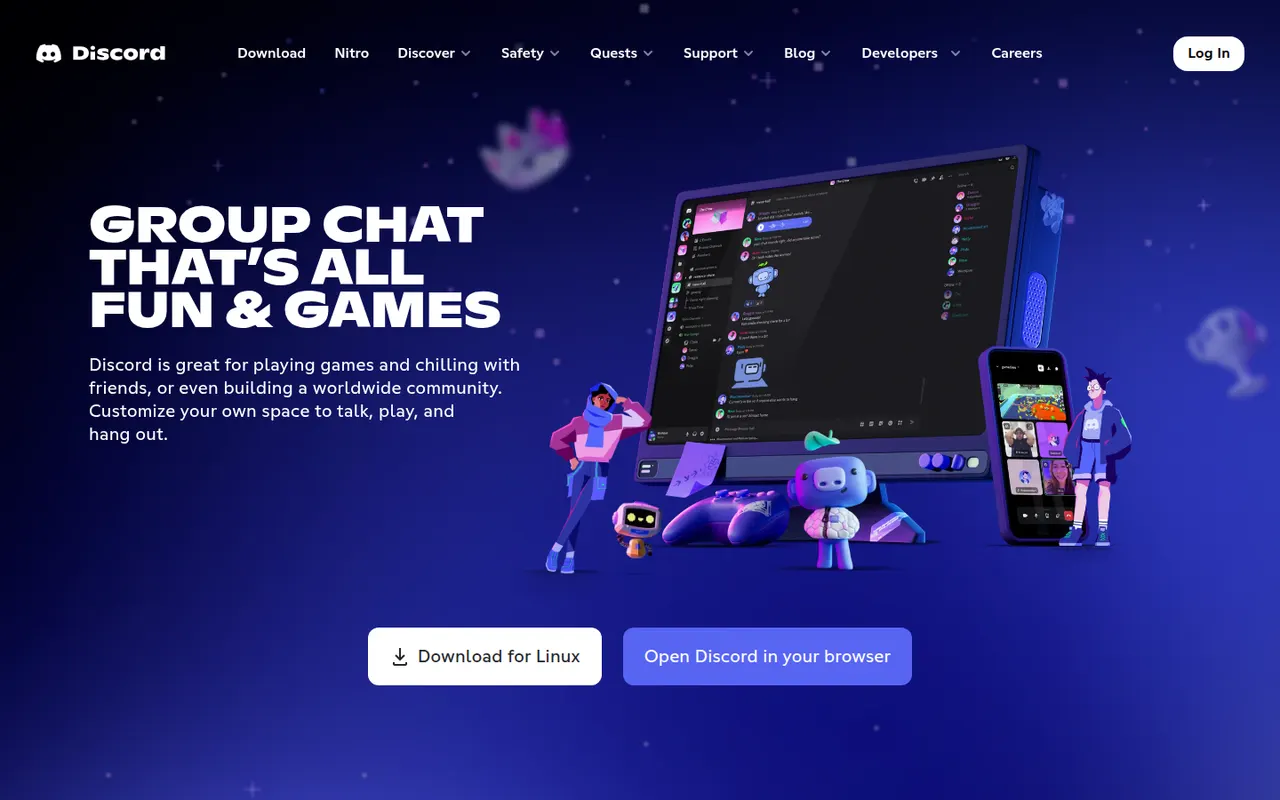
Cost / LicenseFreemiumProprietaryCategoriesDiscord is a chat platform built around servers, each with its own text channels, voice channels and roles. It started with gamers but now hosts communities of every kind, from open-source projects to study groups, with drop-in voice rooms, screen sharing, threads and forums. Bots extend servers, and an optional Nitro subscription adds perks such as larger uploads and higher-quality streaming.
11 Discord alternativesPros
- Drop-in voice channels make spontaneous conversations easy
- Roles, bots and permissions scale to very large communities
- Generous free tier across desktop, mobile and the web
Cons
- Not designed for workplace compliance or admin controls
- Busy servers and notifications can quickly feel overwhelming
- Text messages are not end-to-end encrypted
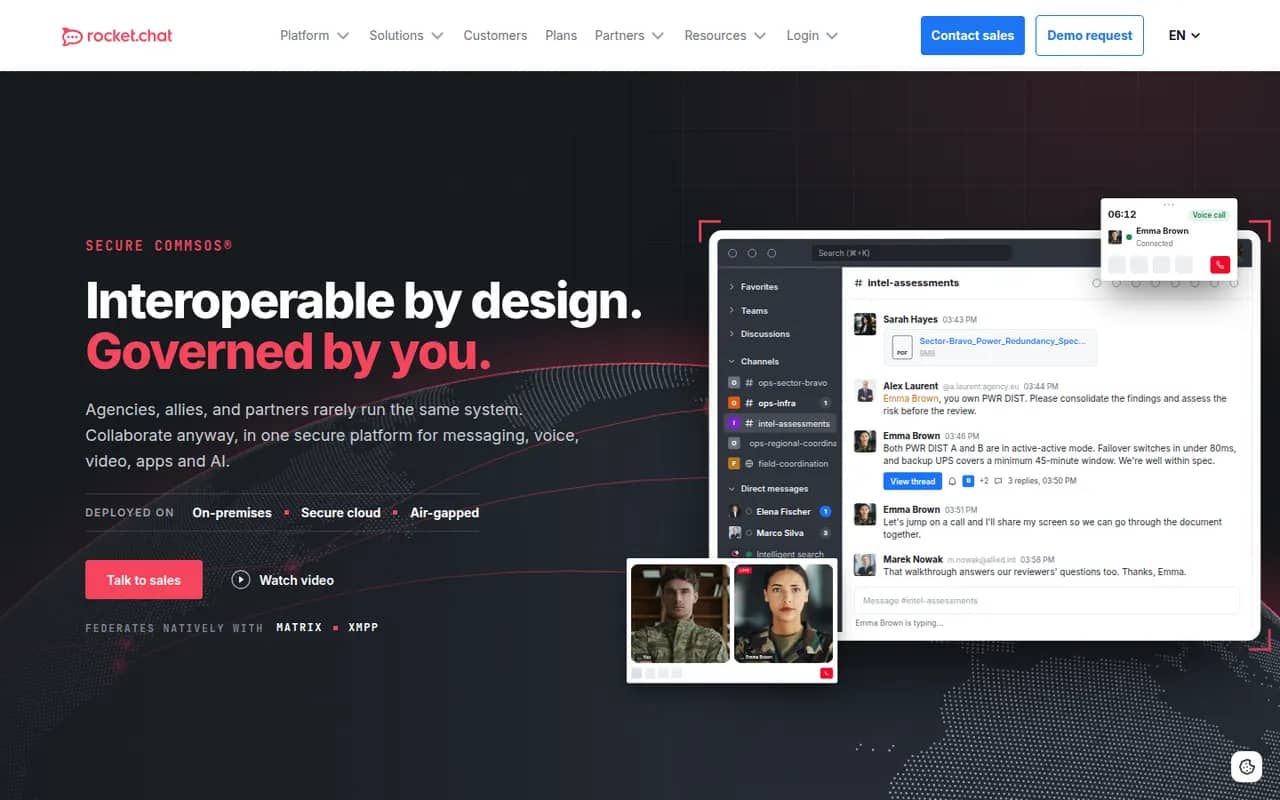
Cost / LicenseFreemiumProprietaryCategoriesRocket.Chat is an open-source communications platform that can be self-hosted or used as a cloud service. Besides team channels, threads, direct messages and calls, it includes an omnichannel module that routes website chat, email and messaging apps to support agents. Its marketplace and APIs let organizations customize it heavily, and self-hosting suits teams with strict data residency needs.
9 Rocket.Chat alternativesPros
- Omnichannel module routes website chat, email and messaging apps
- Self-hostable open source platform for strict data residency needs
- Marketplace and APIs allow deep customization
Cons
- Self-hosted setups require regular maintenance and upgrades
- Some features are reserved for paid editions
- The wide range of settings makes administration complex
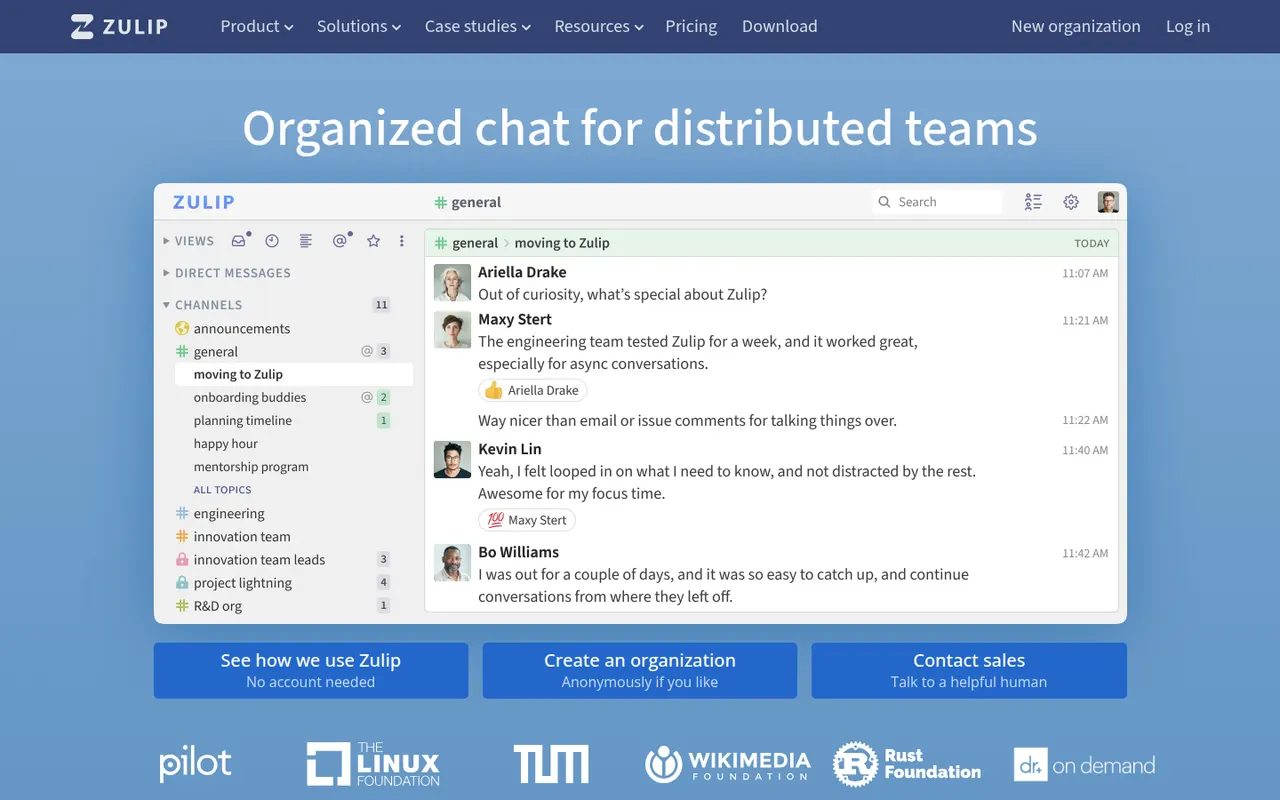
Cost / LicenseFreemiumOpen sourceCategoriesZulip is an open-source team chat app whose threading model files every channel message under a named topic, so people can catch up on several discussions without losing context. It supports Markdown, code blocks and LaTeX math, and integrates with common developer tools. It can be self-hosted for free or used through Zulip Cloud, which suits open-source projects, research groups and remote teams.
8 Zulip alternativesPros
- Topic-based threading makes catching up on discussions easy
- Markdown, code blocks and LaTeX suit technical teams
- Free to self-host under an open source license
Cons
- The topic model takes some getting used to after Slack
- Video calls rely on external services such as Jitsi or Zoom
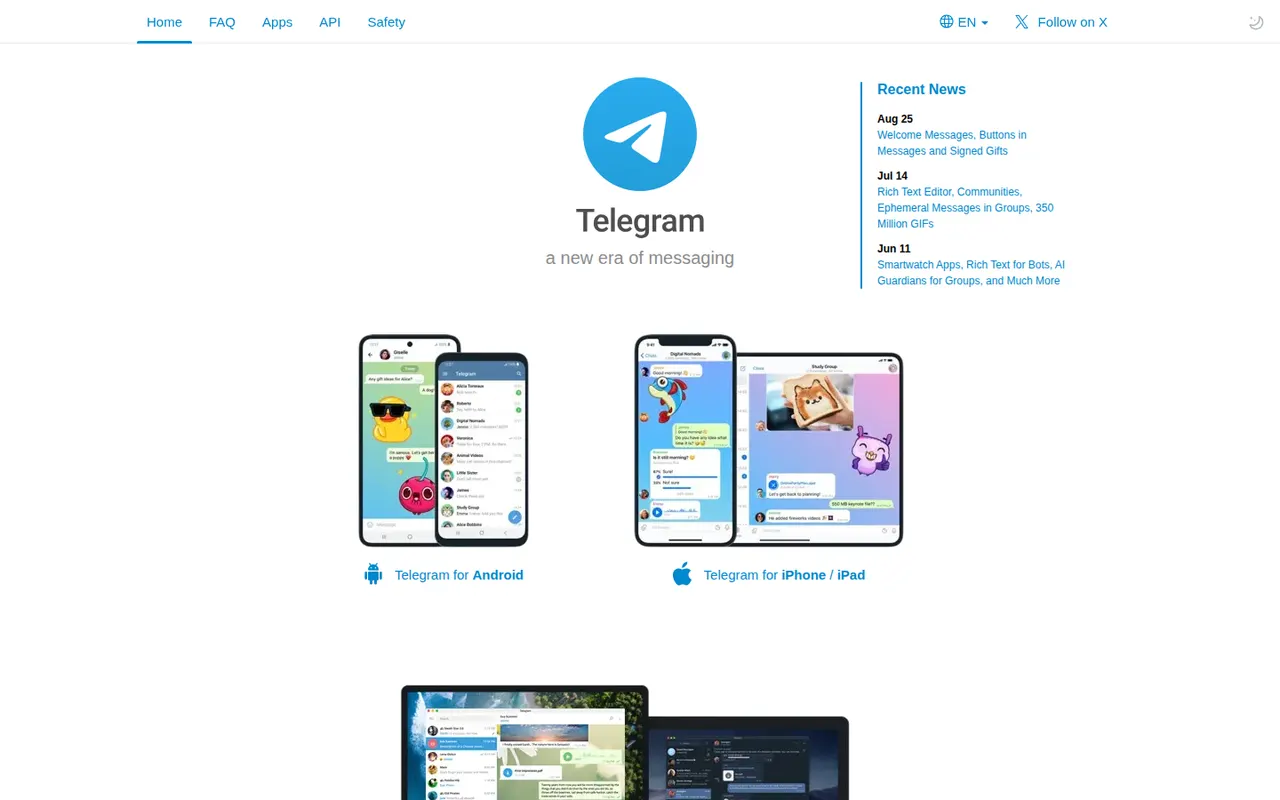
Cost / LicenseFreemiumOpen sourceCategoriesTelegram is a cloud-based messaging app that syncs chats across phones, desktops and the web, with very large groups, broadcast channels and an extensive bot platform. Its client apps are open source, but the server is not, and only the optional Secret Chats are end-to-end encrypted. Telegram Premium adds extras such as bigger uploads and faster downloads.
10 Telegram alternativesPros
- Cloud sync across phone, desktop and web
- Huge groups, broadcast channels and a powerful bot platform
- Open source clients that are fast and polished
Cons
- Regular chats are not end-to-end encrypted, only Secret Chats are
- Secret Chats do not sync across devices and are unavailable in groups
- Server code is closed, unlike the client apps
Cost / LicenseFreemiumOpen sourceCategoriesWhereby is a Norwegian video meeting service where each host gets a permanent room link that guests open in their browser, with no download or account needed. It offers screen sharing, recording, breakout groups and in-room integrations with tools like Miro and Google Docs, which suits small teams, coaches and online consultations. Developers can also embed Whereby video rooms in their own apps through its API.
8 Whereby alternativesPros
- Permanent room links that guests open without an account
- Nothing to install, since meetings run in the browser
- API to embed video rooms in your own apps
Cons
- Less suited to large meetings or webinars than bigger platforms
- Fewer enterprise admin controls than Zoom or Teams
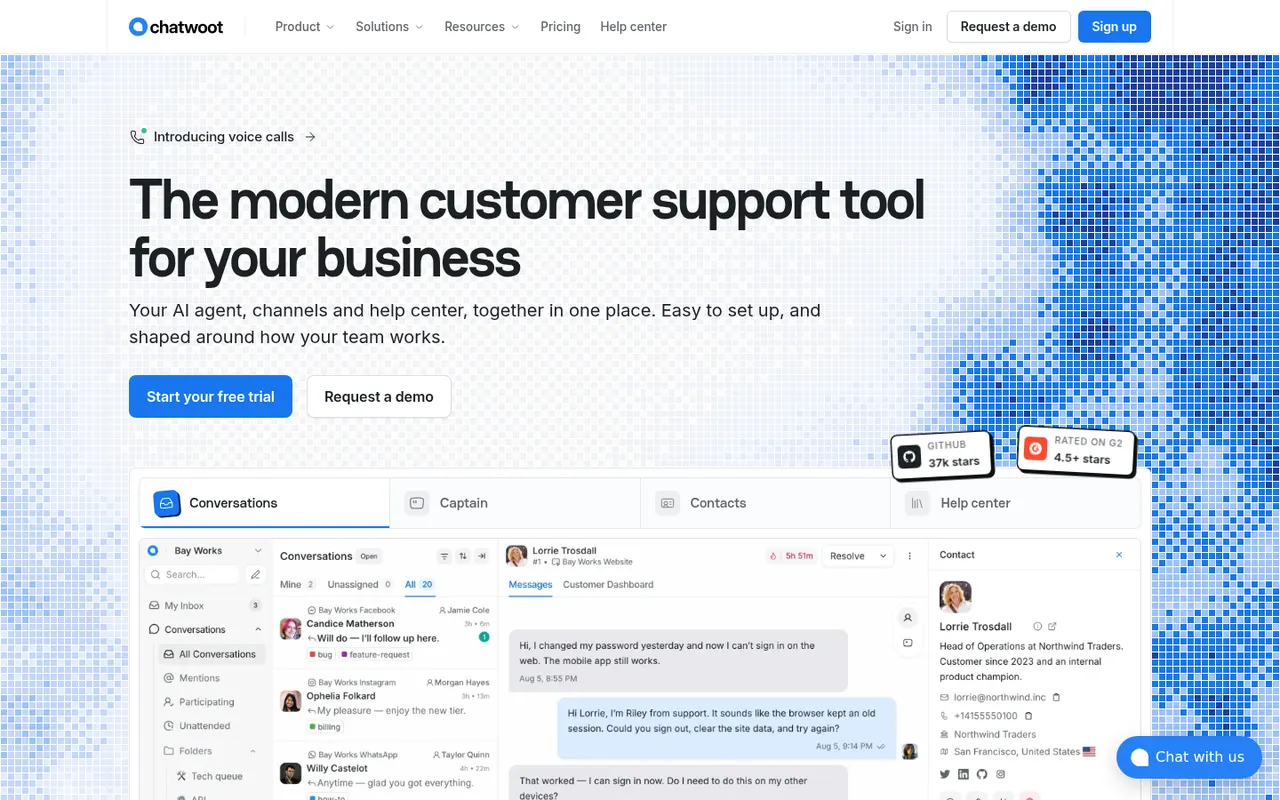
Cost / LicenseFreemiumProprietaryCategoriesChatwoot is an open-source customer engagement platform positioned as an alternative to Intercom and Zendesk. It unifies website live chat, email, WhatsApp, Facebook, Instagram, Telegram and SMS in one shared inbox, with a help center, canned responses, automation rules and an AI assistant called Captain. Teams can self-host it for free or use the paid cloud version.
11 Chatwoot alternativesPros
- Open source and free to self-host, keeping conversations on your servers
- One inbox for chat, email, WhatsApp, social channels and SMS
- Includes a help center, canned responses and automation rules
Cons
- Self-hosting requires maintaining the server, updates and integrations
- Reporting and workflows are less deep than in Zendesk or Intercom
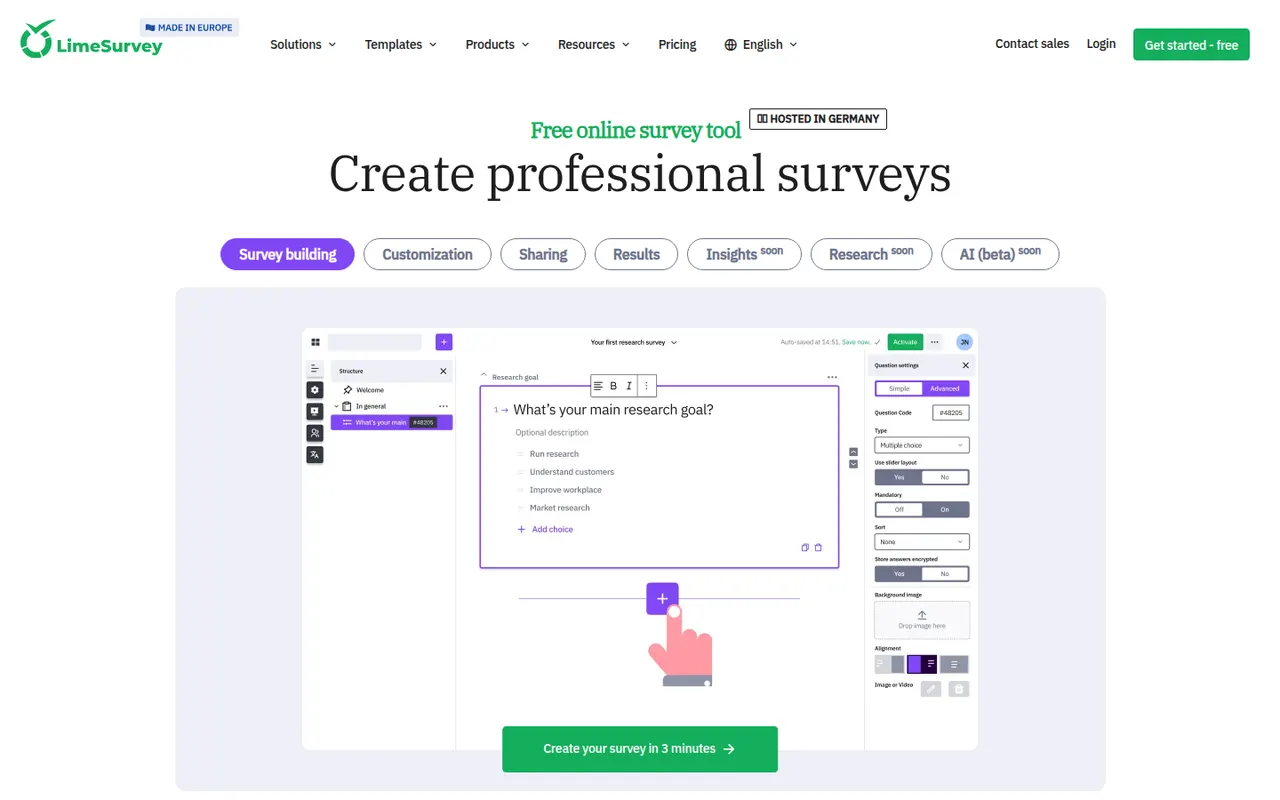
Cost / LicenseFreemiumOpen sourceCategoriesPlatformsLimeSurvey is an open-source online survey tool from Germany, suited to academic and public-sector research. It supports many question types, complex conditions, quotas, multilingual surveys and anonymous responses, with results exportable to SPSS, R and spreadsheets. The Community Edition can be self-hosted for free, and LimeSurvey Cloud offers hosted plans, including a free tier.
8 LimeSurvey alternativesPros
- Advanced logic with quotas, conditions and a wide range of question types
- Free self-hosted edition keeps research data under your control
- Exports results to SPSS, R and spreadsheets for statistical analysis
Cons
- Interface feels dated and takes time to learn
- Survey design looks less polished than modern form builders
- Self-hosting means handling updates and server security yourself
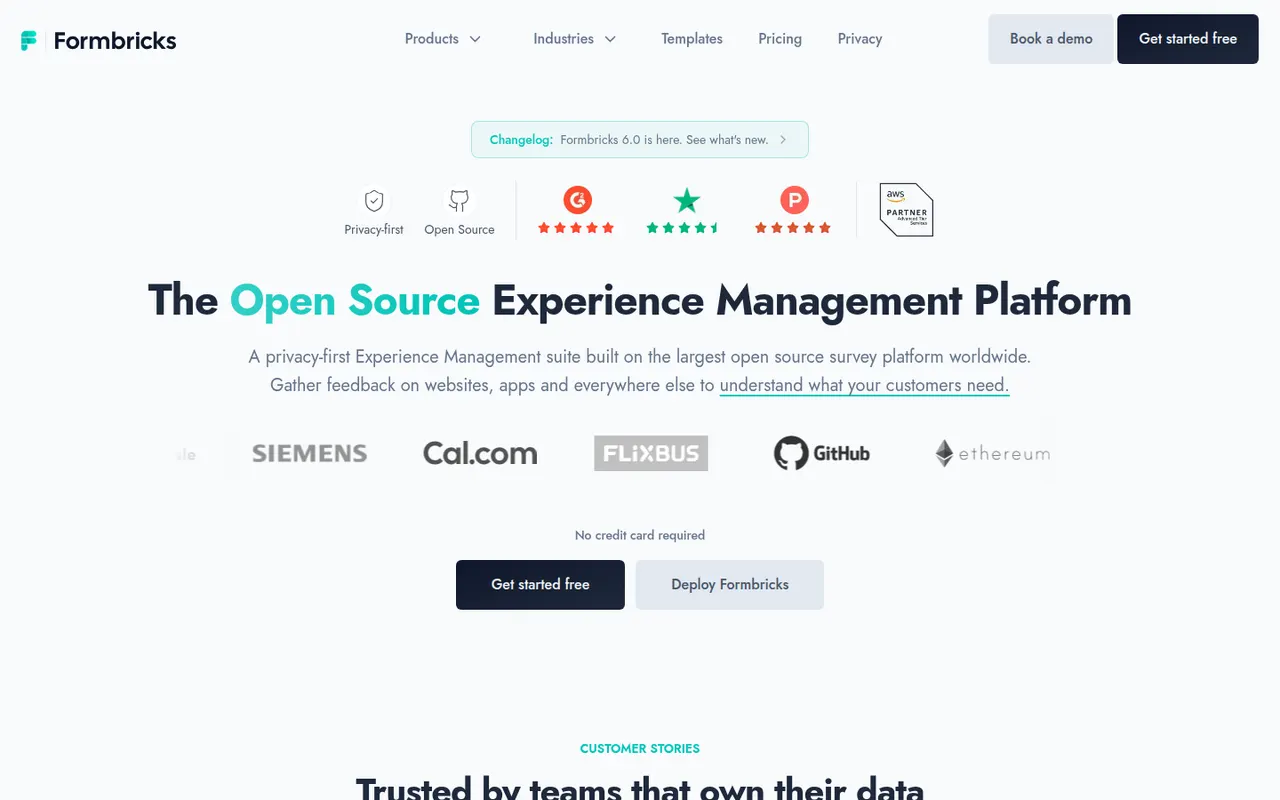
Cost / LicenseFreemiumOpen sourceCategoriesPlatformsFormbricks is an open-source experience management tool for collecting feedback through link surveys, website pop-ups and in-app surveys targeted by user attributes or actions. It integrates with tools like Slack, Notion and Airtable, offers an API and webhooks, and can be self-hosted to keep data on your own servers. Its cloud version has a free plan, and the team is based in Germany.
12 Formbricks alternativesPros
- Open source and self-hostable, so feedback data can stay on your servers
- In-app and website surveys can target users by attributes or actions
- API, webhooks and integrations with Slack, Notion and Airtable
Cons
- Self-hosting requires technical skills and ongoing maintenance
- In-app targeting needs an SDK set up by developers
- Younger product with fewer templates than established survey tools
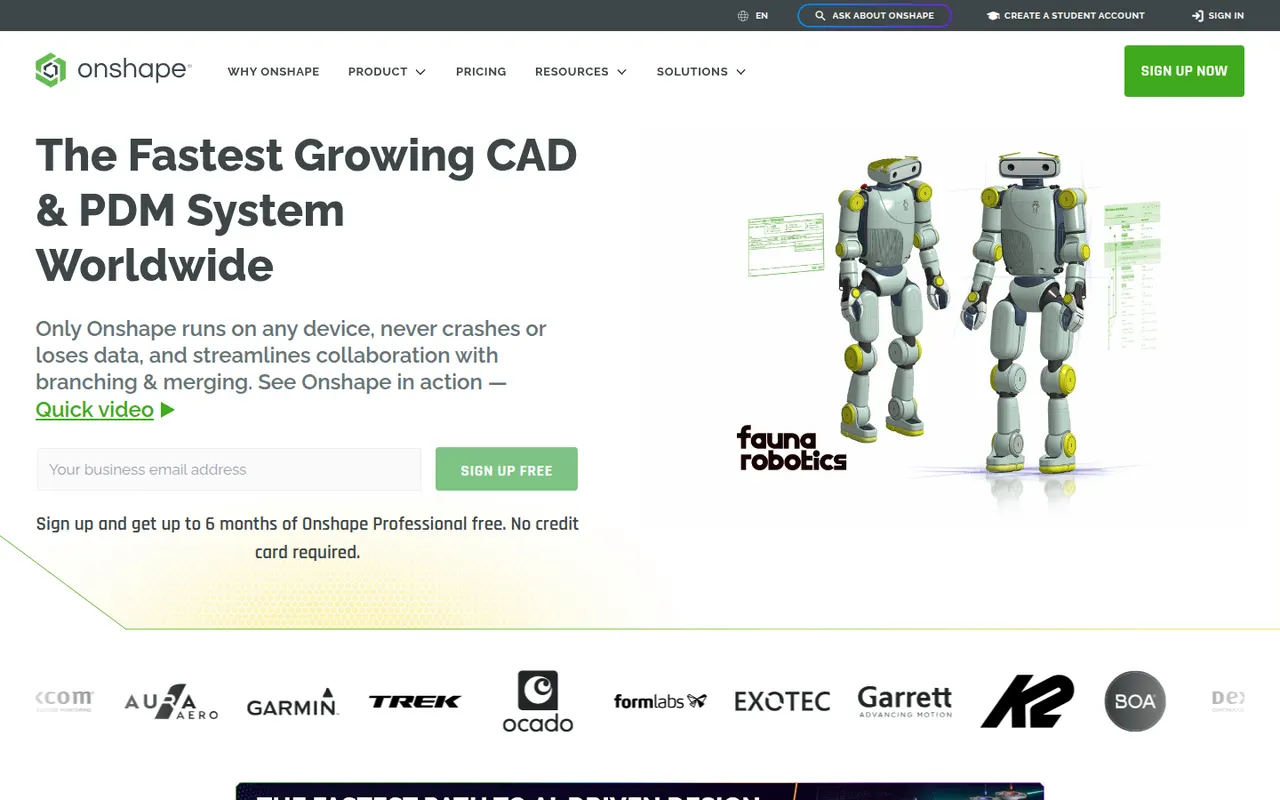
Cost / LicenseFreemiumOpen sourceCategoriesPlatformsOnshape is a professional 3D CAD system that runs entirely in the browser and on mobile devices, with no software to install and no files to manage. It combines parametric part and assembly modeling with Git-like branching, merging and version history, and lets several engineers edit the same design at once. Developed by PTC, it offers a free plan for hobbyists with public documents and paid plans for companies.
6 Onshape alternativesPros
- Runs entirely in the browser with nothing to install
- Built-in branching, merging and version history for designs
- Several engineers can edit the same model at the same time
Cons
- Documents created on the free plan are public
- Needs a reliable internet connection to work
- Professional plans weigh heavily on small companies' budgets
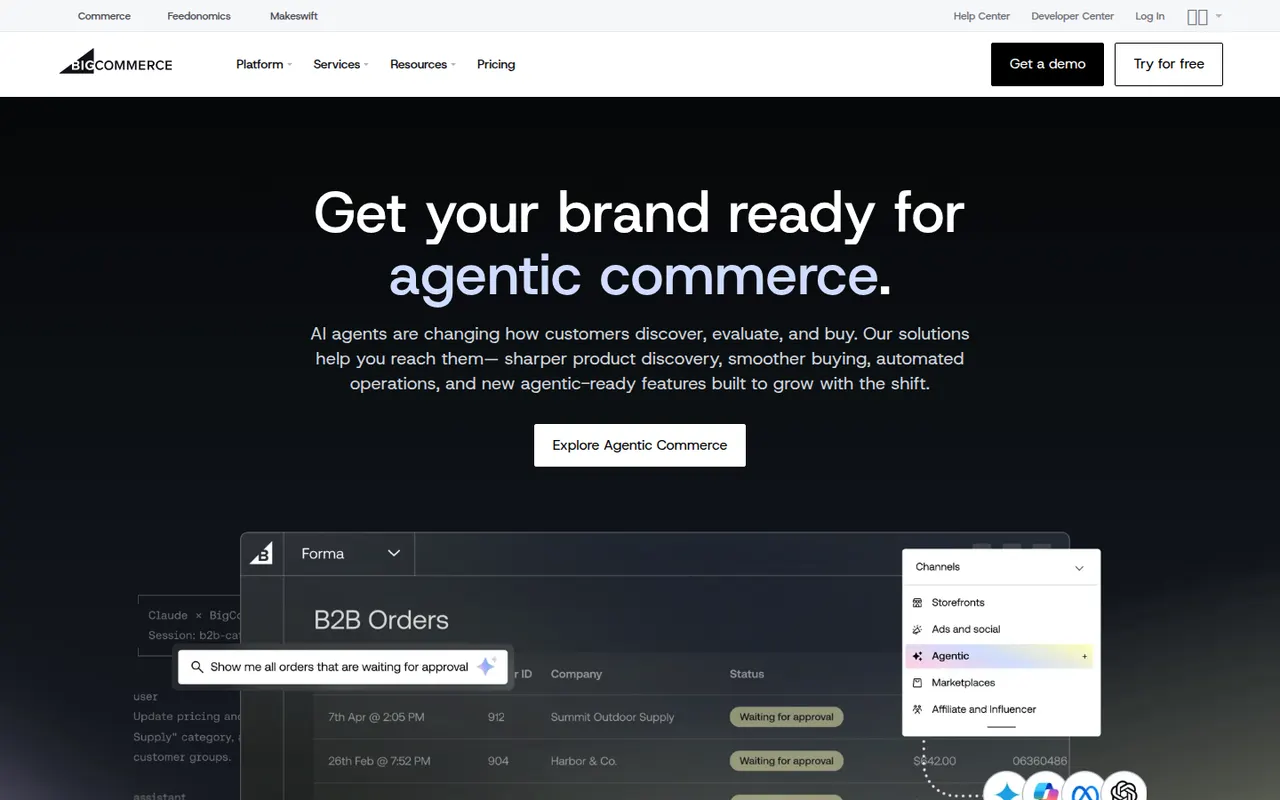
Cost / LicenseFreemiumProprietaryCategoriesBigCommerce is a hosted e-commerce platform that targets mid-sized and enterprise merchants, including B2B sellers. It includes multi-storefront management, built-in B2B features, multi-currency selling and open APIs, and can serve as a headless back end behind a custom front end. Merchants pick it when they want SaaS convenience with more flexibility around integrations.
8 BigCommerce alternativesPros
- Strong built-in B2B features and multi-storefront management
- Open APIs and headless support for custom front ends
- Hosted platform with multi-currency selling out of the box
Cons
- Plan upgrades are required once annual sales pass set thresholds
- Smaller app and theme ecosystem than Shopify
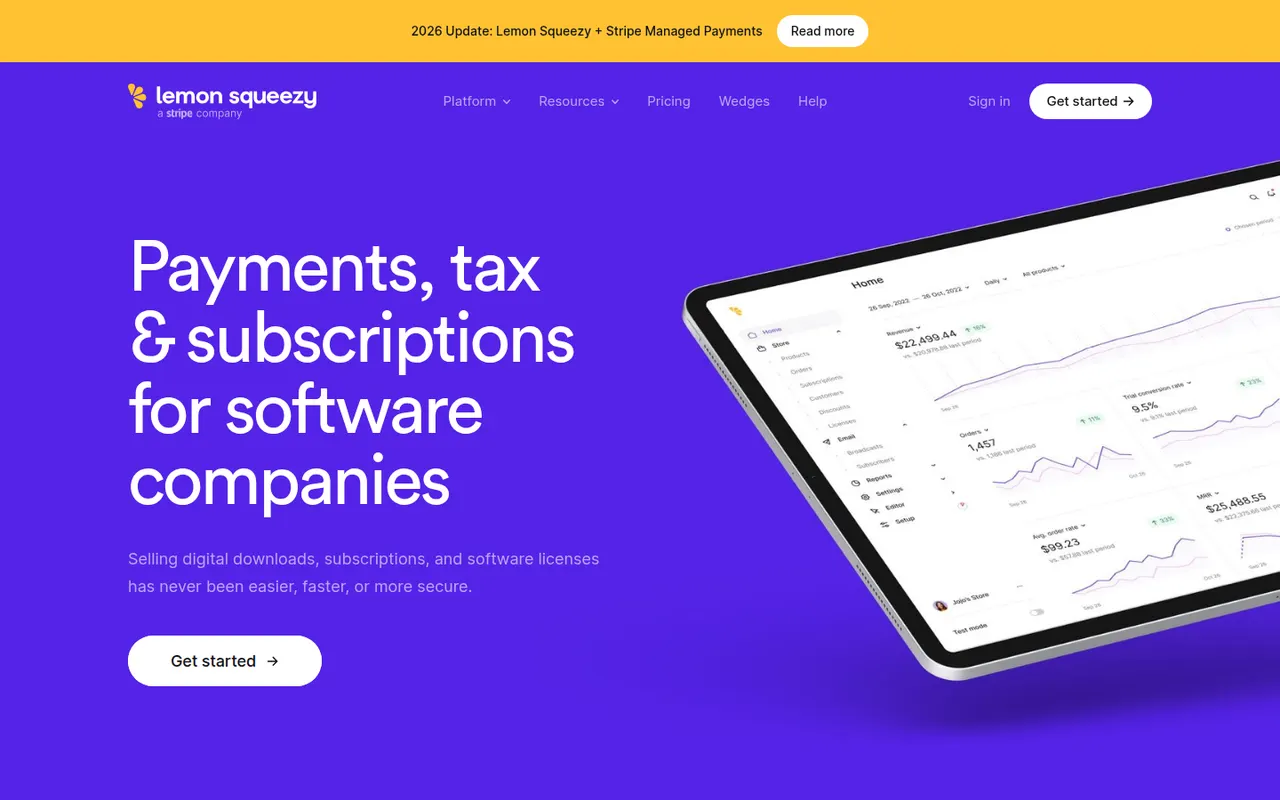
Cost / LicenseFree trialProprietaryCategoriesPlatformsLemon Squeezy is a payments and storefront platform for software companies and creators. It acts as merchant of record, so it handles international sales tax and VAT, fraud and chargebacks on your behalf. It supports one-time products, subscriptions, software license keys, affiliate programs and email marketing. Stripe acquired it in 2024, and it charges a fee per transaction rather than a monthly plan.
6 Lemon Squeezy alternativesPros
- Acts as merchant of record and handles global sales tax and VAT for you
- Built-in license keys and subscriptions for software sellers
- No monthly plan, only fees per transaction
Cons
- Fees are higher than using a payment processor directly
- Product direction is less clear since the Stripe acquisition
- Storefront customization is fairly limited
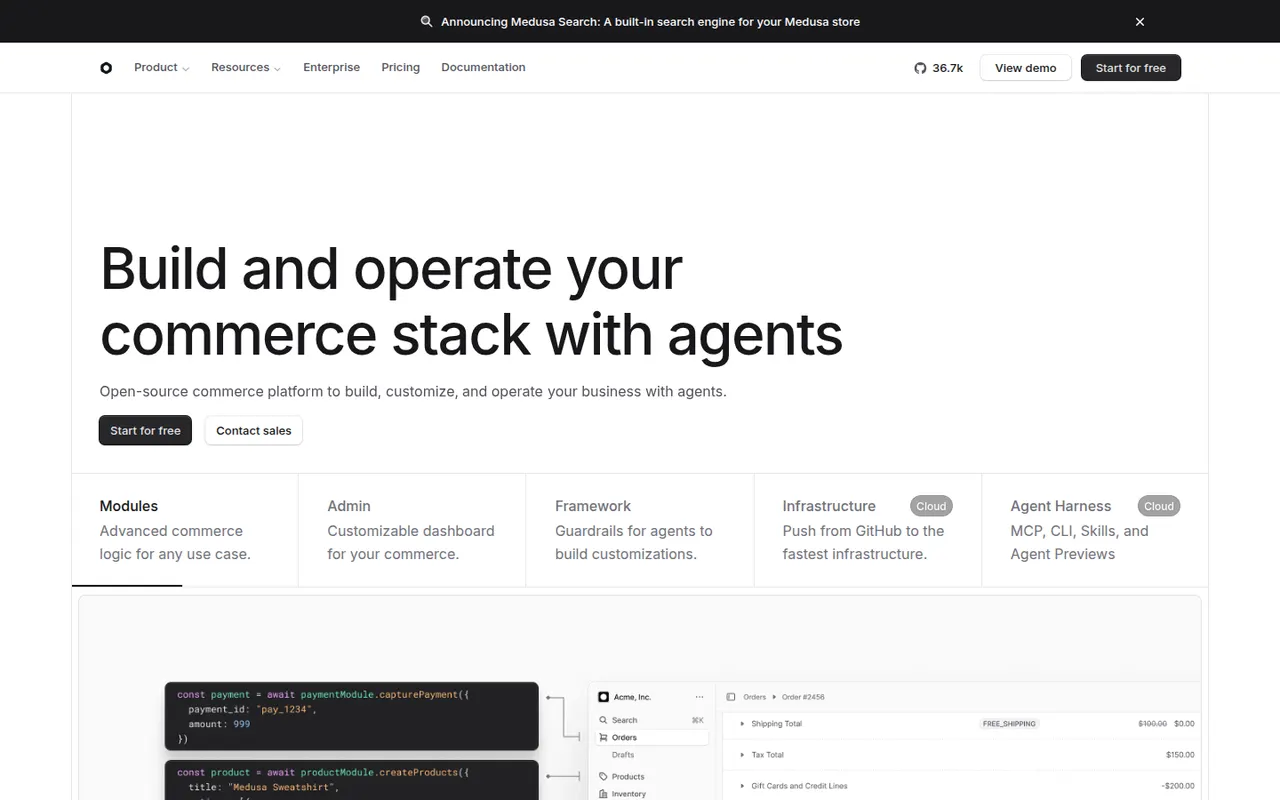
Cost / LicenseFreemiumProprietaryCategoriesPlatformsMedusa is an open source commerce platform for developers who want to build a custom store or marketplace rather than adapt a hosted product. It provides modular back-end building blocks for products, carts, orders, payments and fulfillment, an admin dashboard and APIs that any front end can consume. It can be self-hosted for free or deployed on the managed Medusa Cloud.
6 Medusa alternativesPros
- Modular back end for building custom stores and marketplaces
- Open source and free to self-host, with a managed cloud option
- Admin dashboard and APIs work with any front-end framework
Cons
- Needs developers, so it is not a ready-made store for non-technical merchants
- Smaller plugin ecosystem than Shopify or WooCommerce
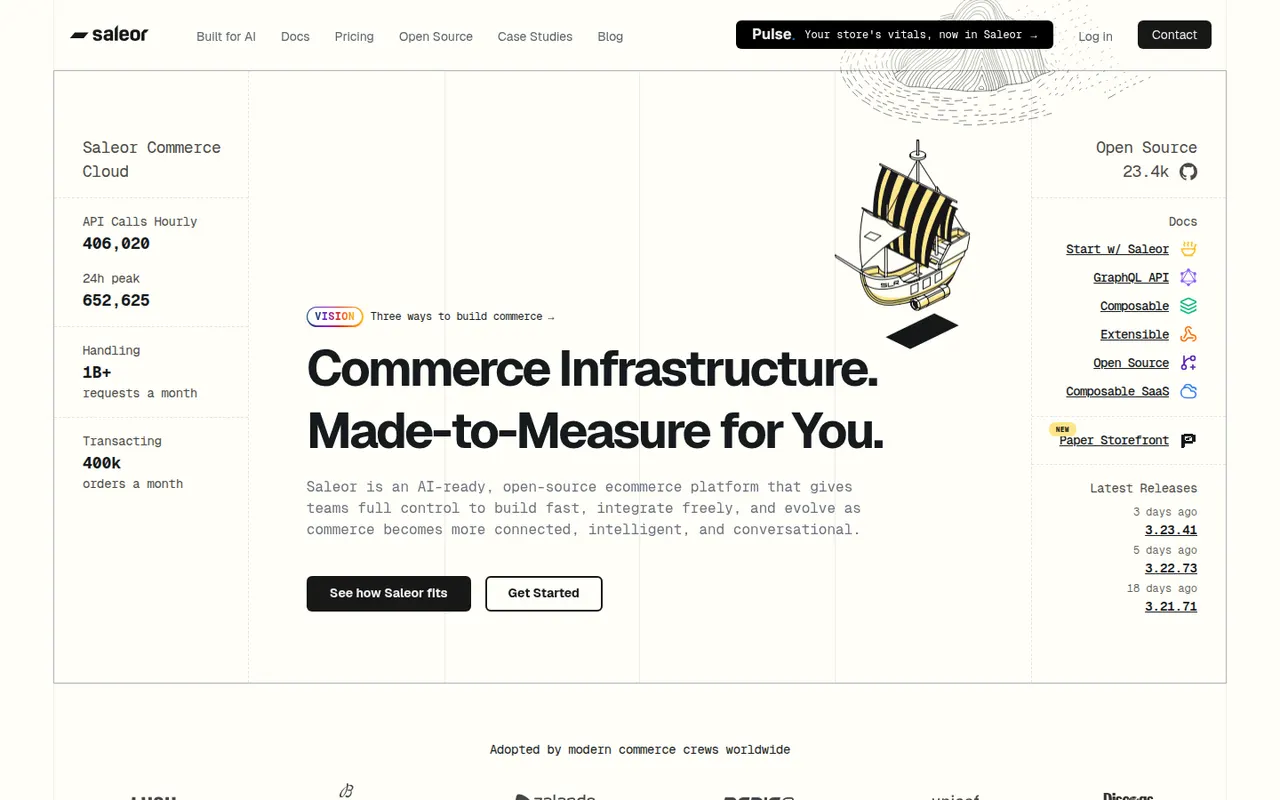
Cost / LicenseFreemiumOpen sourceCategoriesPlatformsSaleor is an open source, API-only commerce platform built with Python and Django, with everything exposed through a GraphQL API. It handles multi-channel catalogs, several currencies and warehouses, and extends through webhooks and apps, while the storefront is built separately with any framework. Teams can self-host it or use the managed Saleor Cloud.
6 Saleor alternativesPros
- GraphQL-first API built for headless storefronts
- Handles multiple channels, currencies and warehouses natively
- Open source Python stack, self-hosted or on Saleor Cloud
Cons
- The storefront must be built separately by developers
- Smaller ecosystem and community than mainstream platforms
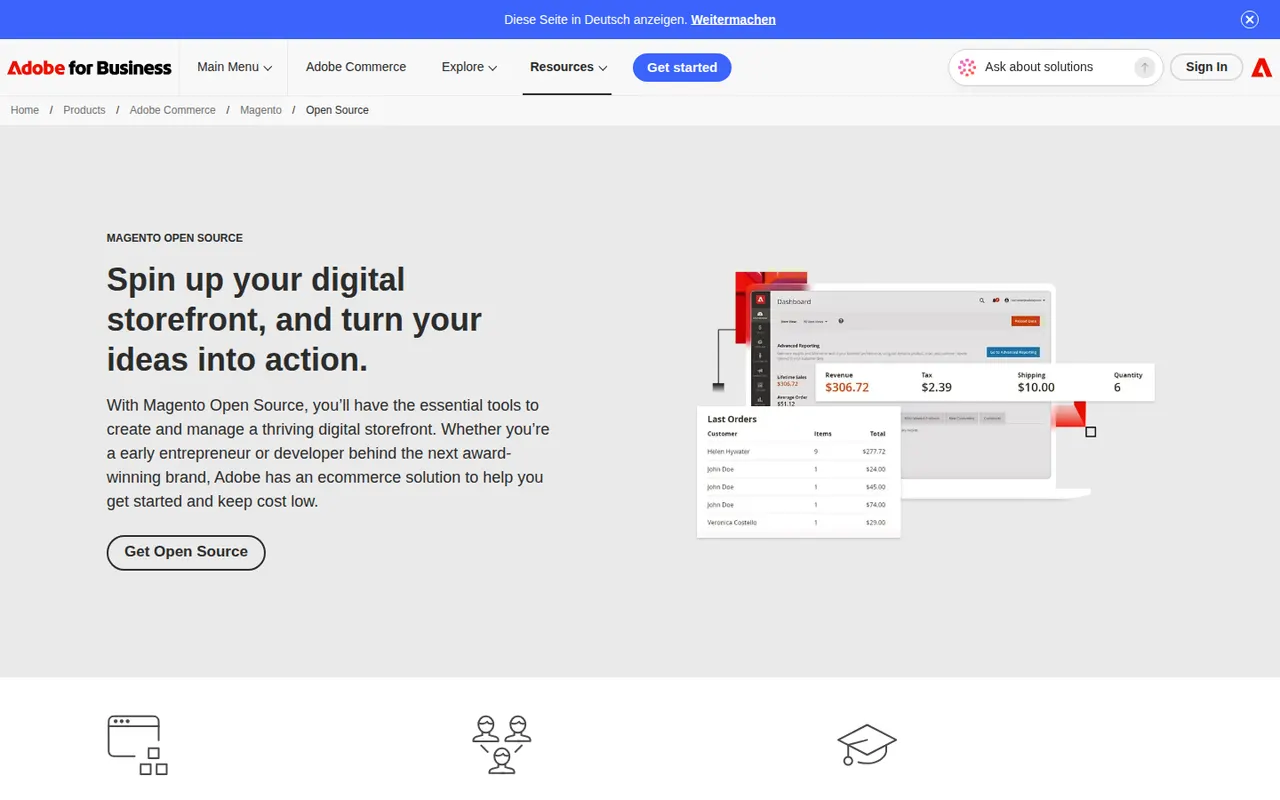
Cost / LicenseFreemiumOpen sourceCategoriesPlatformsMagento Open Source is the free, self-hosted edition of the Magento e-commerce platform, maintained by Adobe alongside its paid Adobe Commerce product. Written in PHP, it supports multiple stores, languages and currencies, complex catalogs and a large ecosystem of extensions and agencies. It is suited to merchants with development resources who need deep customization.
6 Magento Open Source alternativesPros
- Handles complex catalogs, multiple stores, languages and currencies
- Large ecosystem of extensions and specialized agencies
- Free and open source, with full control over code and hosting
Cons
- Resource-hungry, so it needs well-tuned hosting to perform well
- Development and maintenance require experienced PHP developers
- Some advanced features are reserved for the paid Adobe Commerce
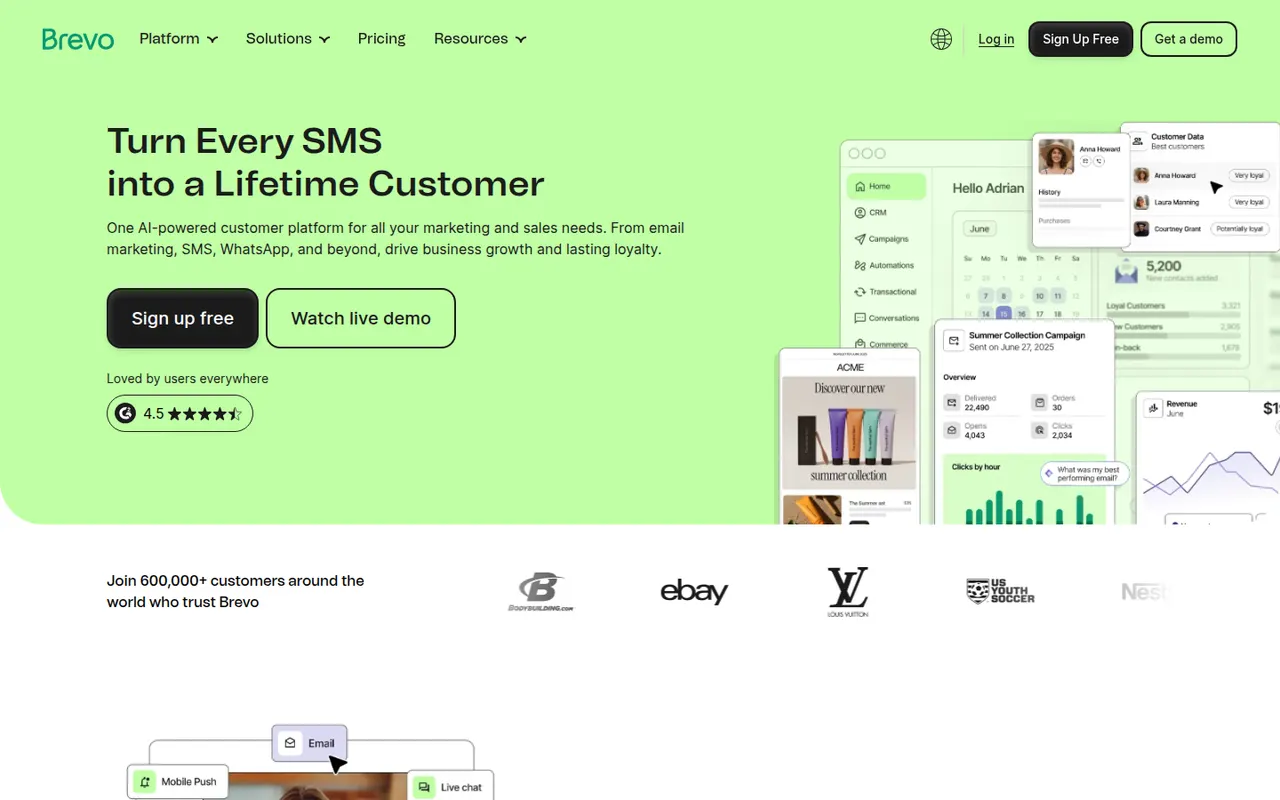
Cost / LicenseFreeOpen sourceCategoriesPlatformsBrevo, formerly Sendinblue, is a French marketing platform covering email campaigns, transactional email, SMS, WhatsApp messages and marketing automation, plus a sales CRM and live chat. Its plans are based mainly on the volume of emails sent rather than the number of contacts, which suits large lists that are mailed occasionally. Data is hosted in the EU, a plus for GDPR-conscious teams.
9 Brevo alternativesPros
- Pricing based on emails sent rather than contacts stored
- Email, SMS, WhatsApp and transactional email in one platform
- EU data hosting suits GDPR-conscious teams
Cons
- Free plan has a daily sending limit and Brevo branding
- Automation builder is less advanced than specialist tools
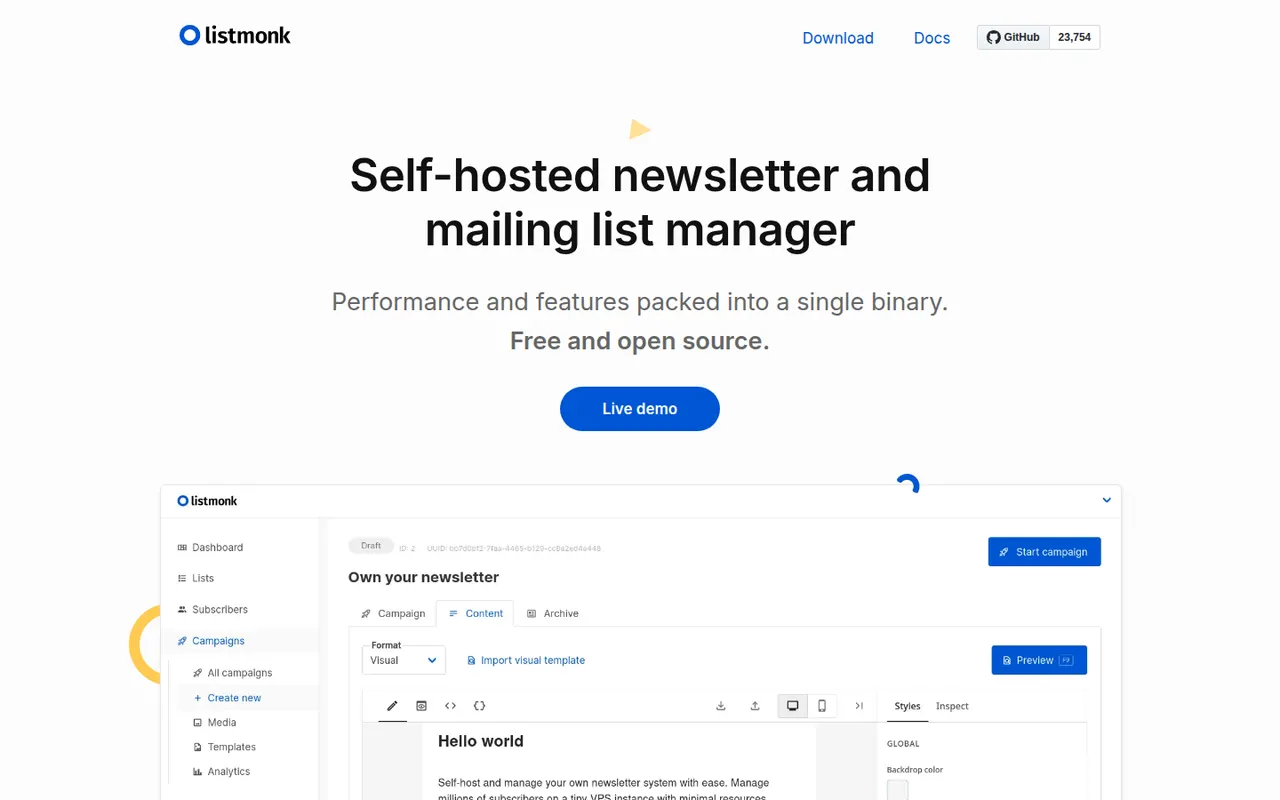
Cost / LicenseFreemiumProprietaryCategorieslistmonk is a free, open source newsletter and mailing list manager distributed as a single binary backed by PostgreSQL. It handles large subscriber lists, template-based campaigns, transactional messages via API and segmentation through SQL queries, and can send through any SMTP server or service. It suits developers and organizations that want to keep email marketing and subscriber data on their own servers.
6 listmonk alternativesPros
- Free, open source and distributed as a single binary
- Handles very large lists efficiently on PostgreSQL
- Sends through any SMTP server or email service
Cons
- Requires self-hosting and a separate sending service
- No visual automation builder or drip campaigns
- Segmentation relies on SQL queries rather than a point-and-click tool
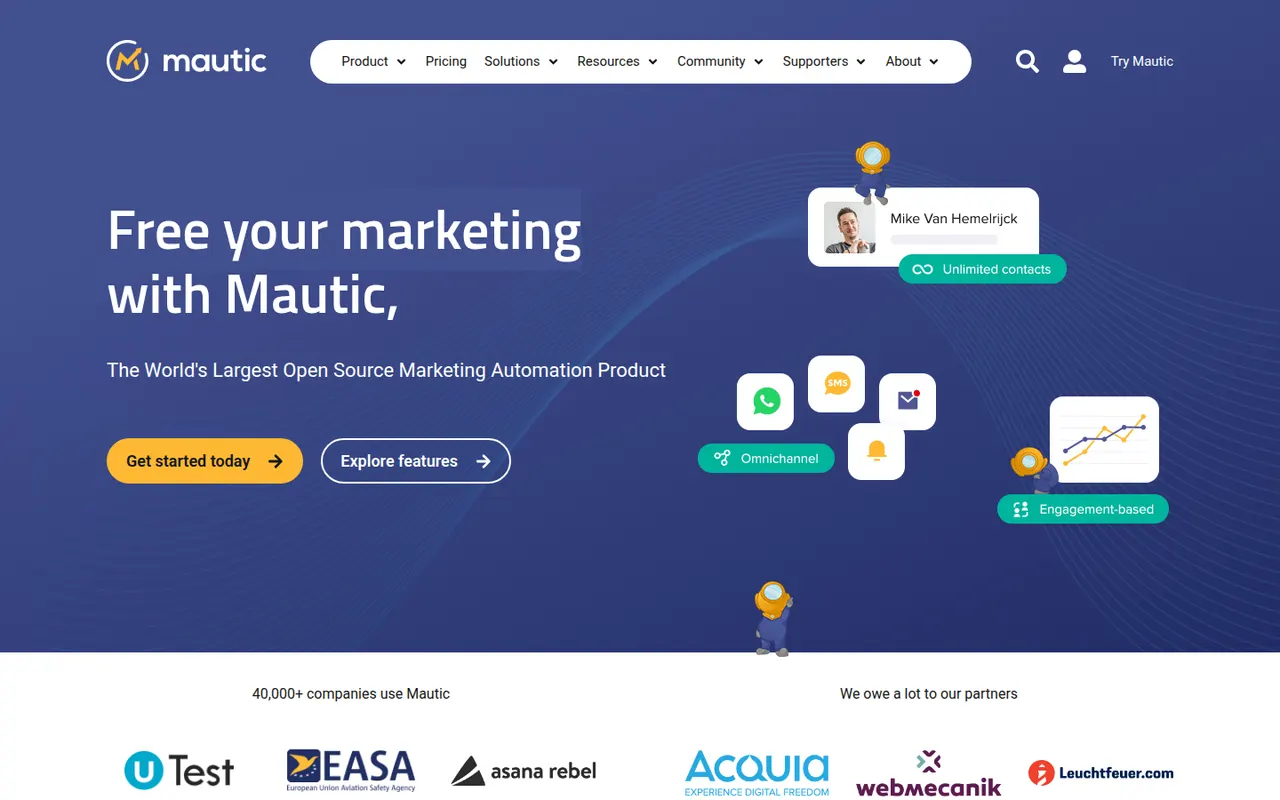
Cost / LicenseFreeOpen sourceCategoriesPlatformsMautic is an open source marketing automation platform for running email campaigns, landing pages, forms, lead scoring and multi-step customer journeys. Self-hosting it keeps contact data on your own infrastructure, and its plugin system connects it to CRMs and other tools. It suits organizations with technical resources that want an alternative to proprietary automation suites.
7 Mautic alternativesPros
- Free and open source marketing automation
- Contact data stays on your own infrastructure
- Campaign builder with lead scoring, forms and landing pages
Cons
- Installation and maintenance require technical skills
- Needs a separate sending service for good deliverability
- Interface is less polished than commercial automation suites
Cost / LicenseFreeOpen sourceCategoriesPlatformsButtondown is a small, independent newsletter service for writers and developers who prefer a lightweight tool. You write in Markdown or a rich text editor, publish an archive on the web and can charge for subscriptions through Stripe. It offers a complete API, custom domains and RSS-to-email, and is built by a very small team.
6 Buttondown alternativesPros
- Write in Markdown or a rich text editor
- Complete API and RSS-to-email for developers
- Paid subscriptions through Stripe and custom domains
Cons
- Templates and design options are minimal
- Few audience growth tools compared with beehiiv or Substack
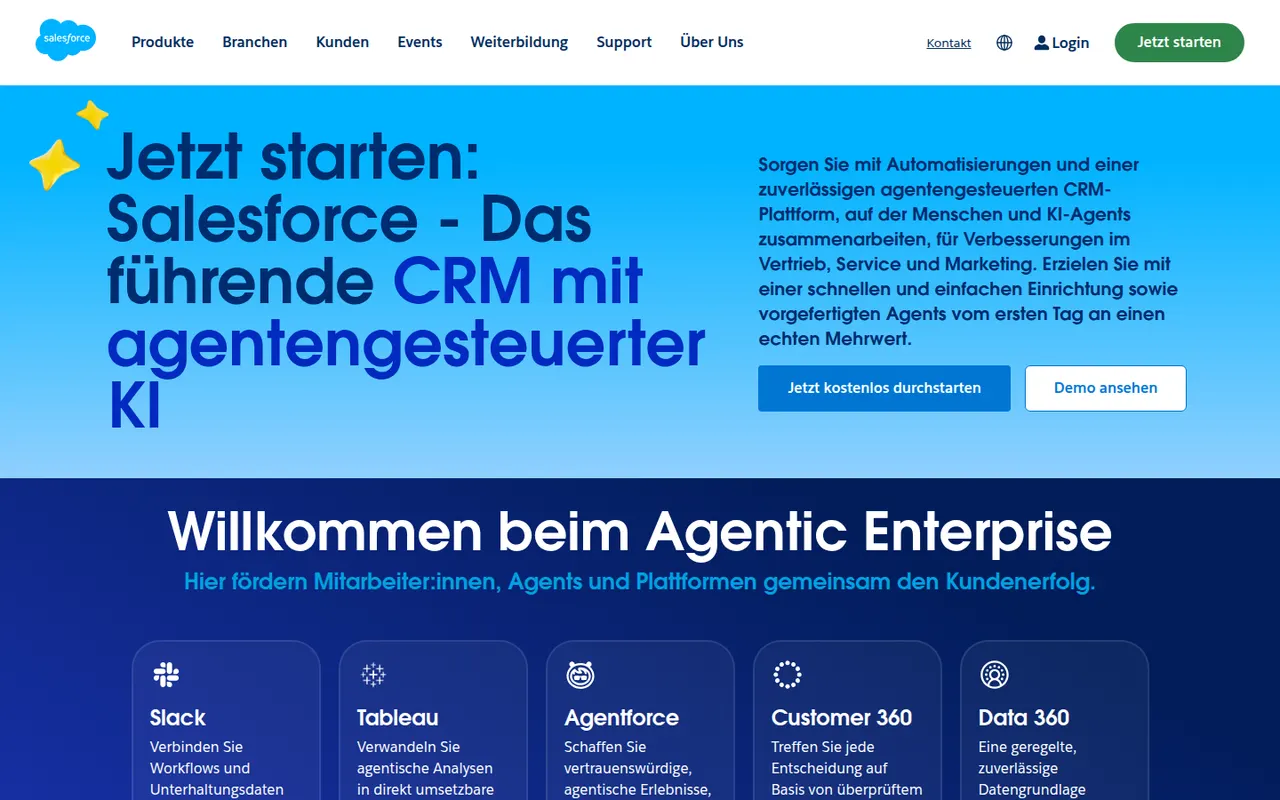
Cost / LicenseFreemiumProprietaryCategoriesPlatformsSalesforce is a cloud CRM platform used mainly by mid-sized and large organizations, with Sales Cloud for pipelines and forecasting, Service Cloud for support and many other clouds and add-ons. It is highly customizable through objects, workflows and code, and the AppExchange marketplace adds a wide range of integrations. Agentforce brings AI agents that can act on CRM data.
9 Salesforce alternativesPros
- Customizable down to objects, workflows and code for any sales process
- AppExchange offers integrations for almost every business tool
- Scales from mid-sized teams to the largest global organizations
Cons
- Steep learning curve that often calls for dedicated admins or consultants
- High per-user cost, with many capabilities sold as add-ons
- Overkill for small teams with simple sales processes
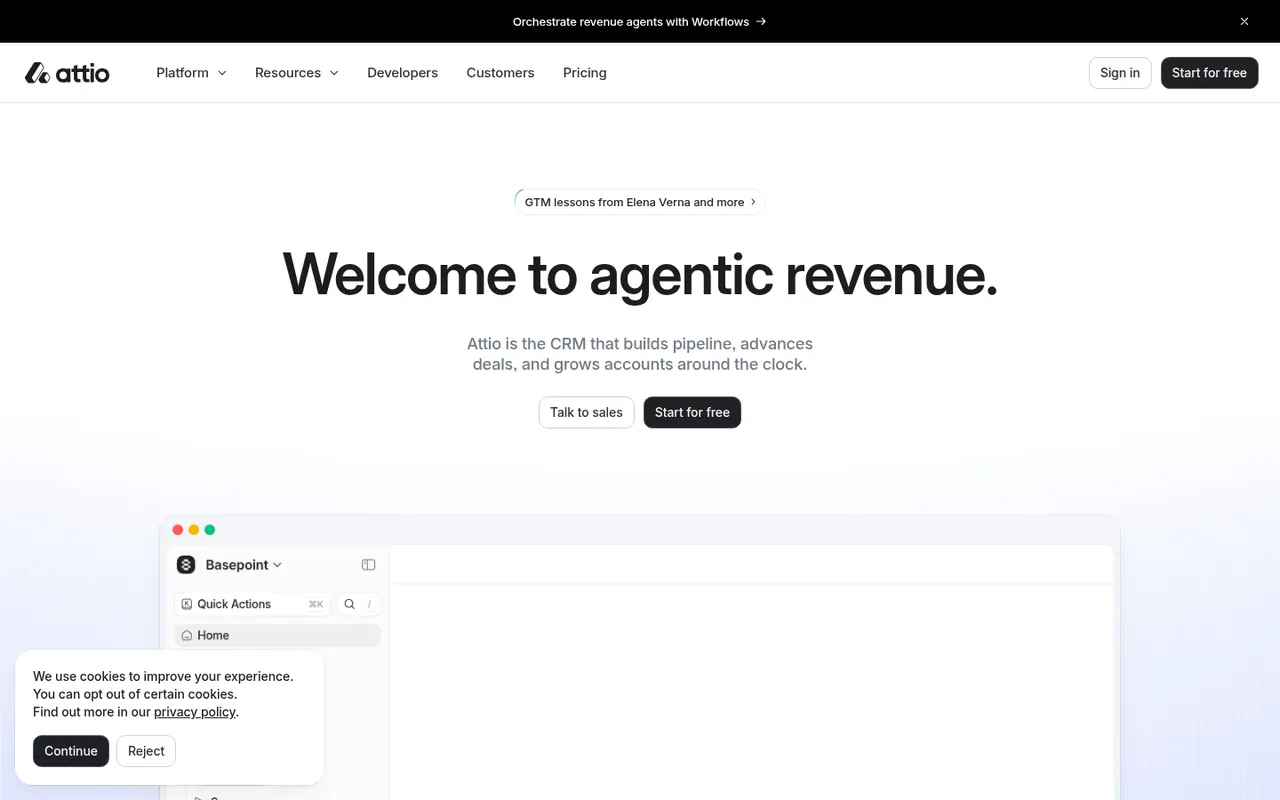
Cost / LicenseFree trialProprietaryCategoriesAttio is a modern CRM that builds itself from your email and calendar, then lets you model any kind of relationship data with custom objects, attributes and views. It offers real-time collaboration, workflow automation, reporting and an API, and is aimed at startups, investors and teams that find traditional CRMs rigid.
11 Attio alternativesPros
- Builds itself automatically from your email and calendar
- Custom objects and views adapt to almost any data model
- Modern, fast interface with real-time collaboration
Cons
- Its flexibility means more setup than an opinionated CRM
- Advanced features and higher limits require paid plans
Cost / LicenseFreemiumProprietaryCategoriesPlatformsClose is a CRM built for inside sales teams that spend their day on the phone and in email. Calling, power dialing, SMS, email sequences and meeting notes live inside the CRM, so reps rarely need separate tools, and every interaction is logged automatically. It targets startups and small businesses with high-volume outbound or inbound sales processes.
8 Close alternativesPros
- Calling, power dialing, SMS and email built into the CRM
- Every call and email is logged automatically
- Email sequences keep outbound follow-ups on track
Cons
- No free plan, only a trial
- Less suited to complex enterprise sales or marketing automation
Cost / LicenseFree trialProprietaryCategoriesSuiteCRM is an open source CRM maintained by SalesAgility, originally forked from SugarCRM Community Edition. It covers sales, marketing campaigns, customer service cases, quotes and workflows, and because it is self-hosted you keep complete control over data and code. Organizations with in-house IT or an implementation partner choose it to avoid depending on a single vendor.
7 SuiteCRM alternativesPros
- Free and open source, with full control over data and code
- Covers sales, campaigns, support cases and quotes in one system
- No vendor lock-in, since you choose the hosting and the partner
Cons
- Needs a server and technical skills to install, secure and update
- Interface feels dated next to modern cloud CRMs
- Upgrades and custom modules can take real development effort
Cost / LicenseFreeOpen sourceCategoriesPlatformsTwenty is an open source CRM positioned as a community-driven alternative to Salesforce, with a modern interface inspired by tools like Notion and Airtable. You can define custom objects and fields, work in table and kanban views, automate tasks with workflows and connect other tools through GraphQL and REST APIs. It can be self-hosted or used through the company's cloud offering.
7 Twenty alternativesPros
- Modern, Notion-like interface with table and kanban views
- Custom objects and fields adapt the data model to your business
- Open source with GraphQL and REST APIs, self-hosted or in the cloud
Cons
- Young product with fewer integrations than established CRMs
- Some advanced sales features of mature CRMs are still missing
- Self-hosting means handling deployment and updates yourself
Cost / LicenseFreemiumOpen sourceCategoriesPlatforms